Key takeaways
- 'Emerald Gaiety' and 'Emerald 'n' Gold' are easy evergreen ground cover for sun or shade
- Euonymus fortunei can climb a wall like ivy, even a shady north-facing one
- Euonymus japonicus makes a glossy evergreen hedge that copes with coastal wind
- Spindles (E. europaeus, E. alatus) give fiery autumn colour and pink seed capsules
- Plant in autumn or spring in any soil that doesn't sit wet in winter
- The seeds and berries are poisonous, so take care around children and pets
Euonymus is one of the hardest-working shrubs you can grow. Evergreen types give colour right through winter, when most of the garden has gone quiet. Deciduous ones, called spindles, put on a blazing autumn show with bright pink seed capsules.
They grow in sun or shade, on clay, chalk or sand. They make ground cover, climb walls, form hedges or grow into small trees. The only thing they really hate is sitting in wet soil all winter. This guide helps you pick the right type, then plant, prune and look after it.
Types of euonymus for UK gardens
Euonymus fall into three groups. Pick the group first, then the variety.
| Group | Type | Height | Best for |
|---|---|---|---|
| Euonymus fortunei | Evergreen, low or climbing | 30-60cm, or up a wall | Ground cover, shade, walls, pots |
| Euonymus japonicus | Evergreen, upright | 1.5-3m | Hedges, coastal gardens |
| E. europaeus (spindle) | Deciduous, native | 3m or more | Autumn colour, wildlife hedges |
| E. alatus (winged spindle) | Deciduous | About 2m | Red autumn leaves, corky stems |
’Emerald Gaiety’
This is the one to start with. It is a compact evergreen E. fortunei with small green leaves edged in creamy white. The edges often blush pink in cold weather. Plant it as ground cover about 60cm apart, at the front of a border or in a pot. Plant it against a wall and it will climb, clinging on with small roots.
‘Emerald ‘n’ Gold’
The gold version of ‘Emerald Gaiety’, with yellow-edged leaves that pick up orange and red tints in winter. It brightens a dull corner and looks great with winter-flowering heathers and hellebores.

Gold-edged euonymus often turns orange and red as the weather cools. It brings warmth to a border all winter.
Euonymus japonicus
Japanese spindle is a bigger, upright evergreen with glossy leaves. Plain green and gold or silver-edged varieties are sold. It clips well and copes with salty sea air, so it is a favourite for coastal hedges. In very cold, exposed inland spots the leaves can scorch in a hard winter, but it usually regrows.
Spindle (Euonymus europaeus)
Spindle is a native British shrub or small tree, often found in hedgerows on chalky soil. In autumn its leaves turn red and it carries bright pink seed capsules that split to show orange seeds. ‘Red Cascade’ is a popular garden form with heavy crops of capsules.

Spindle’s pink capsules split to reveal orange seeds in autumn. They are lovely to look at but poisonous to eat.
Winged spindle (Euonymus alatus)
Winged spindle is grown for its brilliant red autumn leaves. Its stems have corky ridges, or “wings”, that add interest once the leaves fall. It is slow-growing and suits a mixed border or a large pot.

Winged spindle turns a startling scarlet in autumn. Give it some sun for the brightest colour.
Where to plant euonymus
Light: evergreen E. fortunei grows almost anywhere, from full sun to fairly deep shade. Variegated types keep good colour in partial shade. Spindles need a few hours of sun for strong autumn colour.
Soil: any reasonable garden soil, including clay, chalk and sand. Avoid ground that stays waterlogged all winter. On heavy, wet clay, plant on a low mound or dig in grit first.
Shade: E. fortunei is one of the few shrubs that copes with dry shade under trees once established. Water it through its first year while the roots get going. The guide to the best plants for dry shade has more ideas for those tricky spots.
Coast: E. japonicus copes well with salt-laden wind. The guide to salt-tolerant plants for coastal gardens lists good partners.
How to plant euonymus
Plant in autumn (October to November) or spring (March to April). Pot-grown plants can go in at other times, as long as the ground isn’t frozen or bone dry.
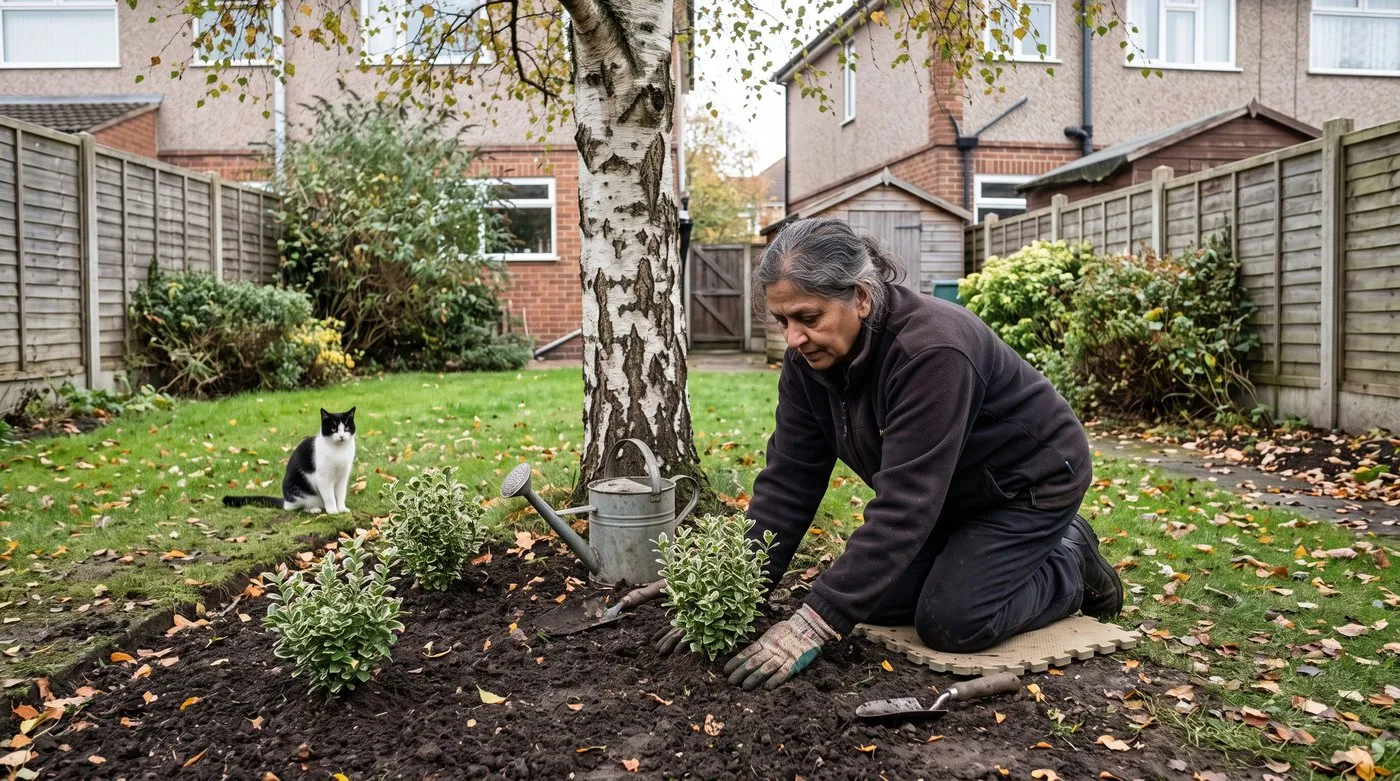
Autumn is a good time to plant. Space ground-cover types about 60cm apart and water them in well.
- Water the pot well an hour before planting.
- Dig a hole about twice the width of the root ball and the same depth.
- On heavy clay, mix some grit into the soil. On sandy soil, add compost.
- Plant at the same depth it sat in the pot, not deeper.
- Firm in, water well and mulch, keeping the mulch off the stems.
Spacing: about 60cm apart for ground cover. For a hedge of E. japonicus, plant about 45-60cm apart. Give spindles 1.5m or more to spread.
Water new plants in dry spells through their first growing season. After that, most need little help. If you are planting a full hedge, the hedge planting guide covers marking out and preparing the trench.
Growing euonymus up a wall
Evergreen E. fortunei will climb a wall or fence if planted at its base. It clings with small aerial roots, like ivy, but is much slower and easier to keep in check. It is a good choice for a shady north-facing wall where little else does well.
Plant about 30-45cm from the wall and lean the shoots towards it. Tie them to a cane for the first year or two until they grip. After that, trim it in spring to keep it neat.

Planted at the foot of a wall, evergreen euonymus slowly climbs and clothes it. It’s a gentler alternative to ivy.
How to prune euonymus
None of them is fussy, but timing differs by type.
- Evergreen E. fortunei: trim lightly in spring once hard frosts are over. Remove frost-damaged tips and wayward shoots. Tidy again in late summer if needed. Older ground-cover patches can be cut back harder in spring to refresh them.
- E. japonicus hedges: trim once or twice a year, in early summer and late summer. Shape the hedge slightly narrower at the top so light reaches the base.
- Spindles: prune in late winter while the branches are bare. Remove dead, crossing or weak stems and keep the natural shape. Avoid heavy cutting, which reduces berries.
Bird nests: check hedges and dense shrubs for nesting birds before trimming in spring and summer. It is an offence to damage or destroy an active nest. Save big cuts for autumn and winter.
Cutting out reverted shoots
Variegated euonymus sometimes throws up plain green shoots. These grow faster and can slowly take over. Cut them back to where coloured leaves start again, as soon as you see them. The guide to variegated plants turning green explains why it happens.
Euonymus problems and how to fix them
Euonymus scale
Euonymus scale is the pest to watch. Small white or brown scales cluster on stems and under leaves. Leaves get yellow spots and badly hit shoots die back. It is most common on E. japonicus.
Cut out and bin badly affected stems. On small plants, scrape off scales by hand. Encourage ladybirds and other predators by not spraying broad-spectrum insecticides. If you need more, use an approved product labelled for scale insects on ornamentals, following the label. Young scales are easiest to tackle in early summer. The guide to scale insects has pictures.
Powdery mildew
A white powdery coating can appear on E. japonicus, especially on hedges in sheltered, dry spots. Good airflow and watering at the roots in dry spells help. Trim out the worst-affected growth. The guide to powdery mildew has more on prevention.
Yellowing and dying back in wet soil
Yellow lower leaves and dark, rotting stem bases usually mean the roots are sitting wet. Move the plant to better-drained ground, or raise the bed.

Japanese spindle makes a bright, glossy hedge that shrugs off sea air. Trim it in summer to keep it dense.
Is euonymus poisonous to pets and children?
Yes. All parts of euonymus are poisonous if eaten, and the bright seed capsules of spindle are the most tempting. Eating them can cause sickness and an upset stomach. Avoid planting spindle where small children or pets play unsupervised. If a pet eats any, call your vet. The PDSA has advice on poisonous garden plants.
Taking cuttings
Euonymus roots easily from semi-ripe cuttings in late summer. Take 10-15cm shoots of this year’s growth, remove the lower leaves and push them into gritty compost. Cover with a clear bag and keep them out of direct sun. Roots usually form within a couple of months. The guide to semi-ripe cuttings walks through each step.
Spreading types like ‘Emerald Gaiety’ also root where stems touch the ground. Peg a low shoot into the soil, then cut it free once rooted.

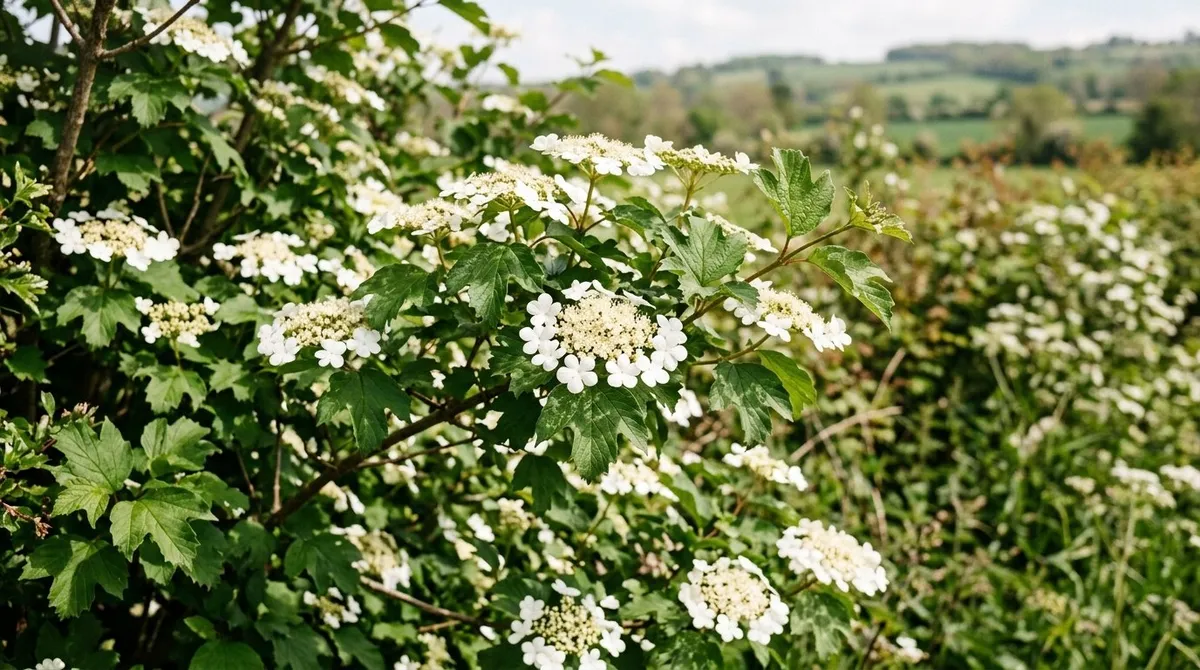
Spindle’s tiny green flowers are easy to miss in late spring. They turn into the bright pink capsules of autumn.
Euonymus care calendar
| Month | What to do |
|---|---|
| January | Enjoy winter colour. Check stems for scale |
| February | Prune deciduous spindles while bare |
| March | Plant new shrubs. Mulch |
| April | Light trim of evergreen types. Cut out reverted shoots |
| May | Water new plants in dry spells. Check for nesting birds |
| June | First hedge trim of E. japonicus. Check for young scale |
| July | Take semi-ripe cuttings |
| August | Second hedge trim if needed, once nesting has finished |
| September | Light tidy of evergreen types |
| October | Spindle autumn colour and seed capsules. Plant new shrubs |
| November | Finish planting |
| December | Enjoy evergreen colour. Little to do |
Common mistakes with euonymus
- Planting in waterlogged soil. The roots rot. Raise the bed or add grit on wet clay.
- Ignoring green shoots. Reverted growth takes over variegated plants. Cut it out early.
- Missing scale. Check stems and leaf undersides, especially on E. japonicus.
- Planting spindle where children play. The pretty seed capsules are poisonous.
- Pruning spindles hard. You lose the berries. Prune lightly in late winter.
Frequently asked questions
Where is the best place to plant euonymus?
Almost anywhere that doesn’t stay waterlogged in winter. Evergreen E. fortunei grows in sun or shade, as ground cover or on a wall. Deciduous spindles colour up best with a few hours of sun.
How fast does euonymus grow?
Most grow at a steady, moderate pace. Ground-cover types spread slowly and stay low. E. japonicus and spindles are quicker, so they make hedges and small trees in a few years.
Is euonymus poisonous to dogs?
Yes, euonymus is poisonous to dogs, cats and people if eaten. The bright seed capsules of spindle are the main worry. Contact your vet if your pet eats any.
How do I stop my variegated euonymus reverting to green?
Cut out plain green shoots as soon as you see them. Cut back to where the coloured leaves start again. Left alone, green shoots grow faster and take over.
Does euonymus make a good hedge?
Yes, Euonymus japonicus makes a good evergreen hedge. It has glossy leaves, clips well and copes with salty sea air. Trim it once or twice a year in summer.
When should I prune euonymus?
Trim evergreen types lightly in spring, and again in late summer if needed. Prune deciduous spindles in late winter while bare. Cut out reverted green shoots at any time.
Can euonymus grow in dry shade?
Yes, Euonymus fortunei copes with dry shade under trees once settled. Water it well through its first year. Variegated types may be a little less bright in deep shade.
For more shrubs that look good all year, read the guide to the best evergreen shrubs for UK gardens. There’s plenty more in the plants hub.
Our team produces practical UK gardening guidance from source research, contributor records and established horticultural practice. Editorial standards are overseen by Matt W.