Key takeaways
- Guelder rose is Viburnum opulus, a native shrub, not a rose
- White lacecap flowers in May and June are followed by red berries and red autumn leaves
- It's one of the best native shrubs for damp, heavy clay, in sun or part shade
- Plant cheap bare-root whips from November to March
- Trim in late winter, before birds start nesting and after the berries are eaten
- Choose the wild species or Compactum for berries; the snowball form Roseum has none
Guelder rose is a native shrub that earns its place three times a year. You get white lacecap flowers in late spring, shiny red berries in autumn and leaves that turn deep red before they fall. Despite the name, it isn’t a rose at all.
It’s also one of the best shrubs for damp, heavy clay, where plenty of others struggle. Here’s how to choose, plant and look after guelder rose, whether as a single shrub or in a wildlife hedge.
Is a guelder rose actually a rose?
No. Guelder rose is Viburnum opulus, a native viburnum found in hedgerows, damp woods and ditch sides across Britain. The flat white flower heads look a bit like wild roses, which is where the name comes from. “Guelder” refers to Gelderland in the Netherlands, home of the old snowball form.
The leaves give it away. They have three lobes and look like small maple leaves, nothing like a rose. There are no thorns either. The Woodland Trust’s guelder rose page has good pictures for identification.
It’s a close cousin of the garden viburnums in our guide to growing viburnum, but it’s the native one and the best of the family for wildlife.
What does guelder rose look like through the year?
Guelder rose puts on three different shows, which is rare for one native shrub.
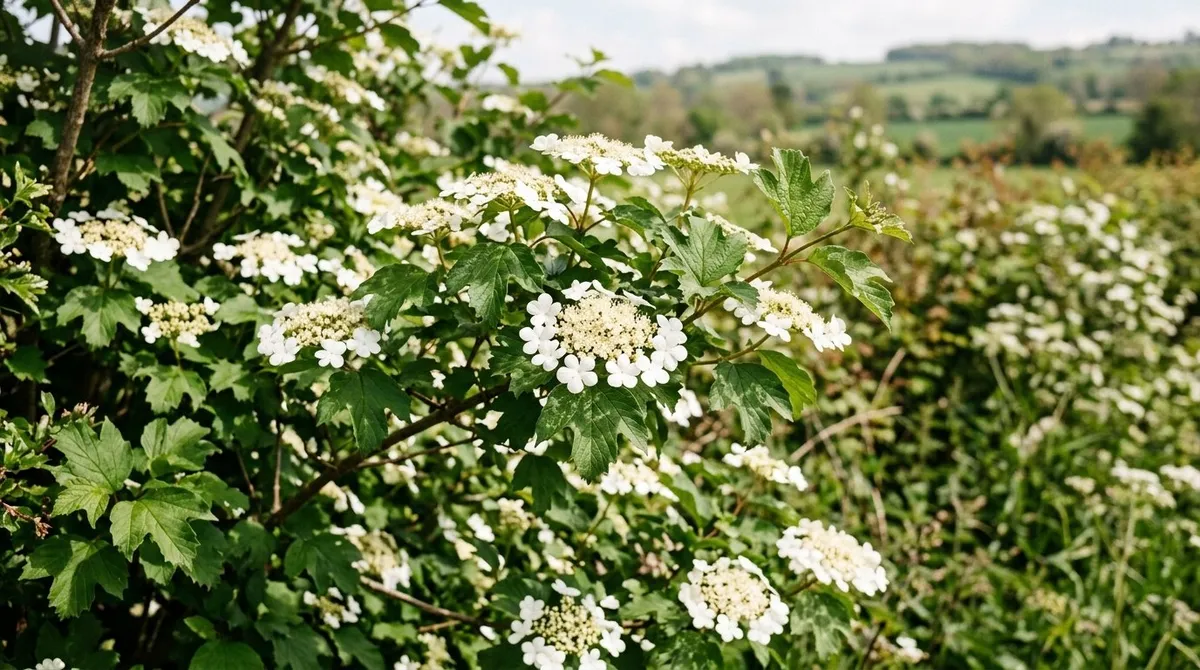
Flowers, May to June. Each flower head is a flat white lacecap. A ring of big showy flowers surrounds a centre of tiny fertile ones. The outer ring is just for show. Bees and hoverflies feed on the small flowers in the middle.
Berries, late summer to winter. The fertile flowers turn into drooping bunches of round, glossy red berries. They glow when the low autumn sun shines through them.
Autumn leaves, October. The leaves turn shades of red and burgundy, often while the berries are at their brightest. Once the leaves drop, the berries hang on the bare branches for birds.
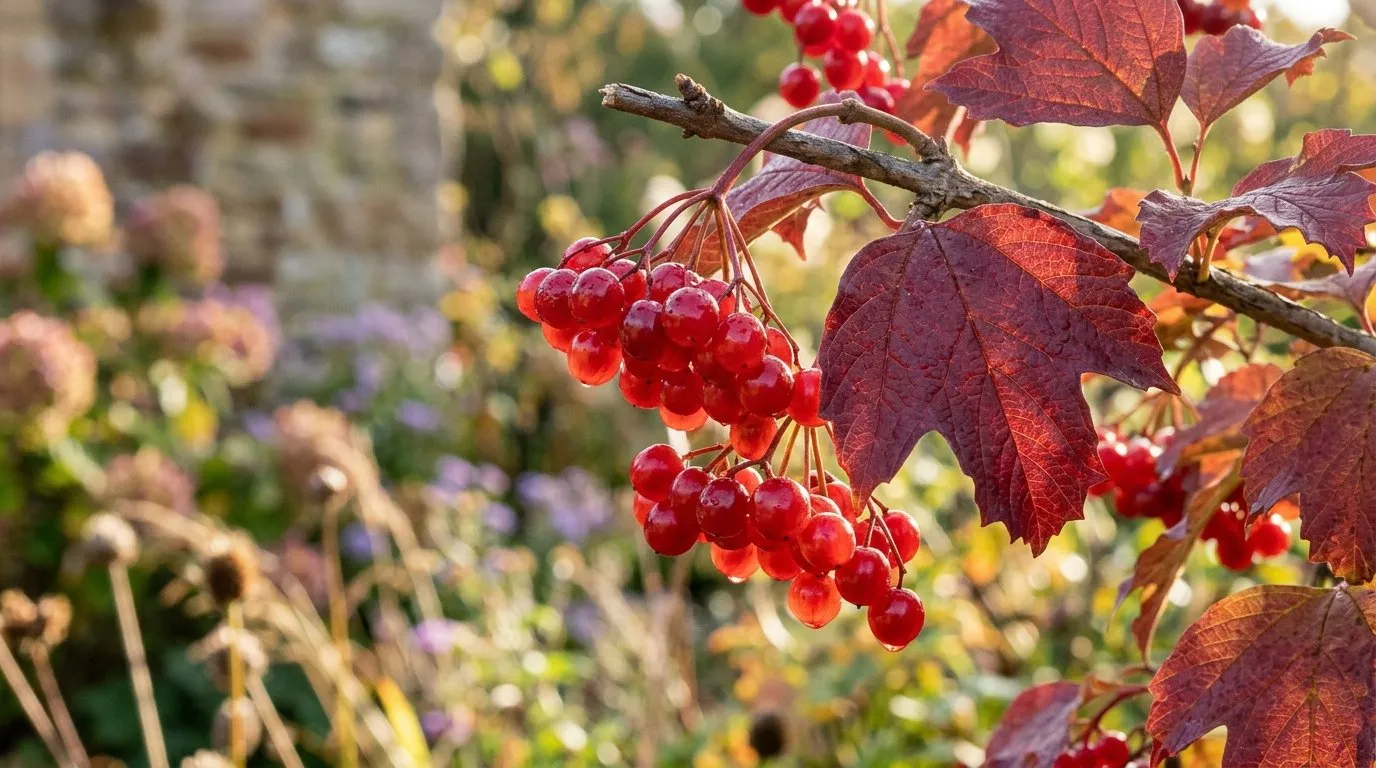
Berries and red leaves at the same time is guelder rose at its best. The berries often stay on after the leaves fall.
Where does guelder rose grow best?
Plant it in moist soil, in sun or part shade. It’s one of the best native shrubs for heavy, wet clay, and it copes with chalk and loam too. Just avoid ground that bakes dry in summer.
In the wild it grows on ditch banks and by ponds and streams. A damp corner, the edge of a pond or a boggy boundary suits it perfectly. On clay, you don’t need to improve the soil first. For other plants that like the same conditions, see our list of the best plants for clay soil.
Sun gives the most flowers, berries and the brightest autumn colour. Part shade at a woodland edge is fine. In deep shade it flowers less and the leaves turn a duller colour.
When and how to plant guelder rose
Plant bare-root plants from November to March, while they’re dormant. Pot-grown plants can go in at any time if you keep them watered. Bare-root whips (young single stems) are the cheap way to plant a hedge, and they settle in just as well.
- Soak bare roots in a bucket of water for an hour or so.
- Dig a hole as deep as the roots and wider than them.
- Set the plant at the same depth it grew before. Look for the soil mark on the stem.
- Spread the roots, backfill with the soil you dug out and firm with your heel.
- Water well, even in winter.
There’s no need to add compost to the hole, and bushy plants don’t need a stake. For a hedge, plant 45-60cm apart. A single shrub needs room to spread up to 4m, unless you plan to prune it. Water in dry spells through the first summer. After that it looks after itself. Our hedge planting guide covers the method step by step.
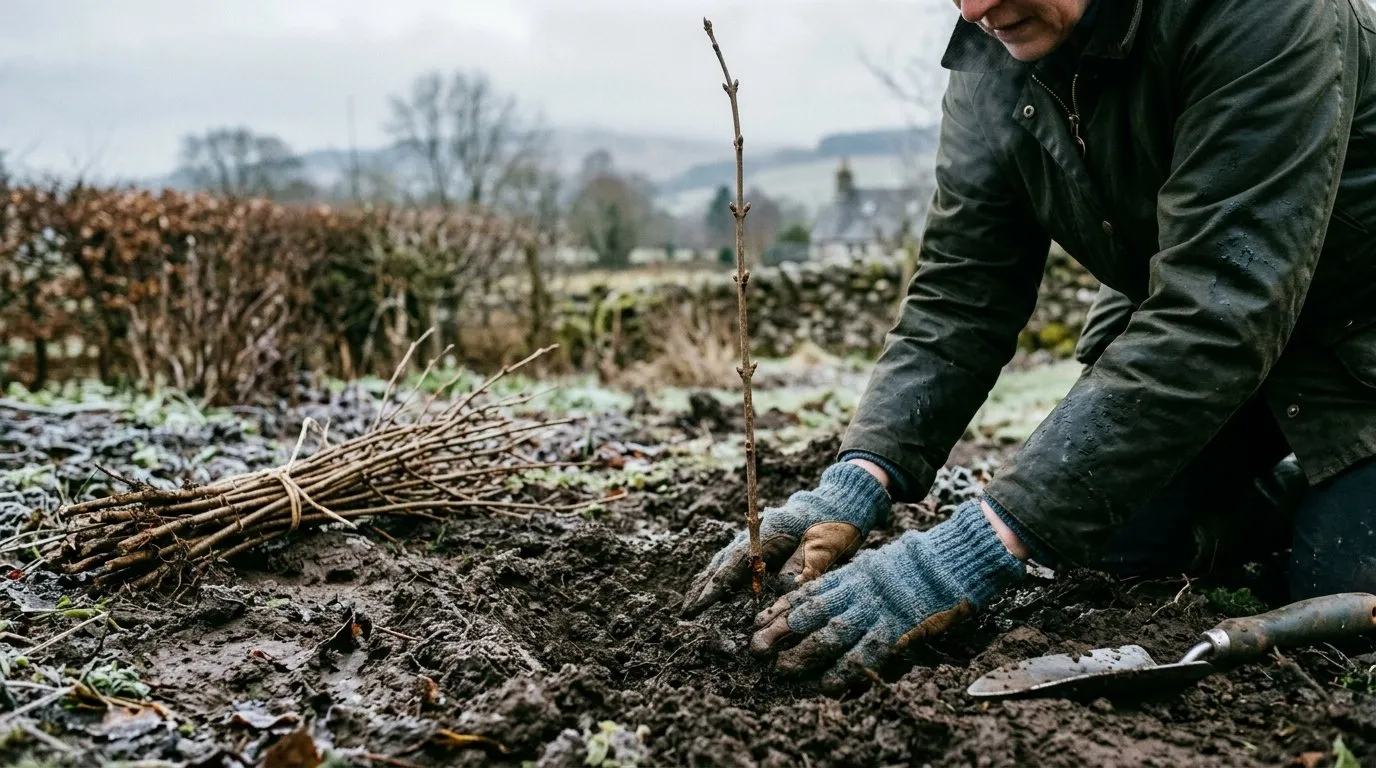
Bare-root whips look like twigs in winter, but they root quickly. Firm them in well with your hands or heel and water them in.
Guelder rose in a native hedge
Guelder rose is a classic part of a mixed native hedge, adding flowers, berries and autumn colour. It’s looser and less dense than hawthorn or blackthorn, so it works best as a partner rather than a hedge on its own. Try about one plant in ten, mixed with hawthorn, blackthorn and hazel.
Trim it in late winter, ideally February. Guelder rose flowers on the previous year’s stems, so a summer cut removes next year’s flowers and berries. February also comes after the birds have eaten the berries and before they start nesting. Damaging or disturbing an active nest is an offence, so leave hedges alone from March to August. Our guide to when to cut hedges explains the rules.
For other good hedge partners, see our native hedgerow species guide.
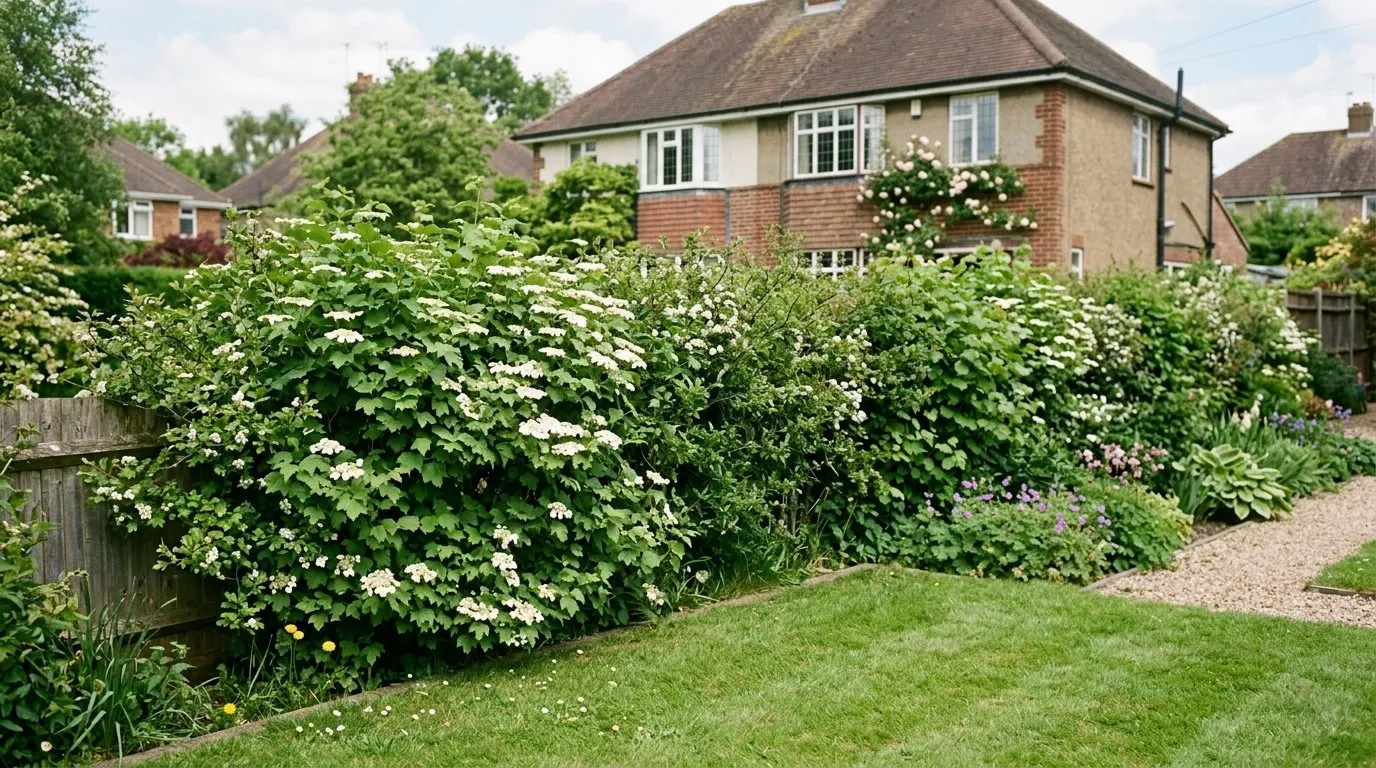
Mixed into a boundary hedge, guelder rose adds a froth of white in late spring. Later the same stems carry the red berries.
Which guelder rose should you plant?
For wildlife, plant the wild species. It gives the most flowers, berries and food for insects and birds. Choose a named variety only if you need something smaller or different.
| Type | Flowers | Berries | Best for |
|---|---|---|---|
| Wild species (V. opulus) | White lacecaps | Red, plentiful | Wildlife, hedges, damp ground |
| Compactum | White lacecaps | Red | Small gardens, about 1.5m tall |
| Xanthocarpum | White lacecaps | Golden yellow | A change from red berries |
| Roseum (snowball tree) | Round white pompoms | None | Looks only, little use to wildlife |
Roseum, often sold as the snowball tree, has round balls of sterile flowers. They look lovely but make no nectar for insects and no berries for birds. Compactum keeps the flowers, berries and autumn colour in a much smaller plant, so it suits a small or city garden.
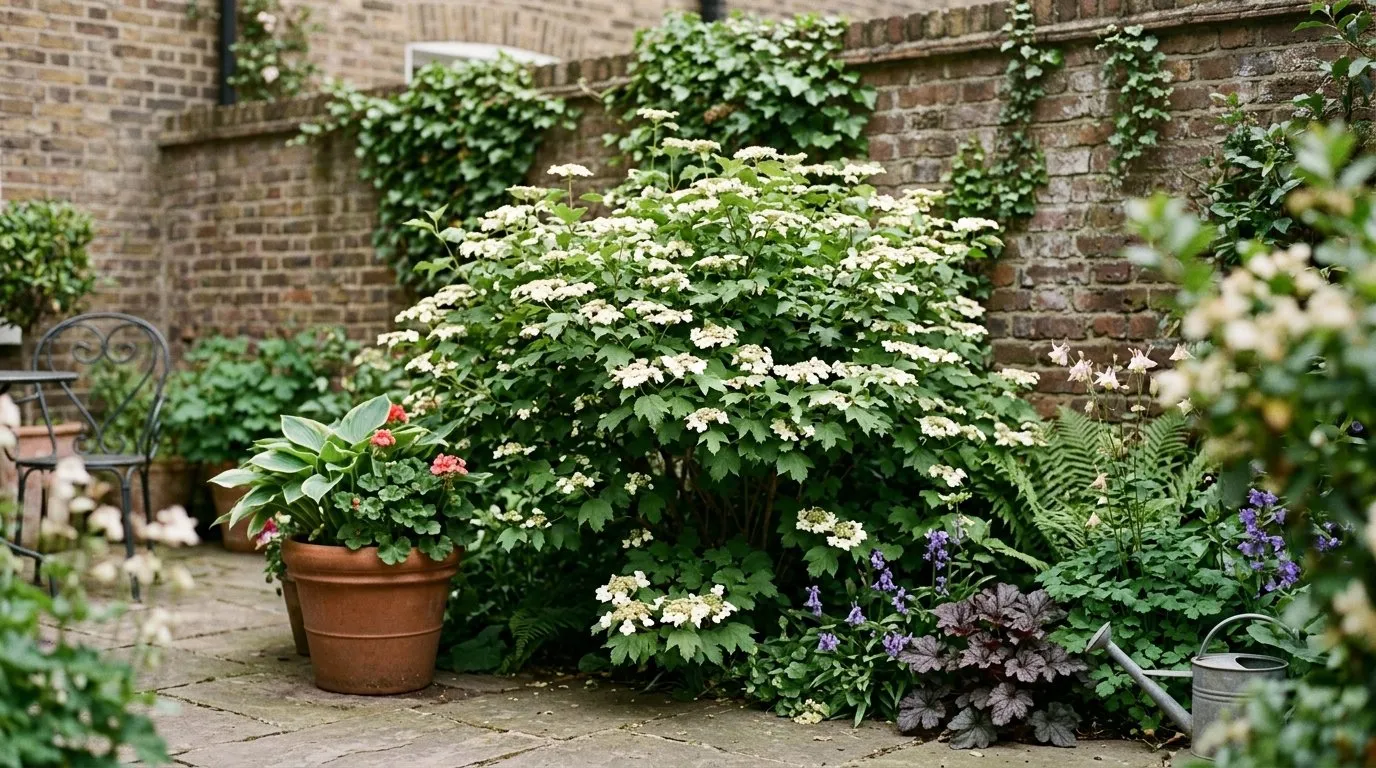
Compactum gives you the full guelder rose show in a small space. It fits happily in a courtyard or narrow border.
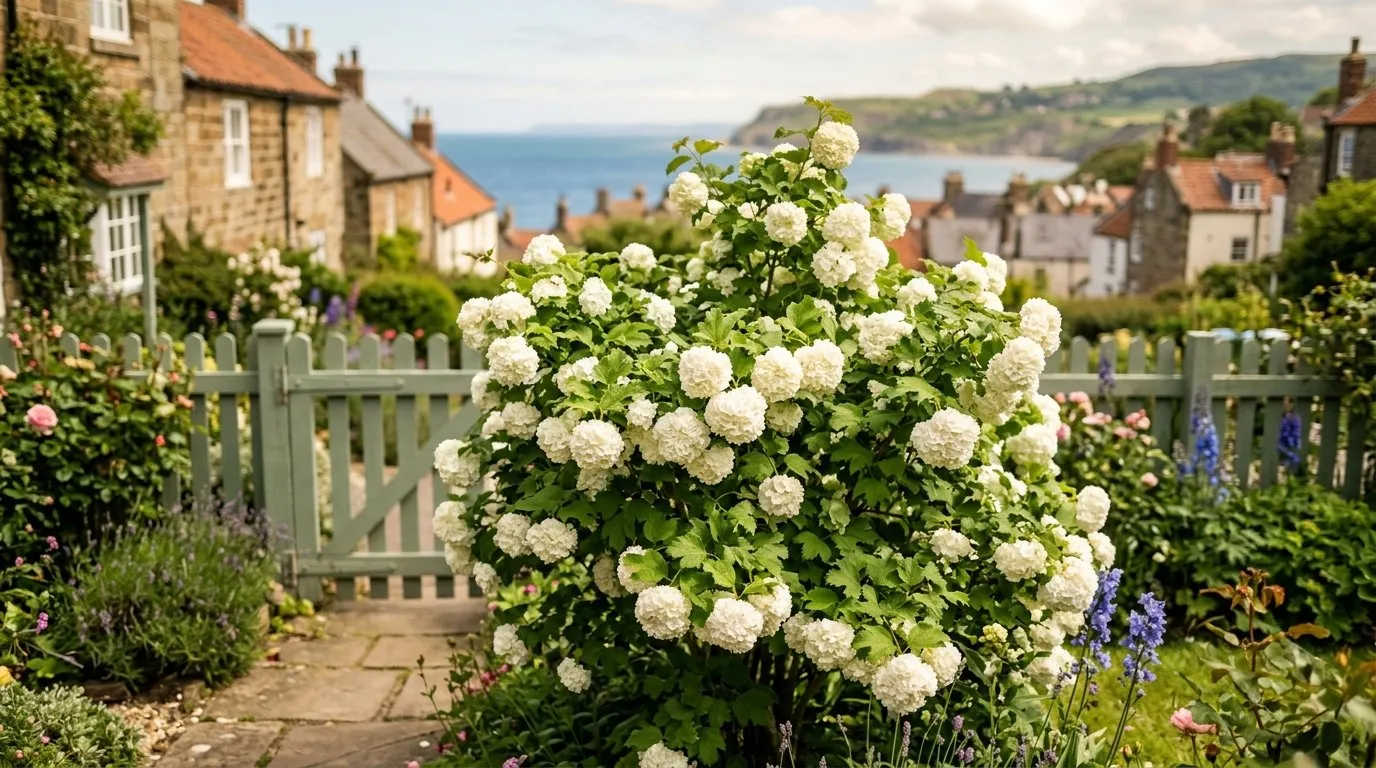
Roseum’s snowballs are showy, but there’s no nectar and no berries. Pick the wild species if wildlife matters to you.
What wildlife does guelder rose support?
Guelder rose feeds and shelters wildlife for much of the year. In May and June, hoverflies and bees visit the small fertile flowers in the middle of each lacecap.
From autumn into winter, birds such as mistle thrushes and bullfinches pick at the berries, and waxwings sometimes visit in winters when they arrive in numbers. The berries often hang on for a while, so they can be useful food later in the season. The dense, twiggy branches also give birds cover and nesting spots in spring.
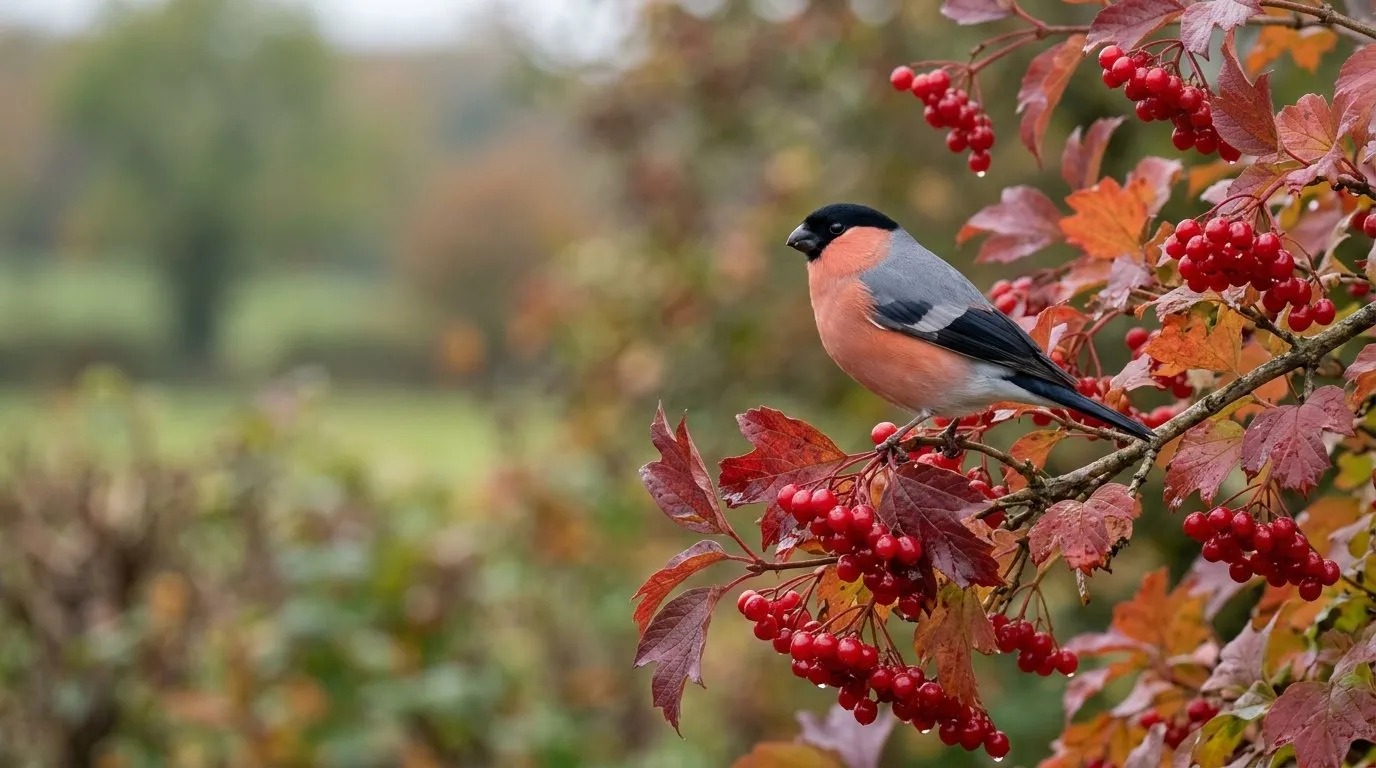
A bullfinch among the berries. Guelder rose keeps feeding birds into winter, long after summer flowers have gone.
What problems affect guelder rose?
Guelder rose is tough and usually trouble-free. The main pest is viburnum beetle.
The greyish-yellow larvae hatch in spring and eat the leaves, leaving them full of holes by early summer. Adult beetles chew more holes later in summer. A bad attack looks alarming, but established shrubs usually recover and leaf up again. Check the undersides of leaves in April and squash young larvae by hand. In winter, look for and prune out twig tips with rows of egg sites. Avoid spraying, which also kills the insects the flowers feed. The RHS viburnum beetle page has pictures of each stage.
Blackfly sometimes cluster on soft shoot tips in spring and curl the leaves. Ladybirds, hoverfly larvae and blue tits usually clear them up.
Are guelder rose berries poisonous?
Raw guelder rose berries are mildly toxic to people and can cause sickness or an upset stomach. They taste bitter, so it’s rare for anyone to eat many. It’s no reason to avoid the plant in a family garden. Just teach children not to eat berries they find, and leave these ones for the birds.
How to propagate guelder rose from cuttings
Guelder rose roots well from hardwood cuttings, so you can grow a hedge’s worth from one shrub. Take them in late autumn or early winter, after the leaves drop.
Cut pencil-thick stems from this year’s growth into 20-25cm lengths. Make a flat cut below a bud at the bottom and a sloping cut above a bud at the top. Push them two-thirds deep into a slit trench in the ground and firm them in. Most will root by the next autumn, ready to plant out. See our step-by-step guide to hardwood cuttings.
Month-by-month guelder rose calendar
| Month | What to do |
|---|---|
| January | Plant bare-root whips when the ground isn’t frozen |
| February | Trim hedges and shape shrubs before nesting starts |
| March | Last month for bare-root planting. Mulch new plants |
| April | Check leaf undersides for viburnum beetle larvae |
| May | Flowers open. Watch the hoverflies and bees |
| June | Flowering ends. Water new plants in dry spells |
| July | Berries start forming. Leave hedges uncut for nesting birds |
| August | Berries begin to colour |
| September | Berries ripen. Pot-grown plants can go in now |
| October | Autumn colour peaks. Birds start on the berries |
| November | Take hardwood cuttings. Start bare-root planting |
| December | Plant bare-root whips. Leave remaining berries for birds |
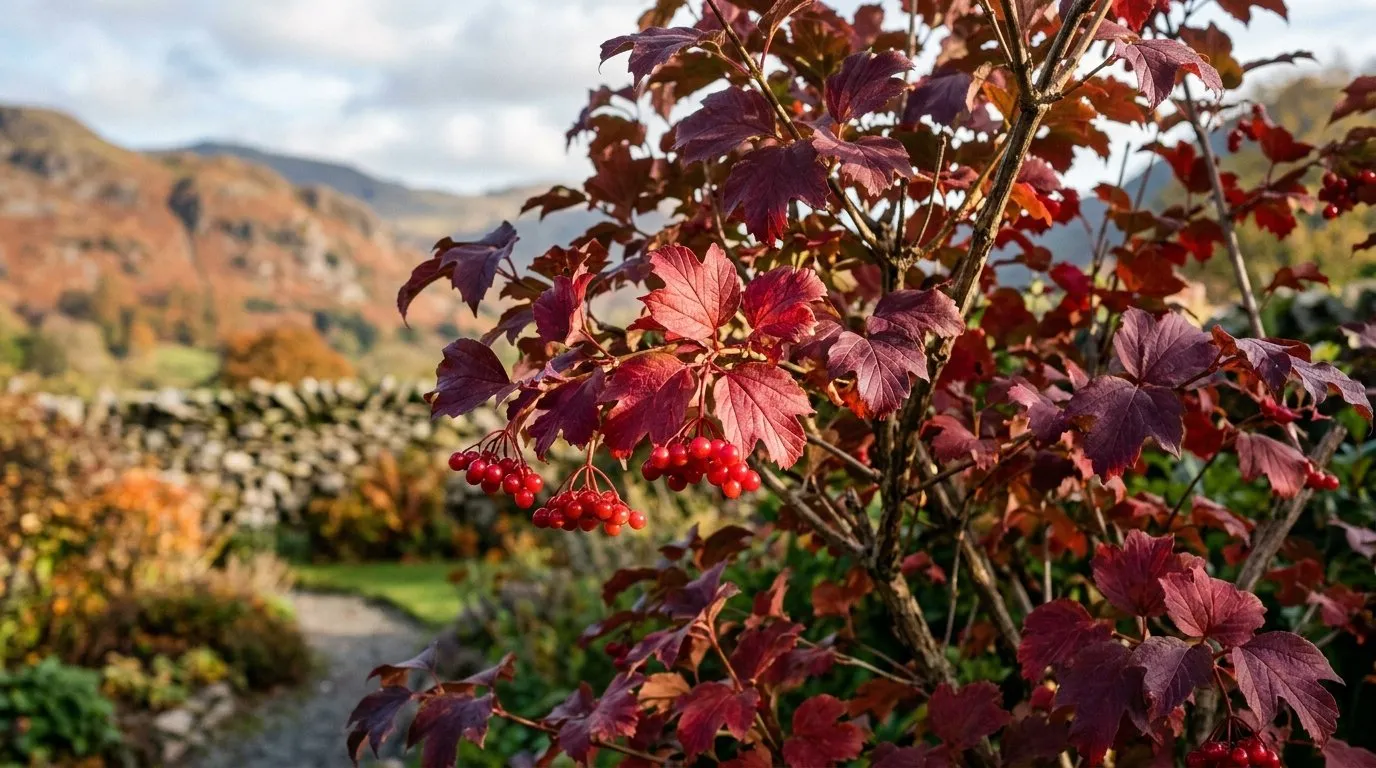
October is the showiest month, with red leaves and berries together. Even cold northern gardens get the full display.
Common guelder rose mistakes
Trimming in summer. This cuts off the stems that would flower and berry next year, and risks disturbing nesting birds. Trim in late winter instead.
Planting Roseum for wildlife. The snowball form is sterile, with no nectar or berries. Plant the wild species or Compactum.
Planting in dry soil. Guelder rose struggles in ground that dries out in summer. Choose a damp spot, or mulch and water well while it settles.
Panicking about viburnum beetle. The holey leaves look bad, but healthy shrubs bounce back. Pick off larvae in spring and skip the sprays.
Looking for more natives to plant alongside it? Read our guide to UK native plants for gardens, or browse more shrubs in the plants section.
Frequently asked questions
Is a guelder rose actually a rose?
No, guelder rose is a native viburnum, not a rose. Its proper name is Viburnum opulus. The “rose” comes from its flat, rose-like flower heads, and “guelder” from Gelderland in the Netherlands.
Where does guelder rose grow best?
It grows best in moist soil, in sun or part shade. It’s very happy on heavy, damp clay and also copes with chalk. In the wild you’ll find it by ditches, streams and damp woodland edges.
Are guelder rose berries poisonous?
Raw berries are mildly toxic and can cause an upset stomach. They taste bitter, so most people spit them out. Teach children not to eat them, and treat the berries as food for birds.
When should I cut a guelder rose hedge?
Trim it in late winter, ideally February. By then birds have eaten most berries and haven’t started nesting. Avoid summer trims, which remove next year’s flowers and berries.
Does guelder rose have berries every year?
The wild species usually berries well every year once settled. The snowball form Roseum never berries, because its pompom flowers are sterile. For berries, plant the wild species or a berrying variety such as Compactum.
How big does a guelder rose get?
Left alone it reaches about 4m tall and wide. It takes pruning well, so you can keep it much smaller. Compactum naturally stays around 1.5m, which suits small gardens.
Is guelder rose good for wildlife?
Yes, it’s one of the best native shrubs for wildlife. Hoverflies and bees visit the flowers, birds take the berries in autumn and winter, and the dense branches give cover for nesting.
Our team produces practical UK gardening guidance from source research, contributor records and established horticultural practice. Editorial standards are overseen by Matt W.


