Key takeaways
- Take cuttings between leaf fall in late October and bud burst in spring, avoiding frosty days
- Use pencil-thick wood from this year's growth, cut into 20-25cm lengths
- Sloping cut at the top, straight cut at the base, so you never plant one upside down
- Rub off the lower buds on gooseberries and redcurrants; leave all the buds on blackcurrants
- Firm them in well and re-firm after frosts, as loose cuttings dry out and fail
- Leave them in the ground for a year and lift them the following autumn
Hardwood cuttings are the easiest way to get free shrubs and fruit bushes. In late autumn or winter you push lengths of bare stem into the ground, leave them alone for a year, and dig up rooted plants the following autumn. No pots, no greenhouse and hardly any watering.
This guide covers when to take them, how to prepare them, the simple slit trench method and the bud trick that matters for currants and gooseberries. For the summer version of the job, see our guide to semi-ripe cuttings.
What is a hardwood cutting?
A hardwood cutting is a length of this year’s stem, taken after the plant has dropped its leaves and gone dormant. By then the wood is fully ripe and firm all the way along.
Find this year’s growth by running your fingers down a stem from the tip. Where the bark changes, often smoother or a different colour, sometimes with a ring of old bud scars, is where last year’s wood starts. Everything above that point is your cutting material.
Which plants grow from hardwood cuttings?
Lots of deciduous shrubs, fruit bushes and climbers root this way. Some are almost foolproof, others take a little more patience.
| How easy | Plants |
|---|---|
| Very easy | Willow, dogwood (Cornus), blackcurrant, forsythia, flowering currant, elder |
| Easy | Gooseberry, redcurrant, whitecurrant, buddleja, philadelphus, weigela, honeysuckle |
| Worth a try | Roses (especially rugosa and rambler types), grape vines, fig |
Willow is famously easy: push a stick into damp ground and it often roots. Our guides to pussy willow and forsythia cover growing them on.
When to take hardwood cuttings
Take them between leaf fall, usually late October, and bud burst in late winter or early spring.
Many gardeners like November, soon after the leaves drop. The cuttings settle in before winter and are ready to root as the soil warms up in spring. Late winter works too, as long as you get them in before the buds start to open.
Don’t take cuttings when the wood or ground is frozen. If you’ve pruned on a cold day, bundle the stems and stand them in a bucket of damp sand in a shed until the weather turns.
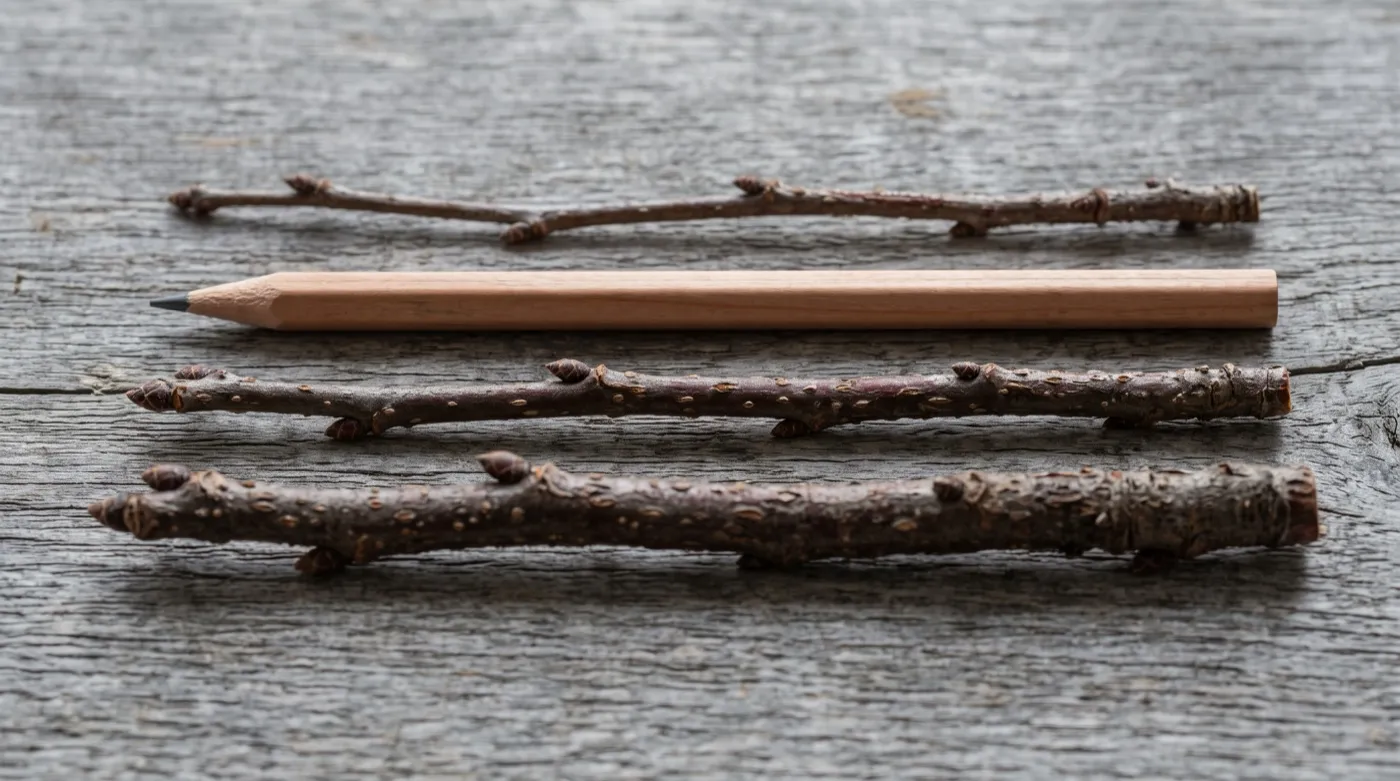
Pencil-thick, straight, this year’s stems make the best cuttings.
How to prepare hardwood cuttings
- Cut whole shoots. Choose strong, straight stems from this year’s growth. A long shoot often makes several cuttings.
- Remove the soft tip. If the top few centimetres bend rather than snap, cut them off.
- Cut into 20-25cm lengths. About the length of a pencil, or a bit longer.
- Sloping cut at the top, just above a bud and sloping away from it. This marks the top and lets rain run off.
- Straight cut at the base, just below a bud. Roots form most readily near a bud.
- Sort out the buds for currants and gooseberries (see below).
- Dip the base in rooting hormone if you like, for slower plants such as roses.
Gardener’s tip: Keep every stem the right way up from the moment you cut it. Stand bundles tips up in a bucket and never lay them flat on the bench. It’s the easiest way to avoid planting one upside down.
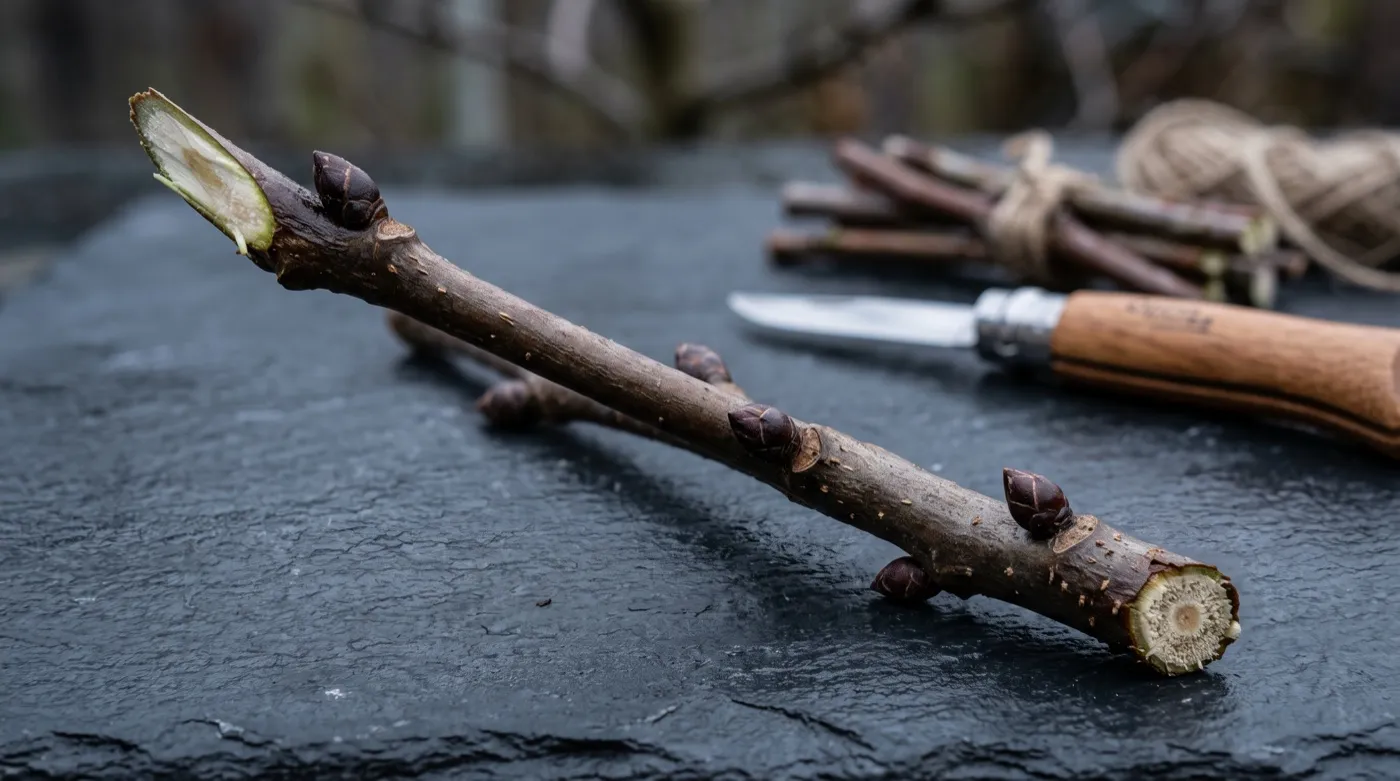
Sloping cut at the top, straight cut at the bottom. Even with gloves on, you can feel which end is which.
The bud trick for currants and gooseberries
Blackcurrants and gooseberries are both easy from hardwood cuttings, but they need their buds treated differently.
Blackcurrants are grown as a stool: lots of stems coming up from below ground. So leave every bud on the cutting. The buried buds grow into new stems and you get a bushy plant from the start.
Gooseberries, redcurrants and whitecurrants are grown on a leg: a short, clear stem with the branches above it. This keeps the fruit off the ground and makes picking easier. So rub off all but the top three or four buds with your thumb before planting. Leave the low buds on and you’ll get suckers coming up from below, and a tangled, prickly bush.
It takes seconds and is hard to put right later. Our guide to flowering currants covers their ornamental cousin, which roots just as easily.
How to plant cuttings in a slit trench
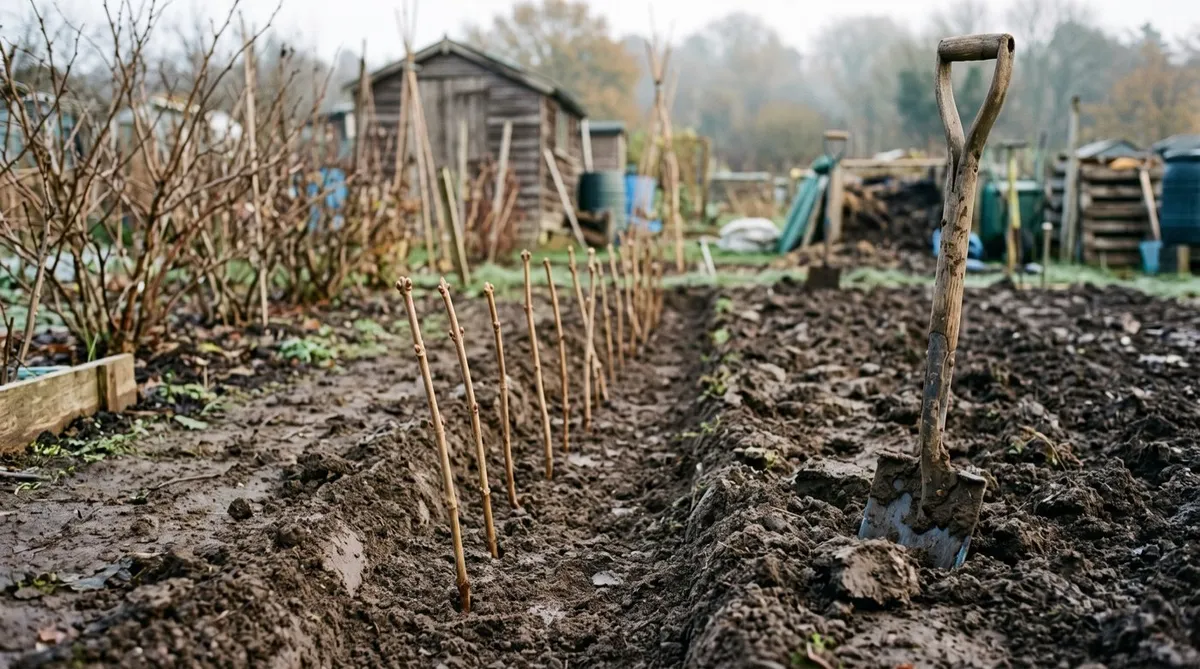
A slit trench is just a narrow slot in the ground. It’s the simplest way to root lots of cuttings at once.
- Pick a spot. Somewhere sheltered that doesn’t get waterlogged, where the cuttings can stay for a year undisturbed.
- Make the slit. Push a spade straight down, about 15cm deep, and rock it back and forth to open a narrow V.
- Add sand on heavy soil. On clay, trickle a few centimetres of sharp sand into the bottom. It helps drainage where the cutting base sits.
- Insert the cuttings. Push them in, straight end down, so about two-thirds is below ground. Space them 10-15cm apart.
- Firm them in well. Press the soil back with your boot along both sides of the slit. Loose cuttings dry out and fail.
- Label the row with the plant and the date. A year is a long time to remember.
Leave about 30-40cm between rows so you can weed without treading on them. On light, sandy soil you can skip the sand, but water in dry spells next summer.
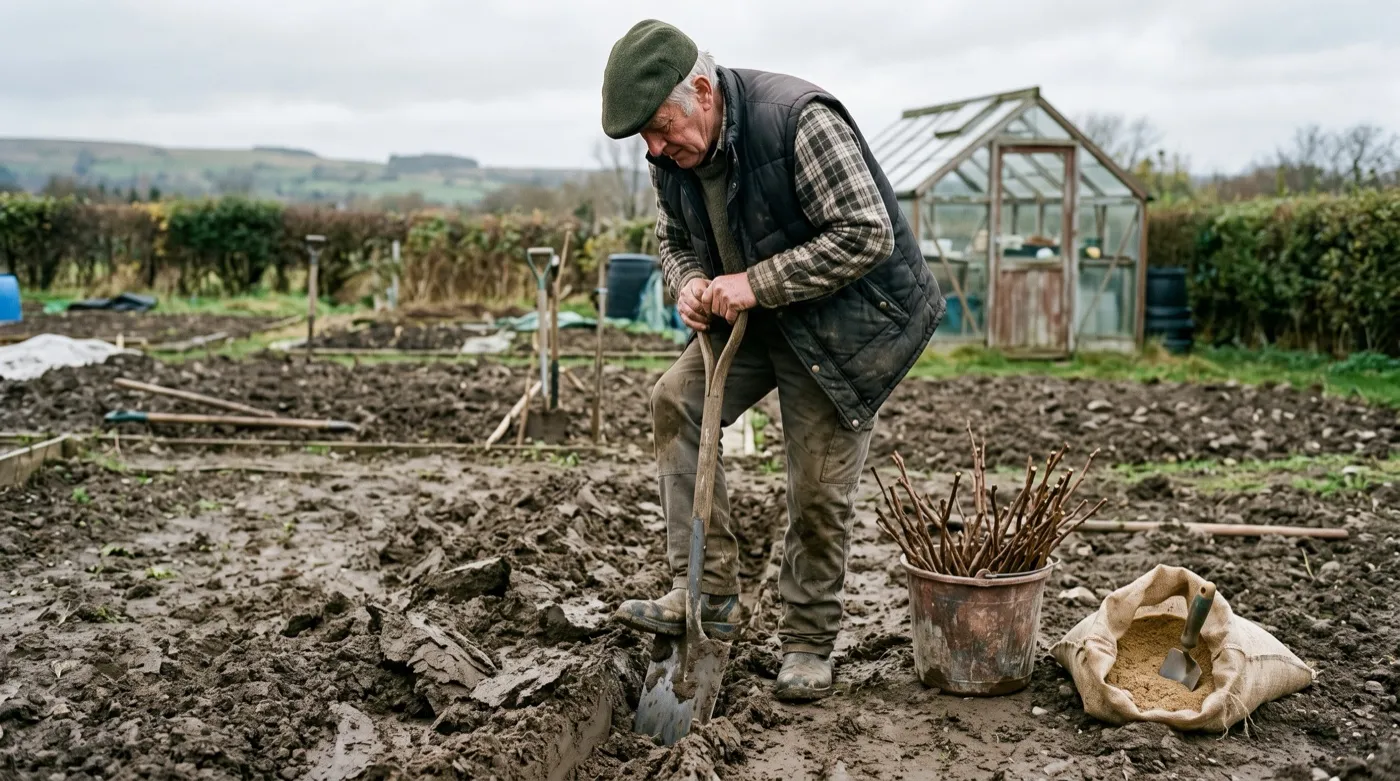
Push the spade in and rock it back and forth. You’re opening a slot, not digging a trench.
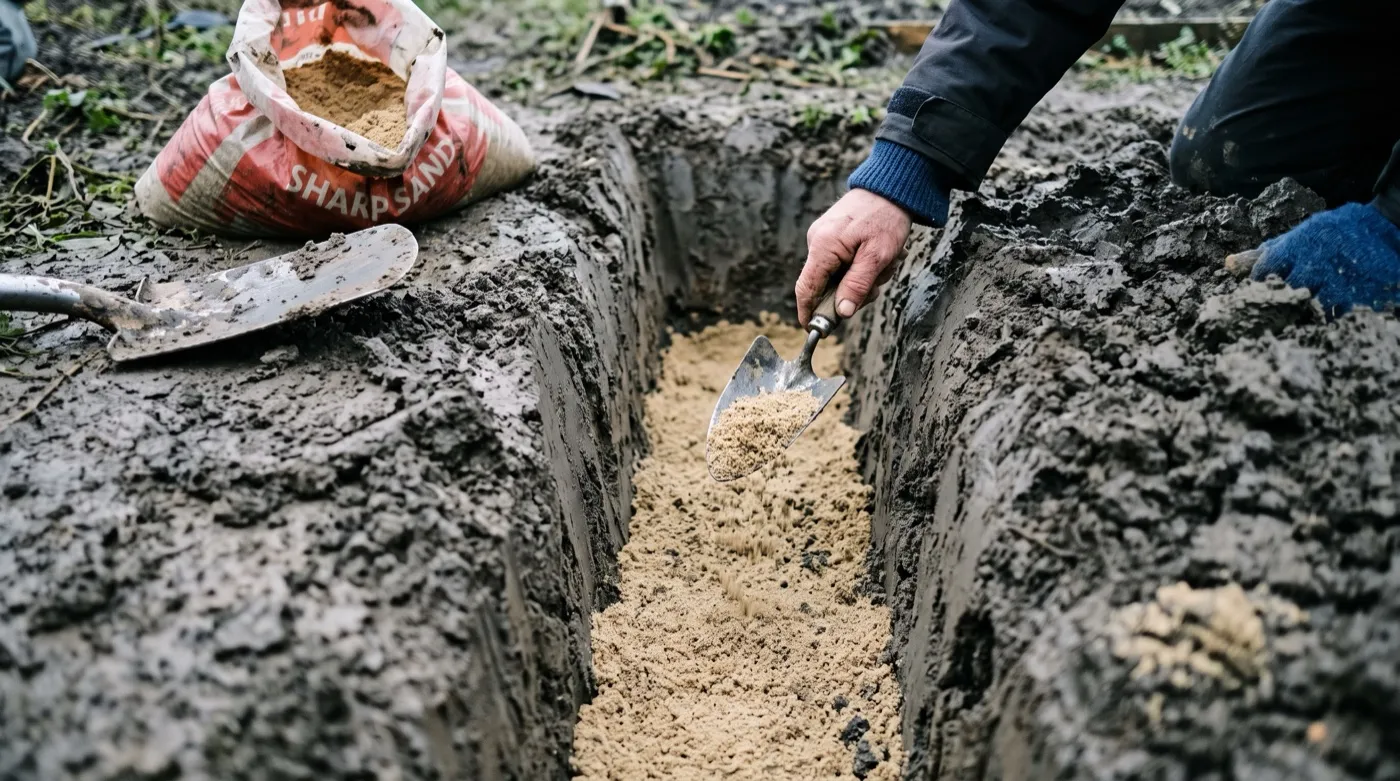
On clay, a layer of sharp sand in the bottom keeps the base of each cutting from sitting in winter wet.
Other ways to root hardwood cuttings
The slit trench is best for easy plants and gardens with a bit of spare ground. There are two other good options.
Deep pots in a cold frame. No spare ground? Put several cuttings around the edge of a deep pot of gritty compost. Keep it in a cold frame or sheltered spot and don’t let it dry out.
Bundles in sand. For slower plants such as roses, tie prepared cuttings in a bundle and bury it in a box of damp sand in a cool, frost-free shed. The bases form a callus, a pale healing layer, over winter. Plant them out in early spring.
Hardwood cuttings don’t root in a jar of water. Our guide to rooting cuttings in water explains which soft, leafy cuttings do.
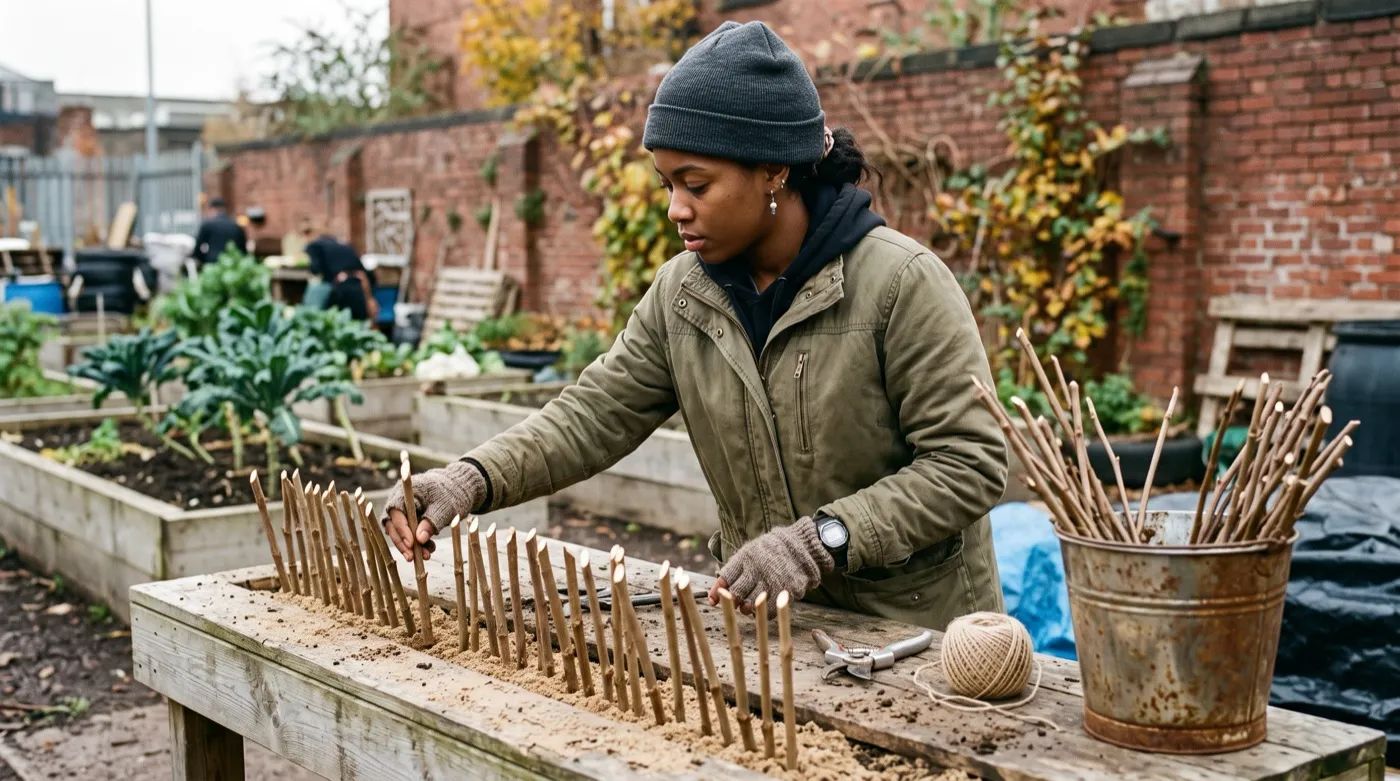
No spare ground? A deep box or pot of gritty compost and sand works well in a sheltered corner.
Why do hardwood cuttings fail?
Most failures come from air around the base. A cutting needs firm contact with moist soil to root.
- Frost heave. Frost can lift cuttings out of the ground, especially on clay. Walk the row after frosty spells and firm them back in with your boot.
- Loose planting. If they weren’t firmed well at the start, the base sits in an air pocket and dries out.
- Wind rock. An exposed row rocks back and forth all winter. Choose a sheltered spot.
Don’t be fooled by spring leaves. Cuttings can leaf out on stored energy alone, then wilt and die in early summer if they haven’t rooted. Ones still growing strongly in late summer have rooted.
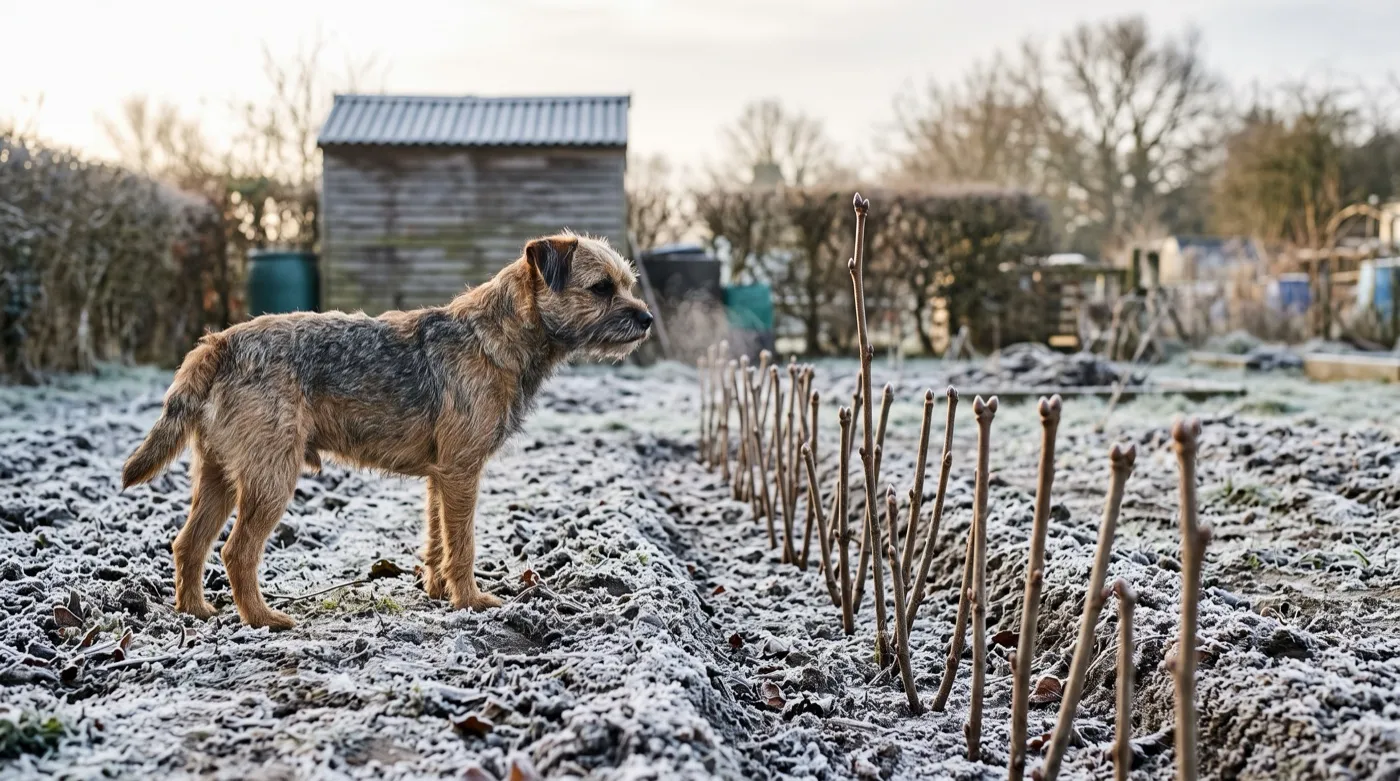
After a frost, walk the row and firm back any cuttings that have lifted.
Hardwood cuttings through the year
| Month | What to do |
|---|---|
| October | Watch for leaf fall. Choose and prepare the spot |
| November | Main month for taking and planting cuttings |
| December to February | Firm back any cuttings lifted by frost. Late cuttings can go in on mild days |
| Late winter | Last chance to take cuttings before the buds open |
| April to May | Buds break. Weed by hand and don’t dig or tug the cuttings |
| June to August | Water in dry spells. Failures brown off and can be pulled out |
| September | Prepare where the young plants will go |
| October to November | Lift, plant out or pot up. Take next year’s cuttings from your prunings |
Lifting and planting out rooted cuttings
A year after planting, in October or November, lift the cuttings. Push a fork in a little way from the row and lever gently. Don’t pull on the stem.
Plant the well-rooted ones straight into their new homes. Pot up smaller ones and grow them on for another year. Any that come up without roots can go on the compost heap.
To get a bushier shrub, cut back dogwoods and similar shrubs after planting so they send up more stems. Don’t cut gooseberries and redcurrants back to the ground: you’ve just spent a year building that clear stem.
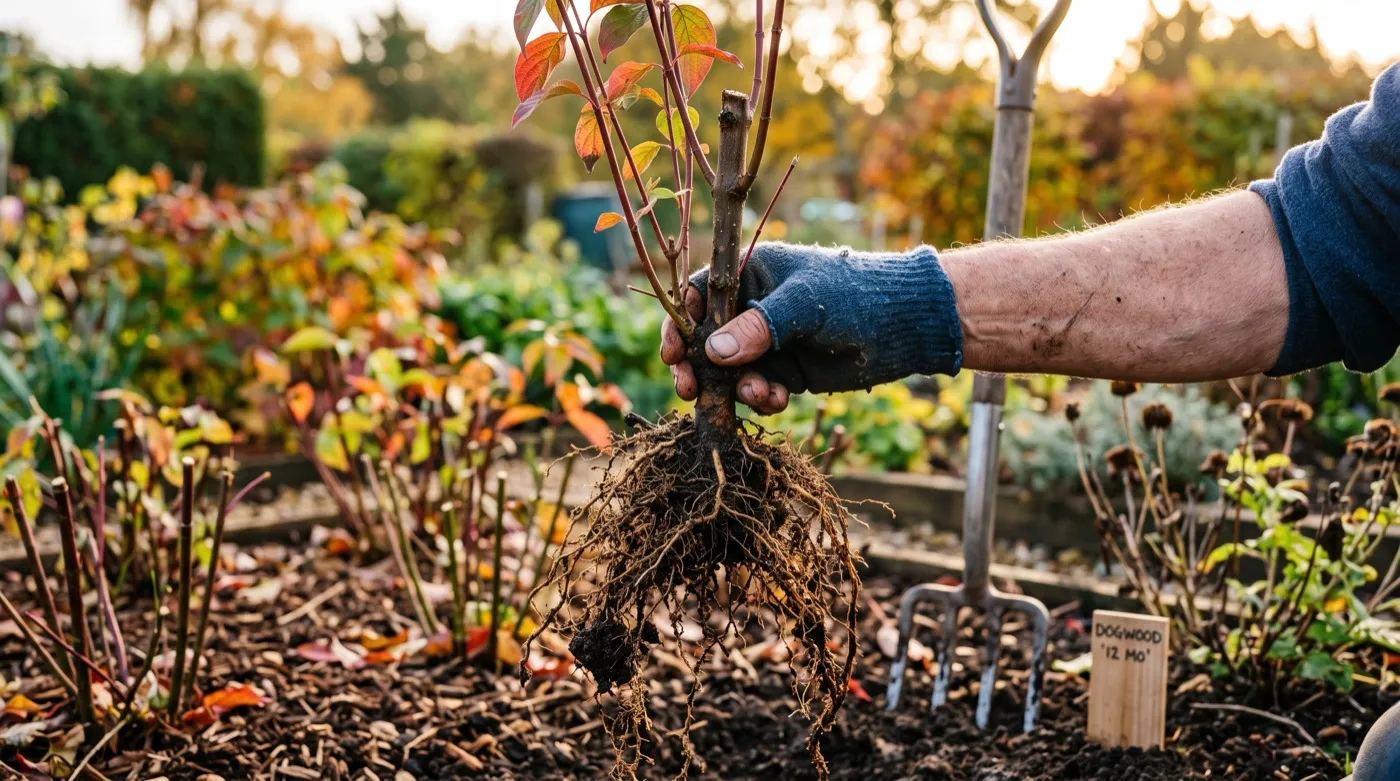
A year on, a rooted dogwood cutting is ready for its new spot.
Common mistakes with hardwood cuttings
- Planting them upside down. They won’t root. Sloping cut at the top, straight cut at the bottom.
- Leaving low buds on gooseberries. You’ll get suckers and a prickly thicket. Rub them off.
- Skipping the sand on clay. The base sits wet all winter and rots.
- Digging them up to check. You’ll damage new roots. Leave them alone until autumn.
- Trusting spring leaves. Leaves don’t mean roots. Judge them in late summer.
- Using old wood. Older, thicker stems root less readily. Use this year’s growth.
Frequently asked questions
When should I take hardwood cuttings in the UK?
From leaf fall in late October until just before the buds open in spring. Many gardeners take them in November, soon after the leaves drop. Avoid days when the ground or wood is frozen.
How thick should a hardwood cutting be?
About as thick as a pencil, from this year’s growth. Thin, twiggy shoots tend to dry out. Thick, older wood roots less readily. This year’s growth is usually smoother and often a different colour from the older wood below.
Which way up does a hardwood cutting go?
Sloping cut at the top, straight cut at the base. Push the straight end into the soil. The shape tells you which end is which, so you don’t plant any upside down, which stops them rooting.
Do hardwood cuttings need rooting hormone?
Most don’t. Willow, dogwood, currants and forsythia usually root well without it. Dipping the base in hormone rooting powder or gel can help slower plants such as roses.
How long do hardwood cuttings take to root?
They root through spring and summer, but leave them a full year. Fast plants like willow and dogwood root first. Lift them the following autumn, once they have a good root system.
Can I take hardwood cuttings of blackcurrants and gooseberries?
Yes, they’re among the easiest fruit to grow this way. Leave all the buds on blackcurrants so they grow several stems from below ground. On gooseberries and redcurrants, rub off all but the top three or four buds to make a short clear stem.
Why did my hardwood cuttings callus but not root?
Usually the base dried out or wasn’t firmly in contact with the soil. Frost can lift cuttings and leave air pockets around them. Check the row after frosts and firm back any that have lifted.
For the bigger picture, our guide to propagation by cuttings, division and layering maps out the whole year, and you’ll find more seasonal jobs in our how-to guides.
Our team produces practical UK gardening guidance from source research, contributor records and established horticultural practice. Editorial standards are overseen by Matt W.