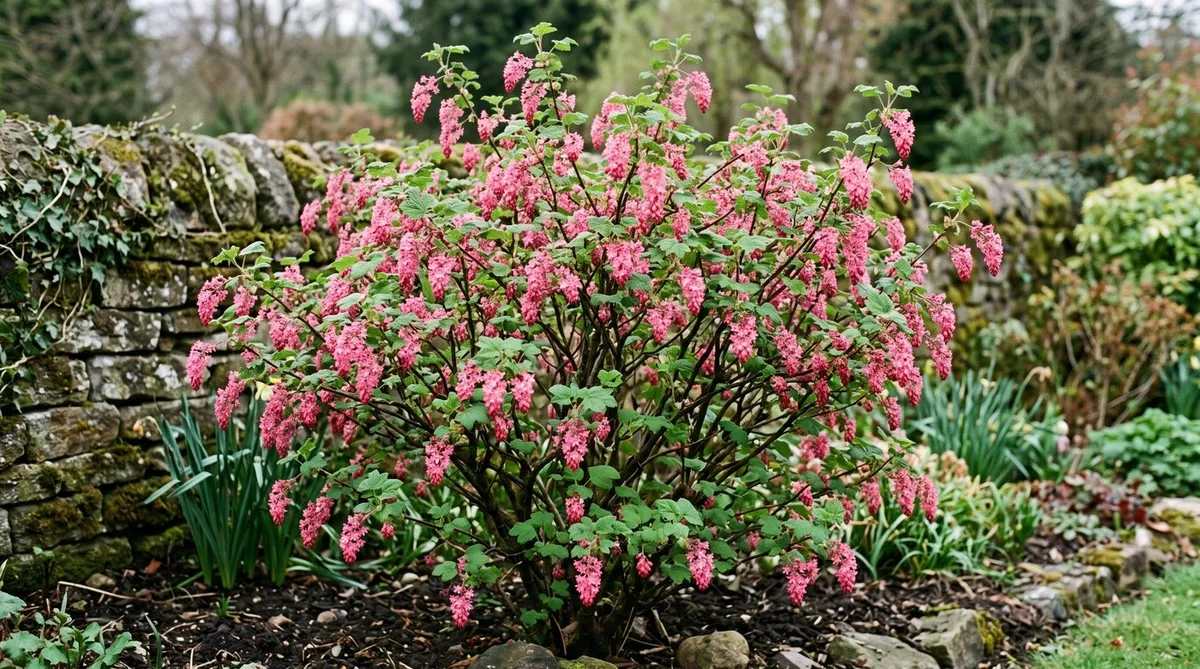
Key takeaways
- Flowering currant blooms in March and April on stems that grew the summer before
- Prune straight after flowering, never in winter, or you cut off next spring's flowers
- Take out one in three of the oldest stems at the base each year to keep it young
- It grows in almost any soil that isn't waterlogged, in sun or part shade
- Pencil-thick hardwood cuttings pushed into the ground in late autumn root easily
- It's grown for flowers, not fruit, so don't mix it up with blackcurrant
Flowering currant is one of the first shrubs to brighten a UK spring. Ribes sanguineum hangs out clusters of pink, red or white flowers in March and April, just as its fresh leaves open. It’s tough, quick and happy in almost any soil.
The one thing to get right is pruning. It flowers on last year’s stems, so cut it at the wrong time and you lose the show. This guide covers where to plant it, which variety to pick, when to prune and how to grow new plants for free.
What does flowering currant look like?
Flowering currant is a deciduous shrub with upright, slightly arching stems. It grows about 1.5-2.5m tall and roughly as wide. The soft, lobed leaves look a bit like small maple leaves.
The flowers are the reason to grow it. They hang in drooping clusters, each made up of lots of small tubular blooms. Colours run from pale pink to deep crimson and white, depending on the variety. They open in March and April, as the leaves unfold, and last a few weeks.
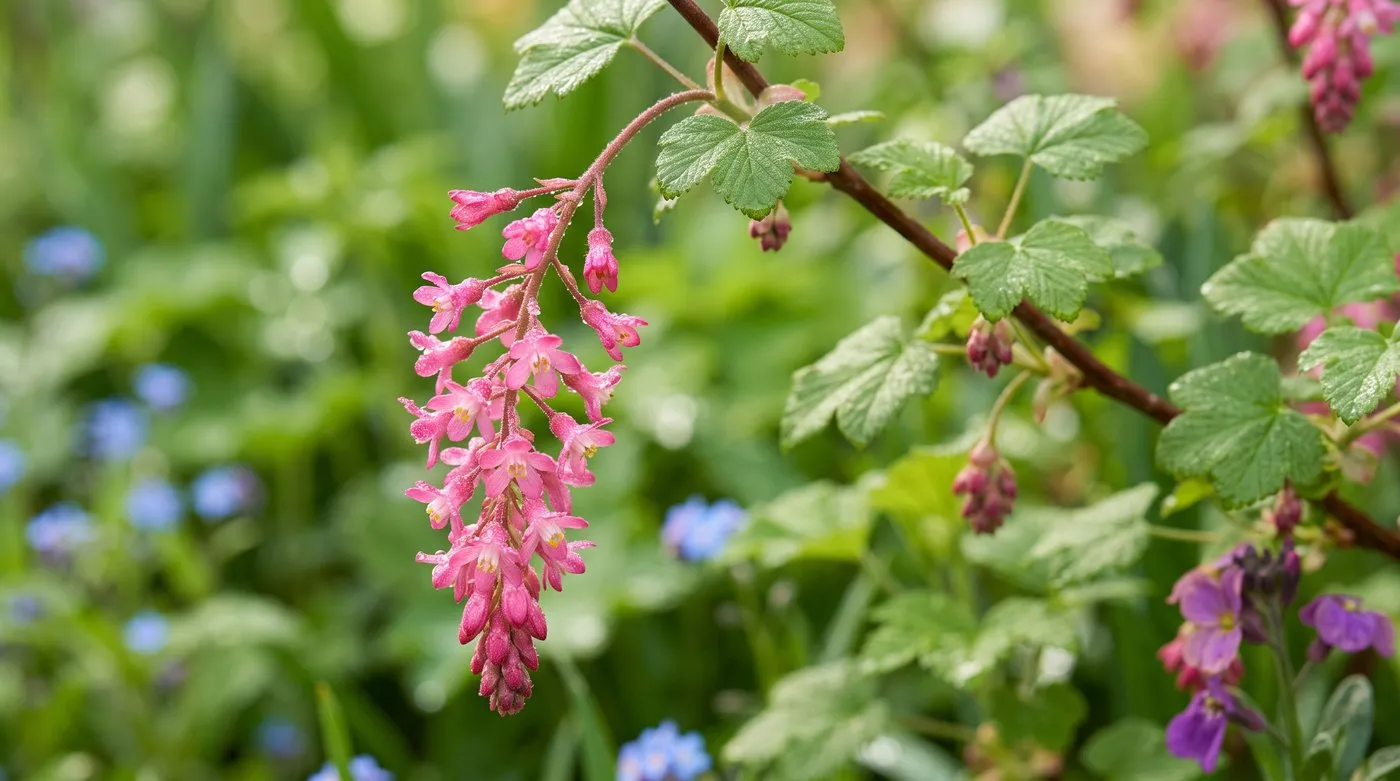
Those dangling pink clusters are what you’re growing it for. They open in early spring just as the soft leaves unfurl.
Where to plant flowering currant
Plant it in sun or part shade, in any reasonable soil that doesn’t sit wet. It handles clay, chalk and sandy soil. Only waterlogged ground really upsets it.
It’s fully hardy across the UK and copes with wind and cold. That’s why you see it in so many older gardens and hedges. Plant pot-grown shrubs any time the ground isn’t frozen or parched, but autumn and early spring are easiest. Bare-root plants go in from November to March, while they’re dormant. Water well in the first summer, then it looks after itself.
For the best flowers, give it a sunny spot. In deep shade it stretches towards the light and flowers sparsely.
Which flowering currant variety should I choose?
Pulborough Scarlet is a great all-rounder, vigorous and full of deep pink-red flowers. It holds the RHS Award of Garden Merit. King Edward VII has rich crimson flowers on a more compact bush, so it suits smaller gardens. For a cooler scheme, White Icicle has pure white flowers.
| Variety | Flower colour | Best for |
|---|---|---|
| Pulborough Scarlet | Deep pink-red | A reliable, vigorous all-rounder |
| King Edward VII | Crimson | Smaller gardens |
| White Icicle | White | Pale or white planting schemes |
| Brocklebankii | Pink, with golden leaves | Light shade, as the leaves scorch in hot sun |
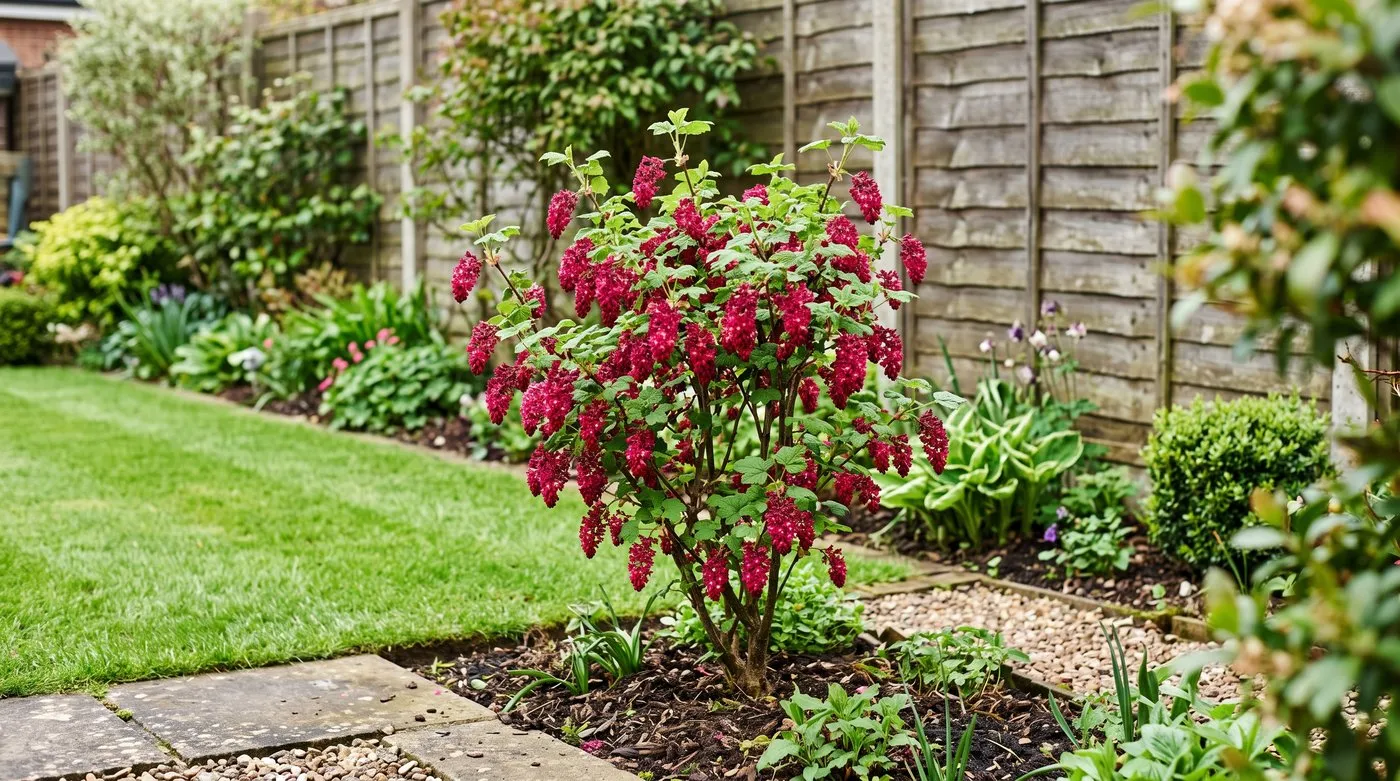
King Edward VII packs deep crimson flowers onto a neat bush. It fits comfortably into a typical suburban border.
Why flowering currant is good for bees
It flowers early, when queen bumblebees are just waking up and there’s little else about. Those first nectar-rich flowers give them a welcome meal.
Plant it with other early bloomers and you’ll keep pollinators fed from February onwards. Our list of early spring pollinator plants has good partners. It also flowers alongside yellow forsythia, and the pink and yellow together make a cheerful spring corner.
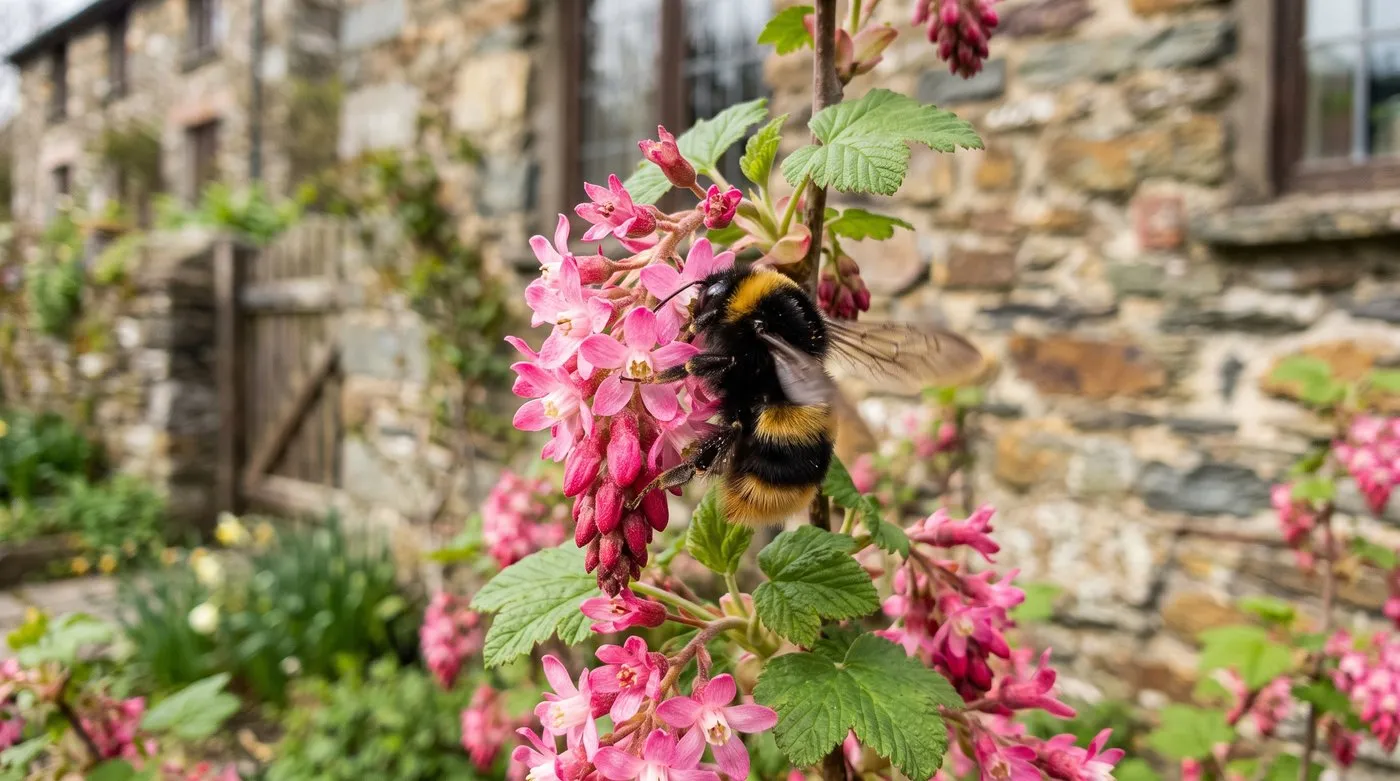
A bumblebee tucking into flowering currant on a chilly spring day. Few other shrubs offer this much nectar so early.
How to prune flowering currant after flowering
Prune straight after flowering, usually in late April or May. Flowering currant flowers on stems that grew the previous summer. Cutting in winter removes those stems and the flowers with them.
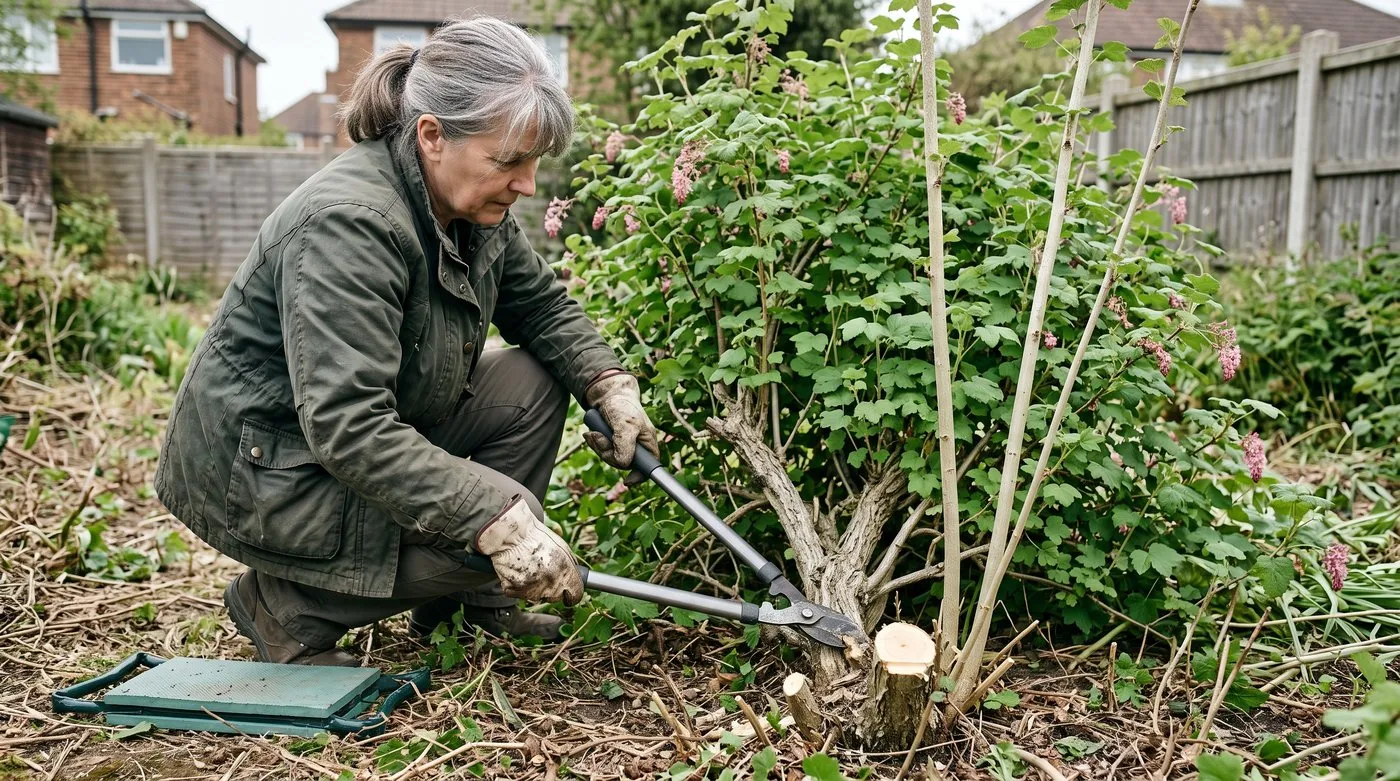
Take the oldest, thickest stems right down to the base. Loppers make a much cleaner job of old wood than secateurs.
Pruning just after flowering gives the shrub all summer to grow new stems for next spring. Here’s how:
- Wait for the flowers to fade. This is usually late April to mid-May.
- Cut out one in three of the oldest, thickest stems right down to the base. Loppers or a pruning saw make a cleaner cut than secateurs on old wood.
- Remove dead, weak or crossing stems to open up the middle.
- Shorten any over-long shoots if the shape needs balancing.
- Leave the young stems. They’ll carry next year’s flowers.
Do this every year and the bush stays young and full of flowers. An old, overgrown shrub can be renewed the same way over three years. For other jobs at the same time, see our list of plants to prune in May.
Gardener’s tip: While the shrub is in flower, tie a bit of wool around the oldest few stems. Once it’s a mass of leaves, you’ll know exactly which ones to take out.
How to take flowering currant cuttings
Flowering currant is one of the easiest shrubs to grow from hardwood cuttings. Take them from October to December, after the leaves drop.
- Choose straight, pencil-thick shoots from this year’s growth.
- Cut lengths of about 20-25cm. Make a flat cut just below a bud at the bottom and a sloping cut above a bud at the top.
- Push a spade into the soil to make a narrow slit trench, and add a little grit on heavy ground.
- Push the cuttings in two-thirds of their length, about 15cm apart, and firm the soil.
Then leave them alone. They’ll root over winter and spring, and most are ready to move the following autumn. Our guide to hardwood cuttings in a slit trench shows the method for lots of other shrubs.
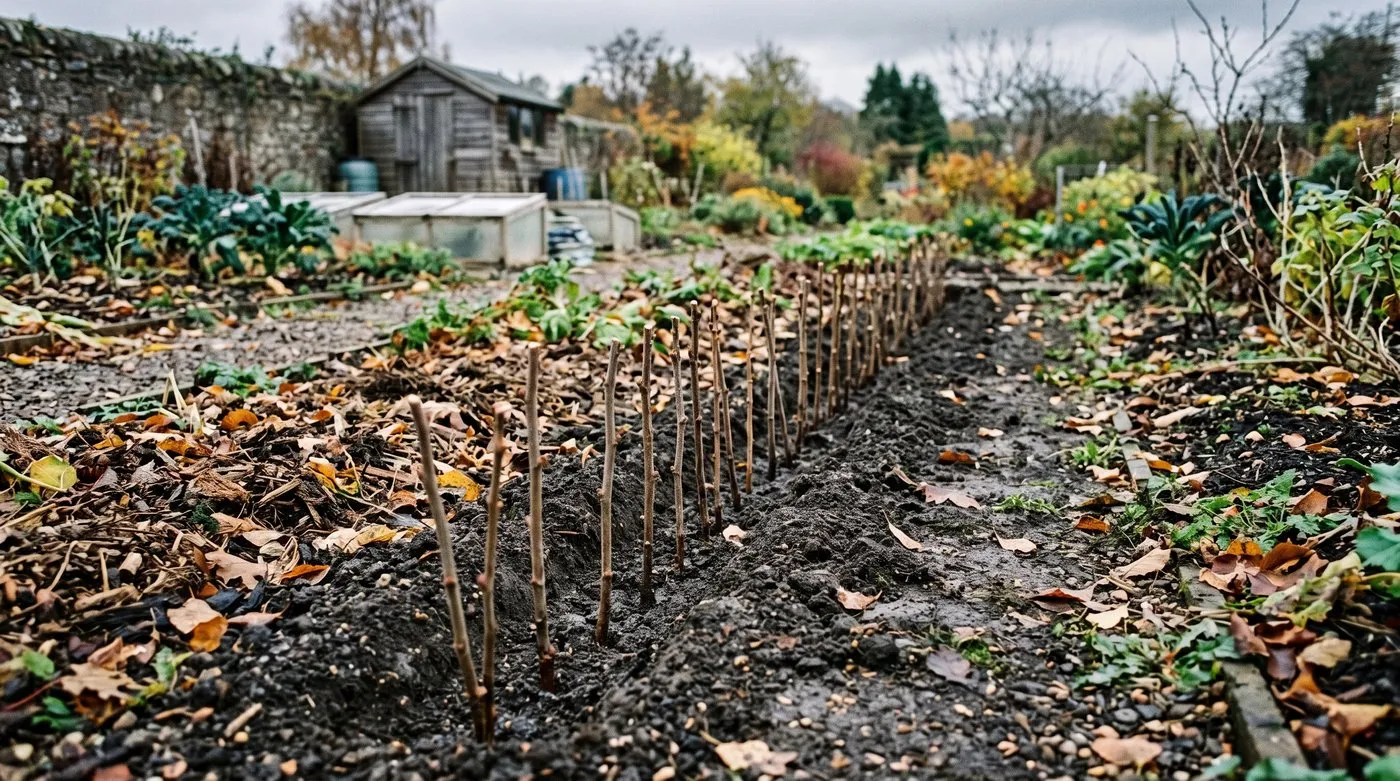
A row of bare cuttings in autumn doesn’t look like much. By next autumn most will be rooted young shrubs.
Can you grow flowering currant as a hedge?
Yes, it makes a lovely informal flowering hedge. Plant about 45-60cm apart in a single row. Trim lightly straight after flowering, never in winter.
It won’t give a crisp, formal shape like yew or box. Instead you get a relaxed, leafy screen with a wall of pink each spring. It mixes well with hawthorn and hazel in a wildlife hedge. For more ideas, browse our pick of the best flowering shrubs.
Wildlife note: Check for nesting birds before you trim. Disturbing an active nest is an offence, and birds nest in hedges from March to August.
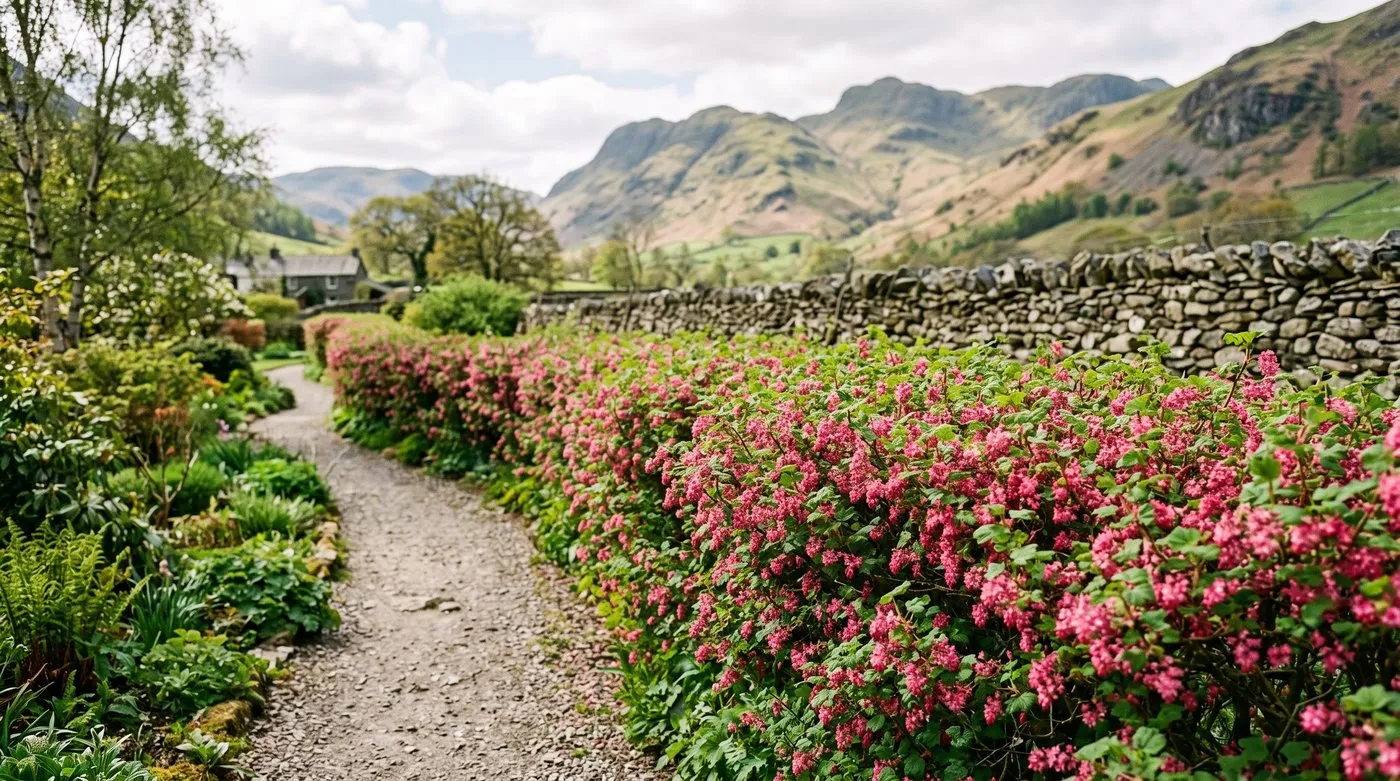
An informal flowering currant hedge in full bloom. Trim it lightly after flowering and it’ll do this every spring.
Flowering currant or blackcurrant?
Flowering currant is grown for flowers. Blackcurrant (Ribes nigrum) is grown for fruit. They’re close relatives, and both have that strong-smelling foliage.
Flowering currant has showy hanging flowers and small blue-black berries with a dusty bloom. The berries aren’t poisonous, just bland and not worth eating. Blackcurrants have small greenish flowers and big, juicy, sharp fruit for jam and cordial. If you want a crop, see our guide to growing redcurrants and blackcurrants.
Month-by-month flowering currant calendar
| Month | What to do |
|---|---|
| January | Dormant. Don’t prune, or you’ll lose the flowers |
| February | Plant bare-root shrubs. Mulch around established plants |
| March | First flowers open. Enjoy the bees |
| April | Peak flowering. Water new plants if spring is dry |
| May | Flowers fade. Prune now, taking one in three old stems |
| June | New stems grow for next year’s flowers. Water young plants in dry spells |
| July to August | Little to do. Avoid hard cuts |
| September | Plant pot-grown shrubs while the soil is warm |
| October | Leaves drop. Start taking hardwood cuttings |
| November | Take more cuttings. Plant bare-root shrubs and hedging |
| December | Firm in any cuttings lifted by frost |
Common flowering currant mistakes
Pruning in winter. This is the big one. The flowers form on last year’s stems, so a winter trim removes them. Always prune just after flowering.
Shearing the whole bush. Clipping it all over cuts off every flowering stem and leaves it congested. Remove whole old stems at the base instead.
Planting in deep shade. It survives, but grows leggy with few flowers. Give it at least part sun.
Expecting fruit. The berries look like currants but taste of very little. Grow a true blackcurrant if you want a crop.
Skipping the sniff test. The leaves smell strongly of blackcurrant or tomcat. Rub one at the garden centre before planting it by your back door.
Want to keep the rest of your shrubs in shape too? Read our guide on how to prune shrubs next, or find more spring flowers in the plants section.
Frequently asked questions
When should I prune flowering currant?
Prune straight after flowering, usually late April or May. It flowers on last year’s stems, so a winter cut removes the coming spring’s flowers. Take one in three of the oldest stems down to the base, plus any weak or crossing shoots.
How big does Ribes sanguineum get?
Most grow about 1.5-2.5m tall and roughly as wide. It’s quick to fill out while young. Compact varieties such as King Edward VII stay smaller, which suits a small garden.
Is flowering currant the same as blackcurrant?
No, flowering currant is grown for its flowers, not fruit. Both are Ribes, but the edible blackcurrant is Ribes nigrum. Flowering currant berries are small, blue-black and bland, so they aren’t worth growing for eating.
Why does my flowering currant smell?
The leaves give off a strong blackcurrant or tomcat smell, especially when brushed. Some people hardly notice it and others dislike it. Rub a leaf before you buy, and plant it away from doors and paths if it bothers you.
Does flowering currant grow in shade?
Yes, it copes with part shade, but flowers best in sun. In deep shade it gets leggy and flowers thinly. A spot with a few hours of sun or dappled light under high trees works well.
How do you take flowering currant cuttings?
Take pencil-thick hardwood cuttings about 20-25cm long from October to December. Push them two-thirds deep into a slit trench of gritty soil outdoors and leave them. Most will have rooted by the following autumn.
Can you grow flowering currant as a hedge?
Yes, it makes a good informal flowering hedge. Plant about 45-60cm apart and trim lightly straight after flowering. It gives a relaxed screen with a wall of pink each spring, but it won’t clip into a crisp formal shape.
Our team produces practical UK gardening guidance from source research, contributor records and established horticultural practice. Editorial standards are overseen by Matt W.


