
Key takeaways
- Prune spring-flowering shrubs as soon as the flowers fade, while they have all summer to regrow
- Remove up to a fifth of the oldest stems at the base, rather than clipping the outline
- Clematis montana and other early clematis only need a tidy after flowering
- Prune cherries, plums and laurel in dry weather to reduce disease risk
- Check every shrub and hedge for nesting birds before you cut
May is when the shrubs that lit up your spring garden need a cut. Forsythia, flowering currant and other early bloomers flower on last year’s stems, so pruning them as soon as the flowers fade gives them all summer to grow next year’s display.
This guide covers ten plants to prune in May, how much to take off each one and the few plants to leave alone this month. For earlier jobs, such as hard pruning roses and late-summer shrubs, see our spring pruning guide.
Why prune spring-flowering shrubs in May?
Prune them now because they flower on stems that grew the previous year. Cut them straight after flowering and the new shoots have the whole summer to ripen and form flower buds.
Leave it until late summer and you’ll cut off those new shoots, and with them next spring’s flowers.
The basic method is the same for most of them:
- Cut flowered shoots back to a strong pair of buds or a young, unflowered side shoot.
- Take out up to a fifth of the oldest stems right at the base. This keeps the shrub young and flowering.
- Remove dead, damaged and crossing stems while you’re there.
Avoid shearing the outside into a neat dome. It makes a dense, twiggy shell with fewer flowers.

Forsythia and flowering currant are usually the first shrubs to prune in May. Loppers make light work of the older stems.
Check for nesting birds before you cut
May is the busiest month of the bird nesting season. Before pruning any shrub, climber or hedge, look carefully inside it for nests.
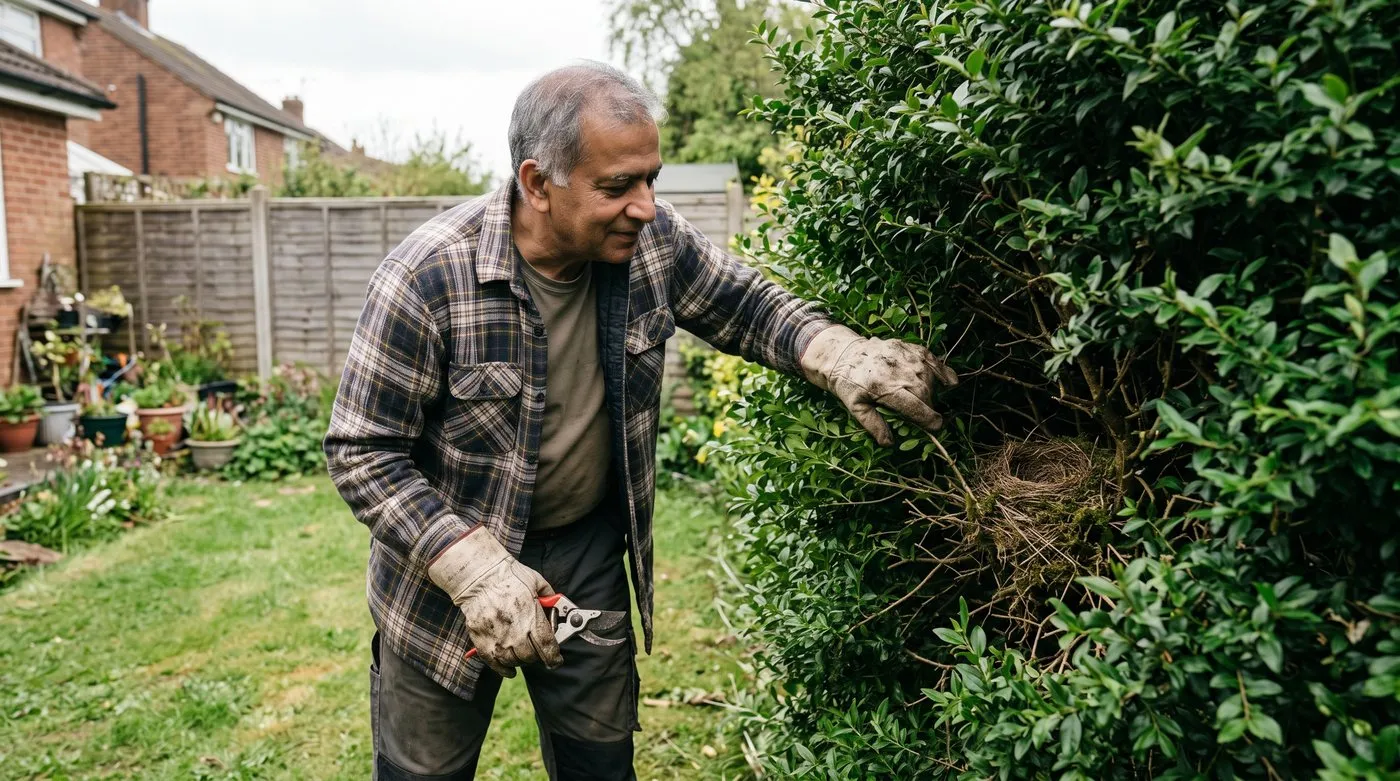
A quick look inside before you cut can save a nest. If you find one, leave that shrub until the young have flown.
Damaging or destroying an active nest is an offence. If you find one, leave that plant until the young have flown, usually a few weeks. Most garden birds nest from March to August, so leave bigger hedges until late summer. Our guide on when to cut hedges explains the rules.
The ten plants to prune in May
Start with the earliest to flower and work through the month. Wait for each one’s flowers to fade.
| Plant | When | What to do |
|---|---|---|
| Forsythia | Early May | Cut flowered stems back, remove some old stems at the base |
| Flowering currant (Ribes) | Early May | As forsythia |
| Kerria | Early to mid May | Cut flowered stems to young shoots or the base |
| Clematis montana and alpina | After flowering | Tidy and trim to fit the space |
| Choisya | After the spring flowers | Light trim to shape |
| Evergreen ceanothus | After flowering | Light trim of the flowered shoots only |
| Weigela | Late May to June | Cut flowered stems back, remove some old stems |
| Viburnum tinus | Late spring | Light trim to shape |
| Cherry laurel and Prunus shrubs | Late spring to summer, in dry weather | Trim with secateurs |
| Box | From late May | Light clip to shape |
Forsythia
Prune forsythia as soon as the yellow flowers drop, usually in late April or early May. Cut the flowered stems back to strong new shoots. Then take out up to a fifth of the oldest, greyest stems at ground level with loppers or a saw.
An overgrown forsythia can be renovated over three years by removing a third of the old stems each spring.
Flowering currant (Ribes)
Treat flowering currant just like forsythia. Cut flowered stems back to strong buds and remove some old stems at the base. Cut cleanly to a bud or right to the base, as short stubs tend to die back.

Take old flowering currant stems right back, so there’s no stub left to die back. Use loppers or a saw on anything thicker than a finger.
Kerria
Kerria flowers on shoots that grow from the base. After flowering, cut the stems that flowered back to young side shoots or right to the ground. Leave the fresh green stems that haven’t flowered, as they’ll bloom next year. Pull or dig out suckers that wander too far.
Clematis montana and other early clematis
Group 1 clematis, such as montana, alpina and macropetala, flower on old stems. They don’t need regular pruning. If one has outgrown its space, trim it straight after flowering. Cut overlong shoots back to a healthy pair of buds and remove dead stems.
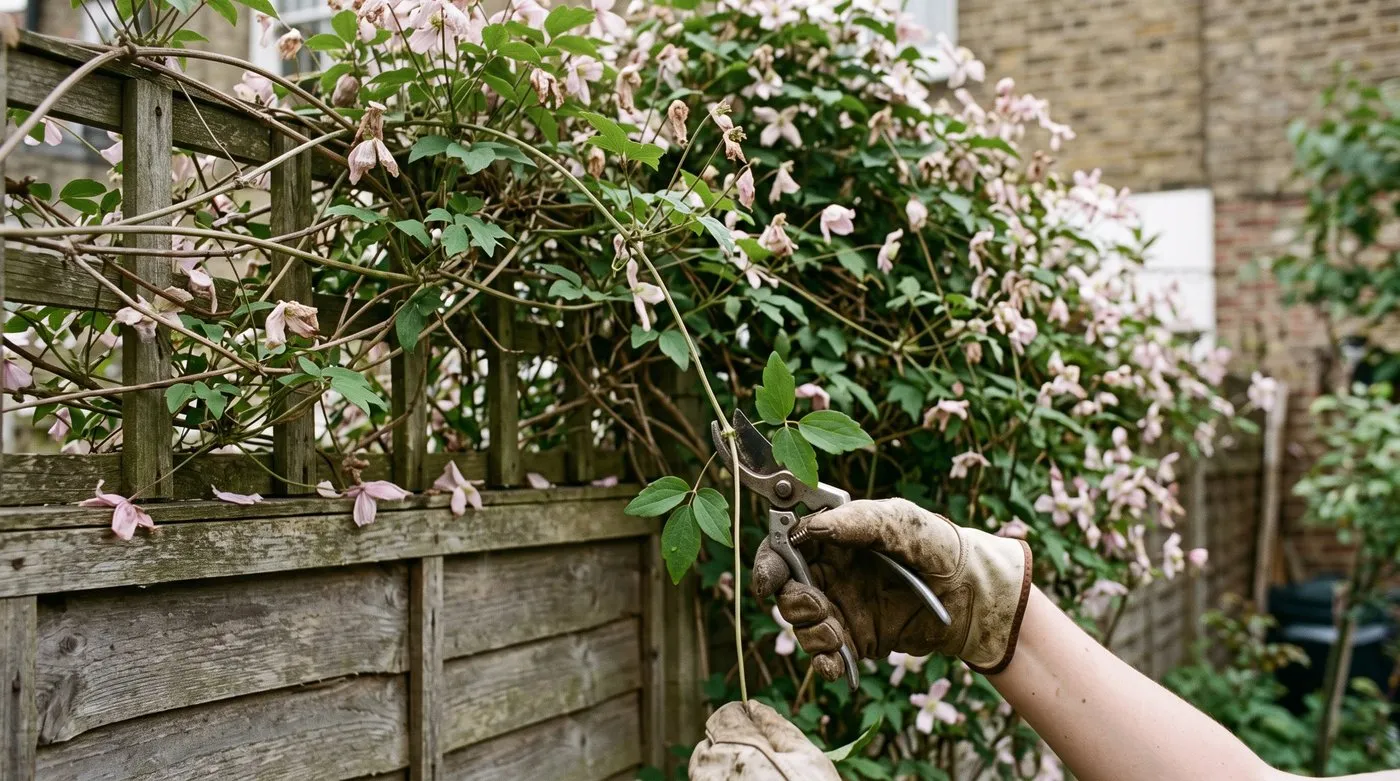
Clematis montana only needs a trim if it’s outgrown its space. Do it as the last flowers fade.
Never cut a montana hard in winter, or you’ll lose next spring’s flowers. Our guide on how to prune clematis by group covers the other two groups.
Choisya and ceanothus
Choisya (Mexican orange blossom) needs only a light trim after its spring flowers fade. Cut back straggly shoots to keep it bushy. Choisya will usually regrow if it needs cutting back harder.
Evergreen ceanothus is different. Trim only the shoots that have flowered, by up to a third, straight after flowering. Never cut into old, bare wood, because it rarely regrows from there.
Weigela
Weigela flowers in late spring and early summer, so it is usually one of the last on the list. Once the main flush fades, cut flowered stems back to strong young shoots lower down. Remove up to a fifth of the oldest stems at the base.
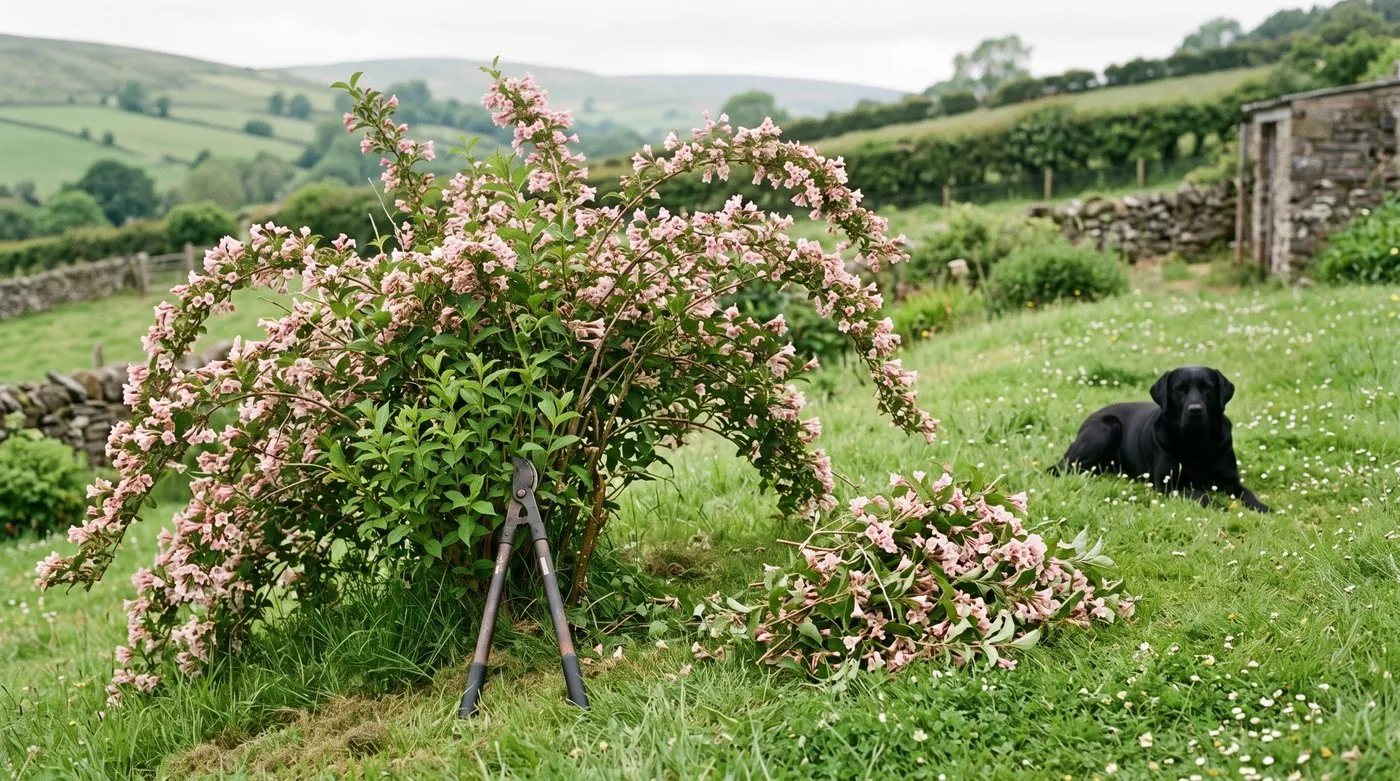
Cut weigela’s flowered stems back to the fresh shoots lower down. Those shoots carry next year’s flowers.
Viburnum tinus
Viburnum tinus flowers through winter into spring. Give it a light trim to shape once flowering ends. It’s a popular place for birds to nest, so look carefully before you start.
Cherry laurel and other Prunus
The cherry family, including cherry laurel, ornamental cherries and plums, can catch silver leaf and bacterial canker through pruning cuts. The risk is lowest when it’s dry and the plant is growing strongly, from late spring through summer.
Trim laurel with secateurs rather than a hedge trimmer, which shreds the big leaves and leaves brown edges. Avoid pruning these plants in winter or wet weather.
Box
Clip box lightly from late May into June, once the first flush of growth has firmed. Pick a dull, dry day. Clipping in hot sun can scorch freshly exposed leaves, and damp weather helps box blight spread. Check for box tree caterpillars while you work. Our guide to box tree moth treatment shows what to look for.

A light clip on a dull, dry day keeps box neat without scorching the new leaves.
What not to prune in May
A few plants are better left alone this month.
- Lavender. Its flower stems are forming now. Trim it in late summer after flowering instead. Our guide on how to prune lavender shows how.
- Hydrangeas. Mophead and lacecap types get their main trim in early spring and are now forming flower buds. Our hydrangeas in May checklist covers what to do instead.
- Early-summer shrubs such as philadelphus and deutzia. They haven’t flowered yet, so wait until they finish in summer.
- Hedges with nesting birds. Wait until the young have flown.
Common May pruning mistakes
- Waiting too long. The later you prune spring-flowering shrubs, the fewer flowers you’ll get next year. Prune as soon as they fade.
- Clipping the outline. Removing whole old stems at the base gives far better flowering than shearing the outside.
- Pruning in full bloom. You’ll lose the display you’ve waited for. Wait until most flowers have dropped.
- Cutting into old wood on ceanothus. It rarely regrows. Stick to green, leafy shoots.
- Using blunt tools. Blunt blades crush stems. Sharpen and clean them before you start.
May is busy in other ways too, so check our list of what to plant in May. After pruning, spread a mulch of compost around the base and water well in dry spells. For a full year of jobs, see our year-round pruning calendar, and browse more seasonal tasks in our how-to guides.
Frequently asked questions
Why prune spring-flowering shrubs in May?
Because they flower on stems made the year before. Pruning straight after flowering gives them all summer to grow new shoots, which carry next spring’s flowers.
Can I prune lavender in May?
No, leave lavender alone in May. Its flower stems are forming and you would cut them off. Trim it in late summer, after flowering, without cutting into old bare wood.
What pruning tools do I need in May?
Sharp secateurs, loppers and a small pruning saw cover almost everything. Secateurs suit thin stems, loppers thicker ones, and the saw anything bigger. Clean the blades between plants.
When is it too late to prune forsythia?
Once it has made its new summer shoots, usually by midsummer. Forsythia flowers on those shoots, so a late cut removes next spring’s flowers. If you miss the window, wait until after next year’s flowering.
Does May pruning encourage disease?
Not for most shrubs, which heal quickly while growing strongly. The exception is the cherry family, including plums and laurel. Prune these in dry weather to lower the risk of silver leaf and canker.
Can I prune hedges in May?
Only if you are sure no birds are nesting in them. Most garden birds nest from March to August, and harming an active nest is an offence. Leave bigger hedges until late summer if you can.
Should I feed plants after May pruning?
A mulch of compost helps, and a light feed is optional. Spread well-rotted compost or manure around the base, and water well in dry spells. Avoid heavy high-nitrogen feeds, which push soft, floppy growth.
Our team produces practical UK gardening guidance from source research, contributor records and established horticultural practice. Editorial standards are overseen by Matt W.


