Key takeaways
- Finish cutting off last year's flower heads, just above the first pair of fat buds
- Don't prune live mophead or lacecap stems now, as they carry this year's flowers
- Mulch 5cm deep around the plant, keeping it clear of the stems
- Feed once in spring with a general or rose fertiliser
- Water deeply once a week in dry spells, more often in pots
- Check soft new shoots for aphids and squash or hose them off
In May, hydrangeas need four simple jobs: finish removing old flower heads, mulch, feed and water in dry spells. Get those right and you’ll have a strong show of flowers from July onwards.
Here’s your May checklist, with what to do and what to leave alone. For year-round care, planting and choosing a variety, the guide on how to grow hydrangeas covers it all.
Your May hydrangea checklist
- Finish removing old flower heads on mopheads and lacecaps, if you haven’t already.
- Leave live stems alone. They’re carrying this summer’s flowers.
- Mulch 5cm deep with leaf mould, bark or compost.
- Feed once with a general or rose fertiliser, if you didn’t in April.
- Water deeply once a week if May turns dry.
- Check for aphids on soft new shoots.
The rest of this guide explains each job.
Removing last year’s flower heads
The old, papery flower heads on mophead and lacecap hydrangeas help shelter the buds below through winter. Most gardeners cut them off in March or April, once the worst frosts are over. If yours are still on, May is a fine time to finish the job.
- Follow each old flower head down its stem.
- Find the first pair of fat, healthy buds or new shoots.
- Cut just above them with sharp secateurs.
- Put the old heads on the compost heap.
Don’t cut further down into live stem. On mopheads and lacecaps, the flower buds for this summer are at the tips of last year’s stems.
Paniculata and Annabelle-type hydrangeas are different. They flower on new growth and are pruned harder in late winter or early spring. The guide to types of hydrangeas helps you tell which you have.
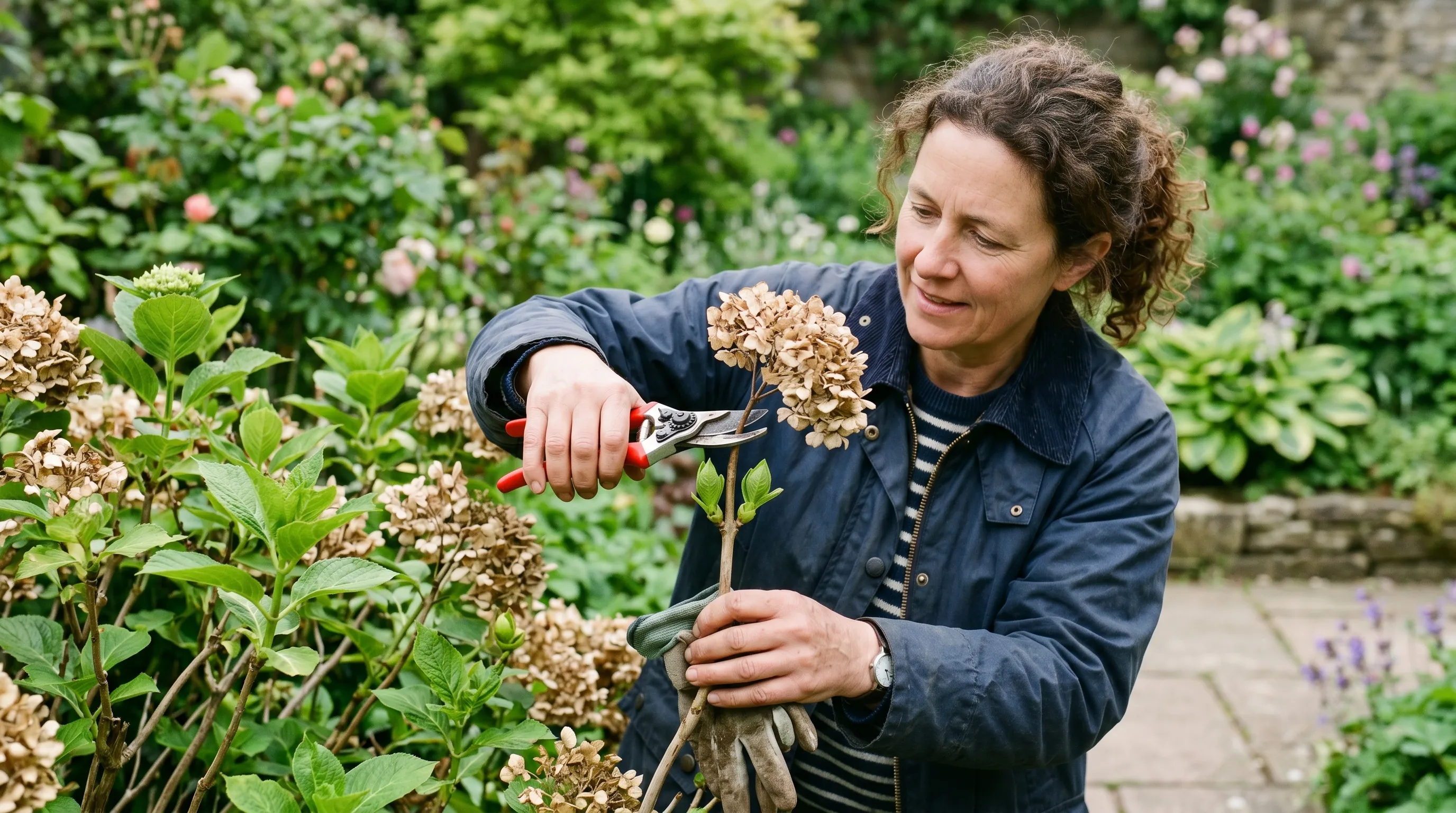
Snip off the old head just above the first pair of fresh buds. Leave the rest of the stem, as it carries this summer’s flowers.
Can you prune hydrangeas in May?
Only lightly. In May you can remove old flower heads, dead stems and anything broken by wind. Cut dead stems right down to the base.
Don’t shorten live mophead or lacecap stems now. You’d be cutting off the flower buds that are already forming. If your plant is too big, the time to thin it properly is next spring. The guide on how to prune hydrangeas explains how for each type.
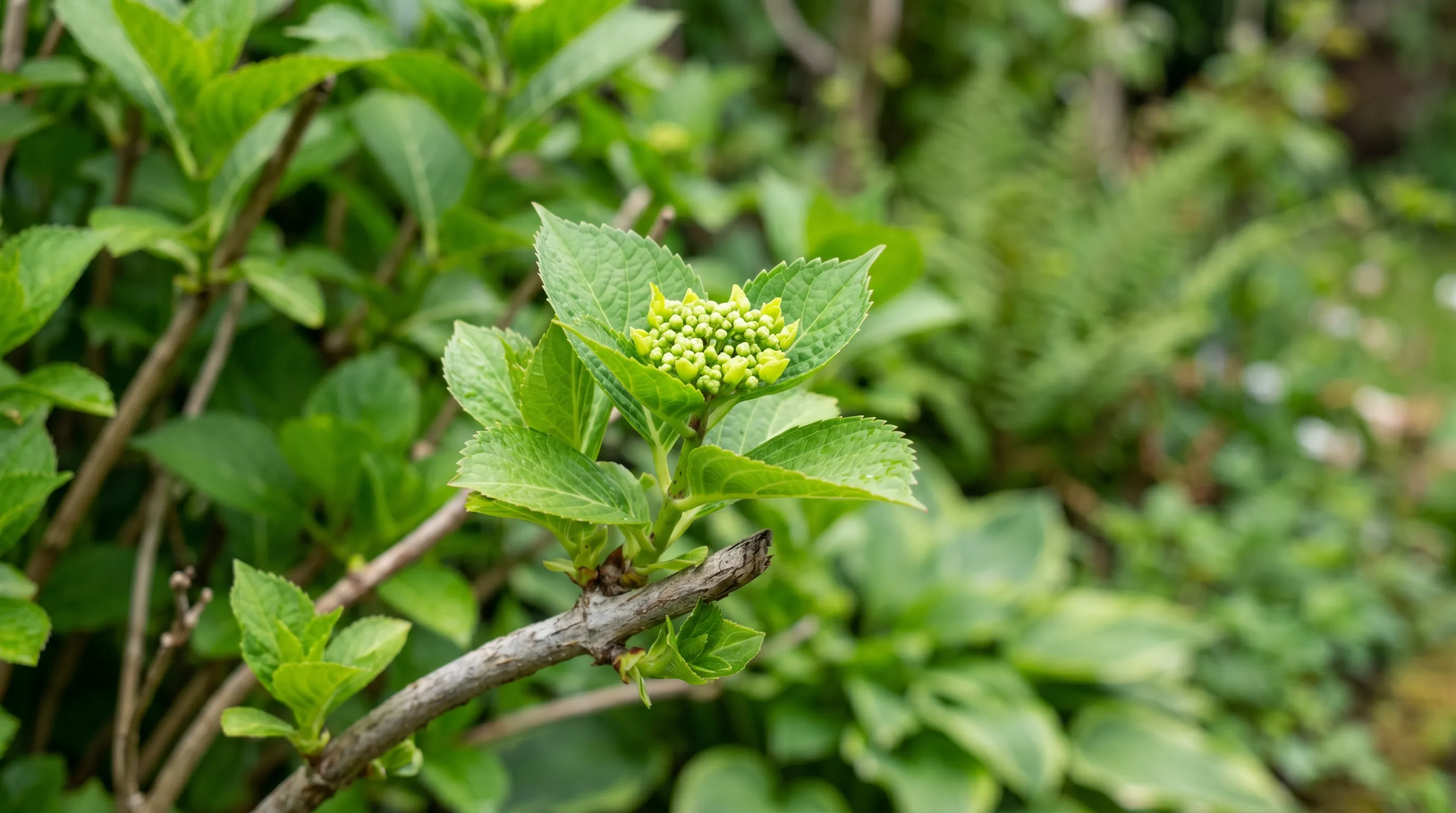
By May, little clusters of flower buds sit at the tips of last year’s stems. Cut these off and you lose this summer’s flowers.
Mulching and feeding hydrangeas in May
Do both together, ideally on damp soil after rain.
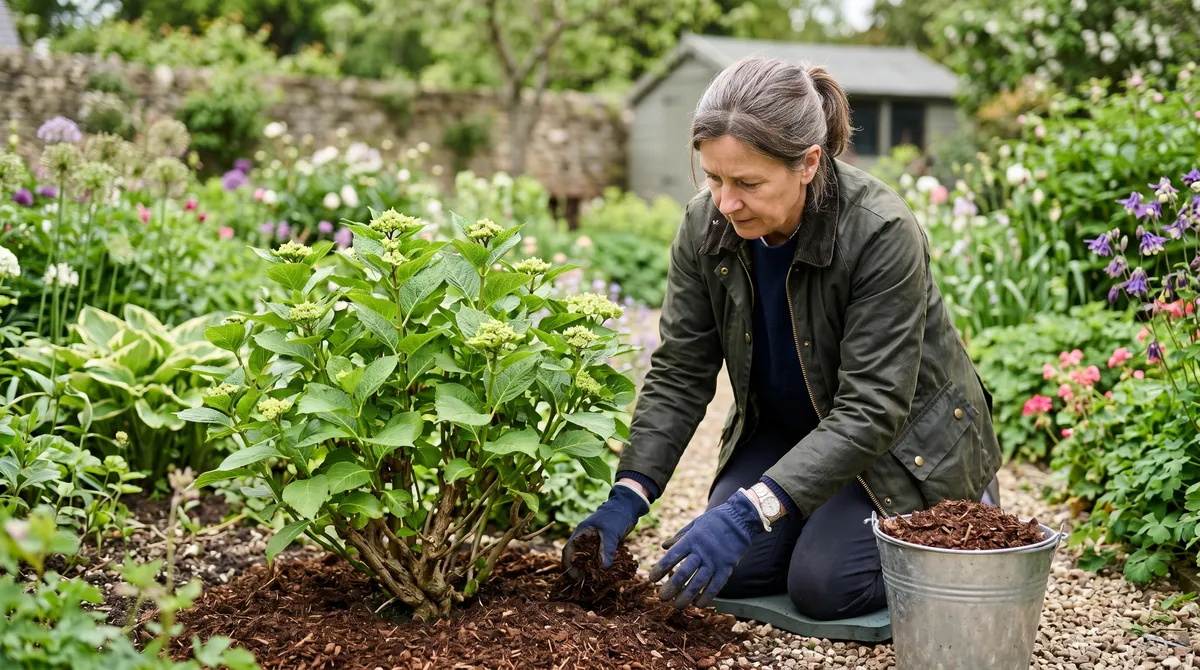
Mulch helps hold moisture in the soil, which hydrangeas love. Spread about 5cm of leaf mould, bark or peat-free compost around the plant, out to the edge of the leaves. Keep it a hand’s width clear of the stems so they don’t stay damp.
Feed once in spring with a general or rose fertiliser. Sprinkle it around the plant at the rate on the pack, rake it in lightly and water it in. One feed is enough for most hydrangeas in the ground. Avoid high-nitrogen feeds, which give lush leaves and fewer flowers.
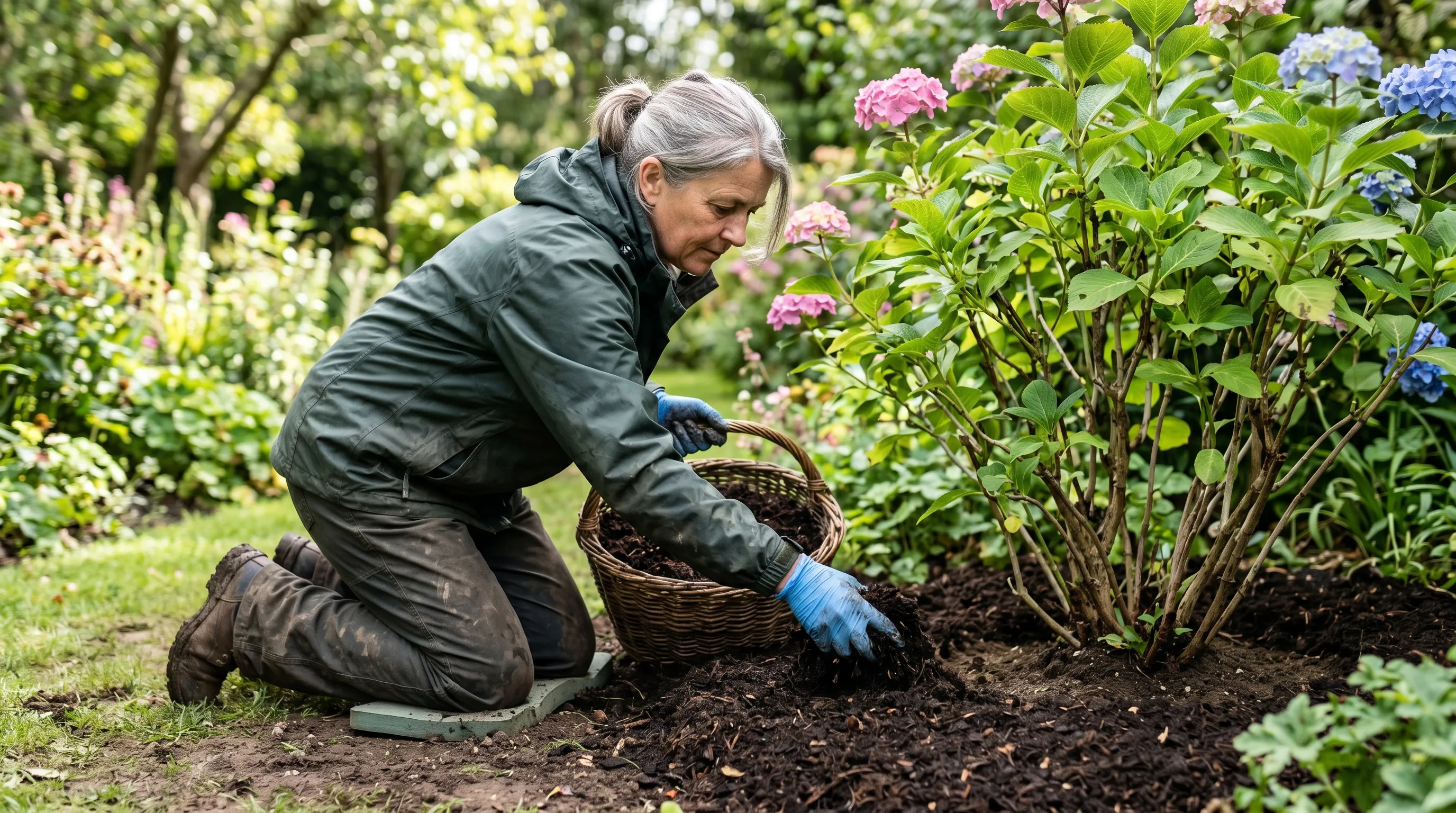
A thick mulch keeps the roots cool and moist. Spread it out to the edge of the leaves, but keep it off the stems.
Watering hydrangeas through May
Hydrangeas are thirsty, and May can be surprisingly dry. If there’s been no decent rain for a week or so, water.

Water at the base, not over the leaves. A deep weekly soak in dry spells beats a daily sprinkle.
- Give established plants a deep soak once a week, a couple of full watering cans each.
- Water at the base, not over the leaves.
- Early morning or evening is best.
- Mulch means you’ll need to water less often.
Hydrangeas in pots dry out much faster. Check them every day or two, and water whenever the top of the compost feels dry. The guide to growing hydrangeas in pots covers pot sizes and feeding too.
Checking for aphids on new shoots
Soft new growth in May attracts aphids, often clustered on shoot tips and under leaves. Have a look once a week.
- Squash small clusters between finger and thumb.
- Knock bigger groups off with a jet of water from the hose.
- Leave ladybirds, lacewings and hoverfly larvae to mop up the rest.
Don’t use washing-up liquid sprays. Homemade mixes aren’t legal to use as pesticides in the UK. If you really need a spray, use an approved product for that use and follow the label. The guide on getting rid of aphids has more ideas.
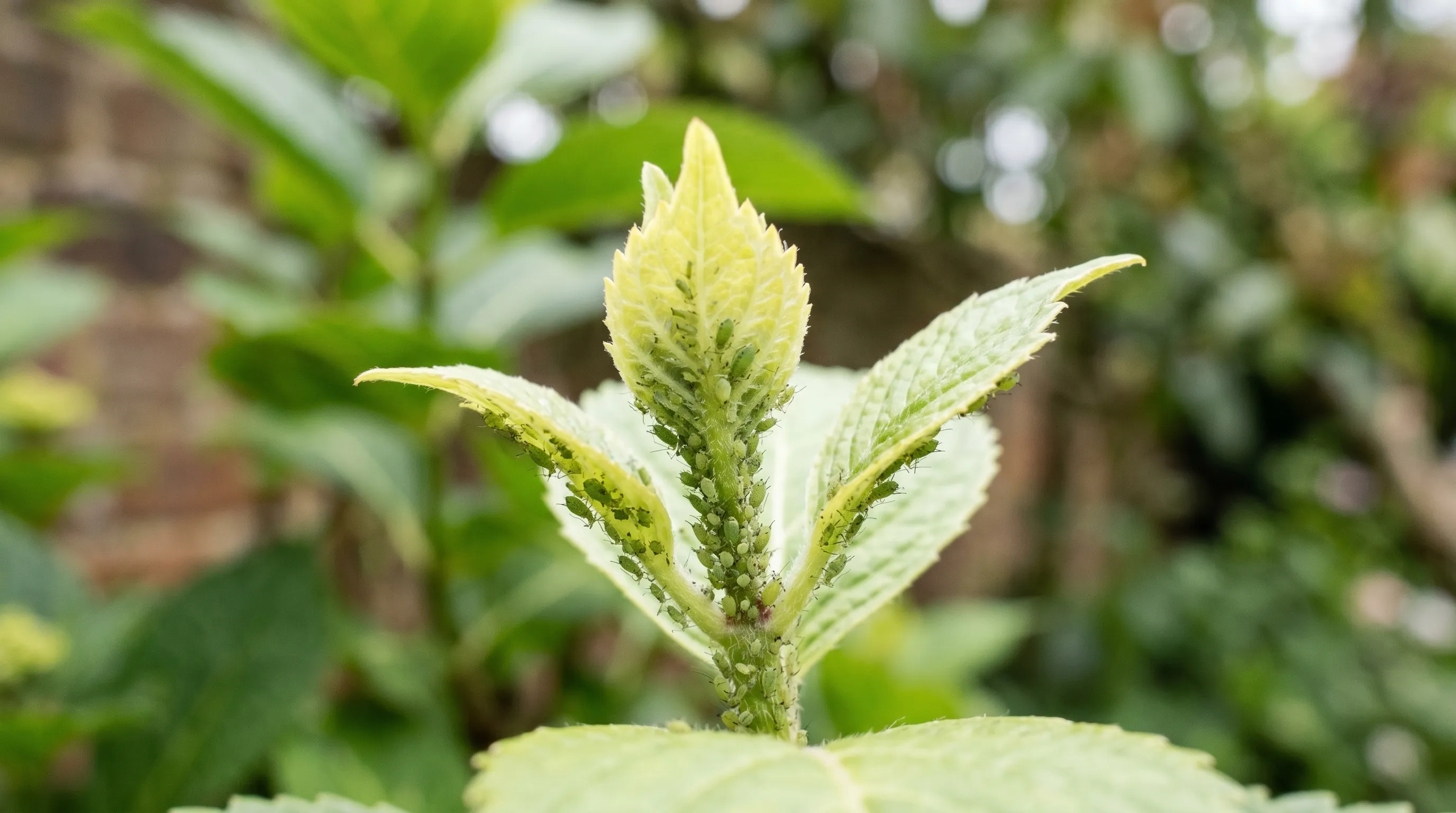
Aphids love soft May shoot tips. Squash or hose them off early, before the colony builds up.
Changing hydrangea colour in May
Only mophead and lacecap hydrangeas change colour with the soil. They go blue on acid soil and pink on chalky or limy soil. White varieties stay white whatever you do.
If you want blue on neutral soil, apply a hydrangea colourant (aluminium sulphate) from spring, following the pack. To keep plants pink, avoid ericaceous feeds and add a little garden lime. Don’t expect an instant change. It usually takes a season or two to show.
Blue is very hard to achieve on chalky soil. Growing blue varieties in a pot of ericaceous compost is far easier. The guide on how to change hydrangea colour explains more.
Common May hydrangea mistakes
- Cutting back live stems. On mopheads and lacecaps, you’ll cut off this summer’s flowers.
- Feeding with lawn feed or other high-nitrogen fertiliser. You’ll get leaves, not flowers.
- Little and often watering. A daily sprinkle wets only the surface. A weekly soak reaches the roots.
- Piling mulch against the stems. Keep a gap so the stems stay dry.
- Forgetting pots. Potted hydrangeas can wilt in a single warm May day.
If your plant still isn’t flowering, the guide on why your hydrangea won’t flower runs through the usual causes.
Frequently asked questions
When should I remove last year’s hydrangea flower heads?
In spring, once the worst frosts are over. Most gardeners do it in March or April, but May is fine if you haven’t yet. Cut just above the first pair of fat, healthy buds below each old head.
What feed do hydrangeas need in May?
A general or rose fertiliser, once in spring. Sprinkle it around the plant at the rate on the pack and water it in. Skip high-nitrogen feeds, which give lots of leaves but fewer flowers.
Should I water hydrangeas in May?
Yes, whenever May turns dry. Give established plants a deep soak once a week rather than a daily sprinkle. Hydrangeas in pots dry out much faster, so check them every day or two.
Why are my hydrangea leaves yellow in May?
Often it’s a lack of iron, especially on chalky or limy soil. The leaves go yellow between green veins. A sequestered iron feed, used as the pack says, usually greens them up. Cold nights and waterlogged soil can also cause yellowing.
Can I prune hydrangeas in May?
Only to remove old flower heads and dead stems. Don’t cut back live mophead or lacecap stems now, as they carry this summer’s flower buds. Proper pruning of these is a spring job, done in March or April.
How do I change my hydrangea’s colour?
Change the soil, and expect it to take a season or two. Mopheads and lacecaps turn blue on acid soil and pink on chalky soil. Use a hydrangea colourant for blue, following the pack. White varieties stay white.
Now your hydrangeas are set for summer, see the other May pruning jobs for UK plants, or browse more flowers and plants guides.
Our team produces practical UK gardening guidance from source research, contributor records and established horticultural practice. Editorial standards are overseen by Matt W.