
Key takeaways
- May's soft new growth roots quickly, and young plants get all summer to grow on
- Take 5-10cm non-flowering tips in the morning and keep them in a damp bag
- Use a 50:50 mix of peat-free compost and perlite or grit, not neat compost
- Cover most cuttings to keep them humid, but leave pelargoniums uncovered
- Rooting hormone is optional and helps most with woodier plants like rosemary
May is one of the best months to fill your garden with free plants. Shrubs and tender perennials are bursting with soft new shoots, and those shoots root quickly as softwood cuttings.
All you need is a sharp knife, some pots, compost mixed with perlite and a clear bag. This guide covers twelve plants that root well from cuttings in May, how to take them and how to bring them on. For the bigger picture on cuttings, division and layering through the year, see our guide to plant propagation methods.
Why is May good for taking cuttings?
May gives you soft, fast-rooting shoots, warm days and a whole summer ahead for the new plants to grow.
Softwood is this year’s new growth, still green and bendy. It roots faster than older wood. By midsummer many shoots have firmed up into semi-ripe wood, which roots more slowly. Our guide to semi-ripe cuttings covers that later window.
May cuttings usually root within a few weeks. That gives them time to make a good root system before autumn, so they go into winter as sturdy young plants.
May is busy elsewhere in the garden too. Our list of what to plant in May covers sowing and planting out.
How to take a softwood cutting
Take a short tip from a healthy, non-flowering shoot, trim it below a leaf joint and pot it up straight away.
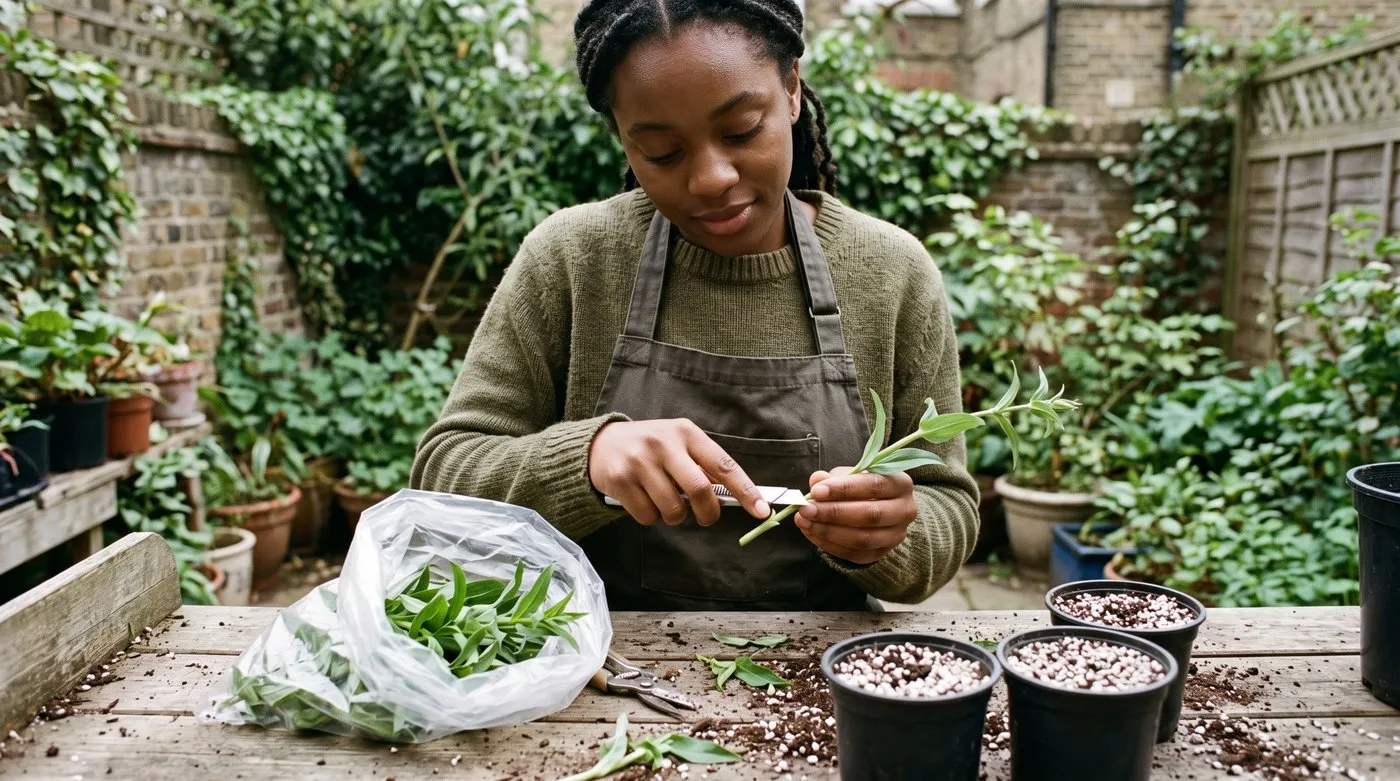
Trim just below a leaf joint and strip the lower leaves. A bag of cuttings beside you stops the rest wilting while you work.
- Go out in the morning, when plants are full of water. Put cuttings straight into a clear plastic bag to stop them wilting.
- Choose non-flowering shoots and cut 5-10cm tips. Strong, leafy shoots root best.
- Trim just below a leaf joint with a sharp knife or clean secateurs. Roots form most easily here.
- Remove the lower leaves, leaving two or three pairs at the top. Pinch off any flower buds.
- Fill small pots with half peat-free compost and half perlite or grit. Water and let it drain.
- Push the cuttings in around the edge of the pot, so the leaves sit just above the surface.
- Cover with a clear bag or put them in a propagator. Keep them somewhere bright but out of direct sun.
Label each pot with the plant and date. Check them every few days and wipe off heavy condensation so the leaves don’t rot.
Do you need rooting hormone or a heated propagator?
Neither is essential. Both can help, especially with slower plants.
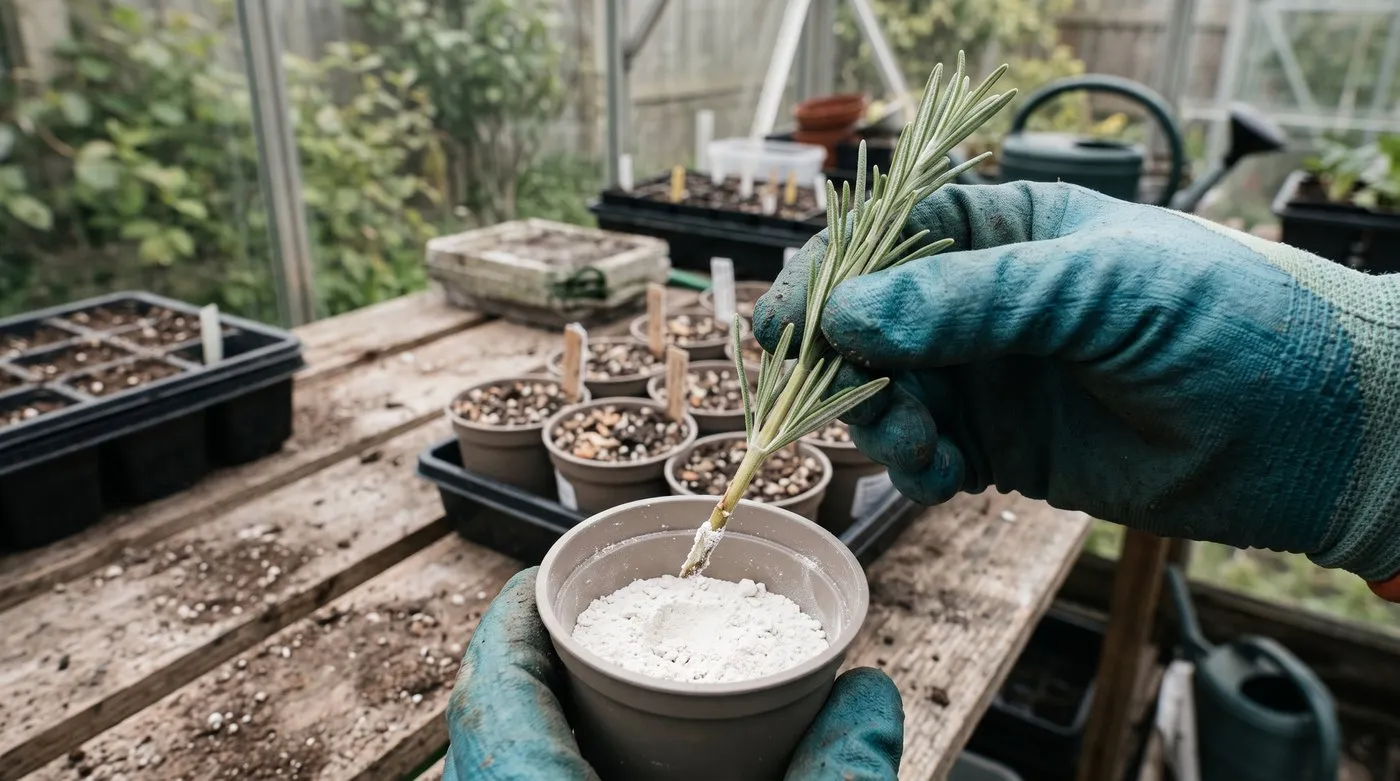
Only the cut end needs a dip. Rooting powder is most useful for woody plants like rosemary, lavender and hebe.
Rooting hormone is a powder or gel you dip the cut end into. Most soft cuttings root fine without it. It’s most useful for woodier plants such as rosemary, lavender and hebe. Dip just the base and tap off the excess.
Bottom heat from a heated propagator or heat mat speeds things up. A setting of about 20°C suits most cuttings. On a warm, bright windowsill, easy plants like pelargoniums and fuchsias root without it. A cool greenhouse or cold frame works too, just more slowly.
Twelve plants to propagate from cuttings in May
These twelve root reliably from softwood cuttings taken in May. Start with the easy ones if you’re new to cuttings.
| Plant | How easy | Rooting hormone | Good to know |
|---|---|---|---|
| Pelargonium | Very easy | Not needed | Don’t cover, they rot |
| Fuchsia | Very easy | Not needed | Roots in a glass of water too |
| Penstemon | Easy | Not needed | Keeps short-lived plants going |
| Salvia (shrubby types) | Easy | Optional | Use non-flowering shoots |
| Osteospermum | Easy | Not needed | Overwinter young plants frost-free |
| Perennial wallflower | Easy | Not needed | Replace woody old plants |
| Hydrangea | Fairly easy | Optional | Halve big leaves |
| Sage | Fairly easy | Optional | Choose soft young shoots |
| Rosemary | Fairly easy | Helpful | Rooting is a bit slower |
| Lavender | Fairly easy | Helpful | Use shoots without flower spikes |
| Hebe | Fairly easy | Helpful | Watch for rot under covers |
| Clematis | Trickier | Helpful | Cut between leaf joints |
Pelargoniums and fuchsias
Pelargoniums (bedding geraniums) are the easiest of all. Take 7-10cm tips, strip the lower leaves and pot them up. Don’t cover them, as their soft stems rot in humid air.
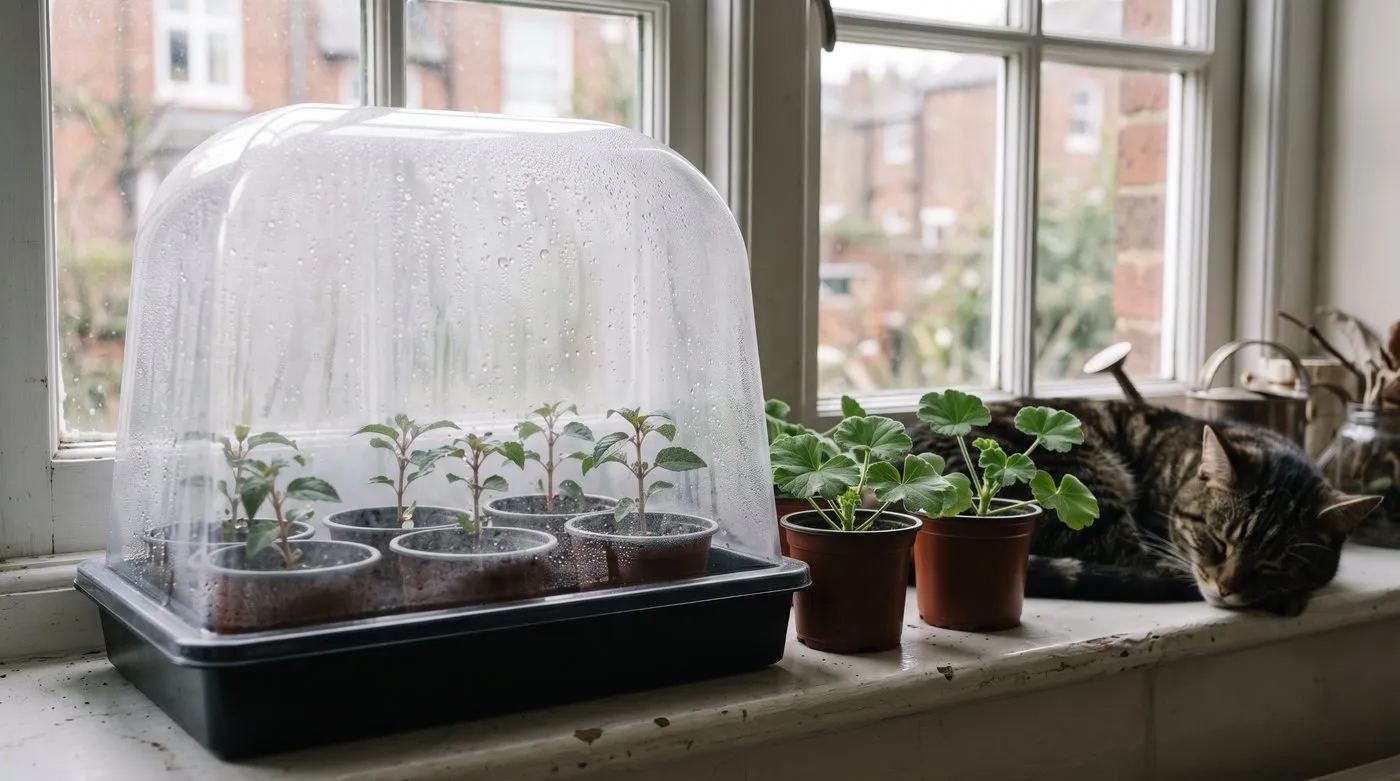
Fuchsias like a cover to keep them humid, while pelargonium cuttings sit happily in the open air. A bright windowsill suits both.
Fuchsias root just as readily. Take soft tips 5-8cm long and cover them with a bag. Hardy types such as ‘Mrs Popple’ make good hedging from cuttings. Our guide to growing fuchsias covers aftercare.
Penstemons, salvias and osteospermums
Penstemons can be short-lived, so a few cuttings each year keep your favourites going. Use non-flowering side shoots. Shrubby salvias such as ‘Hot Lips’ root well from soft tips too.
Osteospermums root quickly. Keep the young plants frost-free over their first winter.
Perennial wallflowers and hydrangeas
Perennial wallflowers such as Erysimum ‘Bowles’s Mauve’ get leggy after a few years. May cuttings give you fresh replacements. Hydrangea cuttings should come from shoots without flower buds. Cut the remaining big leaves in half so they lose less water.
Sage, rosemary, lavender and hebe
These four have woodier stems and root a little more slowly. Take soft tips from new growth, not old wood, and try a dip of rooting hormone. Keep the compost just moist, never wet. Our step-by-step guide to taking rosemary cuttings works for sage and lavender too. Hebes can rot under a cover, so air them every day or two.
Clematis
Clematis cuttings are cut between leaf joints rather than below one. Cut the stem just above a pair of leaves, then a few centimetres below it. Remove one of the two leaves, push the stem in up to the leaf joint and keep it warm and humid.
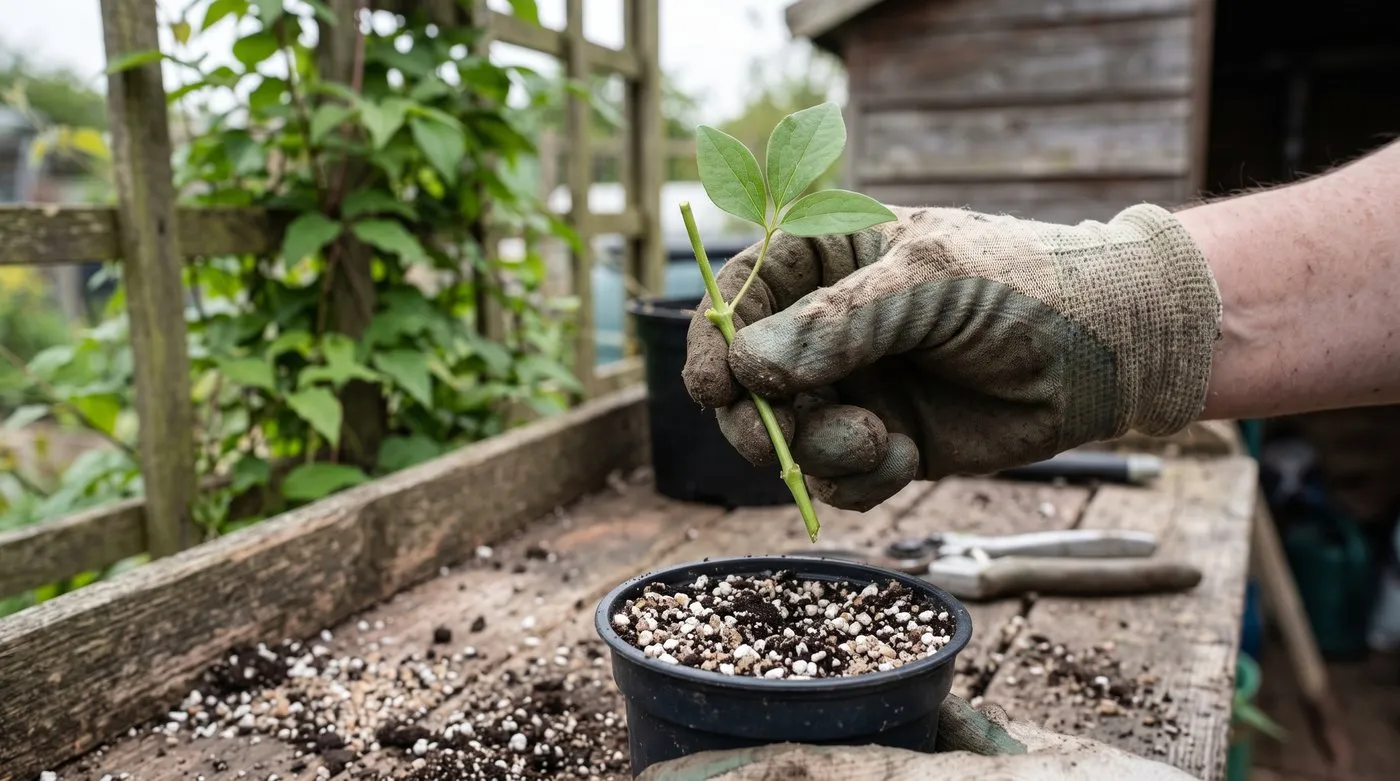
Clematis cuttings are cut between leaf joints, with one leaf left at the top. Push them in so the joint sits at the surface.
How to tell when cuttings have rooted
New growth at the tip and roots showing at the drainage holes are the signs to look for. Most May cuttings root within a few weeks, the easy ones sooner.
Don’t keep pulling cuttings up to check. A gentle tug is fine. If it resists, roots are holding it in place. Cuttings that turn black at the base or drop all their leaves have failed. Clear them out so the rot doesn’t spread.

Plenty of white roots means this pelargonium cutting is ready for its own pot.
Aftercare for newly rooted cuttings
Toughen rooted cuttings up gradually, then give each one its own pot.
- Open the cover a little more each day for about a week, so they get used to drier air.
- Pot each cutting on into a 9cm pot of peat-free multipurpose compost.
- Grow them on in a cold frame, a sheltered spot or the greenhouse. Water when the surface feels dry.
- Plant hardy ones out once they fill their pots with roots, usually late summer.
Keep tender plants such as pelargoniums, osteospermums and shrubby salvias frost-free over winter. A cold frame is handy for hardening off the tougher ones.

Rooted lavender cuttings get a pot each. A few months on, they’ll be ready for the border.
What to propagate when: a year of cuttings
May is the peak month for softwood cuttings, but there’s something to propagate most of the year.
| Month | What to propagate |
|---|---|
| March to April | Dahlia basal shoots from sprouted tubers. Divide summer perennials |
| May | Softwood cuttings of the twelve plants above |
| June to July | More softwood cuttings. Pinks from pipings, short shoots pulled out at a joint |
| August to September | Semi-ripe cuttings of shrubs such as box, hebe and lavender. Pelargonium cuttings for winter |
| October to February | Hardwood cuttings of shrubs and fruit bushes in an outdoor trench |
Want to split clumps instead? See our guide to dividing perennials in May. For woody shrubs later in the year, hardwood cuttings are even easier.
Common mistakes with May cuttings
- Letting cuttings wilt. Collect them in a bag and pot them up quickly. A floppy cutting rarely recovers.
- Taking flowering shoots. They put energy into flowers, not roots. Choose leafy, non-flowering tips.
- Using neat compost. It stays too wet and rots soft stems. Mix in plenty of perlite or grit.
- Putting them in full sun. Under a cover, sun cooks cuttings fast. Bright shade is best.
- Overwatering. Keep the compost just moist. Soggy compost causes rot at the base.
Got houseplants that need a trim too? Our guide on how to propagate houseplants has the indoor methods, and there are more seasonal jobs in our how-to guides.
Frequently asked questions
What is a softwood cutting?
A short piece of soft, new green growth taken from the tip of a shoot. It is usually 5-10cm long and still bendy rather than woody. Softwood cuttings root quickly in warm, humid conditions.
Why does May suit softwood cuttings?
Plants are full of soft new growth that roots quickly. The days are long and warm, and rooted cuttings have the whole summer to grow before autumn.
Do I need a heated propagator for softwood cuttings?
No, but gentle bottom heat helps many cuttings root faster. Easy plants such as pelargoniums and fuchsias root well on a bright windowsill. Keep all cuttings out of direct sun.
What compost should I use for cuttings?
Use a free-draining mix of peat-free compost and perlite. Half and half works well. Compost on its own holds too much water and can rot soft stems.
Is rooting hormone necessary?
No, most softwood cuttings root without it. It can help woodier plants such as rosemary, lavender and hebe. Dip only the cut end and tap off the excess.
How do I know if cuttings have rooted?
Look for new leaves at the tip and roots at the drainage holes. A rooted cutting also resists a very gentle tug. Pot it on once the roots are well developed.
What aftercare do new cuttings need?
Get them used to drier air gradually, then pot them on. Open the cover a little more each day for about a week. Pot them into small pots of peat-free compost and grow them on somewhere sheltered.
Our team produces practical UK gardening guidance from source research, contributor records and established horticultural practice. Editorial standards are overseen by Matt W.


