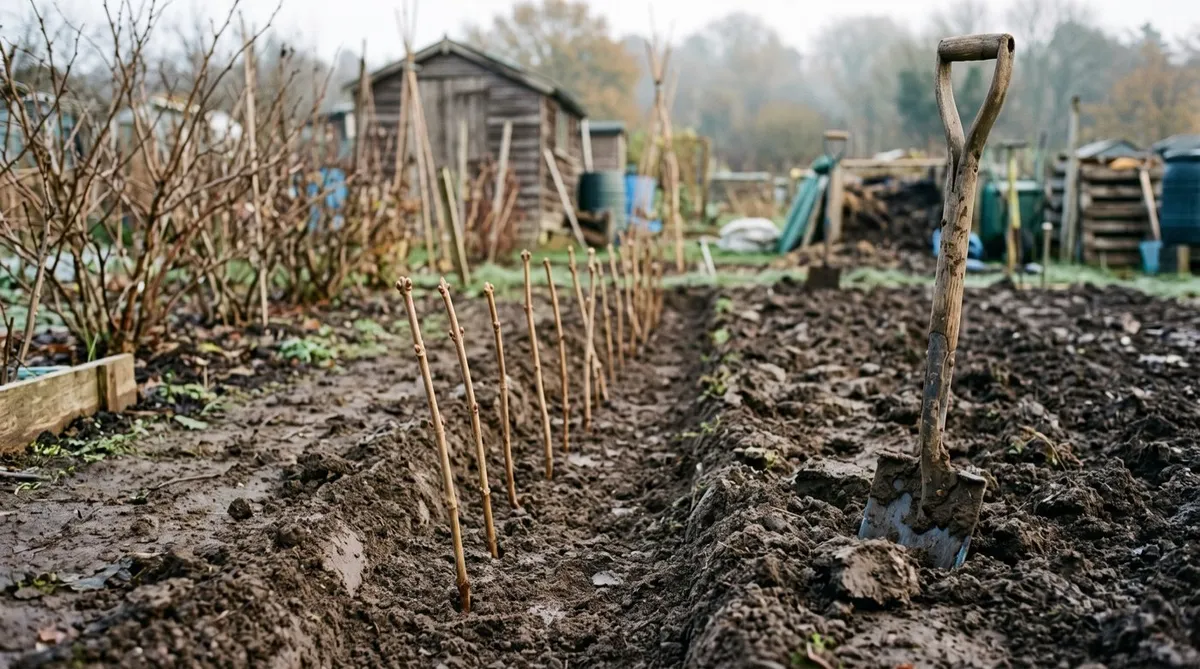
Key takeaways
- Take semi-ripe cuttings from mid-July to the end of September, when shoots are firm at the base and soft at the tip
- Go by the feel of the wood, not the date, as shoots ripen later in the north and in shade
- Cut 10-15cm lengths just below a leaf joint, strip the lower leaves and halve any very large ones
- Use gritty, free-draining compost and keep cuttings humid but not sealed shut
- Gentle bottom heat of around 18-21C helps them root before winter
Semi-ripe cuttings are the easiest way to get free shrubs and woody herbs. Take them from mid-July to the end of September, from this year’s shoots that are firm at the base and still soft at the tip. Lavender, rosemary, hebe, choisya and many evergreens all root well this way.
This guide covers just this late-summer method in detail. For a side-by-side look at every method, see the guide to propagation by cuttings, division and layering.
What is a semi-ripe cutting?
A semi-ripe cutting comes from this year’s growth once it has started turning woody. The base of the shoot is firm and may be turning light brown. The tip is still green and soft.
That mix is what makes them work. The firm base holds the cutting up and stops it rotting. The soft, growing tip helps it make roots.
Too early, and the shoot is soft all the way and wilts on the bench. That’s a softwood cutting, taken in spring and early summer. Too late, and the shoot is woody all the way. For deciduous shrubs, that wood is better saved for hardwood cuttings in winter.
How to tell when the wood is ready
Feel the shoot rather than trusting the calendar. A semi-ripe shoot is firm and woody at the base but soft and bendy at the tip.
Pick a side shoot of this year’s growth and bend it gently:
- Softwood flops and bends easily all the way along. Leave it a few more weeks.
- Semi-ripe resists at the base but the tip is still flexible. This is the one you want.
- Hardwood is stiff and woody right to the tip. It’s past the semi-ripe stage.
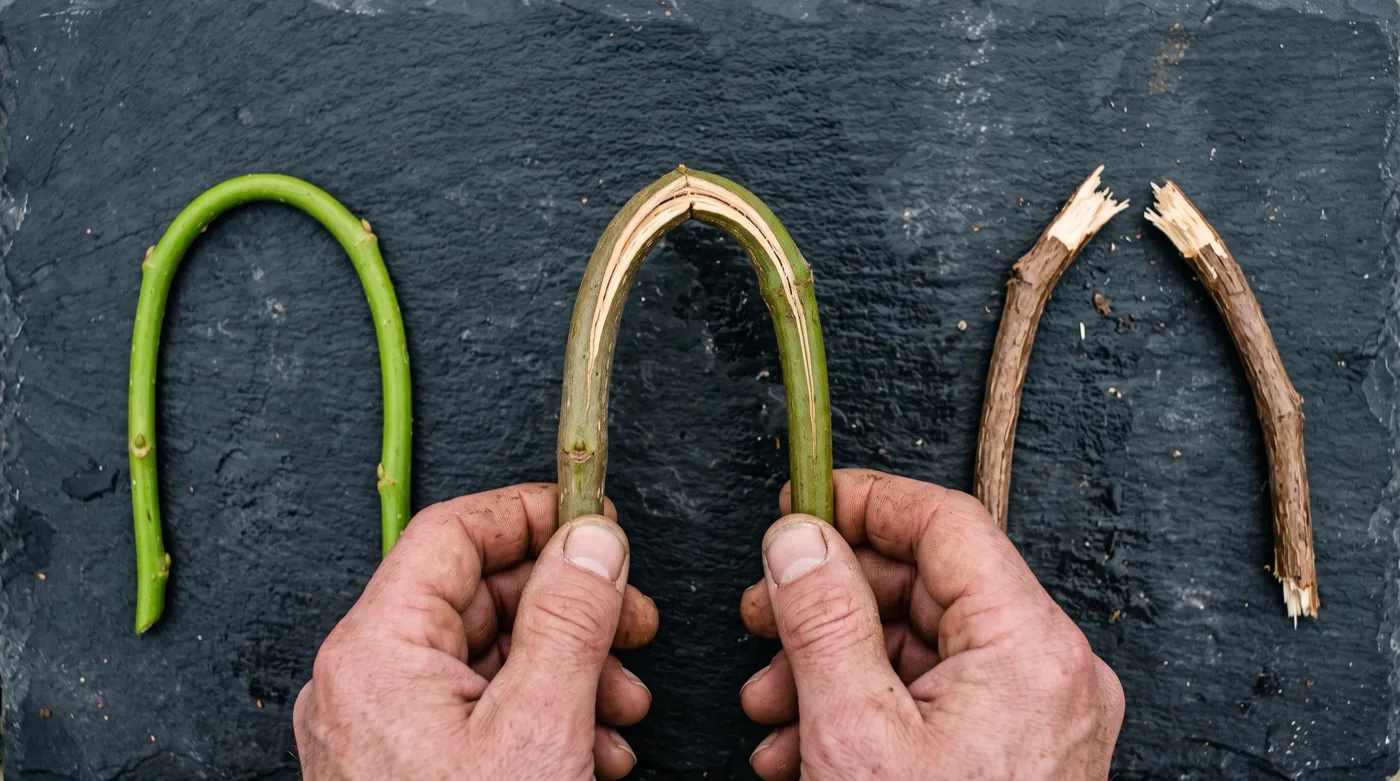
Soft shoots bend easily, semi-ripe ones push back at the base, and old woody stems snap. Test a few before you cut.
When to take semi-ripe cuttings in the UK
The window runs from mid-July to the end of September. Where you are and where the plant grows both shift the timing.
Shrubs in the warm south and south-west often ripen first. In northern England and Scotland, the same plants may not be ready until later in the season. A shrub against a sunny wall ripens sooner than one in shade.
Late August and early September are a good target in most gardens. Cuttings taken then usually have time to root before the cold arrives.
Cut in the morning, when shoots are full of water. Put each one straight into a plastic bag with a splash of water inside, then seal it and keep it in the shade until you’re ready.
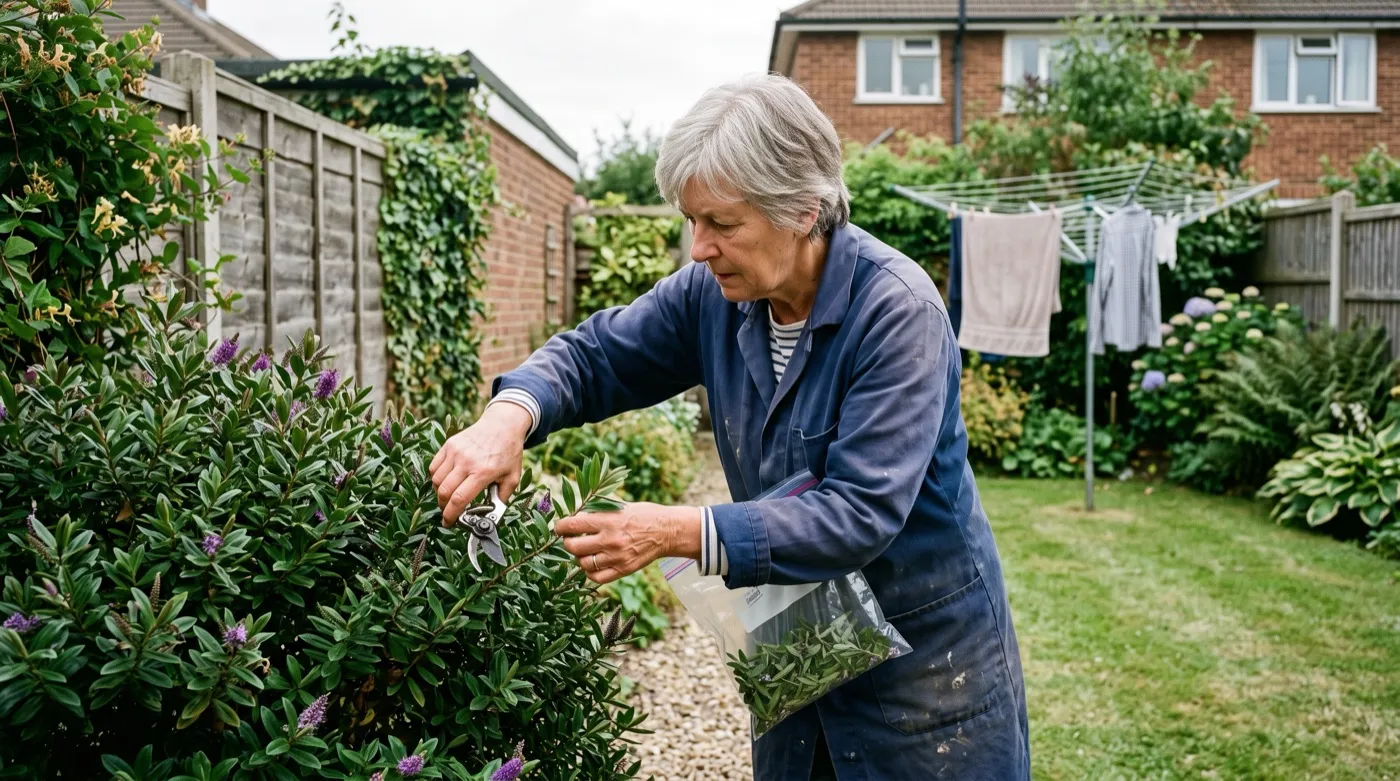
Pop cuttings straight into a bag as you go. They stay fresh and won’t wilt before you plant them.
How to prepare a semi-ripe cutting step by step
Work in the shade and keep the bag closed between cuttings. The whole job is quick once you’ve got the right shoots.
- Choose the shoot. Pick healthy side shoots without flowers, ideally with short gaps between the leaves.
- Cut to length. Trim to 10-15cm, cutting straight across just below a leaf joint.
- Strip the lower leaves. Remove the leaves from the bottom half. Any leaf buried in compost will rot.
- Keep a few leaves at the top. Leave two to four leaves. On plants with big leaves, such as hydrangea or fatsia, cut each leaf in half to cut water loss.
- Wound slow rooters. For camellia, rhododendron and magnolia, slice a thin strip of bark about 2.5cm long from one side of the base.
- Add rooting hormone if you like. Dip the base in rooting powder or gel, especially for slow, woody shrubs.
- Plant straight away. Push the cuttings into the compost so the bottom third is buried. Space them so the leaves don’t touch.
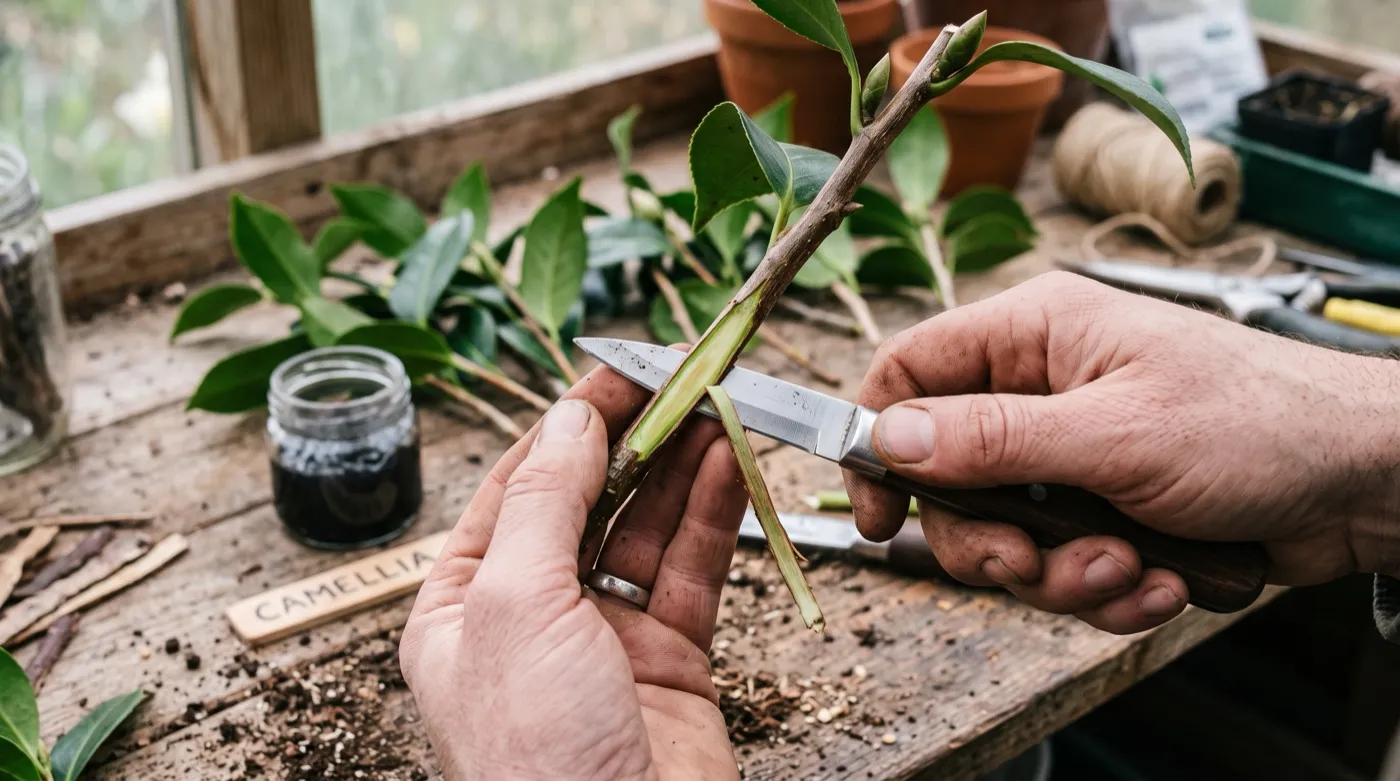
A shallow wound on a camellia cutting. It gives roots more places to start on a slow shrub.
Heel, mallet and nodal cuttings compared
Most shrubs root from a simple nodal cutting, cut just below a leaf joint. A few do better with a different base.
A heel cutting is a side shoot pulled downwards off the main stem so it comes away with a strip of older bark. Trim the ragged end neatly. It suits ceanothus, pyracantha and many conifers.
A mallet cutting keeps a short piece of the main stem across the base, like a little hammer. It suits shrubs with hollow or pithy stems, such as berberis.
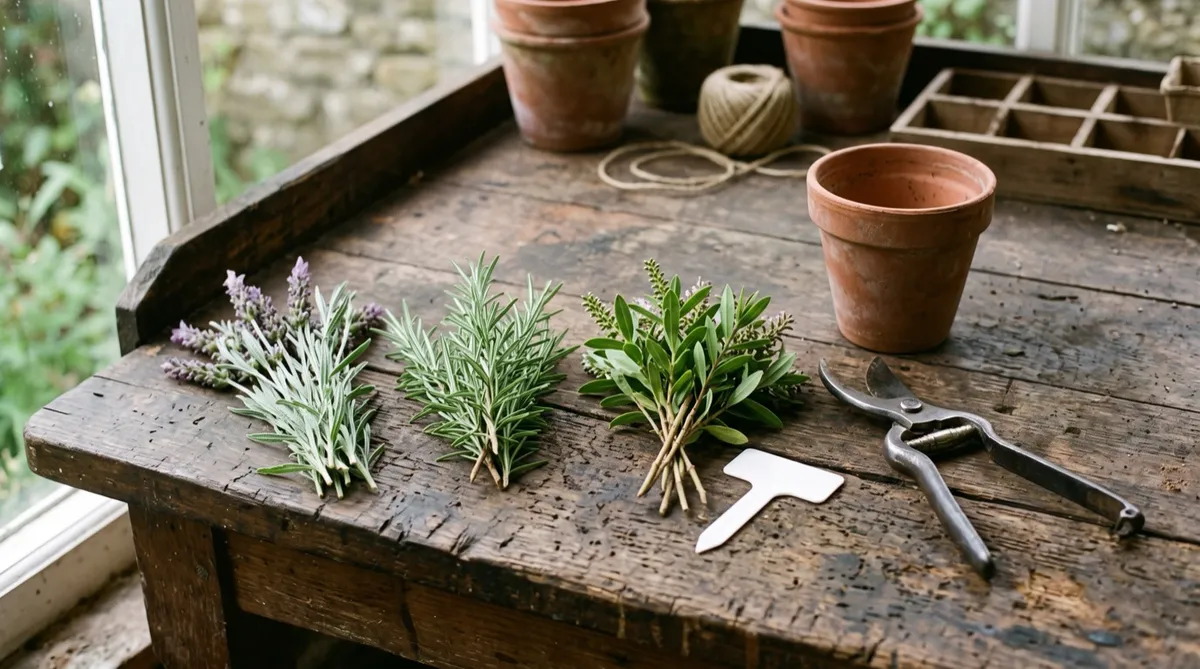
For lavender, sage and rosemary, short side shoots work well. The guide to taking rosemary cuttings walks through that one in detail.
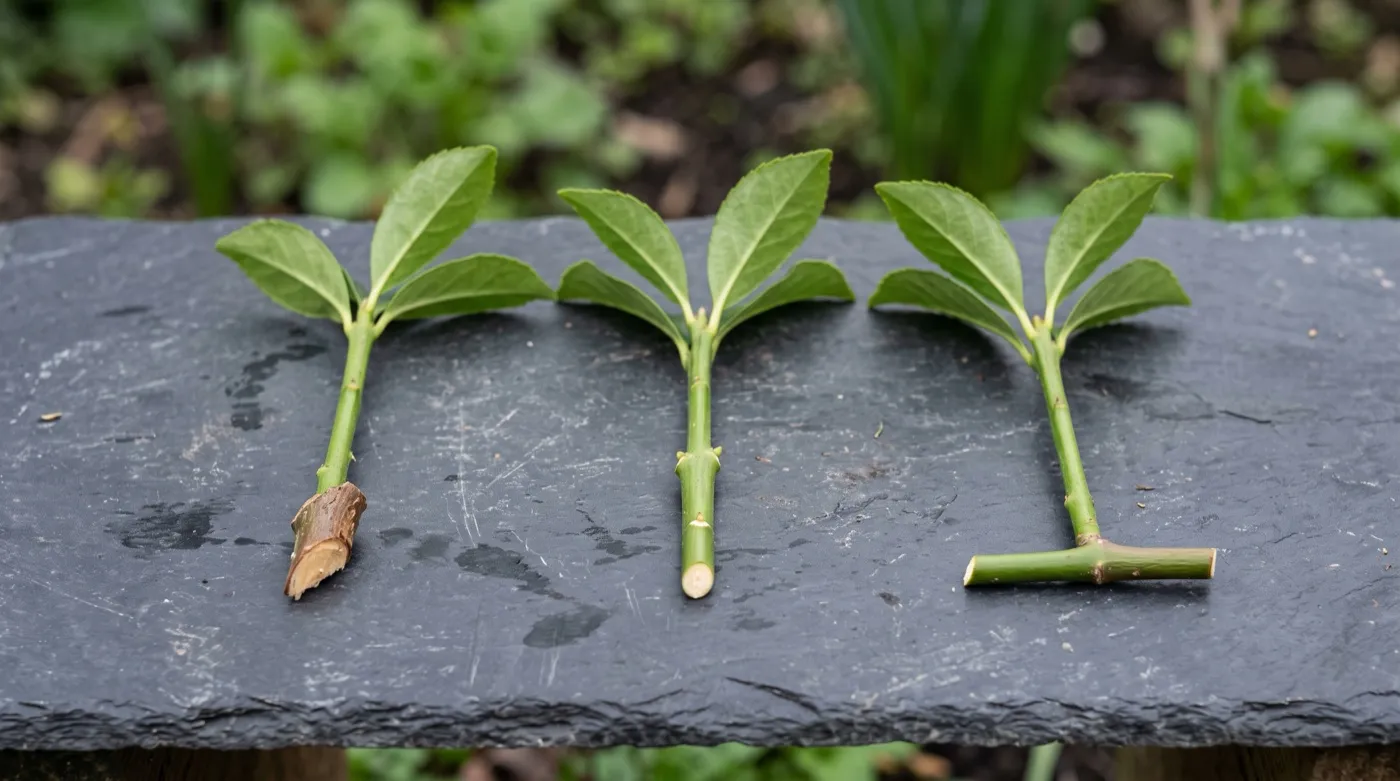
Heel cutting on the left, nodal in the middle and mallet on the right. The base shape is the only difference.
Best compost and setup for rooting cuttings
Semi-ripe cuttings want free-draining compost, gentle warmth and humid air. They don’t need a rich mix.
Mix peat-free multipurpose compost half and half with perlite, grit or sharp sand. Fill 9cm pots and push five or six cuttings round the edge, or use a seed tray for bigger batches.
Bottom heat helps a lot. A heated propagator or mat set to around 18-21C speeds rooting. An unheated cold frame or greenhouse works too, just more slowly.
Humidity stops the leaves drying out. Cover with a propagator lid or a clear bag held off the leaves with sticks. Open it for a few minutes most days, and pick off any leaves that go mouldy. Grey mould (botrytis) spreads fast where damp leaves touch.

Gritty compost and enough space between cuttings keep the air moving and the leaves dry.
Which shrubs root easily from semi-ripe cuttings?
Some shrubs root quickly and reliably. Others are slow and need more patience.
| How easy | Plants | What to expect |
|---|---|---|
| Easy | Hebe, choisya, escallonia, lavender, rosemary, fuchsia | Often root in a few weeks with warmth |
| Fairly easy | Ceanothus, pyracantha, photinia, box, salvia | Root more slowly, rooting hormone helps |
| Slow | Camellia, holly, magnolia, rhododendron | Wound the base and expect to wait months |
If you’re new to cuttings, start with hebe or lavender. Success with those builds confidence for the slower shrubs.
Aftercare from rooting to planting out
Don’t tug cuttings to see if they’ve rooted, as you’ll snap the new roots. Look instead for new growth at the tip or roots poking out of the drainage holes.
Once they’ve rooted, get them used to drier air over a week or two. Prop the lid open a little more each few days, then take it off.
Most cuttings are best left in their pot over winter. Keep them in a cold frame or cool greenhouse and water sparingly, as cold, wet compost causes more losses than frost. Pot them on into their own pots in spring once they’re growing again. Plant out once they’ve filled a 9cm pot with roots.
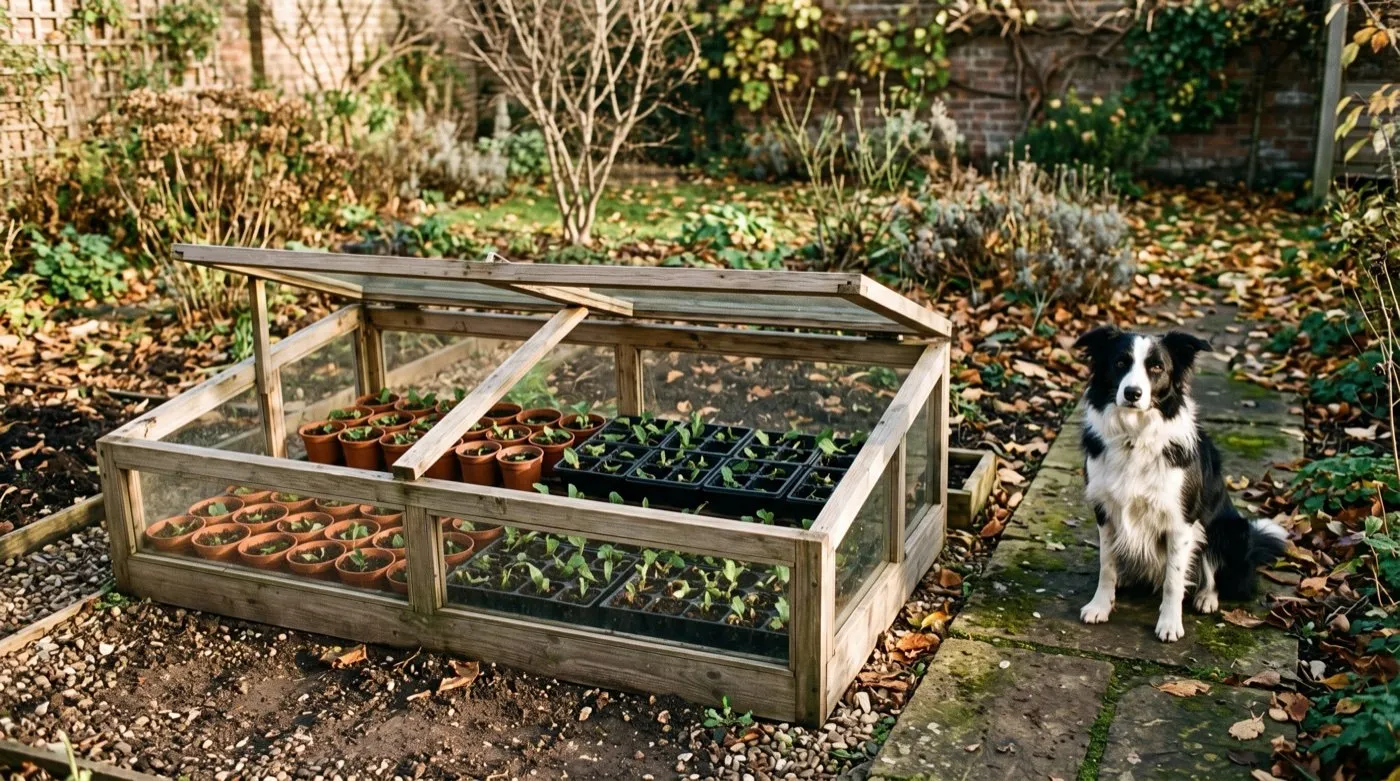
A cold frame keeps rooted cuttings frost-free and out of the worst wet. Open the lid on mild, dry days.
Semi-ripe cuttings month by month
| Month | What to do |
|---|---|
| June | Check shoots. Most are still soft, so take softwood cuttings instead |
| July | Start testing shrubs on sunny walls from mid-month. Clean pots and mix compost |
| August | The main month for most shrubs. Cut in the morning |
| September | Still a good month, especially in the north. Bottom heat helps more now |
| October | Rooting is less reliable. Vent frames on dry days |
| November | Water sparingly. Switch to hardwood cuttings of deciduous shrubs |
| December to January | Keep frost-free. Pick off mouldy leaves and water only when dry |
| February | Look for new growth on early rooters like hebe |
| March | Pot on rooted cuttings into their own pots once they’re growing |
| April to May | Harden off and plant out the strongest |
Common mistakes with semi-ripe cuttings
- Going by the date, not the wood. Shoots ripen at different times in different gardens. Feel them first.
- Letting cuttings wilt. Cuttings left in a hot trug lose water fast and may never recover. Bag them straight away and keep them shaded.
- Using flowering shoots. A shoot in flower spends its energy on blooms, not roots. Choose non-flowering side shoots.
- Sealing them in with no air. A closed bag with no air flow grows grey mould. Open it for a few minutes most days.
- Potting on too soon. Tiny new roots rot in a big pot of cold, wet compost. Wait until spring.
What to do if you miss the semi-ripe window
You haven’t lost the year. Deciduous shrubs, currants, willow and dogwood all root well from hardwood cuttings in winter. Some soft plants also root happily in a jar, as shown in the guide to rooting cuttings in water.
In spring, the cycle starts again with softwood cuttings. The list of plants to propagate in May is a good place to start. More practical projects are in the how-to section.
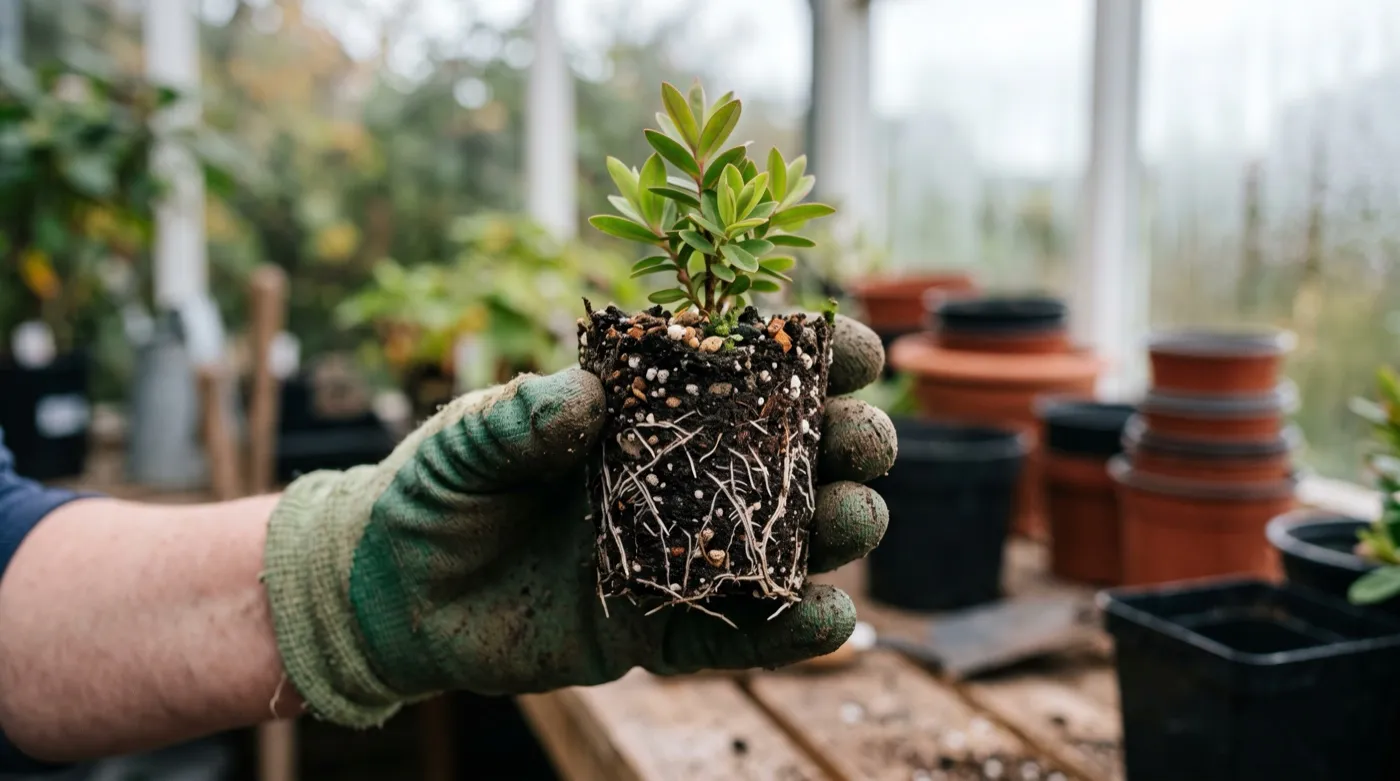
White roots right round the compost mean the cutting is ready for its own pot.
Once your shrub cuttings have rooted, try the same trick on the kitchen windowsill with the guide to propagating houseplants.
Frequently asked questions
When should I take semi-ripe cuttings in the UK?
From mid-July to the end of September. Shoots ripen later in the north and in shady spots, so go by the feel of the wood. Late summer cuttings usually have time to root before winter.
What is the difference between softwood and semi-ripe cuttings?
Softwood is soft all the way; semi-ripe is firm at the base. Softwood cuttings are taken in spring and early summer and wilt quickly. Semi-ripe cuttings come later, hold up better and are less likely to rot.
How do I know if a cutting is semi-ripe?
The base feels firm and woody while the tip is still soft. Bend the shoot gently. A softwood shoot flops and bends easily. A semi-ripe one resists at the base, and a fully woody one is stiff all the way.
Do semi-ripe cuttings need rooting hormone?
Easy plants don’t, but it helps harder ones. Hebe, lavender and rosemary usually root without it. For slower shrubs like camellia and ceanothus, dip the base in rooting hormone before planting.
How long do semi-ripe cuttings take to root?
Anything from a few weeks to several months. Easy shrubs like hebe can root in a few weeks with bottom heat. Camellia and holly are slow and may not root until spring. Don’t tug them to check.
What is a heel cutting and when should I use one?
It’s a side shoot pulled off with a strip of older bark at the base. It helps plants that are slow to root from normal cuttings, such as ceanothus, pyracantha and many conifers. Trim the ragged tail neatly before planting.
Can I take semi-ripe cuttings in October?
You can, but they root less reliably. Light and warmth are fading, so cuttings often sit without rooting all winter. Wait until the leaves fall and take hardwood cuttings of deciduous shrubs instead.
Our team produces practical UK gardening guidance from source research, contributor records and established horticultural practice. Editorial standards are overseen by Matt W.