Key takeaways
- Soft, sappy stems root best in water; woody, hairy and succulent plants usually do better in compost
- Cut just below a leaf node, as that's where the roots form
- Strip any leaves that would sit underwater, or the jar turns slimy
- Change the water every few days and keep the jar in bright, indirect light
- Pot up when roots are 3-5cm long, before they grow long and tangled
- Use a gritty compost and cover new pots for a week to help them settle
Rooting cuttings in water is the easiest way to make free plants, and it’s fun to watch. Pop a soft stem in a jar on the windowsill and white roots often appear within a couple of weeks. No propagator, no compost and no guessing what’s happening below the surface.
It works best for soft, sappy plants such as pothos, tradescantia, mint and basil. Woody plants usually root better in compost. For a side-by-side look at water, compost and division for indoor plants, see the guide to propagating houseplants.
Which plants root well in water?
Soft-stemmed plants with plenty of leaf nodes root best in water. Woody, hairy-leaved and succulent plants usually don’t.
Houseplants are the stars. Pothos roots very reliably, which is why it’s everyone’s first try. Tradescantia, coleus, heartleaf philodendron, Swedish ivy and spider plant babies all root freely in a jar.
Soft herbs are just as easy. Basil and mint are the classics, and lemon balm, oregano and marjoram usually take too. One pot of supermarket basil can become a whole windowsill of plants.
Some garden plants root in water as well. Fuchsias do well, and soft herbaceous salvias usually take. Willow roots so readily that it’s the basis of willow water. Tomato sideshoots root in a glass of water too. The guide to tomato sideshoot cuttings shows how.
| Plant | Roughly how long to roots | Best time to take |
|---|---|---|
| Pothos, tradescantia | 1-2 weeks | Any time indoors |
| Coleus | 1-2 weeks | Late spring to summer |
| Basil, mint | 1-2 weeks | Late spring to summer |
| Spider plant babies, Swedish ivy | About 2 weeks | Any time indoors |
| Fuchsia | 2-3 weeks | Spring to late summer |
| Soft salvias | 2-4 weeks | Late spring to midsummer |
| Willow | Often within a week or two | Spring to autumn |
Timings vary with warmth and light. Indoor plants root all year because the house stays warm. Garden plants follow the seasons.
Plants that root better in compost
Woody, hairy and succulent plants tend to rot in water before they root. Save yourself the disappointment and give them compost.
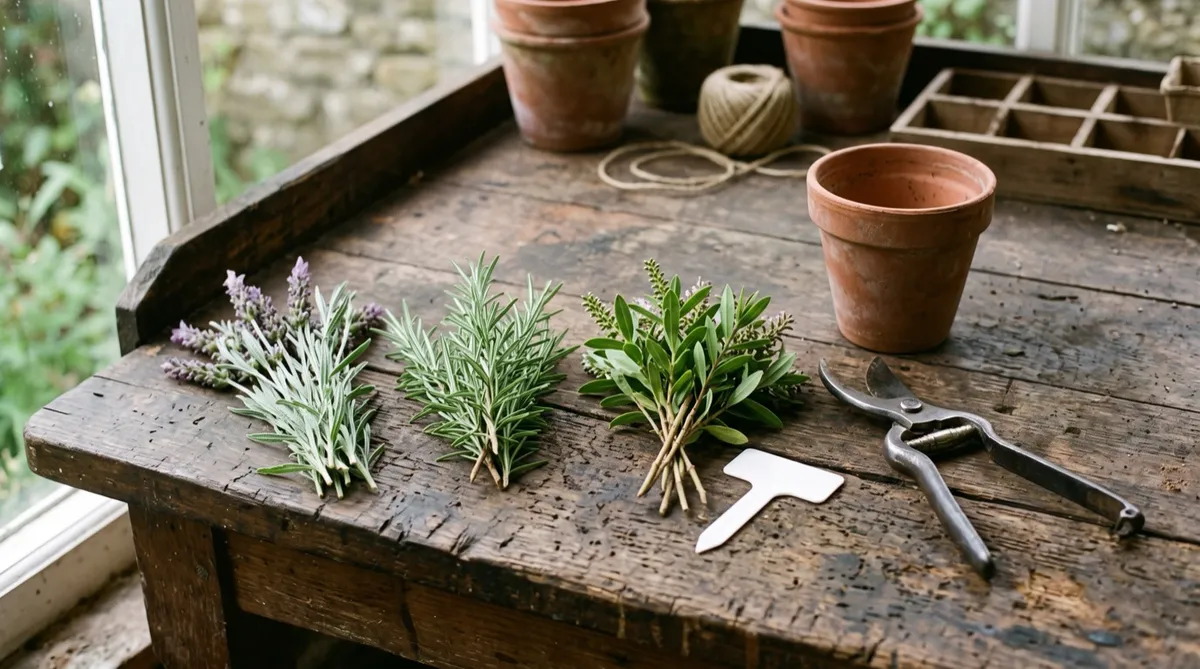
- Lavender stems often rot in water. Take cuttings into gritty compost instead.
- Rosemary sometimes roots in water but is more reliable in compost. The rosemary cuttings guide shows both methods.
- Pelargoniums (the plants many people call geraniums) rot easily in water. Push them into barely moist compost.
- Succulents and cacti rot in water. Let the cut end dry for a few days, then root them in gritty compost.
- Fuzzy-leaved plants such as African violets dislike wet leaves. Use compost.
A handy test: if you’d normally take it as a semi-ripe or hardwood cutting, it belongs in compost. The guide to cuttings, division and layering covers those methods.
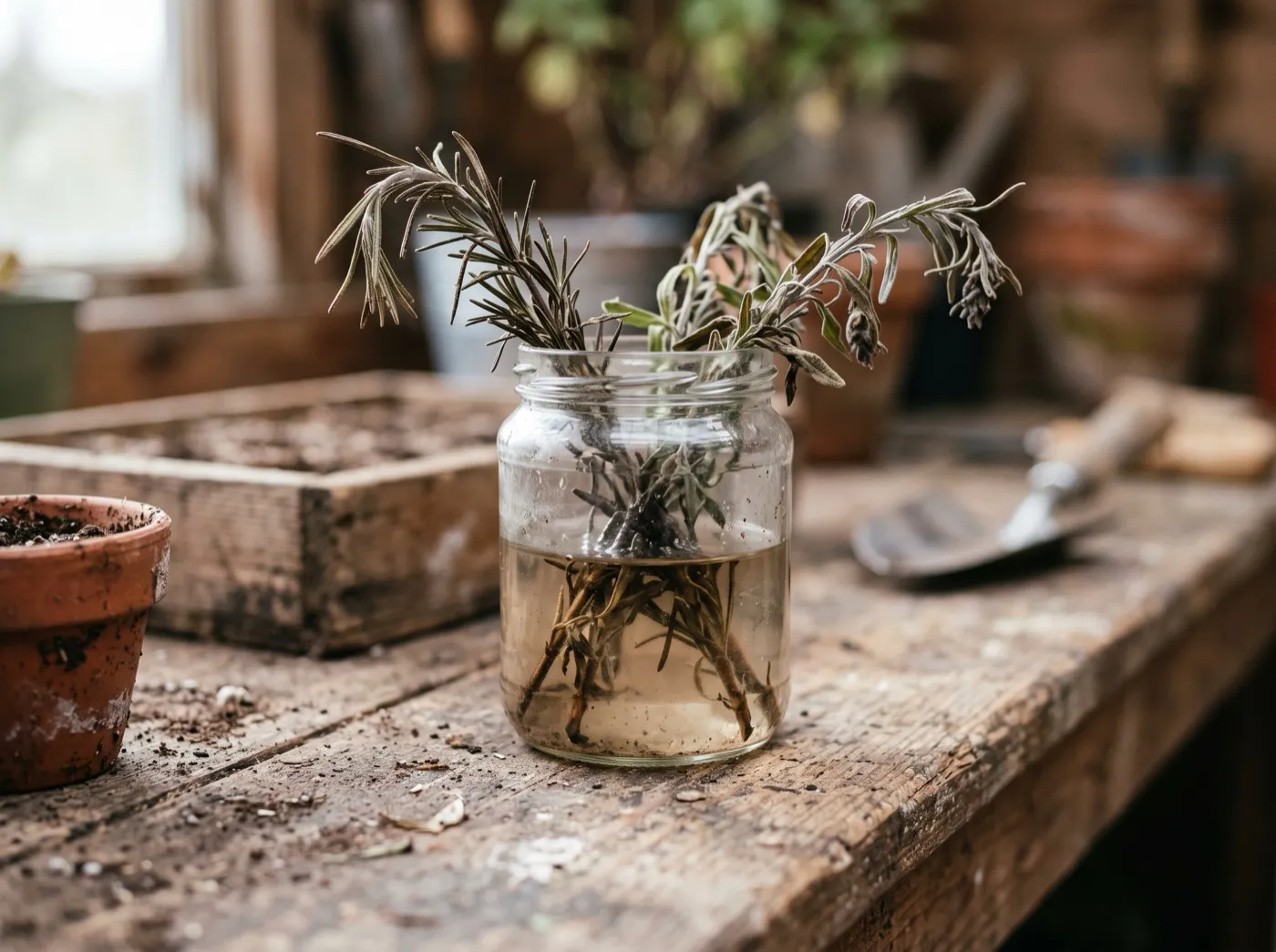
Woody, aromatic stems like these often rot in water, especially if it goes stale. Gritty compost suits them better.
How to root cuttings in water, step by step
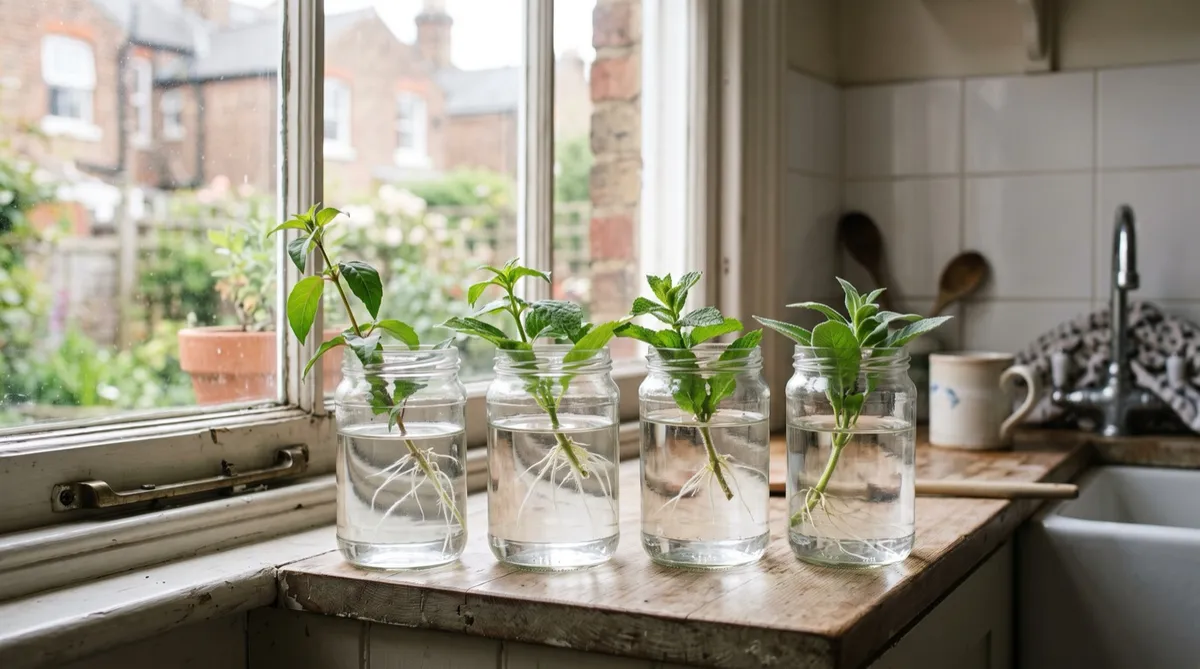
The secret is simple: keep a leaf node in clean water. Roots grow from the nodes, the little bumps where leaves join the stem.
- Choose healthy, non-flowering growth. Aim for a stem about 8-12cm long with two or three nodes.
- Cut just below a node with clean, sharp scissors or a knife. A crushed cut is more likely to rot.
- Strip the lower leaves. No leaf should sit in the water, or it will rot and turn the jar slimy. Keep two or three leaves at the top.
- Stand it in a clean glass jar of tap water, with one or two nodes under the surface.
- Put it somewhere bright but out of direct sun. A north- or east-facing windowsill is ideal. A hot, sunny sill warms the water and encourages algae.
- Change the water every few days, or sooner if it looks cloudy. Top it up in between.
That’s it. The easy plants do the rest themselves.
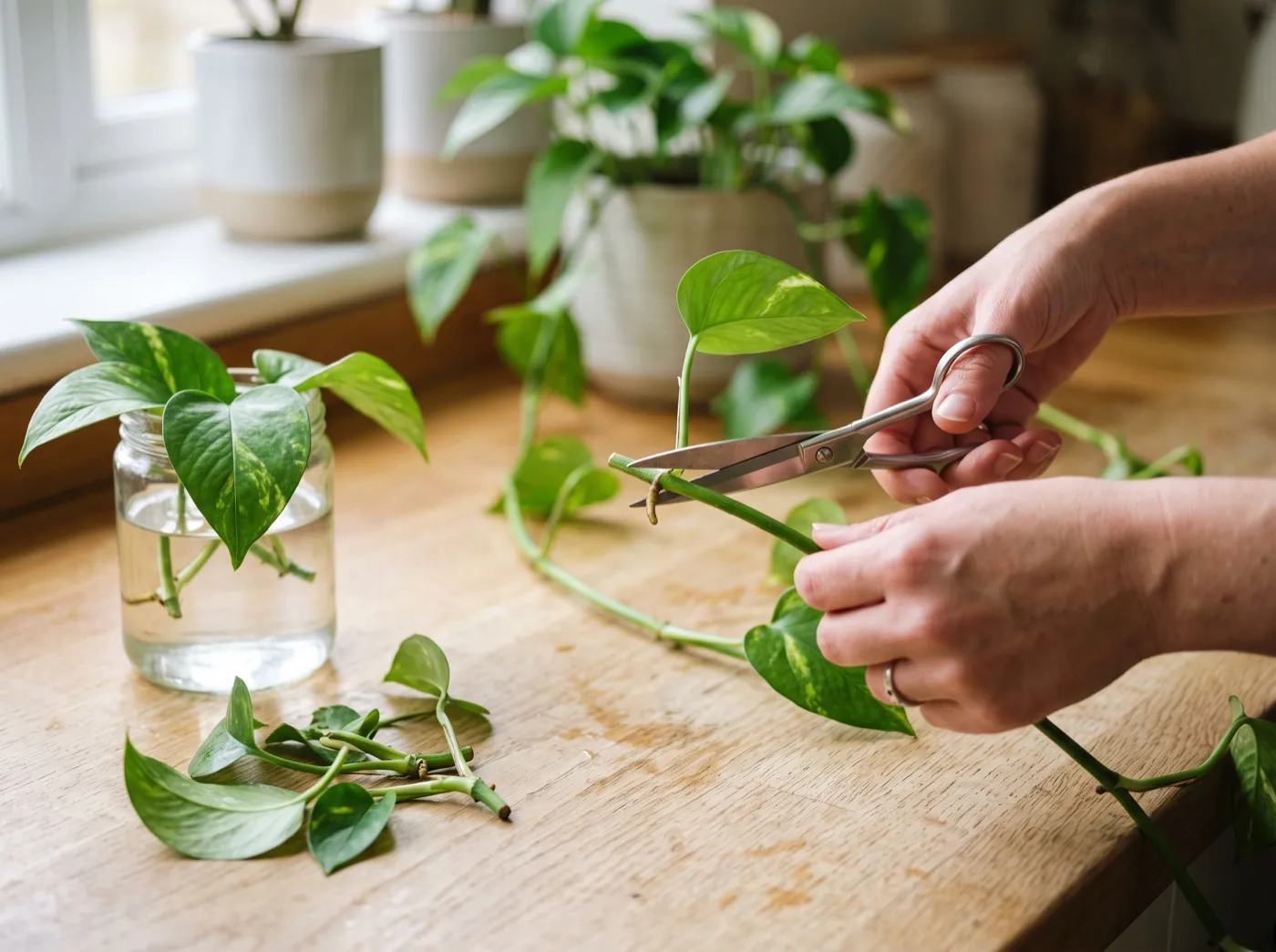
Cut just below a node, the small bump where a leaf joins the stem. That’s where the new roots will grow.
Why water roots struggle in compost
Roots grown in water are thin, white and fragile. Roots grown in compost are tougher. When you pot up a water-rooted cutting, its roots have to adjust, and some may break or rot.
That’s why freshly potted cuttings often sulk for a week or two and droop a little. Most recover, but you lose some of the head start.
The fix is to pot up early. Move the cutting when its roots are just 3-5cm long. Short roots settle in faster and are less likely to snap. Waiting until the jar is full of long, tangled roots is the most common mistake.
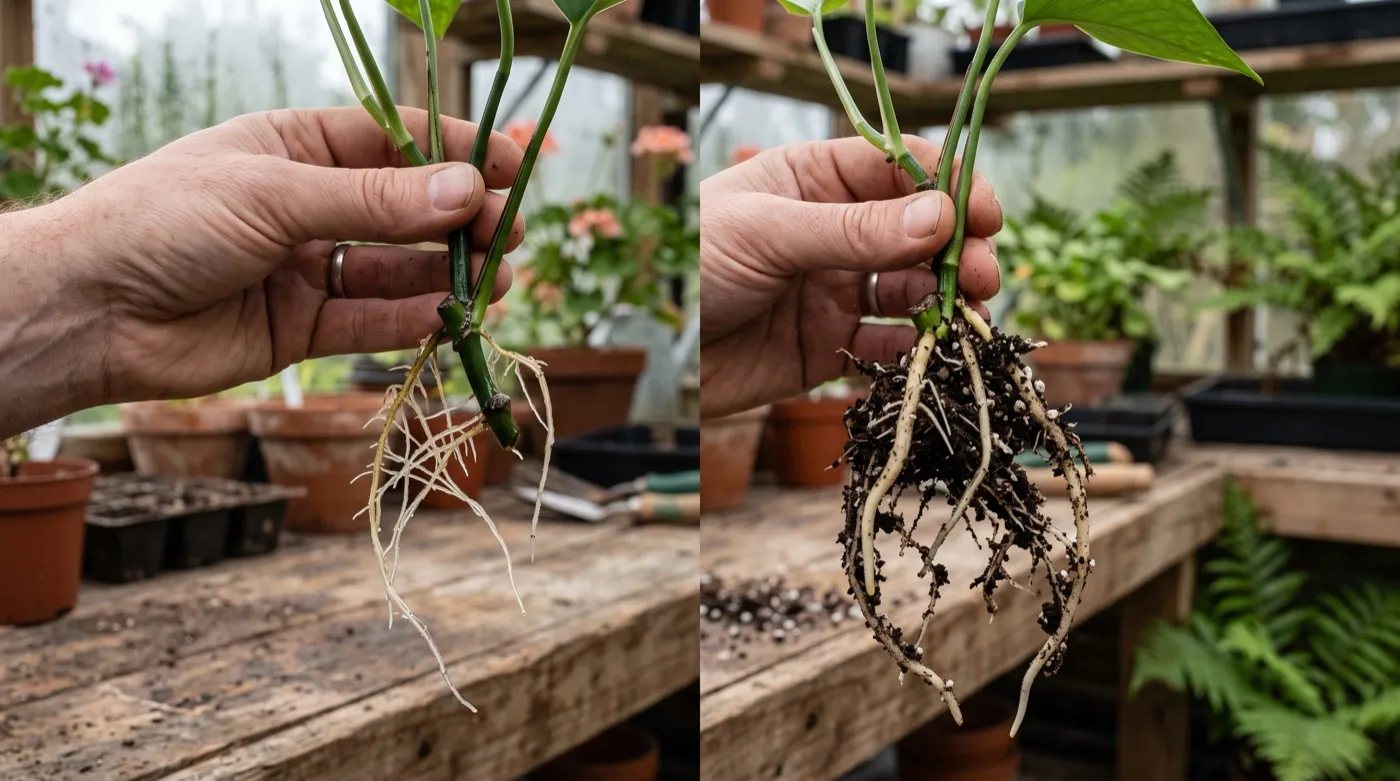
Water roots (left) are thin and fragile, while compost roots (right) are tougher. That’s why the move into a pot is the tricky bit.
How to move water cuttings into compost
Pot water-rooted cuttings into a gritty, free-draining mix while the roots are still short, then keep the air around them humid for a week.
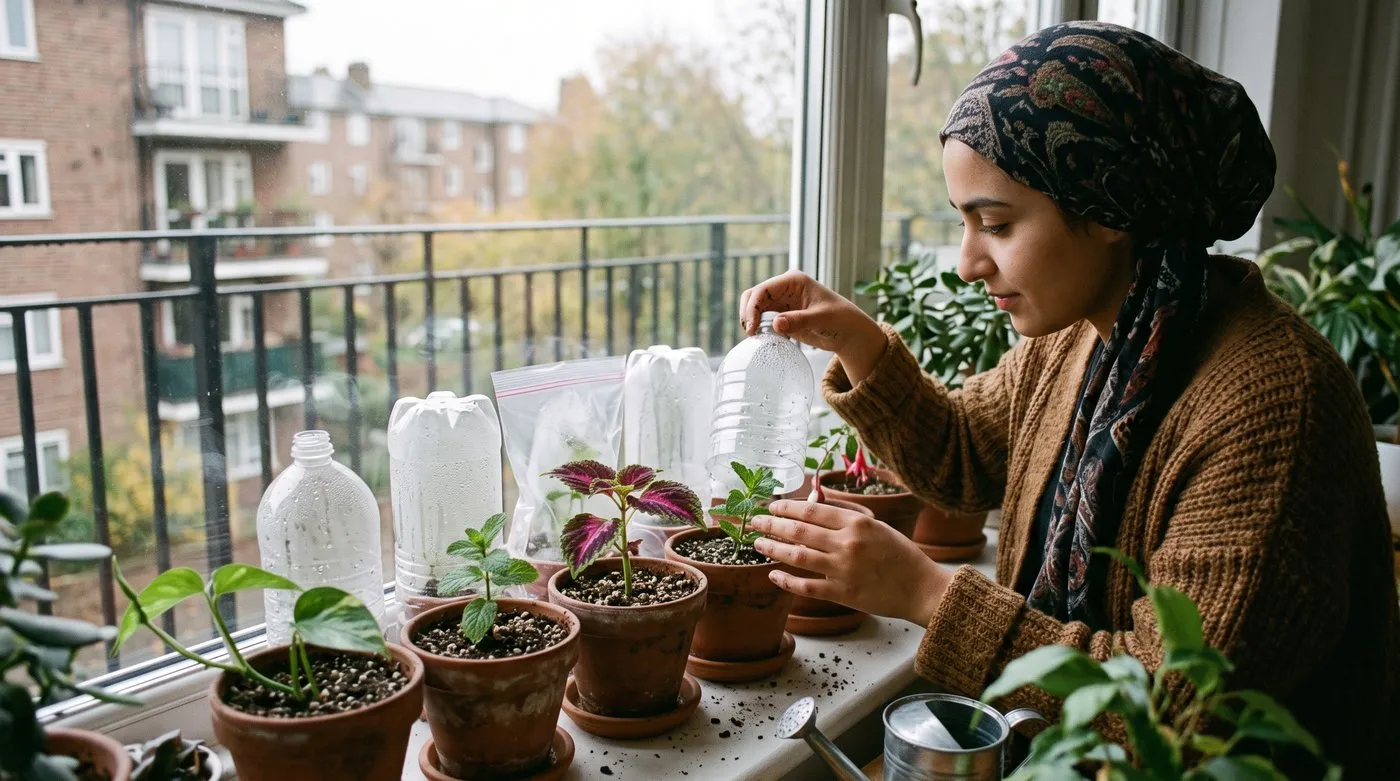
A clear cover keeps the air humid for the first week, which helps fragile water roots settle into compost.
- Mix the compost. Use multipurpose compost with a generous handful of perlite or fine grit mixed in.
- Make a hole in a small pot of the mix with a pencil or your finger.
- Lower the roots in gently, then trickle compost around them. Don’t press hard, as water roots snap easily.
- Water once to settle the compost.
- Cover the pot with a clear plastic bag or a cut-down drinks bottle for about a week. Keep it somewhere bright but out of direct sun.
- Take the cover off gradually. Remove it for an hour or so a day, then leave it off once new leaves appear.
Keep the compost just moist, never soggy. A waterlogged pot is the main reason potted-up cuttings fail. If tiny flies hover over the compost, it’s too wet. The fungus gnats guide explains how to deal with them.
Do you need rooting powder or willow water?
For easy plants, no. Pothos, tradescantia and mint root happily in plain tap water.
Rooting powder is made for cuttings pushed into compost, so it isn’t much use in a jar. Willow water is a traditional home-made rooting aid that some gardeners like for trickier plants such as salvias and fuchsias. Evidence that it helps is mixed, but it does no harm.
To make it, chop a handful of thin, young willow stems into short pieces. Steep them in a jug of water for a day or two, then strain and use the water for your cuttings. If you grow willow in the garden, it costs nothing to try.
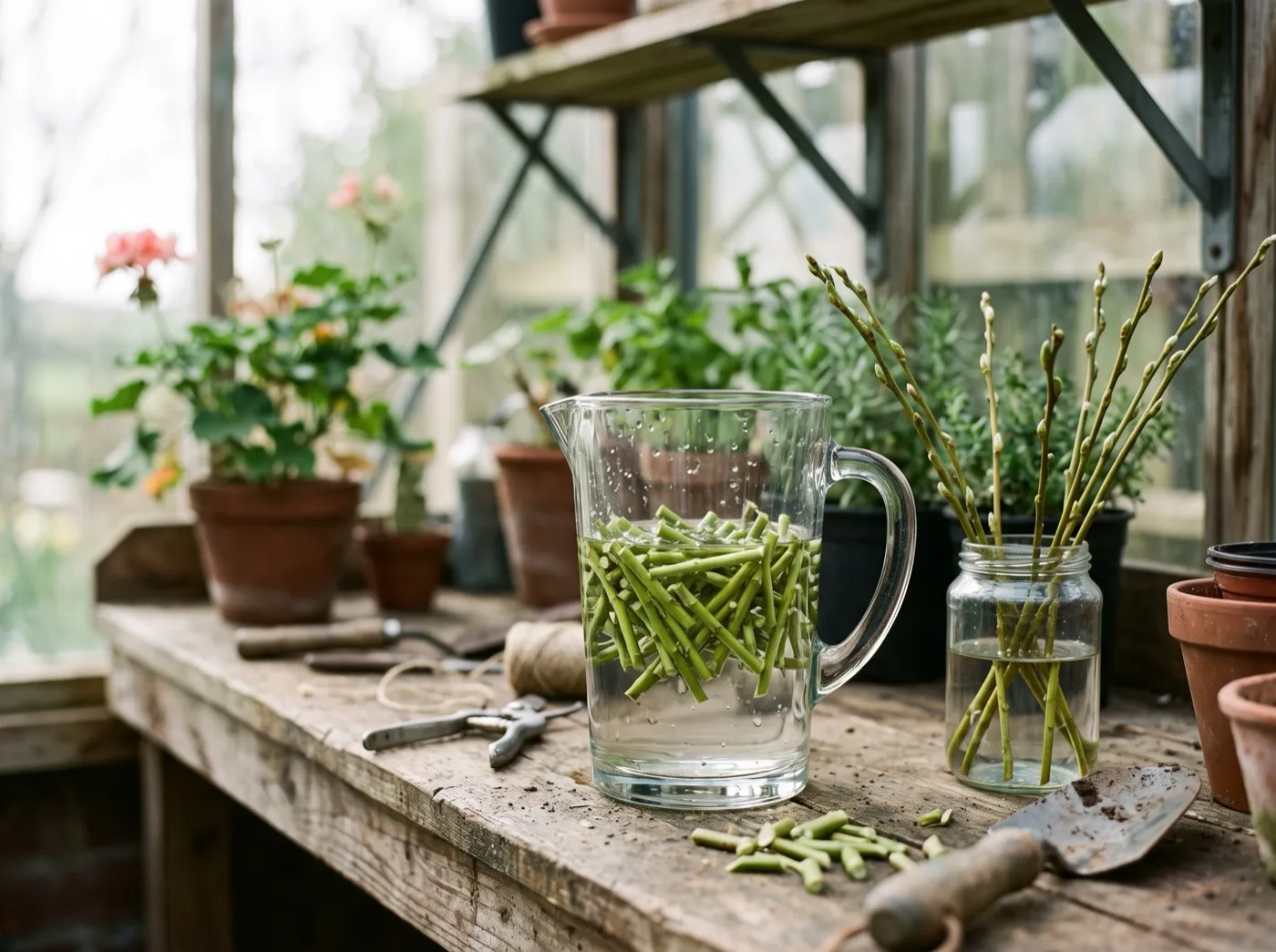
Chopped young willow stems soaking in water. Some gardeners like willow water as a home-made boost for trickier cuttings.
Rooting herbs in water for the kitchen
Basil and mint are perfect first projects. Take a 10cm non-flowering shoot, cut just below a node, strip the lower leaves and stand it in water. Roots usually show within a week or two.
Basil is quick but slimes easily, so change its water often and pot it up promptly. The basil growing guide covers what to do next. Mint barely ever fails. Once potted, it can spread fast, so keep it in its own pot.
Lemon balm, oregano and marjoram root the same way. Woody herbs such as thyme and sage are better as compost cuttings.
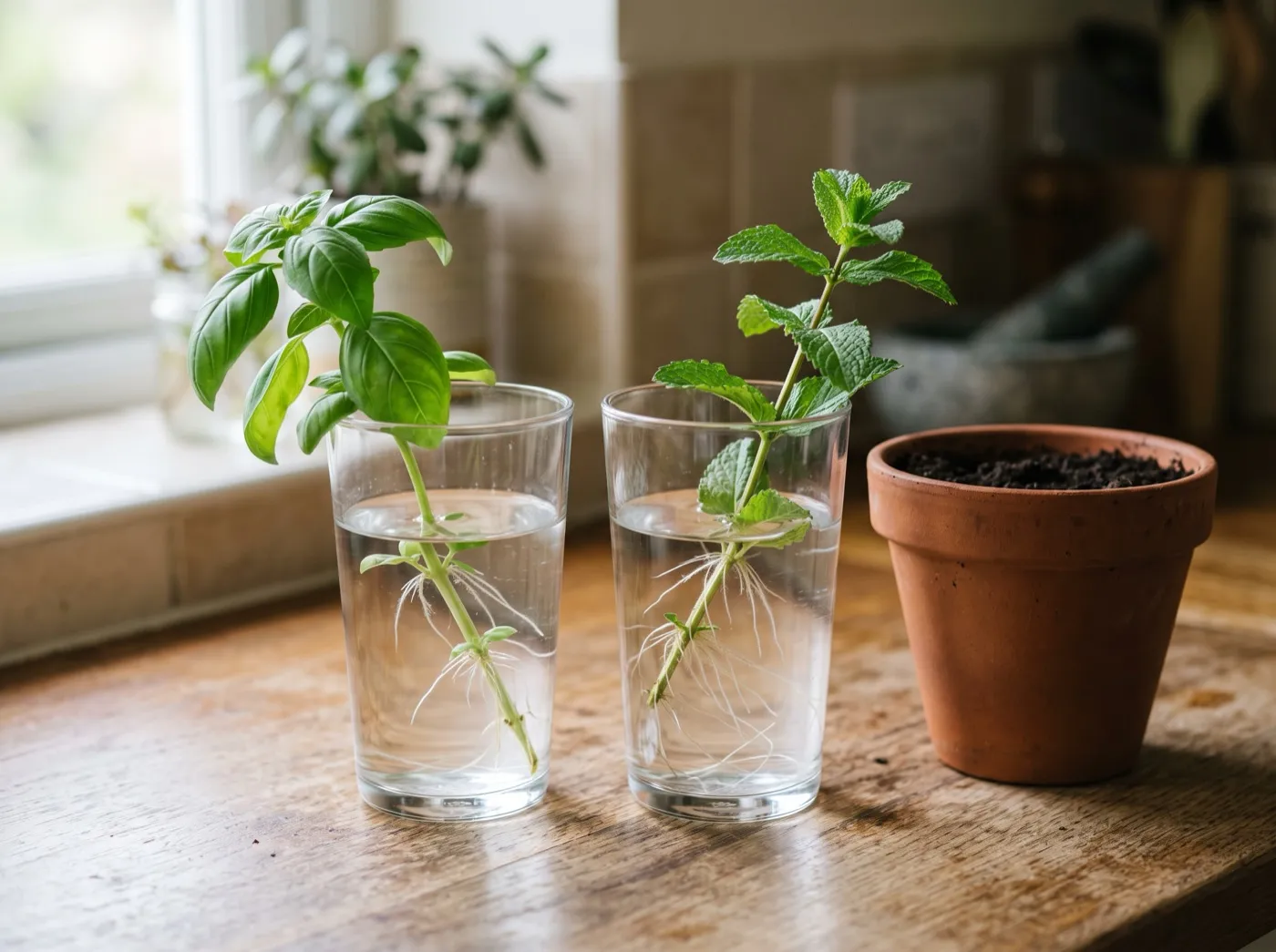
Basil and mint usually root within a week or two. Change basil’s water often, as it turns slimy quickly.
Rooting fuchsias and other garden plants in water
Some garden plants root in water, but compost is usually more reliable. A jar is a fun, low-effort way to make one or two new plants.
Fuchsias are the best of the garden plants for water rooting. Soft tip cuttings taken from spring to late summer usually root within a few weeks. Pot them up early. The fuchsia growing guide explains how to grow them on.
Soft salvias often root in water too. Woody shrubby salvias are better in gritty compost.
Hydrangeas can root in water, but their water roots are weak and many fail after potting. They root much better as softwood cuttings in compost in early summer.
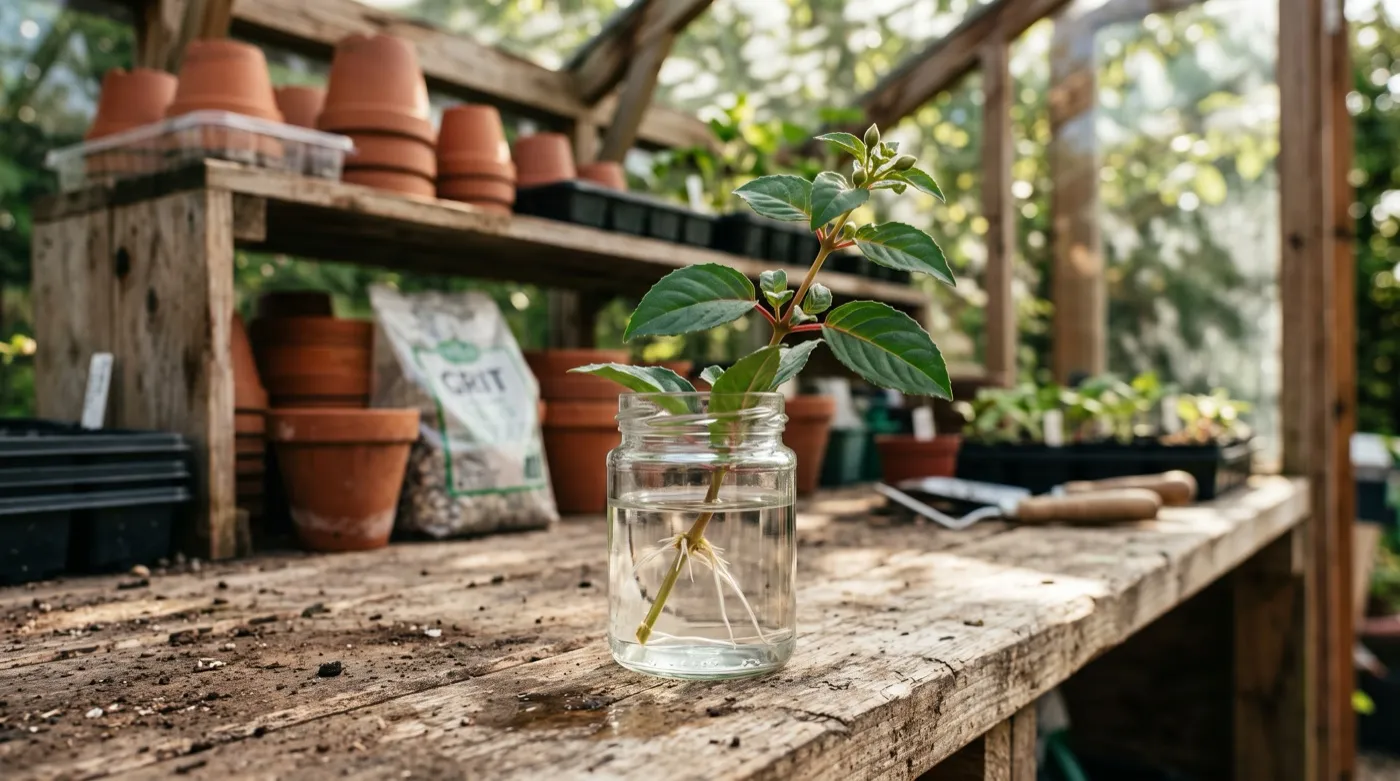
A fuchsia tip cutting rooting in a jar. Pot it up while the roots are short for the best start.
When to root cuttings in water through the year
| Month | What to root |
|---|---|
| January to March | Houseplants such as pothos, tradescantia and spider plant babies |
| April to May | Mint, fuchsias and the first coleus and basil |
| June to July | Basil, coleus, soft salvias, tomato sideshoots |
| August to September | Fuchsias, mint and any last soft herbs |
| October to December | Houseplants indoors; pot up anything rooted earlier |
Common water-rooting problems
Slimy water and soft stems. Stale water or leaves underwater are to blame. Change the water every few days, strip submerged leaves and wash the jar. A stem that has gone soft and brown at the base won’t recover.
No roots after several weeks. It’s probably too cold or dark, or it’s the wrong plant. Move the jar somewhere warmer and brighter. If it’s woody, try a compost cutting instead.
Green algae in the jar. Light on the water feeds it. Use a coloured jar, wrap it in paper or move it out of direct sun. Regular water changes help.
Cuttings collapse after potting. Pot them up sooner, use a gritty mix, keep it barely moist and cover the pot for a week.
Frequently asked questions
Which plants root fastest in water?
Pothos, tradescantia, coleus, mint and basil are among the fastest. They often show roots within one to two weeks. Fuchsias and soft salvias take a little longer. Willow roots very readily. Woody and succulent plants are better rooted in compost.
How long can you leave cuttings in water before potting them?
Pot them up once the roots are 3-5cm long. That’s usually two to four weeks after taking the cutting. Leave them much longer and the roots grow long and tangled, so they break more easily when you pot them. A cutting can live in water for months but slowly weakens without compost.
Why are my water cuttings rotting instead of rooting?
Stale water and leaves sitting underwater are the usual causes. Change the water every few days and strip any leaves below the surface. Use a clean jar. If the stem base has gone soft and brown, start again with a fresh cutting.
Do you need rooting hormone to root cuttings in water?
No, easy plants root in plain water without help. Rooting powder is made for cuttings pushed into compost, so it isn’t needed in a jar. Some gardeners use willow water as a traditional rooting aid for trickier plants.
Why do my water-rooted cuttings die after potting into soil?
The move from water to compost is a shock for the roots. Roots grown in water are fine and fragile. Pot up early, at 3-5cm, into a gritty mix. Keep the compost just moist and cover the pot with a clear bag for about a week.
Can you root rosemary or lavender in water?
Rosemary sometimes roots in water, but lavender often rots. Both root more reliably as cuttings in gritty compost. Woody, hairy-leaved and succulent plants generally prefer compost to a jar.
What is the best jar and water for rooting cuttings?
A clean, clear glass jar and ordinary tap water work well. Clear glass lets you watch the roots and spot cloudy water. Top up as the level drops and wash the jar between batches. A coloured jar helps cut down green algae in a bright room.
Once your first jar has rooted, try the plant that starts most people off with the guide to growing pothos, or browse more how-to guides.
Our team produces practical UK gardening guidance from source research, contributor records and established horticultural practice. Editorial standards are overseen by Matt W.