Key takeaways
- Pinched-out sideshoots from cordon tomatoes root easily into new plants
- Take soft green shoots 8-12cm long, in the morning
- Root them in 3-4cm of water or in moist compost, warm and bright
- Roots usually appear within one to two weeks
- Take cuttings by mid-July so the plants have time to ripen fruit
- A cutting is an exact copy of its parent, so F1 varieties stay true
Those tomato sideshoots you pinch out every week can become free plants. Stand one in a jar of water on a windowsill and it usually grows roots within a week or two. Take cuttings by mid-July and the new plants still have time to crop this summer.
This guide is about turning sideshoots into new plants. If you want to know which shoots to remove in the first place, the guide to pinching out tomato sideshoots explains when and how.
Why tomato sideshoots root so easily
Tomato stems are made to root. Look at the base of a tomato plant and you’ll often see small bumps on the stem. These are ready-made root buds. Give them water and warmth and they grow into roots within days.
That’s why tomatoes need no rooting hormone. It’s also why planting tomato seedlings deep works so well: the buried stem grows extra roots. Woody shrubs are a different story, and take much more care.

The little shoot in the joint between stem and leaf is the sideshoot. Let it grow a bit longer and it makes a perfect cutting.
Which sideshoots make the best cuttings?
The best cuttings are soft, healthy sideshoots 8-12cm long from a cordon tomato. On cordon (tall, single-stem) varieties you remove these anyway, so taking them costs the plant nothing.
- Choose green, sappy shoots that are growing strongly.
- Avoid thick, woody shoots, shoots with flowers on, and any shoot from a sickly plant.
- Take them in the morning, when the plant is full of water.
Viruses and some diseases pass on to the new plant, so only use healthy parents. If a plant looks odd, check it against the guide to common tomato diseases first. Bush tomatoes make fewer sideshoots and are rarely pinched, so they’re a poorer choice.

A good cutting is a soft green shoot about the length of your hand’s width. Pop it straight into water on a hot day so it doesn’t wilt.
How to root tomato cuttings in water
Rooting in water is quick, and you can watch the roots grow. All you need is a clean jar.
- Strip the lower leaves so the bottom 3-4cm of stem is bare.
- Pour 3-4cm of water into a jar and stand the cutting in it. Three or four cuttings can share a jar.
- Keep only bare stem in the water. Leaves underwater rot.
- Stand the jar on a warm, bright windowsill, out of scorching midday sun.
- Top the water up as it drops, and change it if it goes cloudy.
- Pot up once the roots are a few centimetres long.
Roots usually show within one to two weeks. Don’t leave them in water for weeks on end. Long water roots are brittle and take longer to settle into compost.

White roots in a jar of water. Pot them up once they’re a few centimetres long, before they grow into a tangle.
How to root tomato cuttings in compost
You can skip the jar and root cuttings straight into compost. It’s a little slower, but the roots grow in compost from the start, so there’s no settling-in period.
- Fill a 9cm pot with moist multipurpose compost, mixed with some perlite.
- Strip the lower leaves and make a hole with a pencil.
- Push the cutting in so about 4cm of bare stem is buried. Firm gently and water.
- Cover with a clear plastic bag or propagator lid to keep it humid.
- Keep it warm, in bright light but out of direct sun.
The cutting may flop for a day or two, which is normal. After a couple of weeks, give it a gentle tug. If it resists, it has rooted.
| Water | Compost | |
|---|---|---|
| What you need | A jar | Pot, compost, perlite, cover |
| See the roots? | Yes | No, use the tug test |
| Speed | A little faster | A little slower |
| Best for | Watching progress | Fewer jobs, sturdier roots |
When to take tomato cuttings in the UK
Take cuttings from June to mid-July. A cutting is starting from scratch, so it needs enough summer left to flower and ripen fruit.
After mid-July, outdoor plants often run out of warmth and light. You get a healthy plant covered in green fruit that never colours. In a greenhouse or polytunnel you can push on a week or two later. Late cuttings are still useful for green tomato chutney, though.
Potting on and growing your new tomato plants
Once roots are a few centimetres long, pot each cutting into a 9cm pot of multipurpose compost. Plant it a little deeper than before, as the buried stem grows more roots. Keep it warm and bright while it settles.
If it’s going outdoors, harden it off over about a week. Put it out in a sheltered spot by day and bring it in at night, leaving it out a little longer each day.
Then grow it like any other tomato. Plant into a large pot, growbag or the greenhouse border once it fills its pot. Tie cordons to a cane and pinch out their own sideshoots. Start a weekly tomato feed once the first truss sets. The beginner’s guide to growing tomatoes covers feeding, watering and support.

Pot each rooted cutting on its own and plant it a little deeper. The buried stem grows extra roots for a sturdier plant.

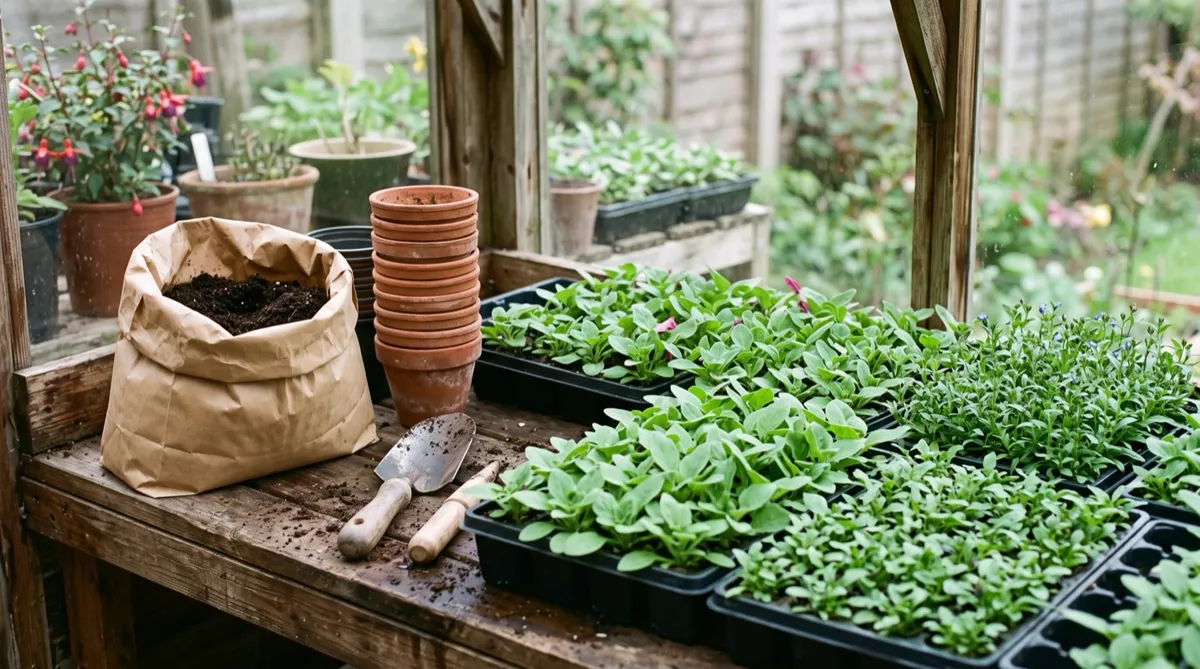
Young plants growing away in the greenhouse. Harden off any that are heading outside before they go out.
Clever ways to use tomato cuttings
- More plants for free. A couple of healthy plants can give you several more from shoots you’d have thrown away.
- Keep an F1 favourite going. Seed saved from an F1 doesn’t come true, but a cutting is an exact copy. Take a cutting from ‘Sungold’ and you get ‘Sungold’.
- Fill a gap. If a plant dies early in summer, a rooted cutting can replace it.
- Spread a good variety. Cuttings from one of the best tomato varieties or a blight-resistant tomato keep its traits.

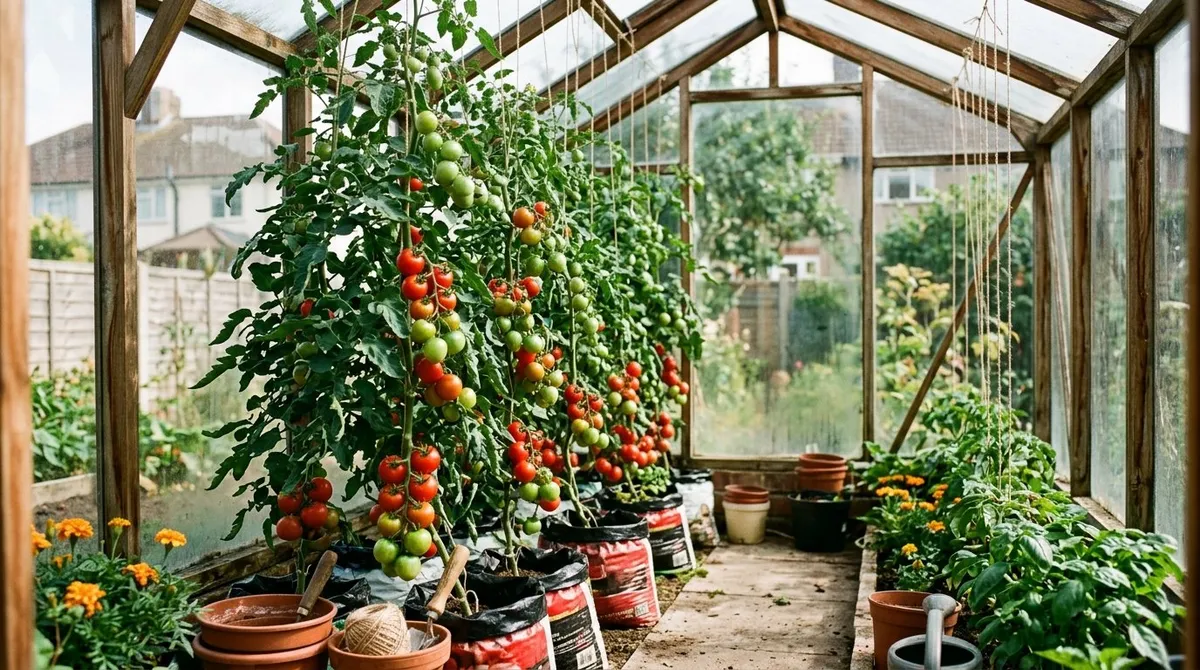
A healthy cordon plant gives you fruit and plenty of sideshoots for cuttings. Only take them from clean, strong plants.
Tomato cutting calendar
| Month | Task |
|---|---|
| May | Grow parent plants on. The first sideshoots appear |
| June | Start taking cuttings from strong sideshoots |
| Early to mid-July | Last cuttings for outdoor fruit |
| Late July | Last cuttings for greenhouse plants |
| August to September | Grow young plants on under glass. Feed weekly once fruit sets |
| October | Pick the last fruit. Ripen green ones indoors or make chutney |
Common mistakes with tomato cuttings
- Taking cuttings too late. August cuttings root fine but rarely ripen fruit. Stick to mid-July outdoors.
- Using woody shoots. Thick, hard shoots root slowly and often rot. Choose soft green ones.
- Letting cuttings wilt. A wilted cutting struggles. Take them in the morning and get them into water quickly.
- Too much stem underwater. Only the bottom 3-4cm goes in, with no leaves below the water.
- Using a sickly parent. Diseases and viruses come along with the cutting.
Frequently asked questions
Can you grow a tomato plant from a cutting?
Yes, tomato sideshoots root easily and grow into full plants. Stand a pinched-out shoot in water or push it into compost, and roots usually appear within a week or two. The new plant is an exact copy of its parent.
How long do tomato cuttings take to root in water?
Usually about one to two weeks on a warm windowsill. You’ll see small white bumps first, then roots. Pot the cutting up once the roots are a few centimetres long. Cuttings in compost take a little longer.
When is it too late to take tomato cuttings in the UK?
After mid-July for plants that will grow outdoors. Later cuttings often run out of warmth and light before the fruit ripens. In a greenhouse or polytunnel you can push on a week or two later.
Do tomato cuttings grow true to the parent plant?
Yes, a cutting is an exact copy of the plant it came from. That’s handy for F1 varieties, because seed saved from an F1 doesn’t come true. A cutting from a ‘Sungold’ gives you another ‘Sungold’.
Should I use rooting hormone on tomato cuttings?
No, tomato cuttings root well without it. Warmth, moisture and light are all they need. Save the rooting powder for trickier woody cuttings.
Can I take cuttings from any tomato plant?
Cordon types give the best cuttings. Bush tomatoes make fewer sideshoots and are rarely pinched, so they’re a poorer choice. Only take cuttings from healthy plants, as viruses and some diseases pass on to the new plant.
Will a tomato grown from a cutting fruit the same year?
Yes, if you take it by mid-July. Early cuttings root quickly and soon start flowering. Under glass they can ripen fruit into autumn. Cuttings taken in August usually run out of season.
How deep should tomato cuttings sit in water?
Keep just the bottom 3-4cm of stem in the water. Strip off any leaves that would sit below the water line. Too much stem underwater can rot. Top the jar up as the level drops.
Want to root other plants in water too? The guide to rooting cuttings in water shows what works, and there are more crops to try in the growing veg guides.
Our team produces practical UK gardening guidance from source research, contributor records and established horticultural practice. Editorial standards are overseen by Matt W.