Key takeaways
- Grafting joins a tough rootstock to a variety chosen for its fruit
- Grafted plants pay off most in a greenhouse border that grows the same crop each year
- Rootstocks are bred to resist soil-borne problems such as fusarium and verticillium wilt
- Keep the graft union above the soil, or the top variety roots and the benefit is lost
- In fresh grow bags or compost, ordinary seed-raised plants do nearly as well
Grafted vegetable plants are two plants joined into one: the roots of a tough, vigorous variety and the top of a variety chosen for its fruit. It’s the same trick fruit growers have used for centuries, now used on greenhouse crops.
The result is a plant with stronger roots that copes better with tired soil. This guide explains which crops are worth buying grafted, where they pay off and the one planting rule that decides whether you get any benefit. If you’re curious about the potato-and-tomato combination plant, see our separate look at whether the TomTato works.
What are grafted vegetable plants?
A grafted plant has two parts. The rootstock is chosen for strong roots and disease resistance. The scion is the top variety, chosen for its fruit.
Growers join them as young seedlings by cutting both stems and holding the cut faces together. The join heals in a few days in warm, humid conditions, and from then on the two grow as one plant. The rootstock never fruits. It just powers the plant from below, while the scion carries the tomatoes, aubergines or peppers you want.
Grafted plants are sold under the scion’s name, so the label shows the fruiting variety you’ll be picking.
Why grow grafted vegetables?
The main reason is soil-borne disease. In a greenhouse border that grows tomatoes year after year, problems such as fusarium wilt, verticillium wilt and root-knot nematodes build up in the soil. Rootstocks are bred to resist them. Our guide to fusarium wilt on tomatoes shows what an ordinary plant can suffer.
Vigour is the second reason. The rootstock’s bigger root system takes up more water and food, so the plant grows strongly and keeps cropping late into the season.
Earliness can be a bonus too. Strong roots push faster early growth, which helps in a short or cool summer.
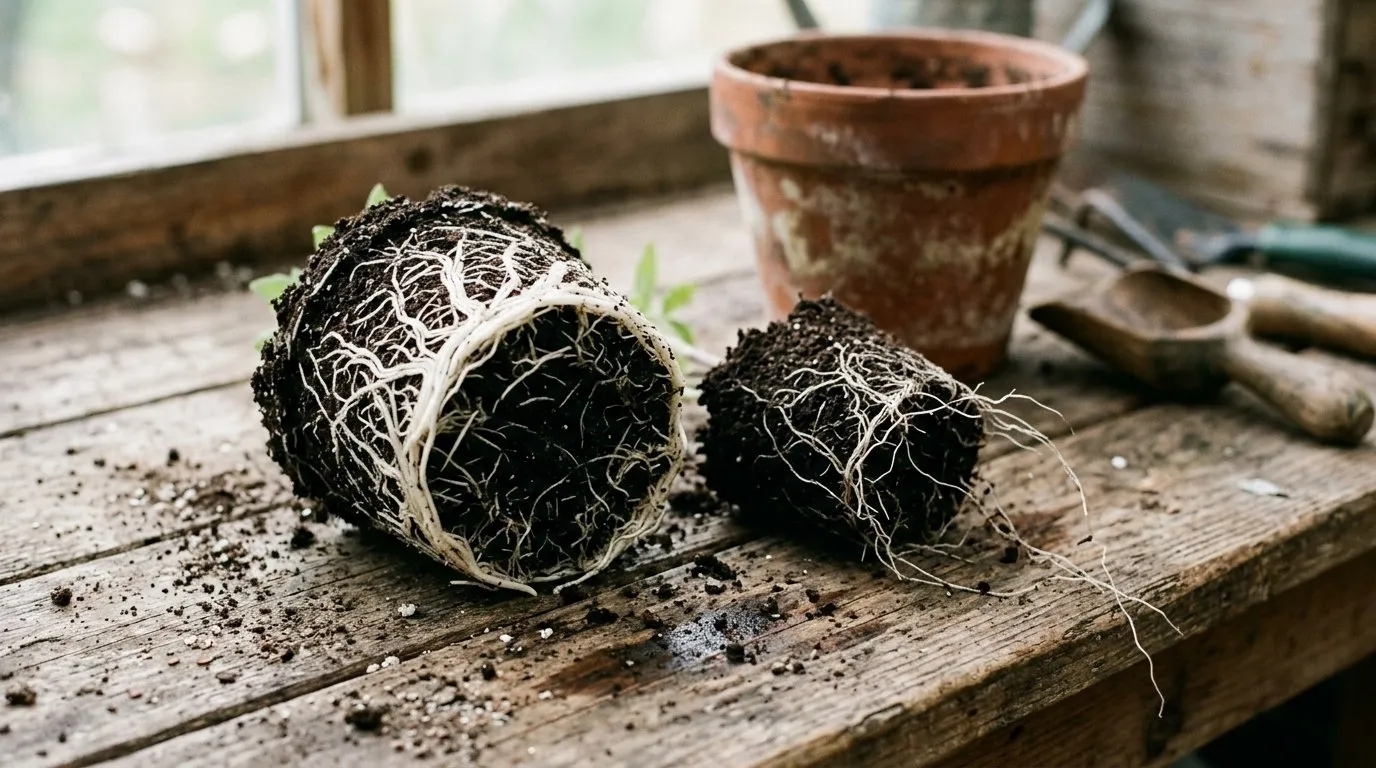
A vigorous rootstock fills its pot with roots. That extra root power is what you’re paying for.
Gardener’s tip: Grafting earns its keep on old ground, not fresh compost. If you plant into new grow bags every year, an ordinary plant already has clean roots. Save grafted plants for the border you never dig out.
Which vegetables can you buy grafted?
Five crops make up most grafted vegetable plants sold in the UK.
Tomatoes are the biggest seller, in both cordon and bush types. If you grow tomatoes in a greenhouse border, they’re the crop to try grafted first.
Aubergines can struggle in cool British summers, so the extra vigour from grafting helps them get going. Combine it with the warmth tips in our guide on how to grow aubergines.
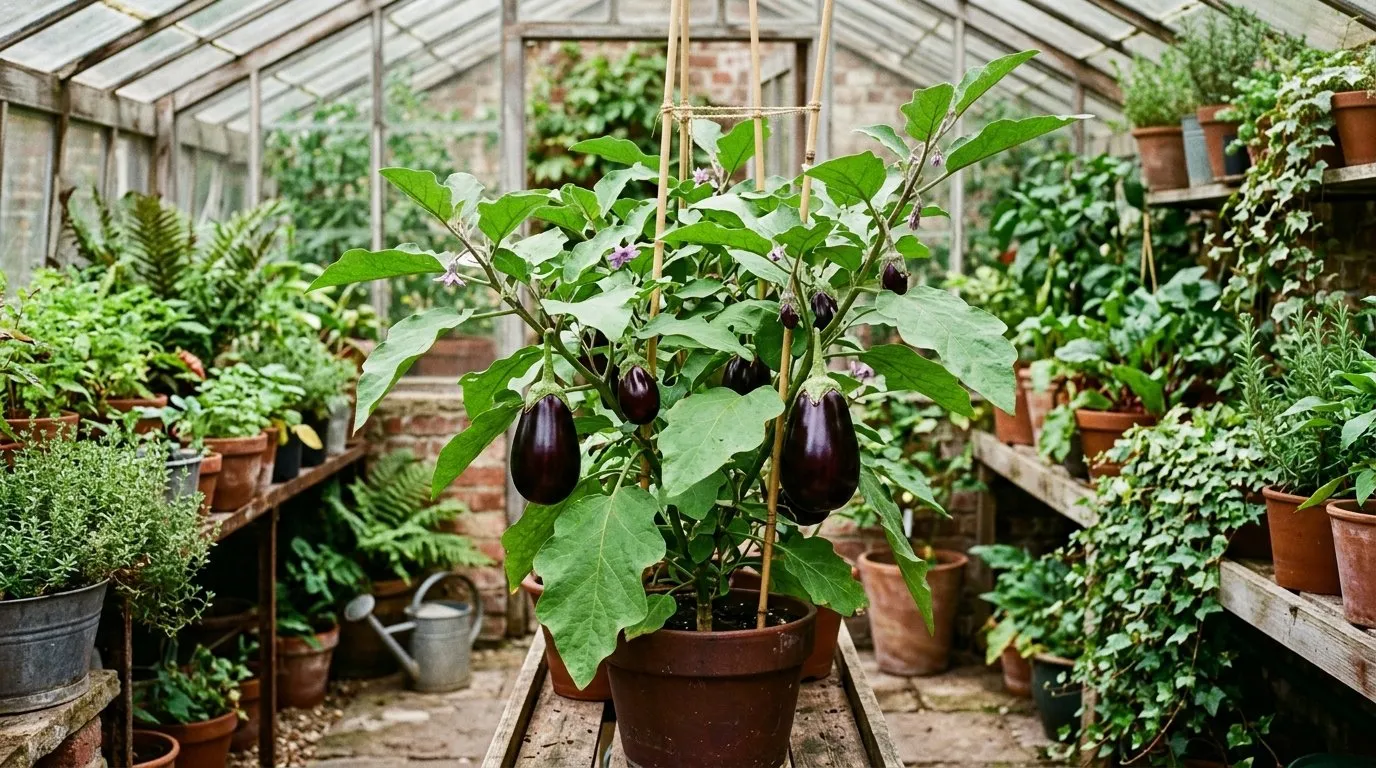
Aubergines need a long, warm season. A grafted plant gets off to a stronger start under glass.
Sweet peppers and chillies come grafted too. The vigour helps in an unheated greenhouse. Our guide on how to grow sweet peppers covers ripening them to full colour.
Cucumbers are usually grafted onto a squash rootstock, which copes better with cool soil. See our guide on how to grow cucumbers for training and watering.
| Crop | What grafting helps with | Best for |
|---|---|---|
| Tomato | Soil-borne wilts, vigour | Greenhouse borders |
| Aubergine | Vigour in a cool summer | Greenhouses and warm patios |
| Sweet pepper and chilli | Vigour, soil-borne disease | Unheated greenhouses |
| Cucumber | Cool soil, vigour | Greenhouse borders |
Are grafted plants worth the extra cost?
Grafted plants cost several times more than raising your own from seed, so it pays to be choosy.
Buy grafted if you grow in a greenhouse border you can’t rotate, if past crops have wilted or died from soil problems, or if your summers are too cool to ripen aubergines and peppers well.
Skip grafted if you grow in fresh grow bags or clean compost each year. An ordinary plant has healthy roots there and crops nearly as well. Our guide to growing in grow bags is the low-cost route for most people.
A good compromise is to buy one or two grafted plants for the worst spot and raise the rest from seed.
Where should the graft union sit when planting?
The graft union must sit above the soil, never buried. This is the one rule that decides whether grafting works.
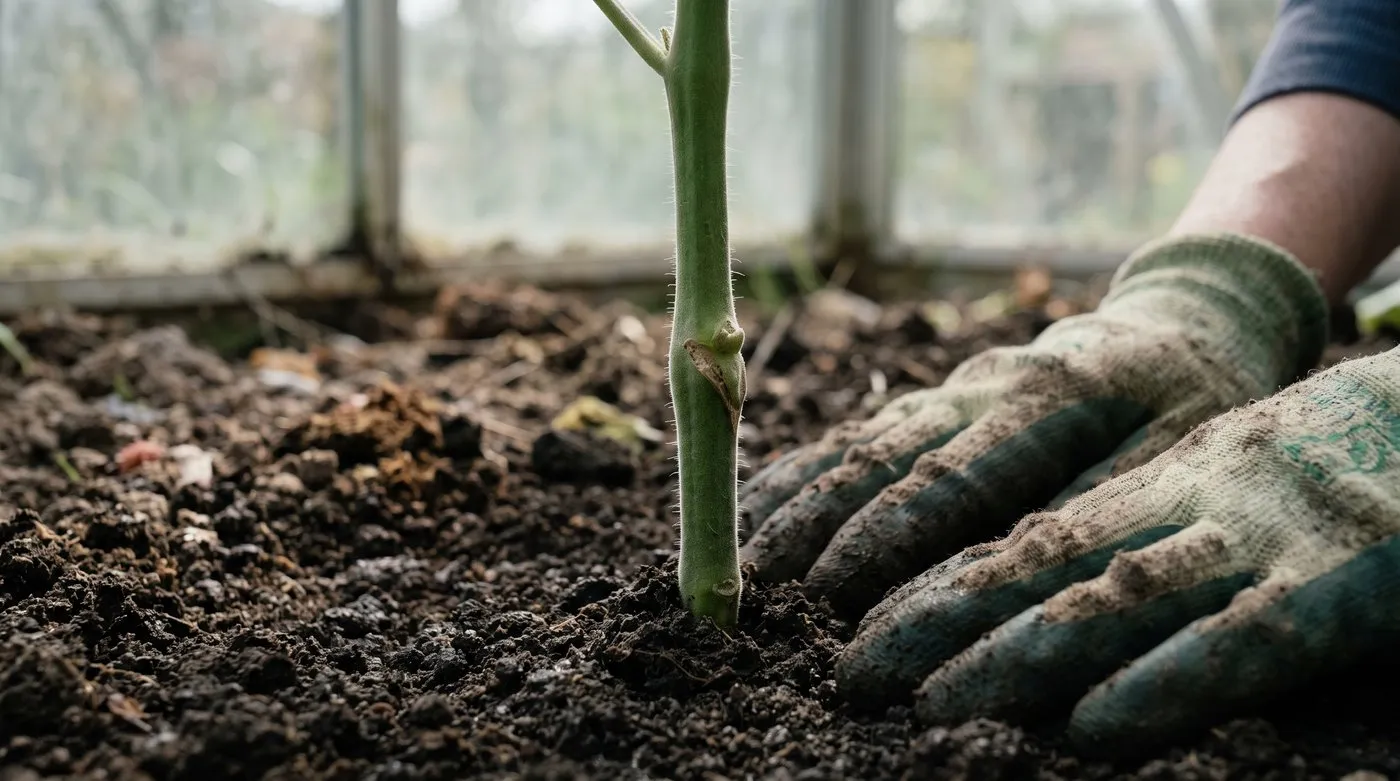
See the join a few centimetres up the stem? Keep it above the soil and the rootstock keeps doing its job.
The union is the bump low on the stem where the two plants were joined. Look for a slight kink or a change in stem thickness. If you bury it, the top variety puts out its own roots and stops relying on the rootstock. You lose the vigour and disease resistance you paid for.
This is the opposite of normal tomato advice. Ordinary tomatoes are often planted deep because they root along the buried stem. With a grafted plant, keep the union clear of the surface every time you pot on, plant out or mulch.
Harden plants off before they go into an unheated greenhouse. A cold shock stalls even a grafted plant.
How do you grow grafted plants for a good crop?
Grow them as you would any strong plant of the same crop, but keep up with water and feed, because vigorous roots work hard.
- Spacing: Give cordon tomatoes 45-60cm in a border, so light reaches the extra leaf.
- Training: Pinch out sideshoots on cordon tomatoes, as our guide to pinching out tomato sideshoots explains. Some suppliers suggest training grafted cordons on two stems, so check the instructions that come with your plants.
- Feeding: Start a high-potash tomato feed when the first flowers open and follow the label.
- Watering: Water deeply and regularly. Uneven watering splits fruit.
- Rootstock shoots: Rub off any shoot growing from below the graft union. It comes from the rootstock and won’t give useful fruit.
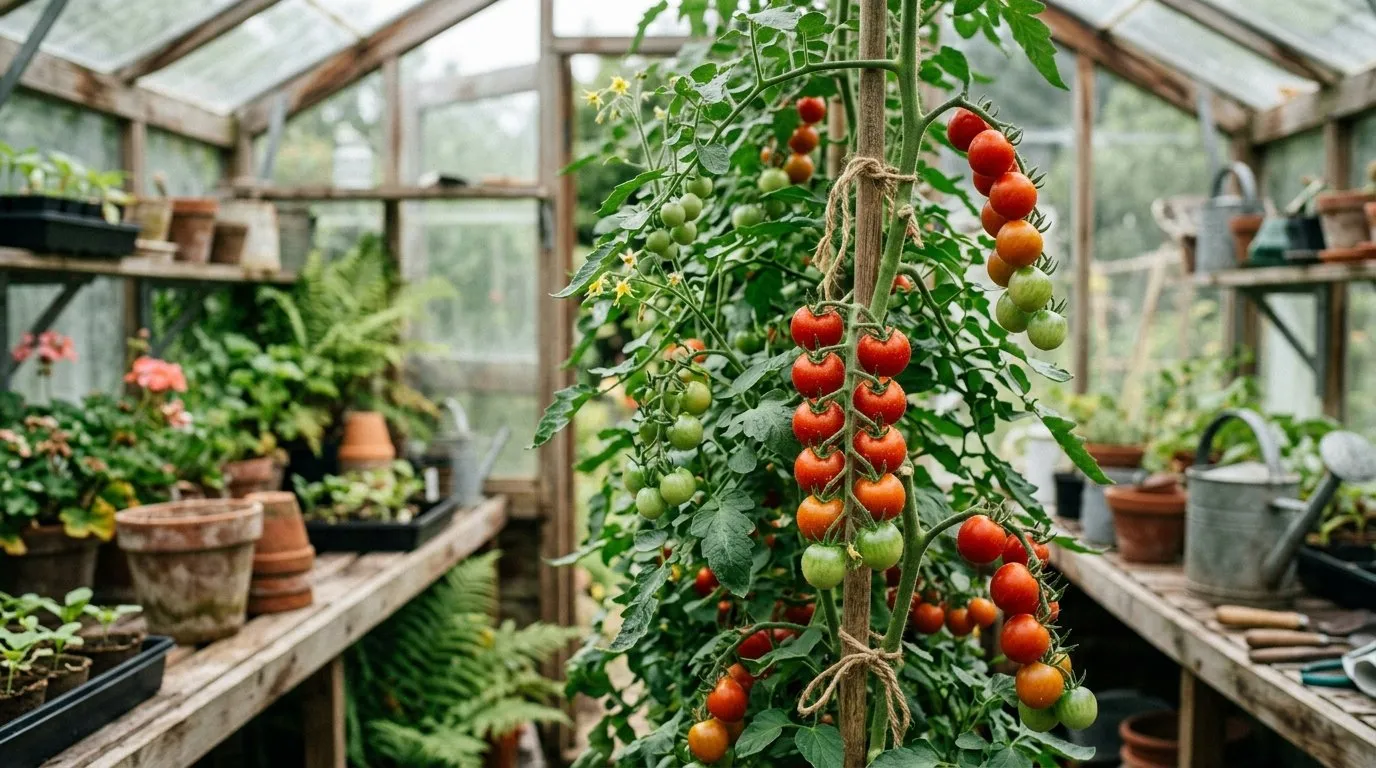
A vigorous plant keeps setting trusses into late summer, as long as feeding and watering keep up.
Can you graft your own vegetable plants?
Yes, and it’s a satisfying project if you want lots of plants. The usual method is a splice graft.
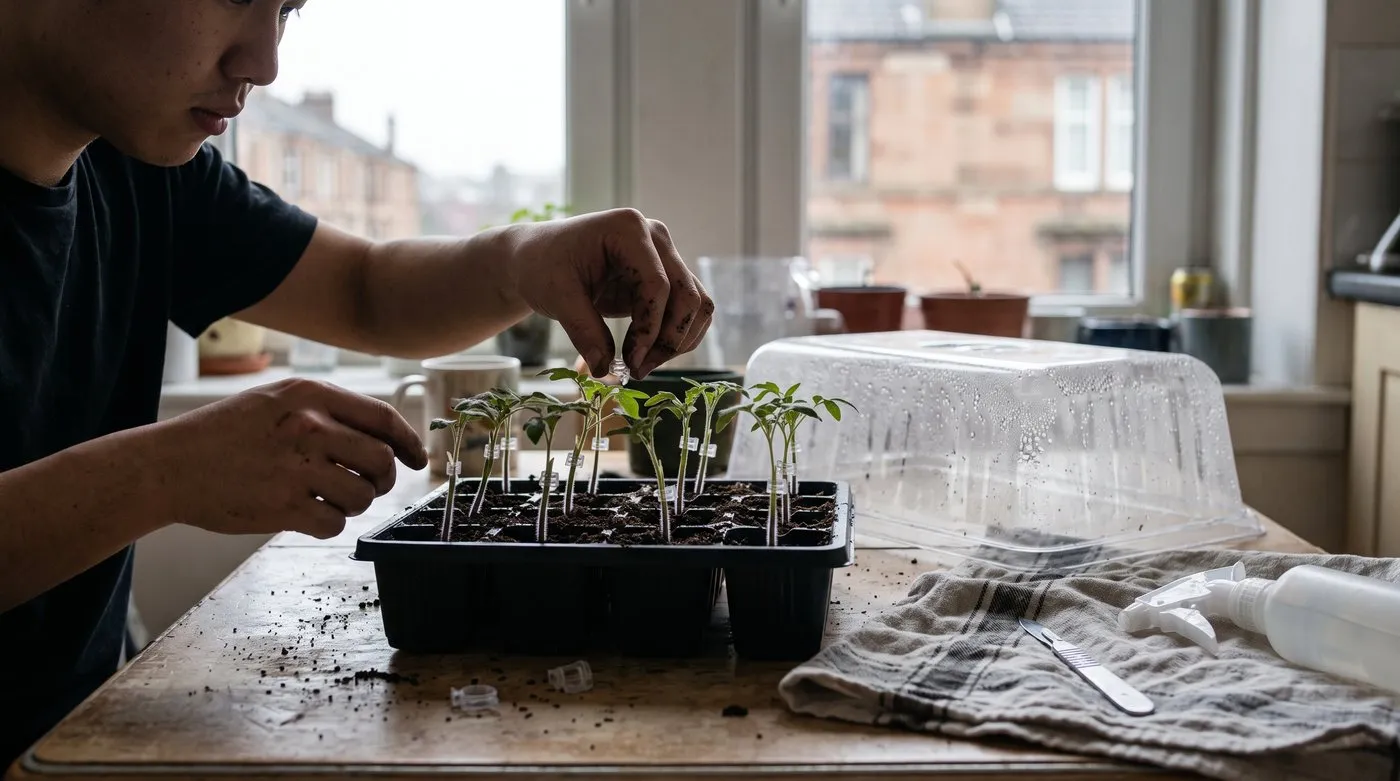
Each seedling is a rootstock and a top variety held together with a clip. A few humid days under the lid lets the join heal.
- Sow the rootstock and top variety so their stems end up the same thickness.
- Cut both stems at the same slanting angle.
- Press the cut faces together and hold them with a small grafting clip.
- Keep the plants warm, humid and shaded for a few days while the join heals.
- Slowly give them more air and light over the next few days.
Expect a few failures at first, so sow spares. A scion that’s still limp after the healing period hasn’t taken.
Common mistakes with grafted vegetables
- Burying the graft union. The most common mistake, and it undoes the whole point of grafting.
- Buying grafted for grow bags. Clean compost doesn’t have the soil problems grafting is meant to beat.
- Letting rootstock shoots grow. Shoots from below the union steal energy and don’t crop well.
- Underfeeding. A vigorous plant carrying a big crop needs regular feeding through summer.
You’ll find more greenhouse crop guides in our growing section. To choose what to graft, have a look at the best greenhouse tomato varieties for UK growers.
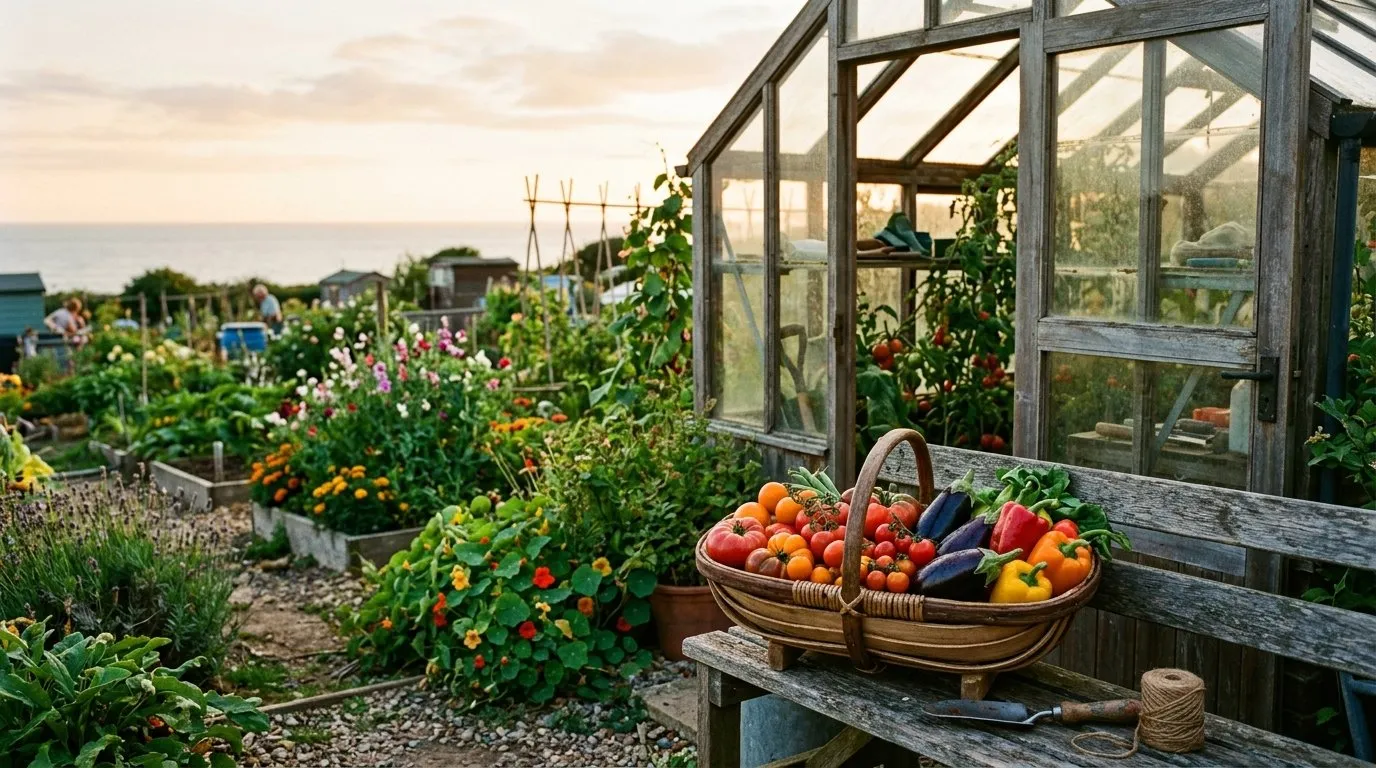
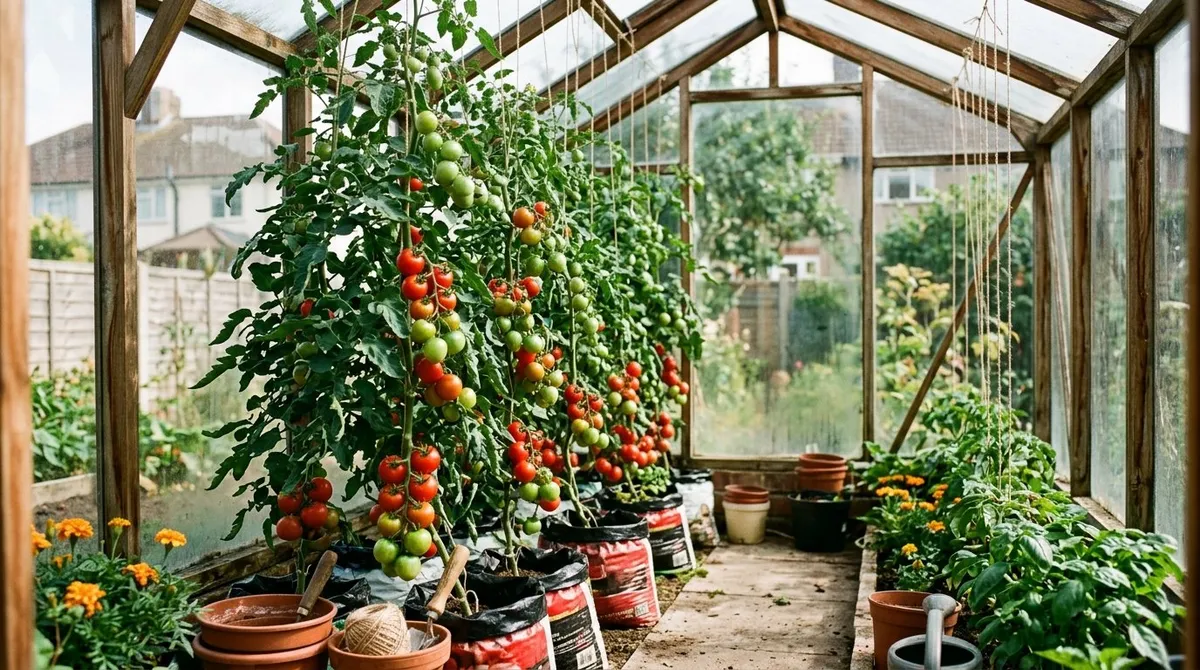
Tomatoes, aubergines and peppers from a small greenhouse. Grafted plants help most where the border soil is tired.
Frequently asked questions
Are grafted vegetable plants worth the money?
They’re worth it on tired soil or in a greenhouse border you can’t rotate. There the rootstock shrugs off soil-borne wilts that weaken ordinary plants. In fresh grow bags or compost the gain is much smaller, so cheap seed-raised plants make more sense.
How deep do you plant grafted tomatoes?
Plant so the graft union sits clearly above the soil. The union is the bump low on the stem where the two plants were joined. Bury it and the top variety grows its own roots, losing the rootstock’s vigour and disease resistance. This is the opposite of deep planting for ordinary tomatoes.
Which vegetables can you buy grafted in the UK?
Tomatoes, aubergines, sweet peppers, chillies and cucumbers are the main ones. Grafted melons turn up less often. Seed companies usually send them out as young plants in April and May.
Can you graft your own vegetable plants at home?
Yes, though it takes practice and a warm, humid spot for healing. Sow rootstock and top variety so their stems match, cut both at the same angle and hold them with a grafting clip. Keep them shaded and humid for a few days while the join heals, and sow spares.
Do grafted plants crop earlier?
They often do, because the strong roots push faster early growth. Earlier fruit is most useful in a short northern summer or an unheated greenhouse. How much earlier depends on the variety and the weather.
Do you still remove sideshoots on grafted tomatoes?
Yes, treat the top of a grafted cordon tomato like any other. Pinch out sideshoots as they appear. At the base, rub off any shoot growing from below the graft union, because it comes from the rootstock.
Can you save seed from grafted plants?
You can, but it won’t give you a grafted plant. The seed carries only the top variety’s genes, so seedlings grow on their own roots. Most grafted varieties are F1 hybrids too, so saved seed won’t come true.
Our team produces practical UK gardening guidance from source research, contributor records and established horticultural practice. Editorial standards are overseen by Matt W.


