Key takeaways
- The TomTato is a hand-grafted plant, not genetically modified and not a hybrid
- Both crops are real, but each is smaller than from a separate tomato and potato plant
- Grow it in a tub of at least 40 litres and plant out after the last frost
- Never pile compost above the graft, or the tomato roots into it and the potatoes suffer
- Both halves can catch blight, so water at the base and site it in an airy spot
- It is an annual and can't be saved, so you buy a new plant each spring
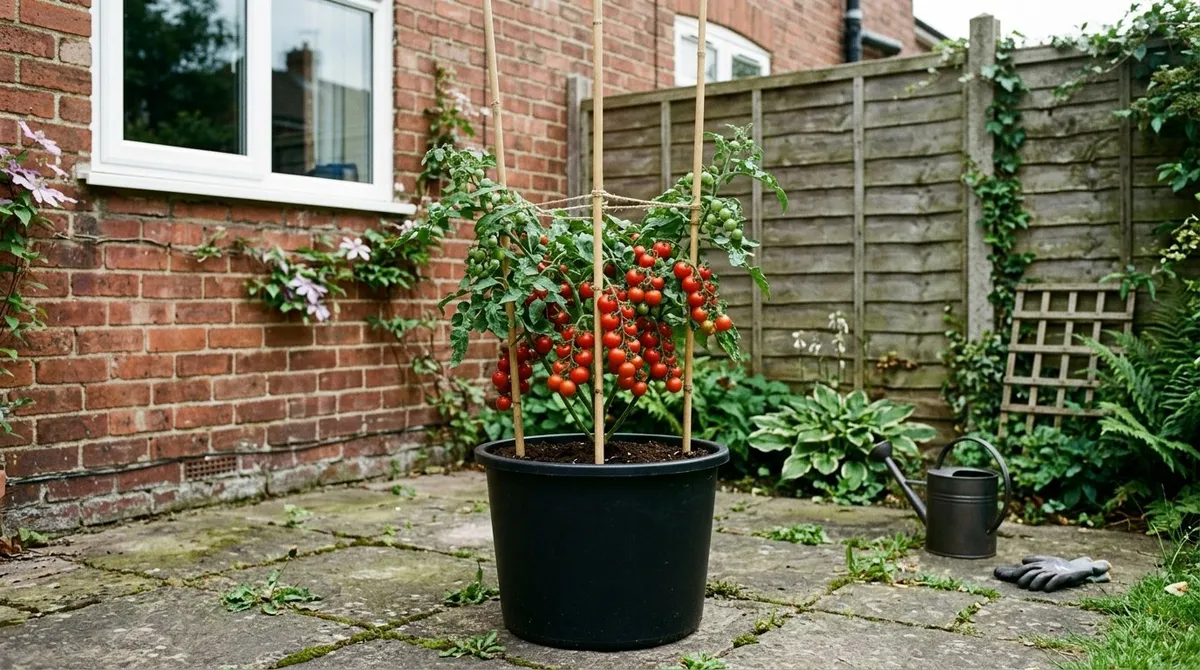
The TomTato does work: one plant gives you cherry tomatoes on top and potatoes underneath. The catch is that one set of roots feeds both crops, so each crop is smaller than you would get from two separate plants. It’s a fun, clever plant for a small patio or for growing with children. If you want the biggest harvest, grow tomatoes and potatoes apart.
Thompson & Morgan launched the TomTato in 2013, and it is still sold every spring. Here’s what it is, how to grow one in a tub, and the mistakes to avoid.
What is a TomTato?
A TomTato is a grafted plant. A cherry tomato shoot is joined by hand onto the roots of a potato plant. The two grow together into one plant. The join is the graft union, and you can usually see it as a small swelling or a clip on the stem just above the compost.
It isn’t genetically modified, and it isn’t a cross between a tomato and a potato. Grafting is the same old technique used on apple trees and grapevines. It works here because tomatoes and potatoes are close relatives in the same plant family.
Above the graft, it grows like any cherry tomato. Below it, a potato plant forms tubers in the compost. If you’re curious about why growers graft vegetables at all, the guide to grafted vegetable plants explains the idea.
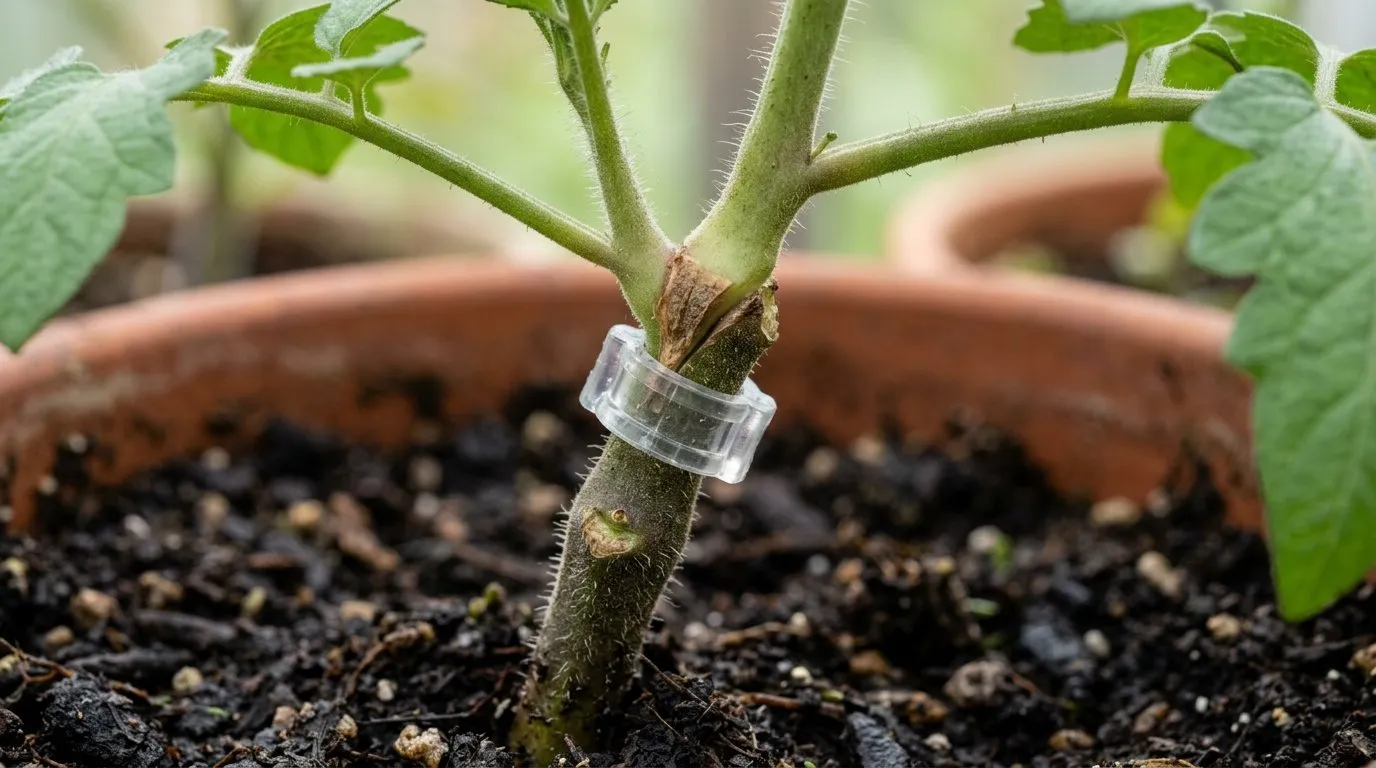
The graft union is the knobbly join just above the compost. Everything above is tomato and everything below is potato.
Does the TomTato give a good crop?
It gives two genuine crops, but neither is as big as you’d get from a plant grown on its own. That’s the honest answer.
The reason is simple. One set of leaves and one set of roots has to feed tomatoes and potatoes at the same time. From midsummer, both crops are swelling and both want the same sugars. Neither gets as much as it would alone.
So think of it as sharing rather than adding. A TomTato makes sense when you only have room for one tub and want a bit of both. If you have space for two tubs, a separate tomato and a separate potato will give you more of each.
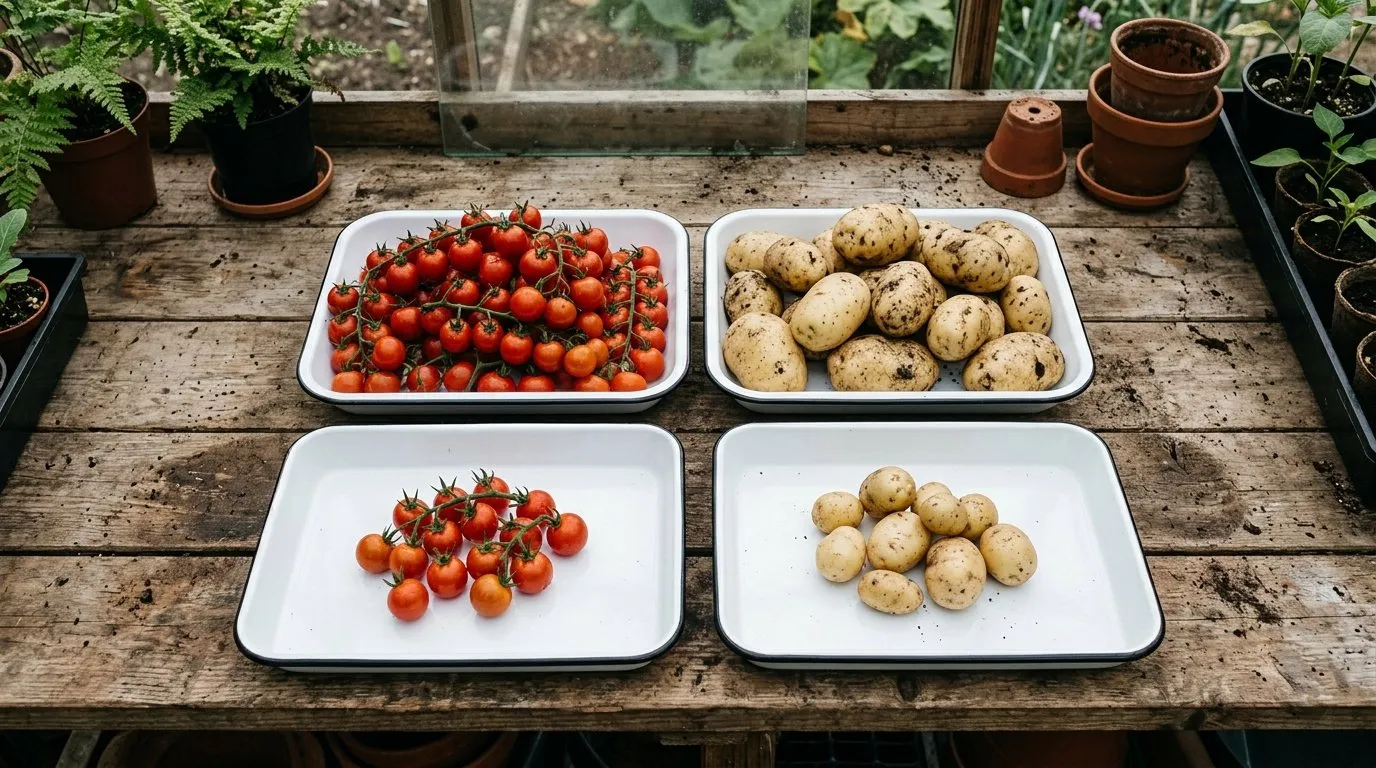
Both crops turn up, but expect smaller amounts of each than from separate plants. Think of it as a bit of both from one tub.
TomTato or two separate plants?
| Option | Tomatoes | Potatoes | Space | Best for |
|---|---|---|---|---|
| TomTato in a 40-50 litre tub | Smaller crop | Smaller crop | One tub | Small patios, children, novelty |
| Tomato and potato in separate tubs | Full crop | Full crop | Two tubs | Biggest harvest |
| TomTato in a small pot | Poor | Poor | One small pot | Not worth it |
How to grow a TomTato in a container
Grow a TomTato in a tub of at least 40 litres, and bigger if you can. A deep tub is better than a wide shallow one, because the potatoes form in the compost below the graft. Make sure it has drainage holes, and stand it on pot feet.
Fill it with a mix that holds water well, such as John Innes No 3 or a good peat-free multipurpose mixed with some loam-based compost. Steady moisture keeps tomato skins from splitting and potatoes from cracking. The guide to growing potatoes in buckets covers the same container basics for a plain potato crop.
Plants usually arrive small in spring. Pot them on and keep them frost-free indoors or in a greenhouse.
- Harden off over about two weeks: outside by day, in by night.
- Plant out after the last frost, usually late May or early June.
- Set the plant so the graft stays above the compost. Push in a short cane level with the graft as a marker.
- Support the tomato with a cane or two and tie it in as it grows.
- If it’s a cordon (single-stem) type, pinch out sideshoots as they appear.
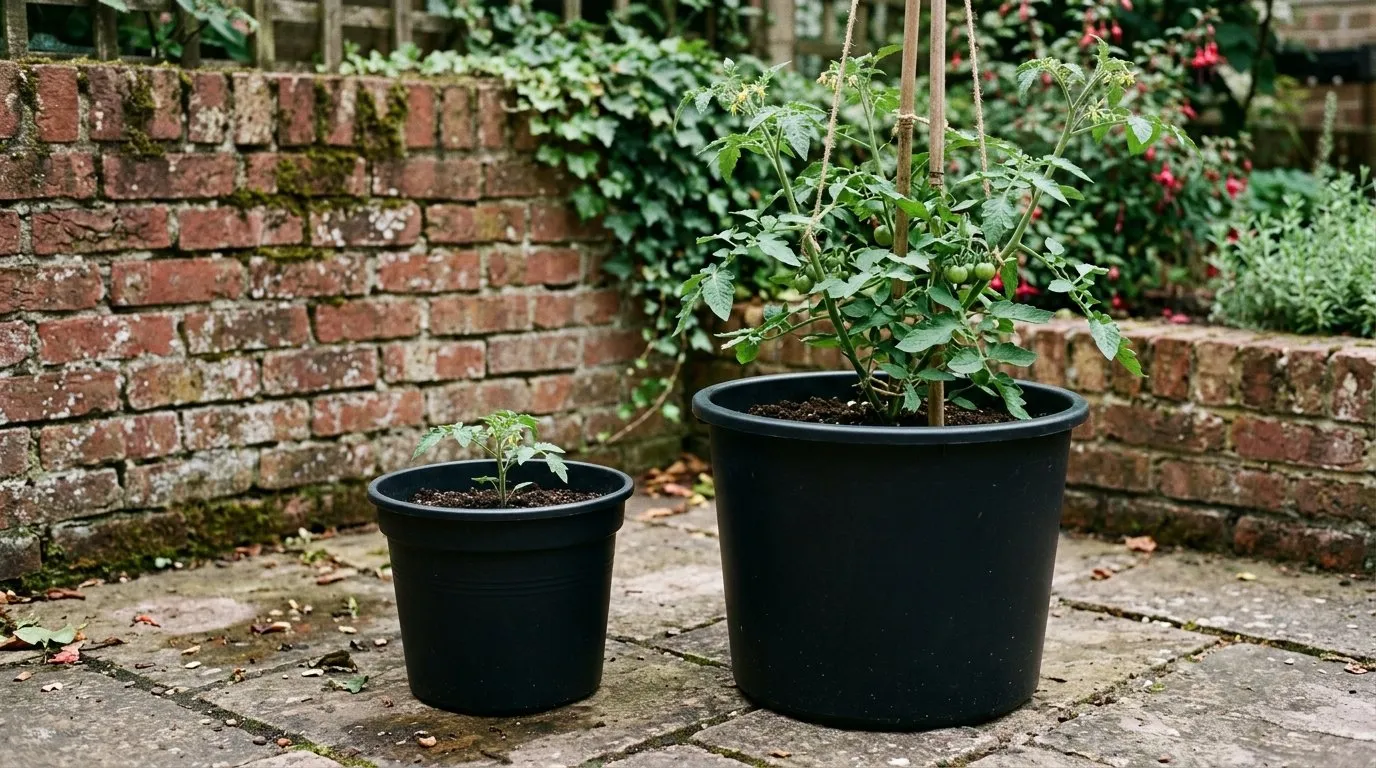
Give it a big tub. The roots feed two crops, so more compost means more water and food for both.
Watering and feeding a TomTato
Water the compost, not the leaves, and keep it evenly moist. In a hot spell a big tub may need watering every day. Dry compost followed by a big soaking splits tomatoes and can make potatoes hollow or knobbly.
For feeding, give a balanced liquid feed for the first few weeks after planting out. Once the first tomatoes have set, switch to a tomato feed every week, following the label. It’s high in potash, which helps both the tomatoes and the potatoes.
Don’t overfeed to make up for the shared roots. Extra feed won’t make the plant bigger. It just gives soft, sappy growth.
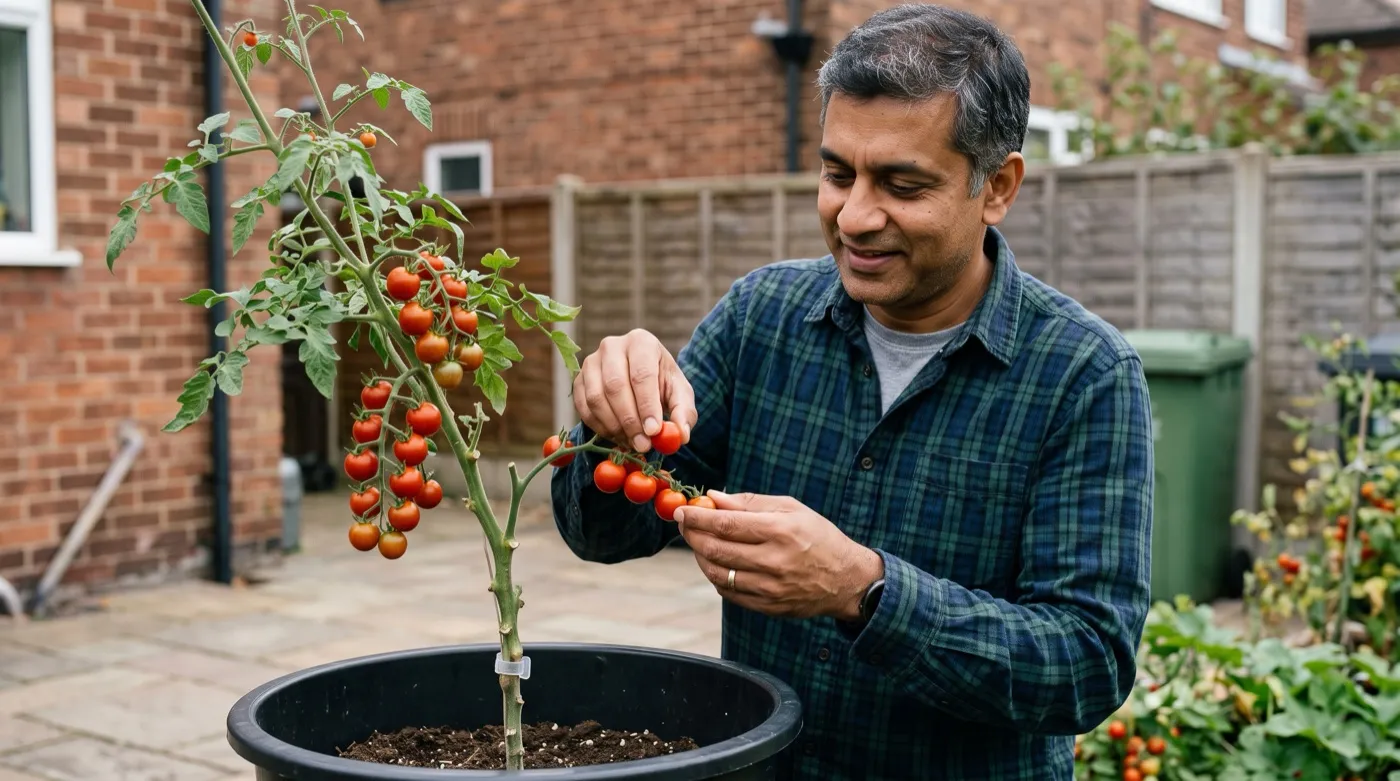
Pick tomatoes as soon as they ripen. Regular picking keeps the rest of the trusses ripening.
Gardener’s tip: Use a watering can at the base, not a hose over the top. Dry leaves are your best defence against blight.
Never earth up over the graft
This is the most important TomTato rule. Potato growers are used to earthing up, piling compost around the stems as they grow. On a TomTato, don’t let compost cover the graft.
If you bury the graft, the tomato stem can grow its own roots into the compost. Tomato stems root very easily. The tomato then feeds itself, and the potato underneath does poorly.
You can add a little compost to cover any potatoes peeping out at the surface. Just keep it below the graft. A cane cut level with the graft makes the line easy to see. The guide to earthing up potatoes explains why ordinary potatoes do need it.
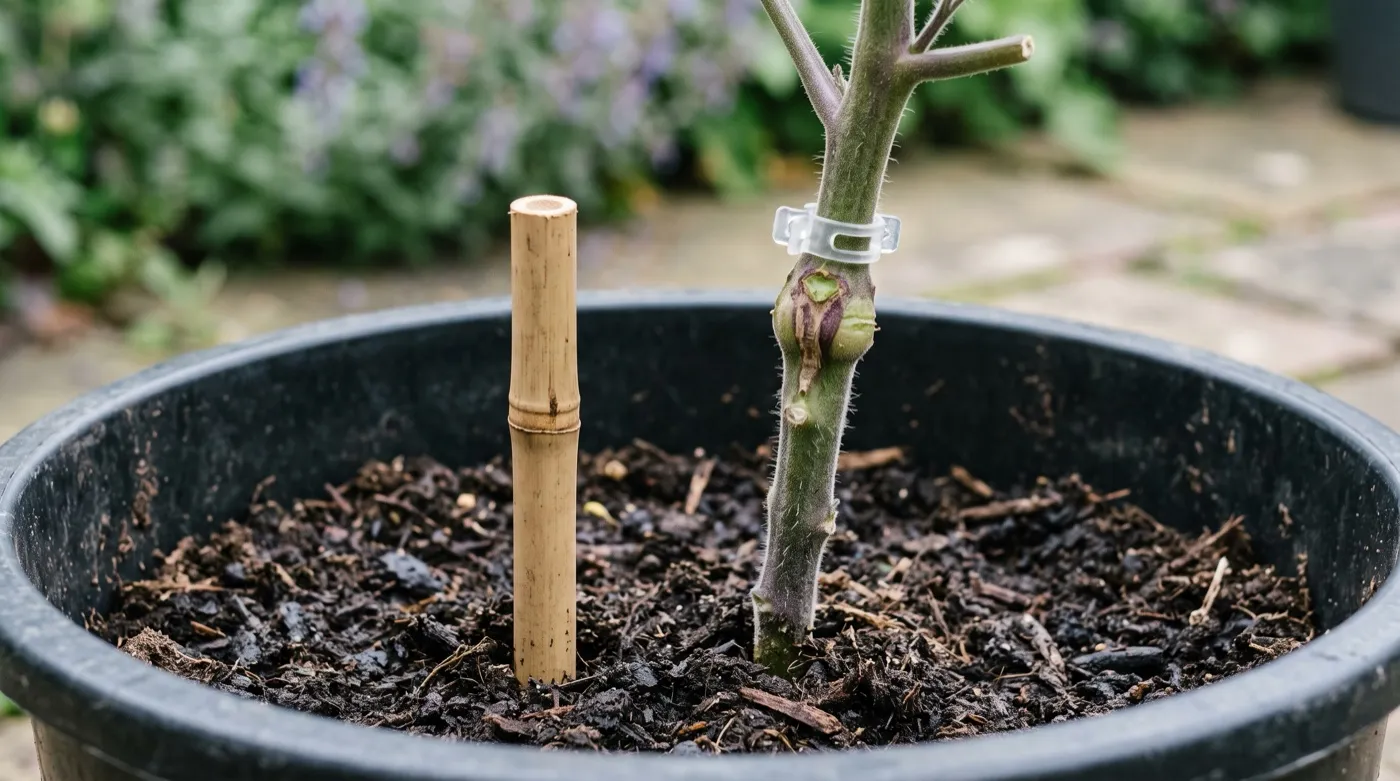
A short cane level with the graft is a simple reminder. Keep the compost below that line all season.
Blight on a TomTato
Late blight attacks both tomatoes and potatoes, so a TomTato can lose both crops to it. It strikes in warm, humid weather, usually from midsummer. Spores blow in on the wind.
Look for brown patches on the leaves, dark marks on the stems and firm brown patches on the tomatoes. Once the leaves are infected, spores can wash down into the compost and reach the potatoes.
To lower the risk:
- Stand the tub in an open, airy spot, away from potato beds.
- Water at the base and keep the leaves dry.
- Remove any blighted leaves as soon as you see them.
If blight takes hold, cut the whole plant off at compost level and bin it. Leave the potatoes in the tub for two or three weeks before tipping out. The guide to late blight on potatoes and tomatoes has pictures of each stage. If blight hits your garden every year, a separate blight-resistant tomato may be a better use of the space.
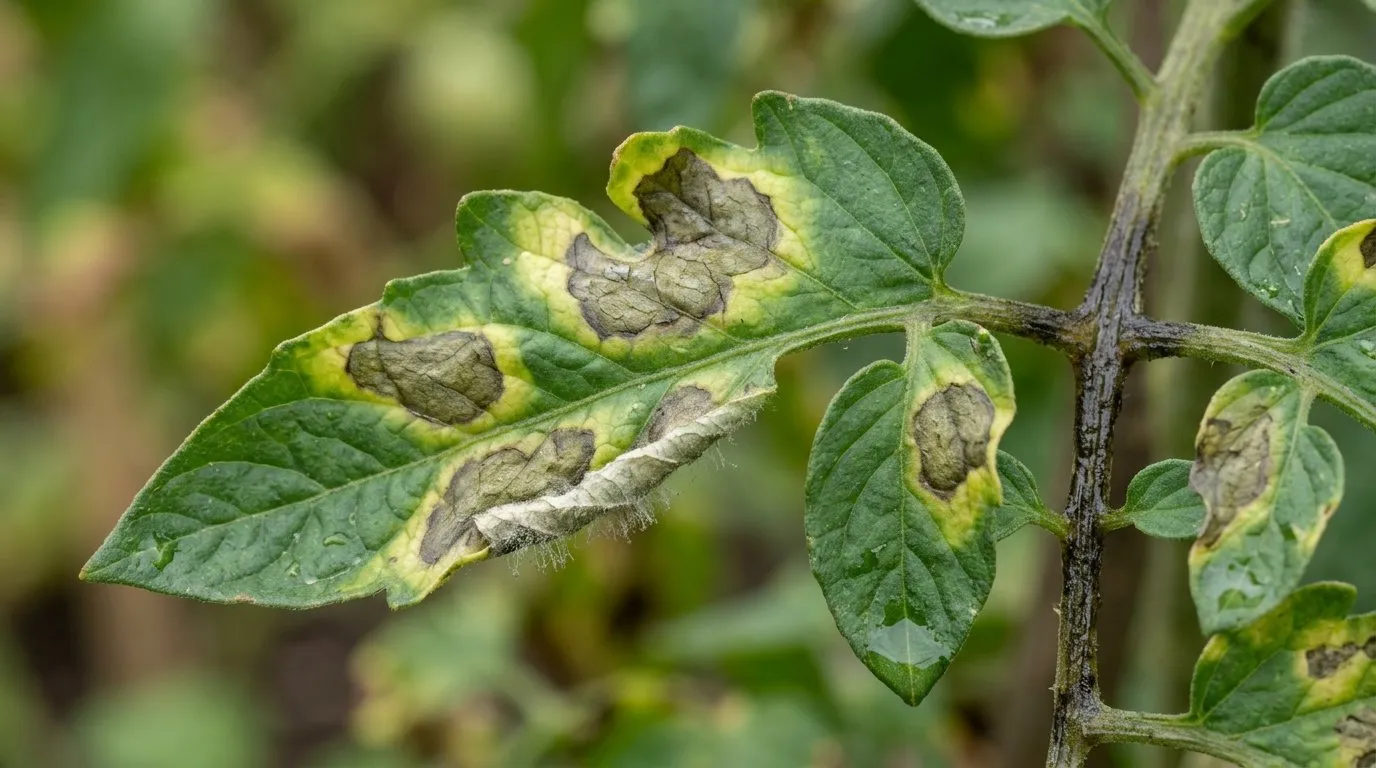
Brown patches with yellowing edges are a warning sign. Remove affected leaves quickly before spores reach the potatoes below.
When to harvest TomTato potatoes
Pick tomatoes as they ripen, usually from late July to September. Leave the potatoes until the top growth has died back in autumn, then wait another couple of weeks so the skins firm up.
Don’t tip the tub out just because the tomatoes have finished. The potatoes can keep swelling for a while. When you’re ready, tip the whole tub onto a sheet and sort through the compost.
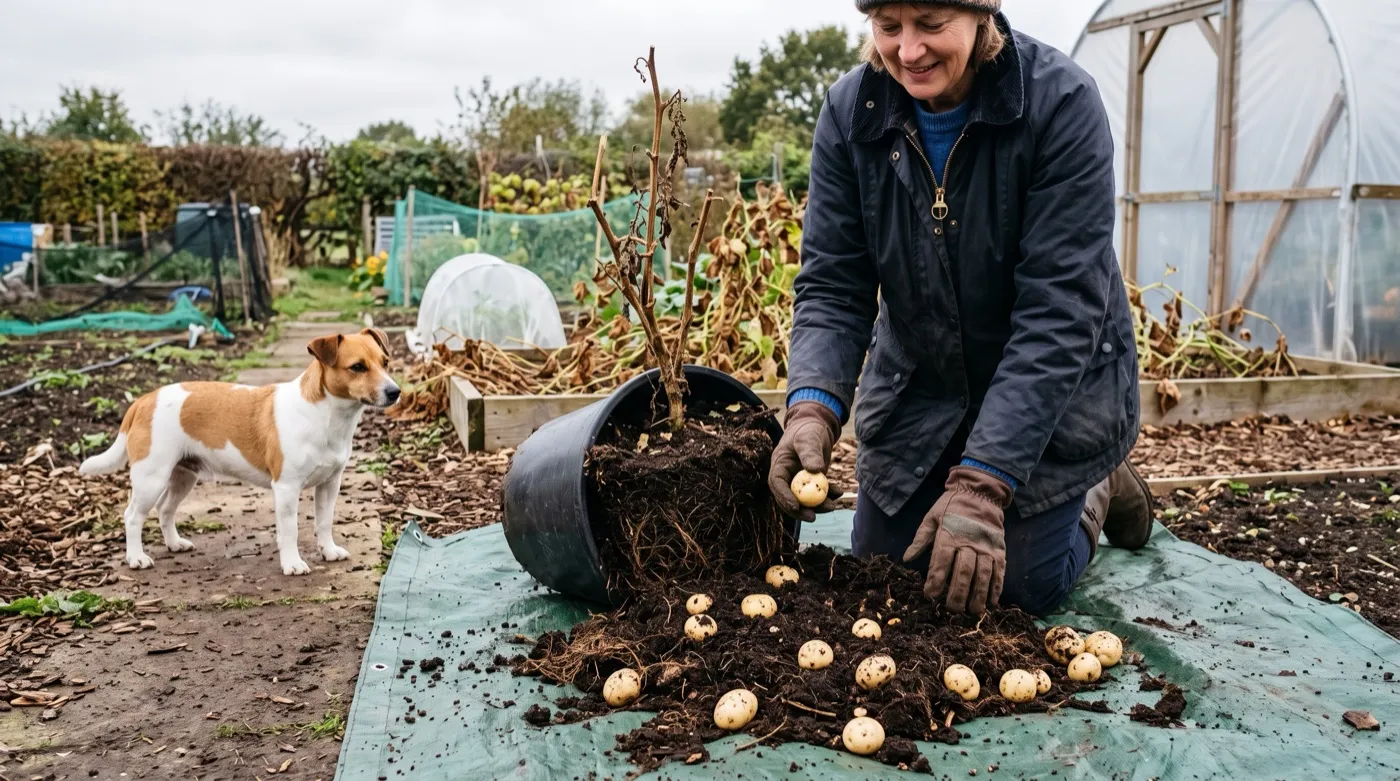
Tip the tub out once the top has died back. The dead tomato stem sits on top, with the potatoes underneath.
Can you save a TomTato for next year?
No. The TomTato is grown as an annual, and the graft doesn’t carry on.
- Saved potatoes grow into ordinary potato plants with no tomato on top.
- Tomato cuttings root easily but grow into ordinary tomato plants. The guide to tomato cuttings shows how.
- Tomato seeds from the fruit won’t come true.
So budget for a new plant each spring if you want one again.
TomTato month-by-month calendar
| Month | What to do |
|---|---|
| March | Order a plant. Plants are usually sent out from late April |
| April to May | Pot on and keep frost-free. Harden off for about two weeks |
| Late May to June | Plant into a 40 litre or larger tub after the last frost. Mark the graft with a cane |
| July | Switch to tomato feed. Water steadily. Watch for blight |
| August | Pick tomatoes as they ripen. Keep the leaves dry |
| September | Last tomatoes. Let the top growth die back |
| October | Tip out the potatoes a couple of weeks after the top dies back |
Common TomTato mistakes
Burying the graft. The tomato roots into the compost and the potatoes suffer. Keep compost below the graft.
Too small a pot. A small pot can’t feed two crops. Use at least 40 litres.
Tipping out too early. The potatoes are still growing after the tomatoes finish. Wait for the top to die back.
Watering over the leaves. Wet leaves invite blight. Water the compost.
Expecting double the crop. You get a bit of both, not two full crops.
Who should buy a TomTato?
Buy one if you have room for just one tub, you’re growing with children, or you love a garden curiosity. On a small balcony, a bit of both from one pot is a good deal.
Skip it if you grow mainly for the kitchen, you have room for two tubs, or blight strikes your garden every year. You’ll get more from a tomato plant and a bucket of potatoes side by side.
Frequently asked questions
Is the TomTato genetically modified?
No, the TomTato is not genetically modified. A tomato shoot is joined by hand onto a potato plant’s roots, the same grafting idea used on fruit trees. No genes are changed.
Does the TomTato actually produce both crops?
Yes, it gives both tomatoes and potatoes. One set of roots feeds both crops, though, so each is smaller than you would get from a separate tomato plant and potato plant.
Can I earth up a TomTato like a normal potato?
No, keep the compost below the graft. If you bury the graft, the tomato stem can root into the compost and the potato crop suffers. Mark the graft height with a short cane when you plant.
Can I save a TomTato for next year?
No, it is grown as an annual. Saved tubers grow into ordinary potato plants, and a tomato cutting grows into an ordinary tomato plant. For a TomTato next year, buy a new plant.
Is blight a problem on a TomTato?
Yes, both the tomato and the potato can catch late blight. Water at the base, give it an airy spot away from other potatoes, and cut off blighted growth straight away.
How big a pot does a TomTato need?
At least 40 litres, and bigger is better. One root system feeds two crops, so more compost means more water and food for both.
For more crops that make the most of a single pot, read the guide to container vegetable gardening, or browse all the growing guides.
Our team produces practical UK gardening guidance from source research, contributor records and established horticultural practice. Editorial standards are overseen by Matt W.


