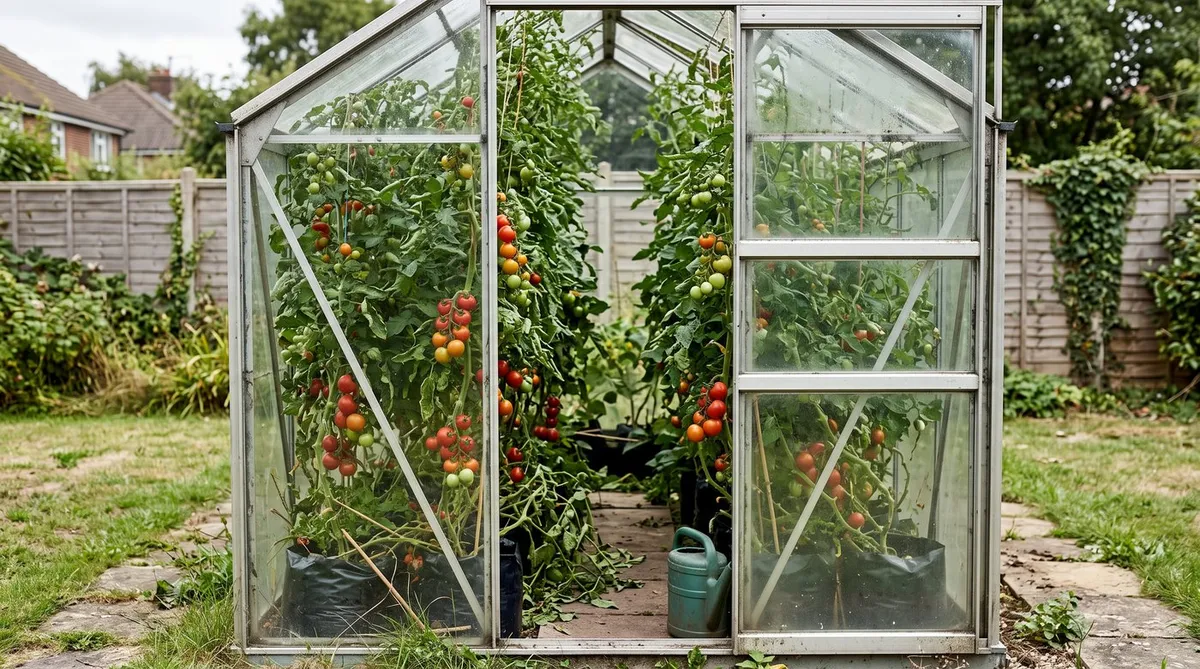
Key takeaways
- Crimson Crush and Mountain Magic are the most reliable blight-resistant tomatoes for UK gardens
- Losetto and Lizzano are bush cherry tomatoes that suit pots, troughs and hanging baskets
- Resistance slows blight down but doesn't make plants immune, so good habits still matter
- Water the soil, not the leaves, and space cordons about 60cm apart for good airflow
- Grow tomatoes well away from potatoes, which share the same blight
Crimson Crush and Mountain Magic are the best blight-resistant tomatoes to grow outdoors in the UK. If you want cherry tomatoes in pots, try Losetto or Lizzano. These varieties keep cropping long after ordinary tomatoes have collapsed from blight.
Tomato blight is the same disease that hits potatoes, and it thrives in warm, wet British summers. This guide is for anyone growing tomatoes outside, on an allotment, patio or veg bed, where blight is the biggest risk. If you’re new to tomatoes, our beginner’s guide to growing tomatoes covers sowing and care.
What does blight resistance actually mean?
A blight-resistant tomato carries genes that help it fight off the disease. It can still catch blight, but it slows the disease right down, so you keep picking for weeks longer.
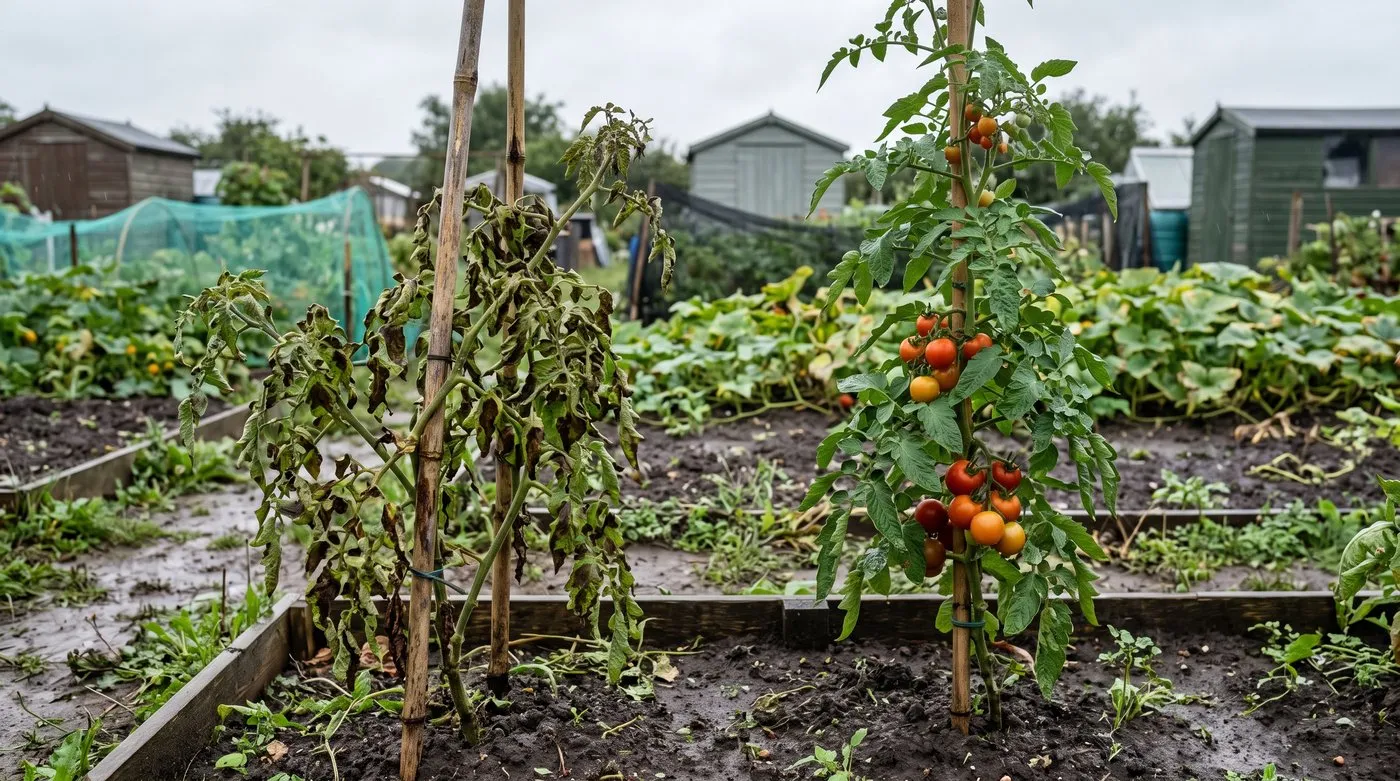
After a wet week, ordinary tomatoes can collapse while a resistant variety keeps its leaves and carries on cropping.
The strongest varieties carry two resistance genes, called Ph-2 and Ph-3. Crimson Crush, Mountain Magic and Iron Lady all have both. Others, such as Ferline and Fantasio, have some tolerance but give up sooner in a bad year.
Blight is caused by a water mould that spreads on the wind from infected potatoes and tomatoes. It needs wet leaves and warm, humid weather to take hold. That’s why resistant varieties work best alongside habits that keep the leaves dry.
The best blight-resistant tomato varieties
These are the most reliable choices for outdoor growing in the UK.
| Variety | Fruit | Habit | Blight resistance | Best for |
|---|---|---|---|---|
| Crimson Crush | Large, round, red | Cordon | Strong | Slicing tomatoes outdoors |
| Mountain Magic | Cocktail size, sweet | Cordon | Strong | Flavour and big trusses |
| Iron Lady | Medium, round | Cordon | Strong | Tough all-rounder, harder to find |
| Losetto | Cherry | Bush | Good tolerance | Pots and patios |
| Lizzano | Cherry | Trailing bush | Good tolerance | Hanging baskets |
| Ferline | Medium to large | Cordon | Some tolerance | Allotments |
| Fantasio | Medium | Cordon | Some tolerance | Outdoors or greenhouse |
| Legend | Medium to large | Bush | Some tolerance | Saving your own seed |
Crimson Crush
Crimson Crush is the best-known blight-resistant tomato in the UK. It was bred in Britain specifically to cope with blight outdoors. It gives large, round red fruit with a pleasant flavour, ideal for slicing into salads and sandwiches. Grow it as a cordon, a single stem tied to a cane with the side shoots pinched out.
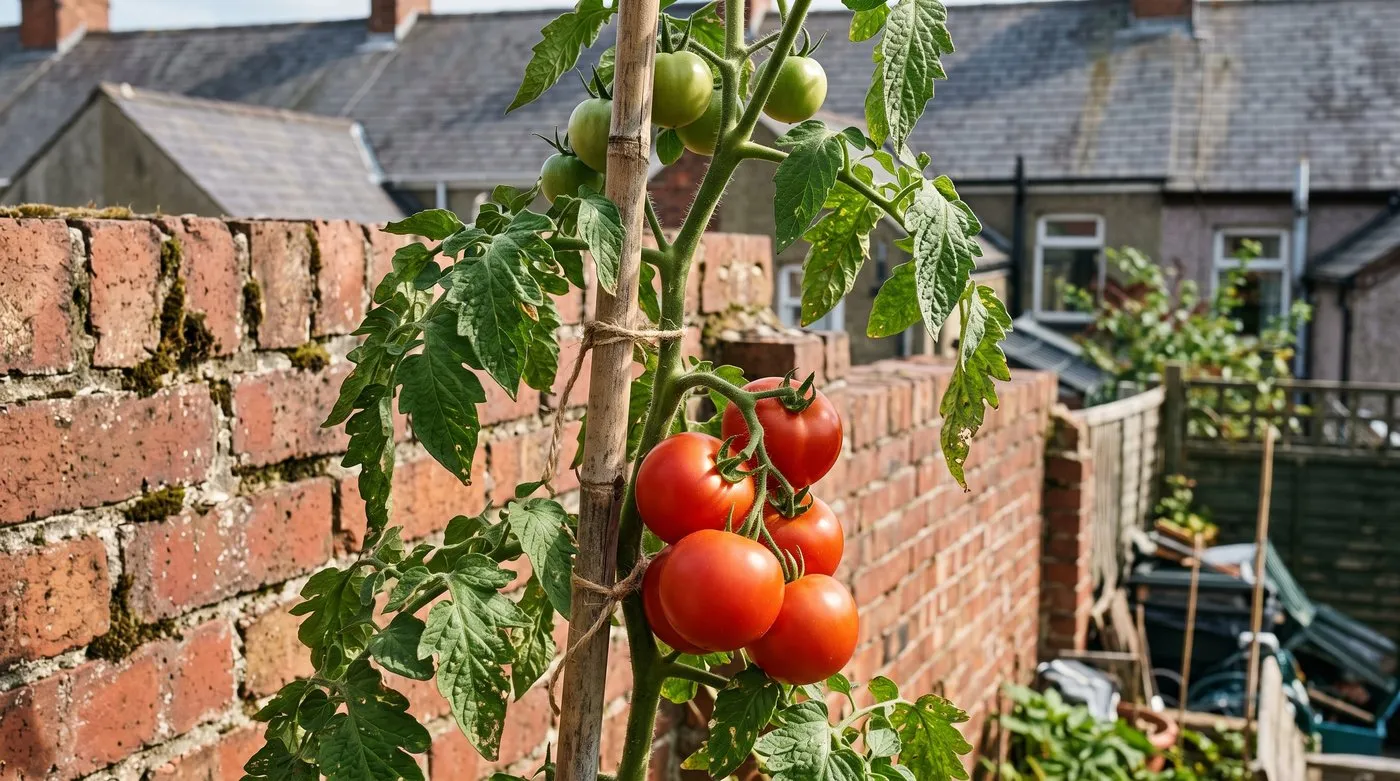
Crimson Crush gives big, round slicing tomatoes outdoors, even in a damp British summer.
Mountain Magic
Mountain Magic carries the same two resistance genes as Crimson Crush. The fruit is smaller, about the size of a cocktail tomato, with a sweet, well-balanced flavour. It grows in long trusses and resists splitting in wet weather better than many cherries. It’s a great choice if flavour matters most.

Cocktail-sized varieties such as Mountain Magic ripen in long trusses, so you get plenty of sweet fruit from each plant.
Iron Lady
Iron Lady also has both resistance genes and copes with some other leaf diseases too. It gives medium, round red fruit. It’s harder to find in UK seed catalogues, so you may need a specialist supplier.
Losetto and Lizzano
Losetto is a compact bush cherry that needs no staking or side-shooting. It’s perfect for pots, troughs and raised beds. Lizzano is similar but trails, so it’s the better pick for hanging baskets. Both have good blight tolerance and sweet little fruit.
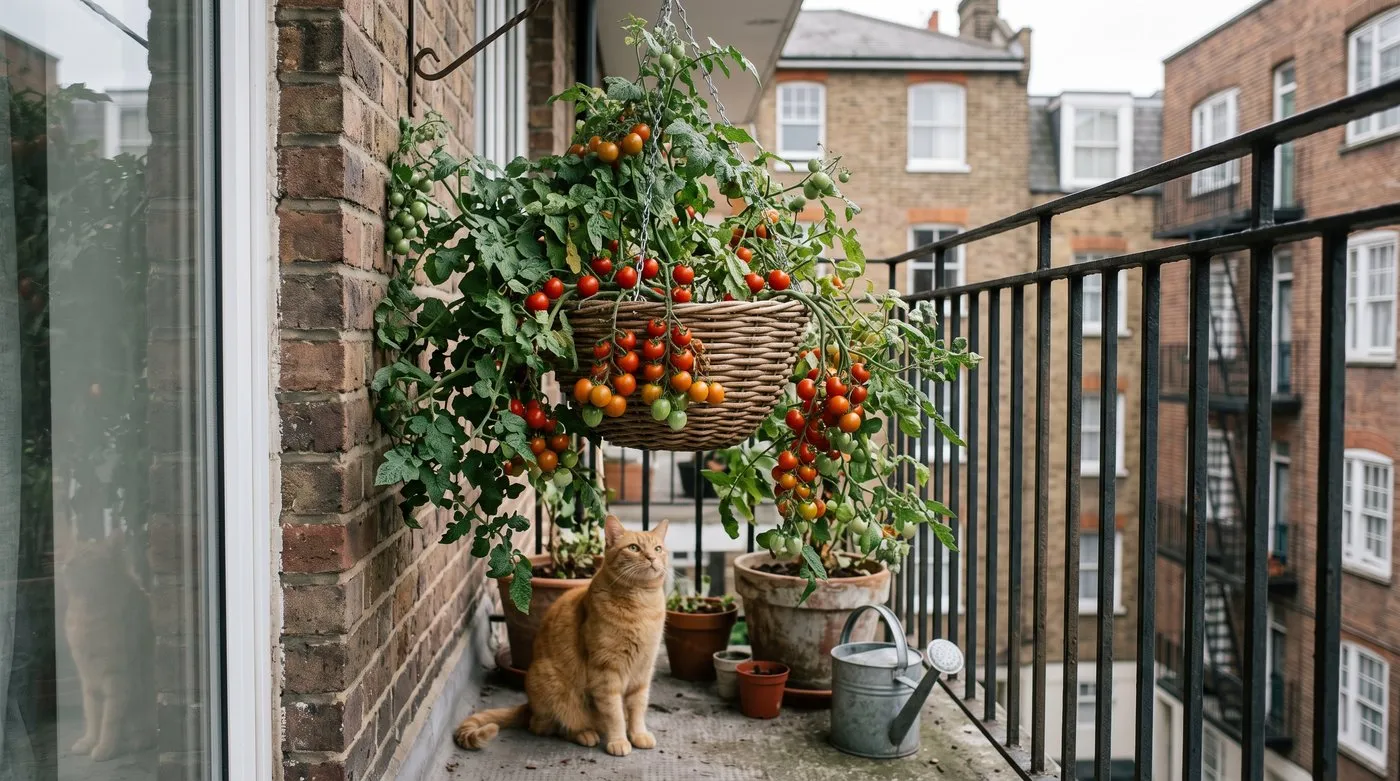
Trailing bush cherries such as Lizzano are made for baskets. The airy spot helps keep the leaves dry, too.
Ferline and Fantasio
Ferline and Fantasio are older varieties with some blight tolerance. They’ll usually keep going a little longer than ordinary tomatoes in a blight year, but not as long as Crimson Crush. They’re still decent all-rounders.
Legend
Legend is an open-pollinated bush variety with some blight tolerance. Unlike F1 hybrids, it comes true from saved seed, so you can keep your own seed each year.
How to keep blight away from outdoor tomatoes
Resistant varieties work best with a few simple habits. Together they can give you a decent crop even in a damp summer.
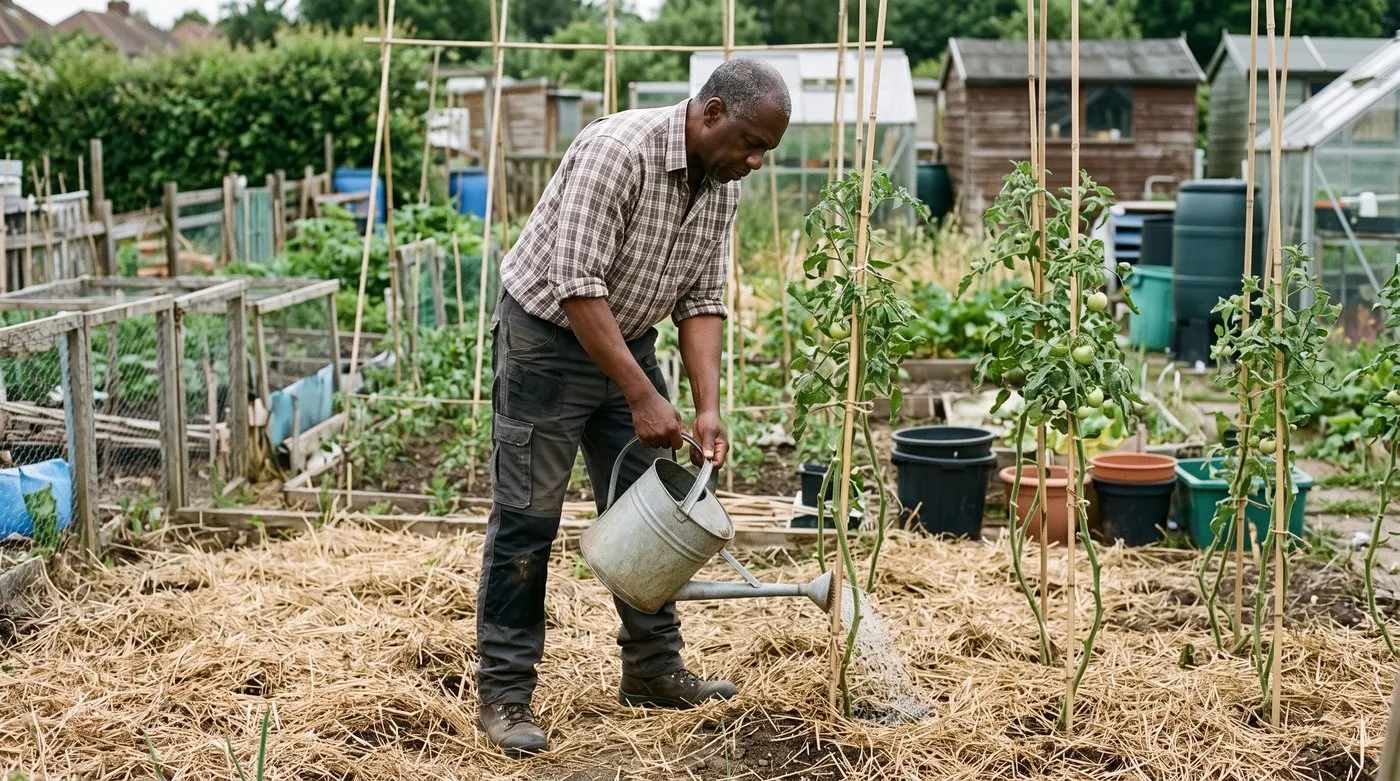
Water the soil, not the leaves, and take off the lowest leaves. Dry foliage is your best defence against blight.
- Water the soil, not the leaves. Wet leaves let blight in. Water at the base, ideally in the morning.
- Give plants room. Space cordons about 60cm apart and bush types about 45cm apart, so air moves through.
- Take off the lower leaves. Once the first truss is setting fruit, remove leaves touching the soil. This stops rain splashing spores up.
- Keep tomatoes away from potatoes. They share the same blight. Put as much distance between them as you can.
- Remove affected leaves fast. At the first brown patches, cut them off and bin them. Don’t compost them.
Our guide to tomato blight prevention and treatment explains what to do if blight does strike.
When is tomato blight most likely?
Blight usually arrives from July, after a spell of warm, muggy weather. It likes nights of at least 10°C with long stretches of damp, humid air on two days in a row. Wet western and southern areas often see it first.
Potato growers use a free alert service called Blight Watch, which warns when these conditions hit your area. It’s handy for tomato growers too. When an alert comes in, check your plants every day and remove any affected leaves straight away. To tell blight from other problems, see our guide to late blight on potatoes and tomatoes.
Best blight-resistant tomatoes for your space
For allotments and veg beds
Crimson Crush and Mountain Magic are the top choices. Both are cordons, so tie them to 1.8-2m canes and pinch out side shoots each week. Our guide to pinching out tomato side shoots shows how.
For pots, patios and baskets
Losetto and Lizzano are the easy options. Use pots or baskets of at least 10 litres, filled with peat-free compost. Stand pots on feet so water drains away and air moves underneath. Growing in a grow bag? Our guide to growing in grow bags covers watering and feeding.
For greenhouses
Blight is much less of a problem under glass, because the leaves stay dry. Choose for flavour and crop instead. Our guide to the best greenhouse tomato varieties has the top picks.
Outdoor tomato calendar
| Month | What to do |
|---|---|
| March to April | Sow indoors in a warm spot, about 18-21°C. Pot on into 9cm pots |
| May | Harden off plants outside during the day |
| Late May to early June | Plant out once frosts are over and nights are mild |
| June | Tie in cordons and pinch out side shoots weekly. Start feeding |
| July | Remove lower leaves. Check for blight after warm, wet spells |
| August | Main picking. Keep feeding and watering at the base |
| September | Pinch out the tops. Pick green fruit before frost to ripen indoors |
| October | Clear plants. Bin any with blight rather than composting |
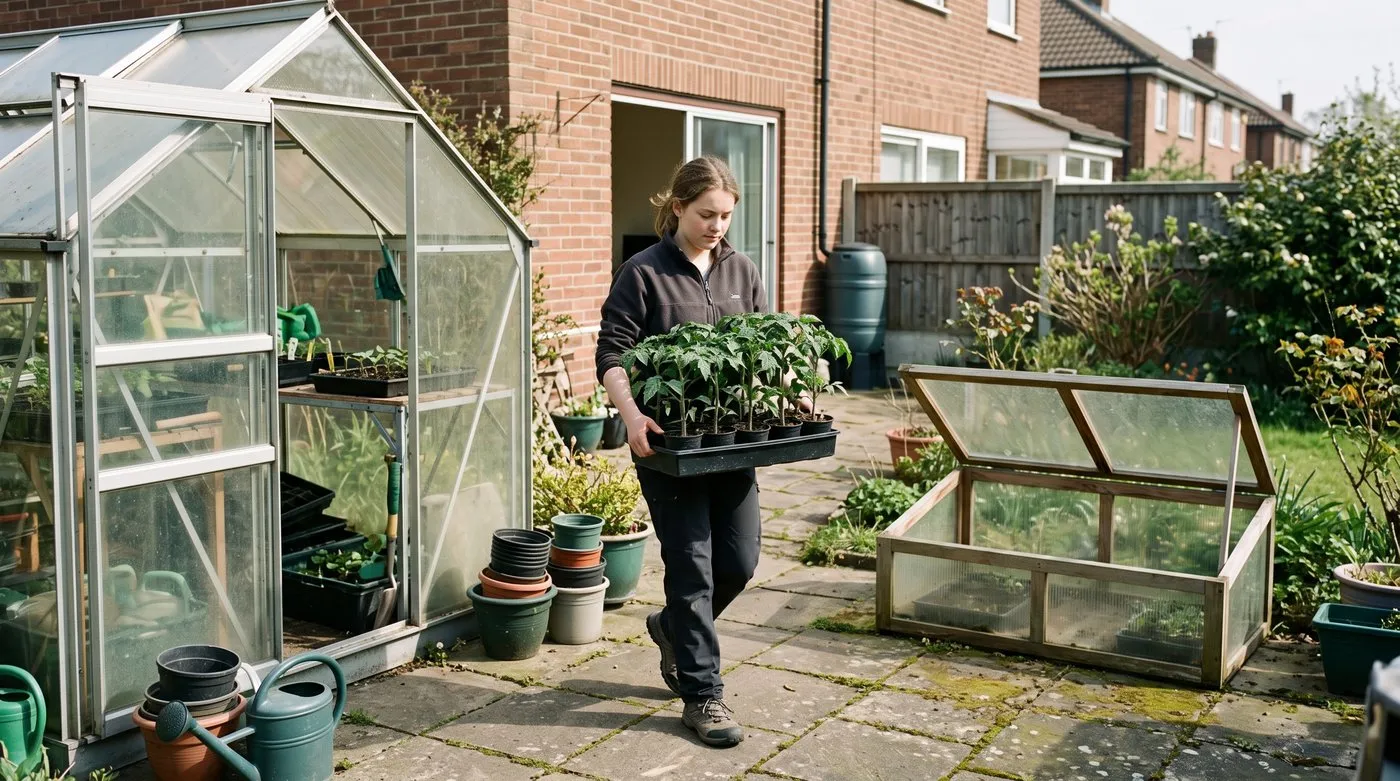
Get young plants used to outdoor life over a week or two before planting them out in late May or early June.
For timing your sowing, see when to plant tomatoes.
Common mistakes with blight-resistant tomatoes
- Thinking resistance means immunity. In a long wet spell, resistant plants can still get some leaf spotting. Keep up good habits.
- Watering over the top. Wet leaves are exactly what blight needs. Water the soil.
- Planting too close. Crowded plants stay damp. Give cordons about 60cm.
- Planting out too early. Cold nights check growth. Wait until late May or early June.
- Growing next to potatoes. Blight moves easily between the two crops.
For more outdoor and greenhouse varieties, read our guide to the best tomato varieties to grow in the UK, or browse more ideas in the growing veg hub.
Frequently asked questions
What is the most blight-resistant tomato in the UK?
Crimson Crush is the best-known choice. It carries two blight-resistance genes and gives large, round red tomatoes. Mountain Magic carries the same two genes and gives smaller, sweet cocktail-sized fruit. Both are good starting points for outdoor growing.
Can blight-resistant tomatoes still get blight?
Yes, resistance slows blight down but doesn’t stop it completely. In a long, warm, wet spell, resistant plants can still get some brown patches on their leaves. They usually keep cropping much longer than ordinary varieties. Keep up good habits such as watering the soil and removing affected leaves.
Are blight-resistant tomatoes less tasty?
Modern ones taste good. Mountain Magic has a sweet, well-balanced flavour, and the bush cherries Losetto and Lizzano are sweet enough to eat straight off the plant. Crimson Crush has a pleasant flavour and is good for slicing.
Should I spray blight-resistant tomatoes?
No, there’s no need to spray them. Home gardeners have very few products for blight, and none cure it. Rely on resistant varieties, dry leaves, good spacing and quickly removing any affected leaves instead.
When does tomato blight start in the UK?
Usually from July, though it can arrive in late June. It follows warm, humid weather, with nights of at least 10°C and long spells of damp air. Wet western and southern areas often see it first. In a dry summer it may come late or not at all.
Can I grow blight-resistant tomatoes in pots?
Yes, bush varieties such as Losetto and Lizzano are ideal. Use a pot or basket of at least 10 litres filled with peat-free compost. Water often in summer and feed with a tomato feed once flowers set. Pots on a sunny patio often get better airflow than plants in a border.
Do I need a greenhouse to avoid tomato blight?
No, but a greenhouse helps a lot because it keeps the leaves dry. Blight is far less common under cover, though it can still blow in. If you grow outdoors, blight-resistant varieties are your best defence.
Our team produces practical UK gardening guidance from source research, contributor records and established horticultural practice. Editorial standards are overseen by Matt W.