
Key takeaways
- Rocket gives some of the earliest new potatoes, ready about 10 weeks after planting
- Charlotte is a lovely waxy salad potato that's easy to grow
- Sarpo Mira has very good blight resistance, though no potato is fully immune
- Maris Piper is the classic for roasting, chips and mash
- First earlies usually dodge blight because you lift them before it arrives
- Chitting seed potatoes from late January gives them a head start
Here are the best potato varieties for UK gardens, sorted into first earlies, second earlies and maincrops. Whether you grow in the ground, in raised beds or in containers on a patio, these are reliable, tasty choices.
What are first early, second early, and maincrop potatoes?
Potatoes are grouped by how long they take from planting to harvest. That tells you when to plant, how much you’ll get and how likely blight is to catch them.
| Group | Plant | Harvest | Weeks to harvest | Crop size | Blight risk |
|---|---|---|---|---|---|
| First early | Mid-March | June | 10-12 | Small | Very low |
| Second early | Early April | July to August | 13-16 | Medium | Low to medium |
| Maincrop | Mid-April | August to October | 18-22 | Big | High |
First earlies give small, waxy new potatoes. They’re usually ready before blight arrives in summer, so they rarely get it. The crop is smaller, but nothing from a shop beats a freshly dug new potato.
Second earlies sit between new potatoes and storing potatoes. Lots of growers think they’re the sweet spot. Charlotte, the nation’s favourite salad potato, is a second early.
Maincrops take longest but give the heaviest harvests. These are the ones you store for autumn and winter. Blight is the main worry, which is why blight-resistant varieties matter so much if you don’t want to spray.
Best first early potato varieties
First earlies go in from mid-March, or early April in northern England and Scotland. They’re the quickest way to home-grown potatoes and perfect for small gardens and pots.
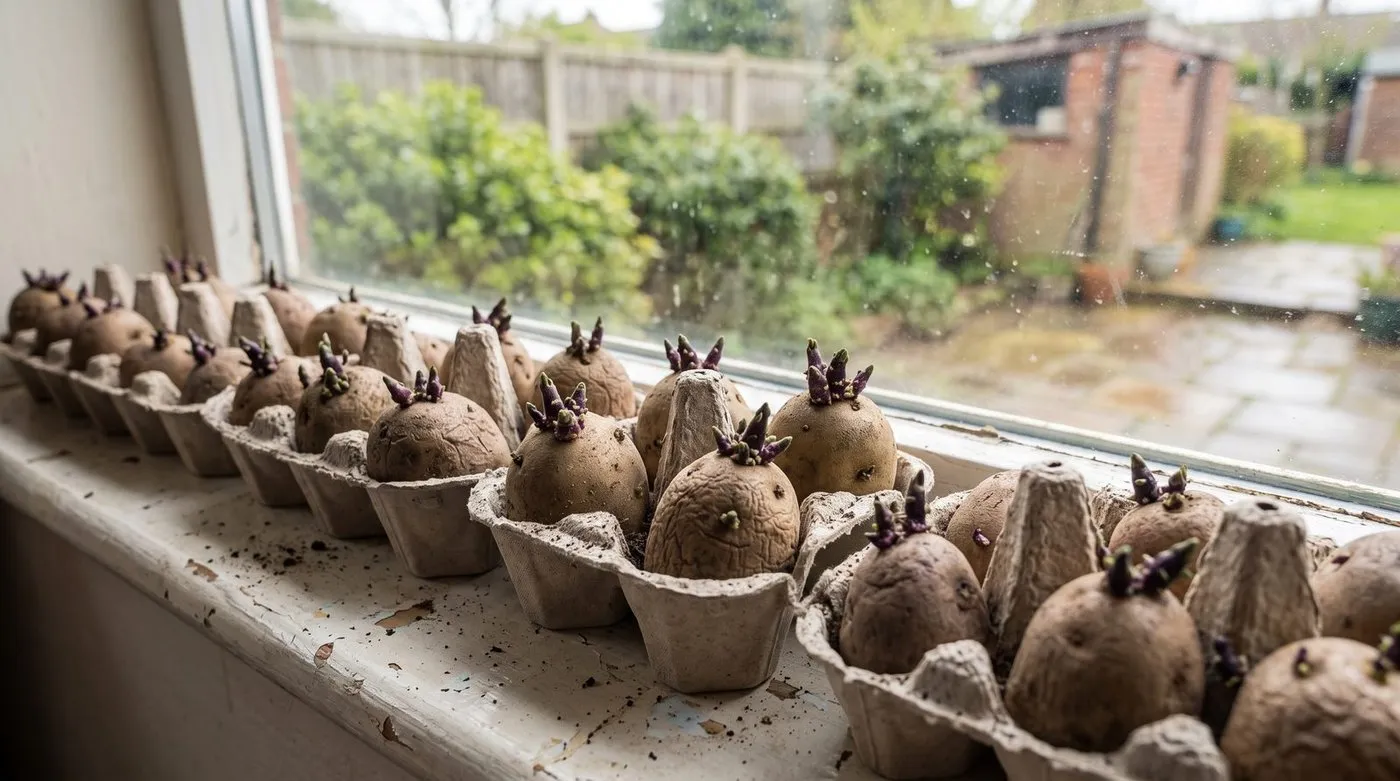
Chitting seed potatoes on a windowsill from late January. Short, stubby shoots are just what you want.
Rocket
Rocket is one of the quickest potatoes you can grow. It can be ready about 10 weeks after planting, giving neat, round, white new potatoes. It’s a great choice for pots and for anyone who can’t wait to dig their first spuds.
Swift
Swift is another speedy first early, ready in about 10 weeks. It’s a handy choice for containers and small beds. Plant it in March and you’ll be eating new potatoes in early summer.
Lady Christl
Lady Christl takes a week or two longer than Rocket and Swift, but gives a bigger crop. It has pale yellow, waxy potatoes that are lovely boiled or in salads.
Best second early potato varieties
Second earlies go in from early April and are lifted from July into August. They give the best mix of crop size, flavour and easy growing for most UK gardeners.
Charlotte
Charlotte is the classic salad potato, with waxy, yellow flesh and a buttery flavour. It’s lovely hot or cold. Boiled with mint and butter, it’s the perfect British new potato. Sliced into a potato salad, it keeps its shape. It’ll even make chips at a push, though a floury potato is better for that.
Kestrel
Kestrel has pretty purple-eyed potatoes and is a real all-rounder. It boils, roasts, chips and mashes well. It copes with slugs better than most potatoes, which is a big plus on heavy or damp soil. It also stores better than many second earlies in a cool, dark shed.
Nicola
Nicola has some of the best flavour of any waxy potato. The potatoes are long, smooth and yellow with a rich, nutty taste. It has more blight resistance than most second earlies. It makes a superb potato salad or gratin. Its one weak spot is drought, so keep it well watered in June and July while the potatoes are forming.
Best maincrop potato varieties
Maincrops go in from mid-April and stay in the ground until August, September or even October. They give the biggest harvests and the potatoes you store through winter.

Earthing up maincrop potatoes every 2-3 weeks stops green potatoes and gives a bigger crop.
Maris Piper
Maris Piper is the UK’s best-known floury potato. It’s the one for crispy roasties, proper chips and fluffy mash. It’s a heavy cropper, but it has little blight resistance, so lift it promptly if blight strikes.
King Edward
King Edward has been grown in the UK since 1902 and is still the classic baking potato. It has red-splashed white skin and very floury flesh that turns to fluff when baked. It crops less than modern varieties and has no real blight resistance. But for baking and roasting, it’s hard to beat.
Sarpo Mira
Sarpo Mira is the go-to maincrop if you’re worried about blight. It has very good resistance, makes big, leafy plants and gives a heavy crop of red-skinned, floury potatoes that are great roasted, mashed or baked. It also stores really well. For growers who don’t want to spray, it’s one of the most reliable maincrops in a blight year, though no variety is fully immune.
Desiree
Desiree is the most popular red-skinned potato in the UK. The pale yellow flesh is good for roasting, mashing and chips. It copes with dry spells better than many, which helps on sandy soil. Its blight resistance is poor, but the potatoes form quite quickly, so you can often lift them earlier than other maincrops. The red skins look great in a tray of roast veg.
Potato varieties at a glance
| Variety | Group | Texture | Best for | Blight resistance |
|---|---|---|---|---|
| Rocket | First early | Waxy | New potatoes, pots | Escapes by being early |
| Swift | First early | Waxy | New potatoes, pots | Escapes by being early |
| Lady Christl | First early | Waxy | Boiling, salads | Escapes by being early |
| Charlotte | Second early | Waxy | Salads, boiling | Low |
| Kestrel | Second early | All-rounder | Everything | Low |
| Nicola | Second early | Waxy | Salads, gratins | Medium |
| Maris Piper | Maincrop | Floury | Roasts, chips, mash | Low |
| King Edward | Maincrop | Floury | Baking, roasting | Low |
| Sarpo Mira | Maincrop | Floury | Roasts, mash, baking | Very good |
| Desiree | Maincrop | All-rounder | Roasting, mash, chips | Low |
How to chit seed potatoes
Chitting means letting seed potatoes sprout before planting. It gives them a head start of a couple of weeks, which helps most with first and second earlies.
From late January, stand seed potatoes in egg boxes or trays, with the end that has the most eyes facing up. Put them on a cool, bright windowsill or in an unheated room with good daylight.
After 4-6 weeks, you should see short, stubby shoots about 1.5-2.5cm long. They should be green or purple, not the long white threads you get from potatoes forgotten in a dark cupboard. Short, coloured shoots are much tougher and less likely to snap off when you plant.
When to plant potatoes in the UK
Timing really matters. Plant too early into cold, wet soil and the seed potatoes rot. Plant too late and maincrops run into blight.
| Type | South England | Midlands | North and Scotland |
|---|---|---|---|
| First early | Mid-March | Late March | Early April |
| Second early | Early April | Mid-April | Late April |
| Maincrop | Mid-April | Late April | Early May |
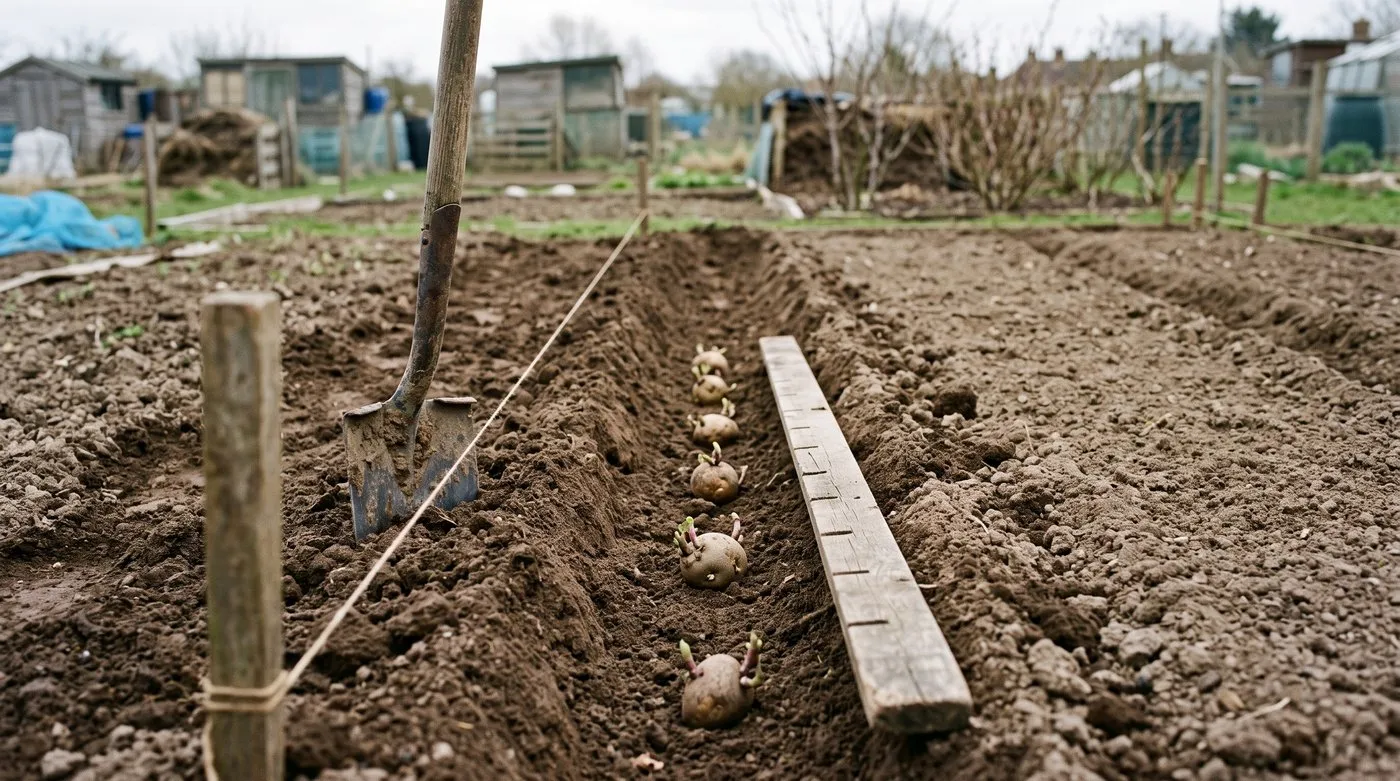
Set chitted potatoes shoots-up along the trench, then cover gently so you don’t snap the shoots. Wait until the soil isn’t cold and wet.
How to earth up potatoes
Earthing up means pulling soil up around the stems as they grow. It stops the potatoes turning green, smothers weeds and gives you a bigger crop. Green potatoes are poisonous, so never eat them.

Lifting maincrops with a fork in September. Push the fork in well away from the plant so you don’t spear the potatoes.
When the shoots are 20-25cm tall, use a hoe or rake to pull soil from between the rows up around the stems, leaving about 10cm of leaves showing. Do it again every 2-3 weeks until the ridges are 20-30cm high or the leaves meet between the rows. For the full how-to, see our guide on how to earth up potatoes.
Potatoes in pots need the same treatment. Add more compost each time the shoots poke through, until the pot is full.
Common potato problems in the UK
Late blight (Phytophthora infestans)
Blight is the worst potato disease in the UK. Brown patches appear on the leaves in warm, wet weather from summer onwards. The leaves collapse within days, and the disease can wash down into the soil and rot the potatoes.
To avoid it, grow first earlies (lifted before blight usually arrives), choose resistant varieties like Sarpo Mira, Sarpo Axona and Carolus, and space plants well so air can move around them. If blight appears on maincrops, cut off and bin the leaves and stems, then wait a couple of weeks before lifting the potatoes. Blight warnings are based on the Hutton Criteria: two days in a row where it stays at 10C or above and the air is very humid for at least six hours each day. The RHS guide to potato and tomato blight explains more.
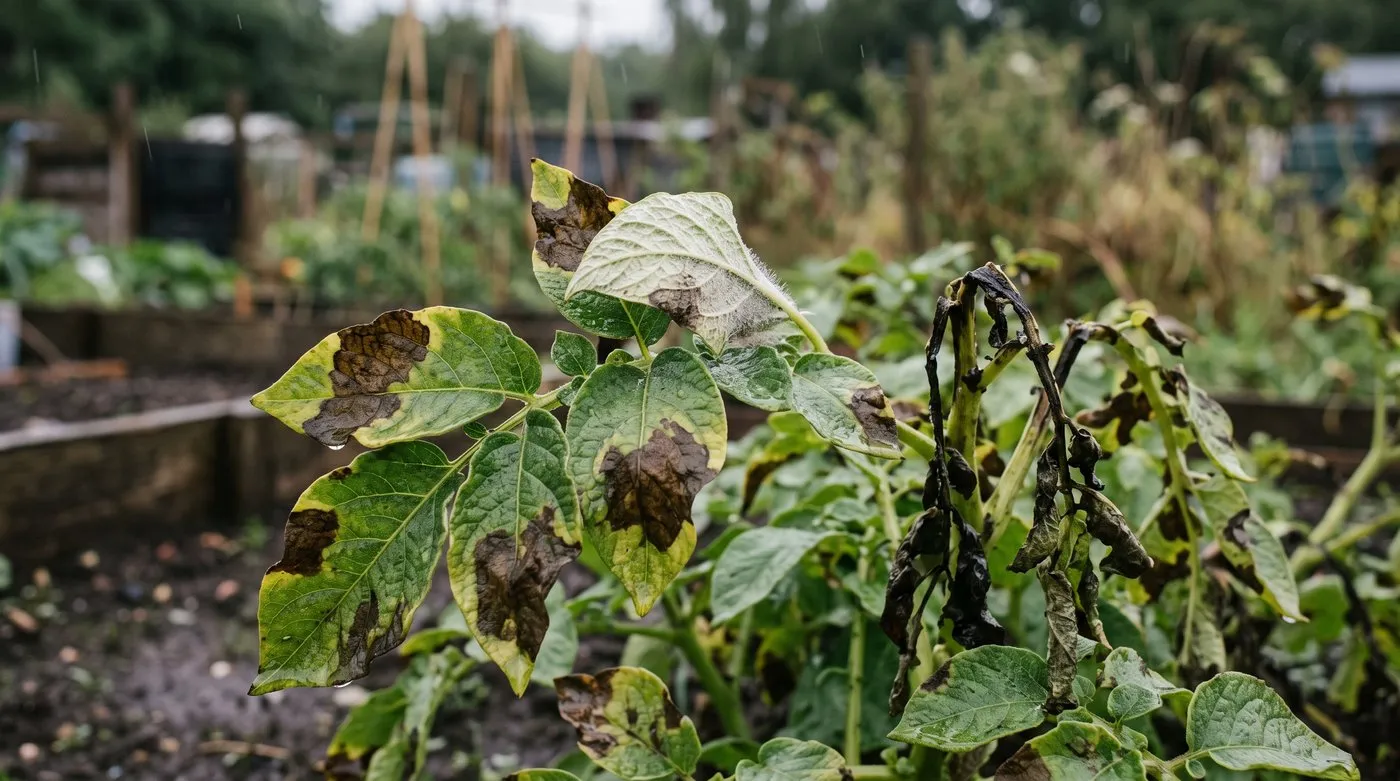
Dark brown patches that spread fast in warm, wet weather mean blight. Cut off and bin the foliage, then wait two weeks before lifting.
Common scab
Rough, corky patches on the skins. It’s more common in dry summers and on chalky soil. It’s only skin deep, so the potatoes are still fine to eat once peeled. Don’t add lime before planting potatoes, as it makes scab worse. Keep the soil evenly moist while the potatoes are forming, around the time the plants flower.
Slug damage
Slugs bore holes into potatoes underground, especially maincrops on heavy soil in wet years. Lift maincrops as soon as they’re ready rather than leaving them in the ground. Kestrel copes with slugs better than most varieties, so it’s a good pick if slugs are a problem for you.
Potato blackleg
Blackleg turns the base of the stems black and slimy, and the plants wilt and collapse. It comes in on infected seed potatoes. Always buy certified seed potatoes, and never plant potatoes from the supermarket, which may carry disease.
Growing potatoes in containers
No garden? First earlies and compact second earlies do really well in pots. A 40-60 litre pot is the smallest worth using, and big potato grow bags work well too.
Fill the bottom third with multipurpose compost mixed with some perlite. Space 3 seed potatoes evenly, shoots facing up, and cover with 10cm of compost. As shoots appear, keep adding compost until the pot is full. Water regularly once the potatoes start forming.
A fortnightly liquid tomato feed from flowering time helps the potatoes swell. Our container vegetable gardening guide covers compost, drainage and feeding for all kinds of veg.
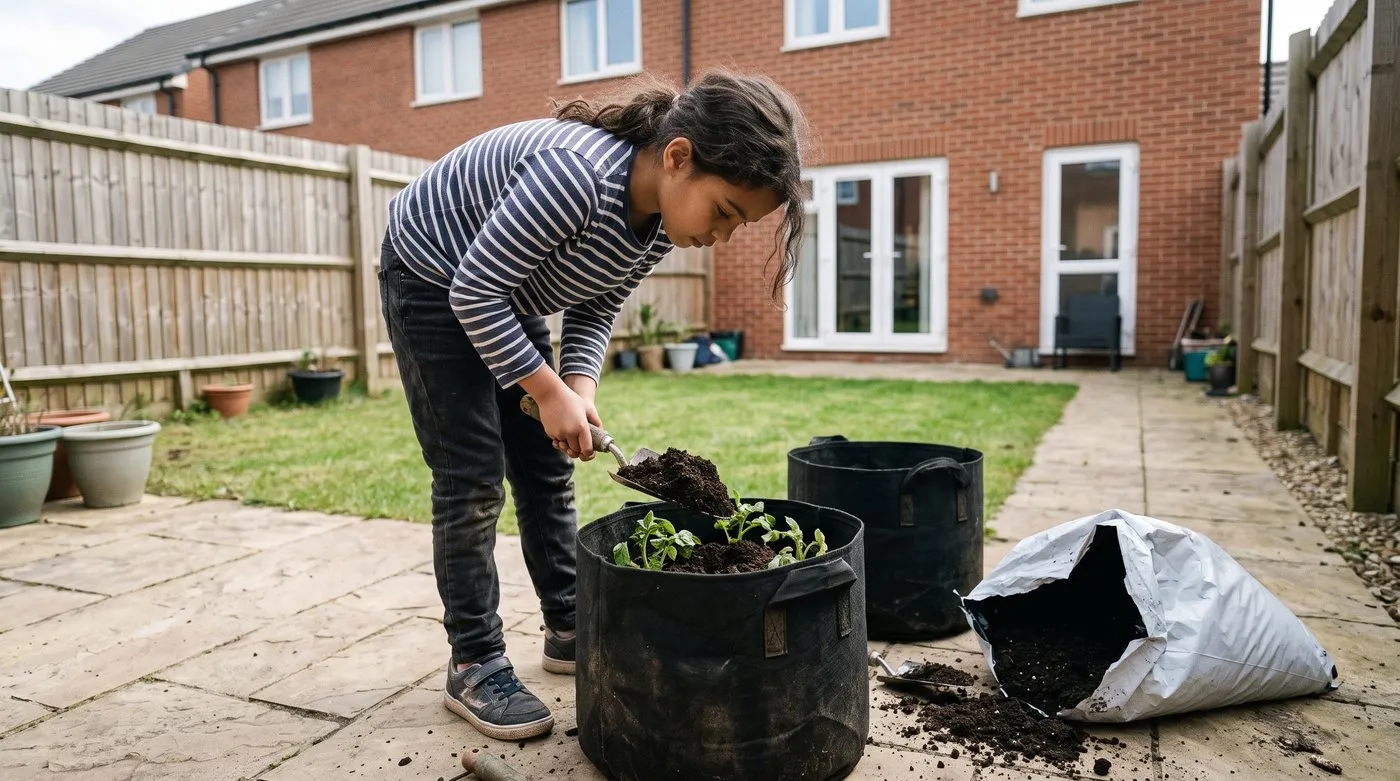
Each time the shoots poke through, add more compost until the bag is full. First earlies are the best choice for pots.
Crop rotation for potatoes
Never grow potatoes in the same soil two years running. Pests and diseases, especially eelworm, build up fast where potatoes grow year after year.
Leave at least three years before growing potatoes in the same spot again, and four is better. In a classic four-bed rotation, potatoes follow peas and beans, then brassicas and roots follow the potatoes.
On a small plot, crop rotation planning means keeping notes. Jot down which beds grew potatoes each year so you don’t go back to them too soon.
Where to buy seed potatoes in the UK
Buy certified seed potatoes from a seed company or specialist supplier. Well-known UK suppliers include:
- Thompson & Morgan, including some heritage varieties
- JBA Seed Potatoes, a potato specialist with a long list of varieties
- Marshalls Seeds, with all the popular varieties
- Suttons Seeds, including collections sized for small gardens
Order by December or early January for the best choice, as popular varieties like Charlotte and Sarpo Mira can sell out. One seed potato makes one plant. For a 3m row, you need about 10 seed potatoes spaced 30cm apart for first earlies, or fewer at 40cm apart for maincrops.
Storing your potato harvest
First earlies are for eating fresh. Their skins are thin and they soon go soft, so eat them within 2-3 weeks of lifting.
Second earlies like Charlotte keep for a few months if you dry them properly. Leave freshly dug potatoes on the soil for a few hours to dry, then move them somewhere cool, dark and frost-free. Paper or hessian sacks are better than plastic, which traps moisture and makes them rot.
Maincrops keep the longest. Dry them for about 2 weeks in an airy spot to toughen the skins, then store in complete darkness somewhere cool but frost-free. An unheated garage or shed is usually perfect. Check them every month and take out any that are soft or sprouting. Well-stored maincrops keep well into spring.
Frequently asked questions
What is the best potato variety to grow in the UK?
Charlotte is a great all-round potato for UK gardens. Its waxy, yellow-fleshed potatoes have a buttery flavour and keep their shape when cooked. It’s easy to grow and works hot, cold or in a salad. For fluffy roasts and mash, grow Maris Piper too.
What are the earliest potatoes you can harvest in the UK?
Rocket is one of the earliest, ready about 10 weeks after planting. Swift is just as quick. Both are first earlies planted from mid-March in southern England or early April further north. Lady Christl takes a little longer but gives a bigger crop.
Can you grow potatoes in pots and containers?
Yes, first earlies like Swift and Rocket do well in pots. Use a container of at least 40 litres and plant 3 seed potatoes in March. Cover with 10cm of compost and keep adding more as shoots appear. Charlotte works in bigger containers too.
When should you start chitting seed potatoes?
Start chitting in late January or early February. Stand seed potatoes in egg boxes, with the end that has the most eyes facing up, on a cool, bright windowsill. After 4-6 weeks you want short, stubby green or purple shoots. Avoid warm, dark spots, which give long, pale, weak shoots.
How many potatoes will one seed potato produce?
It depends on the type, but you’ll usually get a good handful or more. First earlies give a smaller crop of new potatoes. Second earlies give more, and maincrops give the most. Earthing up and steady watering while the potatoes form both help you get a bigger harvest.
What is the best potato for roasting?
Maris Piper is a brilliant roasting potato. It goes crispy outside and fluffy inside. King Edward and Desiree roast well too. For the crispiest roasties, parboil for 8-10 minutes, rough up the edges with a fork and roast at 200C in hot fat.
Which potato varieties are resistant to blight?
The Sarpo varieties are the most blight-resistant potatoes for UK gardens. ‘Sarpo Mira’ and ‘Sarpo Axona’ stand up well to late blight. ‘Carolus’ also has good resistance. No variety is fully immune, so remove infected leaves quickly. First earlies are usually lifted before blight arrives, which helps them escape it.
Our team produces practical UK gardening guidance from source research, contributor records and established horticultural practice. Editorial standards are overseen by Matt W.


