Key takeaways
- Start earthing up when shoots are about 20cm tall, usually late April to May
- Draw soil up the stems, leaving the top few centimetres of leaves showing
- Repeat every two to three weeks until ridges are about 25-30cm high
- It stops tubers turning green and helps protect young shoots from late frost
- First earlies need one or two earthings; maincrop needs three or four
- In bags and pots, top up with compost instead of drawing up soil
Earth up potatoes when the shoots are about 20cm tall. Use a hoe to pull soil up around the stems, leaving just the tops showing. Repeat every two to three weeks until the ridges are about 25-30cm high or the leaves meet across the row.
It’s a quick job with a big payoff. New potatoes form near the surface, and any that see daylight turn green and bitter. Earthing up keeps them buried in the dark. It also shelters young shoots from late frosts and smothers weed seedlings. This guide covers when to start, how to do it and how the timing differs for earlies and maincrop. For planting dates, see when to plant potatoes.
Why earth up potatoes?
Earthing up does several jobs in one go:
- Stops green potatoes. Tubers that reach the light turn green. The green parts are bitter and contain a natural toxin, so they’re not safe to eat.
- Protects from frost. Young potato shoots blacken in a frost. A ridge of soil over the tips keeps them safe on a cold night.
- Keeps weeds down. Each pass with the hoe buries seedling weeds along the row.
- Gives tubers loose soil. A deep, crumbly ridge is easy for new potatoes to swell into.
- Helps shield tubers from blight. A good layer of soil over the tubers helps stop blight spores washing down from infected leaves.
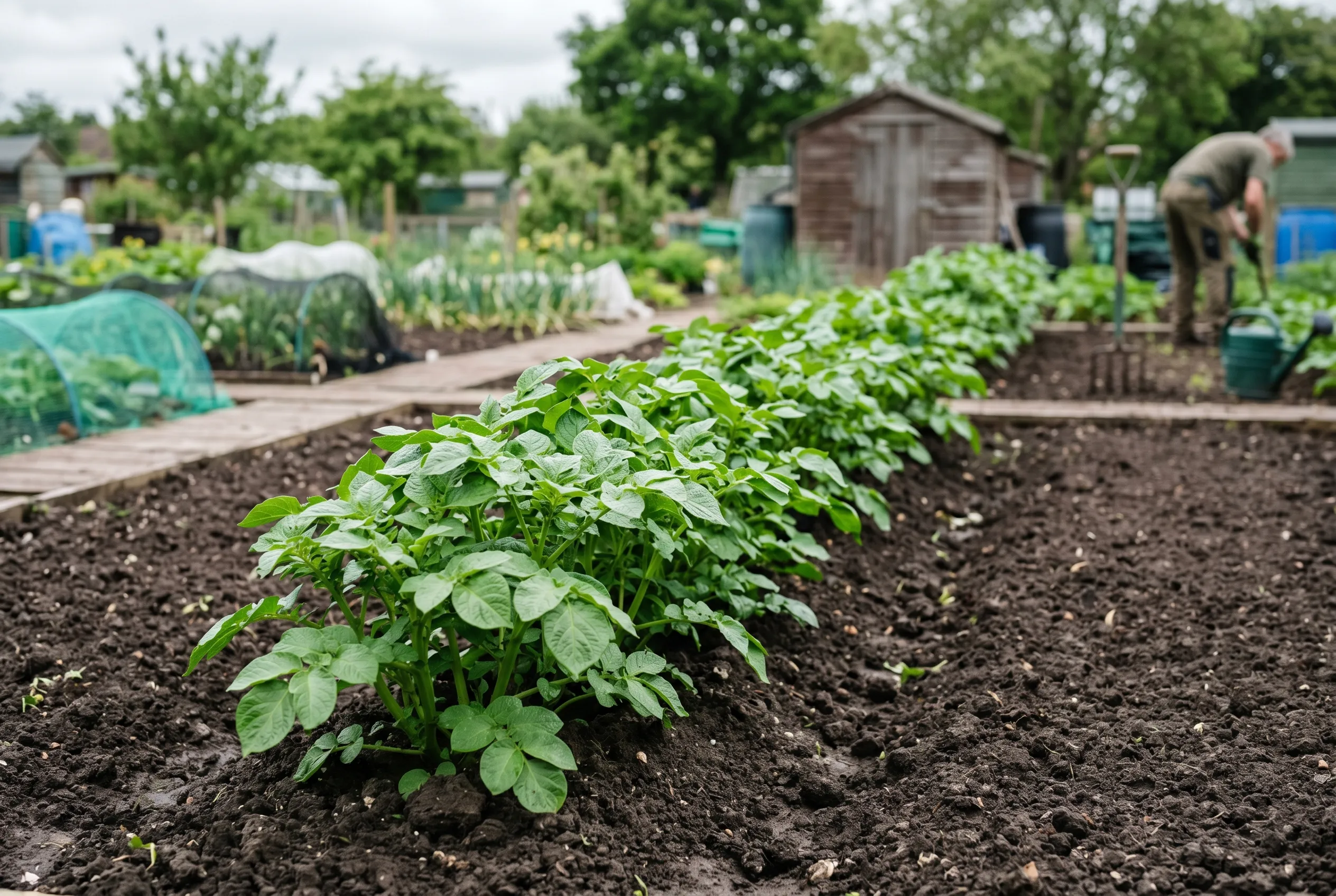
At about 20cm tall, these plants are ready for their first earthing up.
When to start earthing up potatoes
Start when the shoots are about 20cm tall, roughly a hand-span above the soil. For earlies planted in March, that’s usually late April or May. Maincrop planted in April gets there in May or June.
Don’t wait for flowers. They arrive weeks after the first earthing should have happened.
If a frost is forecast while shoots are still small, draw soil right over them. They’ll push through again in a few days. A layer of fleece works too.
Pick a dry day when the soil crumbles. Wet clay smears into sticky clods that set hard and shed rain.
How to earth up potatoes step by step
A draw hoe is the classic tool, but a rake or spade works on a small bed.
- Weed the row first, so you’re not burying big weeds.
- Loosen the soil in the gaps between rows with the hoe.
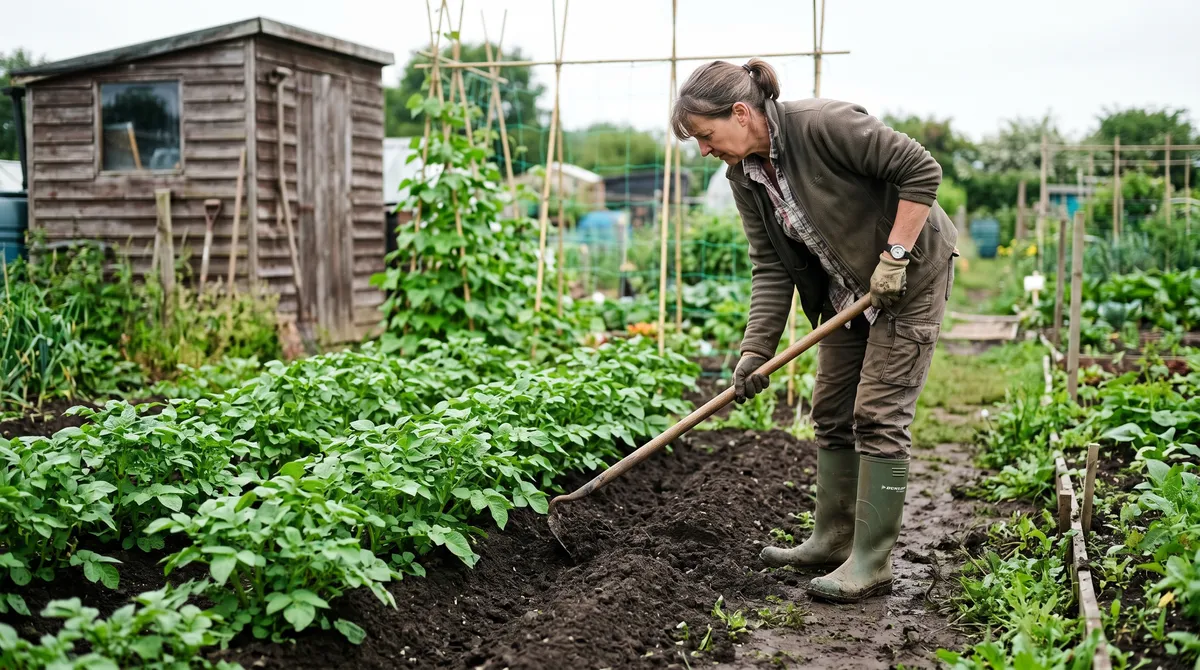
- Pull soil up both sides of the row, against the stems, to make a ridge.
- Leave the tips showing. Stop when the top few centimetres of leaves are still clear.
- Firm the sides lightly with the back of the hoe so the ridge holds its shape.
- Repeat every two to three weeks, adding a bit more height each time, until the ridge is about 25-30cm high.
Keep the hoe shallow, so you don’t slice into tubers. Once the leaves meet across the rows, they shade the soil themselves and you can stop.
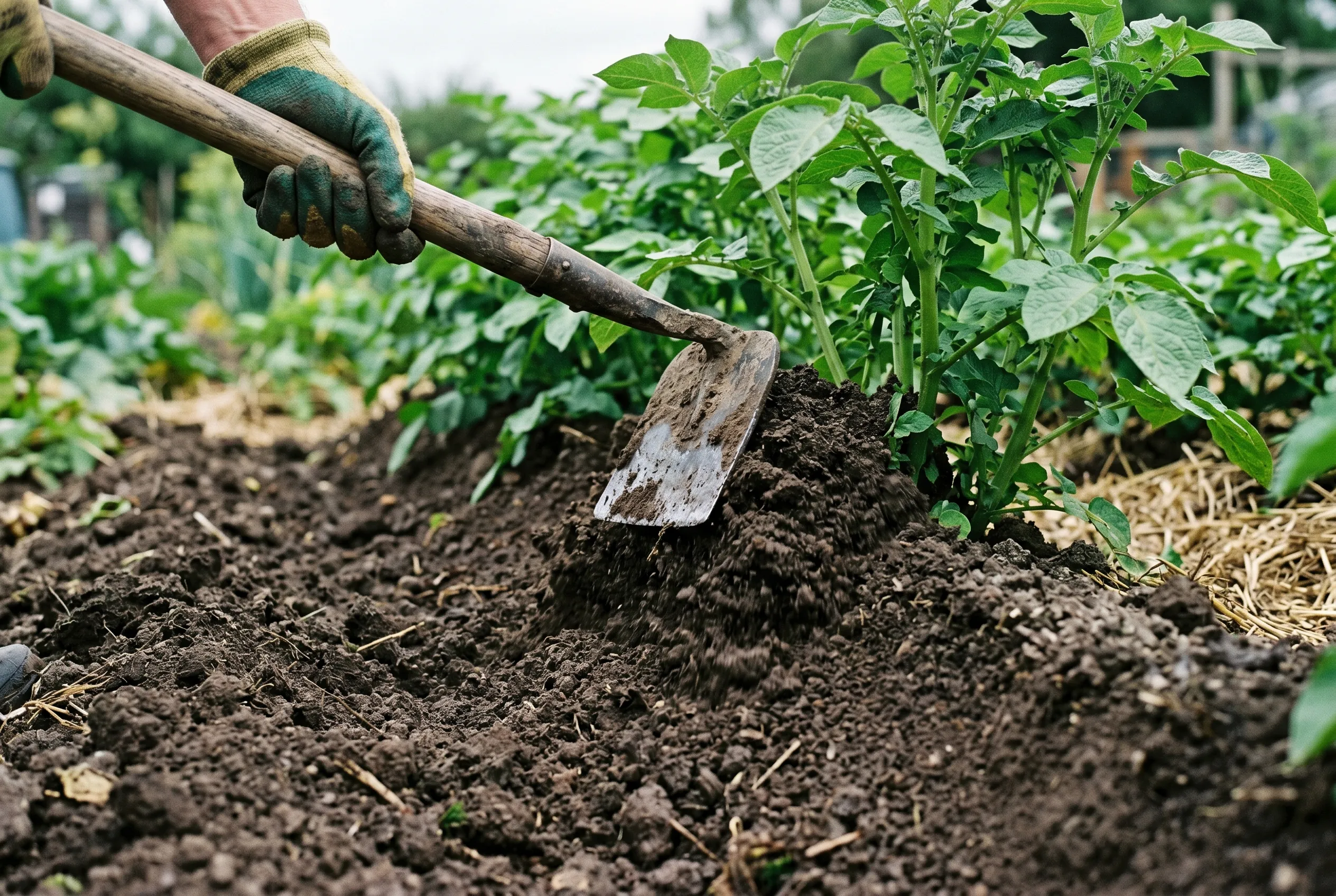
Pull soil up from both sides of the row and keep the hoe shallow, so it never nicks a tuber.
Earthing up earlies and maincrop
How many times you earth up depends on how long the crop is in the ground.
First earlies such as Rocket, Swift and Foremost grow fast and are lifted from June. One or two earthings is usually enough.
Second earlies such as Charlotte and Kestrel, and maincrop such as Maris Piper, King Edward and Sarpo Mira, stay in much longer. They usually need three or four earthings between May and July. Their bigger tubers push up harder as they swell, so build their ridges to the full 25-30cm. The guide to the best potato varieties explains the groups.
| Month | First earlies | Maincrop |
|---|---|---|
| March to April | Plant. Cover shoots if frost threatens | Plant in April |
| Late April to May | First earthing at about 20cm | Shoots appear. Cover on frosty nights |
| June | Second earthing if needed. Start lifting | First and second earthings |
| July | Finish lifting | Final earthing. Ridges at full height |
| August to September | Bed free for the next crop | Leaves die back. Lift for storing |
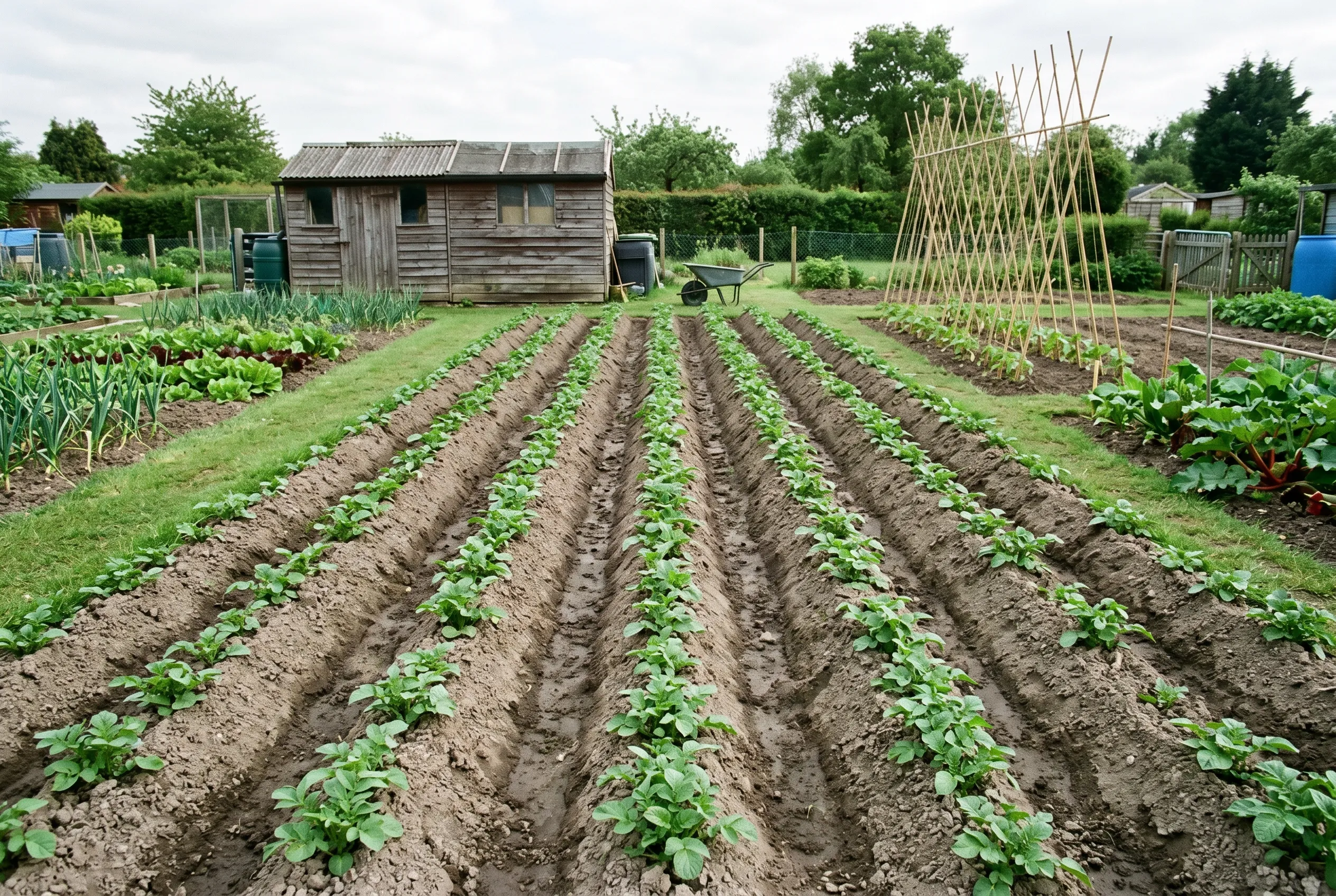
Freshly earthed rows with just the tops showing. The ridges get higher with each pass.
Other ways to earth up potatoes
You don’t always need a hoe.
- Bags and containers: start with the bag about a third full of compost. Each time the shoots grow 15-20cm, add more compost to cover all but the tips. The guide to growing potatoes in buckets and containers covers the details.
- Straw or compost mulch: pile a thick layer over the rows instead of soil. It suits no-dig beds, where you don’t want to disturb the soil. Top it up as the plants grow and make sure no tubers peek through.
- Under black sheeting: some gardeners plant through a weed membrane, so the tubers stay dark without any earthing up.
Common earthing up mistakes
Waiting for flowers. By then, tubers near the surface may already be green. Start at about 20cm.
Burying the whole plant. The leaves feed the crop. Always leave the tips showing.
Building it all at once. One huge mound can smother young plants. Add soil in stages.
Working wet soil. Sticky clay forms hard clods. Wait for a dry spell.
Hoeing too deep. A deep blade can slice tubers and stolons, the underground stems that carry them. Keep it shallow.
Stopping too soon. Keep checking until the leaves close over. Tubers that poke out in July still go green.
What to do about green potatoes
Green skin means a tuber has seen light. The green part tastes bitter and contains a natural toxin, solanine, which cooking doesn’t destroy. Cut away green patches generously before cooking, and bin or compost any potato that’s green all over.
Store your harvest in the dark too, or it will turn green in the cupboard. The guide to storing potatoes shows how.
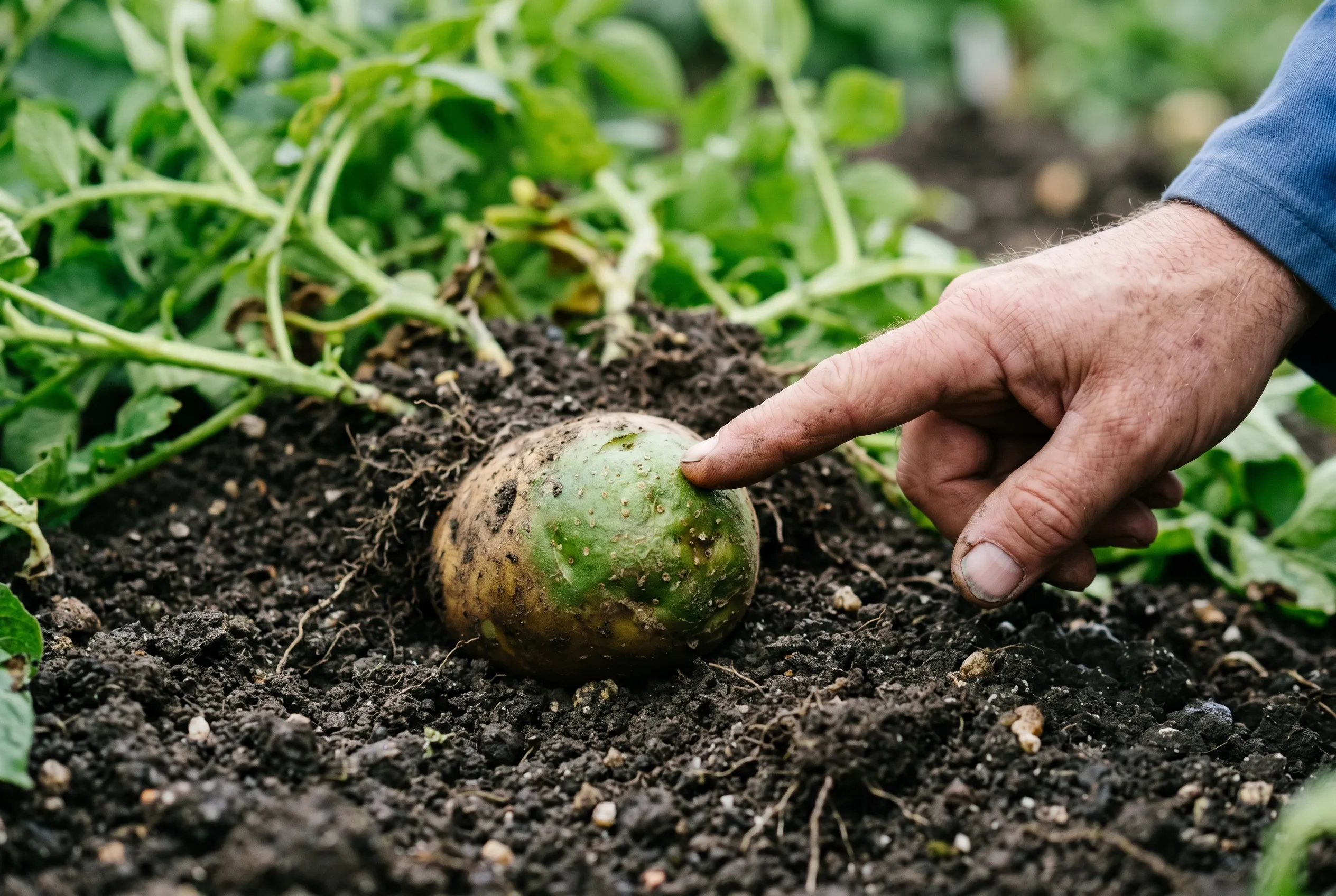
This potato pushed up into the light and turned green. Earthing up keeps the rest of the crop pale.
When the time comes, the guide to harvesting potatoes shows when each type is ready to lift.
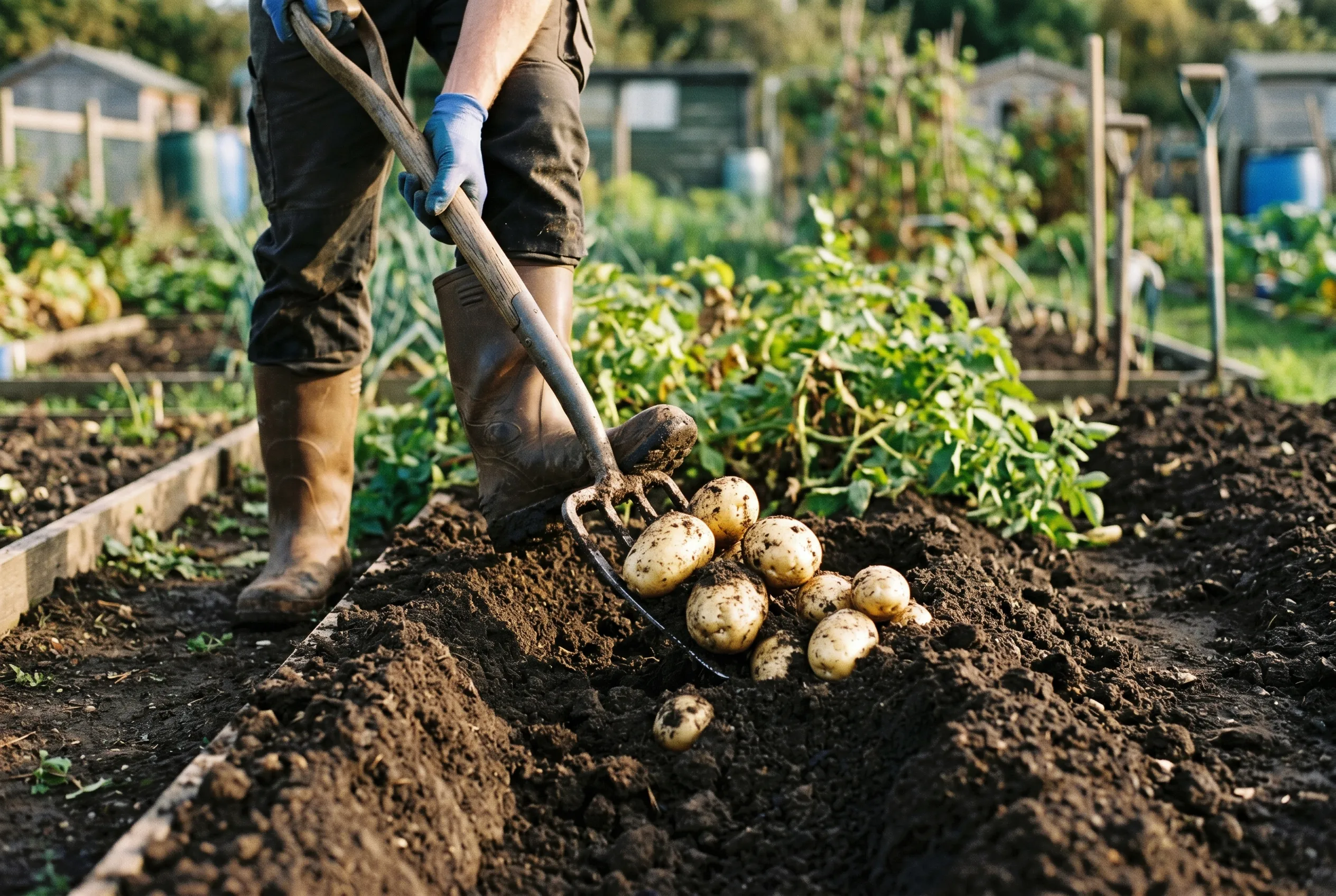
The payoff: clean, pale potatoes lifted from a well-earthed ridge, with no green shoulders to trim.
Frequently asked questions
When should I start earthing up potatoes?
When the shoots are about 20cm tall, usually late April to May. Earlies planted in March are often first. Don’t wait for flowers, as they come long after the first earthing is due.
How high should you earth up potatoes?
Build the ridges to about 25-30cm in stages. Each time, draw soil up the stems and leave the top few centimetres of leaves showing. Never bury young plants completely in one go.
Do you have to earth up potatoes?
It isn’t essential, but it’s well worth doing. It stops tubers near the surface turning green, shelters shoots from frost and buries weed seedlings. A thick mulch of straw or compost does a similar job.
Why do my potatoes turn green?
They’ve been exposed to light. Tubers near the surface push up as they swell and turn green where light reaches them. Green parts taste bitter and can make you ill, so cut them away generously or bin badly greened potatoes.
Can you earth up potatoes too much?
Yes, if you bury all the leaves at once. The plant needs its leaves to grow. Always leave the top few centimetres showing, and build the ridge in stages.
How do I earth up potatoes in bags or containers?
Top up with compost instead of soil. Start with the bag about a third full. Each time the shoots grow 15-20cm, add compost to cover all but the tips, until the bag is nearly full.
Now your ridges are built, read the full guide to growing potatoes for watering, feeding and keeping blight at bay, or browse more growing veg guides.
Our team produces practical UK gardening guidance from source research, contributor records and established horticultural practice. Editorial standards are overseen by Matt W.