Key takeaways
- Sow hardy salads from late January and tomatoes and peppers from February, in gentle heat
- Plant tomatoes into the tunnel in late April or May, with fleece ready for cold nights
- Sow winter salads and oriental leaves in August and September for winter picking
- Open doors and vents on sunny days all year to cut overheating and damp
- Move crops around the beds each year so soil diseases don't build up
A polytunnel lets you sow earlier, pick later and grow crops that sulk outside. To get the most from it, you need to know what to do and when, because the jobs change fast from month to month.
This calendar takes you through the year, from sowing salads in January to clearing summer crops in October. If you grow under glass instead, our greenhouse growing calendar covers similar ground for greenhouses.
How a polytunnel year works
A polytunnel year has two main crops: summer fruiting crops and winter salads. Spring and autumn are about getting one out and the other in.
- Sowing runs earlier than outdoors. You can start many crops a few weeks before the outdoor soil warms up.
- Harvests run later. Tomatoes and peppers often crop into October, and winter salads keep going right through.
- Ventilation is a daily job. A tunnel heats up fast in sun, even in spring and autumn.
- Watering is all down to you. No rain reaches the beds.
- Rotation still matters. Move crops around the beds each year so soil pests and diseases don’t build up.
| Month | Main jobs |
|---|---|
| January | Pick winter salads. Sow hardy salads. Clean pots and plan |
| February | Sow tomatoes, peppers and aubergines in heat. Mulch beds with compost |
| March | Sow early salads, radish, beetroot and peas. Pot on seedlings |
| April | Harden off. Plant tomatoes late in the month in mild areas |
| May | Finish planting summer crops. Set up watering. Open up daily |
| June | Train tomatoes and cucumbers. Feed weekly. Sow successional salads |
| July | Peak picking. Sow kale, chard and oriental leaves for winter |
| August | Keep picking. Sow winter salads. Stop tomato plants growing taller |
| September | Plant out winter crops. Pick the last summer crops |
| October | Clear summer crops. Mulch beds. Plant garlic |
| November | Pick winter salads. Check the cover before winter storms |
| December | Pick, plan and order seed |
Winter polytunnel jobs: December to February
Winter is a quiet time of picking salads and getting ready for spring.
December
Pick winter salads, chard, parsley and spinach little and often. Order seeds for the spring rush. Check the cover, door and anchoring before winter gales. Our guide to polytunnel maintenance and repair shows what to look for.
January
Keep picking winter leaves. Sow hardy salads such as lamb’s lettuce, mizuna and mustards in modules. Wash and dry pots and seed trays. On sunny days open the doors for a few hours to clear damp air, then close up by mid-afternoon.
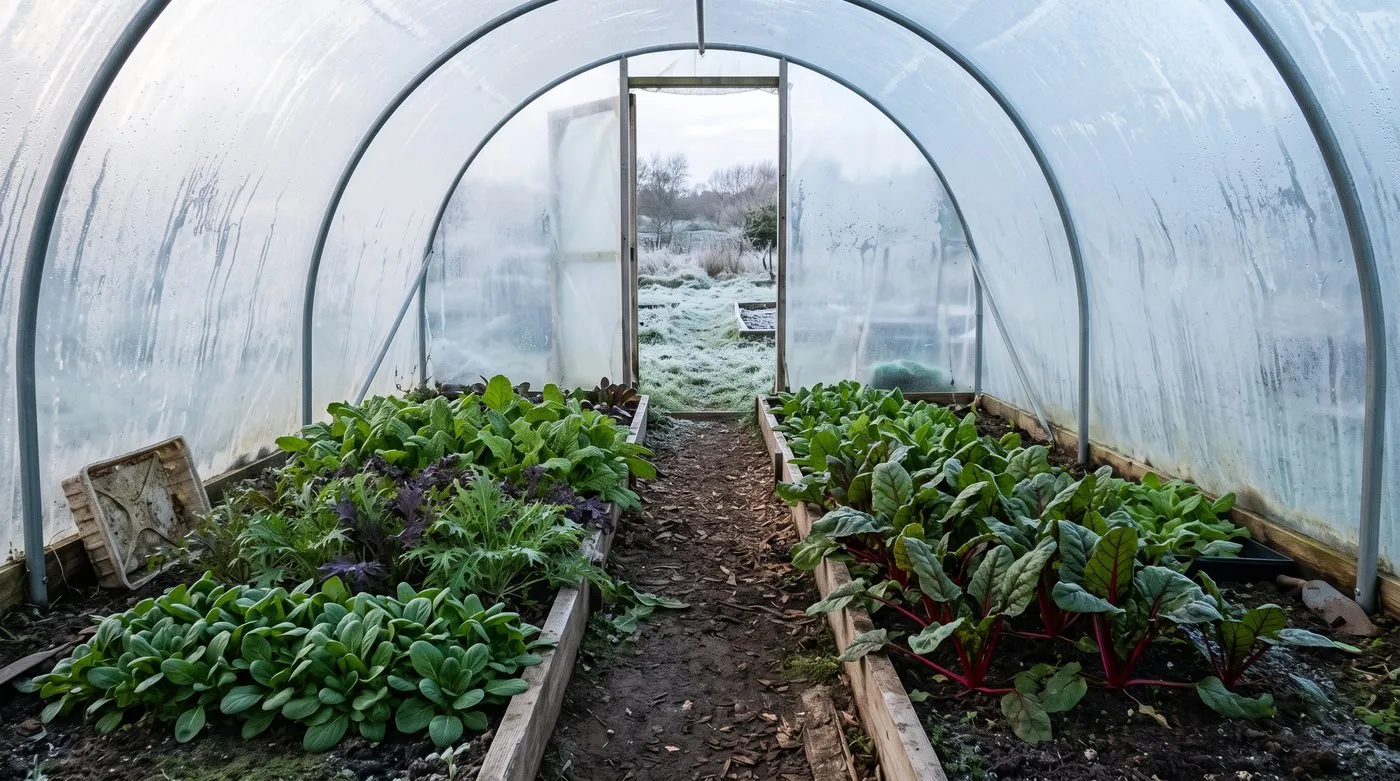
Sow them in late summer and winter salads keep you picking right through January. Open the door on bright days to clear the damp.
February
Sow tomatoes, peppers, chillies and aubergines in a heated propagator, or on a warm windowsill. Peppers and aubergines need the longest season, so start them first. Spread a few centimetres of compost over the beds. Patch any tears from winter storms.
Spring polytunnel jobs: March to May
Spring is the busiest time, as seedlings fill every surface and the beds change over.
March
Sow early lettuce, radish, beetroot, spring onions and peas straight into the beds. Pot on tomato and pepper seedlings. Open the doors on warm days and close them at dusk. Check vents and door hinges before the busy season.
April
Keep sowing salads. Sow cucumbers, courgettes, French beans and basil in pots. Harden off young plants in the tunnel. In mild areas, plant tomatoes into their final spots in late April. Keep fleece handy, as unheated tunnels can still get a frost.

Put canes or strings in before you plant tomatoes, so you don’t damage the roots later. Fleece is handy for any cold April nights.
May
Finish planting tomatoes, peppers, aubergines and cucumbers. Set up drip lines or a seep hose before summer arrives. Open the doors every morning and close them in the evening. Start feeding tomatoes with a high-potash feed once the first flowers set.
Summer polytunnel jobs: June to August
Summer is all about watering, training and picking.
June
Pinch out tomato side shoots every week and tie stems to their supports. Our guide to pinching out tomato side shoots shows how. Train cucumbers up strings. Sow lettuce and rocket every few weeks. Water fruiting crops every day or two, and feed weekly.
July
This is peak picking time. Pick cucumbers and courgettes every day or two, and tomatoes as they colour. Sow kale, chard and oriental leaves in modules for winter. Remove lower tomato leaves to let air move around the plants.

Midsummer in the tunnel. Drip lines keep the water going, and open sides help keep the heat down.
August
Keep picking and watering. Pinch out the tops of tomato plants so the last fruits ripen before autumn. Sow winter lettuce, lamb’s lettuce, mizuna, mustards and land cress in modules. Clean the cover inside and out on a still, cloudy day, as a clean cover lets in more winter light.

A soft brush and plain water clean off the green film, so your winter crops get more light.
Autumn polytunnel jobs: September to November
Autumn is changeover time, from summer crops to winter ones.
September
Plant out winter salads and oriental leaves from August sowings. Pick the last tomatoes, peppers and cucumbers. Ripen green tomatoes indoors if the plants are flagging. Close up earlier in the afternoon as nights get colder.
October
Clear finished summer crops. Compost healthy plant material and bin anything diseased. Spread compost or well-rotted manure over empty beds. Plant garlic in a spare bed. Make a note of where everything grew, so you can move crops round next year.
November
Pick winter salads, taking a few outer leaves from each plant. Sow broad beans for an early spring crop if you have space. Check the cover, door and ventilation panels before winter. Watch for mice nibbling winter crops.

A basket like this is what all that spring sowing is for. Late summer is when the tunnel really pays you back.
Ventilation and watering through the year
Ventilation stops your crops cooking in summer and keeps the air drier in winter. Open the doors and side vents on any sunny day, even in winter. In summer, leave them open all day and close them in the evening. Our guide to ventilation and humidity control explains how to keep the balance.
Watering is up to you. In summer, fruiting crops need water every day or two, and much more in a heatwave. Water the soil, not the leaves. In winter, water only when the soil is drying, and do it in the morning so plants aren’t sitting wet overnight.
Keeping pests down in a polytunnel
The warm, sheltered air suits pests as much as plants. Check plants a couple of times a week and act early.
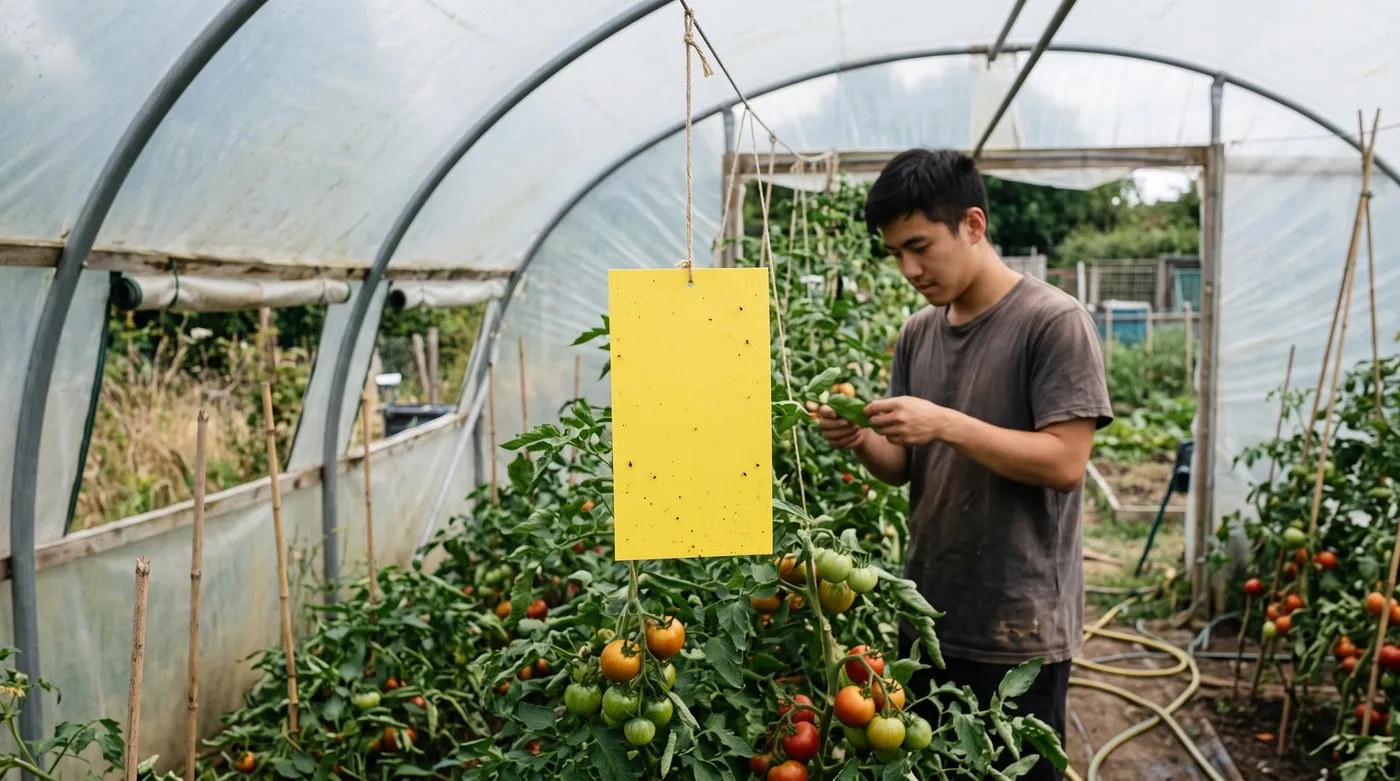
A yellow sticky trap shows you when whitefly arrive, so you can bring in biological controls early.
- Aphids: squash small colonies and encourage ladybirds and hoverflies.
- Whitefly: use yellow sticky traps and the parasitic wasp Encarsia formosa. See our greenhouse whitefly guide.
- Red spider mite: damp down paths in hot weather and use the predatory mite Phytoseiulus.
- Slugs: pick them off at dusk and clear hiding places.
Biological controls work best released early, before numbers build up. Avoid sprays where you’re picking food. If you must use one, choose an approved product for that crop and follow the label.
Common polytunnel mistakes
- Forgetting to open up. Even a spring morning can overheat a closed tunnel. Make opening the doors part of your routine.
- Keeping it shut all winter. Damp, still air causes grey mould. Open up on mild, sunny days.
- Growing tomatoes in the same bed every year. Soil diseases build up. Move crops around, or grow tomatoes in big pots or bags of fresh compost.
- Leaving gaps in winter. Sow winter salads in August and September so the tunnel keeps working.
- Ignoring small tears. A small rip grows fast in wind. Patch it straight away.
Still deciding which structure suits you best? Our polytunnel vs greenhouse comparison helps, and our guide to winter salad leaves has more cold-season crops to try. You’ll find more seasonal jobs in our how-to guides.
Frequently asked questions
What can you grow in a polytunnel year-round?
Summer fruiting crops and winter salads, with spring and autumn crops in between. Grow tomatoes, peppers, cucumbers and aubergines in summer. Through winter, pick lettuce, rocket, mizuna, mustards, spinach and chard.
When should I sow in a polytunnel?
From late January to September, depending on the crop. Start hardy salads in late January and tomatoes and peppers in February and March. Sow winter salads and oriental leaves in August and September.
When can I plant tomatoes in a polytunnel?
Usually late April in the south and May further north. Wait until night temperatures stay mild, and keep fleece handy for cold snaps. Unheated tunnels can still get a frost in April.
Should you ventilate a polytunnel in winter?
Yes, on mild and sunny days. Opening the doors for a few hours clears damp air, which helps prevent grey mould. Close up again by mid-afternoon to hold some warmth for the night.
How often do polytunnel crops need watering?
Often in summer and much less in winter, because no rain gets in. In summer, water fruiting crops every day or two. In winter, water lightly and only when the soil is drying out.
How do you control pests in a polytunnel?
Check plants often and act early. Use sticky traps, pick off pests and bring in biological controls such as Encarsia for whitefly. Good ventilation and clean pots help too.
Our team produces practical UK gardening guidance from source research, contributor records and established horticultural practice. Editorial standards are overseen by Matt W.