Key takeaways
- Keep beds planted all year, not just from May to October
- Grow tall crops up strings and fill the ground below with quick salads
- Sow small batches of salad every two to three weeks rather than one big sowing
- Plant winter salads into gaps in September so beds never sit empty
- Top-dress beds with about 5cm of compost each winter and water steadily
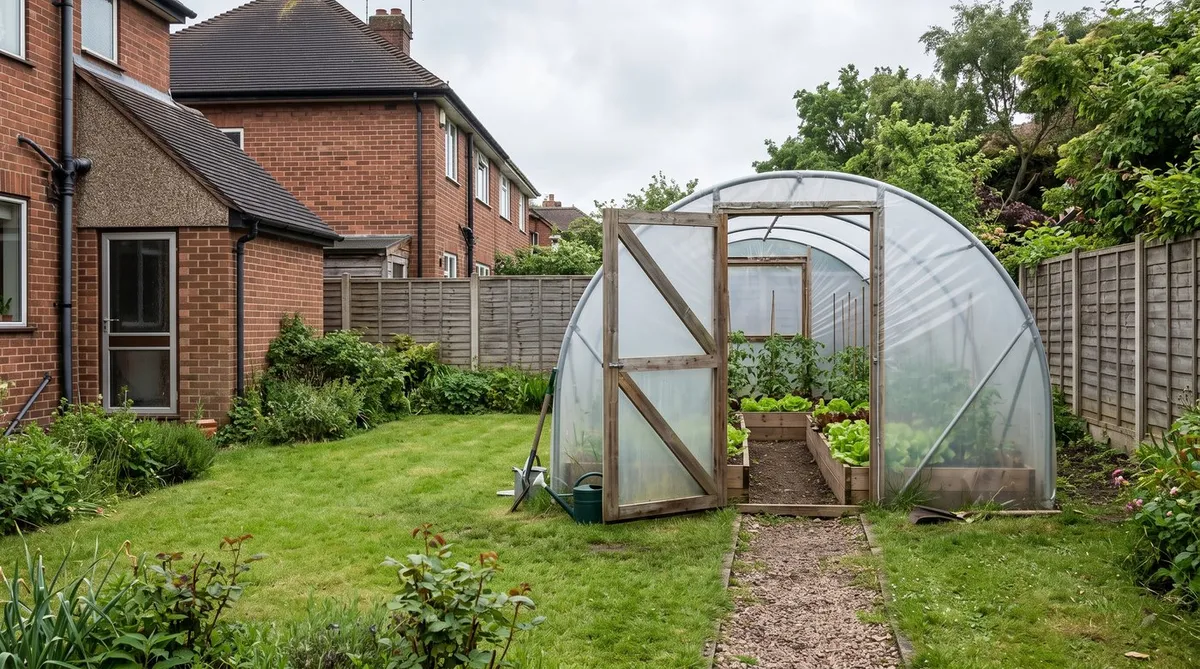
The secret to a productive polytunnel is simple: never leave soil empty. The tunnel’s floor space is fixed, so you get more food by growing upwards, packing quick crops into gaps and keeping beds planted through winter as well as summer.
This guide covers bed layout, growing in layers, catch crops, succession sowing and keeping the soil in good heart. If you’re still choosing a structure, the polytunnel vs greenhouse guide compares the two.
Why polytunnels can grow so much more
A polytunnel keeps off rain and wind and traps warmth, so crops start earlier in spring and keep going later into autumn. Warm-season crops such as cucumbers, peppers and aubergines crop far more reliably than they do outside.
The space only pays off if you use it well, though. Four things make the biggest difference:
- Keeping beds busy with something growing in every month
- Growing upwards so tall crops use the height of the tunnel
- Feeding the soil because intensive cropping uses a lot of goodness
- Steady watering and airflow since rain never reaches the beds
Get those right and a modest tunnel can keep a family in salad and summer fruit for much of the year.
How to lay out polytunnel beds
Choose a layout that gives plenty of growing space but still lets you reach every plant without treading on the soil. Beds about 1-1.2m wide are easy to reach across from one side.
| Layout | Best for | Watch out for |
|---|---|---|
| Two long beds with a central path | Rows of tomatoes and cucumbers on strings | Centre of each bed can be a stretch to reach |
| Beds down both sides plus a centre bed | Getting the most growing space | Harder to barrow compost to the far end |
| Several short beds across the tunnel | Rotating crops and smaller tunnels | More path space overall |
Keep paths narrow, about 45-60cm, so they don’t eat up growing room. Put the tallest crops along the north end or sides so they don’t shade everything else.

Two long beds and one central path is the easiest layout to work. Tomatoes go up one side, salads fill the other.
Growing in layers to use the tunnel’s height
A tunnel has far more space above the beds than on them. Use it by growing in three layers:
- Top layer: cordon tomatoes and cucumbers trained up strings tied to the frame
- Middle layer: peppers, chillies, aubergines, dwarf French beans and basil between the tall plants
- Ground layer: lettuce, rocket, radish, parsley and other quick salads around the base
Low crops grow happily in the dappled shade under tomatoes once summer gets hot. Lettuce in particular is less likely to bolt there than in full sun.
Hanging baskets of trailing tomatoes or strawberries can also go on the frame near the doors. Keep an eye on the weight, and don’t hang them where they’ll shade the main crops.

Tomatoes up top, basil in the middle and lettuce at the front: three crops from one bed.
Catch crops and overlapping plantings
A catch crop is a fast crop squeezed in before or between slower ones. It’s the easiest way to get extra harvests from the same soil.
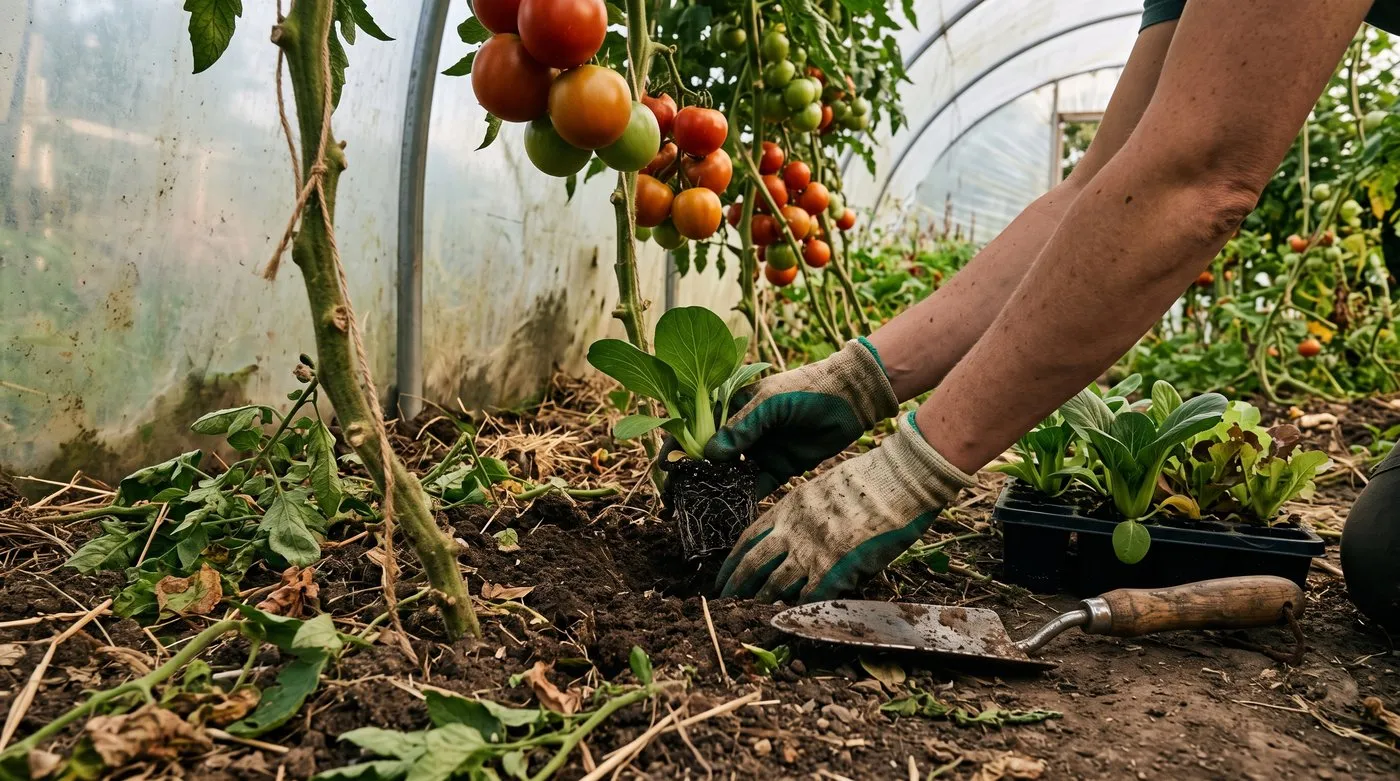
Pop the next crop in between the tomatoes in September and it’s already growing when they come out.
- Spring: sow radish, rocket, spring onions and baby salad leaves from March. Most are picked before tomatoes go in during late April or May.
- Early summer: plant lettuce and basil between young tomato plants. They’re picked before the tomatoes fill out.
- Late summer: plant winter salads and pak choi between tomato plants in September. When the tomatoes come out in October, the next crop is already growing.
The trick is to raise the next crop in modules (small cell trays) so it’s ready to plant the moment a space appears. That way a bed never sits empty for weeks. The succession planting guide explains the idea in more detail.
Succession sowing for a steady supply
Succession sowing means sowing small batches often, so you get a steady supply rather than a glut. It suits fast salads best.
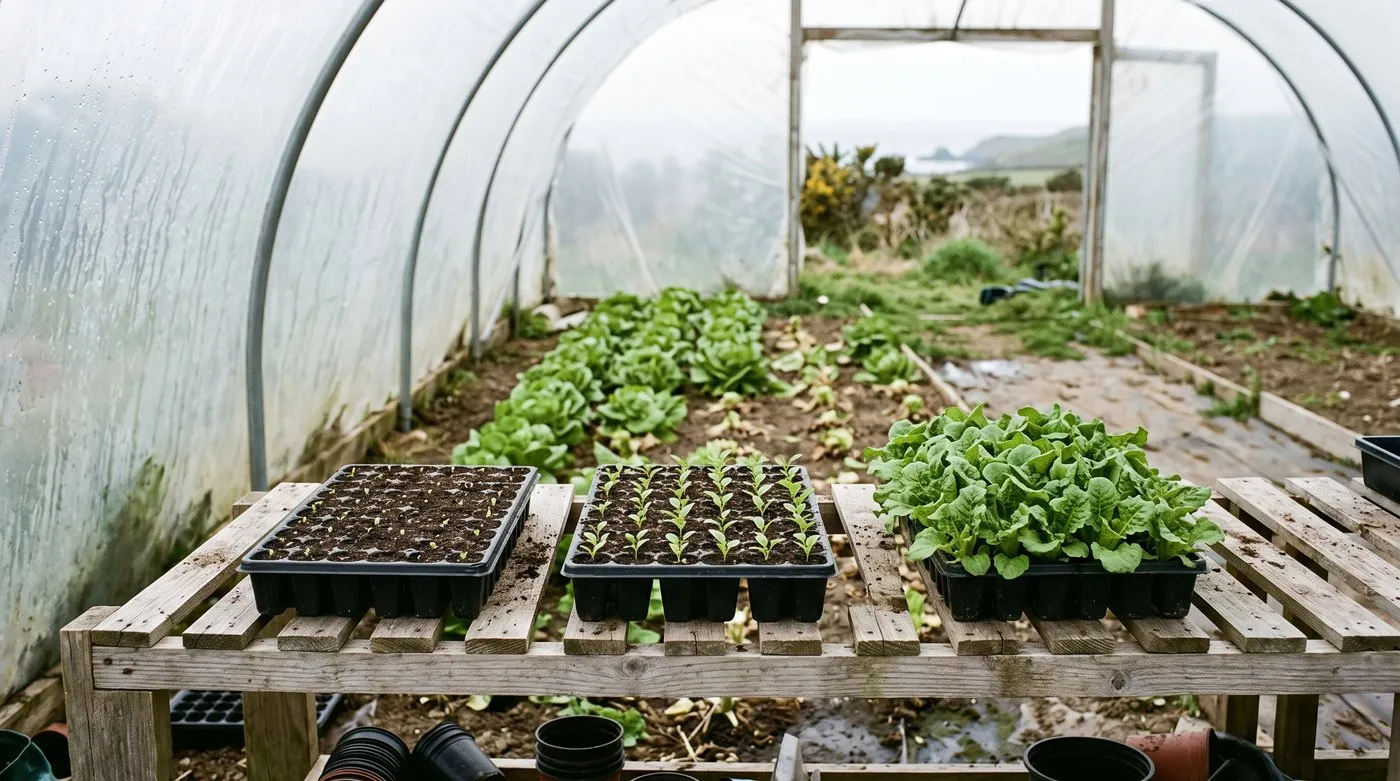
Trays at three different stages mean there’s always a lettuce ready to fill the next gap.
| Crop | Sow | How often |
|---|---|---|
| Lettuce | March to September | Every 2-3 weeks |
| Radish | March to September | Every 2-3 weeks, smaller batches in midsummer |
| Rocket | March to May, then August to September | Every 3 weeks |
| Spring onions | March to August | Every 3-4 weeks |
| Coriander | March to September | Every 3 weeks, in the coolest corner in summer |
| Pak choi and mustard greens | Late summer to early autumn | Every 3-4 weeks |
Rocket, coriander and pak choi bolt quickly in midsummer heat, so give them a break in June and July or sow them in a shadier spot. Sow a new batch of modules about a week before you expect to clear a space.
Keeping the tunnel productive through winter
Winter is where most tunnels lose out. An unheated tunnel won’t grow much in December, but it keeps hardy salads in good condition and picking slowly. They speed up again from February.
Sow or plant these from late August to September:
- Corn salad (lamb’s lettuce)
- Claytonia (winter purslane)
- Mizuna and mustard greens
- Winter lettuces such as ‘Arctic King’ and ‘Winter Density’
- Spinach and chard
Pick a few leaves from each plant rather than cutting whole plants, and they’ll keep going for months. Open the doors on mild days to keep the air moving. The guide to growing winter salad leaves has more varieties to try.

Beds of hardy winter salads keep the tunnel picking long after the tomatoes have gone.
Choosing the best crops for the space
Some crops earn their space under cover much more than others.
- Tomatoes: cordon types such as ‘Sungold’, ‘Gardener’s Delight’ and ‘Shirley’ crop for months. Remove sideshoots every week; the guide to pinching out tomato sideshoots shows how.
- Cucumbers: greenhouse types such as ‘Carmen’ are all-female, so you don’t need to remove male flowers. Train one stem up a string and pick often.
- Peppers and chillies: slow to start but crop well from late summer into autumn under cover.
- Aubergines: rarely worth trying outside in most of the UK, but often crop well in a warm tunnel.
- Salads: cut-and-come-again leaves give several pickings from one sowing.
Space-hungry crops such as maincrop potatoes, winter squash or Brussels sprouts usually do just as well outside. Save the tunnel for crops that really need the warmth.
Feeding and caring for hard-working soil
Polytunnel soil works hard, and it never gets rain to refresh it. Look after it and it keeps giving.
Top-dress every year. In late winter, spread about 5cm of well-rotted compost or manure over each bed. You don’t need to dig it in. Worms will do the work.
Feed fruiting crops. Once tomatoes, peppers and cucumbers start setting fruit, give a high-potash liquid feed about once a week.
Move crops around. Growing tomatoes in the same soil year after year can let soil-borne problems build up. Swap beds each year, or grow some tomatoes in large pots of fresh compost. The guide to tomato diseases in polytunnels covers what to look out for.
Watering and ventilation
Rain never reaches tunnel beds, so watering is down to you. Steady moisture matters more than big soakings now and then.
- Water in the morning, at the base of plants, not over the leaves
- In hot weather, check daily; tomatoes and cucumbers may need water every day
- Mulch around plants with compost to hold in moisture
- A drip line or seep hose on a tap timer saves a lot of time. The guide to drip irrigation kits compares options.
Ventilation matters just as much. A closed tunnel can quickly get well above 30°C on a sunny day, which stops tomatoes setting fruit. Open both doors early on warm days, and close them in the evening. Add shade netting over the top in a heatwave. Open doors also let bees in to pollinate.

Jotting down what each bed gives you is a fun way to spot which crops earn their space.
Common mistakes that waste polytunnel space
- Leaving beds bare all winter. Plant winter salads in September instead.
- Not removing tomato sideshoots. Plants turn into leafy jungles and fruit less.
- Letting the tunnel overheat. Closed doors on a hot day stop fruit setting.
- Watering in fits and starts. Dry spells then soakings cause split fruit and blossom end rot.
- Sowing a whole packet at once. You get a glut, then nothing. Sow little and often.
- Filling it with crops that grow fine outside. Keep the tunnel for crops that need the warmth.
For more ideas on what to grow and when, visit the growing veg hub. Then plan your sowings month by month with the polytunnel calendar.
Frequently asked questions
How do I get more out of my polytunnel?
Keep every bed planted all year and grow in layers. Train tomatoes and cucumbers up strings and grow lettuce and basil underneath. Sow salads little and often. Plant winter salads into gaps in September so the beds are full again as soon as the summer crops come out.
What is the most productive crop for a polytunnel?
Cordon tomatoes are hard to beat for the space they take. Trained up a string, they keep cropping from midsummer to autumn. Cucumbers come a close second, and both do far better under cover than outside in most UK summers.
Can I grow crops in a polytunnel through winter?
Yes, hardy salads and greens grow well in an unheated tunnel. Corn salad, claytonia, mizuna, mustard greens and winter lettuces sown in September pick slowly through winter. They take off again from February as the days lengthen.
Do I need to heat a polytunnel to keep it productive?
No, most UK polytunnels are unheated. Winter cropping comes from choosing hardy crops, not from adding heat. A small heated propagator is useful in early spring for starting tomatoes, chillies and other warm-season crops.
What is the biggest mistake that wastes polytunnel space?
Leaving beds bare after the summer crops come out. Many growers clear tomatoes in October and leave the soil empty until spring. Sow or plant winter salads into the gaps in September and those beds keep feeding you all winter.
How often should I water a polytunnel in summer?
Little and often, usually every day in hot weather. Water the soil in the morning rather than the leaves. Steady watering stops tomatoes splitting and helps avoid blossom end rot. A drip line on a timer makes it much easier.
Our team produces practical UK gardening guidance from source research, contributor records and established horticultural practice. Editorial standards are overseen by Matt W.