Key takeaways
- A polytunnel usually costs much less than a greenhouse of the same size
- Polythene covers wear out in sunlight and need replacing every few years, while glass lasts for decades
- Polytunnels give more ground space, greenhouses give more shelf and staging space
- Greenhouses are easier to keep cool thanks to roof vents and louvre windows
- In England, both are usually permitted development if under 2.5m tall within 2m of a boundary
- A greenhouse suits most small gardens best; a polytunnel suits allotments and bulk salads
Choosing between a polytunnel and a greenhouse comes down to three things: your budget, your space and what you want to grow. Both stretch the growing season and keep crops safe from wind, rain and light frost. New to growing food? Start with our guide to growing your own vegetables.
Here’s how the two compare on cost, space, airflow, how long they last, planning rules and the crops that love each one.
How much does a polytunnel cost vs a greenhouse?
A polytunnel usually costs well under half the price of a greenhouse with the same floor space. Small tunnels are a real bargain, and you can browse the full range of polytunnels at Greenhouse Stores.
Greenhouses cost more to buy. A Palram Hybrid 6x8 polycarbonate greenhouse is a good budget choice. A premium model like the Elite Thyme 6x8 with toughened glass costs a good deal more.
Over the years the gap shrinks a little. A tunnel needs a new cover every few years as sunlight wears the polythene out. A greenhouse with toughened glass rarely needs new glazing.
| Polytunnel (4m x 2m) | Greenhouse (6x8ft) | |
|---|---|---|
| Price to buy | Low | Medium to high |
| Cover lasts | A few years | Decades with toughened glass |
| Floor space | About 8 sq m | About 4.5 sq m |
| Best value for space | Yes | No, but more shelf space |

A polytunnel gives you the most growing space for your money, which is why allotment growers love them.
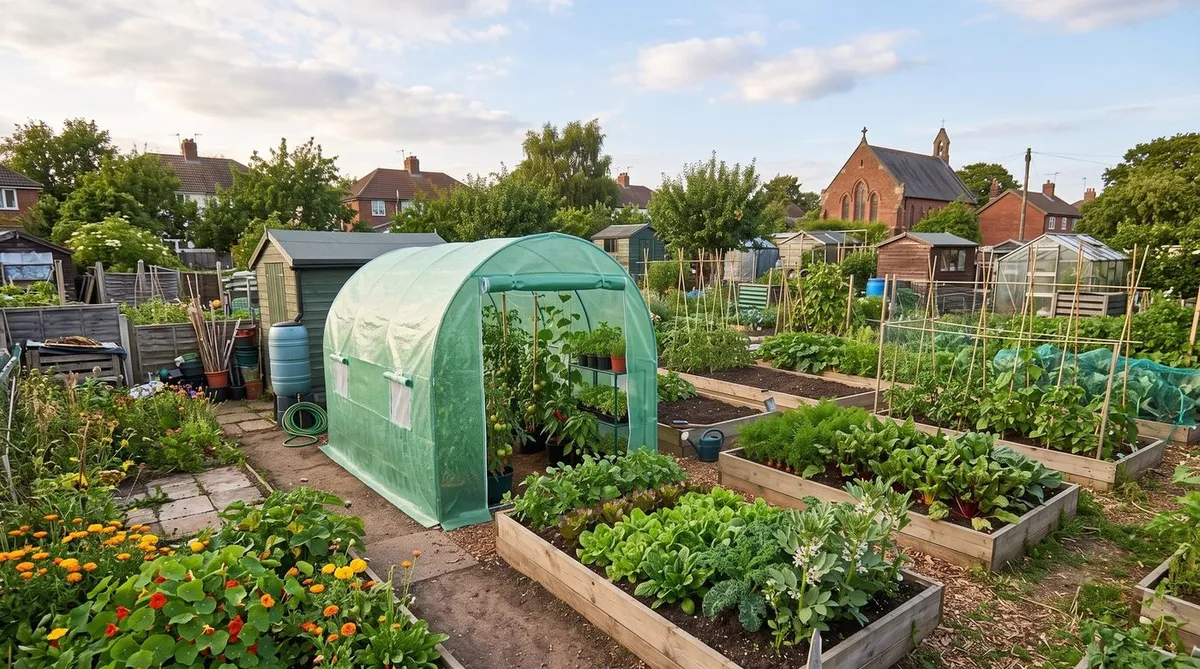
Fancy a small one to start? Have a look at the 3m x 2m polytunnel at Greenhouse Stores.
Growing space and layout
Polytunnels win on ground space. A 4m x 2m tunnel gives you about 8 square metres to plant in. A 6x8ft greenhouse gives you about 4.5. That makes a tunnel great for rows of salads and bulk veg.
Greenhouses make up for it by growing upwards. Shelves, staging and hanging baskets turn the walls into extra growing room. Seedlings can sit on the top shelf while bigger plants grow below.
Tunnels suit long rows of crops in the ground, like salads, brassicas, courgettes and root veg. Greenhouses suit crops that grow tall or sit on staging: tomatoes up strings, cucumbers on frames and chilli peppers in pots.
Keeping air moving and plants cool
Greenhouses are easier to keep cool. Roof vents, louvre windows and the door let hot, damp air out. The RHS advice on greenhouse ventilation explains how much venting you need.
Most polytunnels just have a door at each end. Some add side vents or roll-up sides. Air doesn’t move as freely, so the middle of a long tunnel gets very hot on a sunny day with the doors shut.
Then there’s condensation. Polythene doesn’t breathe, so water collects on the inside and drips onto plants. That damp brings diseases like grey mould. Anti-drip polythene helps a lot. Greenhouses get damp too, but roof vents clear it faster. Our guide to greenhouse ventilation and humidity control has more tips.
Is a polytunnel warmer than a greenhouse?
Not really, especially at night. Single polythene and single glass both lose heat fast once the sun goes down. Neither is frost-free without a heater.
By day, both warm up quickly in sunshine. A big tunnel holds more air than a small greenhouse, so it heats and cools a bit more slowly. A small greenhouse with shut vents can overheat in an hour on a bright spring morning. Good airflow matters more than what the cover is made of. For extra winter warmth, use fleece over crops, bubble insulation on the glazing or a small heater with a thermostat. Twin-wall polycarbonate holds heat better than single glass.
How long each one lasts
A sturdy aluminium greenhouse with toughened glass can last for decades with very little fuss. Toughened glass copes with knocks better than standard horticultural glass. Polycarbonate panels slowly go cloudy and brittle in sunlight, so they need replacing sooner.
Galvanised steel tunnel frames last for years. The cover is the weak spot. Sunlight wears it down, and wind, branches or animals can tear it. Polythene comes with a UV guarantee, so check it when you buy a new cover.
| Polytunnel | Greenhouse | |
|---|---|---|
| Frame | Galvanised steel hoops | Aluminium or timber |
| Cover | Polythene, replaced every few years | Glass or polycarbonate, long-lasting |
| Wind | Fine if well anchored | Good when bolted to a solid base |
| Hail | Cover can puncture | Toughened glass copes well |
| Upkeep | Patch and re-cover | Yearly clean, the odd reseal |
Will a polytunnel blow away in high winds?
Not if it’s anchored well and the doors are shut. Wind gets under a loose cover and lifts it like a sail.
Bury the edges of the cover in a trench at least 30cm deep, or fix them to timber base rails. Anchor every hoop, not just the corners. Fit the cover on a warm day and pull it drum-tight, so it won’t flap once it cools. Shut both doors before a gale, as wind blowing through an open door can lift the whole tunnel. Keep it out of gaps between buildings, and point the narrow end into the usual wind if you can. In exposed coastal or hilly spots, go for a heavier frame.
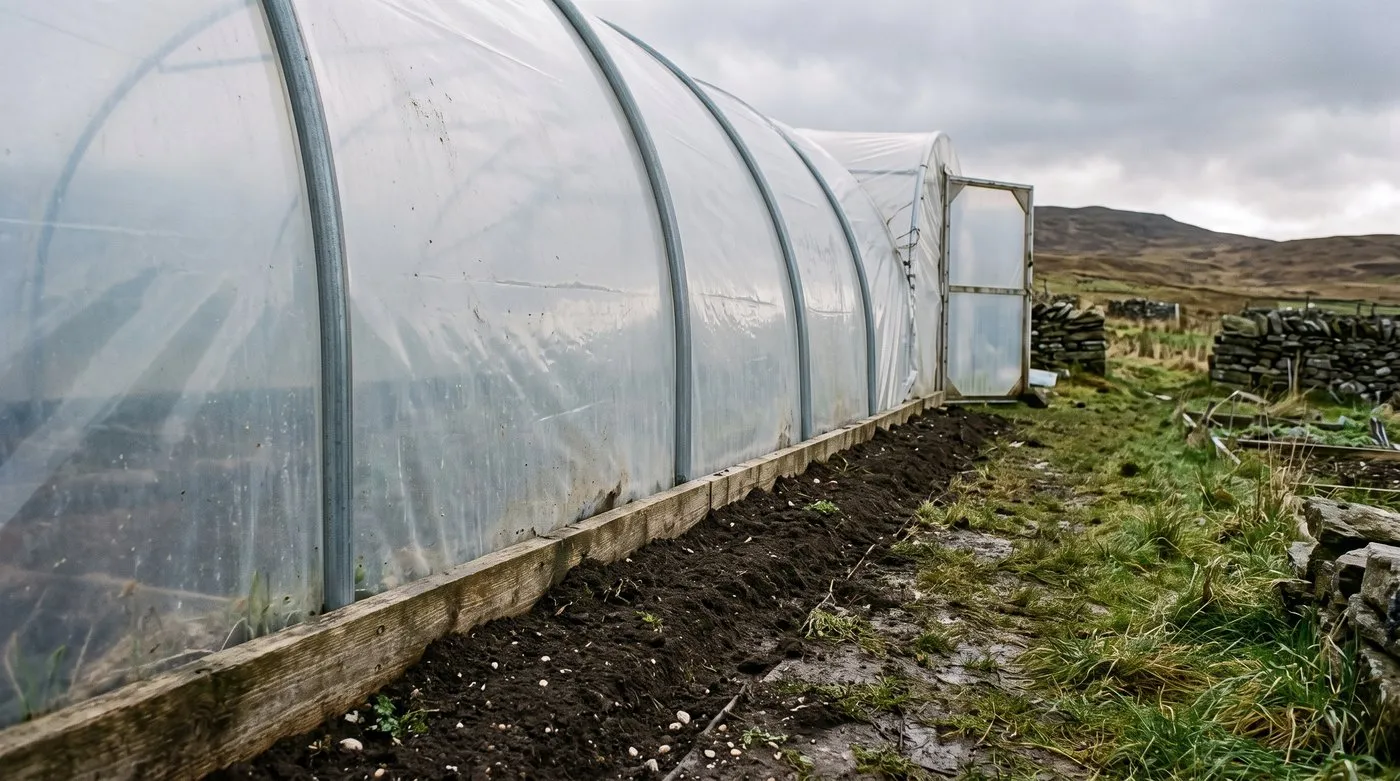
A tight cover with every edge fixed down gives the wind nothing to grab. Shut both doors before a gale and it should sit tight.
Looks and planning permission
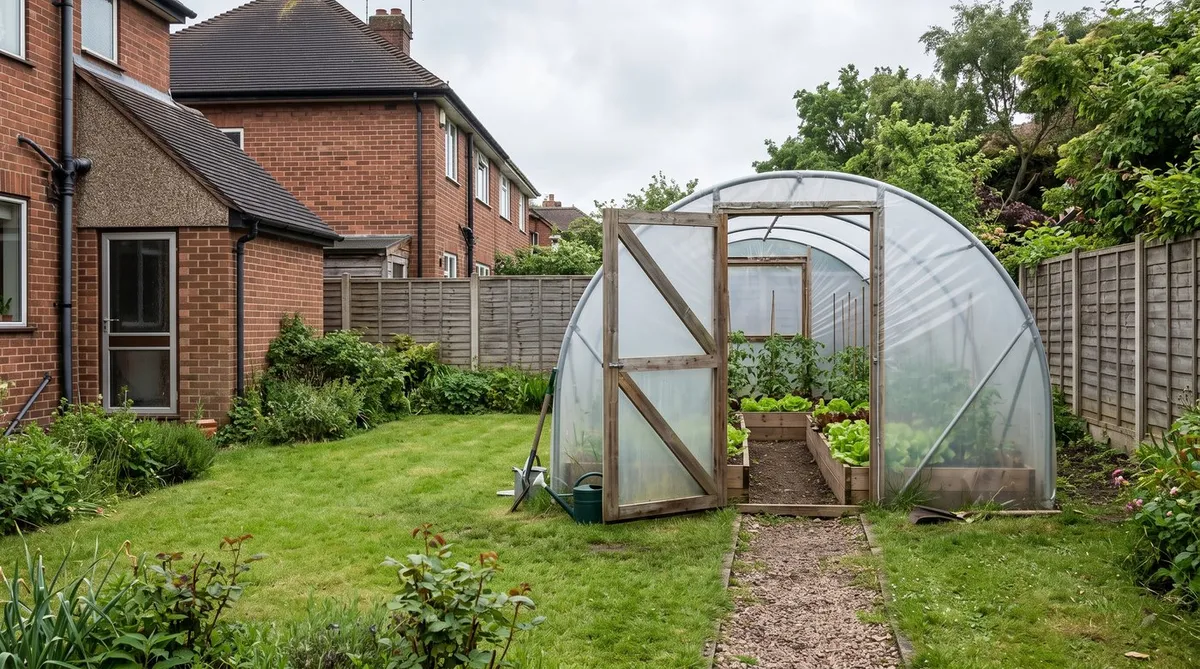
Greenhouses look more at home in most gardens. You can get them in silver, green, black or timber. Polytunnels are more practical than pretty. A white or clear cover suits a veg patch or allotment but can stand out in a small or formal garden.
In England, both count as outbuildings, and most don’t need planning permission. The Planning Portal guide to outbuildings sets out the limits. Within 2m of a boundary, it must be no taller than 2.5m. Elsewhere the limit is 3m, or 4m with a dual-pitched roof. It can’t sit in front of the house, and outbuildings can’t cover more than half the land around it. Conservation areas, National Landscapes, National Parks and listed buildings have stricter rules. Wales, Scotland and Northern Ireland have their own rules too, so check with your council.

The Palram Hybrid is a friendly middle ground: a proper greenhouse at a budget price.
If that sounds like you, take a look at the Palram Hybrid 6x8 at Greenhouse Stores.
What grows best in each one?
Heat-lovers on staging suit a greenhouse. Rows of salads, winter crops and big sprawling plants suit a polytunnel. Both give you an earlier start in spring and a longer finish in autumn.
Best in a greenhouse:
- Tomatoes, trained up strings, with roof vents to keep grey mould away
- Cucumbers, which like warm, humid air but still need a breeze
- Chilli peppers, which need steady warmth for a long season
- Aubergines, which want the warmest, most sheltered spot you have
- Early seedlings, with shelves and staging to fit plenty in
Best in a polytunnel:
- Rows of salad: lettuce, rocket, spinach, spring onions
- Courgettes, which need room to spread
- Winter brassicas like kale and purple sprouting broccoli
- Cut flowers such as sweet peas and dahlias in long rows
- Strawberries in ground beds for an earlier crop
Can you grow tomatoes in a polytunnel?
Yes, and they do really well. Any variety sold for greenhouses suits a tunnel too. Cordon types up strings make the most of the height under the hoops.
Plant them in the ground or in big pots, and tie each one to a string hung from the hoop above. Ground beds hold more water than grow bags, so plants are less likely to get blossom end rot from uneven watering. The main job is airflow. Open both doors on warm days from late spring, and leave them open on summer nights. Damp, still air brings grey mould and leaf mould. Side vents or mesh doors make life much easier.
Gardener’s tip: Lots of keen growers end up with both. The greenhouse takes the heat-lovers and seedlings, and the tunnel does bulk salads and winter veg. If you can only have one, a greenhouse is the more flexible choice for most gardens.

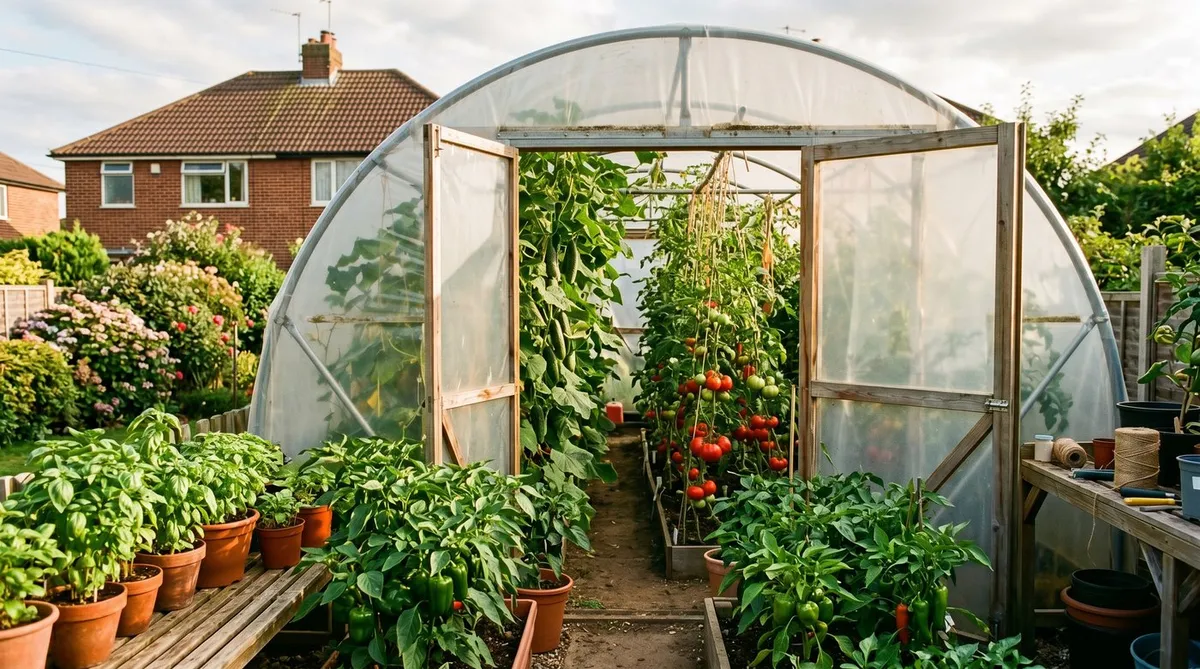
Tomatoes on strings and chillies on staging, both loving the warmth and fresh air a greenhouse gives them.
Which should you choose?
Pick a greenhouse for a smaller garden and for raising seedlings. Pick a polytunnel for the most growing space for your money.
For most people with a medium-sized garden, a 6x8ft greenhouse is the better first buy. It’s more permanent, easier to keep cool and handy for all sorts of jobs. Our guide to the best greenhouse for UK gardens compares aluminium, wooden and polycarbonate models. Add container growing and raised beds around it for even more space. Got an allotment or a big veg plot? A polytunnel gives you room a greenhouse can’t match for the price.
Once you’ve decided, have a read of polycarbonate vs glass greenhouses to pick the right glazing.
Frequently asked questions
Is a polytunnel cheaper than a greenhouse?
Yes, usually by a long way. A small polytunnel costs a fraction of a 6x8ft greenhouse and gives you more floor space too. You’ll need a new cover every few years, which adds a little to the cost over time, but the tunnel normally stays the cheaper option.
Do polytunnels need planning permission in the UK?
Usually not in England. A tunnel within 2m of a boundary must be under 2.5m tall and must not sit in front of the house. Outbuildings also can’t cover more than half the garden. Conservation areas, National Landscapes, National Parks and listed buildings have tighter rules, so check with your council.
How long does a polytunnel last?
The frame lasts for years if it’s well anchored. The cover is the weak spot, as sunlight slowly makes polythene brittle. Expect to re-cover every few years, and check the UV guarantee before you buy new polythene.
Can I put a polytunnel on my allotment?
Often, but ask first. Councils and allotment associations set their own rules on size, height and whether a frame can go into the ground. Check your tenancy agreement and have a word with the site committee before you buy.
Can I use a polytunnel in winter?
Yes, and it’s brilliant for it. It keeps off wind and rain, so hardy salads, spinach, winter lettuce and overwintering garlic all do well inside. It isn’t frost-free, so throw fleece over tender crops on the coldest nights.
Which is better for a small garden?
A greenhouse, in most cases. It takes up less ground, looks tidier and gives you shelves and staging to grow upwards. A 6x8ft greenhouse squeezes into lots of back gardens, while a polytunnel needs more room.
Our team produces practical UK gardening guidance from source research, contributor records and established horticultural practice. Editorial standards are overseen by Matt W.