Key takeaways
- A 3m x 6m polytunnel costs £279 to £399 new and pays for itself in 18 to 24 months
- Tomato yields rise 40 to 60% under cover versus the same variety grown outdoors
- Polytunnels extend the UK growing season by 6 to 8 weeks at each end
- Covers last 5 to 7 years; the steel frame lasts 20 years or more
- Per square metre per year, lifetime cost works out at £2.30 to £4.10
- Polytunnels are 60 to 70% cheaper than greenhouses of the same growing area
A polytunnel costs less per square metre than any other piece of UK growing infrastructure. The cheapest 2m x 3m unit lands at £139 delivered. A 3m x 6m model from First Tunnels or Northern Polytunnels sits at £279 to £399. That single purchase doubles the productive growing area of a typical UK back garden for the next five to seven years.
1. Cost per square metre beats every other growing structure
Across the UK market in 2026, the price per square metre of usable growing area looks like this:
| Structure | Size | Price | Sqm | Cost per sqm |
|---|---|---|---|---|
| Polytunnel 3m x 6m | 18 sqm | £379 | 18 | £21 |
| Polytunnel 3m x 4m | 12 sqm | £229 | 12 | £19 |
| Polycarbonate greenhouse 6x8 | 4.5 sqm | £435 | 4.5 | £97 |
| Glass greenhouse 6x8 | 4.5 sqm | £675 | 4.5 | £150 |
| Cold frame 1.2m x 0.6m | 0.7 sqm | £69 | 0.7 | £99 |
| Raised cloche tunnel 3m | 1.5 sqm | £45 | 1.5 | £30 |
A polytunnel costs around £19 to £21 per square metre at purchase. A polycarbonate greenhouse costs nearly five times that. A glass greenhouse costs seven times more. For a UK gardener thinking purely about square metres of cover, polytunnels are the clear value choice.
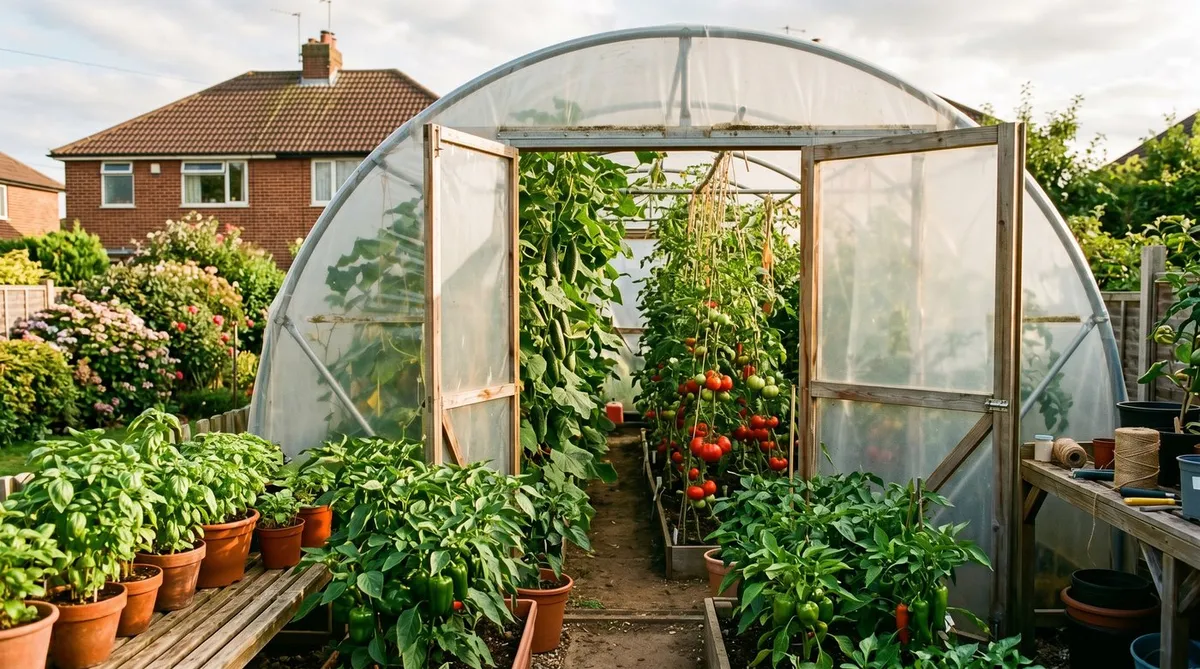
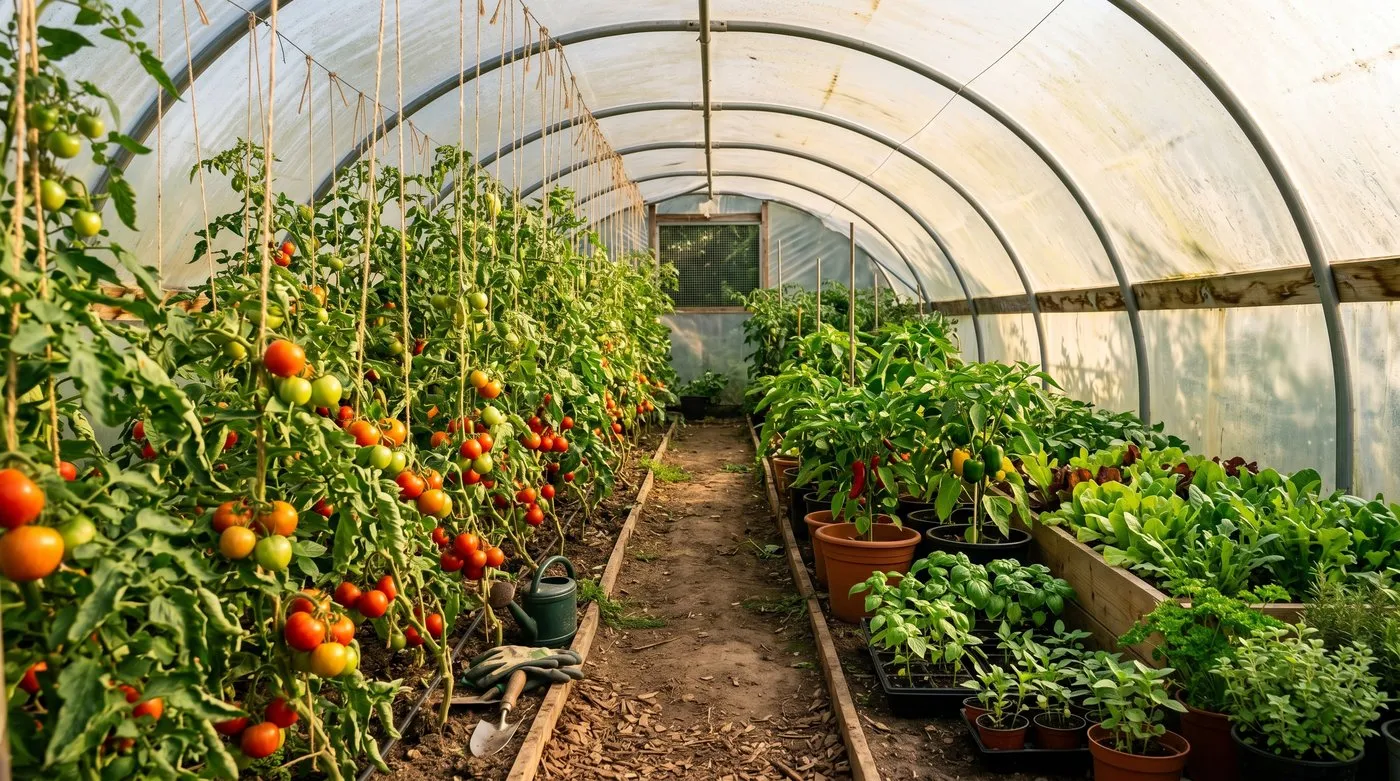 A 3m x 6m polytunnel in late August. 18 square metres of cover for under £400 buys more productive growing space than any other UK garden structure at the same price.
2. Payback in 18 to 24 months at UK retail produce prices
- Tomatoes: 38 kg from 12 plants
- Cucumbers: 28 kg from 6 plants
- Peppers: 9 kg from 8 plants
- Aubergines: 6 kg from 4 plants
- Lettuce and salad: 14 kg across the season
- Spring onions: 4 kg
That is 99 kg of produce in year one alone. At supermarket prices for organic equivalents (£4.50 to £8 per kg depending on crop), the replacement cost sits between £450 and £790. Year one alone covers the tunnel cost. Years two through seven sit at near zero cost beyond seed and compost.
3. Tomato yields rise 40 to 60% under cover
Blight risk drops by roughly 80% under cover because the leaves stay dry. That alone saved an entire 18 plant crop in 2023 when Phytophthora infestans wiped out neighbouring outdoor allotment tomato plots in the wet August.
4. Season extension of 6 to 8 weeks at each end
The tunnel adds 12 to 16 weeks of growing time across the year. In Staffordshire, outdoor frost-tender sowing windows are mid-May to mid-September. Inside the polytunnel, the same crops sit happily from late March through late October.
| Crop | Outdoor window | Tunnel window | Extension |
|---|---|---|---|
| Tomatoes | Late May - early Sep | Early Apr - late Oct | +14 weeks |
| French beans | Late May - mid Sep | Mid Apr - mid Oct | +12 weeks |
| Salad leaves | Apr - Sep | Year-round | +6 months |
| Spinach | Apr - May, Aug - Oct | Year-round | +6 months |
| Coriander | May - Aug | Mar - Nov | +12 weeks |
Year-round salad alone justifies the tunnel for many growers. A weekly £3 supermarket bag of mixed leaves comes to £156 a year. Five years pays for the tunnel twice over on lettuce alone.
5. Weather protection from the four UK extremes
UK weather hits crops in four distinct ways and a polytunnel mitigates every one of them.
The four-weather protection is the single most underrated benefit. The yield numbers above all reflect tunnel crops surviving extreme weather that ruined outdoor parallels.
 A polytunnel sheds water instantly while keeping the foliage dry inside. Wet leaves are the single biggest cause of blight failure in outdoor UK tomato crops.
6. Lower water cost than outdoor or open greenhouse growing
A 200 litre water butt fed from the tunnel’s own roof captures around 15 litres per square metre of cover during a typical UK month. An 18 sqm tunnel collects 270 litres per month from May to September, enough to cover roughly half the summer watering needs.
Tip: Run a single seep hose along each tunnel border at 5cm above soil level. A timer set for 20 minutes at dawn delivers the daily ration without evaporation loss. Cost: £18 for the hose, £14 for the timer, payback inside one summer in saved metered water.
7. Significantly higher humidity for tender crops
Aubergines, peppers, melons, and basil all want UK summer relative humidity above 60%. Outdoor humidity in a Midlands or northern garden drops to 40% on hot dry afternoons and the plants stall. The tunnel holds humidity at 65 to 80% under standard daytime venting, which is the sweet spot for these crops.
The humidity uplift also reduces pollination problems. Pepper flowers in particular drop at low humidity and the tunnel keeps fruit set above 85% even in dry summers.
8. Wildlife access stays manageable
A polytunnel keeps the worst pests out without locking the good ones in. Slugs and snails struggle to cross the dry base rail. Pigeons cannot reach brassicas. Rabbits and deer cannot enter. Meanwhile, bumblebees and hoverflies enter freely through propped doors and pollinate tomato, pepper, and cucumber flowers normally.
| Pest or visitor | Outdoor impact | Tunnel impact | Reduction |
|---|---|---|---|
| Slugs | High | Low | 70% |
| Snails | High | Low | 65% |
| Pigeons | High | None | 100% |
| Cabbage white | High | Medium | 50% |
| Aphids | Medium | Medium | 0-10% |
| Vine weevil | Medium | Low | 40% |
| Carrot fly | High | None | 100% |
| Bumblebees | High | High | 0% (no change) |
9. The total lifetime cost is genuinely modest
Total 20-year cost £803, across 18 square metres of growing space, equals £2.23 per square metre per year. A glass greenhouse of equivalent growing area would cost roughly £2,800 over the same 20 years.
10. Resale and second-hand value is unusually high
A used polytunnel in good condition holds 50 to 65% of its new value at five years. Steel frames, base rails, doors, and crop bars all transfer cleanly to a new owner. Replacement covers ship by post. A buyer-collect tunnel listed on Gumtree or Facebook Marketplace at £180 will typically sell within a week in any UK region.
A glass greenhouse, by contrast, often sells at scrap value because the buyer has to dismantle, transport, and reglaze. Polytunnels are easier to move, store, and resell, so they hold value better.
The honest downsides
A balanced picture means listing the trade-offs. Polytunnels lose on three counts compared to greenhouses.
1. The white polythene divides opinion
Some gardeners hate the look. A 3m x 6m white plastic structure in a 100 square metre back garden visually dominates the plot. Green tinted covers help but add £15 to £25 to the cover cost. Anthracite or thermal cream-tinted covers are available from First Tunnels and reduce visual impact further.
2. Ventilation needs daily attention in summer
Greenhouse autovents open and close themselves. Polytunnel doors must be opened by hand each morning and closed at night. Internal temperatures can hit 45C in July if you forget. A simple solar-powered door ram (£89) automates the morning open but few growers spend it.
3. The cover replacement is non-trivial work
Replacing a 3m x 6m cover takes two adults and an afternoon on a still day. Wind during fitting can rip the new polythene before it is tensioned. Choose a calm day, follow the manufacturer’s instructions, and budget two hours plus a tea break.
Warning: Never replace a polytunnel cover alone. The polythene catches wind even on a calm day and a torn cover at fitting voids most manufacturer warranties.
Cost comparison: polytunnel vs raised bed vs greenhouse
Comparing year-five cost per kg of produce across three setups in the same garden:
| Setup | Year 5 total cost | Year 5 produce kg | Cost per kg |
|---|---|---|---|
| Raised bed (open) 4 sqm | £180 | 45 kg | £4.00 |
| Greenhouse 6x8 polycarb | £620 | 95 kg | £6.53 |
| Polytunnel 3m x 6m | £543 | 480 kg | £1.13 |
The polytunnel produces five times the volume at lower lifetime cost. The raised bed is cheaper to build but cannot match the volume. The greenhouse holds heat better for ripening but the cost per kg sits stubbornly above £6.
For most UK gardens with the space, a polytunnel paired with a small greenhouse gives the best of both. The greenhouse handles late-ripening tomatoes and overwintering tender pot plants. The polytunnel handles bulk crops, salads, and most tender summer crops.
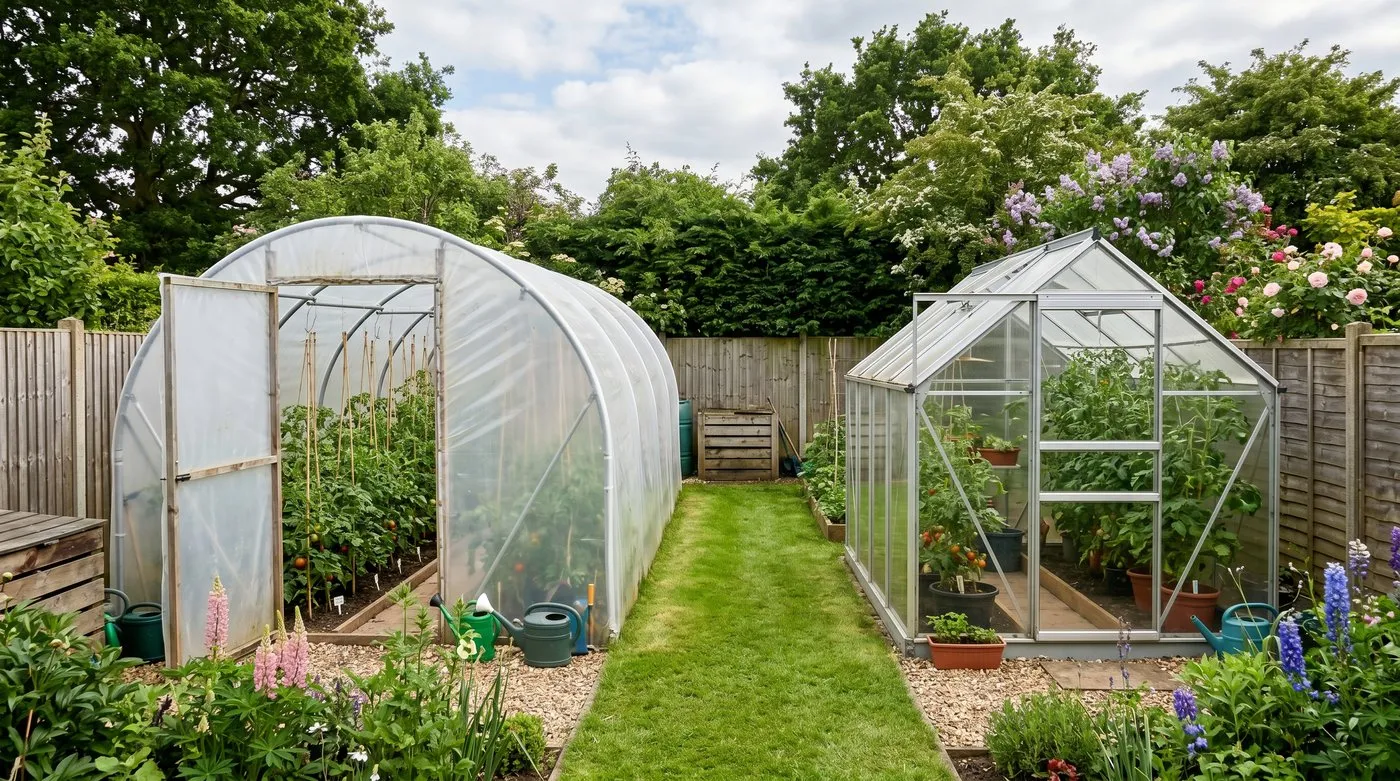 A polytunnel and a 6x8 greenhouse complement each other. The tunnel handles bulk crops and salads; the greenhouse holds heat for ripening tomatoes through October.
Where to buy in the UK in 2026
Four UK suppliers dominate the domestic polytunnel market and each has a price sweet spot.
| Supplier | Best for | Price for 3m x 6m | Cover guarantee |
|---|---|---|---|
| First Tunnels | Premium domestic | £379 | 5 years |
| Northern Polytunnels | Mid-range domestic | £329 | 4 years |
| Premier Polytunnels | Heavy-duty hobby | £445 | 6 years |
| Two Wests & Elliott | Small starter | £229 (2m x 4m) | 3 years |
All four ship within 7 to 14 working days across mainland UK. Highland, island, and Northern Ireland delivery adds £40 to £85.
Polytunnel sizing for typical UK garden sizes
Match the tunnel to the garden honestly. A 6m x 10m tunnel in a 60 square metre garden dominates and irritates the household within a season.
| Garden size | Tunnel size | Tunnel % of garden |
|---|---|---|
| Up to 50 sqm | 2m x 3m | 12% |
| 50-100 sqm | 3m x 4m | 12-24% |
| 100-200 sqm | 3m x 6m | 9-18% |
| 200-400 sqm | 4m x 6m | 6-12% |
| 400+ sqm | 6m x 10m | up to 15% |
Beyond 15% of garden footprint, planning permission rules tighten and household friction rises. The exact thresholds depend on your council and conservation status; ring your duty planning officer before ordering anything over a 3m x 6m tunnel.
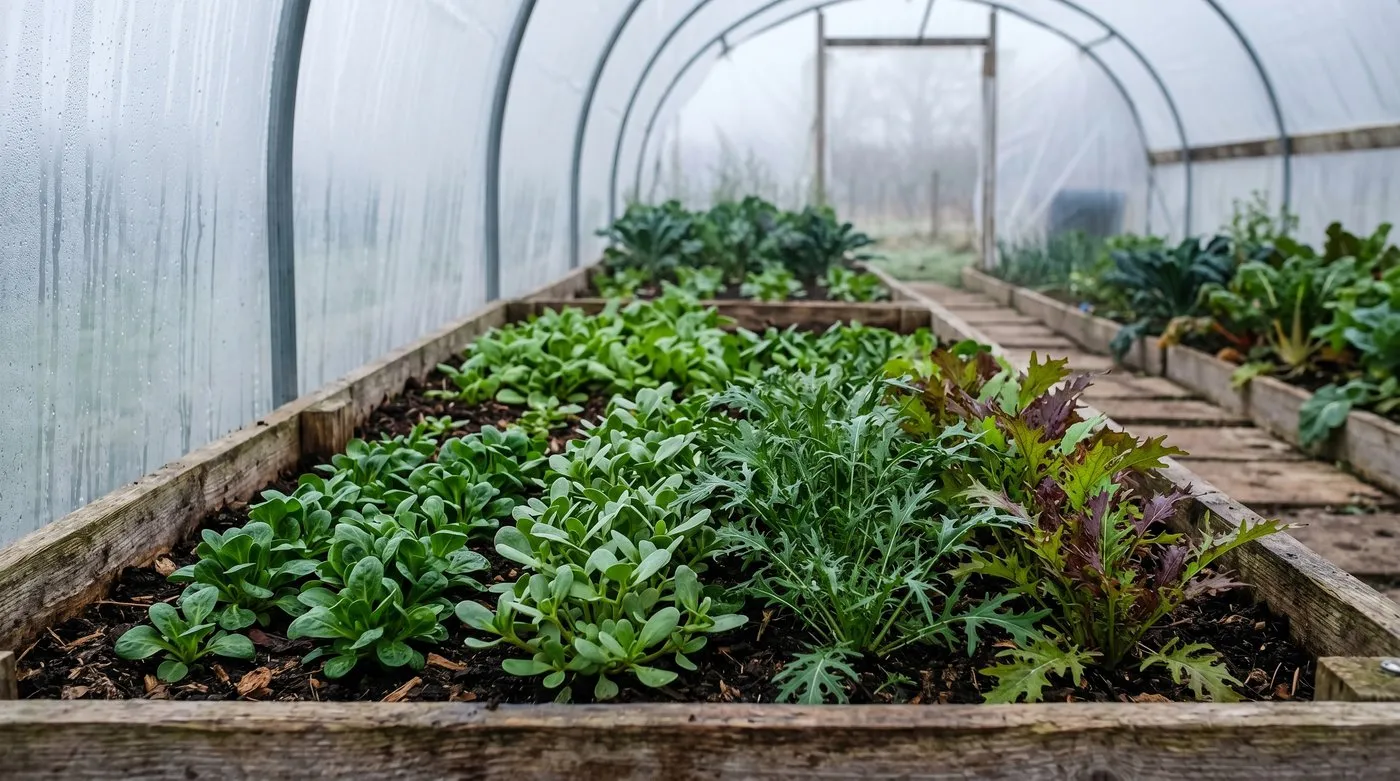 Year-round salad alone justifies a tunnel for many UK growers. Lamb’s lettuce, winter purslane and Tatsoi crop happily through December and January under cover.
Common mistakes that ruin the payback
Mistake 1: leaving doors shut on hot days
A closed polytunnel in July hits 45C internal by 11am. Tomatoes drop flowers. Aubergines abort fruit. Peppers wilt. The single biggest yield killer is failing to prop both doors open from 8am to 8pm in June, July, and August.
Mistake 2: skipping the base rail
A polytunnel without a base rail relies on buried cover skirting for anchoring. The first 50mph wind catches the edge and tears the cover. The base rail kit costs £45 to £75 depending on tunnel size. Always buy it.
Mistake 3: planting outdoor-density crops
Outdoor row spacing of 60cm between tomato plants makes sense outdoors where airflow matters. Inside a tunnel at 80% humidity, the same spacing invites mildew and aphids. Plant at 80cm minimum spacing inside, and never cram four cucumber plants into a 2m bed when two will yield more.
Month-by-month polytunnel productivity
Twelve months of productivity from a single £379 structure with seven hours per week of grower time.
Frequently asked questions
Is a polytunnel worth it for a small UK garden?
Yes, even at 2m x 3m. A small polytunnel returns its £139 to £179 cost in 18 months at UK supermarket produce prices. The structure adds six weeks at each end of the growing season and protects against late frosts that would otherwise cost a 20 plant tomato crop.
How long does a polytunnel last?
The cover lasts five to seven years, the steel frame 20 years or more. Polythene covers degrade through UV exposure but anchorages, base rails, and crop bars stay sound much longer. Replacement covers cost £69 to £179 depending on size.
Are polytunnels worth it compared to a greenhouse?
For growing area, polytunnels win on cost. A 3m x 6m tunnel offers four times the floor area of a 6x8 greenhouse at the same outlay. Greenhouses last longer but cost three times as much per square metre over the lifetime.
What can I grow in a polytunnel that I cannot grow outdoors?
Aubergines, peppers, melons, sweet potatoes, and tender herbs ripen reliably in a UK polytunnel. Outdoors in most of the UK these crops fail in cool, wet summers. The cover gives an average 4C uplift on summer minimum nights, which is enough.
Do polytunnels work in winter?
Yes, for hardy crops. Spinach, kale, winter lettuce, overwintering onions, garlic, and broad beans grow steadily through a UK winter under cover. The tunnel adds frost protection of around 2C to 4C, enough to crop leafy salads from October through March.
Are polytunnels worth it if I already have a greenhouse?
Often yes. The two structures complement each other. Greenhouses hold heat for tomatoes and peppers. Polytunnels offer ground-level space for runner beans, brassicas, and bulk salad crops that need height and width a greenhouse cannot provide.
What is the biggest disadvantage of a polytunnel?
Cover replacement every five to seven years. The steel frame lasts decades but the polythene degrades from UV. Budget £69 to £179 for a replacement cover and one afternoon of work. Storm damage can also rip a cover prematurely.
Now you have the numbers
A polytunnel earns its keep faster than almost any other piece of garden infrastructure in the UK. The payback maths is the easy part. The harder part is sizing the tunnel correctly, picking the right supplier, and using every month of the year.
Once the structure is up, the next priority is hitting every season. Our polytunnel calendar covers what to sow, transplant, and harvest each month. Read our polytunnel productivity guide for crop rotation and density tips that double yields. For long-term care, our polytunnel maintenance guide covers cover care, frame anti-corrosion, and storm repairs. If you are still weighing the choice, polytunnel vs greenhouse walks through every cost variable. For tender summer crops once you are up and running, our container vegetable growing guide shows what to stack inside the tunnel on tiered staging.
Our team produces practical UK gardening guidance from source research, contributor records and established horticultural practice. Editorial standards are overseen by Matt W.