
Key takeaways
- Remove the food first, or new rats will soon replace the ones you catch
- Look for dark droppings, burrow holes and worn runs along walls and fences
- Rat-sized snap traps set along walls are the safest DIY option
- Poison must go in a locked bait station, and it can harm owls, cats and dogs
- Seeing rats in daylight means a big colony, so call in help
Rats in the garden are no fun, and they won’t go away by themselves. The good news is that a few simple changes make your garden far less appealing to them. Start by taking away their food, then trap the ones that are left.
Rats can spread disease, chew through cables and hosepipes, and dig under sheds. So it’s worth acting as soon as you spot the signs. The BPCA rat advice page is a handy extra read if you want more background.
Signs of rats in your garden
Rats come out at night, so you’ll more often see the clues than the rats. Here’s what to look for.
Droppings
Droppings are the surest sign. Rat droppings are dark, about the size of an olive stone, and tapered at both ends. Mouse droppings are much smaller, more like a grain of rice. Fresh ones are dark and soft, while old ones go grey and crumbly.
A cluster in one spot usually means a regular feeding place or route. Check along fences, beside sheds, by the compost bin and under bird feeders.
Burrows
Brown rats dig burrows with holes roughly the width of a tennis ball. Look along the bottom of walls, under sheds and decking, and in compost heaps. A busy burrow has a smooth, packed entrance with fresh soil around it. Cobwebs or leaves across the hole mean it’s no longer in use.
Runs and smear marks
Rats use the same routes night after night, wearing paths through grass and along walls. A flattened, faded strip in a tidy lawn that doesn’t look like ordinary lawn weed patches could be a rat run. On walls and wood, look for dark greasy marks where their fur rubs as they pass.
Gnaw marks
Rats gnaw all the time to keep their teeth in check. Look for chewed shed bases, bin lids, compost bins and hosepipes. Fresh marks look pale. Older ones darken over time.
 A busy rat burrow at the base of a shed. The smooth, packed soil and worn path give it away.
Why rats come to gardens
Rats want three things: food, water and somewhere safe to nest. Take those away and they’ll look elsewhere.
Food sources
- Bird feeders are the biggest draw. Spilled seed on the ground is an open invitation.
- Compost bins with kitchen scraps, especially cooked food, meat or dairy.
- Pet food left outside, particularly overnight.
- Chicken feed that rats can get at.
- Bin bags left out rather than in a lidded bin.
- Fallen fruit left to rot under apple, pear and plum trees.
Shelter
Rats nest under decking, in sheds, in log piles and under thick plants. Overgrown corners full of ivy and brambles are ideal for them. A tidier garden gives them fewer places to hide.
Water
Rats need a drink every day. Dripping taps, ponds, pet bowls and soggy ground all help them. Fixing a leaky outside tap is a quick win.
Good to know: Seeing a rat in daylight usually means there are a lot of them. It’s time to call in help.
Ways to deal with rats
The right approach depends on how many rats you have and whether pets or children use the garden.
| Method | How well it works | Pet and child safe? | Best for |
|---|---|---|---|
| Snap traps | Well | Yes, if covered | Small numbers, DIY |
| Live traps | Fairly well | Yes | People who prefer not to kill |
| Poison in bait stations | Well | Risky | Bigger problems, used with care |
| Electronic traps | Well | Yes | Sheds and sheltered spots |
| Council pest control | Very well | Yes | A good first call |
| Private pest control | Very well | Yes | Big or stubborn problems |
| Ultrasonic repellers | Poorly | Yes | Not worth buying |
Using snap traps
Snap traps are the most practical way to deal with garden rats yourself. They kill quickly and you can see what you’ve caught, unlike poison, where rats often die out of reach.
Choosing and baiting traps
Buy proper rat-sized traps, not mouse traps. A mouse trap is too small and may injure rather than kill. Bait with a little peanut butter or chocolate spread. Rats can’t grab it and run, so they have to stay on the trigger.
Placement
Where you put the trap matters more than the bait. Rats run along edges, not across open ground. Set traps at right angles to a wall or fence, with the trigger end touching it. Put them on runs, near burrows and by droppings.
Rats are wary of new things. Leave traps baited but not set for two or three nights, so the rats get used to them. Then set them.
Checking and safety
Check traps every morning. Wear disposable gloves, and put any dead rats in a sealed bag in your general waste.
If you have pets or young children, put the trap inside a bait box or a short length of drainpipe. Rats can get in, but paws and small hands can’t reach the trap.
Tip: Use at least three traps in a small garden, a few metres apart along the runs. Rats are clever and avoid a spot where another rat was caught, so move a trap after each catch.
 A snap trap set at right angles to the fence, trigger end touching it, right where rats like to run.
Using rat poison safely
Rat poison works, but it brings real risks. Treat it as a last resort if trapping hasn’t worked.
The rules
You can legally use rat poison against brown rats in the UK. The strongest products are for trained professionals only, so garden centre poisons are milder. Any poison must go inside a locked, tamper-resistant bait station. Never scatter loose bait.
Why it can harm other animals
A poisoned rat takes days to die and gets slow and easy to catch. Cats, dogs, foxes, owls and birds of prey can eat it and be poisoned too. If owls or kestrels visit your garden, stick to trapping.
Using bait stations well
- Use only locking, tamper-resistant bait stations.
- Place them along rat runs, against a wall or fence.
- Check every few days and top up eaten bait.
- Remove all stations and bait once the rats have gone.
- Pick up and bag any dead rats you find.
- Lock away unused poison, out of reach of children and pets.
Please note: Don’t use poison where garden birds feed. Trapping is the better choice if you love your garden wildlife.
Calling in pest control
If trapping hasn’t worked after two or three weeks, or there are a lot of rats, it’s time for help.
Council pest control
Many councils deal with rats for free or a small fee. Ring your council’s environmental health team. Waiting times vary, and rats inside a home are usually seen sooner than rats in the garden.
Private pest control
A private company will usually visit, put down bait stations and come back a few times over several weeks. Choose a member of the BPCA (British Pest Control Association) or NPTA (National Pest Technicians Association), so you know they’re properly trained.
When to call a professional
- You see rats in daylight.
- You find several burrows around the garden.
- Your traps have caught nothing after two or three weeks.
- Rats are getting into your house, shed or garage.
- You think rats are living under decking or foundations.
Rat-proofing your garden
Once the rats have gone, a few habits stop them coming back.
Rat-proof your compost bin
An open heap gives rats food, warmth and shelter all in one. Our guide to making compost covers the basics. Here’s how to keep rats out:
- Line the base with strong galvanised wire mesh with small holes. Rats chew through chicken wire easily.
- Leave out cooked food, meat, fish and dairy. Stick to raw peelings, garden waste and cardboard.
- Use a closed bin with a tight lid rather than an open heap.
- Turn the heap about once a week. Rats don’t like being disturbed.
- Try a tumbler bin raised off the ground. Rats find these very hard to get into.
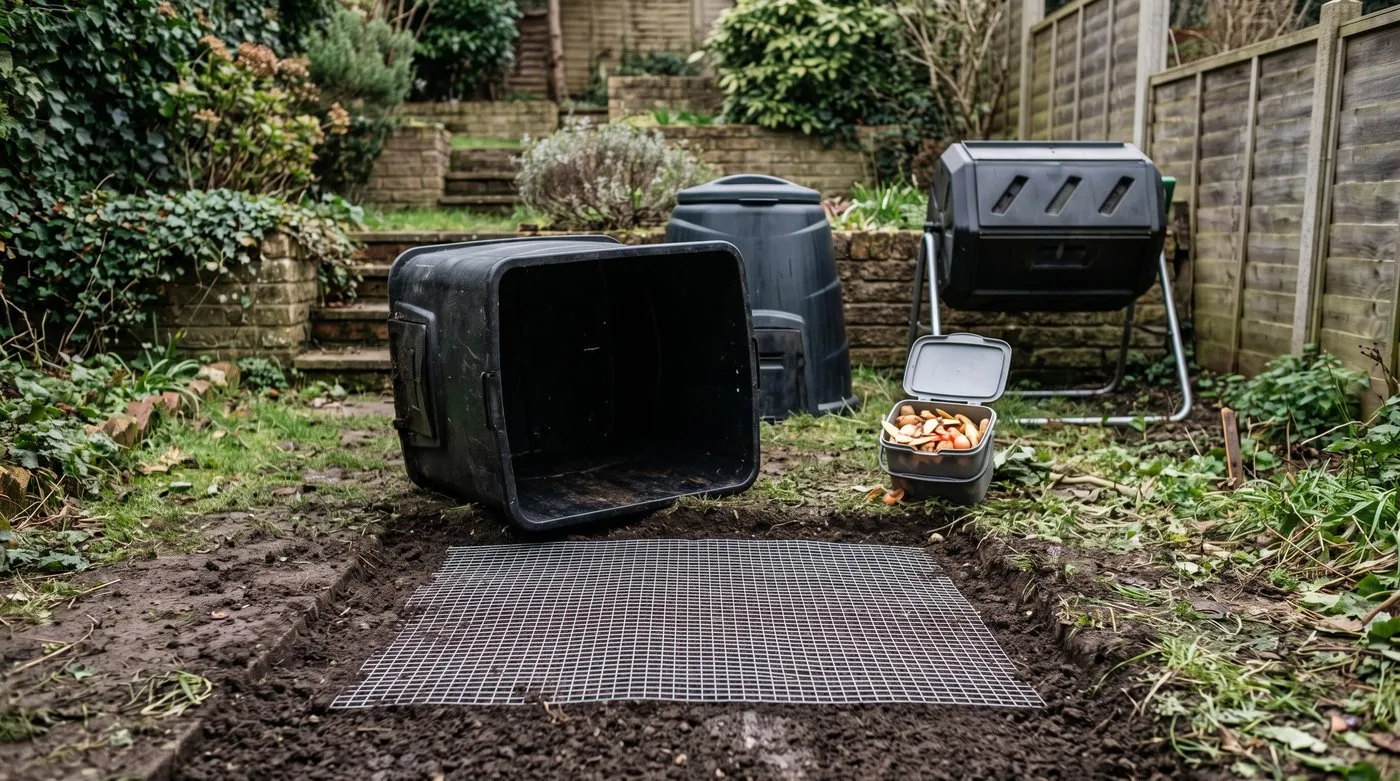
Strong galvanised mesh under the bin stops rats tunnelling up into the warm heap. Chicken wire won’t do, as they chew straight through it.
Feed birds without feeding rats
- Use no-mess seed, like sunflower hearts, that leaves no husks on the ground.
- Sweep up spilled seed each evening.
- Fit a seed tray under hanging feeders.
- Hang feeders on metal poles with baffles. Rats climb wooden posts and fences easily.
- Bring feeders in at dusk while rats are about.
- Don’t scatter food on the ground near hedges or walls.
Secure food and waste
- Keep pet food, chicken feed and bird seed in sealed metal bins. Rats chew through plastic.
- Keep wheelie bin lids shut, and put food waste inside, not beside the bin.
- Pick up fallen fruit quickly.
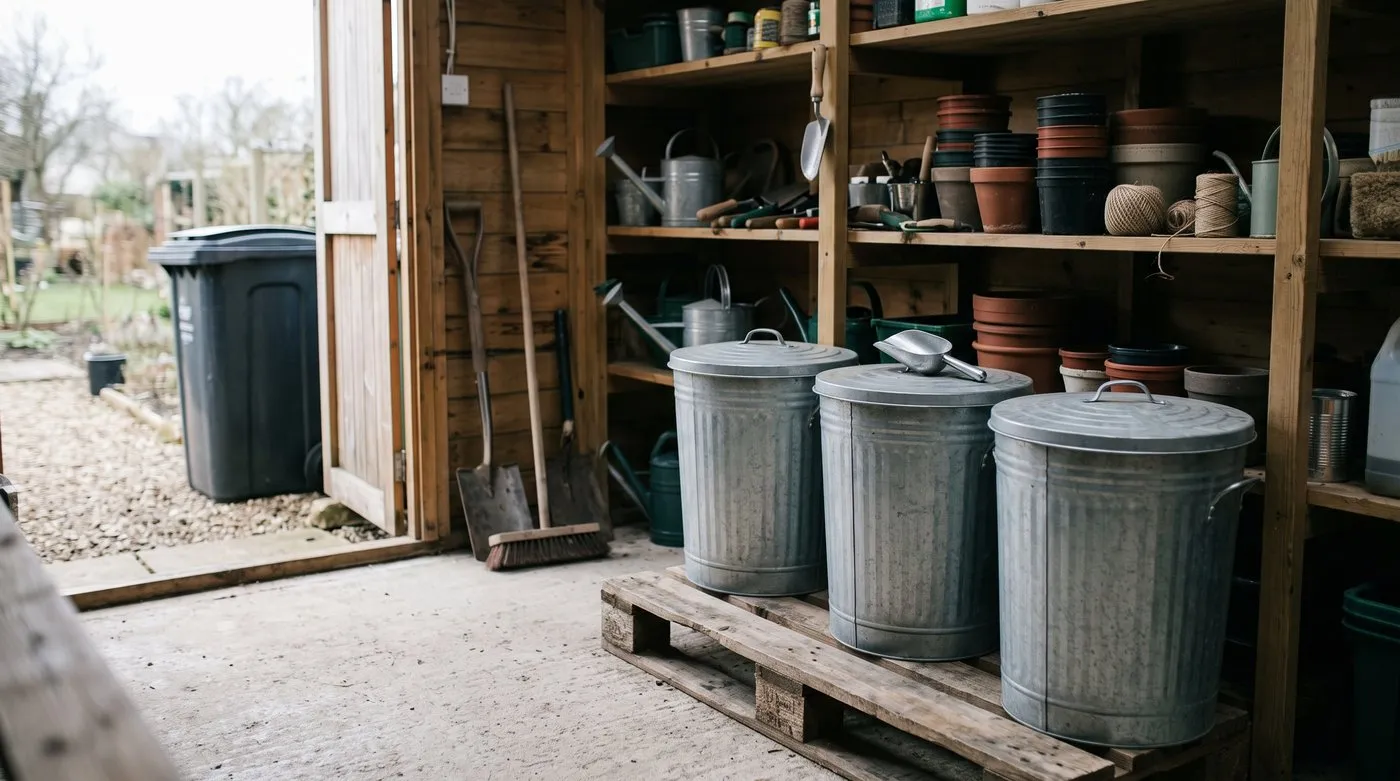
Rats chew through plastic tubs and sacks with ease. Lidded metal bins keep bird seed, pet food and chicken feed safely out of reach.
Remove places to hide
- Keep plants trimmed around sheds, fences and walls. Overgrown borders also shelter slugs and other pests.
- Fit mesh across gaps under decking.
- Block holes in shed walls and bases with cement or metal plates. Rats squeeze through gaps about the width of a pound coin.
- Store logs and materials on a raised platform, away from fences and buildings.
 A closed compost bin, tidy borders and a pole-mounted feeder with a tray all make life harder for rats.
Rats through the year
Rats are about all year, but what they’re up to changes with the seasons.
| Month | What rats are doing | What to do |
|---|---|---|
| January | Looking for warmth and stored food | Check sheds and outbuildings |
| February | Starting to breed in mild weather | Set traps along runs early |
| March | Getting busier, first litters born | Trap, and check compost bins for burrows |
| April | Young rats spreading out | Keep trapping, sweep under feeders daily |
| May | Busy, plenty of food about | Look for new burrows |
| June | Breeding hard | Call in help if the problem won’t shift |
| July | Eating crops and fallen fruit | Pick up windfalls, protect the veg patch |
| August | At their busiest | Keep everything up, block new burrows |
| September | Still busy | Clear fallen fruit, secure compost |
| October | Looking for shelter | Block gaps into sheds, garages and decking |
| November | Moving towards buildings | Check for entry points, trap near buildings |
| December | Quieter but still about | Check lofts and outbuildings |
Tip: Rats breed all year but most in spring and autumn. Acting in February and March stops numbers building up over summer.
Common rat control mistakes
Leaving the food out
Trapping rats beside a messy bird feeder or open compost bin won’t work. New rats move in to replace the ones you catch. Remove the food first, then trap.
Using mouse traps
Mouse traps are too small for rats. An injured rat becomes trap-shy and harder to catch. Always use proper rat traps.
Putting traps in the open
A trap in the middle of the lawn catches nothing. Rats run with one side brushing a wall, so place traps along walls and fences, trigger end touching.
Using loose poison
Loose bait can be eaten by hedgehogs, pets and birds. Always use a locked bait station.
Blocking burrows too soon
Fill in burrows before the rats are gone and they’ll just dig out somewhere else, often inside a shed or under decking. Trap first. Once you’ve caught nothing for about a week, fill the holes and pack the soil down firmly.
Working with your neighbours
Rats don’t stop at the fence. If next door has open bins, overgrown corners or chickens, rats will travel between your gardens. A friendly chat about tackling it together often helps more than anything you do alone. If a neighbouring property is clearly the source and nothing is being done, your council’s environmental health team can step in.
Things that don’t really work
- Ultrasonic repellers don’t keep rats away for long. Save your money.
- Peppermint oil might put rats off briefly, but the smell soon fades.
- Mothballs don’t repel rats well and are harmful to children and pets. Don’t use them outside.
- Cats catch the odd rat, but many won’t tackle a big one. Farms with cats still get rats.
Rats in raised beds
Rats sometimes burrow into raised beds full of soft compost and root crops. If you’re building raised beds, lay strong galvanised wire mesh across the base before you fill them.
For beds you already have, look for holes along the edges where the frame meets the soil. Set traps along those routes and fill the holes once the rats are gone.
Slugs love overgrown borders too, so next have a look at our guide on how to get rid of slugs naturally.
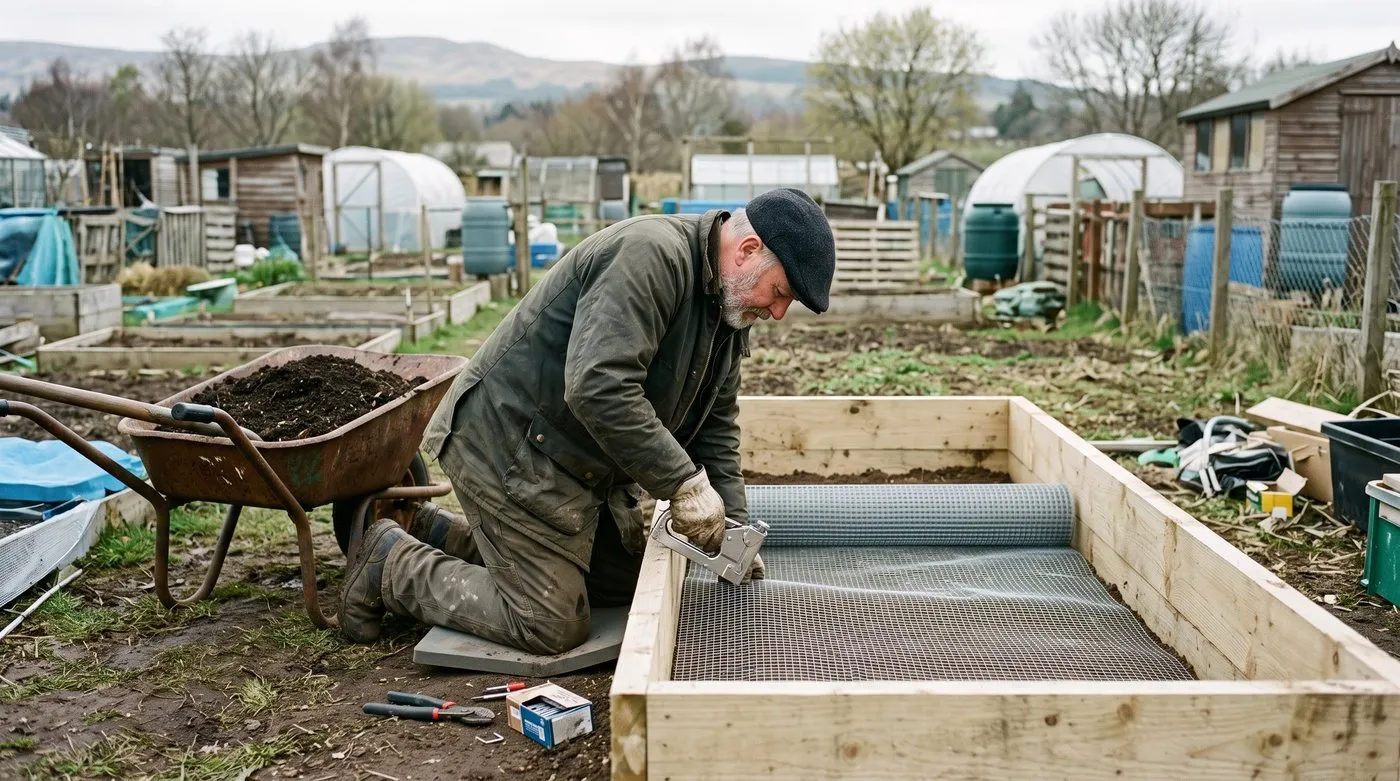
Lay strong mesh across the base before you fill a new raised bed. It keeps rats from burrowing up into the soft compost and root crops.
Frequently asked questions
What attracts rats to my garden?
Food, more than anything else. Spilled bird seed, kitchen scraps in an open compost heap, pet food left out and bin bags are the usual culprits. Rats also like shelter under decking, in sheds and in overgrown corners. Take away the food and the hiding places and your garden becomes much less inviting.
Are rats in the garden dangerous?
They can spread disease, so treat them with care. Rat urine can carry Weil’s disease, which can make people seriously ill, and rats also carry salmonella. Wear gloves when handling traps or cleaning up droppings, and wash your hands afterwards.
How do I know if I have rats or mice?
Look at the droppings. Rat droppings are about the size of an olive stone and tapered at the ends. Mouse droppings are smaller than a grain of rice. Rats also dig burrows about the width of a tennis ball and leave greasy smear marks along walls.
Is it legal to poison rats in the UK?
Yes, but only in a tamper-resistant bait station. Never scatter loose poison where children, pets or wildlife can reach it. The strongest poisons are for trained professionals only. If owls or other birds of prey visit your garden, trapping is the kinder choice.
Will rats leave my garden on their own?
Not while there’s food and shelter to be had. Rats settle into routes and burrows and stay put. Taking away the food will help them move on, but it takes a few weeks. Trapping at the same time speeds things up.
How do I rat-proof my compost bin?
Use a closed bin with a lid and a mesh base. Line the bottom with strong galvanised wire mesh, as rats chew through chicken wire. Don’t add cooked food, meat, fish or dairy. Turn the heap often, because rats don’t like being disturbed. A tumbler bin raised off the ground is the hardest for rats to get into.
Should I call pest control for rats in my garden?
Yes, if you see rats in daylight. It usually means there are a lot of them. Also call if you find several burrows, if rats are getting into buildings, or if trapping hasn’t worked after two or three weeks. Many councils offer rat control for free or a small fee, so ring them first.
Our team produces practical UK gardening guidance from source research, contributor records and established horticultural practice. Editorial standards are overseen by Matt W.


