
Key takeaways
- Red thread is the most common lawn disease and is usually a sign the lawn is hungry
- Fusarium patch is the most damaging and is made worse by feeding nitrogen late in autumn
- Most fairy rings are harmless. Only the kind with a dead ring of grass is a real problem
- Mowing too short and letting thatch build up invite most diseases
- Home gardeners can't buy lawn fungicides, but good care fixes most problems
Sooner or later, most British lawns get a fungal disease. Our mild, damp weather and heavy soils suit lawn fungi down to the ground. Red thread is the one most people meet first. The good news? Most lawn diseases look worse than they are, and simple changes to how you care for the grass usually sort them out.
Most diseases don’t kill grass. They weaken it and spoil the colour, but fix the cause and it usually recovers within weeks. Home gardeners can’t buy lawn fungicides anyway, so this guide is all about spotting the problem and changing the conditions that let it in.
How to Identify Common UK Lawn Diseases
A handful of fungal diseases cause most lawn problems in British gardens. Each one has its own tell-tale signs.
Disease Identification Table
| Disease | What it looks like | When | Usual cause | How serious |
|---|---|---|---|---|
| Red thread | Bleached patches with pink or red threads | Summer to autumn | Hungry lawn | Mild |
| Fusarium patch | Brown circles with a dark edge, sometimes white fluff | Autumn to spring | Late nitrogen feed, poor drainage | Serious |
| Fairy rings | Dark green rings, mushroom rings or dead rings | All year (mushrooms in autumn) | Buried wood or roots | Varies |
| Dollar spot | Lots of small straw-coloured spots | Summer | Hungry, dry lawn | Mild |
| Rust | Orange dust on the blades | Late summer to autumn | Shade, slow growth | Mild |
| Snow mould | White or pink fluff after snow | Winter | Snow cover, late nitrogen feed | Medium |
| Take-all patch | Bronze-brown sunken patches | All year, worst in spring | Alkaline soil, new lawns | Serious |
Is it a lawn disease or something else?
Plenty of brown patches have nothing to do with disease. Check these lookalikes first, as the fixes are very different.
- Dog wee: round patches of dead grass with a bright, dark green ring around the edge. Water the spot well straight away to dilute it.
- Leatherjackets and chafer grubs: yellow or brown patches that spread fast, often with birds, badgers or foxes digging up the turf. Lift a dead patch and look for grubs on the roots.
- Drought: uneven straw-coloured areas in dry weather, worst on sandy soil and under trees. It usually greens up once it rains.
- Feed or weedkiller scorch: stripes, overlaps or footprint shapes soon after you’ve treated the lawn.
- Spilt fuel or oil: random dead patches after mowing or filling up the mower on the grass.
The RHS guide to dead patches in lawns goes into more detail. A fungus is more likely if you can see threads, fluff, orange dust or a clear coloured edge.
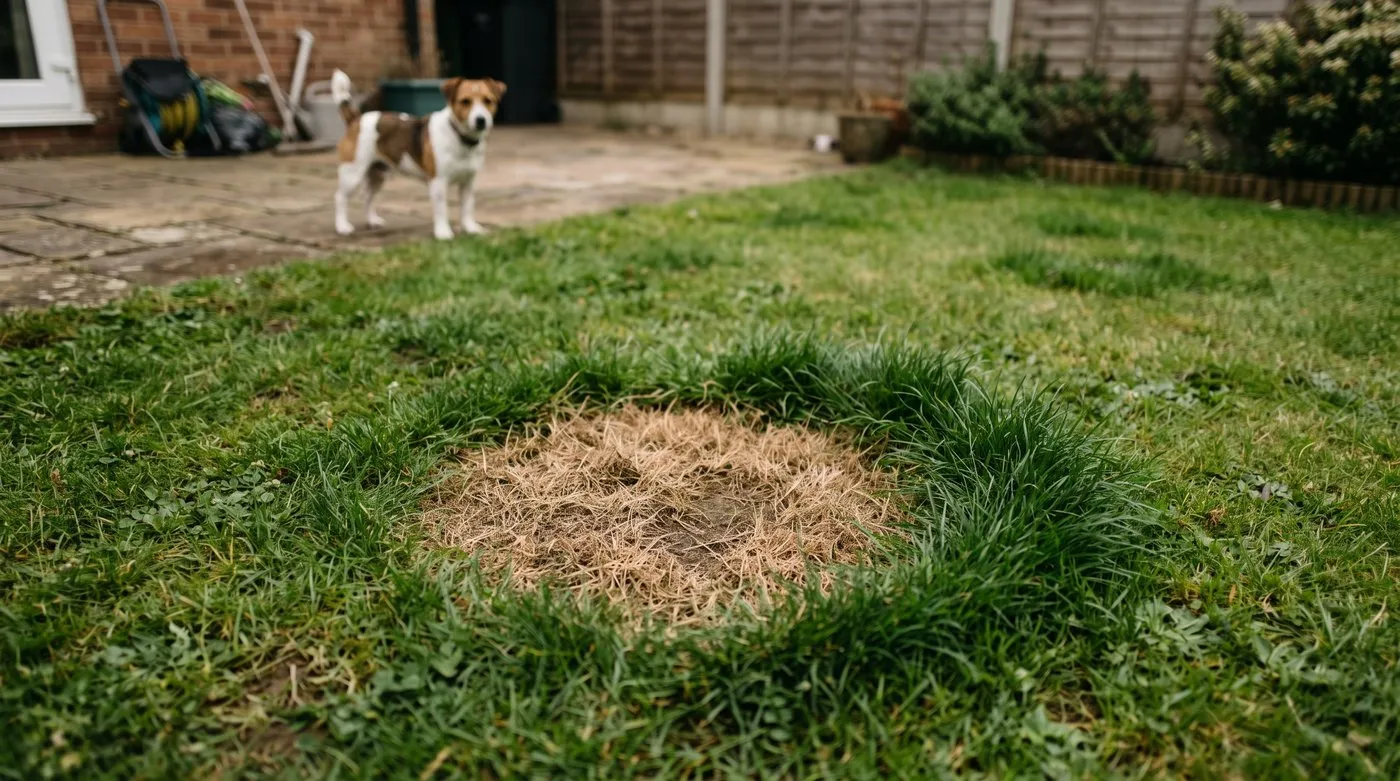
A dead circle with a bright green ring round it is usually dog wee, not disease. Water the spot well straight away to dilute it.
Red Thread
Red thread is the most common lawn disease in the UK, and one of the easiest to spot. Look for uneven, bleached patches with little pink or red threads on the grass, easiest to see when the lawn is wet with dew.
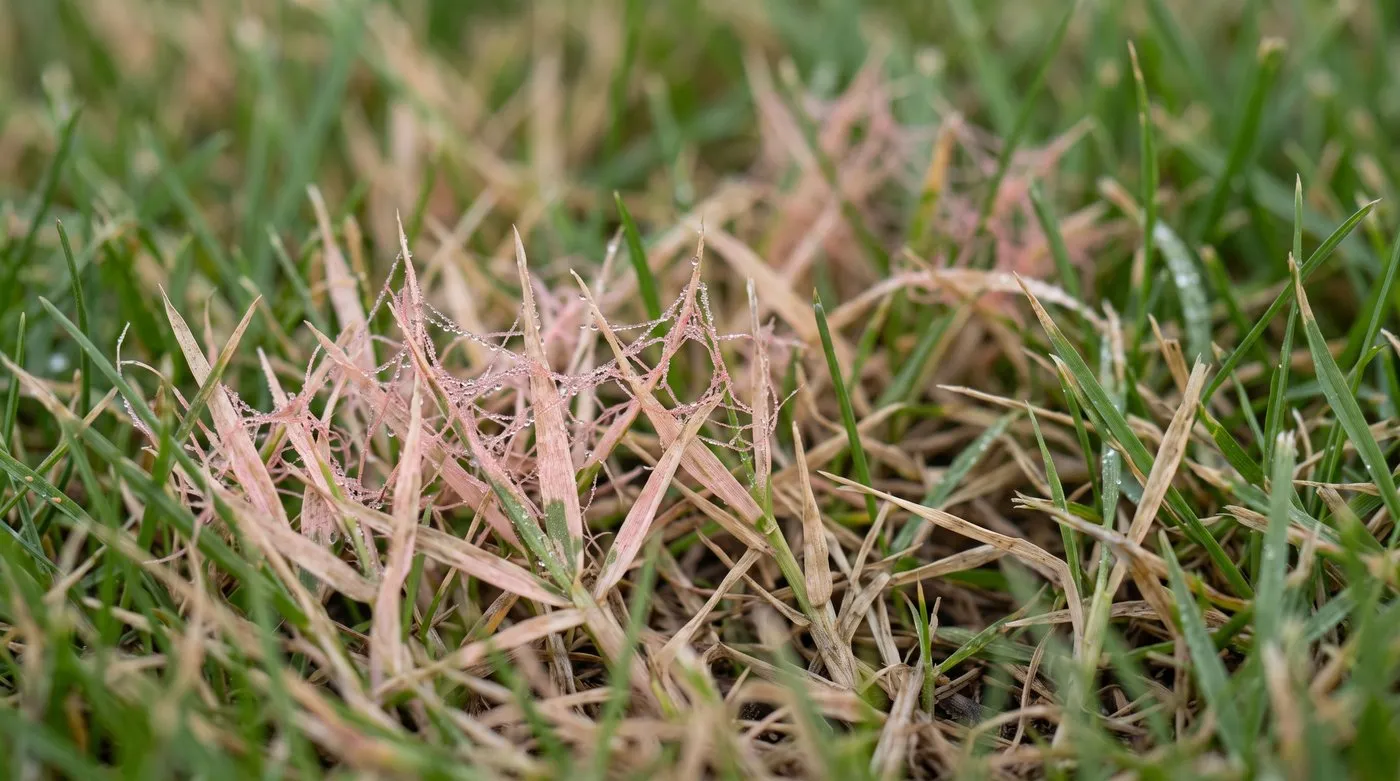
Red thread nearly always means the lawn is hungry. A nitrogen feed usually sorts it within a few weeks, no fungicide needed.
What Causes Red Thread
Red thread nearly always means the lawn is hungry for nitrogen. It goes for slow-growing, underfed grass and rarely shows up on well-fed lawns. Other things that help it along:
- Poor soil, especially sandy or chalky ground
- A dry spell followed by damp weather
- Poor airflow from overhanging trees or dense borders
- Fine fescue grasses, which catch it more easily than ryegrass
Treatment
Feed the lawn. Use a nitrogen-rich lawn feed at the rate on the pack, and you should see it recover within a few weeks as new growth replaces the bleached patches. The base of the grass survives, so it usually comes back fully.
No fungicide needed. If red thread comes back every year, feed regularly: a spring feed in April, a summer feed in June and an autumn feed in September. If the soil under the lawn is part of the problem, our guide to how to scarify and aerate can help.
Can you mow a lawn with red thread?
Yes. Keep mowing at the normal height, but collect the clippings. Mowing doesn’t hurt the grass, and taking off the bleached tips helps it recover.
The RHS page on red thread explains that it spreads on spores, tools and shoes. Bag the clippings and put them in your council garden waste bin rather than the compost heap. Brush or hose off the mower after cutting an infected patch, and mow those bits last.
Gardener’s tip: Red thread looks dramatic but it’s one of the mildest lawn diseases. Feed the lawn and it sorts itself out. Save your worry for fusarium patch.
Fusarium Patch
Fusarium patch (also called Microdochium patch) is the most damaging lawn disease in the UK. It shows up as round patches with a dark brown or soggy-looking edge and a pale, straw-coloured middle. In damp weather you may see white or pinkish fluff around the edges, especially early in the morning.
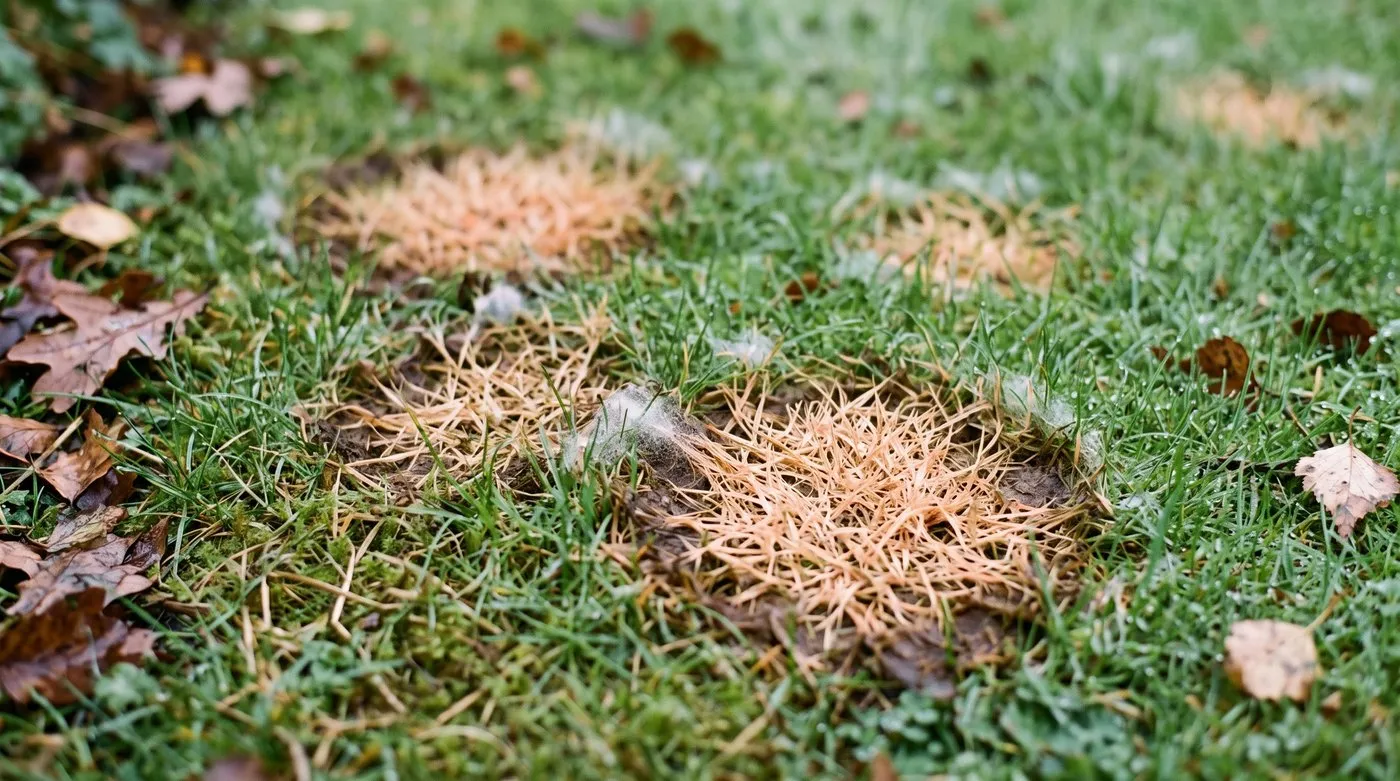
Fusarium loves cool, wet weather and soft growth. Never give it a nitrogen feed. Improve drainage and scarify out the thatch instead.
What Causes Fusarium Patch
Fusarium loves cool, wet weather. It’s busiest from autumn to spring, but can pop up whenever it’s cool and damp. The main triggers are:
- Late nitrogen feeds: a spring or summer feed put down in autumn pushes soft, lush growth the fungus loves
- Poor drainage: clay or packed soil keeps the base of the grass wet
- Thick thatch: a spongy layer of dead grass traps damp at the soil surface
- Snow: snow lying on the lawn, then thawing, is perfect for it (that’s when it’s called snow mould)
Treatment
- Help the lawn drain. Aerate with a hollow-tine aerator in autumn and brush sand into the holes on clay.
- Cut down thatch. Scarify in September.
- Switch to an autumn feed, which is low in nitrogen and higher in potassium. Put it down before October.
- Try an iron sulphate lawn tonic. It toughens the grass and discourages the fungus. Follow the rate on the pack.
- Clear leaves off the lawn quickly in autumn.
- Stay off the lawn when it’s waterlogged or frosty.
Bad cases can kill patches of grass. Reseed them, or returf, once the disease has died down in spring.
Warning: Don’t give a nitrogen feed to a lawn with fusarium. Nitrogen feeds the disease. Wait until spring, and use a potassium-rich autumn feed in the meantime.
Fairy Rings
Fairy rings are caused by fungi living in the soil. They show up as circles or arcs in the lawn and come in three types.
Type 1: Dead Zone Rings
The troublesome kind. You’ll see a ring of dead or dying grass with a band of dark green grass on either side. The fungus gets so thick in the soil that water can’t soak through, so the grass dies of thirst even in wet weather.
Treatment: These are very hard to fix. The only reliable cure is to dig out the soil about 30cm deep and 30cm beyond the ring, refill with clean topsoil and reseed or turf. It’s a big job, so many gardeners just live with the ring.
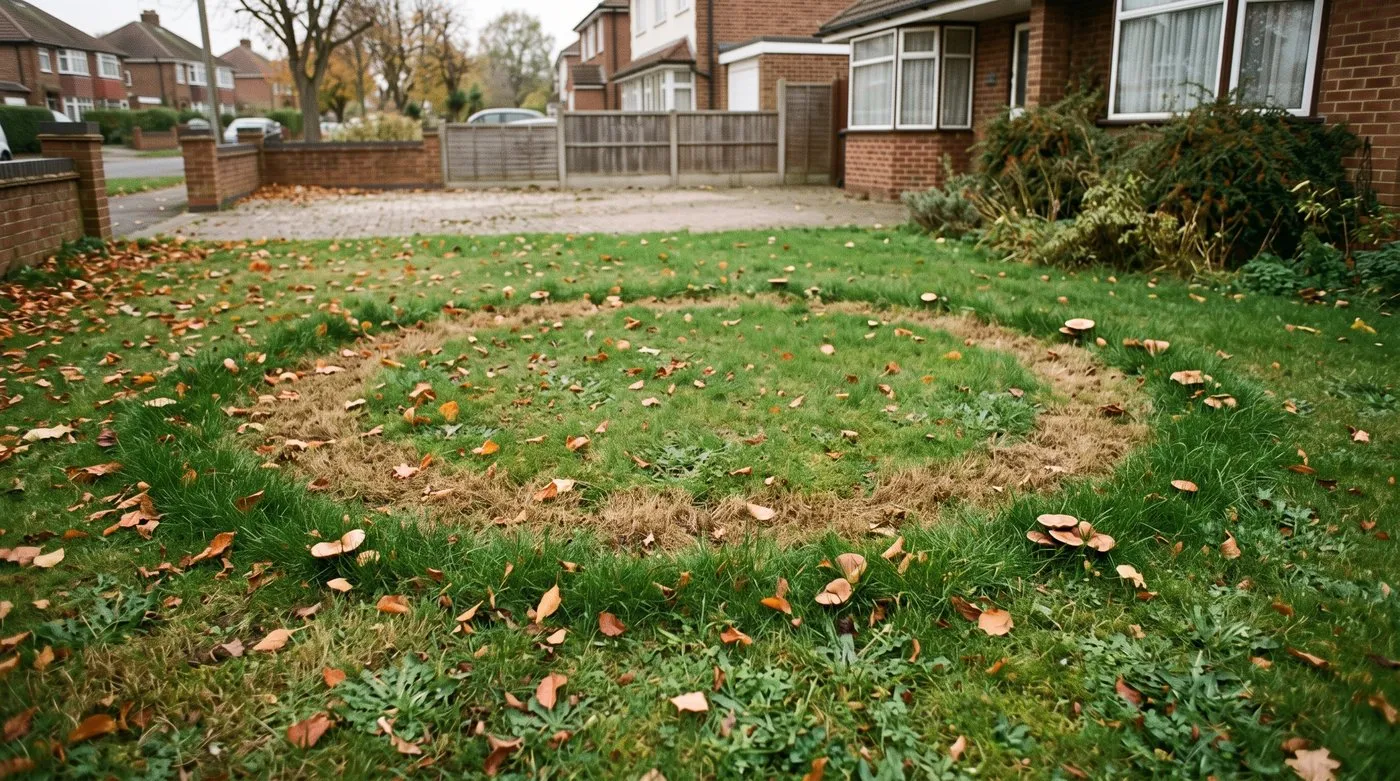
Dead zone rings happen when the fungus stops water soaking in. The only sure cure is digging the soil out, so many people live with them.
Type 2: Dark Green Rings
A ring or arc of darker green grass, sometimes with mushrooms or puffballs in autumn, but no dead grass. The fungus breaks down buried material and releases food for the grass above.
Treatment: none needed. Feed the rest of the lawn so it matches the green ring. Mow off or pick any mushrooms.
Type 3: Mushroom-Only Rings
Rings or clusters of mushrooms with no effect on the grass at all. They pop up in autumn, especially after warm, damp weather.
Treatment: none needed. Pick the mushrooms if children or pets are about. They vanish with the first frosts.
Are fairy ring mushrooms poisonous to dogs?
Some are. The classic fairy ring champignon isn’t poisonous, but it grows alongside lookalikes that are very hard to tell apart. The fool’s funnel also grows in lawn rings and is seriously poisonous to people and pets.
The safest rule is to treat every lawn mushroom as poisonous. Pick or rake them off as soon as they appear, wearing gloves, and put them in the general waste bin. If a dog or child eats a wild mushroom, call your vet or NHS 111 straight away and take a sample with you. Picking mushrooms won’t cure the ring, but it keeps everyone safe.
What Causes Fairy Rings
Fairy rings start from something buried in the soil, like an old tree root, a buried bit of wood or builders’ rubble. The fungus feeds on it and spreads outwards, making the ring shape. Rings slowly grow wider and can last for many years.
Dollar Spot
Dollar spot makes lots of small, straw-coloured spots, each about the size of a coin. In bad cases they join up into bigger patches. Look closely and single blades have a pale band with brown edges.
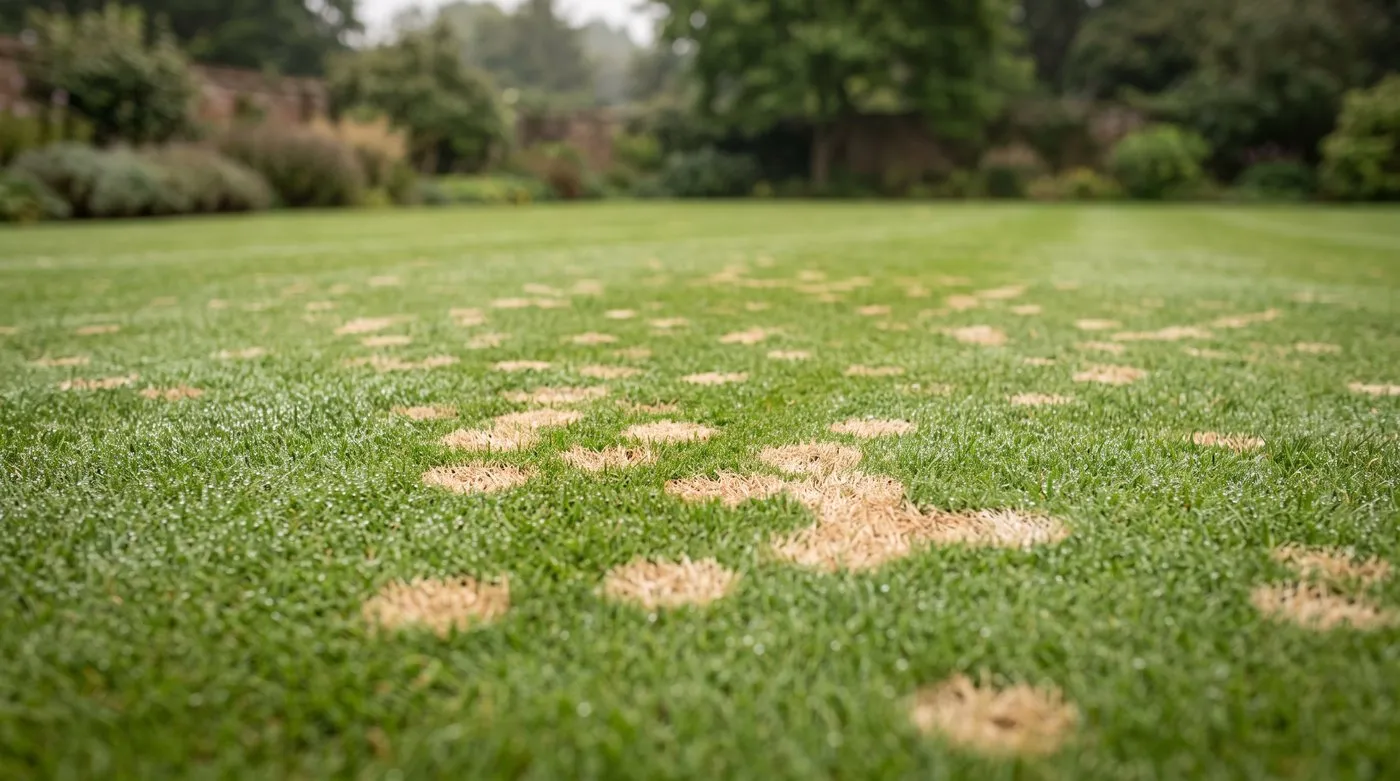
Dollar spot goes for hungry, dry lawns with heavy dew. A nitrogen feed and knocking the dew off in the morning usually clears it.
What Causes Dollar Spot
Dollar spot likes warm, humid summer weather. It’s helped along by:
- A hungry lawn
- Dry soil with heavy morning dew
- Thatch build-up
- Sandy soil that doesn’t hold on to feed
Treatment
A nitrogen feed usually clears it within a few weeks. Water deeply but not too often. In the morning, drag a hose or a bamboo cane across the lawn to knock off the dew, as the fungus needs wet blades to spread. Our guide on how to get rid of moss covers more ways to keep a lawn healthy.
Rust
Lawn rust shows up as tiny orange, yellow or brown spots on the grass. Run your hand across it and you’ll get orange dust on your fingers. Bad patches look orangey from a distance.
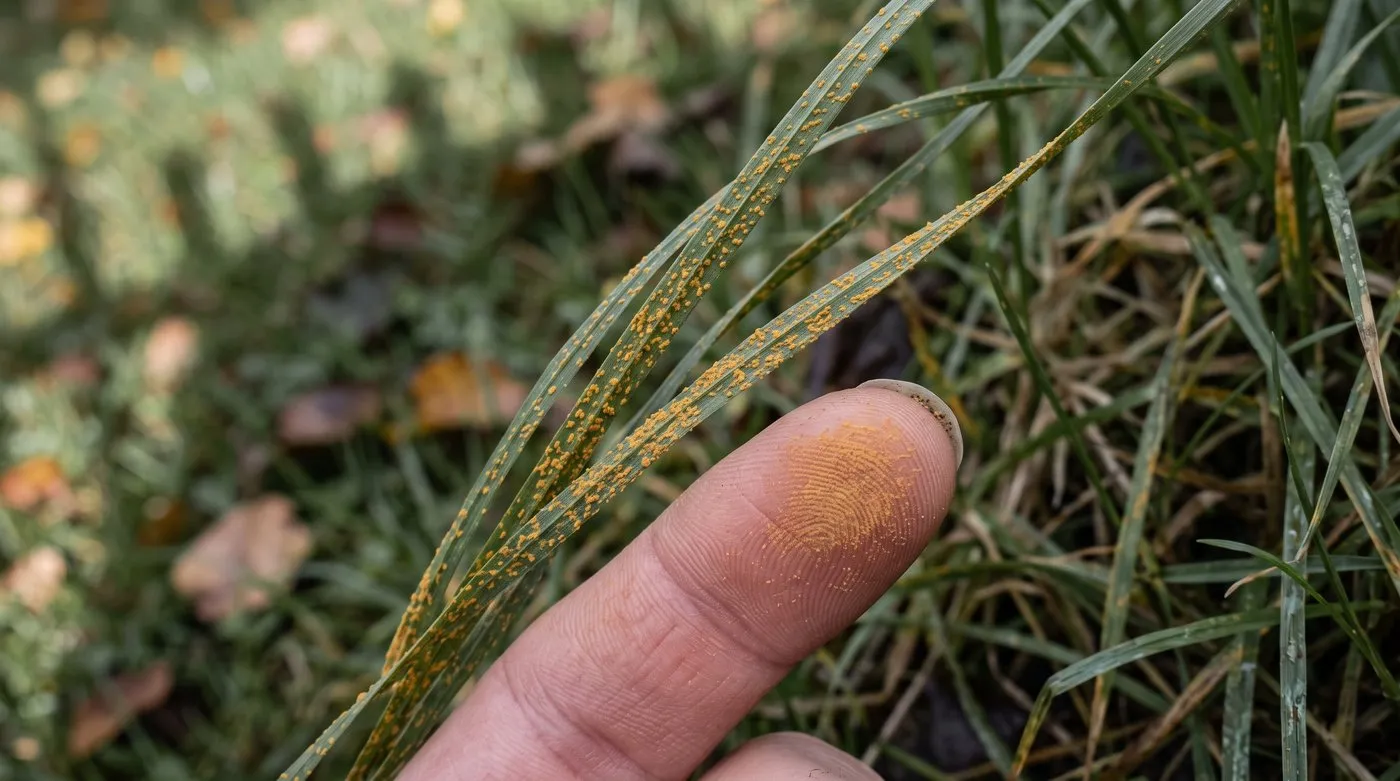
Run your hand across rusty grass and it leaves orange dust on your fingers. A nitrogen feed lets the lawn grow out of it.
What Causes Rust
Rust loves slow-growing grass in shade in late summer and early autumn. Ryegrass catches it most. The main triggers are:
- Shade from trees, buildings or fences
- A hungry lawn growing slowly
- A dry spell followed by muggy weather
- Brand-new lawns that haven’t settled in yet
Treatment
Give the lawn a nitrogen feed and it will simply grow out of it, usually within a few weeks. Collect the clippings rather than leaving them, to take away the spores.
If a shady patch gets rust every year, try overseeding with a shade-tolerant fescue mix.
Snow Mould
Snow mould is the winter form of fusarium patch. It appears after snow has sat on the lawn, as round patches of flattened grass with white or pinkish cotton-wool fluff. You’ll usually notice it as the snow melts.
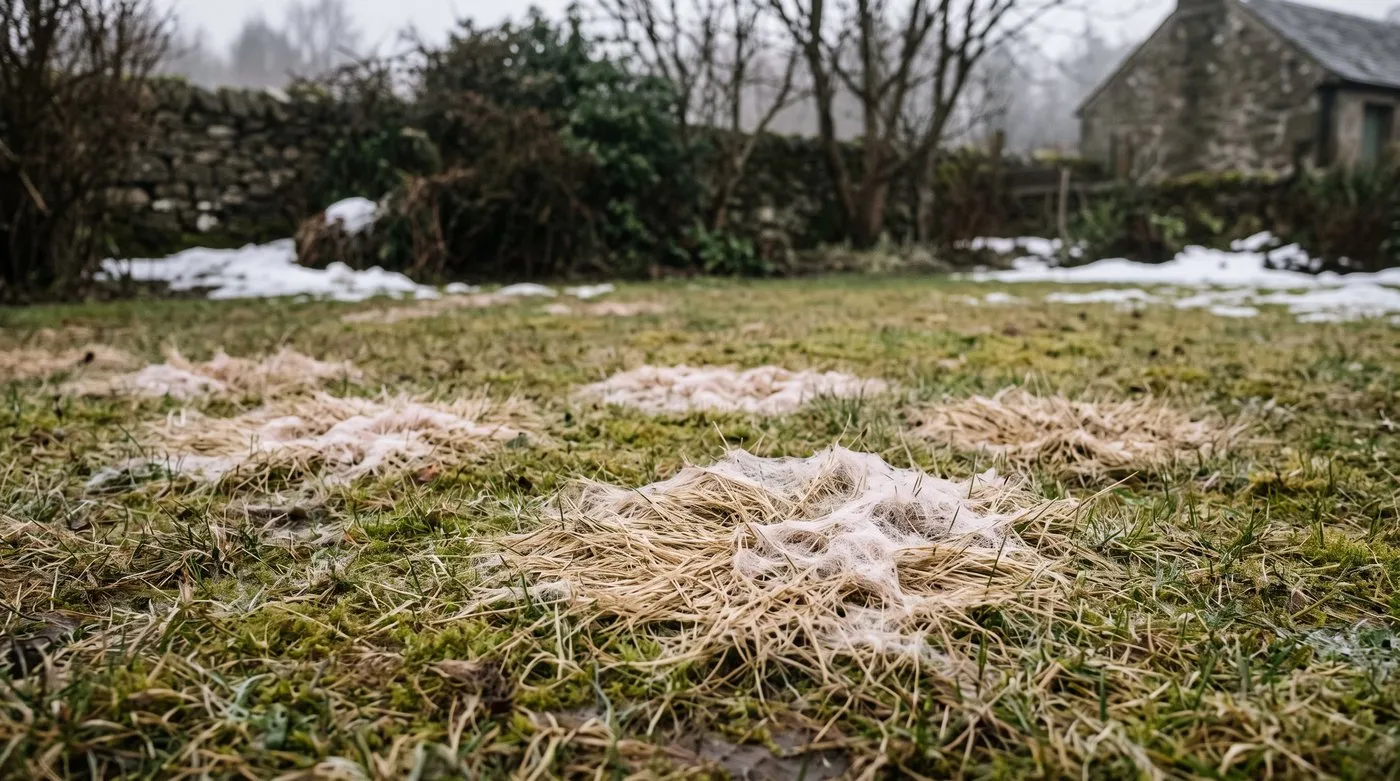
Snow mould shows up as the snow melts. Brush the patches gently to let air in, keep off the lawn and it usually recovers in spring.
Treatment
Gently brush the patches with a stiff broom or the back of a rake to break up the fluff and let air in. Keep off the lawn as much as you can. Most of the time it recovers by itself in spring. Reseed any badly damaged bits in April.
Prevention: avoid nitrogen feeds late in autumn, and use an autumn lawn feed before October. Clear leaves before snow arrives, and don’t pile snow from paths onto the lawn.
Take-All Patch
Take-all patch is a root disease that makes bronze or brown patches that look slightly sunken. Tug the grass and it comes away easily, because the roots have rotted.
What Causes Take-All Patch
It’s most common on:
- New lawns in their first few years, especially on ground that used to be dug
- Alkaline (chalky or limy) soil
- Sandy or chalky soils low in organic matter
- Lawns that have been limed too much, or sit on rubble from building work
Treatment
Take-all is tricky, and there’s no fungicide for home gardeners.
- Bring the pH down if your soil is alkaline. Use an acidifying soil product, following the pack. It works slowly over months.
- Feed the soil life by top-dressing with good, well-rotted compost in autumn. Helpful soil fungi compete with the disease.
- Don’t lime the lawn or use limy top dressings.
- An iron sulphate lawn tonic helps make conditions less friendly for the fungus.
- Reseed badly hit patches. Bent grasses suffer most, while ryegrass copes better.
Seasonal Disease Calendar
Use this to stay one step ahead.
| Month | Diseases about | What to do |
|---|---|---|
| January | Fusarium, snow mould | Keep off frozen or soggy grass |
| February | Fusarium, snow mould | Clear any last leaves and check drainage |
| March | Fusarium fading, take-all starting | First mow on the highest setting. Don’t feed yet if fusarium is about |
| April | Take-all, early red thread | Give a spring feed and reseed bare patches |
| May | Red thread, dollar spot | Keep feeding as planned. Mow weekly at 3-4cm |
| June | Red thread, dollar spot, rust | Watch for signs. Keep the mower blade sharp |
| July | Red thread, dollar spot, rust | In drought, water deeply once a week rather than a little daily |
| August | Red thread, dollar spot, rust | Plan autumn jobs and book a scarifier |
| September | Fusarium starting, red thread fading | Scarify and aerate. Give an autumn feed and reseed thin areas |
| October | Fusarium, fairy ring mushrooms | Clear leaves weekly. Last mow. Use an iron sulphate tonic |
| November | Fusarium, snow mould | Stay off wet lawns. No more feeding until spring |
| December | Fusarium, snow mould | Keep leaves off and leave it be |
Cultural Prevention: The Five Fundamentals
Get these five things right and you’ll avoid most lawn diseases without any chemicals.
1. Feed Twice a Year
Give a spring feed in April and an autumn feed in September. That’s steady food without the soft, lush growth fusarium loves. Don’t feed after early October. Slow-release granules give more even results than liquid feeds.
2. Mow at the Correct Height
Don’t scalp it. Close-mown grass is weaker and catches disease more easily, so keep to about 3cm or more, and go a little higher in summer. Keep the blade sharp, as a blunt one tears the grass and leaves wounds for fungi to get in.
3. Scarify in Autumn
Rake out the thatch in early September with a powered scarifier or a spring-tine rake. A thick thatch layer keeps the base of the grass damp and invites fusarium, dollar spot and red thread. Scarify before you feed and reseed.
4. Aerate Compacted Soil
Use a hollow-tine aerator or a garden fork to make holes 8-10cm deep across the lawn in autumn. On clay, brush sharp sand into the holes. This helps the lawn drain and the roots go deeper. Squashed, soggy lawns get far more fusarium and snow mould. If weeds are a problem too, our guide to lawn weed identification and control covers both together.
5. Improve Drainage
On heavy clay, poor drainage is the biggest cause of winter lawn disease. You can:
- Spike and sand every year
- Put in a French drain along the lowest edge of the lawn
- Top-dress with a sand and loam mix to improve the surface over time
- Cut down heavy foot traffic on the wettest areas
If you’re starting a lawn from scratch, our guide to how to lay turf covers the ground preparation that stops drainage problems from the start.
Common Mistakes
Most lawn disease comes down to late nitrogen feeds, mowing too short and letting thatch build up.
Feeding With Nitrogen in Late Autumn
This is the top cause of fusarium patch. A nitrogen-rich feed after September pushes soft growth the fungus loves. Use an autumn feed in September instead.
Mowing Too Short
Very short grass has weaker roots and thinner turf, so it catches every disease on this list. Raise the blades and you’ll see fewer problems within a season.
Ignoring Thatch Build-up
You can’t see thatch from above, but it causes trouble below. It holds damp, stops air reaching the soil and gives fungi a cosy home. Scarify every September to keep it in check.
Watering in the Evening
Evening watering leaves the grass wet all night, which is just what fungi need. Water in the morning so the lawn dries by midday.
Walking on Wet or Frozen Lawns
Walking on soggy or frosty grass damages it and squashes the soil, and damaged grass catches disease more easily. Stay off when it squelches or when frost is on the blades.
When to Call a Professional
Most lawn diseases respond to the simple fixes above. Think about getting help if:
- A dead-ring fairy ring needs digging out and replacing
- Take-all patch covers a big area and you need a proper soil test
- Disease comes back every year even though you’re feeding, mowing and draining well
- Large areas have died from fusarium and need a full renovation
Lawn specialists can test your soil, bring heavy-duty aerating kit and suggest grass types that suit your ground.
Next, have a look at our guide to common lawn weeds: identification and control to deal with the other big lawn nuisance.
Frequently asked questions
Why does my lawn have orange patches?
That’s most likely lawn rust. Tiny orange spots on the grass leave an orange dust on your shoes. Rust likes slow-growing, hungry grass in shady spots in late summer. Give the lawn a nitrogen feed and it should grow out of it within a few weeks.
What causes brown patches on a lawn in autumn?
Usually fusarium patch, a fungal disease. Look for round brown patches with a darker edge and a paler middle. In damp weather you may see white or pinkish fluff at the edges. It loves cool, wet weather and is made worse by late nitrogen feeds, so use an autumn feed instead.
Is red thread harmful to my lawn?
Not really. It weakens grass but rarely kills it. You’ll see bleached patches with little pink or red threads on the blades. A balanced lawn feed usually clears it within a few weeks, and the grass recovers fully.
How do I get rid of fairy rings in my lawn?
Most fairy rings need no treatment at all. Only rings with a band of dead grass are a real problem. The only reliable fix is digging out the soil about 30cm deep and 30cm beyond the ring, refilling with fresh topsoil and reseeding. It’s hard work, so many people just live with them.
Can I use fungicide on my lawn?
No, home gardeners in the UK can’t buy lawn fungicides. Some lawn care companies can use professional products under strict rules. The best approach is good care: the right feed, a sensible mowing height, aerating and better drainage. An iron sulphate lawn tonic also helps toughen grass against fusarium.
Why does my lawn get diseased in winter?
Slow growth and soggy ground give fungi the upper hand. Fallen leaves trap damp on the surface too. Stay off waterlogged grass, clear leaves often, and give an autumn feed by early October. Don’t use nitrogen-rich feeds after that.
Should I scarify a diseased lawn?
Not while the disease is active. Scarifying can spread it around the lawn. Wait until it has cleared, then scarify in September to remove thatch, the spongy layer of dead grass that keeps the base of the grass damp and invites disease.
What is the white fluffy stuff on my lawn?
It’s usually snow mould, a winter form of fusarium patch. It shows up after snow has sat on the lawn, or in cold, damp spells. Gently brush the patch with a stiff broom to break up the fluff and let air in. The grass usually recovers in spring.
Our team produces practical UK gardening guidance from source research, contributor records and established horticultural practice. Editorial standards are overseen by Matt W.


