Key takeaways
- Badgers dig lawns for leatherjackets and chafer grubs, not to eat the grass
- Lift a small square of turf to see which grub you have, as the nematodes differ
- Apply nematodes from late August to October while the soil is still warm
- Keep the lawn moist for two weeks after treating so the nematodes can work
- Tread rolled turf back down and overseed bare patches in September or April
- Badgers and setts are protected by law, so never trap, harm or block one
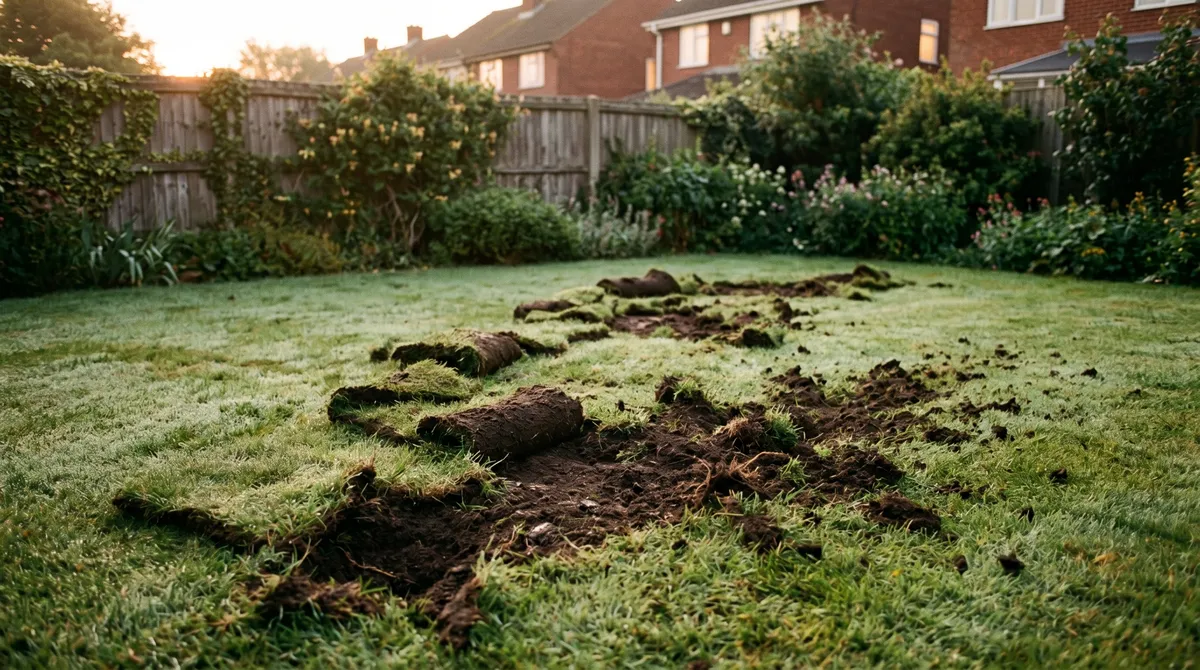
An untouched lawn at dusk, and a ploughed field by breakfast. If badgers are digging up your lawn, they aren’t after the grass. They’re hunting fat grubs in the soil underneath.
That’s good news, because it gives you a clear fix. Clear the grubs and the badger has no reason to dig. This guide covers spotting badger damage, getting the grub treatment timing right and repairing the lawn. For keeping badgers out of the rest of the garden, see the guide to deterring badgers safely and legally.
What badger damage looks like
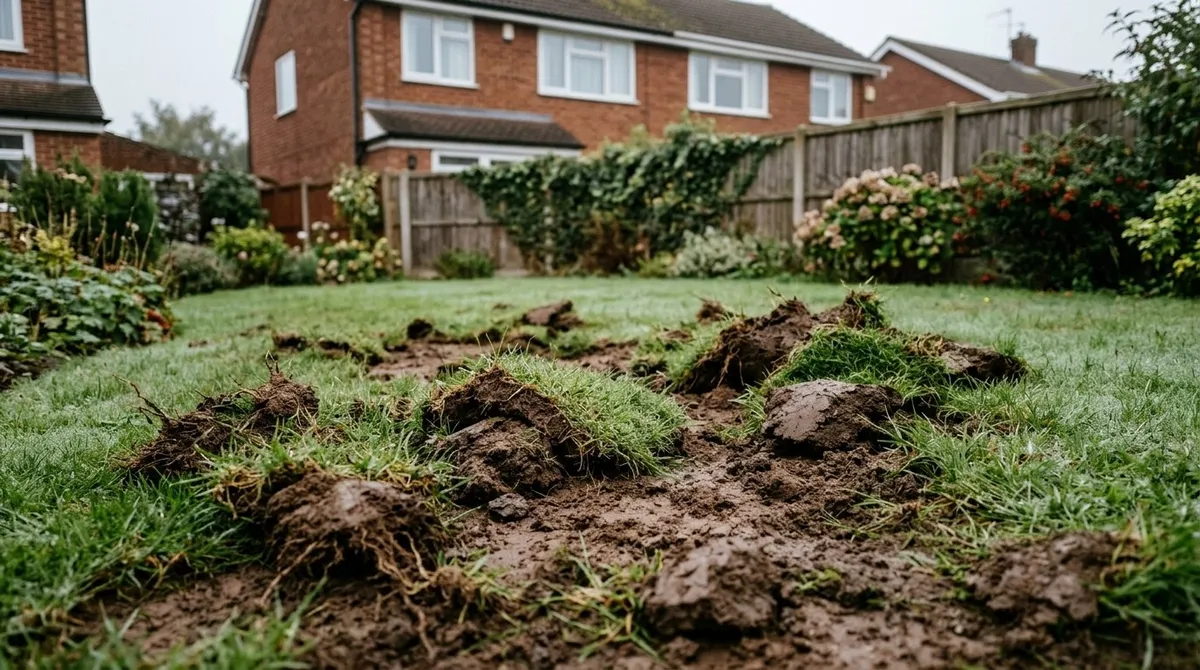
Badgers dig shallow holes with their snouts and peel back flaps of turf to reach the grubs. The flaps are often rolled to one side, still attached at one edge. The damage can cover a large patch and gets worse night after night.
Other diggers look different. Foxes leave single neat holes. Crows and starlings make lots of small peck holes without lifting the turf. If you’re not sure who visited, the guide to small holes in the lawn overnight compares them side by side.
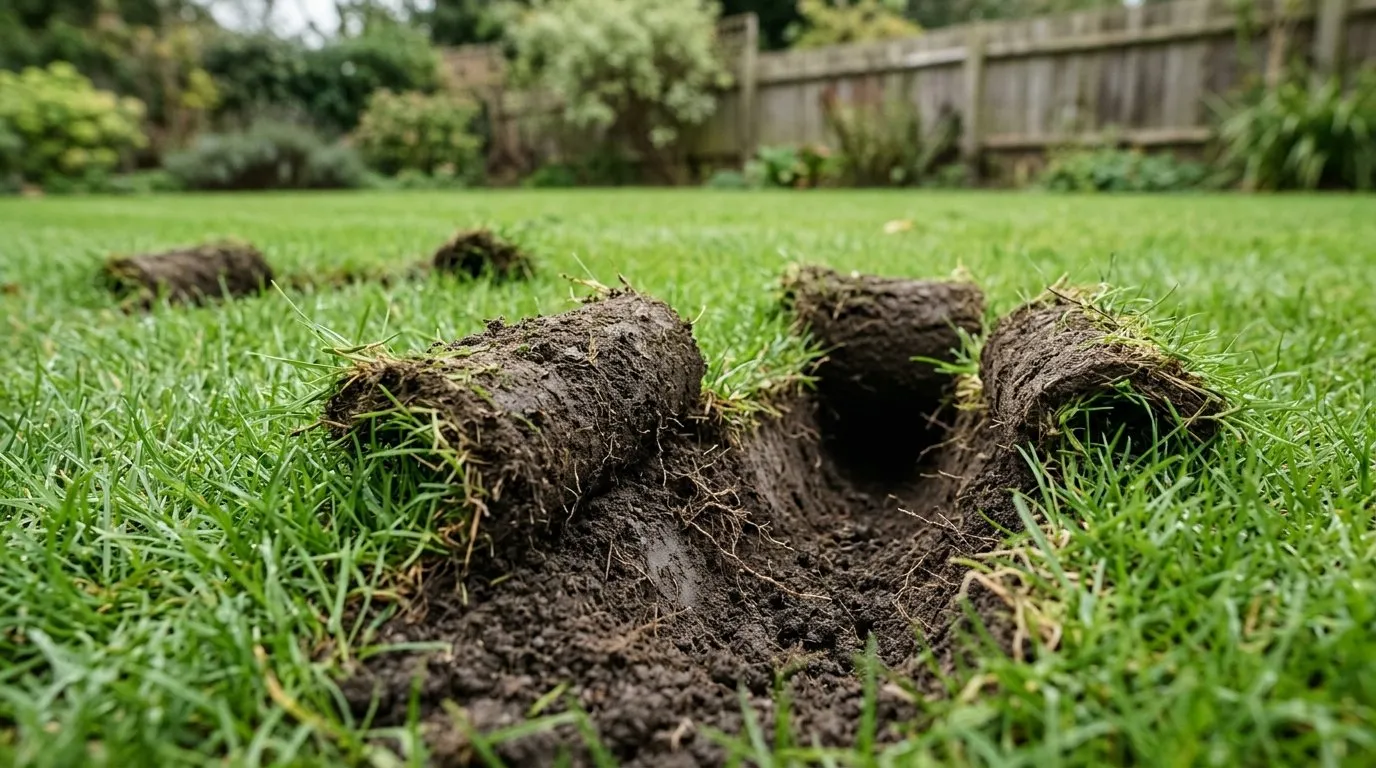
Rolled-back turf and shallow snout holes are the classic sign of a badger feeding on grubs.
Signs a badger is visiting regularly
Check your boundaries at first light. Badgers use the same routes every night, so they leave clues:
- A worn run through grass or under a hedge, often muddy and flattened
- A gap under the fence, pushed or dug out where the badger squeezes through
- Coarse grey hairs snagged on wire or fence boards
- Latrine pits, small dug holes used as toilets, often near a boundary
These tell you where the badger comes in. That’s useful if you later decide to fence the entry point.
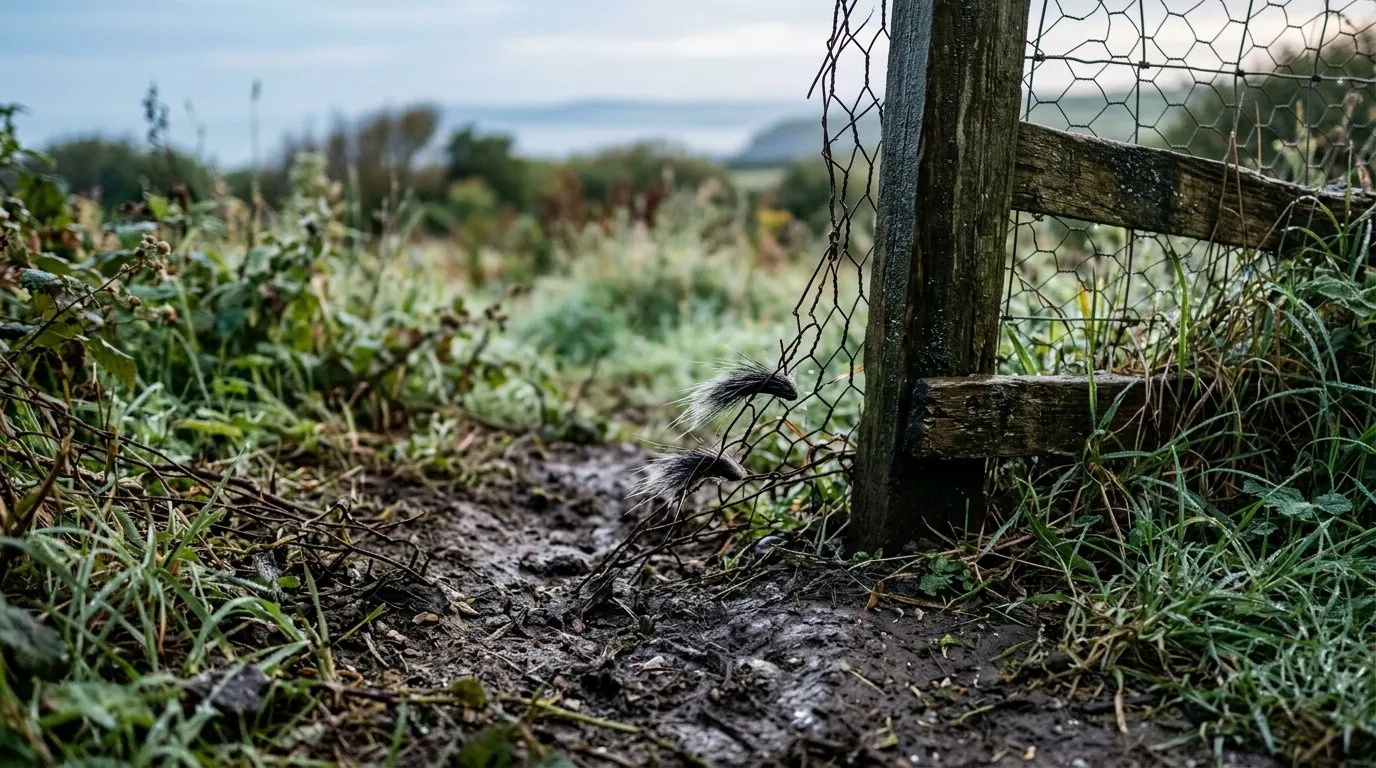
A muddy run and hairs snagged on the wire show the badger’s nightly route into the garden.
The grubs badgers are digging for
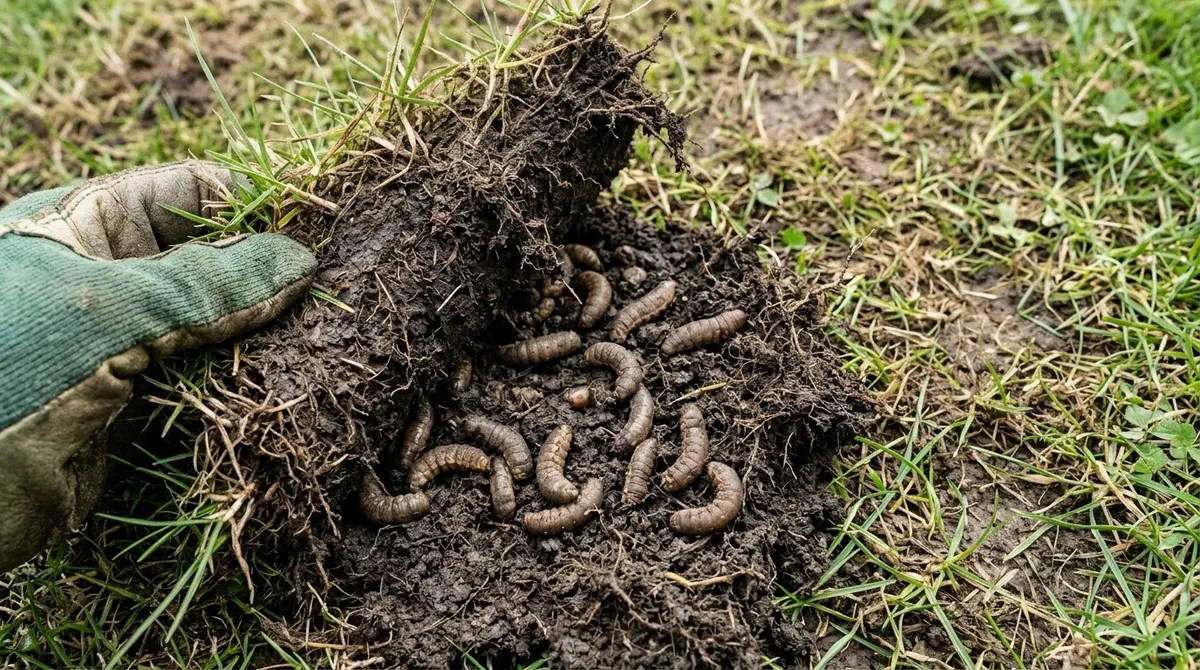
Badgers dig for two grubs: leatherjackets and chafer grubs. Both live in the top few centimetres of soil and eat grass roots. A lawn full of them often yellows and lifts easily even before a badger finds it.
You need to know which you have, because the nematode treatment is different. Cut three sides of a small square of turf in a damaged patch, peel it back and look.
| Feature | Leatherjacket | Chafer grub |
|---|---|---|
| What it grows into | Crane fly (daddy-long-legs) | Chafer beetle |
| Shape | Long and tube-like, no legs | Fat C-shape, three pairs of legs |
| Colour | Grey-brown, tough skin | Creamy white with a brown head |
| Nematode to buy | Leatherjacket nematodes | Chafer grub nematodes |
The guide to chafer grubs in lawns covers the beetle grubs in more detail.
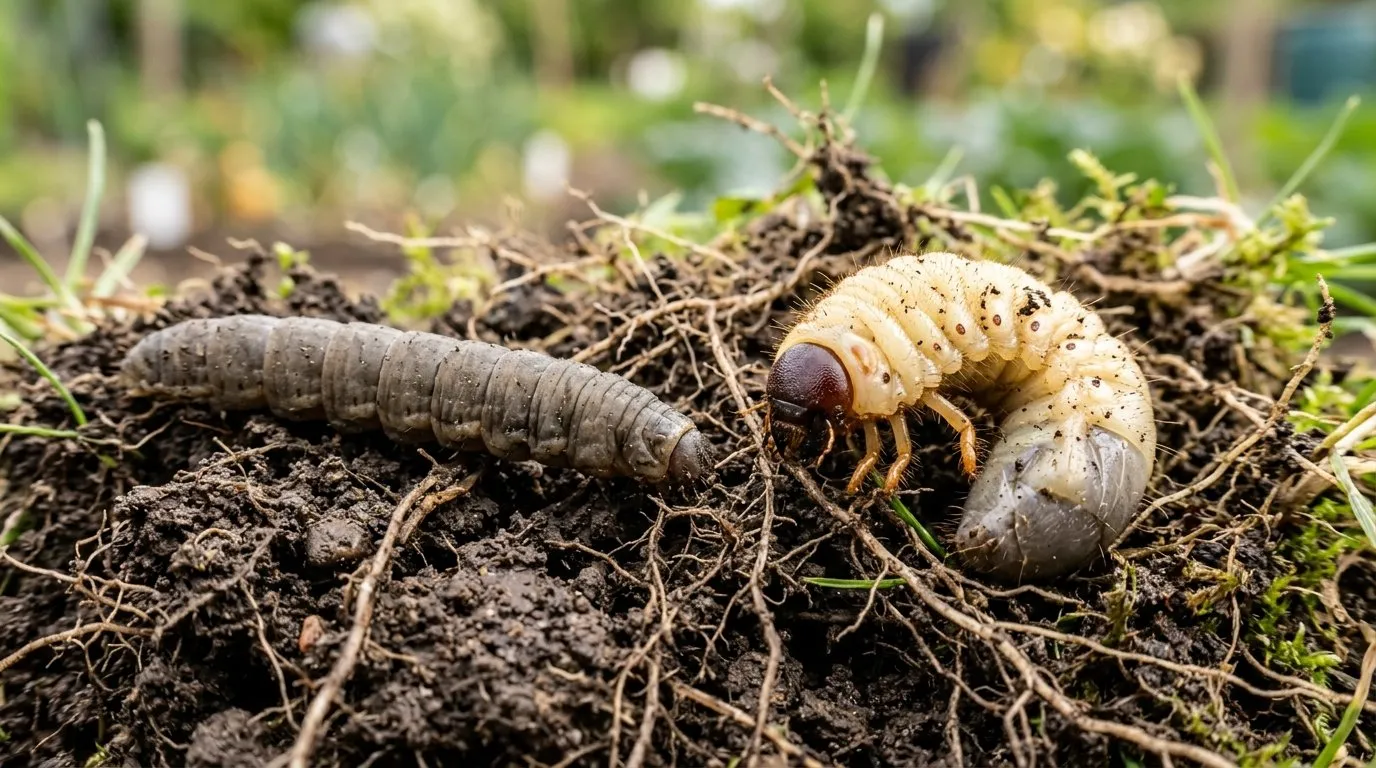
Leatherjackets are legless and tube-like. Chafer grubs curl into a C and have six small legs.
When to apply nematodes
Nematodes are microscopic living worms that hunt grubs in the soil. They’re safe for children, pets, birds and the badger. Timing is everything, and getting it wrong is the main reason treatments fail.
Apply them from late August to October, while the soil is still warm and the young grubs are small and near the surface. Check the packet for the minimum soil temperature. Once the soil turns cold in winter, nematodes can’t work.
Chafer grub nematodes are only used in that late-summer window. Leatherjacket nematodes can also go on in spring if you missed the autumn, once the soil warms up again. The guide to biological pest control explains how nematodes work.
How to apply nematodes step by step
- Water the lawn well the day before, so the soil is moist.
- Mix the nematodes with water as the packet says, and use them straight away.
- Apply on a dull day or in the evening, as sunlight harms them. Use a watering can with a coarse rose, or a hose-end feeder.
- Water again straight afterwards to wash them down into the soil.
- Keep the lawn moist for two weeks. Water every few days if it doesn’t rain.
The badger may keep visiting for a while as the grubs die off. Be patient and don’t treat the holes as a sign it hasn’t worked.
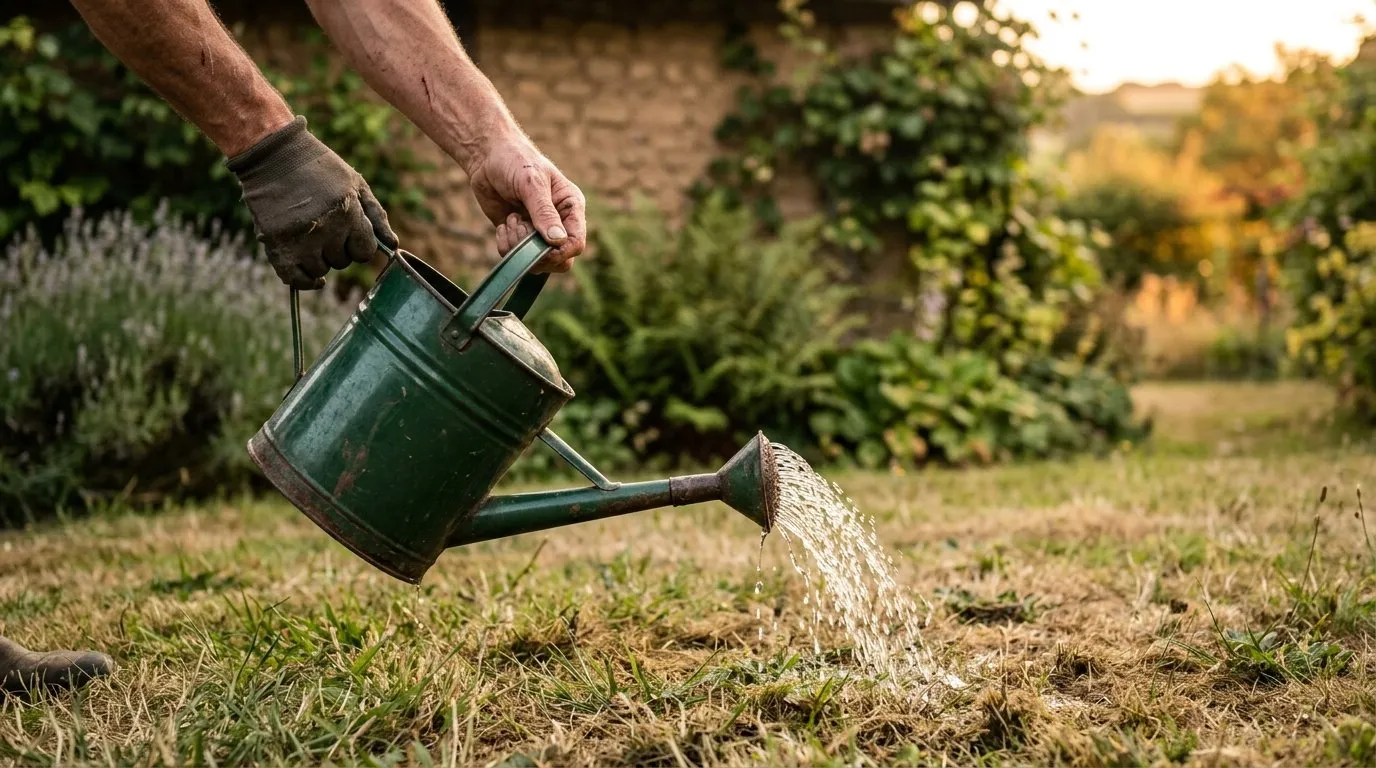
Water nematodes on in the evening, then keep the soil moist so they can reach the grubs.
Badgers and the law
Badgers and their setts are protected by the Protection of Badgers Act 1992. It’s a criminal offence to kill, injure or trap a badger. It’s also an offence to damage, block or disturb a sett.
In practice that means:
- Never block a hole you think might be a sett, even on your own land.
- Never fence a badger in, or cut it off from its sett.
- Don’t put down poison or traps of any kind.
Clearing the grubs, picking up windfalls and fencing your boundary are all fine. If a sett is on or near your boundary, ask your local badger group or Natural England before doing any work nearby. The Badger Trust has clear guidance.
Do badger deterrents work?
Most deterrents only buy time while the grubs die off. A hungry badger on a regular route is hard to put off.
| Method | How well it works |
|---|---|
| Clear the grubs with nematodes | The lasting fix, as it removes the reason to dig |
| Strong fencing at the entry point | Good, if it’s dug in so badgers can’t burrow under |
| Low electric fence kit for badgers | Good, used as the maker directs |
| Scent repellents | A few nights at best |
| Ultrasonic gadgets | Little effect, badgers soon ignore them |
Badgers are strong diggers. A fence needs mesh dug into the ground, or bent outwards along the base, so they can’t tunnel under. Only fence once you’re sure there’s no sett inside your garden.
How to repair a badger-damaged lawn
Once the digging stops, most lawns recover quickly. Act while rolled turf is still alive.
- Tread flaps back down while they’re still attached, and firm them with your heel.
- Water them in dry weather. They re-root within a couple of weeks.
- Rake bare patches to remove loose debris and level the soil.
- Overseed with a hard-wearing grass seed mix in September or April.
- Keep it moist until the new grass is growing well.
Mixing the seed with a little sieved topsoil before scattering helps it stay in contact with the soil. The guide to fixing a patchy lawn covers overseeding in more detail.
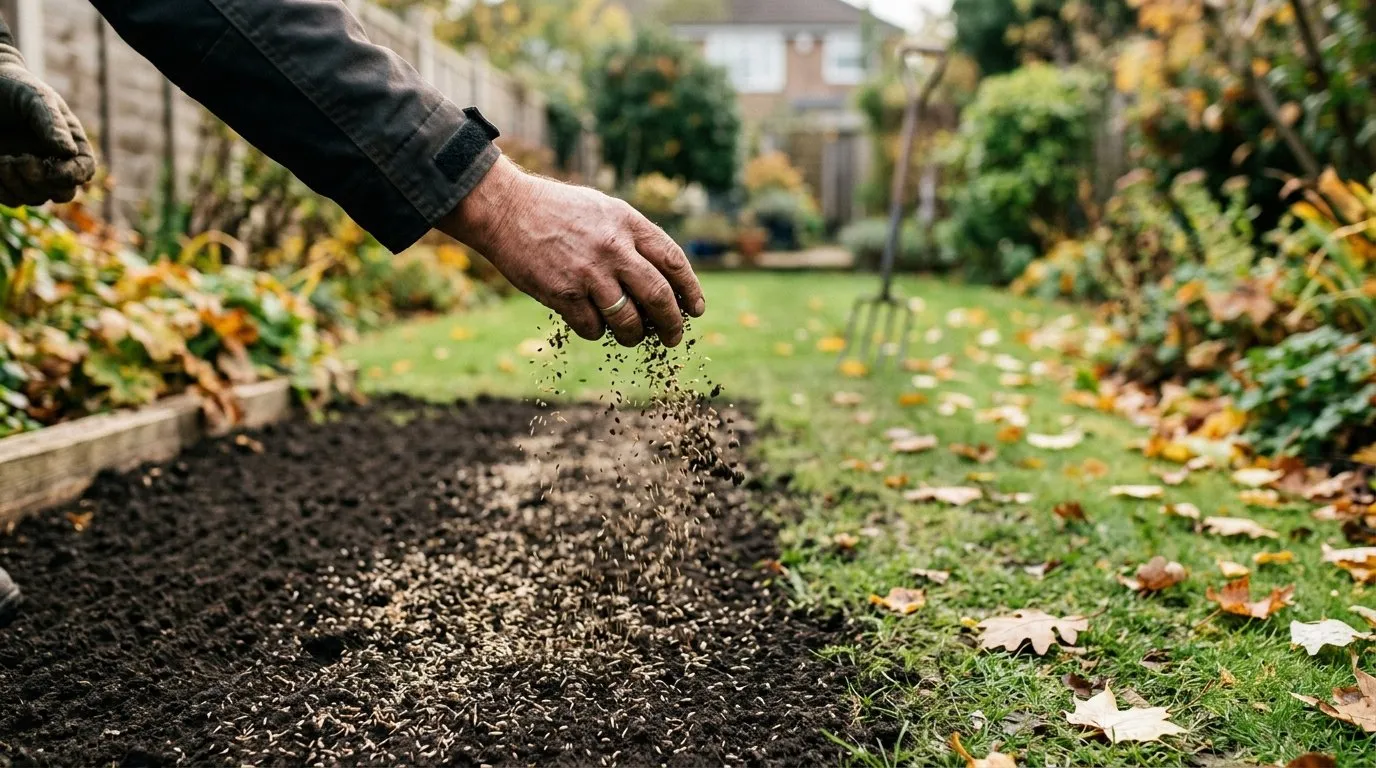
Overseed bare patches in September while the soil is still warm, then keep them moist.
Mistakes that keep badgers coming back
Treating at the wrong time. Nematodes applied in a cold winter or early spring often fail. Late summer to autumn is the window that works.
Chasing the badger, not the grubs. Repellents and gadgets tackle the symptom. While the lawn is full of grubs, the badger keeps returning.
Blocking a run or sett. It’s illegal, and a badger cut off from its route may simply dig harder somewhere else.
Letting the lawn dry out after treating. Nematodes need moist soil to move. Keep watering for two weeks.
Crane flies like to lay eggs in soft, damp lawns in late summer. Good drainage and regular lawn care through the year make your grass less inviting.
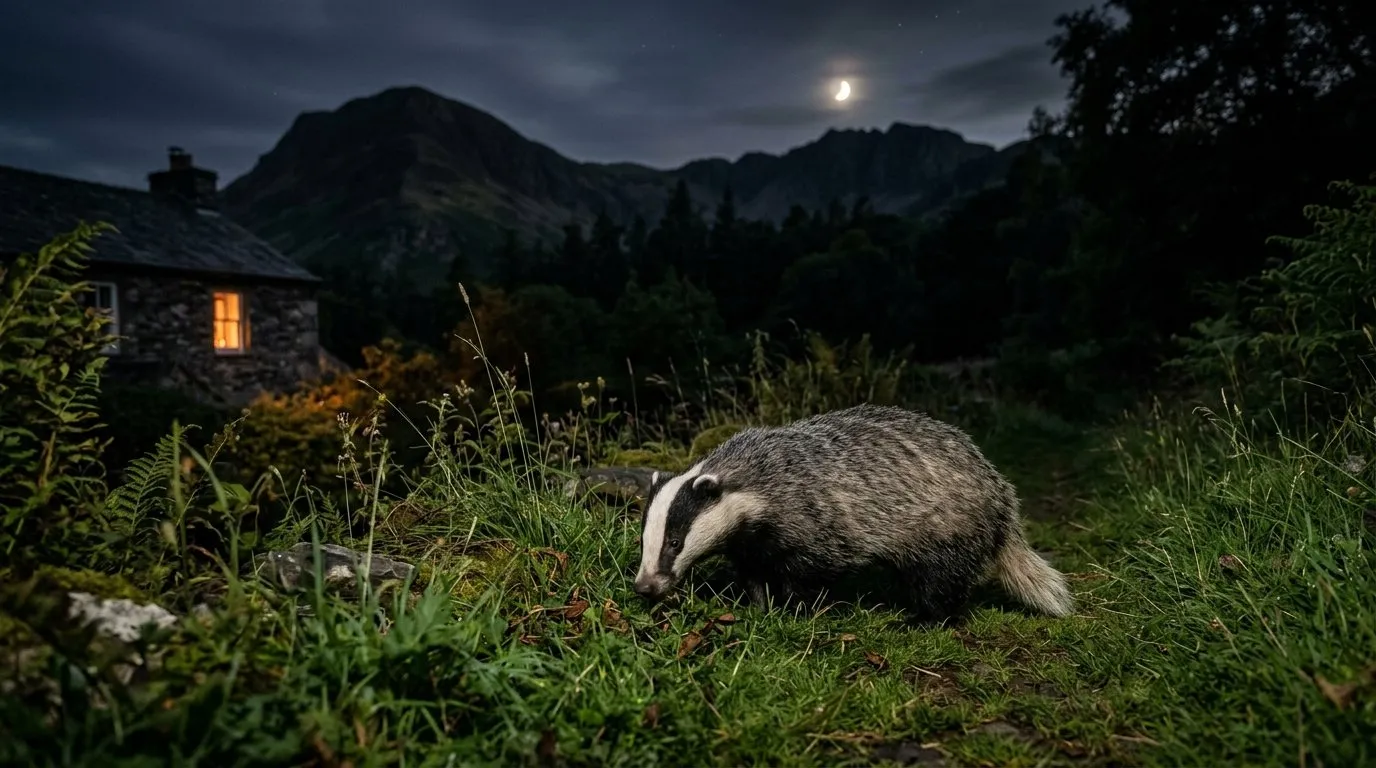
Badgers follow the same routes every night in search of food. Remove the grubs and your lawn drops off the menu.
Frequently asked questions
How do I know it is badgers and not foxes digging my lawn?
Badgers roll back turf in flaps; foxes dig single neat holes. Badger damage often covers a wide patch and returns night after night. Look for latrine pits (small dug holes used as toilets) and coarse grey hairs on fences. Foxes tend to leave one hole and scattered food scraps.
Why do badgers keep digging up my grass?
They are eating grubs in the soil, mainly leatherjackets and chafer grubs. A grub-rich lawn is an easy meal, so the badger keeps coming back. Clear the grubs and the digging soon stops.
Is it illegal to stop a badger coming into my garden?
No, as long as you don’t harm the badger or interfere with a sett. Removing the food and fencing are both fine. Killing, injuring or trapping a badger, or blocking or damaging a sett, are criminal offences. Get advice before any work near a sett.
When should I apply nematodes for grubs?
From late August to October, while the soil is still warm. Check the packet for the minimum soil temperature. Chafer grub nematodes are only used in this window. Leatherjacket nematodes can also go on in spring if you missed autumn.
Do ultrasonic deterrents and scent repellents stop badgers?
Rarely, and not for long. A hungry badger soon ignores sounds and smells, especially when there’s food under the lawn. Clearing the grubs works far better, with fencing at the entry point if needed.
Will my lawn recover after badger damage?
Yes, most lawns recover well. Tread rolled turf back down while it is still attached and water it. Overseed bare patches in September or April and keep them moist. New grass knits in within a few weeks.
Can I put up a fence if there is a badger sett nearby?
Only if it doesn’t block the sett or the badgers’ routes to and from it. Keep posts and digging well clear of sett entrances. If a sett is on or near your boundary, ask your local badger group or Natural England for advice first.
Now you know what the badger is after, read the guide to leatherjackets in lawns to stop the next generation of grubs. There’s more help in the lawn care hub.
Our team produces practical UK gardening guidance from source research, contributor records and established horticultural practice. Editorial standards are overseen by Matt W.