Key takeaways
- Leatherjackets are grey-brown, legless crane fly grubs up to about 3cm long
- Yellow patches that lift like a loose rug in spring are the classic sign
- Starlings, rooks and badgers digging at the lawn often mean grubs below
- Water on Steinernema feltiae nematodes in early autumn while the soil is warm
- No insecticides are available to home gardeners for leatherjackets
- Overseed bare patches in April or September once the damage is done
Leatherjackets are one of the commonest reasons for yellow, dying patches in a UK lawn in spring. They are the grubs of crane flies, the gangly insects better known as daddy long legs. They live just under the surface and chew grass roots from autumn through to the following spring.
If starlings or rooks keep pecking and pulling at your lawn, leatherjackets are a likely reason. The birds are not the problem. They are pointing at it. This guide shows you how to confirm leatherjackets, when nematodes work, and how to get the grass back.
What are leatherjackets?
Leatherjackets are the larvae of crane flies. They are grey-brown, legless and tube-shaped, and they grow to about 3cm long. Their tough, leathery skin gives them the name. There is no obvious head, and they stay fairly straight when you pick them up.
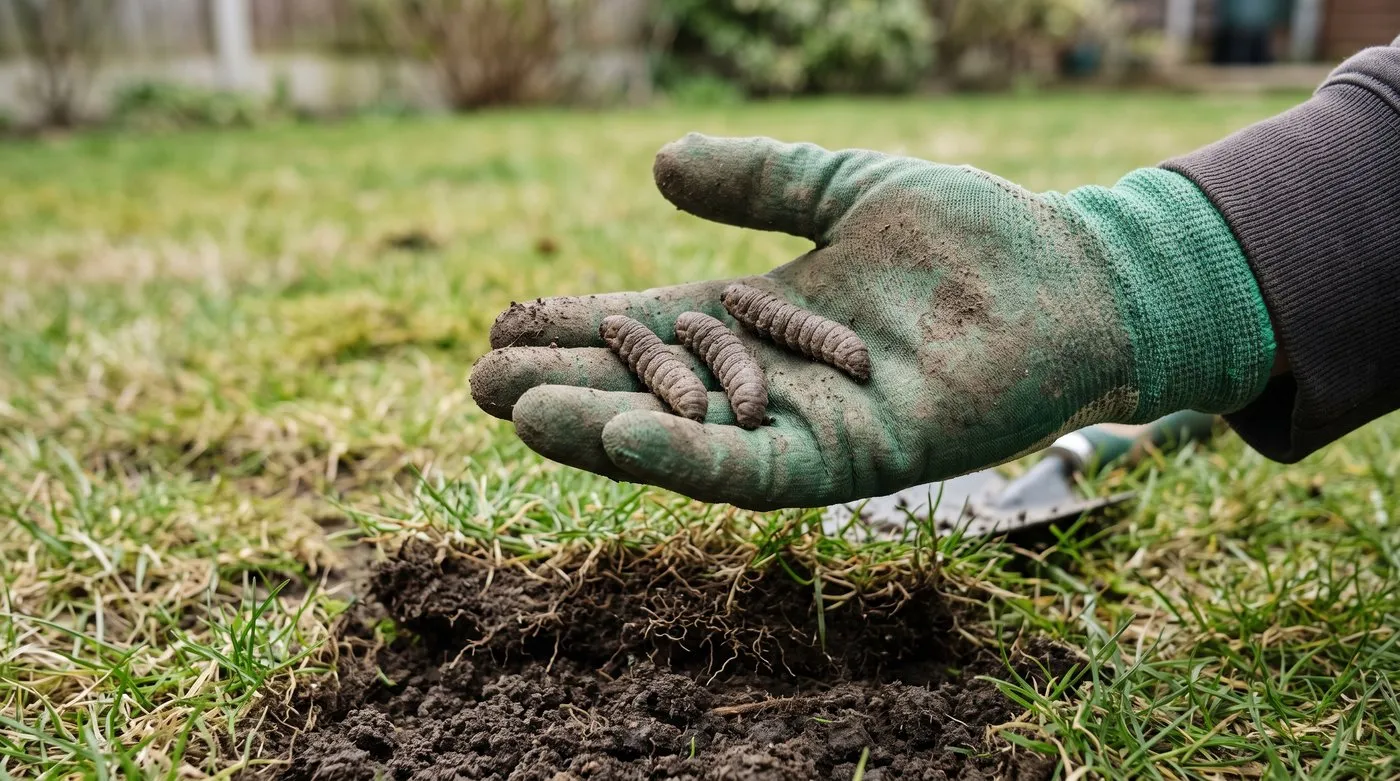
Grey, legless and leathery: if the grubs under your turf look like this, they are leatherjackets.
They live in the top few centimetres of soil. They eat grass roots and the base of the stems, mostly at night. In mild, damp weather they sometimes come to the surface and nibble the grass there too.
Two crane fly species do most of the damage in UK lawns: Tipula paludosa and Tipula oleracea. You don’t need to tell them apart. The grubs look the same and the treatment is the same.
How to tell if leatherjackets are damaging your lawn
Yellowing, thinning patches that turn brown in spring are the main sign. The dead grass lifts easily because the roots have been eaten. Damaged patches often start in damp, low spots or near the edges.
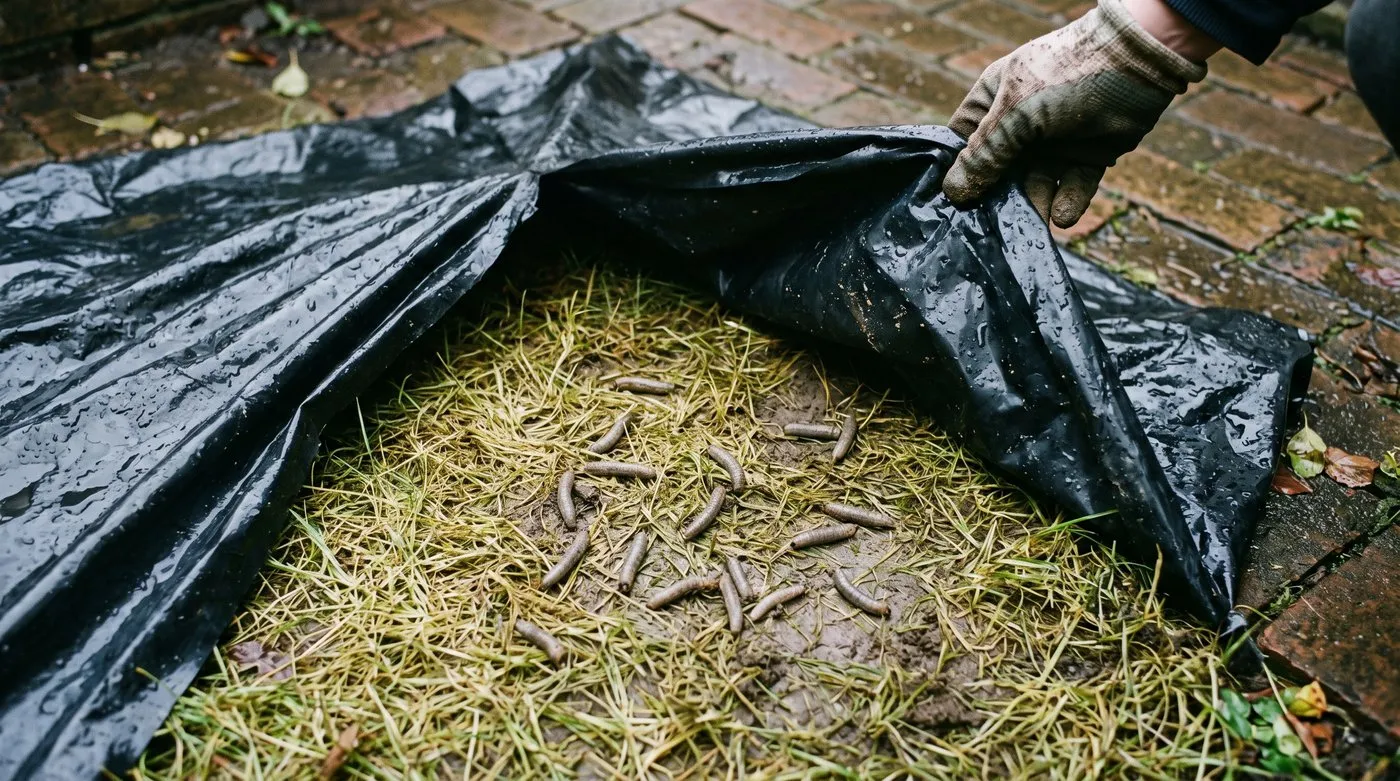
The wet sack test: cover a watered patch overnight and any leatherjackets are waiting on top by morning.
Other clues to look for:
- Birds working the lawn. Starlings probe the surface in groups. Rooks, crows and magpies pull up tufts. Badgers and foxes may dig at night.
- Patches with no clear edge. Lawn diseases such as red thread or fusarium patch tend to form neater rings or show coloured threads. The lawn diseases guide helps rule those out.
- Grubs in the soil. Cut and fold back a small flap of turf at the edge of a dying patch. Leatherjackets will be in the top few centimetres.
To check without digging, try the wet sack test. Water a damaged patch well in the evening. Cover it with damp hessian, an old carpet tile or black plastic overnight. Lift it in the morning and the grubs will be lying on the surface.
Leatherjackets or chafer grubs?
Leatherjackets are grey and legless. Chafer grubs are cream, curl into a tight C and have six legs and an orange-brown head. Both eat grass roots and both bring birds and badgers to the lawn.
| Feature | Leatherjackets | Chafer grubs |
|---|---|---|
| Look | Grey-brown, legless, straight | Cream, C-shaped, six legs, brown head |
| Grown from | Crane fly (daddy long legs) | Chafer beetle |
| Damage most obvious | Spring | Late summer to autumn |
| Nematode | Steinernema feltiae | Heterorhabditis bacteriophora |
| When to apply | September to October | Late July to September |
Getting this right matters because each pest needs a different nematode at a different time. If you find C-shaped grubs, read the chafer grub lawn treatment guide instead.
The leatherjacket year in your lawn
Knowing the life cycle tells you when to act. Here is how the year runs:
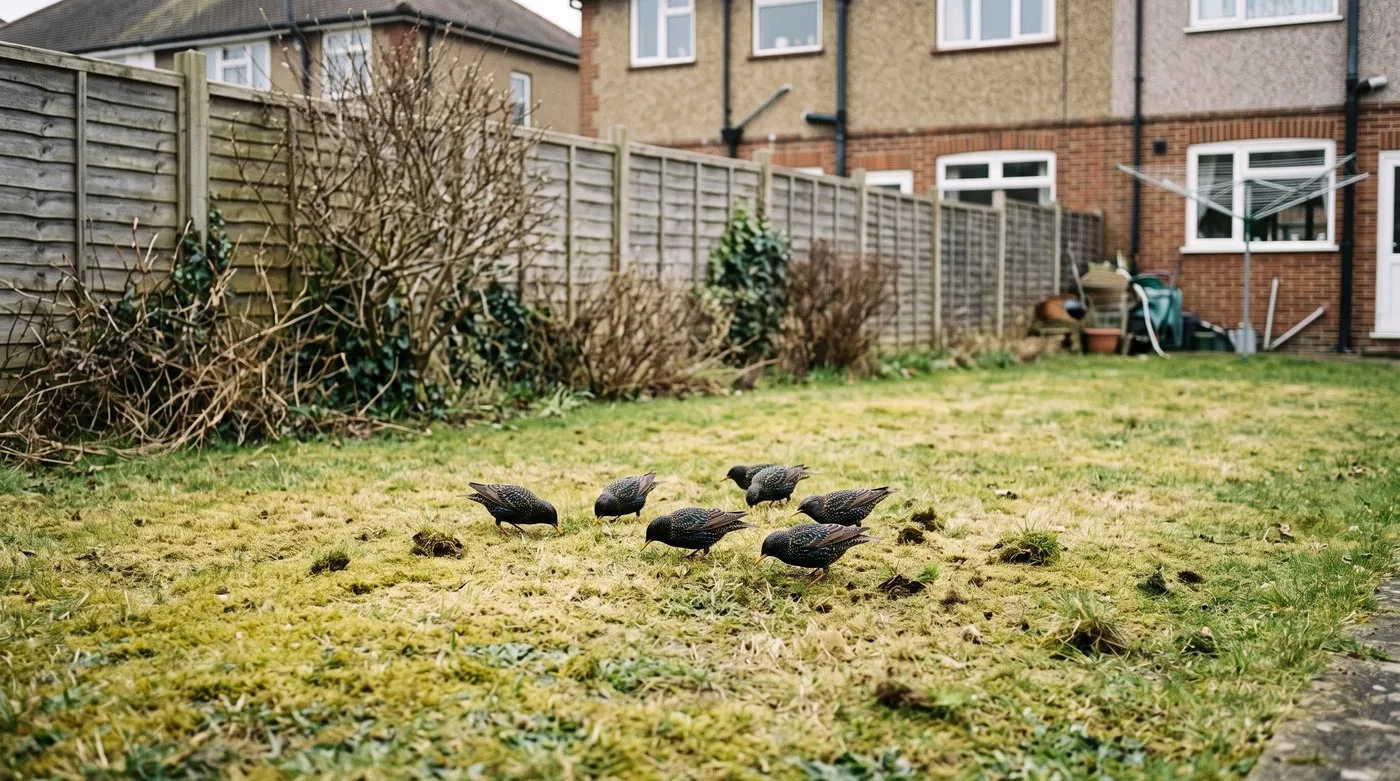
Starlings working over yellowing patches in spring are a strong hint that leatherjackets are feeding below.
| Season | What is happening | What to do |
|---|---|---|
| Late summer to autumn | Adult crane flies lay eggs in damp turf | Apply nematodes once grubs have hatched |
| Autumn to winter | Small grubs feed, little damage to see | Keep an eye out for birds pecking |
| Spring | Grubs are full-sized and feeding hard | Do the wet sack test, rake out dead grass |
| Early summer | Grubs pupate and feeding stops | Overseed damaged patches |
The adults live only a few days and don’t feed. They are harmless to people, pets and plants. Some years bring huge numbers, especially after a damp autumn.
How to get rid of leatherjackets with nematodes
The answer for most gardens is Steinernema feltiae, a microscopic nematode (a tiny worm) that hunts the grubs in the soil. You buy it as a powder by mail order and water it onto the lawn.
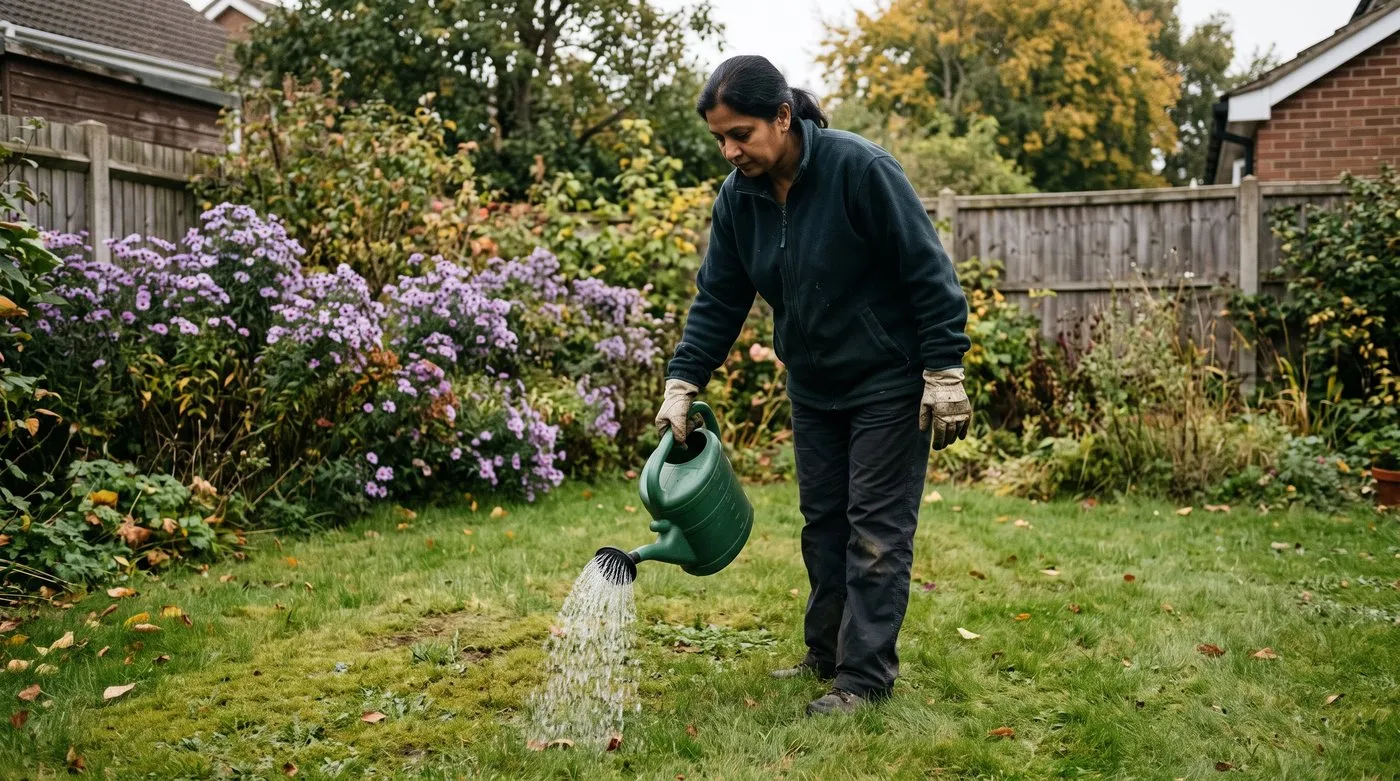
Evening is the time to water on nematodes, onto lawn that is already damp, then water again straight after.
Timing is everything. Apply in September or October, while the soil is still warm and moist and the grubs are young. In the north and Scotland, aim for the earlier end of that window. Some products also list a spring window, but autumn treatment of small grubs tends to work better.
- Mow the lawn the day before.
- Water the lawn well so the soil is moist.
- Mix the nematodes with water as the pack says.
- Apply in the evening or on a dull day, as sunlight harms them.
- Use a watering can with a coarse rose, then water again straight after.
- Keep the lawn damp for about two weeks.
Nematodes are living creatures, so use them soon after they arrive and keep them in the fridge until then. They are safe for children, pets, birds and earthworms. They knock numbers down rather than clearing every grub, so a bad infestation may need treating in two or three autumns in a row. The guide to biological pest control with nematodes covers the other species and how to store them.
Good to know: There are no insecticides for home gardeners to use against leatherjackets. Nematodes and good lawn care are the way to go.
Lawn care that keeps leatherjackets down
Cultural care won’t kill grubs, but it makes your lawn a worse place for crane flies and helps it bounce back.
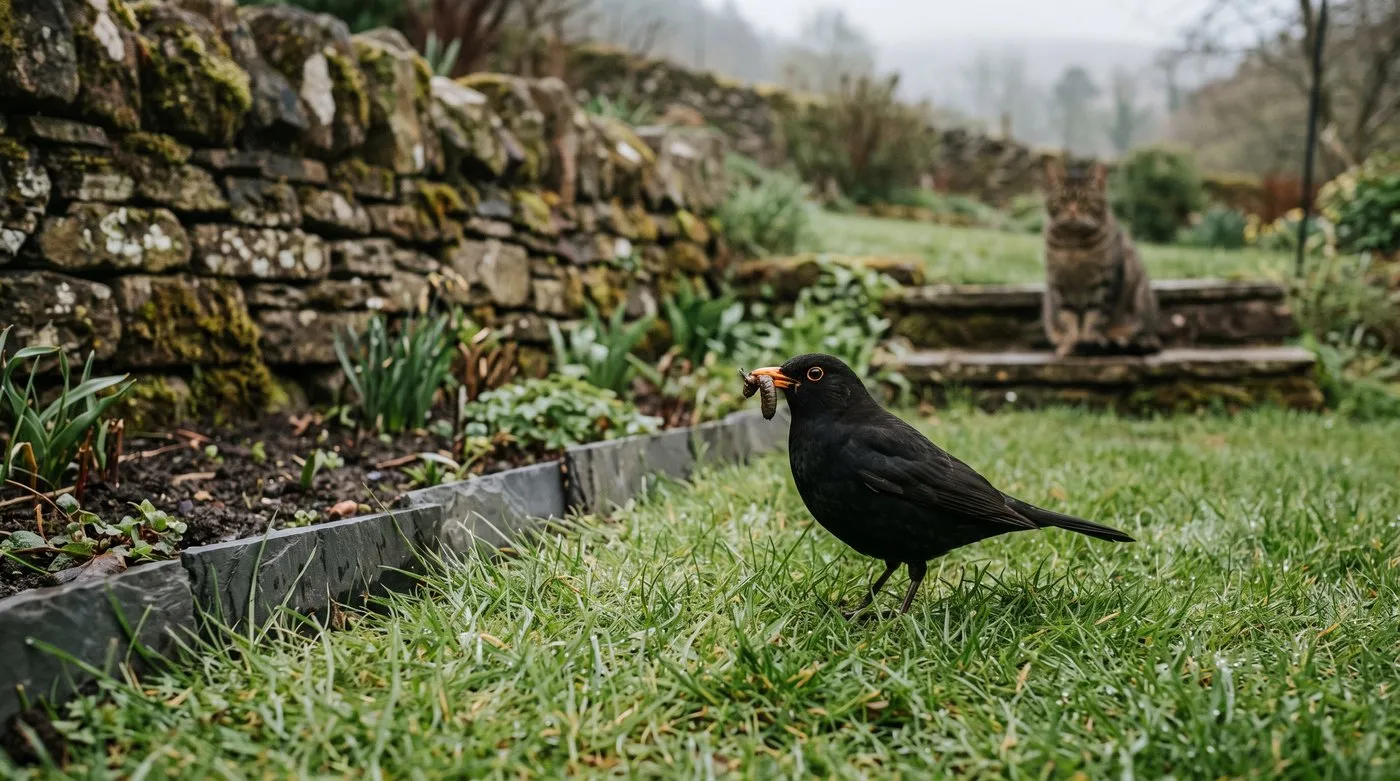
Blackbirds, starlings and hedgehogs eat plenty of leatherjackets, so let them get on with it.
- Don’t water in late summer unless you must. Eggs and young grubs need damp soil. Letting the lawn dry naturally in August and September helps.
- Fix wet spots. Poorly drained lawns hold more grubs. Spiking and top dressing help, and the guide to improving drainage in a clay soil lawn goes further.
- Feed in spring. A thick, well-fed lawn grows away from light damage.
- Welcome the predators. Starlings, blackbirds, hedgehogs and ground beetles all eat leatherjackets. Log piles and a gap under the fence for a hedgehog-friendly garden help.
If badgers are doing the digging, the guide to stopping badgers digging up your lawn explains what you can and can’t do. Badgers are protected, so the answer is to deal with the grubs and protect the turf.
What to do if you find leatherjackets in spring
It is usually too late for nematodes to do much by spring. The grubs are big and tough, and they will soon pupate anyway. Put your effort into repair instead.

Rake out the dead grass, sow fresh seed and keep it watered, and the patch soon knits back in.
- Rake out dead grass once the grubs have finished, usually by early summer.
- Loosen the surface and add a thin layer of top dressing.
- Overseed with a lawn seed mix suited to how you use the lawn.
- Water regularly until the new grass is growing well.
- Book nematodes for the following September.
April and September are the best months to sow grass seed. Netting or fleece keeps birds off the seed while it germinates. The guide to fixing a patchy lawn walks through repair step by step.
Can leatherjackets damage vegetables and borders?
Yes. They nibble young plants at soil level, much like cutworms. Lettuce, brassicas, strawberries and young bedding plants can wilt or topple overnight.
This happens most on new beds dug out of old grass, where the grubs are already in the soil. Dig the ground in autumn or winter and leave it open for a few weeks so birds can pick the grubs out. Fork it over again before planting to catch any left behind.
Common mistakes with leatherjackets
- Treating too late. Spring nematodes on big grubs rarely pay off. September and October are the months that count.
- Using the wrong nematode. Steinernema feltiae is for leatherjackets. Chafer grubs need a different one.
- Applying in sunshine or dry soil. Nematodes need moist soil and dull light to survive.
- Chasing the birds off. They are eating the grubs for you.
- Watering the lawn every evening in late summer. It gives crane fly eggs exactly what they need.
For a year-round view of lawn jobs, see the lawn care hub.
Now you know what leatherjackets are and when to treat them, read the lawn care calendar to plan the rest of your lawn’s year.
Frequently asked questions
What do leatherjackets look like?
They are grey-brown, legless grubs up to about 3cm long. The skin is tough and leathery, which gives them their name. There is no obvious head, and they stay fairly straight when disturbed rather than curling into a C. You find them in the top few centimetres of soil among the grass roots.
When do crane flies lay eggs in lawns?
Mostly in late summer and early autumn. That is when you see daddy long legs bumbling over the lawn at dusk. Females push their eggs into damp turf, and the grubs hatch a couple of weeks later. Damp autumns suit them best.
Do nematodes work against leatherjackets?
Yes, Steinernema feltiae nematodes are the main control for home lawns. Apply them in September or October while the soil is still warm and moist. Water before and after, apply in the evening and keep the lawn damp for a couple of weeks. They reduce numbers rather than wiping out every grub.
Why are birds tearing up my lawn?
Usually because they are after grubs such as leatherjackets or chafer grubs. Starlings probe the surface, while rooks, crows and magpies pull up tufts. The birds are eating the pests, so treat the grubs rather than scaring the birds off.
Can I use chemicals to kill leatherjackets?
No, there are no insecticides for home gardeners to use on leatherjackets. Nematodes, good lawn care and hungry birds are the tools you have. They work best together over a couple of seasons.
How do I tell leatherjackets apart from chafer grubs?
Leatherjackets are grey and legless; chafer grubs are cream, C-shaped and have legs. Chafer grubs also have a clear orange-brown head. The difference matters, because each needs a different nematode applied at a different time.
Will leatherjackets kill my lawn?
They can kill patches, but most lawns recover. Once the grubs pupate in early summer the feeding stops. Rake out dead grass, overseed and keep it watered. A well-fed, healthy lawn shrugs off a light attack much better than thin, compacted turf.
Our team produces practical UK gardening guidance from source research, contributor records and established horticultural practice. Editorial standards are overseen by Matt W.