Key takeaways
- Chafer grubs are fat, creamy, C-shaped larvae with an orange-brown head and six legs
- Birds, badgers and foxes digging for them do more damage than the grubs themselves
- Nematodes watered on from late July to September are the main control for gardeners
- The soil needs to be moist and above about 12C for nematodes to work
- No insecticides are available to home gardeners for chafer grubs
- Clear the grubs first, then reseed bare patches by late September
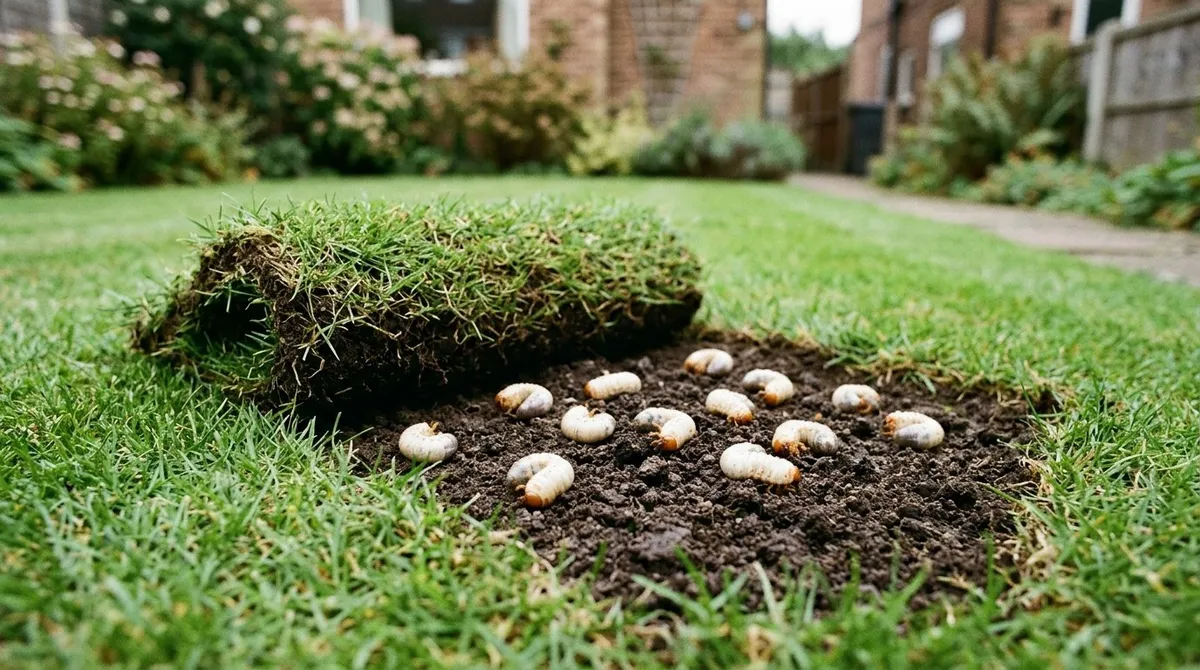
Yellow, spongy patches that lift like a loose rug, or turf rolled back overnight, often mean chafer grubs. These fat, C-shaped larvae eat grass roots just below the surface. Birds, badgers and foxes then dig up the lawn to eat them, and that is where most of the damage comes from.
The fix is timing. Nematodes watered on in late summer catch the young grubs, and the digging stops once the food has gone. This guide covers how to spot them, when to treat and how to repair the lawn afterwards.
What do chafer grubs look like?
Chafer grubs are creamy-white and curled into a C, with an orange-brown head and three pairs of legs near the front. The rear end looks darker and swollen.
The garden chafer, the most common lawn species, has grubs up to about 18mm long. Cockchafer grubs are much bigger and take several years to grow, but they are less common in lawns.
You find them in the top few centimetres of soil, right under the turf. Cut three sides of a small square with a spade and fold it back. If you see several curled grubs, you have found the cause.
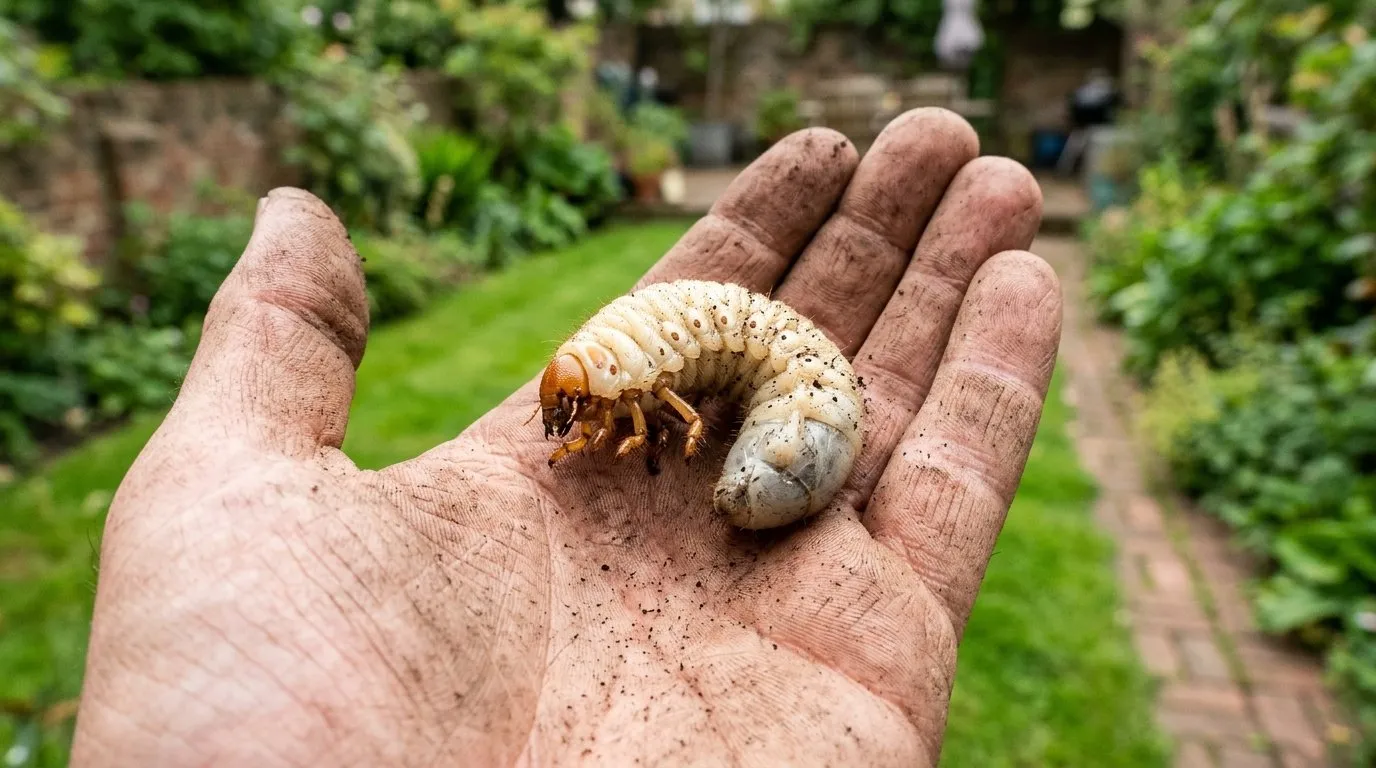
The orange head, six legs and C-shaped curl are all you need to recognise a chafer grub.
What damage do chafer grubs cause?
The grubs eat grass roots from late summer through to spring. Affected grass turns yellow, then brown, and feels spongy. You can often lift the turf away in your hand because there are hardly any roots left.
The bigger problem is the animals that eat them. Crows, magpies, rooks and starlings peck holes and scatter soil. Badgers and foxes roll the turf back like carpet, sometimes over a big area in one night.
Patches also brown first in dry spells, because grass without roots can’t take up water. If you are finding small holes in the lawn overnight, birds probing for grubs are a likely reason.
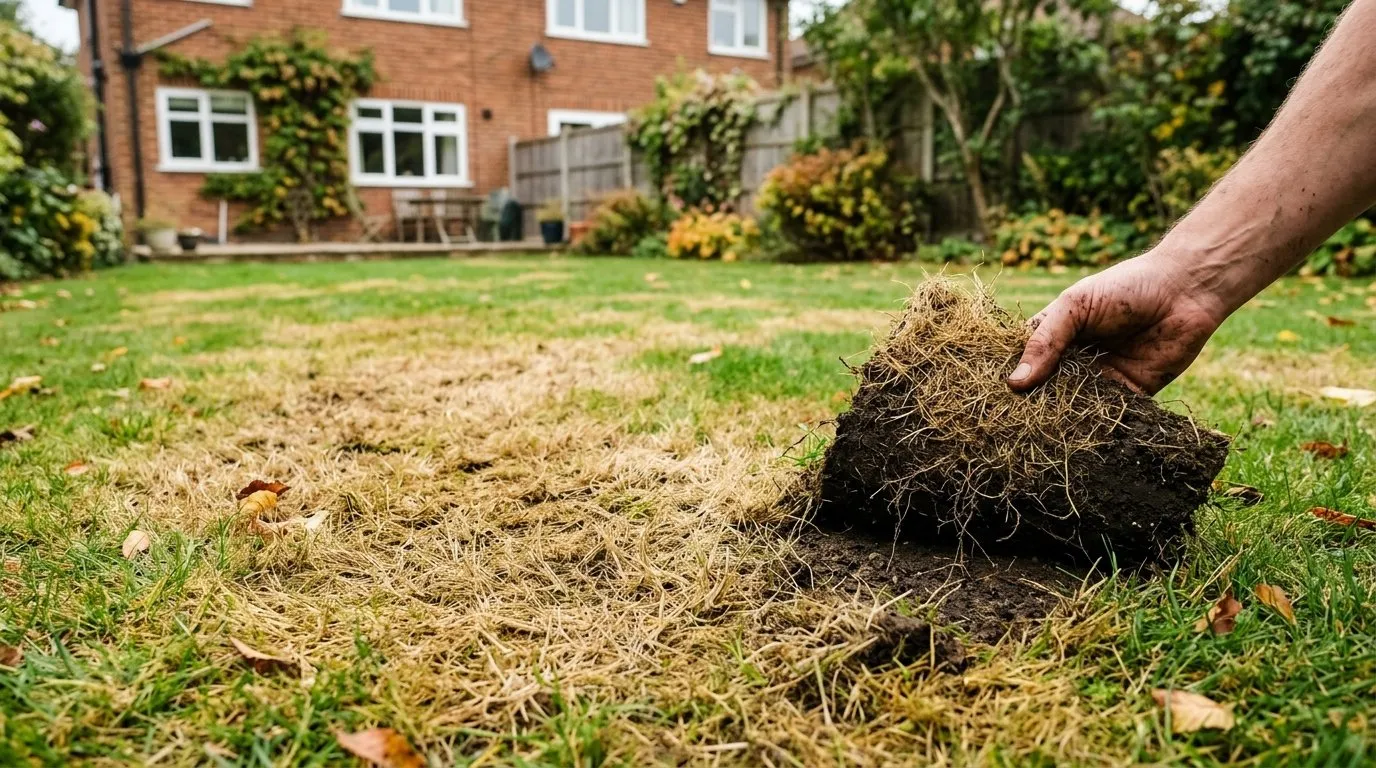
Dead turf that lifts away in your hand, with no roots holding it, is a classic chafer grub sign.
Chafer grubs or leatherjackets?
Chafer grubs are curled and have legs. Leatherjackets are straight, legless and grey-brown. Both eat grass roots, but they need different nematodes, so check before you buy.
| Feature | Chafer grubs | Leatherjackets |
|---|---|---|
| Shape | Fat, curled into a C | Straight, tube-like |
| Legs | Six, near the head | None |
| Head | Obvious, orange-brown | No clear head |
| Colour | Creamy-white | Grey-brown |
| Adult | Chafer beetle | Crane fly (daddy-long-legs) |
| Nematode | Heterorhabditis bacteriophora | Steinernema feltiae |
| Treat in | Late July to September | September to October |
Our guide to leatherjackets in lawns covers the other pest in detail.
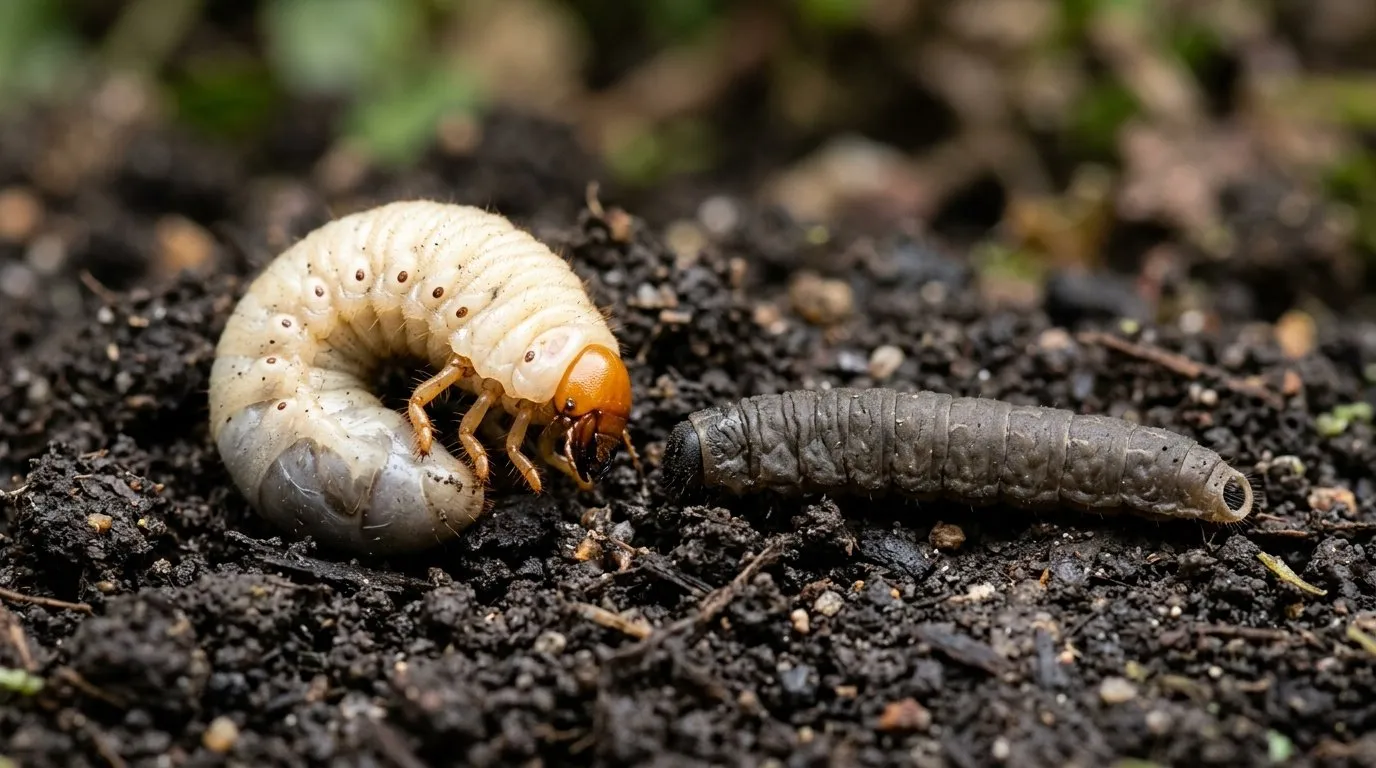
Left, the curled chafer grub with legs. Right, the straight, legless leatherjacket.
Which chafer beetles lay eggs in lawns?
The garden chafer causes most lawn damage. The adults are small beetles, about 1cm long, with a metallic green head and brown wing cases. They fly on warm days in late spring and early summer and lay eggs in the turf. The grubs grow up in a single year, so damage can build quickly.
The Welsh chafer has a similar one-year cycle. The much larger cockchafer, or May bug, has grubs that feed for several years. The RHS chafer grubs page has pictures of each.
How to get rid of chafer grubs
Water on chafer grub nematodes (Heterorhabditis bacteriophora) between late July and September. These tiny worms find the grubs and kill them. They are harmless to people, pets, birds and earthworms. Home gardeners have no insecticides for chafer grubs, so nematodes are the main option.
Get the conditions right:
- Treat in late summer, while this year’s grubs are small and near the surface.
- Soil above about 12C. Colder than that and the nematodes don’t work well.
- Water first. The soil must be moist before you apply them.
- Keep it damp for a couple of weeks afterwards so they can move through the soil.
- Apply on a dull day or in the evening. Sunlight and drying kill nematodes.
Mix the pack with water and apply with a watering can or hose-end feeder, following the pack. Our guide to biological pest control with nematodes explains storing and mixing them.
The usual mistake is waiting for the badger damage in October or November. By then the soil is often too cold and the grubs are bigger. On a lawn that has had chafer grubs before, treat in late summer every year.
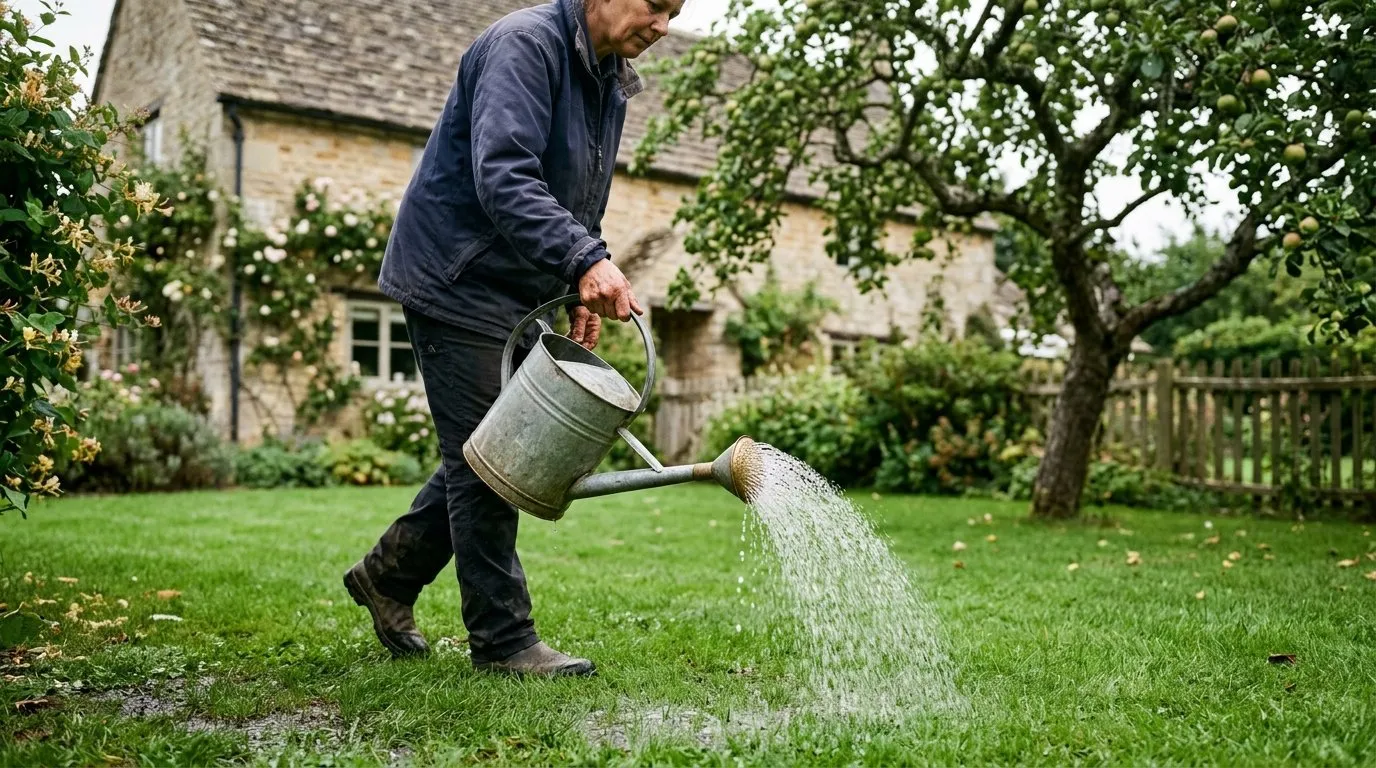
Water nematodes on to moist turf on a dull day, then keep the lawn damp for a couple of weeks.
How to stop badgers and birds digging the lawn
Clear the grubs and the digging stops, because the food has gone. Until the nematodes work, you can lay netting over small patches to keep birds off.
Badgers are protected, so never harm them or block an active sett. Our guide to stopping badgers digging up the lawn covers safe, legal deterrents. Birds such as starlings are helping, even if the holes are annoying.
A thick, healthy lawn copes much better with grubs. Feed it, water it in long dry spells and overseed thin areas. Our lawn care calendar shows what to do each month.
How to repair a lawn after chafer grubs
Deal with the grubs first, then repair. Reseeding over a live infestation just feeds the next lot.
Press any rolled-back turf straight back down and water it. Flaps replaced within a day or two often root again.
For bare patches, rake out the dead grass, loosen the surface and sow fresh seed. Mid-August to late September is ideal, while the soil is still warm and moist. Seed sown later often struggles until spring. Our guide on sowing grass seed covers rates and aftercare. Keep new seed watered and cover it with netting if birds are a problem.

Once the grubs are dealt with, rake out the dead grass and sow fresh seed by late September.
Common mistakes with chafer grubs
Treating too late. Nematodes in November usually fail. Treat in late summer, before the damage shows.
Using the wrong nematode. Leatherjacket nematodes won’t sort out chafer grubs. Check which larva you have.
Applying to dry soil. Nematodes need moisture to move. Water before and after.
Reseeding first. New grass over live grubs gets eaten and dug up again.
Blaming the badger. It is only after the grubs. Remove them and the visits stop.
Frequently asked questions
What do chafer grubs look like?
Fat, creamy-white, C-shaped grubs with an orange-brown head and six legs. The rear end looks dark and swollen. They curl up when disturbed, unlike straight, legless leatherjackets.
How do I get rid of chafer grubs in a lawn?
Water on chafer grub nematodes between late July and September. They need moist soil above about 12C. Water the lawn before and after, and keep it damp for a couple of weeks.
What is the difference between chafer grubs and leatherjackets?
Chafer grubs are C-shaped with legs; leatherjackets are straight and legless. Chafer grubs have an obvious orange head. Leatherjackets are grey-brown and tube-like, and need a different nematode.
Will chafer grubs kill a lawn?
A heavy infestation can kill patches of grass. The roots are eaten, so turf yellows and lifts like a loose carpet. The digging by badgers, foxes and birds usually does more damage than the grubs.
Why is the lawn being dug up at night?
Badgers or foxes hunting grubs are the usual culprits. They smell chafer grubs and leatherjackets under the turf and roll it back to feed. Clearing the grubs removes the reason to dig.
Can I use chemicals to kill chafer grubs?
No, there are no insecticides for chafer grubs available to home gardeners. Nematodes are the main option, alongside a thick, healthy lawn and help from birds.
When are chafer grubs most active?
From late summer to spring, feeding near the surface in autumn. They go deeper in cold weather and feed again in spring. Adult garden chafers fly in late spring and early summer.
For more lawn troubles, visit the lawn care hub. If whole areas look thin once the grubs are gone, our guide to fixing a patchy lawn is the next step.
Our team produces practical UK gardening guidance from source research, contributor records and established horticultural practice. Editorial standards are overseen by Matt W.


