Key takeaways
- Most overnight lawn digging is animals hunting leatherjackets or chafer grubs under the turf
- Badgers roll turf back like carpet, foxes dig single neat holes, birds leave lots of small peck holes
- Tiny volcano mounds in spring are solitary mining bees, which are harmless
- Lift a small square of turf to check for grubs before you treat anything
- Nematodes watered on in late summer or early autumn clear the grubs, and the digging stops
- Badgers are protected, so never block a sett or try to trap one
Woke up to holes in the lawn? Something visited in the night looking for food. Nine times out of ten it was an animal or bird hunting grubs under your grass.
The good news is that the holes tell you who did it. Match what you see to the table below, then deal with the grubs. Once the food is gone, the digging stops.
How to read the holes in your lawn
Look at the shape of the hole first, then the loose soil, any droppings and the time of year. Each digger leaves its own signature.
- Turf rolled back in strips, like peeled carpet, is a badger.
- One neat cone-shaped hole with soil to one side is a fox.
- Lots of small peck holes in clusters are birds after grubs.
- A small round burrow near a shed, wall or compost heap is a rat.
- A tiny volcano of fine soil in spring is a mining bee.
Fresh, damp soil confirms an overnight visit rather than old damage.

Two diggers, two signatures: rolled turf on the left, small peck holes on the right. The shape is your best clue.
Lawn hole identification table
Find the row that matches your morning evidence. Check more than one clue if you can.
| Culprit | What the damage looks like | Other clues | When |
|---|---|---|---|
| Badger | Turf rolled back in strips, shallow snout pits | Latrine pits with droppings, coarse grey hair on fences | Night, worst in autumn and spring |
| Fox | Single neat cone-shaped hole | Strong musky smell, bins raided, droppings on paths | Night, all year |
| Birds (crows, rooks, starlings, magpies) | Many small peck holes, turf torn at the edges | Birds working the lawn at dawn | Autumn and spring |
| Green woodpecker | Small, deep probe holes | A large green bird with a red cap on the lawn | Mostly autumn and winter |
| Rat | Small round burrow, often near cover | Droppings, worn runs to sheds or compost | Night, all year |
| Grey squirrel | Small scrapes, often refilled | Digging under trees, buried nuts | Day, autumn |
| Rabbit | Shallow scrapes, bigger burrows | Round droppings, nibbled grass | Dawn and dusk |
| Hedgehog | Small, shallow snuffle holes | Dark, shiny droppings with insect bits | Night, spring to autumn |
| Mining bees | Tiny volcano mounds with a central hole | Small bees flying in and out | Day, March to May |
| Mole | Heaps of loose soil, no open hole | Raised ridges across the lawn | Any time |
For badgers, foxes and most birds, the reason is the same: grubs in the turf. That points straight to the fix.

A fox digs one neat hole where it smells food, with soil thrown to one side. It’s much tidier than a badger.
Badgers: turf rolled back like carpet
Badgers do the most dramatic damage. They use strong front claws to roll back strips of turf and get at the grubs underneath. They’ll come back night after night while the food lasts.
Badgers and their setts are protected by law. Never block a sett, trap a badger or harm one. The only lasting fix is to remove the grubs they’re after. The guide to stopping badgers digging up the lawn covers the legal options in full, including fencing.
Foxes and rats: single holes near cover
Foxes dig one deliberate hole where their nose tells them food is buried. That might be a grub, a worm or a scrap someone dropped. A raided bin or droppings left on a path are good clues.
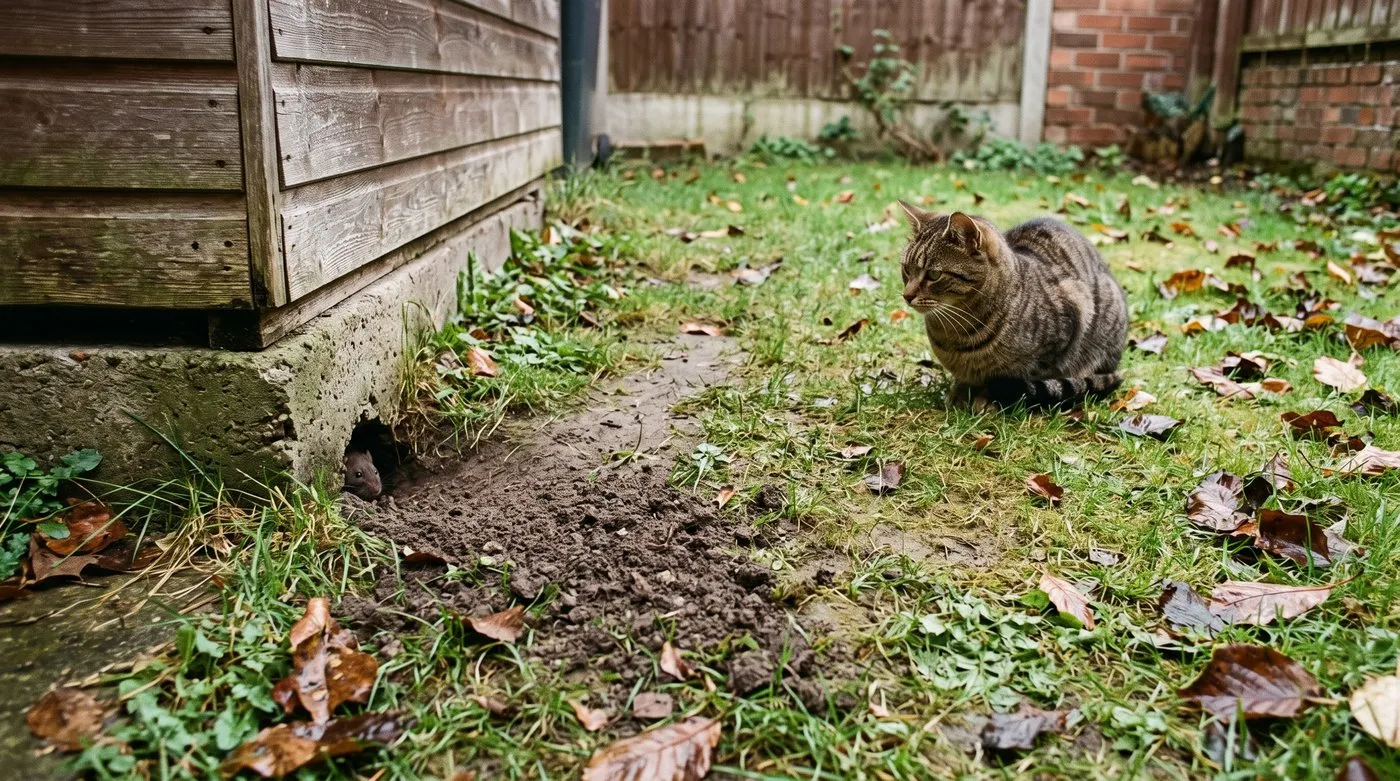
A small round hole by a shed or compost bin, with a worn run leading to it, points to rats rather than a digger after grubs.
Rats leave small, round burrows, usually close to cover such as a shed base, decking or a compost heap. Look for droppings and smooth runs between the burrow and food. Clear spilt bird seed and secure compost bins.
Birds: lots of small peck holes
Birds leave many small holes rather than one big one. Crows, rooks, magpies and starlings probe and pull at the turf for leatherjackets. You’ll often see them working the lawn at dawn.
The green woodpecker is a lawn regular too, but it’s mostly after ants. It leaves small, deep probe holes and does little harm.
Bird damage is cosmetic, and the birds are eating your grubs for free. Don’t scare them off. Lots of birds digging is a sign there’s a grub problem worth treating. To welcome more garden birds, see how to attract birds to your garden.

Green woodpeckers mostly hunt ants in short grass. Their small probe holes do the lawn no lasting harm.
Moles, mining bees and hedgehogs: the harmless lookalikes
Some lawn marks get blamed on the wrong animal, and some need no action at all.
Moles push up heaps of loose soil but leave no open hole. You may also see raised ridges where tunnels run just under the surface. If that’s your problem, read the guide on how to get rid of moles.
Mining bees make tiny volcano mounds with a hole in the middle, usually in sunny, short grass from March to May. They’re gentle, important pollinators and gone in a few weeks. Leave them be.
Hedgehogs leave small, shallow snuffle holes as they hunt beetles and worms at night. They’re welcome visitors. Shallow scrapes with nibbled grass and round droppings point to rabbits instead, and the guide to rabbits digging up the lawn covers those.

Harmless and harmful side by side: a mining bee mound on the left, and the grubs that draw the real diggers in on the right.
The real cause: grubs under the turf
The animals aren’t interested in your grass. They want what’s living under it. Until the grubs are dealt with, the digging keeps coming back.
Two grubs cause almost all of it:
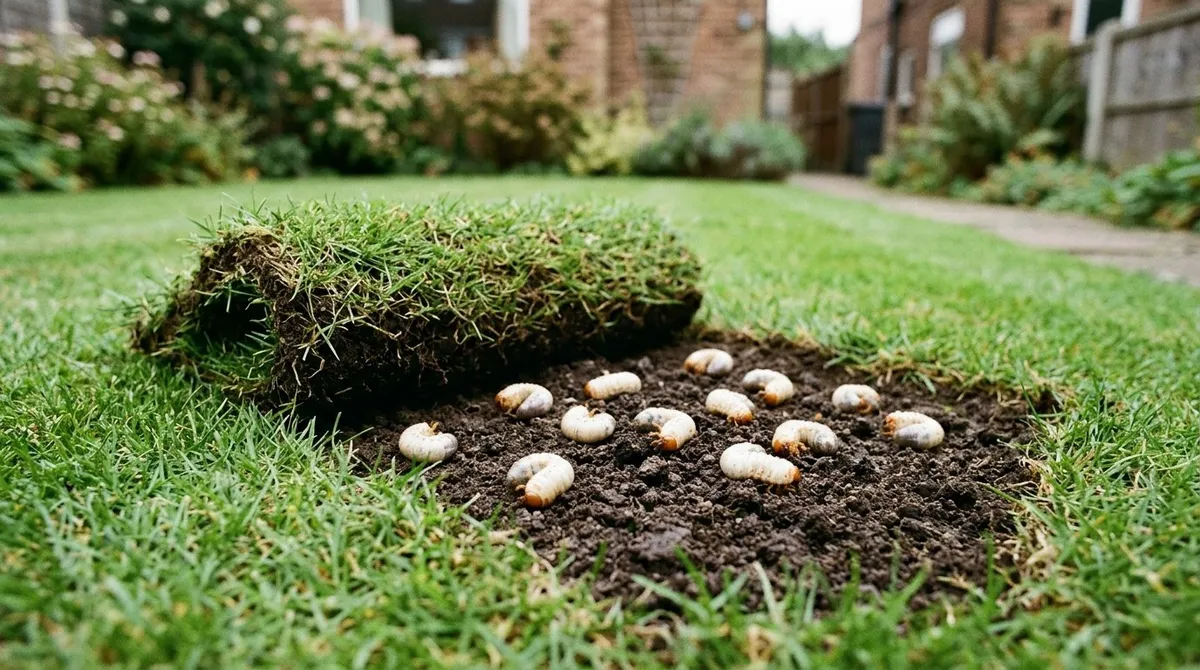
- Leatherjackets are the larvae of crane flies, or daddy-long-legs. They’re legless, grey-brown and tough-skinned. They feed on grass roots through autumn, winter and spring.
- Chafer grubs are the larvae of chafer beetles. They’re creamy white and C-shaped, with a brown head and three pairs of legs. They feed on roots from late summer into autumn.
To check, cut three sides of a 30cm square of turf with a spade. Peel it back and look in the top 5cm of soil. If you find grubs, they are the reason for the digging. Yellowing patches that lift easily are another sign. Press the turf back and water it in afterwards.

Lift a small square of turf and look in the top few centimetres. Grubs here are what the night visitors are after.
How to control the grubs and stop the digging
Nematodes are the go-to control. These are microscopic living worms that you water onto the lawn. They hunt grubs in the soil and are safe for pets, children and wildlife. Buy the right type for your grub, as leatherjacket and chafer nematodes are sold separately.
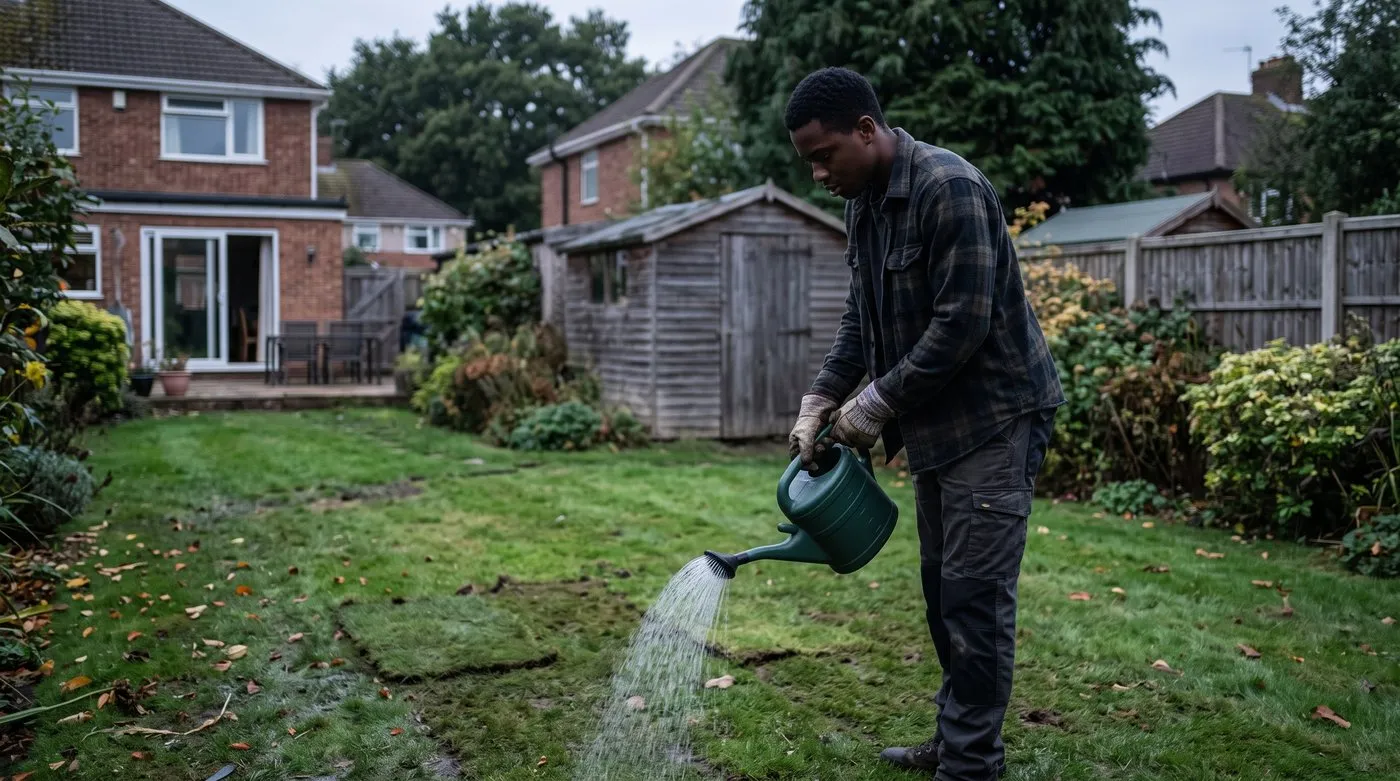
Nematodes go on with an ordinary watering can. Do it in the evening on damp ground and keep the lawn moist afterwards.
- Apply in late summer or early autumn, usually August to October, while the soil is still warm. Check the packet for the minimum soil temperature.
- Water the lawn well first.
- Mix the nematodes with water and apply with a watering can, ideally on a dull day or in the evening.
- Keep the lawn moist for about two weeks, so the nematodes can move through the soil.
Leatherjacket nematodes can also go on in spring if you missed the autumn window. In the meantime, don’t scare birds off, as they’re eating grubs too. Longer term, scarifying and aerating the lawn helps it drain and grow strongly. The chafer grubs in lawns guide and the guide to leatherjackets in the lawn go into each grub in more detail.
Common mistakes with lawn diggers
Treating the holes, not the grubs. Filling holes and scattering repellents changes nothing while the food is there. The animals just dig somewhere else.
Applying nematodes in cold soil. They need warm, moist soil to work. Applied in midwinter, most die before reaching a grub.
Letting the lawn dry out after treatment. Nematodes travel through moist soil. Keep the grass watered for two weeks afterwards.
Blocking a badger sett. It’s against the law, and badgers soon dig their way back. Remove the grubs instead.
Chasing off the birds. Starlings and crows on the lawn are free grub control. Treat the grubs and the birds move on by themselves.
When lawn digging is worst through the year
Digging follows the grubs, so autumn and spring are the busiest times.
| Month | What’s happening | What to do |
|---|---|---|
| January to February | Badgers, foxes and birds still digging on mild nights | Check for grubs, repair damaged turf |
| March to May | Leatherjackets feed again, mining bees nest | Leave bees alone, spring leatherjacket nematodes if needed |
| June to July | Usually quieter | Scarify lightly, feed and water the lawn |
| August | Crane flies and chafer beetles lay eggs | Get nematodes ready for when grubs hatch |
| September to October | Young grubs feed hard, digging peaks | Apply nematodes while the soil is warm |
| November to December | Badgers and birds still dig on mild nights | Re-lay rolled turf, plan next year |
Frequently asked questions
What is digging small holes in my lawn at night?
Usually badgers, foxes or birds hunting grubs in the turf. Badgers roll back turf and dig shallow pits. Foxes dig single, neat cone-shaped holes. Crows and starlings leave lots of small peck holes. Most are after leatherjackets or chafer grubs feeding on the grass roots.
Why are there suddenly holes in my lawn overnight?
An animal has found food under your turf. Leatherjackets and chafer grubs feed near the surface in autumn and spring, which draws in badgers, foxes and birds. Lift a small square of turf to check for grubs, then treat them.
How do I tell a badger hole from a fox hole?
Badgers roll turf back in strips; foxes dig single holes. Badger damage looks like peeled-back carpet, often over a wide area. A fox leaves one neat cone-shaped hole with soil thrown to one side. Badger latrines (small dug pits with droppings) nearby confirm a badger.
How do I stop badgers digging up my lawn?
Remove the grubs they are digging for. Treat the lawn with the right nematodes in late summer or early autumn. Badgers and their setts are protected by law, so never block a sett, trap or harm them. Repellents do little while grubs remain.
Are small volcano holes in my lawn dangerous?
No, small volcano mounds in spring are harmless. They are usually made by solitary mining bees, each mound marking a nest tunnel. The bees are gentle, don’t damage the lawn and are gone within a few weeks. Leave them be.
What is the difference between a molehill and a lawn hole?
A molehill is a heap of loose soil with no open hole. Moles push soil up from tunnels below. Open holes mean a digging animal or bird. Moles can also raise ridges where tunnels run just under the surface.
Are nematodes safe for pets and children?
Yes, nematodes are safe for pets, children and wildlife. They are tiny living worms that only attack certain soil grubs. You water them on and the lawn can be used straight away.
Now you know who’s been digging, read the guide to fixing a patchy lawn to repair the damage. The lawn care hub has more help for the rest of the year.
Our team produces practical UK gardening guidance from source research, contributor records and established horticultural practice. Editorial standards are overseen by Matt W.