
Key takeaways
- March is for tidying, mulching, pruning late-flowering shrubs and sowing tender crops indoors
- Give the lawn its first cut on a high setting in March, then lower it bit by bit
- April is the busiest month for sowing outdoors and planting
- Keep tender plants indoors until the frosts are over, usually late May
- Harden off seedlings for 10 to 14 days before they go outside for good
Spring is when British gardens wake up. From March to the end of May, things go from gentle tidying to full-speed planting. Doing the right jobs at the right time sets you up for a lovely summer. For the rest of the year, see our summer, autumn and winter jobs guides.
This checklist is sorted by part of the garden, with a month-by-month table at the end. For sowing dates, see our seed sowing calendar. The RHS seasonal job finder is handy too.
Lawn care
A bit of care in spring keeps the lawn looking good all summer.
First cut and mowing
Give the first cut in March, once the grass is growing. Set the mower high, at about 4cm. Cutting short too soon weakens grass that’s only just woken up. Never take off more than a third of the length in one go. Our guide on when to mow your lawn has more on heights through the year.
Lower the blades bit by bit through April. By May, about 2.5 to 3cm suits a fine lawn and 3 to 4cm a family lawn. Mow weekly, or twice a week when it really gets going in late April and May.
Gardener’s tip: Leave the grass box off for the first cut. The clippings feed the soil and help the lawn green up.
Scarifying and aerating
Scarify in late March or April to rake out the dead grass and moss (called thatch) that builds up over winter. Use a spring-tine rake on a small lawn or a powered scarifier on a big one. Our guide to scarifying and aerating your lawn walks you through it.
Aerate squashed, hard areas by pushing a garden fork in about 10cm deep, every 15cm or so. On heavy clay, brush sharp sand into the holes to help drainage.
Feeding and weeds
Give a spring lawn feed from mid-March, once the weather has warmed up. Use a spring feed, not an autumn one. Water it in if it doesn’t rain within a couple of days. Our lawn feeding guide explains the different feeds.
Tackle lawn weeds from April, while they’re growing well. On a small lawn, treat single weeds rather than the whole lawn. Our guide to lawn weed identification helps you work out what you’ve got.
Bare patches
Patch up bare bits in April. Rake the soil, scatter grass seed and firm it gently. Keep it damp for two or three weeks until the seed comes up. A bit of netting stops the birds eating it. Our guide on how to fix a patchy lawn has the full method.
 Rake out moss and thatch in early spring, then sow seed on bare patches in April.
Borders and beds
A bit of border work now pays off with colour all summer.
Mulching
Mulch borders in March once you’ve weeded. Spread a 5 to 8cm layer of well-rotted compost or bark around plants, keeping it off the stems. Mulch keeps weeds down, holds in moisture and feeds the soil.
If you make your own, spring is the time to spread last year’s compost. See our guide on how to make compost to get the next batch going.
 Fork compost into borders before planting. It improves the soil and feeds your plants.
Dividing perennials
Split big clumps of perennials in March or early April, before they put on much growth. Lift the clump, split it with two forks back to back, and replant straight away. Water well.
Hostas, daylilies, astilbe, hardy geraniums and ornamental grasses all divide well now. Leave spring-flowering plants like primulas until they’ve finished.
Weeding
Get weeding early. Annual weeds are tiny in March and come out in seconds. By May they’ve got deep roots and are dropping seed. A little weeding each week in spring saves hours in summer.
Perennial weeds like bindweed, couch grass and ground elder need digging out, with as much root as you can. Don’t rotavate them, as every bit of root grows into a new plant.
Staking tall plants
Put in supports for tall perennials in April, before they need them. Staking a delphinium or peony after it flops never looks right. Push in grow-through supports when the plants are about 15 to 20cm tall. The leaves grow up and hide them.
Go gently: Don’t tie plants too tightly. Leave them room to sway a little, which makes for stronger stems.
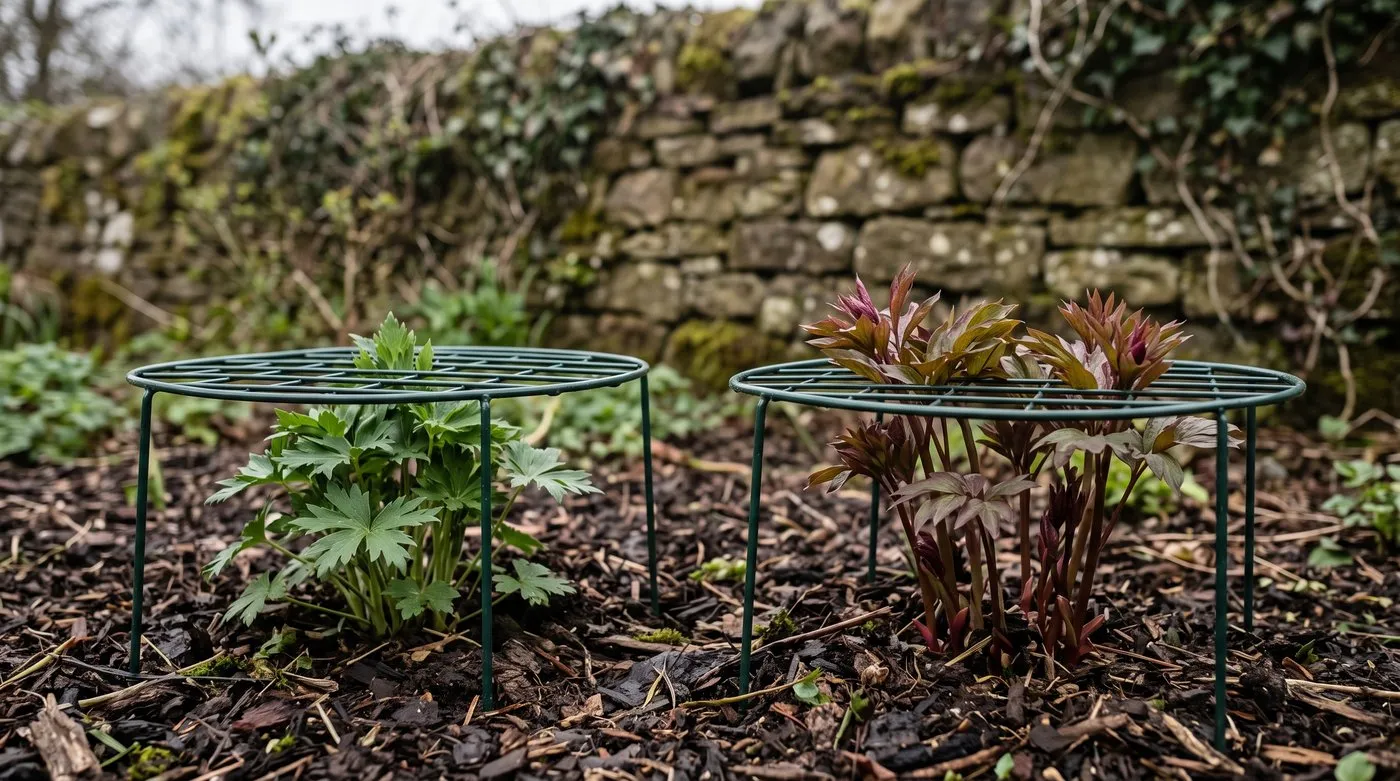
Put supports in while shoots are short. The leaves grow up through the grid and hide it, so by June you’d never know it’s there.
Pruning
Spring pruning has one simple rule. Prune plants that flower on this year’s new growth now. Plants that flower on last year’s growth get pruned after they flower.
Late-flowering shrubs
Cut these back hard in March, before new growth starts:
- Buddleia (Buddleja davidii): cut back to about 60cm. The new shoots flower from July.
- Hardy fuchsia: cut stems down low, to about 5 to 10cm.
- Lavatera: cut back to 30 to 45cm.
- Caryopteris: cut back to a low framework of about 15 to 20cm.
- Perovskia (Russian sage): cut back to about 15cm.
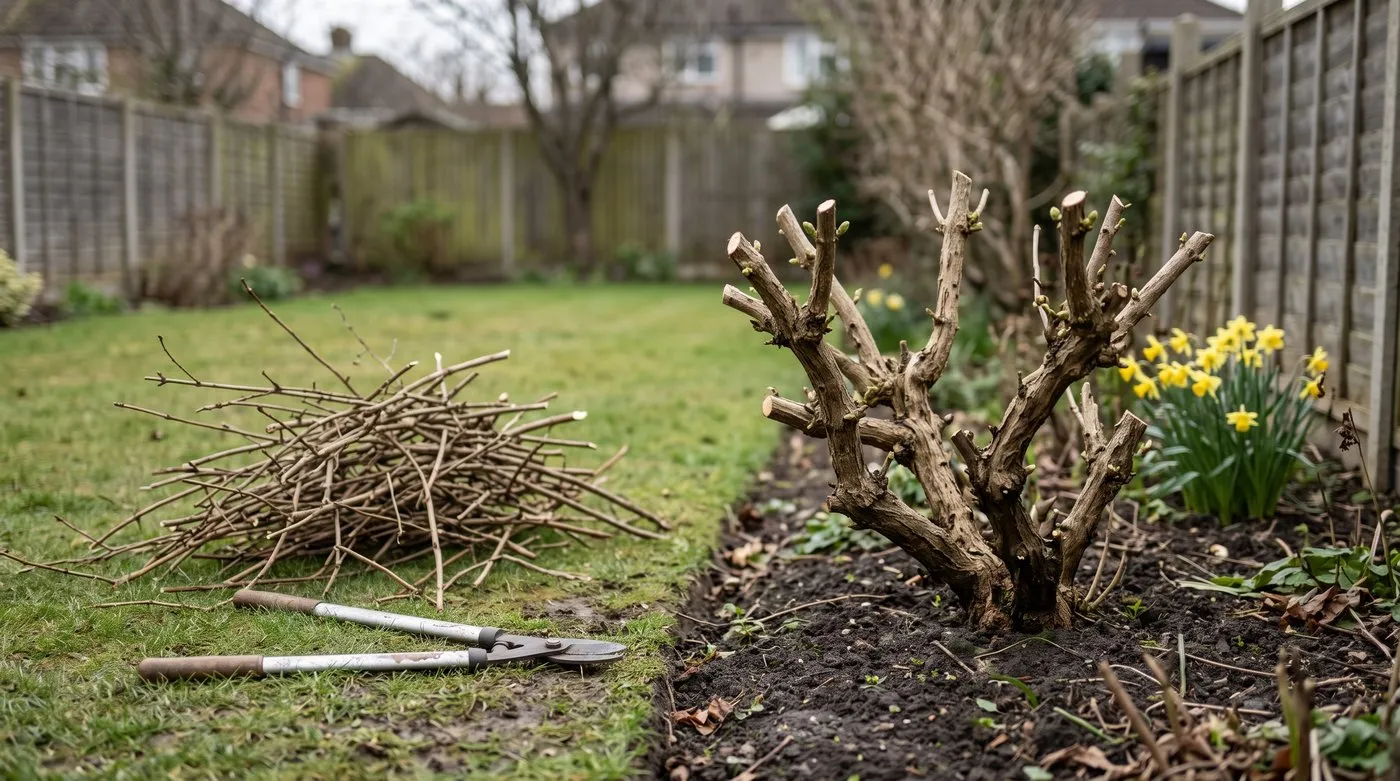
Shrubs that flower on new growth can be cut back hard in March. Buddleia bounces back with long new shoots that flower from July.
Roses
Prune hybrid tea and floribunda roses in March if you didn’t in late winter. Cut just above an outward-facing bud, with a slope away from it. Take out dead, damaged and crossing stems first, then shape the bush. Our guide on how to prune roses has the full details.
Climbing roses need a lighter touch. Tie new shoots in sideways to encourage flowers. Just remove dead wood and thin, weak stems.
 Prune roses in March, cutting just above an outward-facing bud.
Clematis
How you prune clematis depends on its group:
| Group | Flowers on | When to prune | How |
|---|---|---|---|
| Group 1 (montana, armandii) | Old wood | After flowering, May to June | A light trim only |
| Group 2 (large-flowered hybrids) | Old and new wood | Late February to March | Remove dead stems, cut to strong buds |
| Group 3 (viticella, texensis) | New wood | February to March | Cut hard back to about 30cm |
For more climbers, see our guide to the best climbing plants for UK gardens.
Sowing and planting
Spring is sowing season, from March right through May.
Sowing indoors
Start tender crops indoors from early March. Tomatoes, peppers, chillies and aubergines need warmth to germinate, so use a heated propagator or a warm windowsill. They need several weeks indoors before they can go out. Our guide on how to sow seeds indoors takes you through it step by step.
Courgettes, squash and sweetcorn go in from mid-March to April. Sow them in their own 9cm pots, as they don’t like their roots disturbed.
Sowing outdoors
March: Sow broad beans, peas, parsnips and early lettuce outside once the soil has warmed a little. See what to plant in March for the full list.
April: Add beetroot, carrots, turnips, spring onions, spinach and chard. Hardy annual flowers can go straight into the beds. Our flower planting calendar has month-by-month timings. See what to plant in April.
May: Sow runner beans, French beans and sweetcorn outside once the frosts are over. Keep sowing salads and roots little and often. See what to plant in May.
Planting out
Harden off plants raised indoors for 10 to 14 days before planting them out. Put them outside for a bit longer each day and bring them in at night. By late May, most tender plants can go out for good.
Plant summer bulbs like dahlias, gladioli and lilies in April and May. Dahlias go out after the last frost. Plant gladioli every couple of weeks from April for flowers over a longer spell.
Gardener’s tip: Keep fleece handy until the end of May. Late frosts catch out even old hands, and a layer of fleece gives tender plants useful protection.
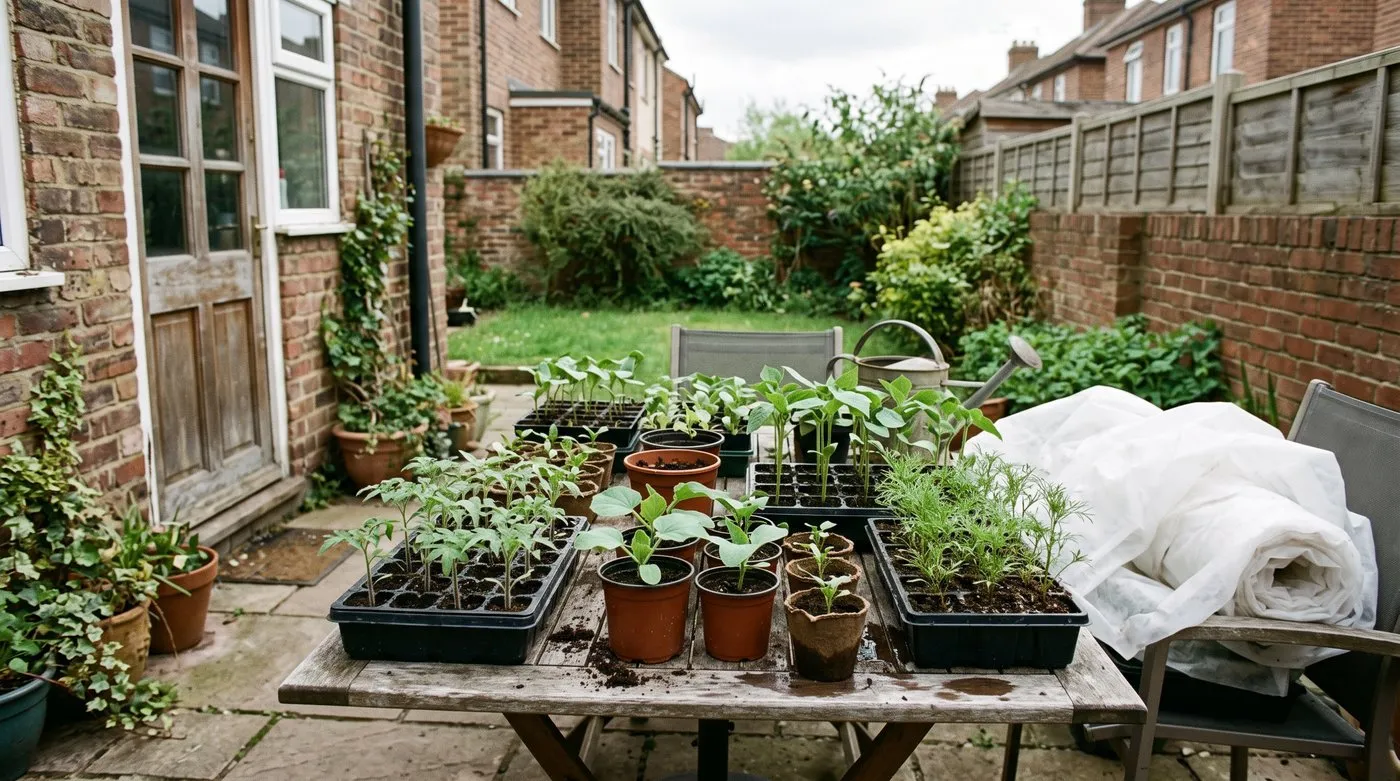
Give indoor-raised plants a couple of weeks of gradual outdoor time first. A table by the back door makes it easy to bring them in at night.
Greenhouse jobs
A greenhouse stretches your growing season at both ends. Get it ready now.
Cleaning
Clean the glass inside and out in late February or early March. Dirty glass cuts the light your seedlings need. Wash with warm soapy water and rinse. Clean staging, shelves and pots with garden disinfectant to get rid of pests hiding over winter.
Ventilation
Check all vents open freely, including automatic openers. Good airflow helps prevent damping off, a disease that kills seedlings in warm, damp, still air.
Keeping temperatures steady
On sunny March days a greenhouse can go from chilly at dawn to very hot by lunchtime. Open vents on warm days and close them before evening. A max-min thermometer shows you what’s going on.
You may need shade netting or shading paint from late April. Young seedlings scorch in strong sun through clear glass.
Fruit garden
Spring feeding and protection make a big difference to your fruit.
Feeding fruit trees
Sprinkle a high-potash feed, such as sulphate of potash, around fruit trees in March. Scratch it in and water. Potash helps flowers and fruit. Then mulch with compost in a ring around the trunk, keeping it clear of the bark.
Planting bare-root fruit
March is your last chance to plant bare-root fruit trees and bushes. Water well and stake trees firmly. Our guides to apple trees and cherry trees cover choosing and planting. March is also good for planting bare-root strawberry runners, as our strawberry growing guide explains.
Protecting blossom
Fruit blossom opens from April, and one hard frost can spoil the crop. Cover wall-trained fruit with fleece on frosty nights. Net against bullfinches too, which can strip the buds from cherries, plums and pears.
Pruning plums and cherries
Don’t prune plums, cherries or damsons in winter. Cuts made then can let in silver leaf disease. Prune them from spring to late summer instead, while they’re growing and heal quickly.
Wildlife
Spring is a big season for garden wildlife, and small things help a lot.
Bird boxes
Put up bird boxes by early March. Many birds start house-hunting in February. Fix boxes 2 to 4m up, facing north or east, away from strong sun and driving rain. Clean out old boxes.
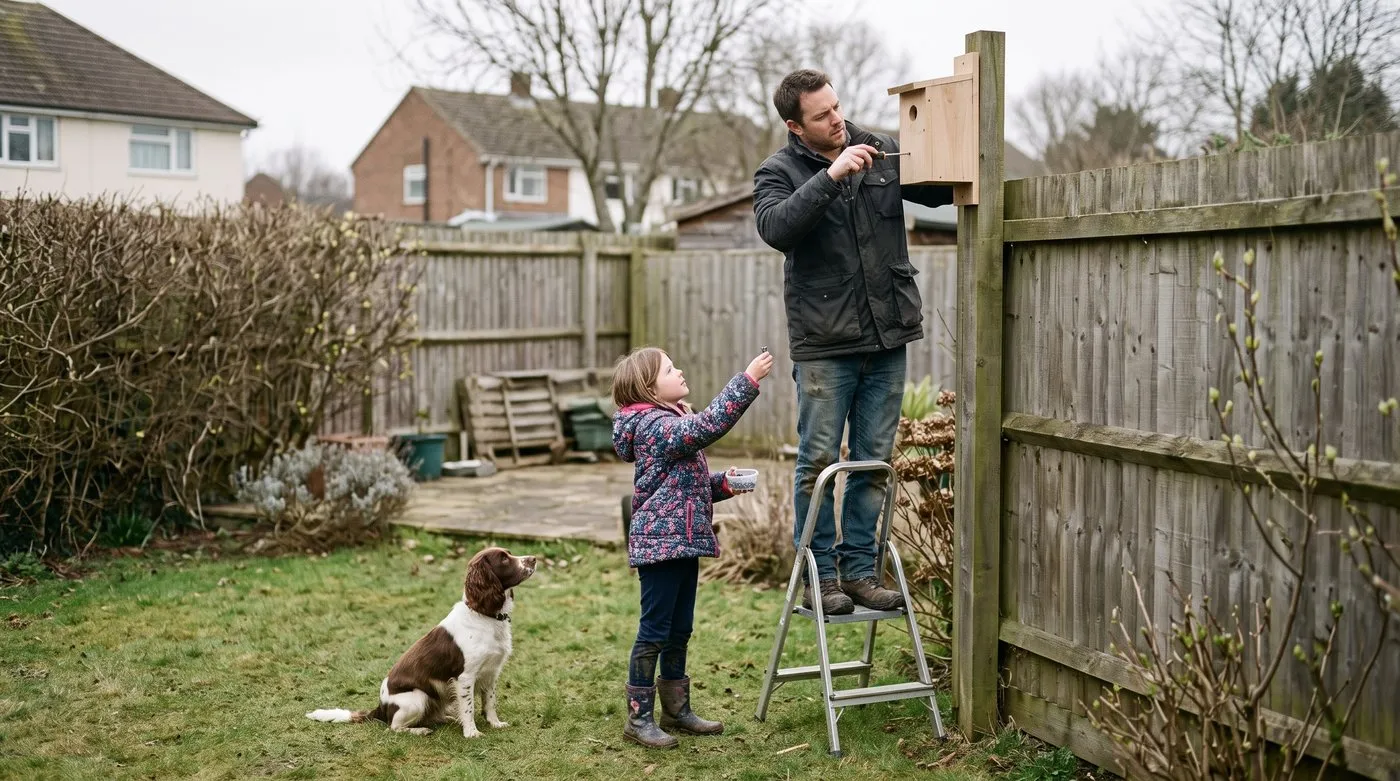
Get boxes up by early March, facing north or east and out of strong sun. Birds start house-hunting earlier than you’d think.
Log piles and habitats
Stack logs in a shady corner for beetles, hedgehogs, frogs and slow worms. Leave them undisturbed and they’ll fill with life.
Leave a patch of lawn unmown from April for a mini-meadow. It feeds pollinators and gives insects cover.
Planting for pollinators
Fill gaps with nectar-rich flowers that open in spring. Early bees are hungry, and a few flowers make a real difference.
Pond care
Removing blanketweed
Blanketweed loves spring sunshine before pond plants have grown enough to shade the water. Twirl it out with a stick or rake. Leave it by the pond overnight so creatures can crawl back in.
Checking pumps and filters
Switch pumps and filters back on from mid-March. Clean the filter sponges and check the pump spins freely. Replace the bulb in a UV clarifier once a year.
Feeding fish
Start feeding pond fish once the water has warmed to about 10C, usually in April. Use a spring and autumn food that’s easy to digest. Feed a little every other day, as too much food clouds the water.
Tools and structures
Sharpening tools
Sharpen and oil tools before the busy weeks start. Sharp blades make every job easier.
Repairing fences and structures
Check fences, trellis and pergolas. Winter storms loosen posts and split panels. Fix them before climbers grow through.
Check raised bed sides for rot too. Replace any crumbling boards before the bed fills up with plants.
Treating timber
Paint wood preservative onto sheds, fences and garden furniture in March or April, when the wood is dry. Do it before plants grow up against them.
Month-by-month spring checklist
| Job | March | April | May |
|---|---|---|---|
| Mow the lawn | First cut, high | A little lower | Summer height |
| Feed the lawn | From mid-March | Second feed if needed | - |
| Lawn weeds | - | Yes | Spot-treat |
| Scarify and aerate | Late March | Early April | - |
| Mulch borders | Yes | - | Top up |
| Divide perennials | Yes | Early April | - |
| Prune late-flowering shrubs | Yes | - | - |
| Prune roses | Yes (if not done) | - | Deadhead |
| Sow indoors | Tender crops | Keep going | Last sowings |
| Sow outdoors | Hardy crops | Lots more | Beans, sweetcorn |
| Plant out | Bare-root fruit | Bulbs, hardy plants | Tender plants |
| Clean the greenhouse | Yes | - | - |
| Feed fruit trees | Yes | - | Mulch |
| Bird boxes | Put up | - | - |
| Pond blanketweed | Remove | Remove | Remove |
| Sharpen tools | Yes | - | - |
| Repair structures | Yes | Yes | - |
Common spring mistakes
Cutting the lawn too short too soon
Scalping the lawn in March weakens grass that’s barely awake. Keep the blades high for the first few cuts. A close cut can wait until May.
Pruning spring-flowering shrubs before they flower
Forsythia, flowering currant and Chaenomeles flower on last year’s growth. Prune them in March and you cut off all the flowers. Wait until they’ve finished.
Planting tender plants out too early
Tomatoes, courgettes, peppers and dahlias die in frost. A warm spell in April is tempting, but it’s a gamble. Wait until late May in most of the UK.
Letting weeds set seed
Annual weeds like hairy bittercress grow and seed very quickly. One weed that pops up in March can scatter loads of seed by May. Pull them young and often.
Skipping hardening off
Moving seedlings straight from a warm windowsill to the garden gives them a shock. It can stop them growing for weeks. Harden them off gradually over 10 to 14 days.
Now your spring jobs are sorted, read our guide on summer gardening jobs for what’s next.
Frequently asked questions
When should I start spring gardening in the UK?
Start in early March by clearing and preparing the soil. Tidy up, prune late-flowering shrubs and start sowing indoors. Things run a couple of weeks later in the north and in exposed gardens, so wait until late March there.
What is the most important spring gardening job?
Getting the soil ready. Clearing weeds and adding compost in March sets up every other job. Plants struggle in hard, hungry, weedy ground.
When should I mow the lawn for the first time in spring?
In March, once the grass starts growing. Set the mower high, at about 4cm. Never take off more than a third of the length at once. If it’s grown long over winter, bring it down over two or three cuts.
Can I plant out tender plants in April?
No, wait until late May in most of the UK. Frosts can still come later than that in the north. A warm April day doesn’t mean the frosts are over, as clear nights can still turn icy.
What shrubs should I prune in spring?
Late-flowering shrubs like buddleia, hardy fuchsia and lavatera. Caryopteris too. They flower on new growth, so a hard prune in March means lots of flowers later. Leave spring-flowering shrubs like forsythia until after they bloom.
When should I feed my lawn in spring?
From mid-March, once the weather has warmed up. Use a spring lawn feed, not an autumn one. Water it in if it doesn’t rain within a couple of days. A second feed in late April helps a lawn that’s slow to green up.
How do I prepare a greenhouse for spring?
Clean the glass inside and out in late February or March. Dirty glass cuts the light seedlings need. Replace cracked panes, check the vents open freely and wash the staging with garden disinfectant. Good airflow helps stop damping off.
Our team produces practical UK gardening guidance from source research, contributor records and established horticultural practice. Editorial standards are overseen by Matt W.


