
Key takeaways
- Choose Gisela 5 rootstock for a smaller tree of about 3-4m
- Sweet cherries need sun, but acid cherries can crop in part shade
- Check the variety is self-fertile if you only want one tree
- Keep the graft (the knobbly join near the base) above the soil when planting
- Prune after picking, in late July or August, on a dry day
Plant a cherry tree in rich soil that drains well, with enough room for the size it will become. Sweet cherries love a sunny, sheltered spot. Acid cherries, like Morello, can still crop in part shade.
The rootstock decides how big the tree grows, so check it before you buy. A smaller tree is much easier to prune, net and pick. It also fits a small garden far better than a giant bought on a whim.
Choose the right size of cherry tree
Most garden cherries are grafted. The top is the fruiting variety you chose, and the roots (the rootstock) control how big it grows.
| Rootstock | Rough final size | Good for |
|---|---|---|
| Gisela 5 | 3-4m tall | Small gardens, big pots, compact bush trees |
| Colt | 6-8m tall | Bigger gardens with room for a large tree |
| Gisela 5 as a fan | About 1.8m tall and 3.5m wide | Training flat against a wall or fence |
These sizes come from the RHS cherry growing guide. Soil, pruning and your local conditions all make a difference too.
So don’t choose by the cherry’s name alone. Ask which rootstock it’s on and what shape it’s meant to be. Our cherry variety guide explains sweet, acid and self-fertile choices. The fruit tree rootstock guide covers how rootstocks work for other fruit too.
Do you need two cherry trees?
Not always. Many modern cherries are self-fertile, which means they can fruit on their own. Others need pollen from a second, matching tree that flowers at the same time.
Check the pollination details before you buy. Two varieties that flower at different times won’t help each other. And a nearby ornamental cherry isn’t a reliable partner.
Acid cherries are self-fertile, and so are many popular sweet cherries. That makes them the easiest pick if you’ve only room for one tree. Even then, cold or wet weather at blossom time can mean a smaller crop, as bees stay at home.
If an older tree flowers but never fruits, check its variety and pollination group first. Our cherry pollination guide walks you through it.

A fan keeps the cherry flat against a wall, so pruning and netting are much easier.
Where should you plant a cherry tree?
Pick a warm, sheltered spot with rich soil that drains well but doesn’t dry out for long. Sweet cherries fruit best in full sun. Acid cherries cope with part shade and can go on a wall that gets less sun.
Avoid a frost pocket, a low spot where cold air settles, if you can. Cherry blossom opens in spring and frost can damage it. A very windy spot is hard on young branches and blossom too.
Plan for the grown-up tree, not the one you bring home. Keep it away from buildings, drains and narrow paths. Check the spread on the label and leave room to reach all the way round for pruning and picking.
Handy tip: Work out how you’ll protect the ripe cherries from birds before you plant. A small bush or fan is far easier to cover than a tall tree.
Our growing guides have more help with planning a fruit patch and choosing crops to grow nearby.
How to plant a bare-root cherry tree
Plant bare-root cherries from late autumn to early spring, while they’re dormant. Pot-grown trees can go in at most times of year, but need more watering in dry weather.
- Soak the roots briefly if they look dry while you dig the hole.
- Dig a hole wide enough for the roots to spread out without bending.
- Loosen any hard soil around the sides and bottom.
- Set the tree at the same depth it grew before, with the graft above ground.
- Fill back in with the soil you dug out and firm gently.
- Add a short stake low down, so the roots are steady but the trunk can still sway.
- Water well and mulch, keeping the mulch off the trunk.
Never bury the graft, the knobbly swelling near the base. If the fruiting part roots into the soil, the rootstock can’t keep the tree small anymore.
Keep a clear circle of soil around a young tree. Grass and weeds steal water while the roots are settling in. Our bare-root tree planting guide goes into more detail.

Spread the roots out naturally and keep the graft above the soil.
How to water and feed a cherry tree
Water a new cherry tree in dry spells through its first summer. Pour slowly over the roots and let it soak in. A quick splash only wets the surface.
Older trees mostly need water when a long dry spell hits while the fruit is swelling. Trees in pots dry out much faster, so check them often. Water when the top of the compost starts to dry, but don’t leave the pot standing in water.
Top up the mulch each spring, leaving a gap around the trunk. It holds in moisture and keeps weeds down. There’s no need to feed heavily, as too much feed makes soft, sappy growth.
Fruit dropping off can follow poor pollination, drought or bad weather. When it happens is a big clue. Our cherry fruit drop guide explains the different times it can happen and why.
Looking after a young cherry tree
The first few years are all about strong roots and a good shape. Keep grass away from the trunk, water in long dry spells and check the stake and tie a few times a year.
The tie should hold the trunk without rubbing or digging in. Loosen it as the trunk thickens. Once the tree stands firm in the wind, take the stake away.
Remove any shoots coming from below the graft. These come from the rootstock and can outgrow the fruiting part. Follow each one back to where it starts and cut it off cleanly.
Don’t expect a big crop straight away. A young tree’s first job is to settle in. If a small tree sets more fruit than its thin branches can hold, thin some off to stop branches bending.
Keep an eye on the planting depth. Soil can settle and mulch can build up over time. The base of the trunk and the graft should always be visible.
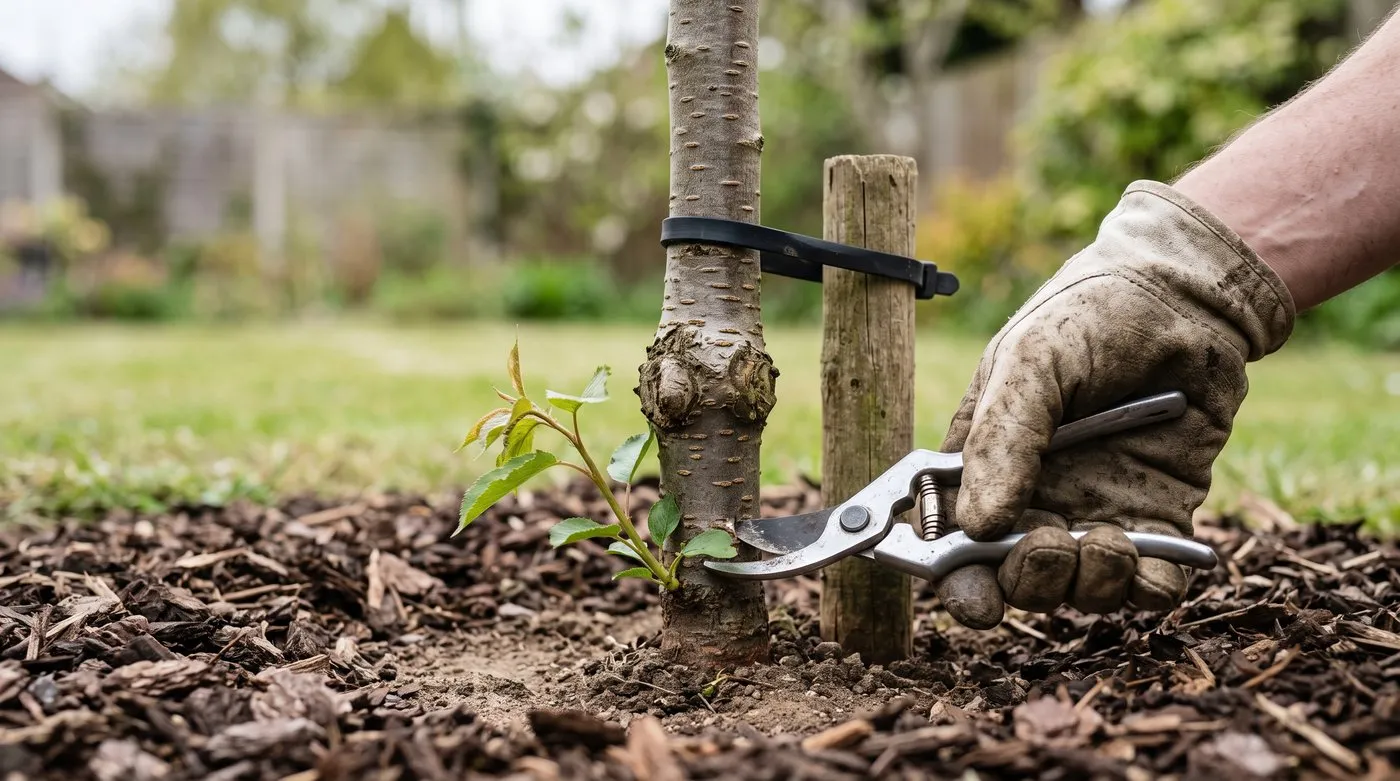
Cut off any shoots from below the graft, as they come from the rootstock. Check the tie too, and loosen it as the trunk thickens.
When and how should cherry trees be pruned?
Prune cherries after picking, usually in late July or August, on a dry day. Pruning in summer cuts the risk of silver leaf and bacterial canker getting into fresh cuts.
Start by removing dead, damaged or diseased wood. Then take out crossing branches and thin just enough to keep the tree open and balanced. Use clean, sharp tools and don’t leave long stubs.
Sweet and acid cherries fruit a little differently. Acid cherries fruit mostly on last year’s shoots, so you need to keep new shoots coming. A fan also needs regular tying in.
The RHS advises pruning stone fruit in spring or summer, in dry weather. For step-by-step cuts, see our fruit tree pruning guide.
Watch out: Don’t prune cherries in winter like you would an apple tree. Stone fruit needs pruning in the warmer months.
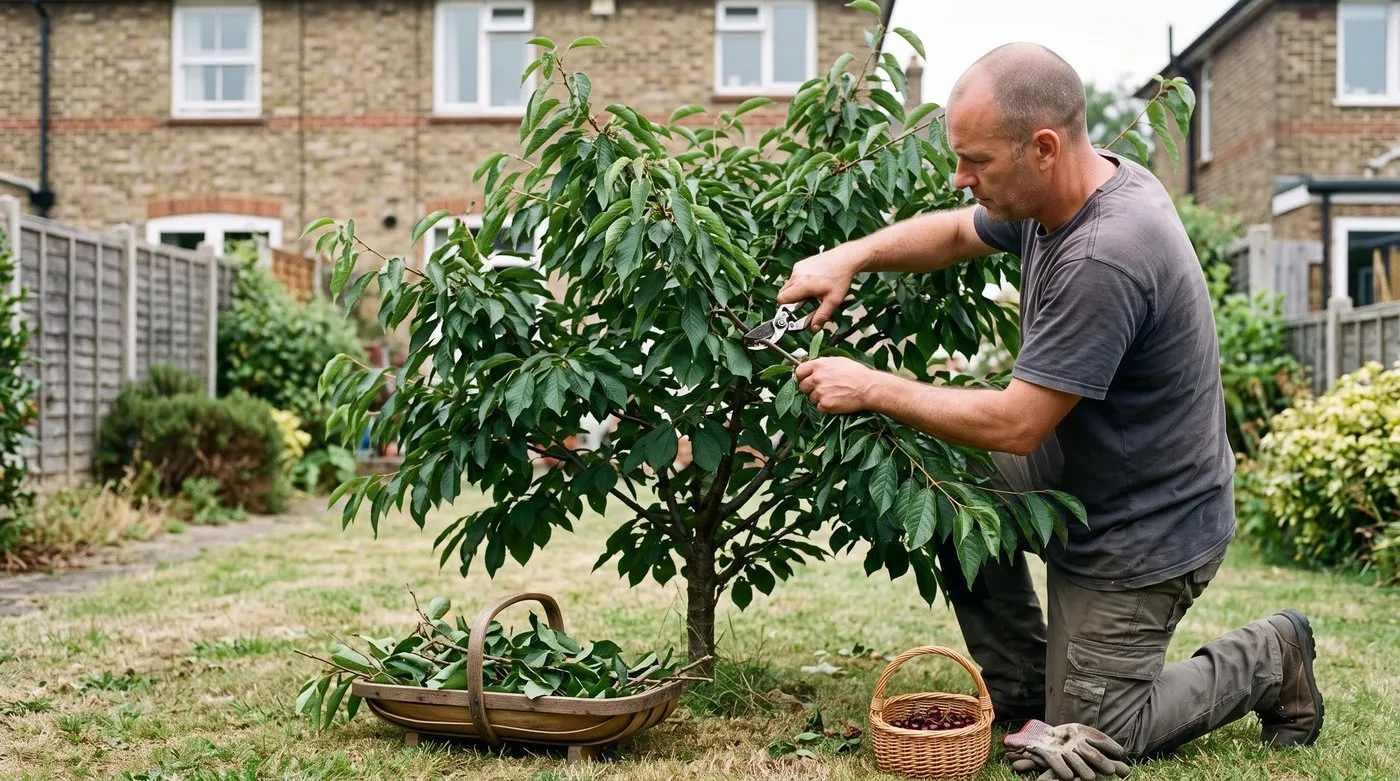
Prune cherries after picking, on a dry day in summer. Fresh cuts heal faster then, which lowers the risk of silver leaf and canker.
Training a cherry as a fan
A fan has several main branches spread out flat along horizontal wires. It suits a sunny wall or fence, puts the fruit within easy reach and is simple to net.
Put the wires up before planting, and make sure they can take the weight of a crop. Leave a gap behind for air, and never tie a branch so tight that it cuts into the bark.
In summer, choose well-placed shoots to fill out the fan and tie them in while they’re still bendy. Remove badly placed or damaged shoots a few at a time rather than all at once. Once the fan fills its space, keep it going by shortening or replacing fruiting shoots.
Don’t hack back a neglected old tree in one go. Spread big cuts over more than one summer. If big branches are unsafe or disease has spread, call in a qualified tree surgeon rather than balancing on a ladder with a saw.
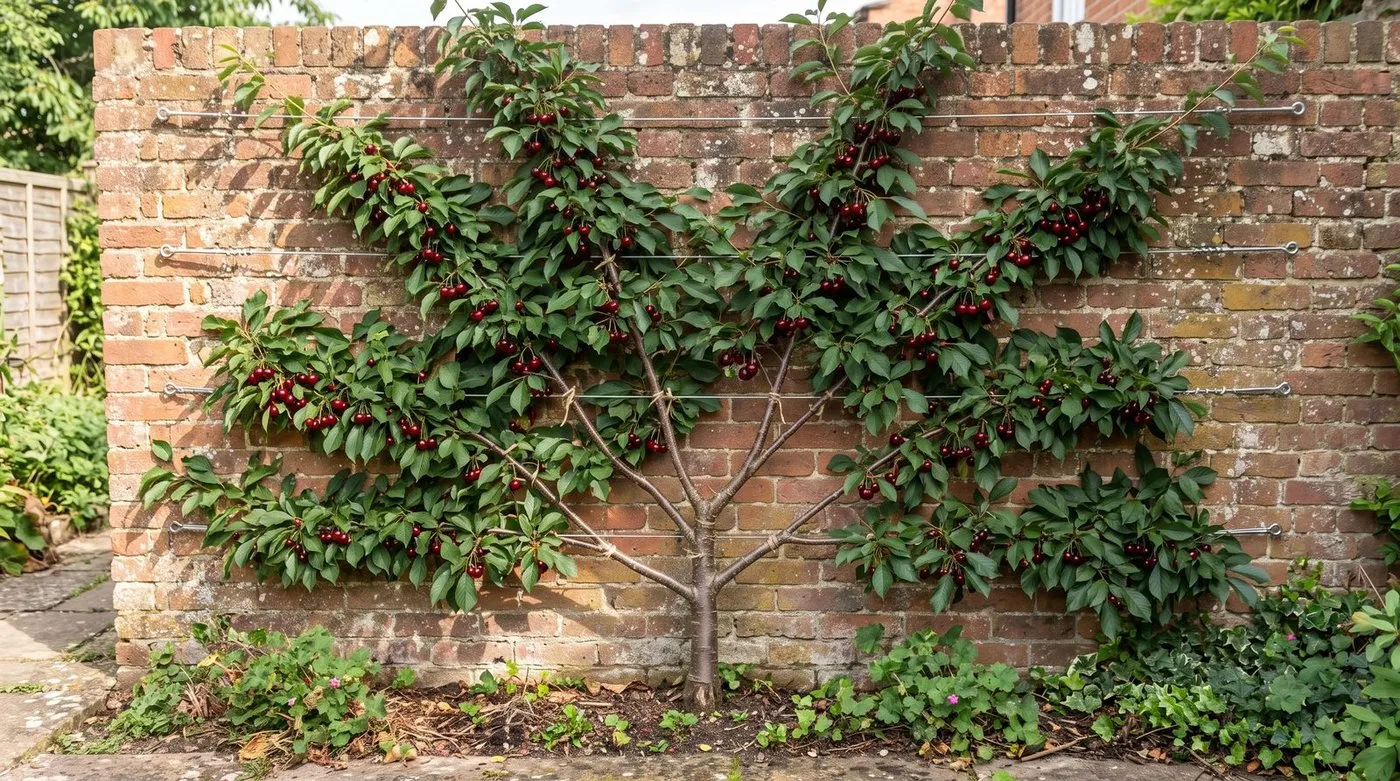
Acid cherries are happy in part shade and look great fan-trained on a wall.
How to protect cherries from birds
Birds spot cherries as soon as they start to colour. Get your protection on before most of the fruit turns red, rather than after the first losses.
Use tight, well-fixed netting that can’t sag around branches or trap birds and hedgehogs. Check it often and close any gaps. A fruit cage or netting on a frame is safer and easier to check than loose netting thrown over a big tree.
Fans and small trees are much easier to cover, which is a great reason to pick a dwarfing rootstock.
Pick cherries when they’re fully coloured and ripe, as they don’t ripen any more once picked. Hold them by the stalk rather than squeezing, and pick on a dry day if you can.

Hold netting clear of the fruit on a frame, and check the edges so birds can’t get caught.
A simple cherry tree calendar
November to March
Plant bare-root trees when the ground isn’t frozen or soggy. Keep roots damp until planting and water in well.
March to May
Keep an eye on the blossom in cold snaps and keep grass away from the trunk. Water young trees if spring is dry.
June and July
Check the young fruit and keep the soil evenly moist. Put bird netting on before the cherries colour.
Late July and August
Pick ripe cherries. Prune after picking on a dry day and clear away diseased wood.
September and October
Take down old netting, clear fallen fruit and check ties and stakes before winter winds.
Common cherry-growing mistakes
Buying without checking the rootstock
A vigorous rootstock can outgrow a small garden. Decide how big a tree you want before you pick a variety.
Burying the graft
A buried graft can root into the soil and lose its size control. Keep it well above ground.
Assuming every cherry is self-fertile
Some varieties need a partner. Check before relying on a single tree.
Pruning in winter
Winter cuts make it easier for disease to get in. Prune after picking, in dry summer weather.
Netting too late
Late, saggy netting can trap wildlife and still leave gaps. Put up a framed net before the fruit colours.
Quick problem checks
| What you see | What to check | What to do next |
|---|---|---|
| Blossom but little fruit | Pollination partner, cold or wet weather at flowering | Check the variety and its pollination group |
| Fruit dropping early | Dry soil, poor pollination or natural thinning | Check soil moisture and note when it happens |
| Gummy ooze or sunken bark | Damage or possibly bacterial canker | Cut out affected wood in dry weather and clean your tools |
| Silvery leaves on one branch | Possibly silver leaf | Get a firm diagnosis before pruning more |
| Curled leaves with insects inside | Aphids and the insects that eat them | Look closely before deciding if you need to act |
Don’t jump to conclusions from one symptom. Weather damage, dry roots and disease can look alike at first. Take photos, check whether it’s one branch or the whole tree, and hold off pruning until you’re surer. Our bacterial canker guide explains the signs to look out for.
Browse our growing guides for more fruit help, then compare trees in our UK cherry variety guide.
Frequently asked questions
Can one cherry tree produce fruit?
Yes, if it’s a self-fertile variety. Other varieties need a partner tree nearby that flowers at the same time.
How long does a cherry tree take to fruit?
Grafted trees fruit much sooner than ones grown from a stone. How long exactly depends on the rootstock, variety, the tree’s age and how happy it is.
Can cherry trees grow in pots?
Yes, compact cherries do well in big pots. Choose a dwarfing rootstock, use free-draining compost and water regularly.
When should I prune a cherry tree?
Prune after picking, in late July or August. Pick a dry spell, as this cuts the risk of silver leaf and bacterial canker getting in.
Why is my cherry tree not producing fruit?
Poor pollination, frost, drought or a young tree are the usual reasons. Check whether your variety needs a partner before changing anything else.
Our team produces practical UK gardening guidance from source research, contributor records and established horticultural practice. Editorial standards are overseen by Matt W.


