Key takeaways
- The pollination group number tells you when a cherry flowers, nothing more
- A partner needs to flower in the same group or one group either side
- Some sweet cherries can't pollinate each other even when they flower together
- Two trees of the same variety will never pollinate each other
- Self-fertile Stella, Sunburst, Lapins, Sweetheart and Morello crop on their own
- Cold, wet or windy weather at blossom time keeps bees at home and cuts the crop
Two cherry trees, flowering together every spring, and not a single cherry. It happens a lot, and frost or bees usually get the blame. Often the real reason is that the two varieties simply can’t pollinate each other.
Cherry pollination groups tell you when a variety flowers. They don’t tell you whether two trees are compatible. This guide explains both, so you can pick a pair that works, or skip the whole problem with one self-fertile tree. For planting and pruning, see the guide on how to grow cherry trees.
What do cherry pollination groups mean?
A pollination group, sometimes called a flowering group, is a number that shows when a variety’s blossom opens. The lowest group flowers first, from early April in a mild spring. The highest flowers last, into May.
The rule is simple: choose a partner in the same group, or one group either side. A group 3 cherry can be pollinated by a group 2, 3 or 4 cherry. That way their flowers are open at the same time, and bees can carry pollen between them.
What the number can’t tell you is whether the pollen will actually work. That’s a separate thing, and it’s where most crops are lost.
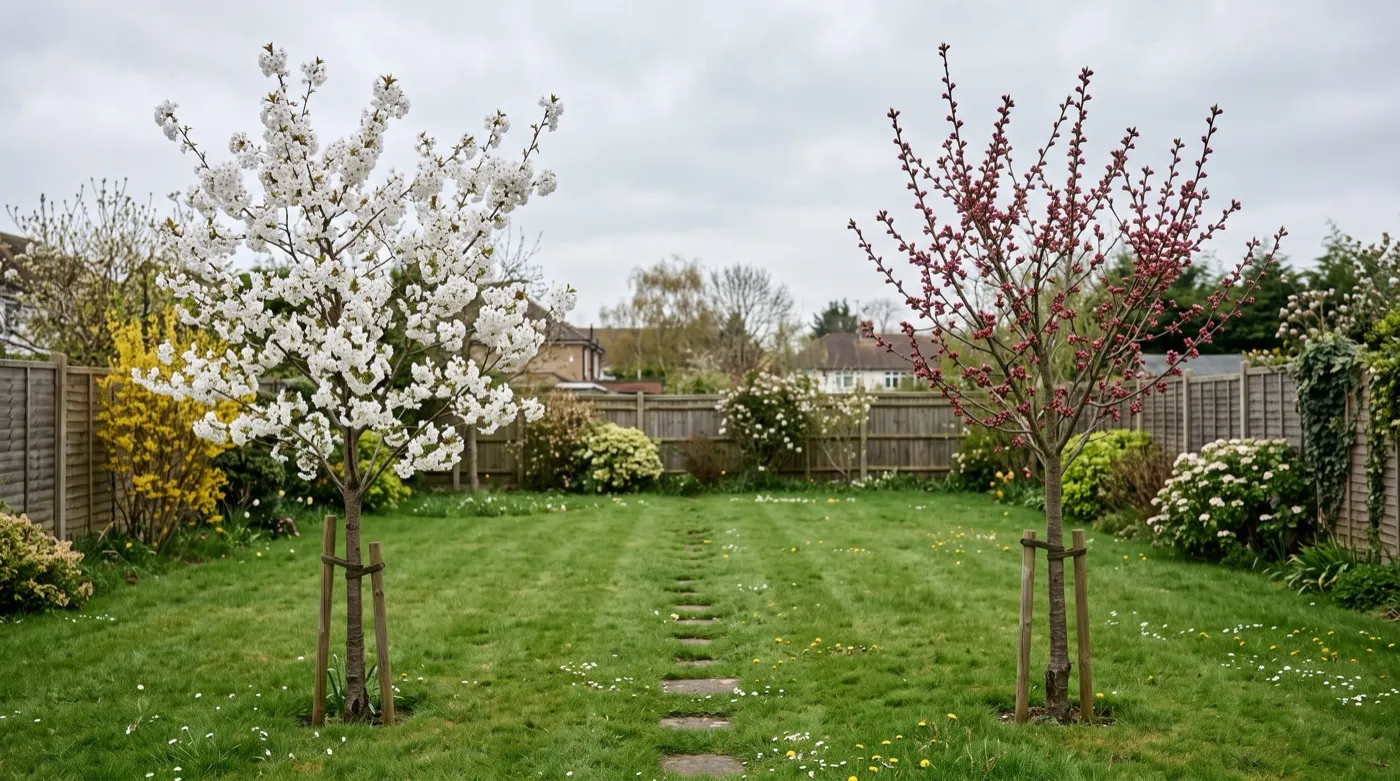
These two are too far apart in flowering time. One is in full bloom while the other is still in bud, so they can’t help each other.
Why two cherry trees can flower together and still give no fruit
Many sweet cherries reject pollen from trees that are genetically too similar. Breeders sort them into incompatibility groups. Two varieties in the same incompatibility group can’t pollinate each other, however well they flower together.
The classic example is Bing, Lambert and Bigarreau Napoleon. They flower at about the same time and share an incompatibility group. Plant any two together and you get blossom but no cherries.
The tricky part is that everything looks normal. The trees flower, bees visit and the petals fall. Tiny fruitlets may even swell for a couple of weeks before yellowing and dropping. If that sounds familiar, the guide to cherry fruit drop helps you work out the cause.
Warning: Two trees of the same variety will never pollinate each other, unless the variety is self-fertile. They are genetically identical. Watch for trade names too: Lapins is often sold as Cherokee, so buying both gets you the same tree twice.
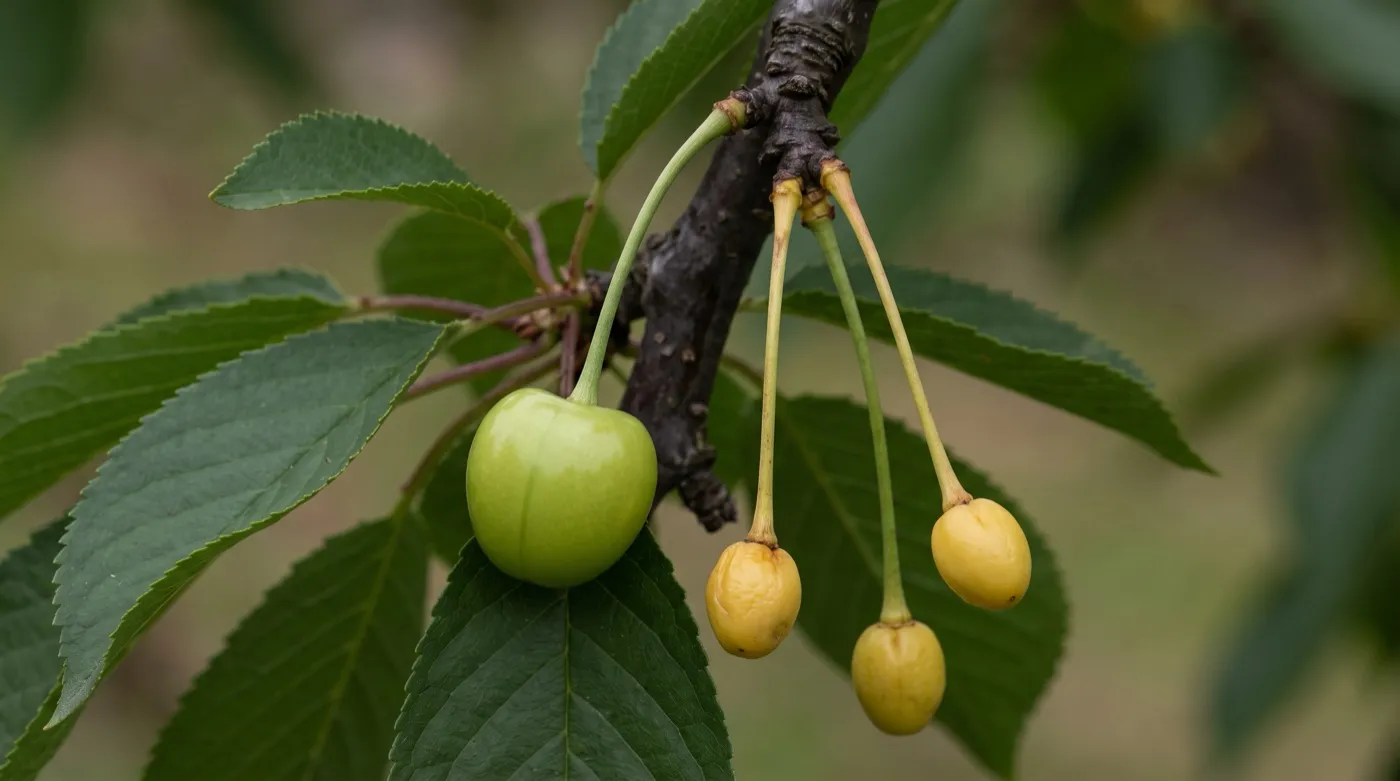
Unpollinated fruitlets swell a little, turn yellow and drop. The firm green one has been pollinated and will carry on.
Self-fertile cherries: the easy answer
A self-fertile cherry can pollinate its own flowers, so one tree will crop alone. Stella, bred in Canada, was the first widely grown self-fertile sweet cherry. Many modern varieties have since been bred from it.
Self-fertile sweet cherries have a handy bonus. Their pollen works on almost any other sweet cherry that flowers at the same time. So one self-fertile tree can also pollinate an older variety that’s been sitting there with no fruit.
Good self-fertile choices for UK gardens:
- Stella: reliable, sweet, dark red fruit
- Sunburst: larger fruit than Stella
- Lapins (also sold as Cherokee): good at resisting splitting in wet weather
- Sweetheart: a later variety that extends the season
- Morello: a sour cherry for cooking, which crops even on a shady wall
The guide to the best cherry tree varieties compares these on flavour and size.
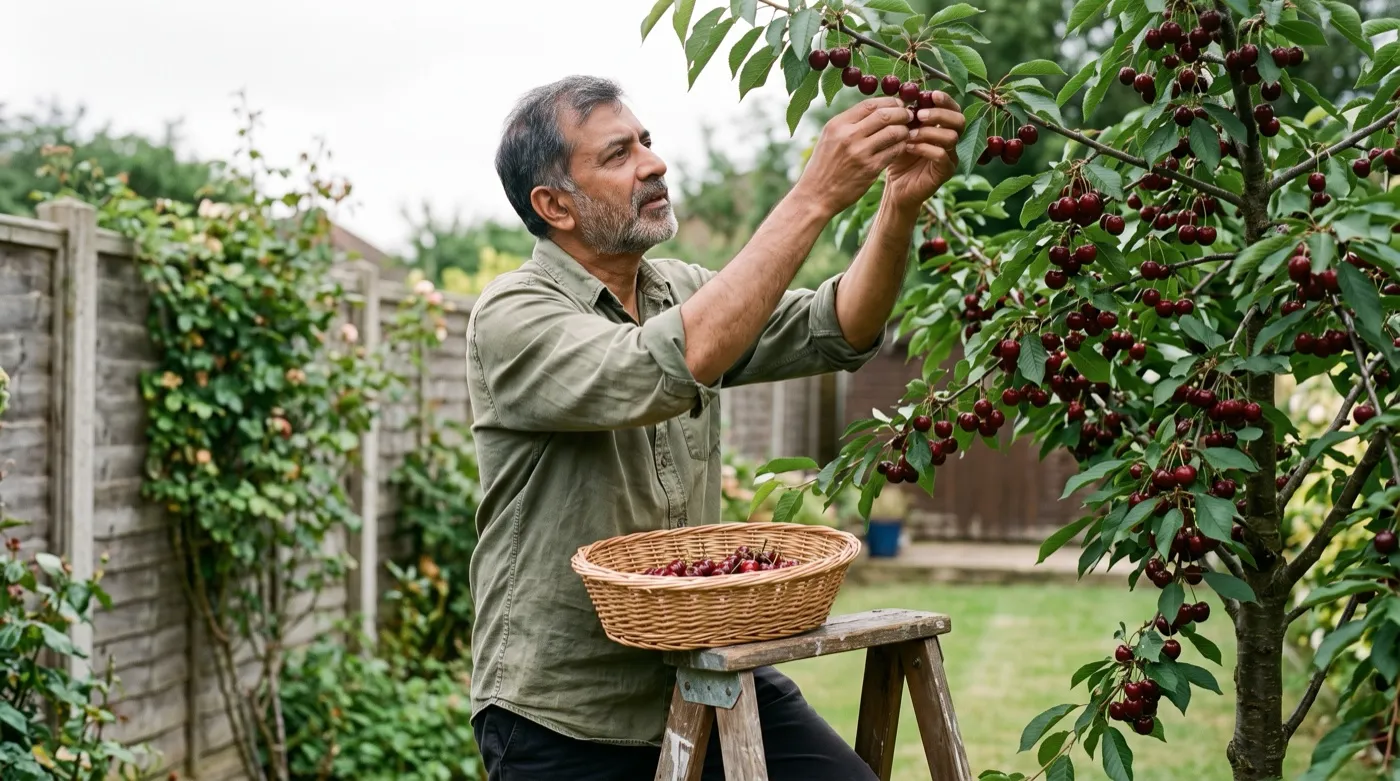
A self-fertile cherry on a dwarfing rootstock crops on its own and stays small enough to pick from a step-ladder.
Sweet and sour cherries follow different rules
Sweet cherries are the ones you eat fresh. Older varieties often need a partner, while many modern ones are self-fertile.
Sour cherries, such as Morello, are for pies, jam and cooking. They’re nearly all self-fertile, so they never need a partner. They also flower later than most sweet cherries, which can help them miss late frosts.
Morello has another trick. It’s one of the few fruit trees that will crop on a north-facing wall, trained flat as a fan. If you have a cold, shady wall and room for only one tree, it’s a great choice. The guide to fan training fruit trees shows how.
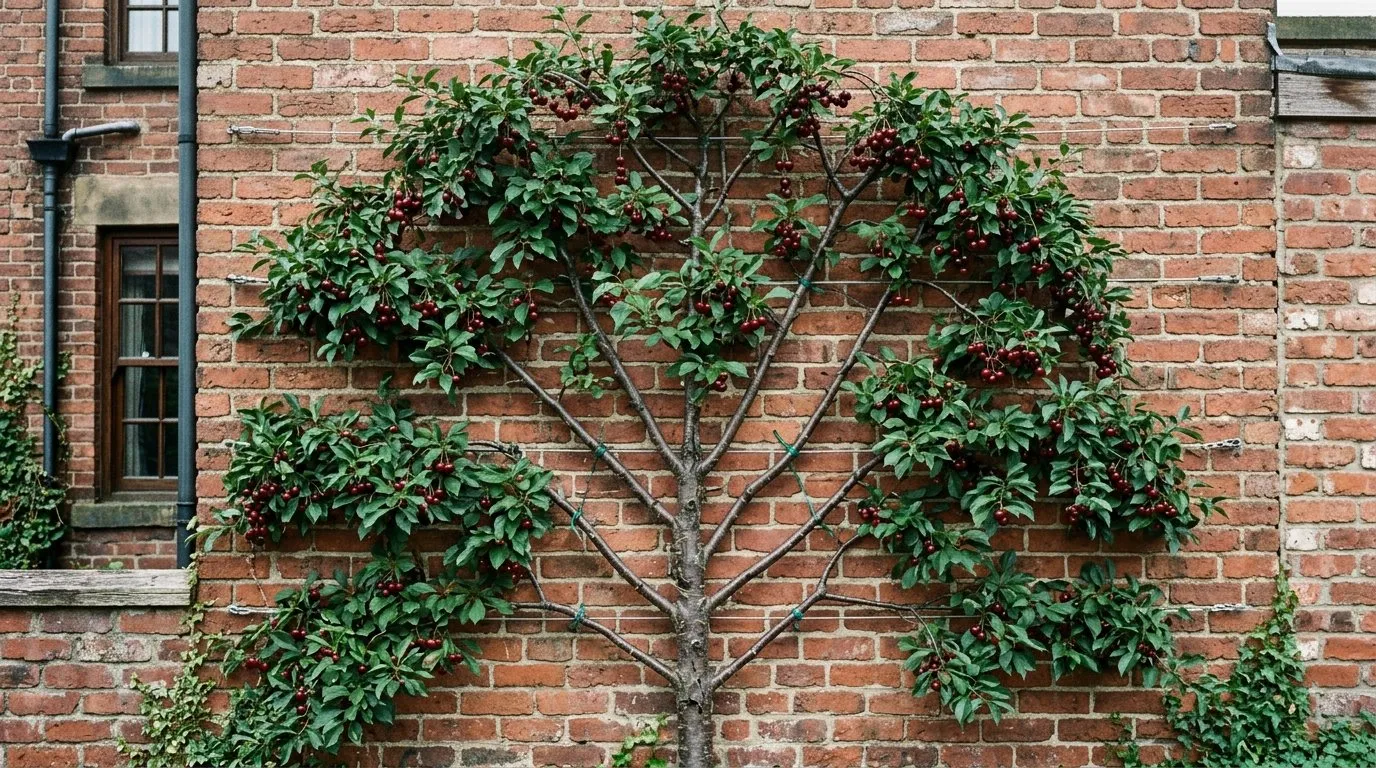
A fan-trained Morello needs no partner and copes with a shady wall where a sweet cherry would sulk.
How to choose two cherries that pollinate each other
If you want a variety that isn’t self-fertile, check two things before you buy:
- Flowering group. The two trees should be in the same group, or one either side.
- Incompatibility group. The two trees must be in different incompatibility groups.
A pair has to pass both checks. Specialist fruit nurseries usually know the incompatibility group, even if it’s not on the label, so ask. If the answer is vague, choose a self-fertile partner instead. It will pollinate the other tree and crop itself.
Space matters too. On a dwarfing rootstock such as Gisela 5, a cherry stays around 2.5-3m tall, so two trees can fit in a typical garden. On a vigorous rootstock such as Colt, each tree gets much bigger. The guide to fruit tree rootstocks explains the options. Rootstock changes size only, never compatibility.
Why cold weather at blossom time matters
Even a perfect pair can have a poor year. Bees stay at home in cold, wet or windy weather, so the pollen never moves. Frost can also kill the flowers outright.
You can’t change the weather, but you can help:
- Plant somewhere sheltered and sunny, ideally against a south- or west-facing wall.
- Grow early flowers nearby so bees are already around when the blossom opens. The list of early spring pollinator plants has ideas.
- Cover small trees with fleece on frosty nights, and take it off in the morning so bees can get in.
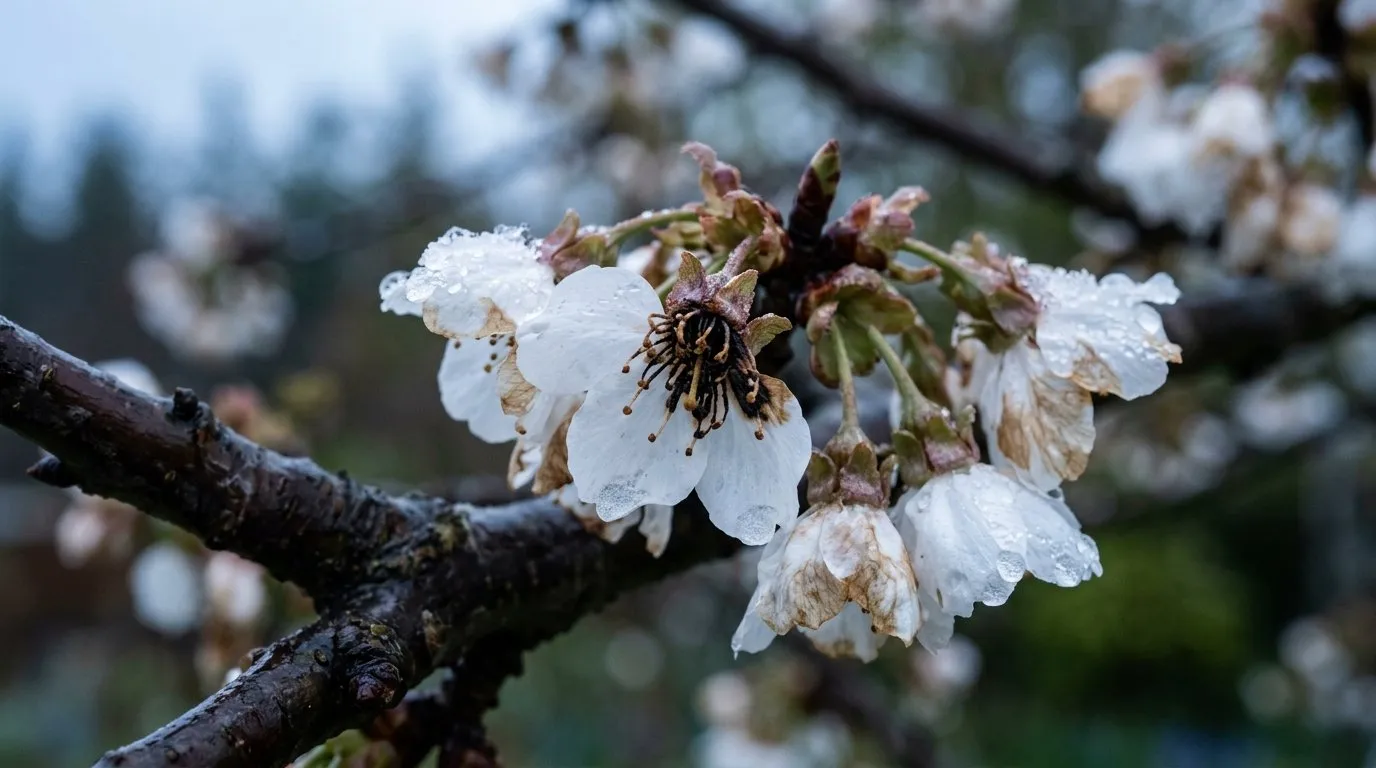
Frost browns the petals and can kill the centre of the flower. Fleece small trees on frosty nights while they’re in bloom.
What to do if your cherry flowers but never fruits
Work out the cause first, then pick the right fix.
- Find out the variety. If it isn’t self-fertile and there’s no compatible cherry nearby, it needs a partner.
- Plant a self-fertile partner. A Stella or Sunburst that flowers at the same time will usually do the job.
- Graft on a branch of a self-fertile variety. This saves space, though it takes a couple of years to flower. The guide to grafting fruit trees explains how.
- Hand pollinate. On a small tree, dab pollen from flower to flower with a soft brush, using a compatible tree’s blossom.
- Borrow a branch. A cut branch of compatible blossom stood in a bucket of water under the tree can help for a season.
- Be patient with young trees. A new cherry may take a few years to crop, especially on a vigorous rootstock.
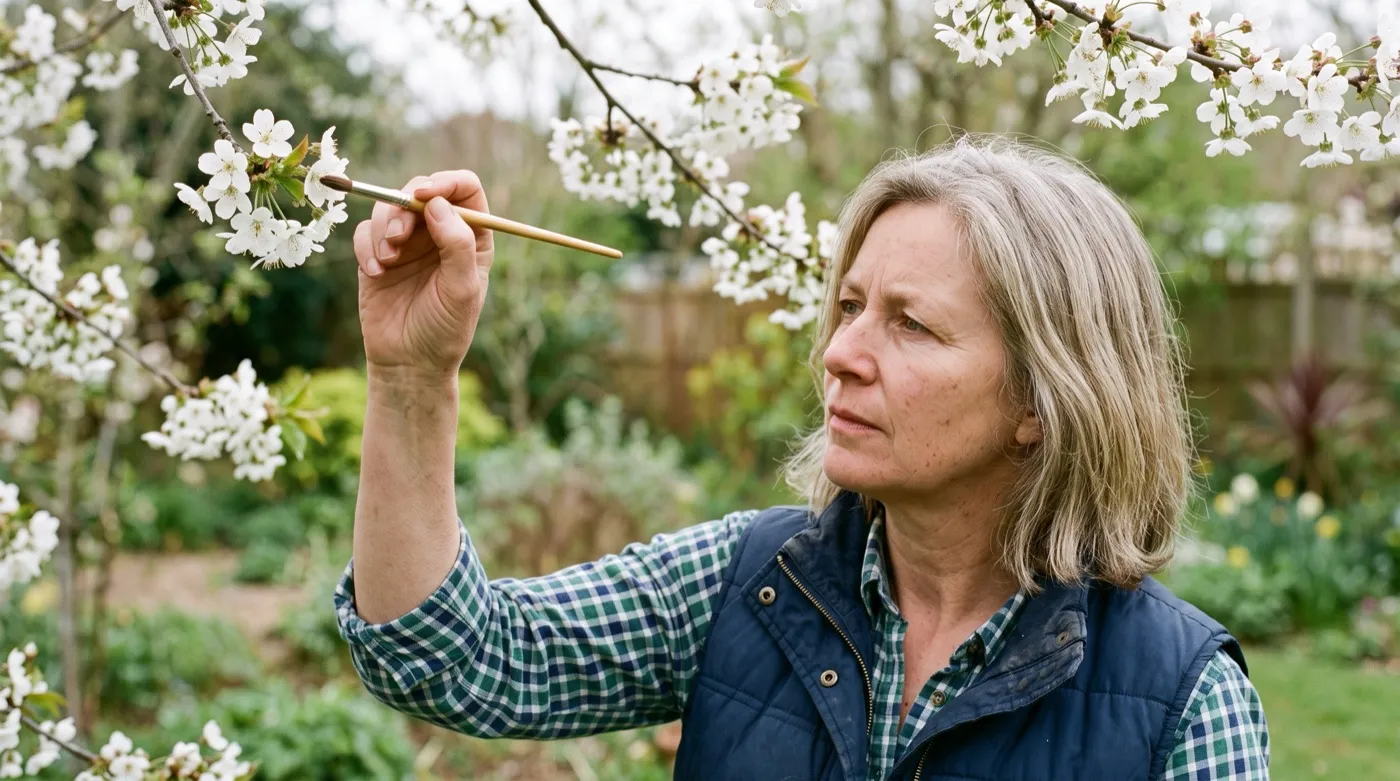
On a small tree, a soft brush moves pollen when the bees won’t. It’s a handy stopgap while a new partner grows.
Cherry pollination calendar
| Month | Task |
|---|---|
| November to February | Plant bare-root trees. Check the variety, rootstock and pollination needs before you buy |
| March | Buds swell. Have fleece ready for frosty nights |
| April | Most cherries flower. Note when yours opens. Fleece small trees on frosty nights only |
| May | Late varieties and Morello flower. Unpollinated flowers start yellowing |
| June | Natural fruit drop. Net sweet cherries against birds before they colour |
| July | Sweet cherry harvest. Prune in summer, not winter, to reduce disease |
| August | Morello and late sweet cherry harvest |
| September to October | Plan any new partner tree. Order bare-root trees early |
Common cherry pollination mistakes
- Matching flowering groups only. Two trees can bloom together and still be incompatible. Check both groups.
- Buying two of the same variety. Identical trees can’t pollinate each other.
- Relying on an ornamental cherry. A flowering cherry nearby isn’t a reliable partner for a fruiting one.
- Blaming frost for everything. Frosted flowers turn brown. Incompatible ones look perfect, then the fruitlets drop.
- Giving up too soon. Young trees can take a few years to crop.
Frequently asked questions
What are cherry pollination groups?
They’re numbers that show when a cherry variety flowers. Low numbers flower earliest and higher numbers later. A partner needs to flower in the same group or one either side, so their blossom overlaps. The group only tells you about timing, not whether the two varieties are compatible.
Why do my two cherry trees not produce fruit?
They may be in the same incompatibility group, so their pollen is rejected. Two trees of the same variety have the same problem. Other common causes are cold or wet weather at blossom time, frost on the flowers and trees that are still too young.
Are cherry trees self-fertile?
Many modern sweet cherries are, and sour cherries almost always are. Stella, Sunburst, Lapins and Sweetheart crop without a partner, and so does the Morello sour cherry. Older sweet varieties such as Bigarreau Napoleon and Early Rivers need a compatible partner nearby.
What is an incompatibility group in cherries?
It’s a set of sweet cherries that can’t pollinate each other. Each tree rejects pollen that matches its own genetic makeup too closely. Bing, Lambert and Bigarreau Napoleon share a group, for example, so any two of them together give flowers but no cherries.
Will one cherry tree fruit on its own?
Yes, if it’s a self-fertile variety. Stella is the classic choice for a single sweet cherry, and Morello for a sour one. A variety that isn’t self-fertile will flower every spring but won’t crop unless a compatible cherry grows nearby.
Can a sour cherry pollinate a sweet cherry?
Not reliably, and you rarely need it to. Sour cherries such as Morello flower later than most sweet cherries. Morello is self-fertile, so it doesn’t need a partner either. If your sweet cherry needs one, choose another sweet cherry.
Now you know which cherries work together, compare pollination for another stone fruit in the guide to the best plum tree varieties, or browse the fruit growing section.
Our team produces practical UK gardening guidance from source research, contributor records and established horticultural practice. Editorial standards are overseen by Matt W.


