
Key takeaways
- James Grieve is a reliable first tree, good for eating and cooking, and copes well in the north
- Discovery gives the first crisp eating apples of the year, ready in August
- Bramley's Seedling is the classic cooker and keeps well into the new year in a cool shed
- Most apples need a partner flowering at the same time, from the same or a neighbouring group
- Cox's Orange Pippin tastes wonderful but needs a warm, sheltered garden and suffers from disease
- Choose late varieties such as Egremont Russet and Ashmead's Kernel if you want apples to store
The best apple varieties for UK gardens are James Grieve, Discovery and Egremont Russet for eating, and Bramley’s Seedling for cooking. The right choice for you depends on what you like to eat, how long you want to keep the fruit, and how warm your garden is.
This guide helps you pick which apples to buy. It sorts the most reliable varieties by taste, use, ripening time and region, then explains how to pair them for pollination. Once you’ve chosen, our guide on how to grow apple trees covers planting, pruning and care.
What are the best eating apples to grow in the UK?
For a sweet, crisp apple straight off the tree, start with Discovery, James Grieve or Egremont Russet. Cox is the flavour classic, but it’s fussier.
Discovery is the first good eating apple of the year, ready in August. It’s crisp and juicy with bright red skin and a hint of strawberry. It doesn’t keep, so eat it fresh. It’s a tough tree with some resistance to scab.
Egremont Russet has rough golden-brown skin and dense, nutty flesh. Pick in late September or October and it keeps until around Christmas. It flowers early, in pollination group 2.
Cox’s Orange Pippin has a rich, aromatic flavour that many people think is the best of all. It needs a warm, sheltered spot and well-drained soil, so it does best in the south and east. It’s prone to scab, canker and mildew, so it isn’t the easiest first tree.
Worcester Pearmain gives sweet, red, strawberry-flavoured apples in September. It crops well across the country. It’s a partial tip-bearer, meaning some fruit forms at the ends of shoots, so go gently when pruning.
Braeburn is the familiar crisp, tangy supermarket apple. It needs a long, warm season to ripen in the UK, so only try it in a sheltered southern garden or on a sunny wall.

Mix early and late varieties and you’ll be picking apples from August right through to late October.
What are the best cooking apples for UK gardens?
Cooking apples are sharp and break down into a soft purée when cooked. That’s what you want for crumbles, pies and apple sauce.
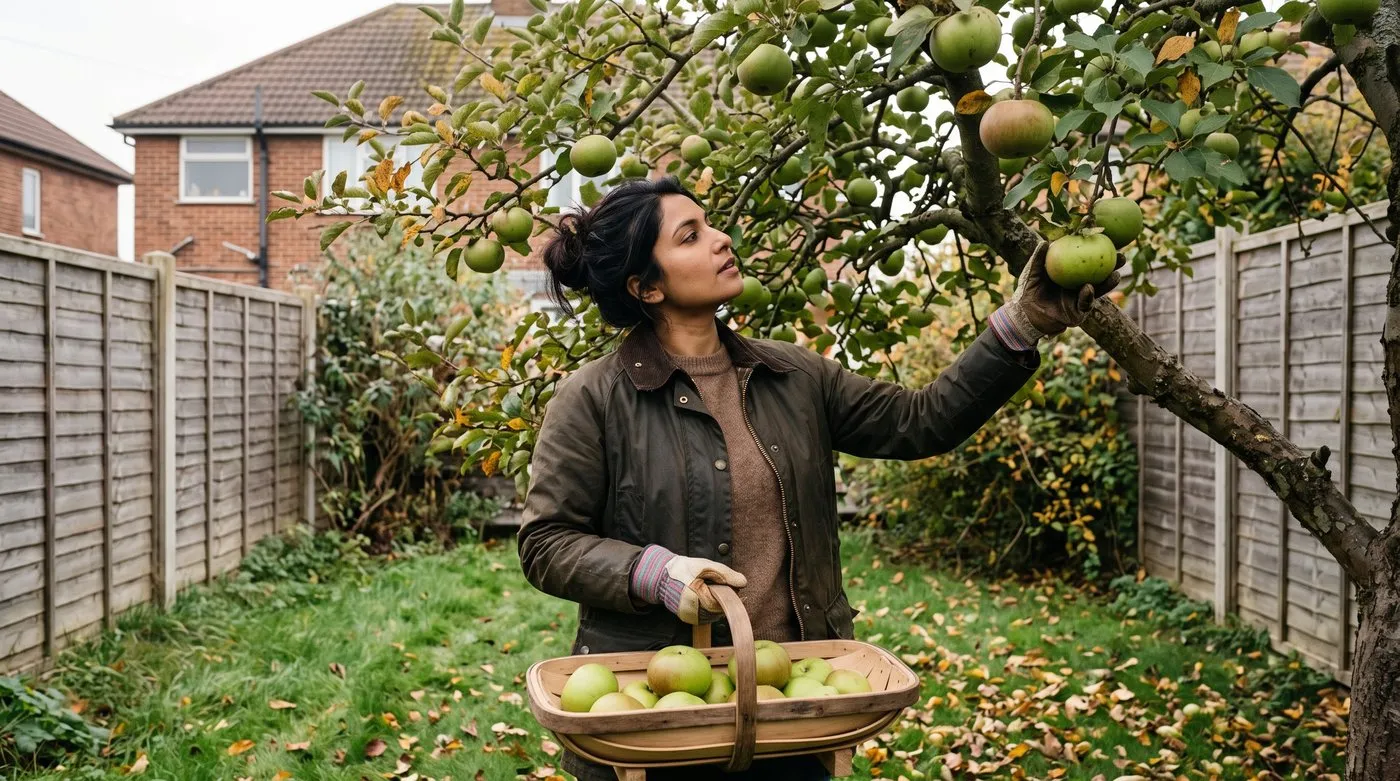
Bramley apples are big, green and sharp. Pick them in October and they’ll keep for crumbles well into the new year.
Bramley’s Seedling is the UK’s favourite cooker. It cooks to a sharp, fluffy purée and stores well into the new year. It’s a big, vigorous tree, so choose it on a dwarfing rootstock for a small garden. Bramley is a triploid, which means its pollen is poor. It needs two other varieties nearby to pollinate it and to pollinate each other.
Howgate Wonder has very large fruit that cooks a little chunkier and milder than Bramley. It stores well and makes a smaller tree, which suits modest gardens.
Grenadier is an early cooker, ready from August. It cooks well and crops reliably, but it doesn’t store, so use it in late summer.
Keswick Codlin is an old, hardy northern cooker ready in August. It’s a good choice for exposed and cooler gardens.
Which apples are good for eating and cooking?
If you only have room for one or two trees, a dual-purpose apple gives you both. These are sharp enough to cook with but pleasant to eat once fully ripe.
James Grieve is the best-known. It was raised in Edinburgh and crops well in cooler summers. It’s sharp when picked early for cooking and sweeter when left to ripen. It can suffer from canker on wet, heavy soil, so give it a well-drained spot.
Charles Ross has large, red-flushed fruit ready in late September. It eats well and cooks to a pleasant purée.
Blenheim Orange is a big old variety with nutty, honeyed fruit. It’s a triploid, makes a large tree and can take several years to start cropping. It’s one for a bigger garden.
Apple variety comparison table
| Variety | Use | Pollination group | Ready to pick | Keeps |
|---|---|---|---|---|
| Discovery | Eating | 3 | August | 1-2 weeks |
| James Grieve | Both | 3 | September | A few weeks |
| Worcester Pearmain | Eating | 3 | September | A few weeks |
| Egremont Russet | Eating | 2 | Late Sept to Oct | Until Christmas |
| Cox’s Orange Pippin | Eating | 3 | October | Until the new year |
| Ashmead’s Kernel | Eating | 4 | October | Into the new year |
| Grenadier | Cooking | 3 | August | 2-3 weeks |
| Bramley’s Seedling | Cooking | 3 (triploid) | October | Into the new year |
| Howgate Wonder | Cooking | 4 | October | Into the new year |
How to choose apples that pollinate each other
Most apples need another variety flowering at the same time to set a good crop. Varieties are sorted into pollination groups by flowering time, from early (group 1) to late (group 7). A tree is usually pollinated by others in its own group or the group on either side.
Group 3 is the easy one. Discovery, James Grieve, Worcester Pearmain, Cox and Bramley all sit there, so two group 3 trees usually do the job. Bramley is a triploid, so plant it with two other varieties, not one.
You don’t always need two trees of your own. Apple and crab apple trees in neighbouring gardens often do the work for you. A crab apple tree such as ‘Golden Hornet’ or ‘John Downie’ is a pretty pollinator for a small garden. Short on space? A family tree, with two or three varieties grafted onto one trunk, pollinates itself.

Apple trees only set fruit if pollinators carry pollen between varieties flowering at the same time, so pick partners from matching groups.
Which rootstock suits your garden?
Every named apple tree is grafted onto a rootstock, which controls how big the tree grows. You choose the variety for the fruit and the rootstock for your space.
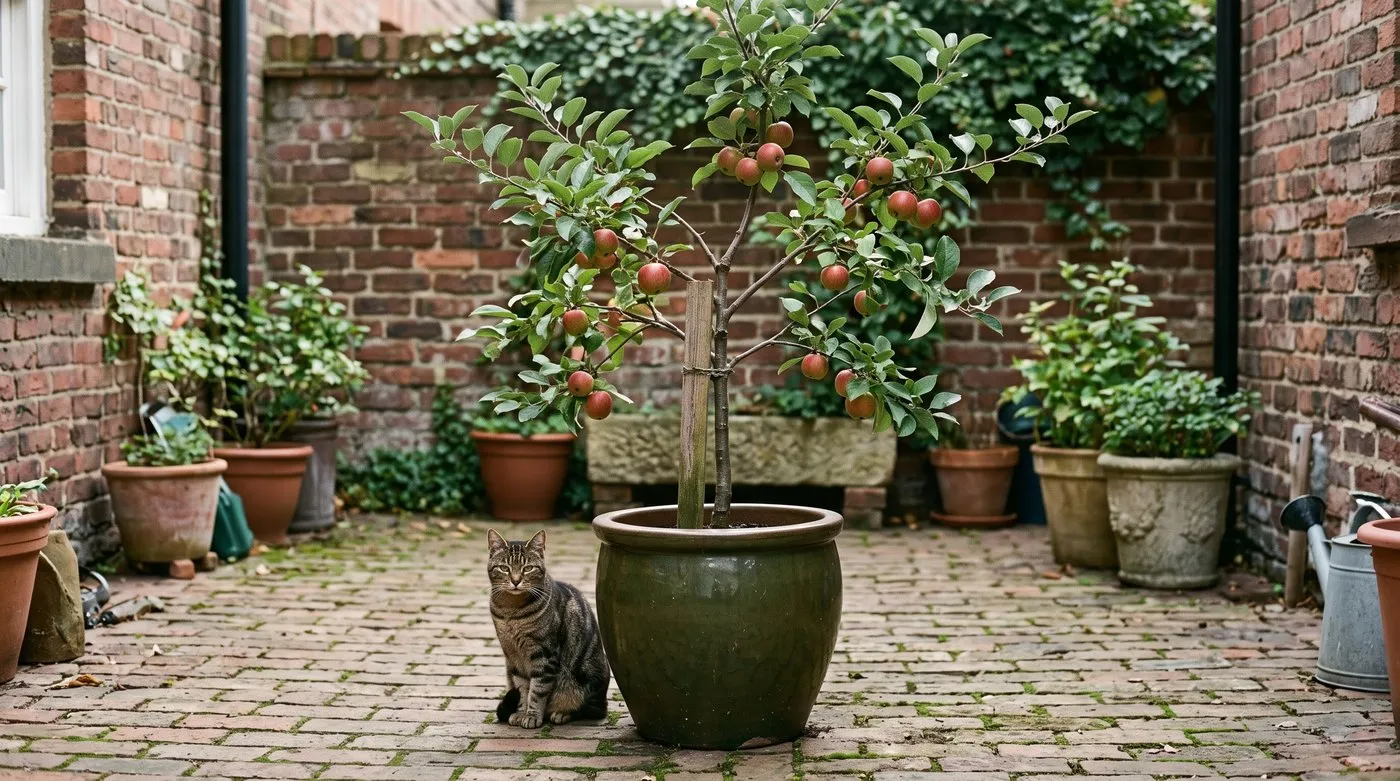
On a dwarfing rootstock, an apple tree stays small enough for a pot in a courtyard and still gives a proper crop.
| Rootstock | Rough height | Best for |
|---|---|---|
| M27 | About 1.5m | Pots and tiny gardens |
| M9 | About 2-2.5m | Small gardens, cordons, pots |
| M26 | About 2.5-3m | Average gardens |
| MM106 | About 3-5m | Larger gardens, poorer soil |
| M25 or MM111 | 5m or more | Traditional orchards |
Smaller rootstocks crop sooner but need staking for life and good soil. Our guide to fruit tree rootstocks explains the choice in more detail.
Which apple varieties resist disease best?
If you’d rather not fight scab and canker, choose a variety with good natural resistance. Scab causes dark, corky spots on fruit and leaves. Canker causes sunken wounds that can kill branches, and is worse on wet, heavy soil.
- Discovery has some resistance to scab and is a tough all-rounder.
- Saturn and Topaz were bred for good scab resistance.
- Egremont Russet is generally healthy and easy to look after.
- Cox’s Orange Pippin and Bramley are more prone to canker and scab, so give them an open, airy spot.
Whatever you grow, rake up fallen leaves in autumn and prune out cankered wood in winter. Our guide to apple and pear scab shows what to look for.
Spur-bearers and tip-bearers: why it matters
Most apples are spur-bearers. They fruit on short, knobbly side shoots, and they’re the best choice for trained shapes such as cordons and espaliers. A few, such as Worcester Pearmain, are partial tip-bearers that fruit at the ends of last year’s shoots.
If you want a cordon or espalier against a fence, pick a spur-bearer. Tip-bearers are better grown as a free-standing tree with light pruning. Our guide to pruning fruit trees explains how to treat each kind.

Spur-bearing apples are pruned in winter. Knowing which type you have stops you cutting off next year’s fruit.
Which apple varieties suit northern England and Scotland?
In cooler, wetter gardens, choose apples that ripen early to mid-season and cope with a short summer. Late, warmth-loving varieties such as Cox and Braeburn often struggle.
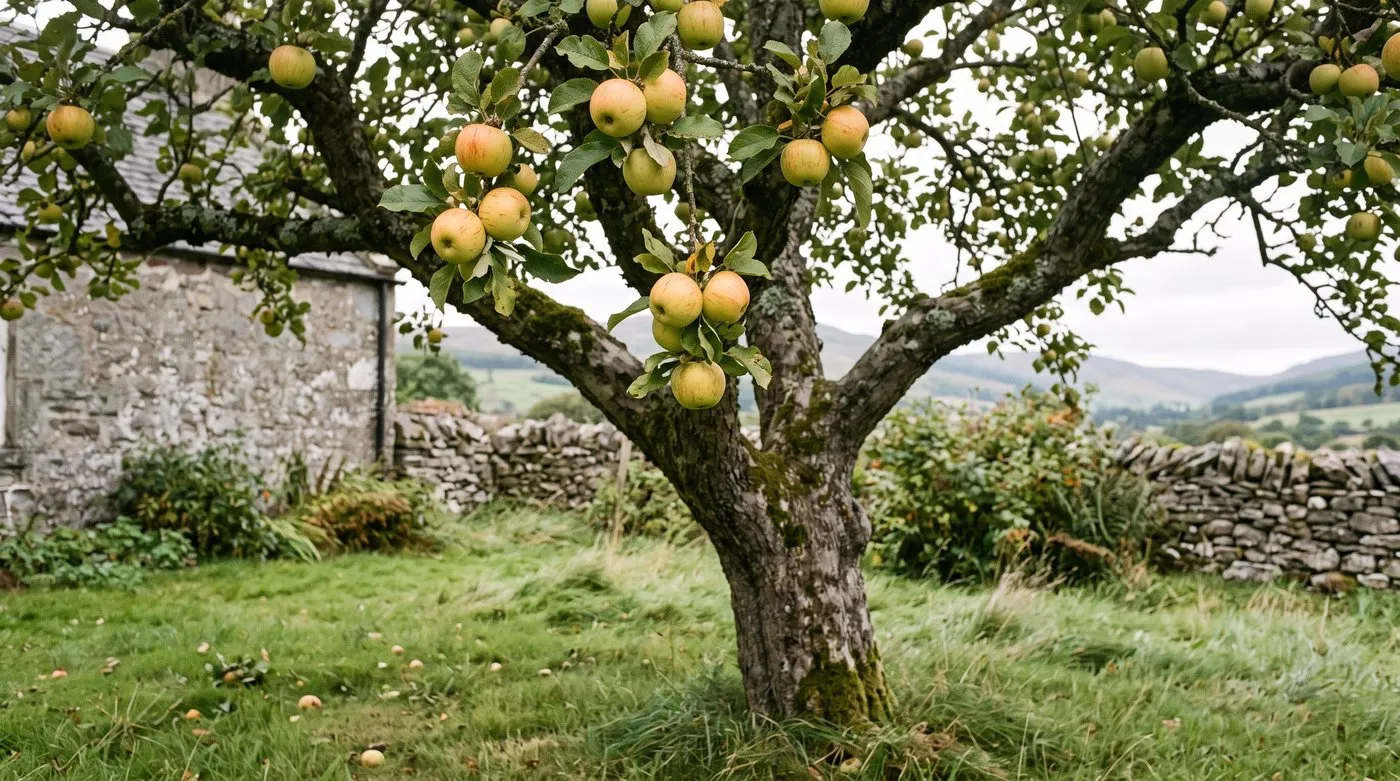
James Grieve was raised in Edinburgh and still crops well where summers are short and cool.
James Grieve is the top choice for Scotland and the north. It was raised in Edinburgh and crops reliably in cool summers.
Keswick Codlin is a hardy cooker that does well in exposed northern and upland gardens.
Discovery ripens early and copes well across the country.
Fiesta, also sold as ‘Red Pippin’, is a Cox seedling. It gives Cox-like flavour and is easier to grow in cooler areas.
If your garden is in a frost pocket, look for a late-flowering variety. Court Pendu Plat is a very old variety that flowers so late it usually misses spring frosts.
Which apples store best?
Late varieties picked in October store best. Early apples such as Discovery are for eating within a week or two.
Bramley, Egremont Russet, Ashmead’s Kernel and Howgate Wonder all keep for months. Pick them carefully, without bruising, and store only perfect fruit. Lay them out on slatted racks or wrap each in paper. Keep them somewhere cool, dark and frost-free, such as a shed or garage, and check every couple of weeks for rotten ones. Our guide on how to store apples and pears covers this step by step.

Only store sound, unbruised apples. One rotten fruit soon spreads to its neighbours.
Heritage apple varieties worth growing
Old British varieties offer flavours you won’t find in the shops. These four are well worth a try.
Ashmead’s Kernel is an 18th-century Gloucestershire apple with a sharp-sweet, nutty flavour. Its flavour improves in storage.
Ribston Pippin is a rich, aromatic Yorkshire apple thought to be a parent of Cox. It’s a triploid and likes a warm, well-drained spot.
Pitmaston Pineapple has small golden apples with a honeyed, pineapple-like taste. It’s a fun one for a small garden on a dwarfing rootstock.
Court Pendu Plat is a very old, late-flowering variety with rich, aromatic fruit. It’s a good pick for frosty gardens.
When are apples ready to pick?
This calendar shows roughly when each variety is ready. Pick early apples straight off the tree and leave late ones to finish ripening in store.
| Month | Ready to pick |
|---|---|
| August | Discovery, Grenadier, Keswick Codlin |
| September | James Grieve, Worcester Pearmain, Charles Ross |
| Late September to October | Egremont Russet, Fiesta |
| October | Cox, Bramley, Howgate Wonder, Ashmead’s Kernel, Blenheim Orange |
| November to March | Plant new bare-root trees in mild, dry spells |
Common mistakes when choosing apple varieties
- Picking partners that don’t flower together. A group 1 and a group 5 tree won’t pollinate each other. Stick to the same or neighbouring groups.
- Buying Bramley with only one partner. As a triploid, it needs two other varieties nearby.
- The wrong rootstock for the space. A Bramley on a vigorous rootstock soon swamps a small garden.
- Ignoring your climate. Cox and Braeburn often disappoint in cool northern gardens.
- Buying unnamed trees. Without a variety and rootstock on the label, you can’t plan pollination or size.
Some varieties crop heavily one year and hardly at all the next. Our guide to biennial bearing explains why. For more fruit to grow, browse our growing hub, or read our guide to the best pear tree varieties to plant alongside your apples.
Frequently asked questions
What is the best apple tree to plant in a UK garden?
James Grieve is a great all-round first tree. It’s good for eating and cooking, crops reliably and copes with cooler northern summers. If flavour matters most and you have a warm, sheltered spot, Cox’s Orange Pippin is hard to beat, but it needs more care.
How many apple trees do I need for pollination?
Usually two that flower at the same time. Pick varieties from the same or a neighbouring pollination group. Triploid varieties such as Bramley need two partners, because their own pollen is poor. A neighbour’s tree or a crab apple nearby often does the job too.
Which apple varieties are self-fertile in the UK?
A few are partly self-fertile, but all crop better with a partner. James Grieve and Greensleeves will set some fruit on their own. Even these give a bigger, more even crop with another apple or a crab apple flowering nearby.
What is the best cooking apple to grow in the UK?
Bramley’s Seedling is the classic choice. It cooks down to a sharp, fluffy purée and keeps well into the new year in a cool shed. It makes a big tree and needs two pollination partners. Howgate Wonder is a good alternative with very large fruit.
What apple varieties store best over winter?
Late varieties picked in October store best. Bramley, Egremont Russet, Ashmead’s Kernel and Howgate Wonder all keep for months somewhere cool and dark. Early apples such as Discovery only last a week or two, so eat them fresh.
Can I grow apple trees in pots?
Yes, choose a variety on a dwarfing rootstock such as M27 or M9. Use a pot at least 45cm wide filled with loam-based compost such as John Innes No. 3. Water often in summer and feed with a high-potash liquid feed while the fruit swells.
Which apple trees grow best in northern England and Scotland?
James Grieve, Keswick Codlin and Discovery are reliable choices. James Grieve was raised in Edinburgh and crops well in cool summers. Keswick Codlin is a hardy early cooker. Avoid Cox and Braeburn, which need a long, warm season to ripen properly.
Our team produces practical UK gardening guidance from source research, contributor records and established horticultural practice. Editorial standards are overseen by Matt W.


