Key takeaways
- Scab shows as olive-green to brown blotches on leaves and dark corky scabs on fruit
- It is worst after wet springs, when spores spread onto new leaves
- The fungus spends winter on fallen leaves, so rake them up in autumn
- Winter pruning to open the tree helps leaves dry faster after rain
- Resistant apples include Discovery, Falstaff, Saturn and Topaz
- Scabby fruit is safe to eat, but it doesn't store well
Dark blotches on your apple leaves and rough, corky patches on the fruit? That is scab, the most common disease of apples and pears in UK gardens. It is caused by a fungus, Venturia inaequalis on apples and Venturia pyrina on pears. Scab looks bad but rarely threatens the tree, and the fruit is still fine to eat.
This guide shows you how to identify scab and how it survives the winter. It then covers the autumn and winter jobs and the resistant varieties that keep it under control.
How to identify apple and pear scab
Scab shows up on leaves, fruit and young shoots.
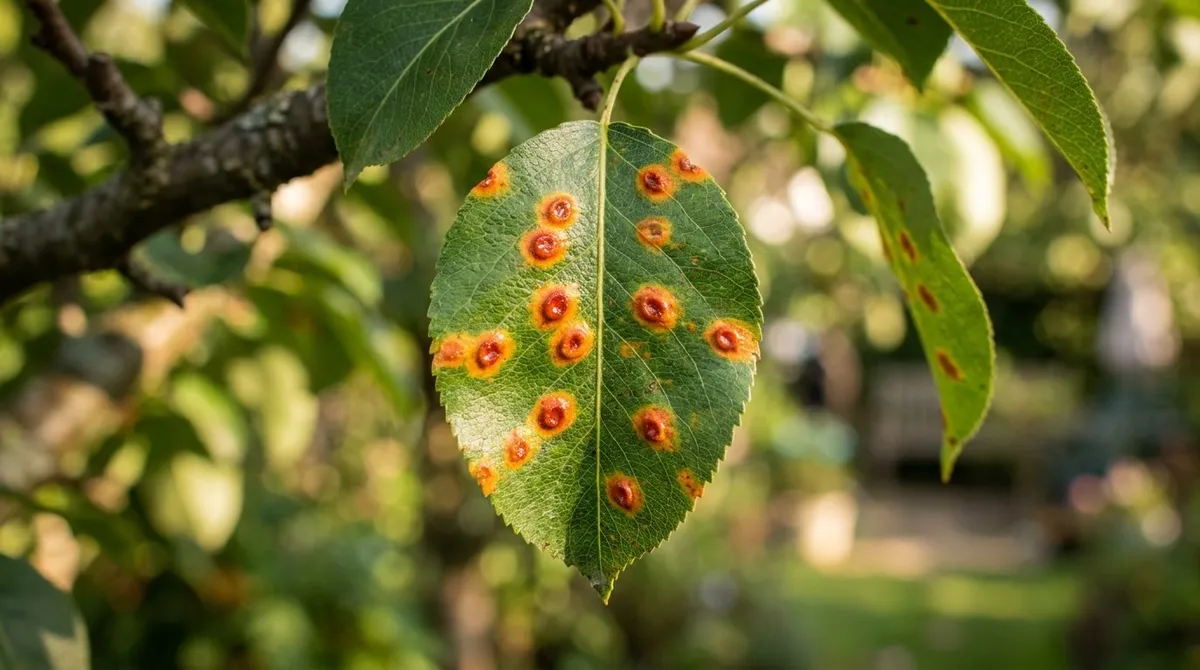
- Leaves: olive-green to dark brown blotches with soft, feathery edges, often along the veins. Badly affected leaves turn yellow and drop early.
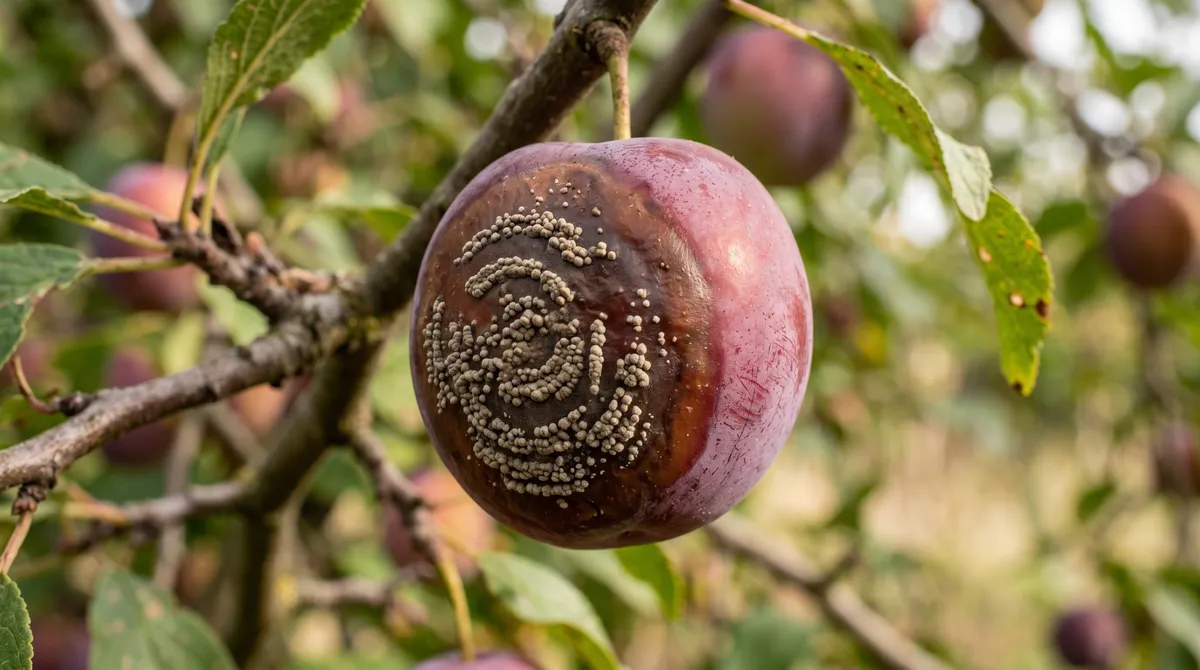
- Fruit: small dark spots that grow into rough, corky patches. Badly scabbed fruit can crack or grow lopsided.
- Young shoots: small, blistered scabby patches on the bark.
Pear scab looks much the same, though spots on pear fruit are often darker and can lead to deep cracks.

Scabbed leaf on the left, healthy leaf on the right. The soft-edged olive-brown spots are typical of scab.

Scab on the fruit grows into rough, corky patches. Peel it off and the apple is still good to eat, but use it first.
If your apples have small sunken brown spots with brown flecks in the flesh instead, that is bitter pit, a calcium problem rather than scab. A hole with crumbly brown droppings inside points to codling moth instead.
How scab spreads through the year
The scab fungus follows a yearly cycle:
- Autumn and winter: it rests on fallen, infected leaves under the tree.
- Spring: rain releases spores from the old leaves. They splash and blow onto new leaves and blossom.
- Late spring and summer: spots develop and produce more spores, which spread to other leaves and the fruit, especially in wet spells.
- Autumn: infected leaves fall, and the cycle starts again.
Wet springs are when scab really takes off, because spores need wet leaves to infect. The fallen leaves in autumn and the damp, crowded branches in spring are the two places you can break the cycle.
Clear fallen leaves in autumn
Clearing fallen leaves is one of the most useful jobs against scab, and it costs nothing.
- Rake up all fallen leaves under apple and pear trees in October and November.
- Get rid of them in your council green-waste bin, or bury them deep inside a compost heap where spores can’t escape.
- Pick off any shrivelled fruit left hanging on the tree.
Do it every year. Spores can still blow in from neighbouring trees, but clearing your own leaves makes a real difference.

Raking up fallen leaves in autumn removes the fungus that would start next spring’s scab.
Prune in winter for airflow
An open tree dries faster after rain, and dry leaves are much harder for scab to infect. Prune apples and pears between November and early March, while they are dormant.
- Remove branches that cross through the middle of the tree.
- Aim for an open, goblet-like shape with space between the main branches.
- Cut back to an outward-facing bud.
- Cut out dead, damaged or diseased wood, including shoots with scabby bark.
Our guide to pruning fruit trees shows the cuts step by step. Scabby patches on bark can let in other problems, so watch for canker on fruit trees too.

Winter pruning opens up the middle of the tree, so the leaves dry quickly after spring rain.
Scab-resistant apple varieties
If you’re planting a new tree, choosing a resistant variety is the easiest control of all.
| Variety | Type | Scab resistance |
|---|---|---|
| Discovery | Early dessert apple | Good |
| Falstaff | Mid-season dessert apple | Good |
| Saturn | Dessert apple | Good |
| Topaz | Late dessert apple | Very good |
| Scrumptious | Early dessert apple | Good |
| Egremont Russet | Russet dessert apple | Good |
| Cox’s Orange Pippin | Dessert apple | Poor, catches it easily |
| Gala | Dessert apple | Poor, catches it easily |
Our guide to the best apple varieties has more choices. For pears, our pear varieties guide helps you pick a tree for your garden.

Clean fruit on one tree and scabby fruit on the next. Variety makes a big difference to how much scab you get.
Should you spray for scab?
Most gardens don’t need to. Few fungicides are approved for home gardeners to use on apples and pears for scab. If you do find one, check the label lists apples or pears and scab, and follow it exactly.
Don’t use old stock of Bordeaux mixture or other copper fungicides. They are no longer approved for garden use. Kitchen mixes such as bicarbonate of soda or milk aren’t approved either.
Leaf clearing, pruning and resistant varieties do far more than any spray. A tree with some scab will usually still give you a good crop.
Common mistakes with scab
- Leaving fallen leaves under the tree. They carry the fungus through winter. Rake them up every autumn.
- Never pruning. A crowded tree stays wet after rain, which suits scab. Open it up in winter.
- Planting a prone variety in a damp spot. Choose a resistant variety for sheltered, damp gardens.
- Storing scabby fruit. It doesn’t keep well. Eat or cook it first.
- Panicking over a few spots. Light scab is cosmetic. The tree and most of the crop will be fine.
Scab control month by month
| Month | What to do |
|---|---|
| January to February | Winter prune to open the tree. Cut out scabby shoots |
| March to May | Watch new leaves for spots after wet spells |
| June to August | Pick off badly scabbed fruitlets when thinning |
| September | Pick fruit and use scabbed apples first |
| October to November | Rake up and remove all fallen leaves. Remove shrivelled fruit |
| December | Plant resistant varieties if replacing a tree |
Frequently asked questions
How do I identify apple scab?
Look for olive-green to dark brown blotches on the leaves. The spots have soft, feathery edges. On the fruit you’ll see dark, rough, corky patches, which can crack. Badly affected leaves turn yellow and drop early.
Which apple varieties resist scab?
Discovery, Falstaff, Saturn, Topaz and Scrumptious are good choices. Egremont Russet also has good resistance. Cox and Gala are among the varieties that catch it easily.
Should I spray for apple scab?
Most gardens don’t need to. Few fungicides are approved for home gardeners to use on apples and pears for scab. Only use a product whose label lists your fruit and scab, and follow it exactly. Leaf clearing, pruning and resistant varieties do most of the work.
Does raking up fallen leaves help with scab?
Yes, it is one of the most useful things you can do. The fungus spends winter on fallen leaves and releases spores in spring. Clear them in autumn and put them in the green-waste bin or bury them in the compost heap.
Can I eat apples with scab?
Yes, scabby apples and pears are safe to eat. Peel or cut away the rough patches. Scabbed fruit doesn’t store well, so use it first.
Can I save a tree that gets scab every year?
Usually, yes. Clear fallen leaves every autumn and prune to open the tree each winter. Most trees crop well despite some scab. If a tree is badly affected every year, consider replacing it with a resistant variety.
Find more fruit tree troubles in our problems hub. For year-round care that keeps trees healthy, read our guide to growing apple trees.
Our team produces practical UK gardening guidance from source research, contributor records and established horticultural practice. Editorial standards are overseen by Matt W.