
Key takeaways
- Most cracking comes from heavy rain after a dry spell, which swells the flesh faster than the skin
- A crack on a rough, corky patch is apple scab, not a watering problem
- Mature trees in the ground rarely need watering, but young and potted trees do
- A mulch over the root area keeps soil moisture steady through summer
- Cracked apples are fine to eat if there's no rot, but use them within a few days
Apples crack when the flesh swells faster than the skin can stretch. The usual trigger is heavy rain after a dry spell. The tree gulps water, the fruit plumps up in a rush and the skin splits. The good news is that it’s mostly preventable with steadier watering and a good mulch. Here’s how to read the cracks, use the fruit you have and keep next year’s crop whole.
Why do apples crack?
Mostly because of uneven water. In a dry spell the apple grows slowly and its skin firms up. When heavy rain arrives, the roots take up water fast and the flesh swells. The skin can’t keep pace, so it tears.
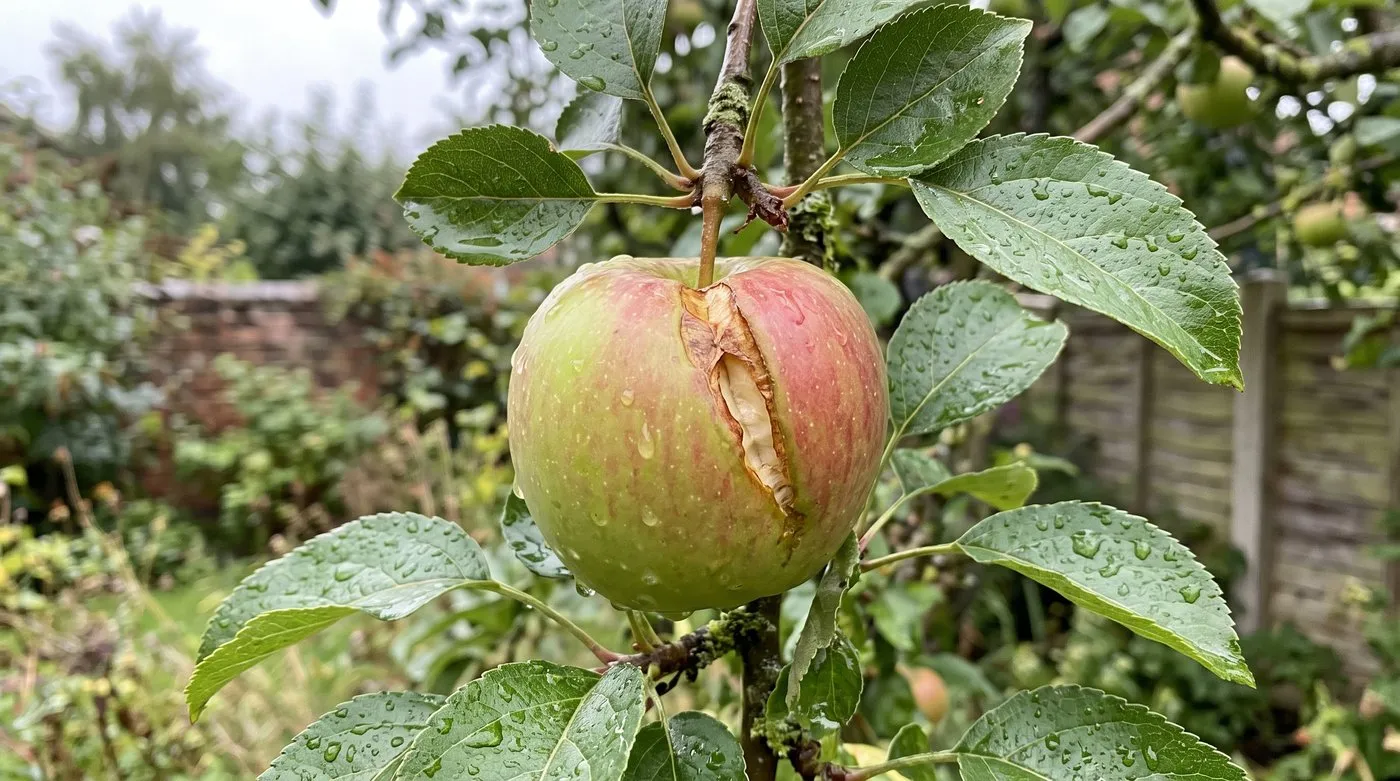
A clean split on otherwise smooth skin is the classic sign of heavy rain after a dry spell.
It’s the swing from dry to wet that does it, not the total rainfall. A tree kept evenly moist all summer copes with a wet spell. A tree that bakes dry and then gets a soaking is the one that splits.
That’s why young trees and trees in pots crack most. Their roots dry out quickly, so they swing between dry and soaked. Established trees in open ground have deep roots that find steady moisture. The guide to growing apple trees covers planting and early care that set young trees up well.
What kind of crack is it?
Not every crack is a watering crack. Look closely before you decide what to do.
| Crack type | What it looks like | Likely cause | What to do |
|---|---|---|---|
| Growth crack | Clean split, smooth skin around it | Heavy rain after a dry spell | Even out watering and mulch |
| Scab crack | Split along a rough, olive-brown or corky patch | Apple scab fungus | Clear fallen leaves, prune for airflow |
| Frost russet crack | Split near a rough, brownish band or ring of skin | Frost while the fruit was tiny | Nothing now, it’s down to spring weather |
Growth cracks are the most common. They appear after wet weather, often near the stalk or down one side, and the skin around them looks normal.
Scab cracks always sit on damage. Apple scab makes dark, corky blotches that can’t stretch, so the skin tears along them as the fruit grows. If that’s what you see, the guide to apple and pear scab explains how to keep it down.
Small brown spots inside the flesh are a different problem again. The guide to apple bitter pit covers those.

Rough and corky on the left, clean and smooth on the right. The patch under the crack tells you whether it’s scab or watering.
How to stop apples cracking
Keep the soil evenly moist from early summer to harvest. That takes away the sudden surge that splits the fruit.
- Mulch in spring. Spread a 5-8cm layer of compost or well-rotted manure over the root area while the soil is moist. Keep it a hand’s width away from the trunk.
- Water the trees that need it. Give young trees and potted trees a deep soak once or twice a week in dry spells, rather than a daily splash.
- Water before the drought breaks. If a long dry spell has been forecast to end with heavy rain, a good soak beforehand softens the swing.
- Keep grass and weeds back. A clear circle around a young tree stops grass stealing its water.

A thick mulch over the roots holds moisture steady through summer. Leave a gap around the trunk so the bark stays dry.
Thinning and watering: the habits that matter most
Thinning crowded fruitlets helps the apples that are left grow well. After the natural fruit drop in June, remove the smallest and any damaged fruitlets. Leave one or two apples per cluster, roughly 10-15cm apart. Thinning also helps stop a tree cropping heavily one year and barely at all the next, which the guide to biennial bearing explains.

Thin crowded clusters after the June drop. Fewer apples per cluster means each one has room to grow.
Apples in pots need the most care. A pot dries out fast and then gets drenched, which is exactly the swing that splits fruit. Water little and often in summer, so the compost never dries right out. The guide to growing fruit in pots has the full routine.

Potted apples dry out quickly. Steady watering through dry spells stops the sudden surge that splits fruit.
What to do with apples that have already cracked
Use them quickly. A split lets in rot, wasps and moisture loss, so cracked fruit won’t keep.
- Pick them now rather than leaving them on the tree, where they attract wasps and brown rot.
- Cut out the damaged part and use the rest in crumbles, sauces, chutney or juice.
- Compost any that have rotted. Don’t leave rotten fruit on the tree or the ground, as brown rot spreads from it.
- Keep them out of storage. Only store sound, unblemished apples. The guide to storing apples and pears shows how.
Apples that look fine but taste odd after storing are a separate issue. See the guide to apples and pears tasting bitter or off.
Common mistakes with cracking apples
Watering in big, occasional floods. A bone-dry pot followed by a drenching is the classic cause. Little and often is better for pots, and a deep weekly soak for young trees.
Blaming the weather for scab. If cracks sit on corky patches, steadier watering won’t fix them. Deal with the scab.
Storing cracked fruit. One split apple can start rot in the whole box. Use them fresh.
Skipping the mulch. Bare soil dries fast in summer. A spring mulch is the easiest fix there is.
More fruit growing guides are in the growing fruit hub.
Frequently asked questions
Why are my apples splitting and cracking?
Usually because heavy rain followed a dry spell. The tree drinks fast, the flesh swells and the skin can’t keep up, so it splits. Apple scab can also crack fruit along its corky patches.
Can you eat cracked apples?
Yes, if the split is fresh and there’s no rot. Cut out the damaged bit and use the rest in cooking, juice or a crumble. Cracked apples won’t store, so use them within a few days.
How do I stop my apples cracking?
Keep the soil evenly moist through summer. Mulch around the tree, water young and potted trees well in dry spells, and thin crowded fruitlets after the June drop. Tackle scab if your cracks sit on corky patches.
Do mature apple trees need watering to stop cracking?
Usually not, as their deep roots find steady moisture. It’s young trees in their first few years and trees in pots that dry out fast. Water those deeply once or twice a week in dry weather.
What is the difference between a growth crack and a scab crack?
A growth crack is a clean split on otherwise smooth skin. A scab crack sits on a rough, olive-brown or corky patch, with ragged edges where the hardened skin couldn’t stretch. Growth cracks need steadier watering; scab cracks need scab control.
Keep the next crop healthy from the start with the guide to pruning fruit trees for airflow and good fruit.
Our team produces practical UK gardening guidance from source research, contributor records and established horticultural practice. Editorial standards are overseen by Matt W.


