Key takeaways
- Bolting is usually triggered weeks earlier by a cold spring spell followed by warmth
- Snap or cut the flower stalk off as soon as you see it, but it won't undo the bolting
- Bolted onions are safe to eat, just cut out the woody centre
- Use bolted bulbs first, as their thick necks never dry and they rot in storage
- Next year, plant small heat-treated sets once the soil has warmed
If your onions have sent up thick, round flower stalks, they’ve bolted. It means they’ve stopped growing a bulb and started making seed. You can’t reverse it, but you can still get a decent meal out of them. Snap off the stalks, use those onions first and keep the rest growing. This guide explains why it happened and exactly what to do now.
What does a bolted onion look like?
A bolted onion sends up a thick, round stalk from the centre of the neck, usually in May or June. It’s stiffer than the leaves, and a pointed, papery bud forms at the top. Left alone, that opens into a round head of small white or purple flowers.
The neck of a bolted plant stays thick and green, rather than thinning and flopping over as the bulb ripens.

That stiff stalk with a papery bud on top is the giveaway. Snap it off as soon as you spot it.
Why have my onions bolted?
Onions normally grow a bulb in their first year and flower in their second. A cold spell in spring followed by warmer weather can trick a young plant into thinking a winter has passed. So it flowers early. The trigger happens weeks before you see a stalk.
A few things make it more likely:
| Cause | Why it matters |
|---|---|
| Large sets | Bigger sets are more ready to flower after a cold snap |
| Planting into cold soil | It gives the plant the chill that sets bolting off |
| Dry spells | Stressed plants are more likely to rush into seed |
| Untreated sets | Heat-treated sets are much less likely to bolt |
Some varieties bolt more easily than others too, and red onions are often more prone. The comparison of UK onion varieties helps you pick reliable ones.
What to do when onions bolt
Act as soon as you see a stalk.
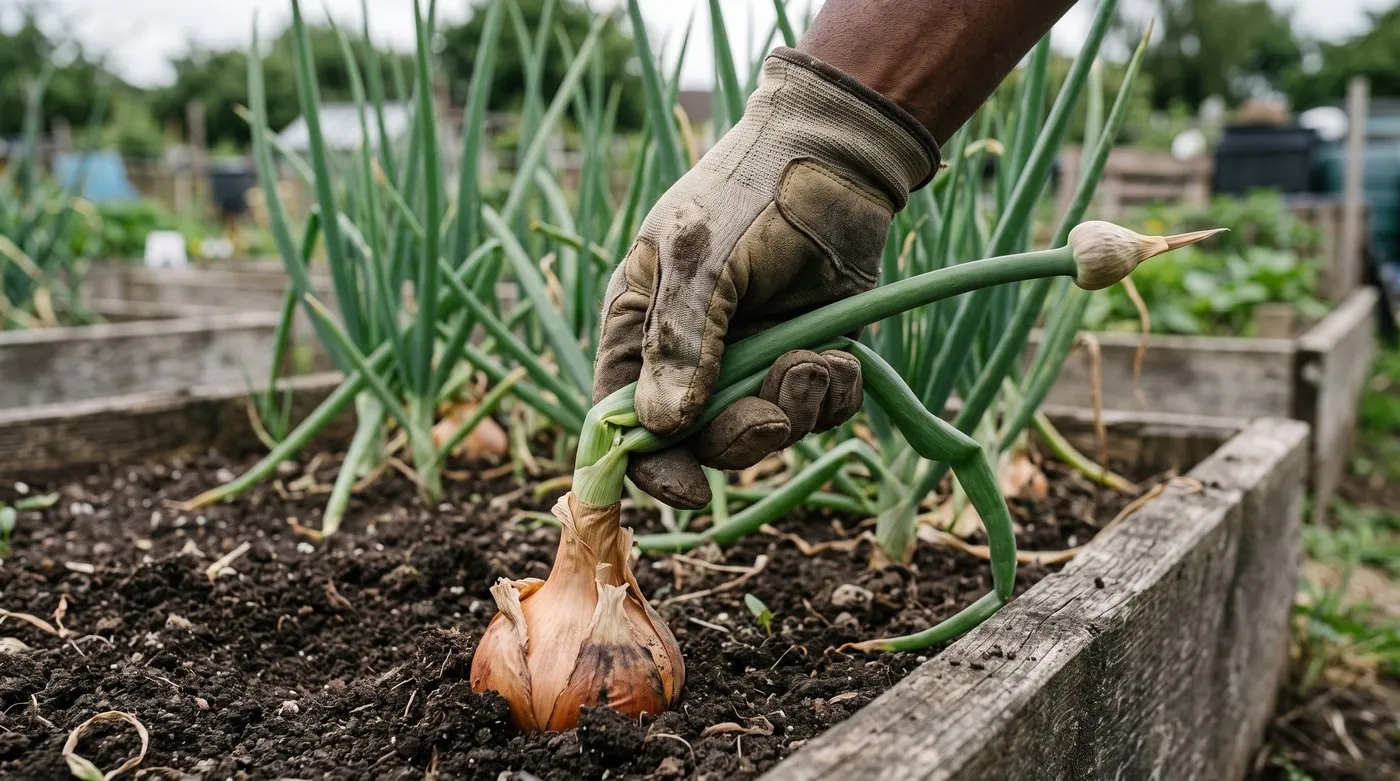
Bend the stalk sharply near the neck while it’s still soft and it snaps cleanly away.
- Snap or cut off the stalk. Bend it sharply near the neck while it’s still soft, or cut it with a clean knife just above the bulb. It won’t undo the bolting, but it stops the plant putting more energy into seed.
- Mark the plant. A cane beside it reminds you which onions to use first.
- Leave it to grow a little. If the bulb is still small, leave it in the ground for a few more weeks to fatten up.
- Lift and use it first. Once it’s a usable size, pull it and get it into the kitchen.
The stalks can go on the compost heap.
Can you eat a bolted onion?
Yes. Bolted onions are perfectly safe to eat. The main difference is a tough, woody core running up the middle, where the flower stalk grew. Cut the onion in half, pull or cut out the hard centre and use the rest as normal. Soups, stews and sauces are ideal.
Don’t throw the flower buds away either. Young, tight onion buds are edible and can be chopped into a stir-fry.

Cut a bolted onion in half and you’ll see the woody core. Remove it and the rest cooks like any other onion.
Why a bolted onion won’t store
A sound onion’s neck thins, dries and seals as it ripens. That seal keeps rot out in storage. A bolted onion’s neck stays thick and green around the old stalk and never dries properly. Moisture and rot get in through the top within a few weeks.
So never store bolted onions with your good ones. One soft onion can spoil the whole net. Use them within a few weeks, keeping them somewhere cool and dry until then.
What about the rest of the onion bed?
Usually only some plants bolt, often the ones from the biggest sets. The rest carry on as normal.
- Keep watering in long dry spells until the bulbs are swelling well, then ease off as the leaves start to yellow.
- Keep weeds down, as onions hate competition.
- Lift when the leaves flop over and yellow, usually in July or August for spring sets.
- Dry them thoroughly before storing. The guide to curing and drying onions shows how, and storing onions, garlic and shallots covers keeping them through winter.
If your onions have yellowing leaves, rot or fuzzy grey patches instead of flower stalks, check the guide to onion diseases.

The unbolted onions are the ones to cure and store. Slim, dry necks mean they’ll keep well into winter.
Do shallots and autumn onions bolt too?
Yes, both can. Shallots bolt for the same reasons as onions, and the same rescue works: snap off the stalk and use those bulbs first. The guide to growing shallots covers planting times that lower the risk.
Autumn-planted onions spend the whole winter in the ground, so pick varieties bred for it, such as ‘Senshyu’ or ‘Radar’. The guide to autumn onion sets explains when to plant them.
How to stop onions bolting next year
Most of the work happens at planting time:
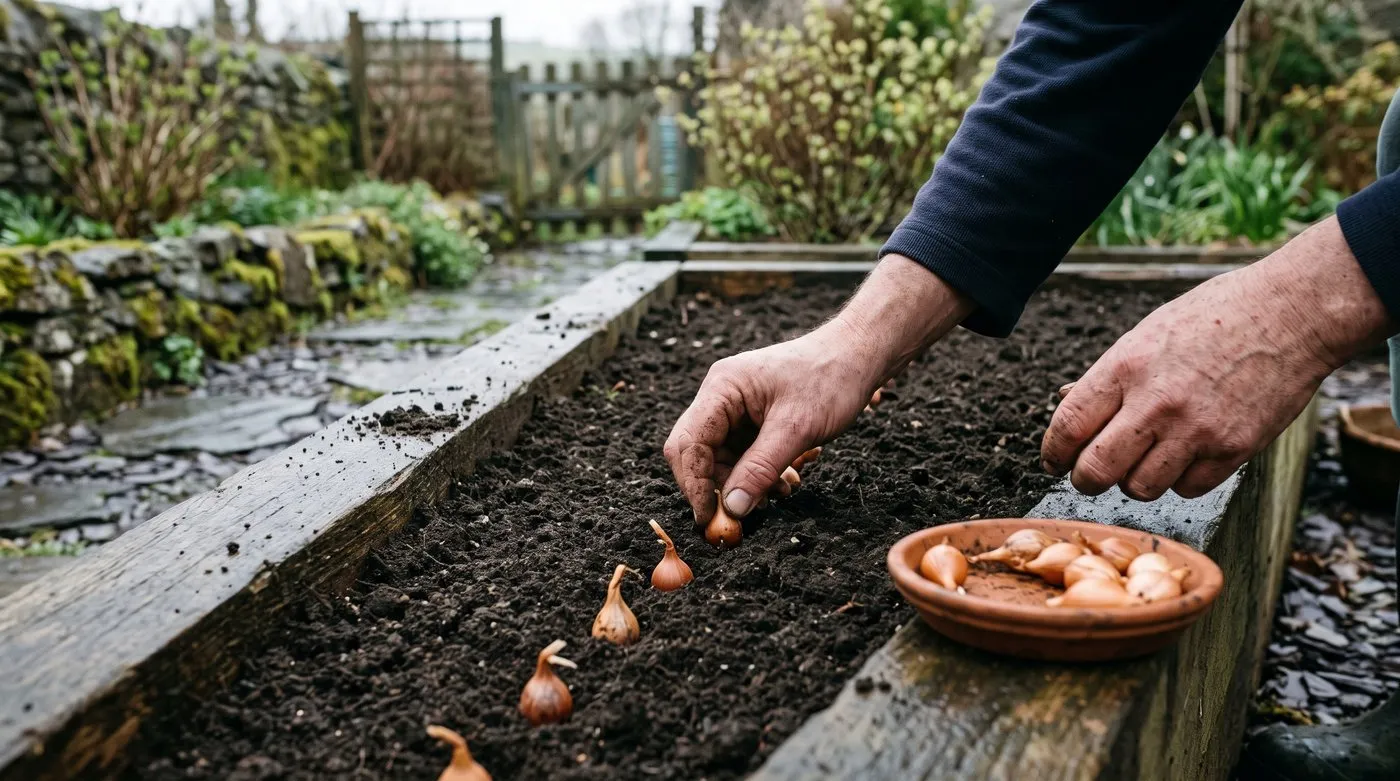
Small sets planted into warming soil in spring are far less likely to bolt than big ones.
- Plant small sets. Choose sets about the size of a marble or smaller rather than big ones.
- Buy heat-treated sets where you can, especially for red onions.
- Wait for warmer soil. Plant spring sets in March or April, once the ground has started to warm, rather than into cold, wet soil.
- Water in dry spells so growth never stalls.
- Firm the soil and avoid fresh manure, which gives soft growth.
The full guide on how to grow onions covers the whole season, from planting to harvest.
Common mistakes with bolted onions
Leaving the stalk to flower. The plant pours energy into seed and the bulb suffers. Snap it off early.
Storing bolted bulbs. They rot from the neck and can spoil their neighbours. Eat them first.
Pulling every plant in a panic. Most of the bed is usually fine. Only lift the ones that bolted, and only once they’re a usable size.
Buying the biggest sets. They look like better value but bolt far more easily.
More veg growing help is in the growing veg hub.
Frequently asked questions
Why have my onions bolted?
Usually a cold spell in spring followed by warmer weather. The plant reads it as winter passing and switches to flowering. Large sets, planting into cold soil and dry spells all make it more likely.
Can you eat a bolted onion?
Yes, bolted onions are perfectly safe to eat. Cut out the tough, woody centre where the stalk runs through and use the rest. Eat them within a few weeks, as they won’t store.
Should I cut the flower off a bolting onion?
Yes, snap or cut it off as soon as you see it. It won’t reverse the bolting, but it stops the plant putting energy into seed. Then lift and use that onion before the rest.
Will the rest of my onions bolt too?
Not necessarily. Usually only some plants bolt, often the ones from the biggest sets. Keep the rest watered in dry spells and they should carry on bulking up for a normal harvest.
How do I stop my onions bolting next year?
Plant small, heat-treated sets once the soil has warmed in spring. Choose varieties known for bolt resistance, firm the soil and water in long dry spells. Autumn sets need varieties bred for overwintering.
Ready to plan next year’s crop? The onion bolting prevention guide goes step by step through sets, varieties and planting dates that keep flower stalks away.
Our team produces practical UK gardening guidance from source research, contributor records and established horticultural practice. Editorial standards are overseen by Matt W.