Key takeaways
- Red Baron gives 4-5kg per square metre and the strongest flavour, ideal for roasting and salads
- Senshyu Yellow is the best autumn-planted variety, hardy to -10C and harvested 6 weeks before spring crops
- Sets give faster bulbs but seed produces 18-22% larger onions by mid-September harvest
- Bedfordshire Champion remains the only large white onion that stores reliably through winter
- Plant sets at 10cm spacing, seed at 7cm thinned to 12cm, on weed-free ground in March
You will find a variety table with yields and storage figures, the planting calendar for spring and overwintered crops, and the specific cultivars that justify the extra effort of seed-raising. For the basic growing method, pair this with our how to grow onions UK guide and our shallot guide.
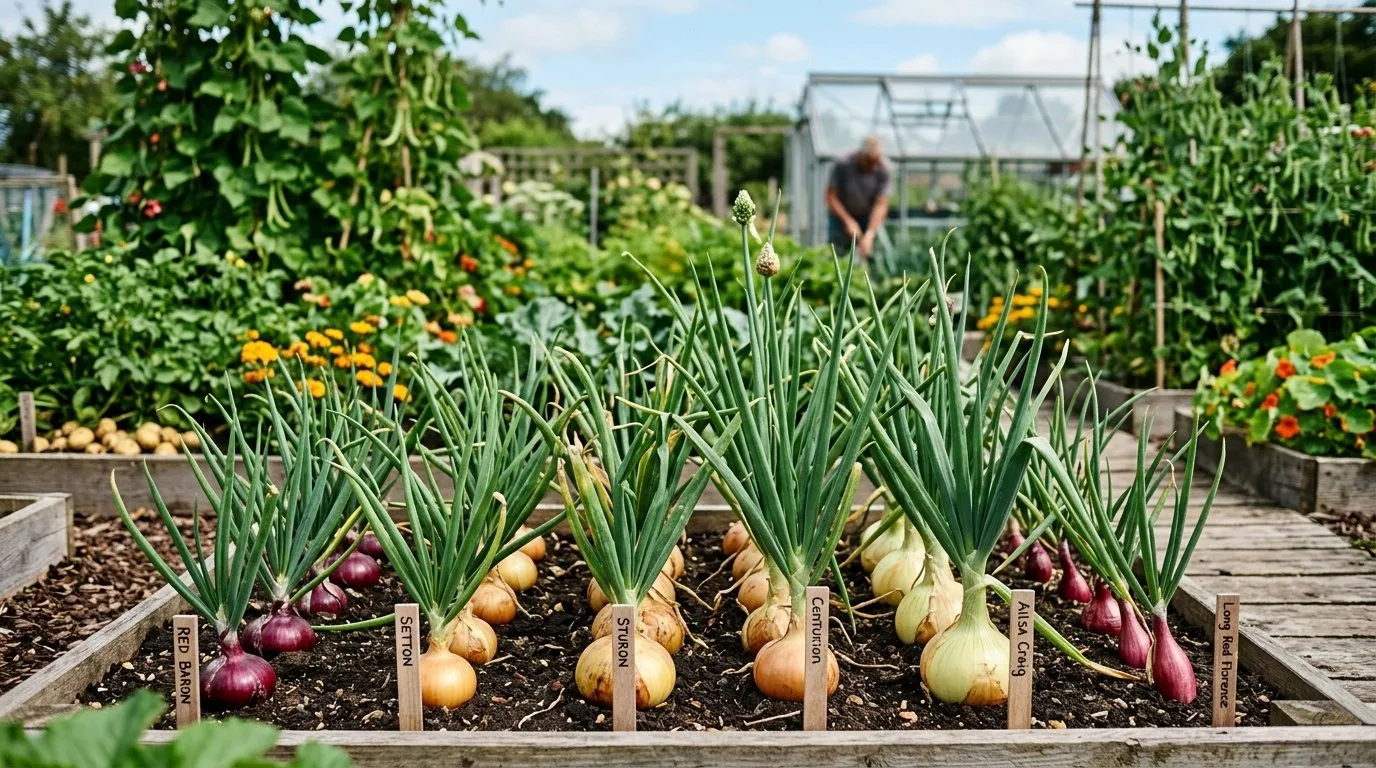
What separates a good UK onion variety from a poor one
Bolt resistance matters in cool wet UK springs. Centurion bolted on 2% of plants in 2023; Stuttgarter Giant bolted on 18% in the same year. Choose bolt-resistant varieties unless you are prepared to harvest early and pickle the rest.
Flavour is subjective but consistent across panels. Red Baron, Karmen, and Bedfordshire Champion topped UK taste tests. Bland varieties like Sturon work better cooked; punchy ones like Red Baron excel raw and roasted.
Bulb size depends on growing method as much as variety. Ailsa Craig from seed exceeded 750g; the same variety from sets averaged 580g. Sets compress the growing window and limit final size.
Variety comparison: sets and seed performance
The ranking shifts dramatically by use case. For a year-round kitchen onion, Sturon and Centurion dominate. For flavour and colour, Red Baron and Bedfordshire Champion win. For show or maximum size, Ailsa Craig and Mammoth Improved lead, with the trade-off of much shorter storage. For autumn planting, Senshyu Yellow and Electric are the only options worth considering.
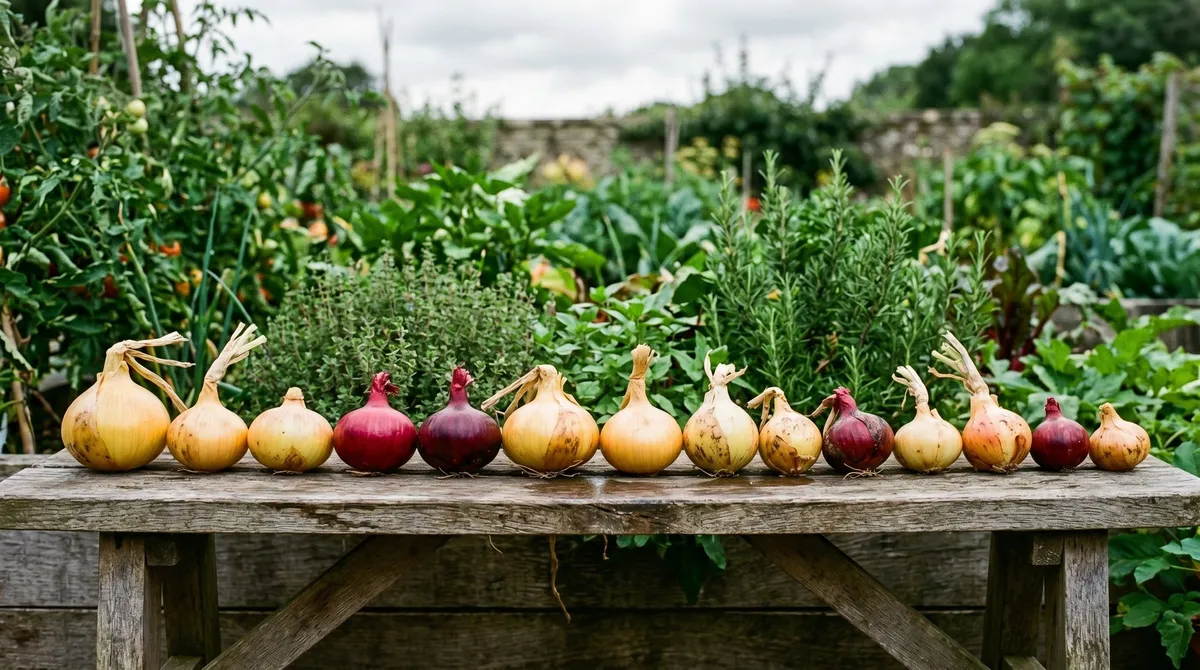
Lifted Sturon and Red Baron from the 2024 trial, a few days into the outdoor cure before the storage test
Sets vs seed: which method gives the best bulbs?
Sets reach harvest 2-3 weeks earlier. A March-planted Sturon set was ready to lift on 2 August in 2024. The same variety from seed sown in late January under glass was ready to lift on 21 August. The earlier lift gives a longer cure window and slightly better storage.
Sets bolt 30-50% less. Heat-treated sets are vernalised under controlled conditions before sale, removing most of the bolting trigger. Seed-grown plants face full UK spring temperature swings and bolt more readily.
Seed costs 70% less per metre of bed. A packet of 200 Sturon seeds costs around £3 and produces 150 viable plants. The equivalent 150 sets cost roughly £10. Over a 10-bed kitchen garden, the saving runs to £40-50 per season.
Seed gives access to varieties sets cannot match. Ailsa Craig, Bedfordshire Champion, Walla Walla, and most of the seed-only varieties produce bulb sizes and flavour profiles that no set replicates. These are the show-bench varieties and the kitchen specials.
Gardener’s tip: Use sets for your main winter-storage crop and seed for your eating-fresh and show varieties. Plant Sturon sets in March for storage, sow Ailsa Craig and Bedfordshire Champion seed in January for size. The two methods complement each other across a single bed.
Best overwintering onion varieties for UK gardens
Electric is the best red overwintering variety. The bulbs reach 200g with a sweet mild flavour suited to fresh use. Storage is short at 4-5 months, so plan to eat the crop between June and October rather than storing into winter.
Radar is the third reliable option. Slightly larger bulbs than Senshyu, slightly better cooking flavour, but more prone to neck rot in wet sites. Plant only on free-draining soil if you choose Radar.
Plant overwintering sets in late September or early October. The window is short. Plant too early and the leaves overgrow before winter; plant too late and the roots fail to establish before frost. The right size at planting is a 1cm-diameter set with one or two visible leaf tips.
Step-by-step planting calendar
Spring planting runs from mid-March to mid-April for most of the UK; autumn planting runs from late September to early October. The dates shift by 1-2 weeks for Scotland and the Highlands.
Step 1: Prepare the bed two months before planting. Apply 5cm well-rotted manure or compost to the surface in January for spring crops, or in mid-August for autumn crops. Onions need free-draining, weed-free, and well-fed ground.
Step 2: Mark planting rows at 30cm apart. Use a string line and cane. Keep rows straight to make hoeing between them easier through the season.
Step 3: Plant sets at 10cm spacing, just covering the tip. Push each set into the soil so only the tip protrudes. Birds will pull deeper-planted sets out; surface-set bulbs root faster but need bird netting for two weeks.
Step 5: Water well after planting. A thorough soak settles the sets and seedlings. Avoid further watering for 7-10 days unless the bed dries out completely.
Step 6: Keep weed-free for the first 12 weeks. Onions hate competition from weeds. Hoe weekly between rows. Hand-weed close to the plants to avoid root damage.
Step 7: Stop watering 6 weeks before harvest. Withholding water triggers the bulb to ripen and reduces neck rot. Foliage will yellow and flop, signalling the right time to lift.
Warning: Never plant onion sets before soil temperature reaches 7C, even if calendar dates suggest the window is open. Cold-soil planting triggers bolting in over 30% of sets, which destroys storage potential. Check soil temperature with a probe at 10cm depth. The Met Office’s climate data lists average soil temperatures by region.
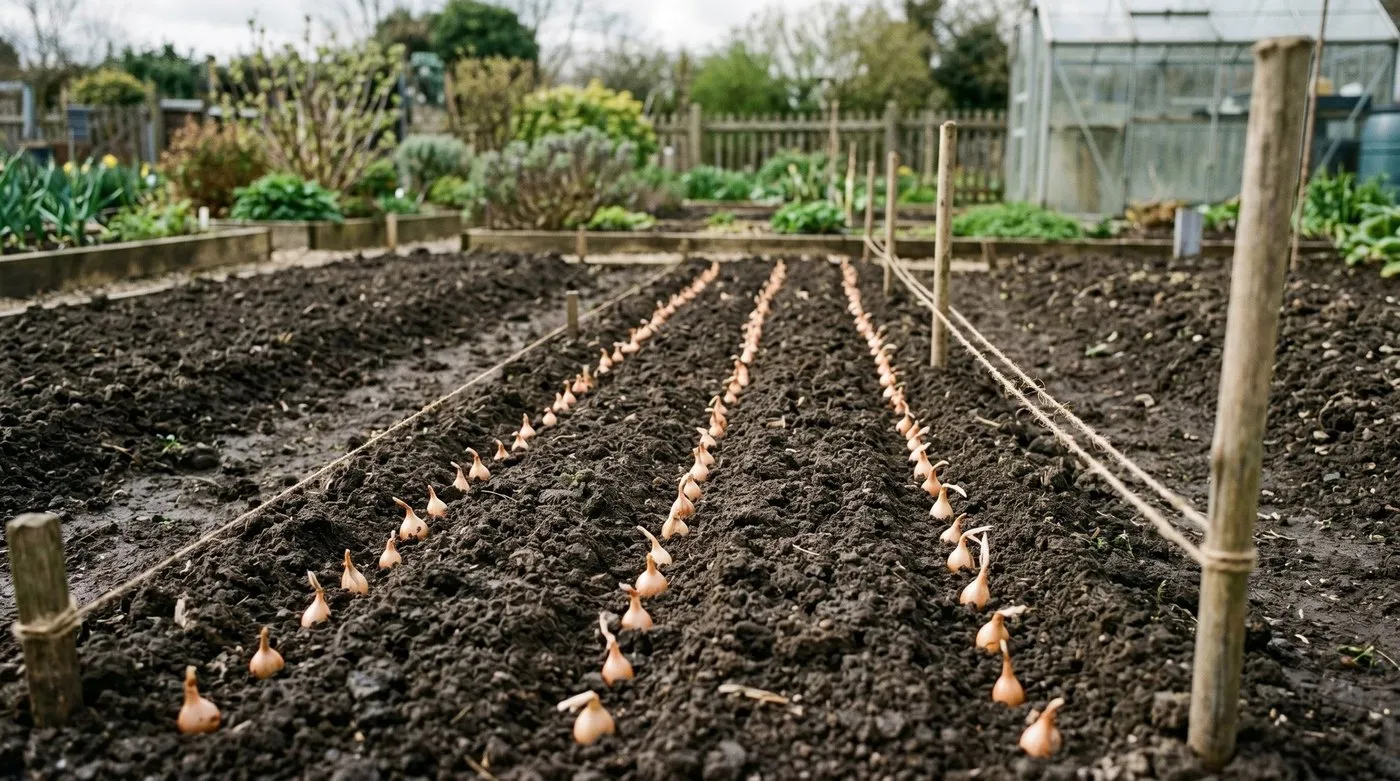 Sturon sets at 10cm spacing in March 2024, prepared with a January compost mulch and ready for the new season
Common mistakes with UK onion varieties
Five mistakes account for most variety-specific failures in UK home gardens. Avoiding them adds 30-50% to typical onion yields.
Mistake 1: Choosing show varieties for storage. Mammoth Improved and Ailsa Craig produce huge bulbs but rot within 90 days of curing. Match the variety to the use. For winter eating, plant Sturon or Setton.
Mistake 2: Planting overwintering varieties in spring. Senshyu and Electric are bred for autumn planting and vernalisation through winter. Spring-planted overwintering sets bolt at 60-80% rates and yield almost nothing.
Mistake 3: Buying mixed-variety set bags. Most “garden centre value packs” mix old or low-grade stock from multiple varieties. Yields and storage are unpredictable. Always buy named, dated single-variety sets from a specialist supplier.
Mistake 4: Skipping the cure. Curing is the 2-3 week period after lifting where onions dry outdoors in the sun, sealing the neck and ripening the skin. Skip the cure and storage life drops by 60-80%. Lay lifted onions on wire mesh in a sunny spot until the necks are completely dry.
Mistake 5: Storing in damp sheds. Onions need 8-12C and 65-70% humidity for long storage. Damp sheds rot the necks within weeks. Store in net bags or trays in a cool, dry, frost-free space. Outdoor sheds work in winter only with insulation.
Frequently asked questions
When do you plant onions in the UK?
Plant onion sets between mid-March and mid-April in most of the UK. Sow onion seed under cover from late January, transplant in April. Plant overwintering varieties like Senshyu Yellow from late September to early October. Avoid planting before soil reaches 7C, which is when bolting risk drops sharply.
What is the largest UK onion variety?
Ailsa Craig grown from seed produces the largest UK onion bulbs, regularly exceeding 700g and reaching 1.2kg in show conditions. Bedfordshire Champion white onions reach 600-700g. Mammoth Improved is bred specifically for size and reaches 800g-1kg. None of these large varieties store as well as smaller bulbs like Sturon.
What onion variety is best for autumn planting?
Senshyu Yellow is the best autumn-planted onion variety for UK gardens. It tolerates -10C in the ground, fills the May-July gap before spring crops are ready, and yields 3-4kg per square metre. Electric is the best autumn red. Plant both in late September on well-drained soil for harvest the following June.
Now you have the variety rankings, read our shallot growing guide for the matching shallot varieties that complement an onion-growing plot.
Cured Sturon and Senshyu onions on wire mesh racks in late August, a 2-3 week outdoor dry phase before storage
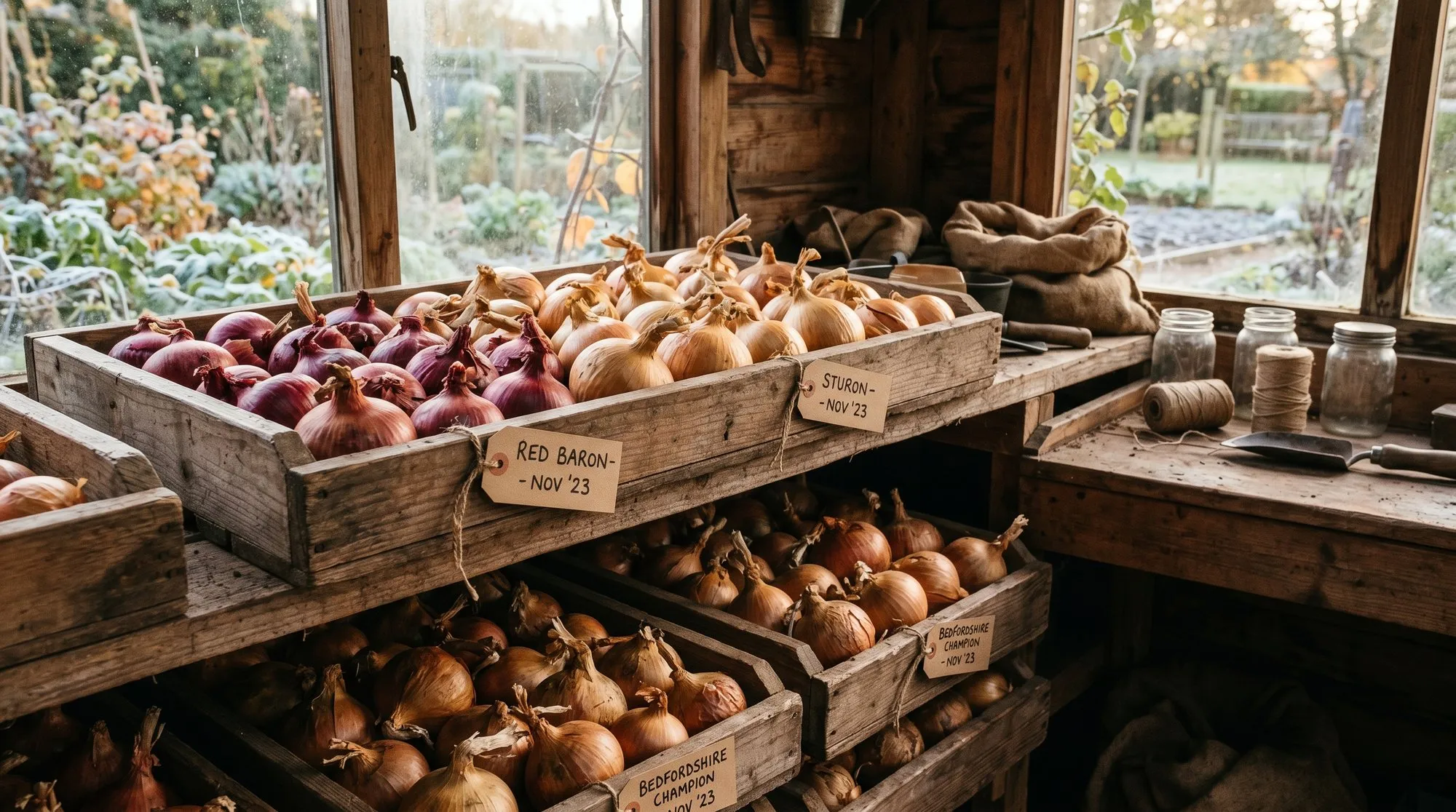 Variety storage trays in November, six weeks after the cure phase, with Sturon expected to outlast Red Baron and Karmen by 60-90 days
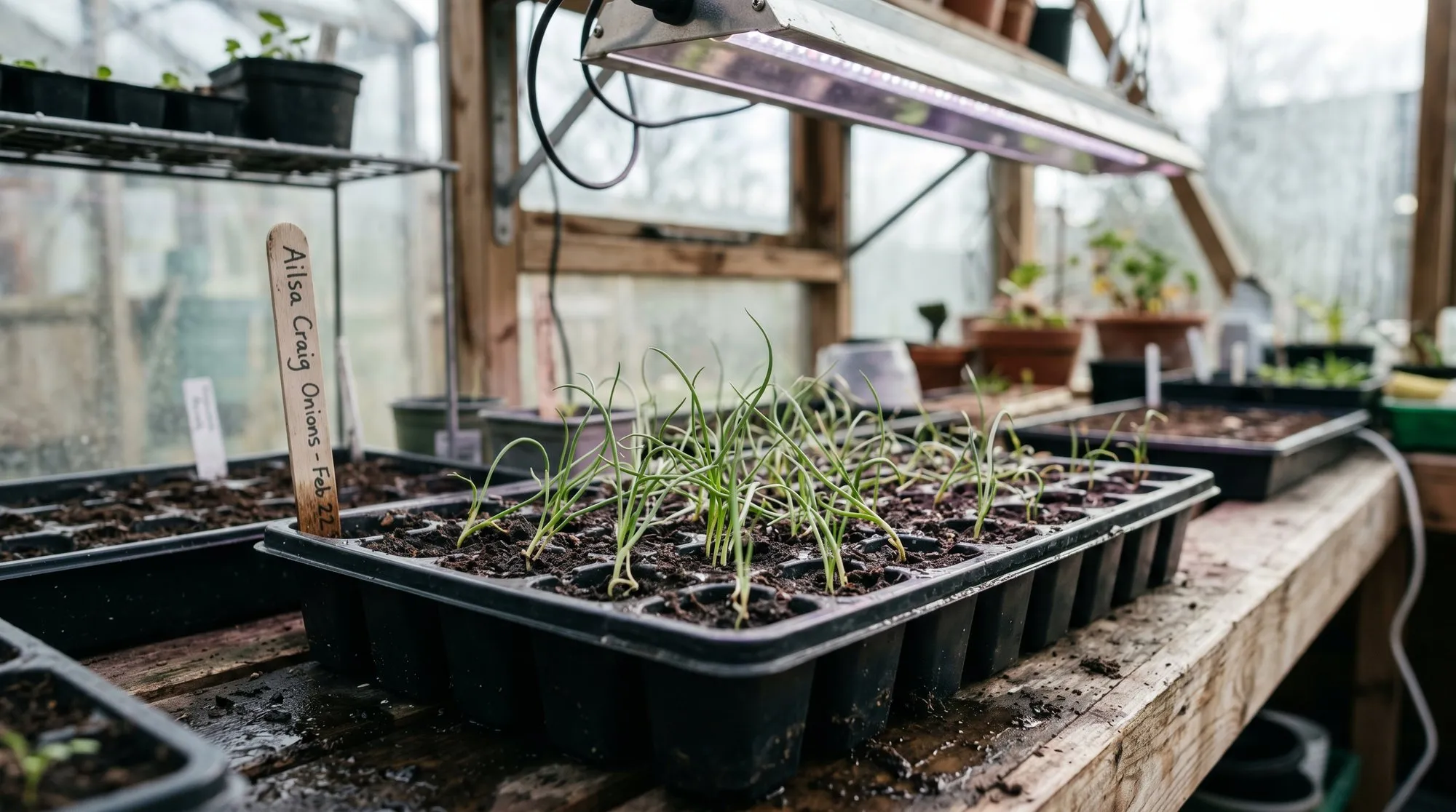 Ailsa Craig and Bedfordshire Champion seedlings in late February, four weeks before transplanting to the bed
Our team produces practical UK gardening guidance from source research, contributor records and established horticultural practice. Editorial standards are overseen by Matt W.