
Key takeaways
- Plant sets from late February to mid-April with just the tip showing
- Space them 15cm apart in rows 30cm apart
- Each set grows into a cluster of several bulbs, so you get lots from a small space
- Golden Gourmet and Longor are easy, reliable varieties for beginners
- Lift them when the leaves turn yellow and flop over, usually July or August
- Dried well, they keep for months, often into the next spring
Shallots are a lovely, easy crop for UK gardens. Push a single set into the soil in spring and by midsummer it has split into a cluster of copper-skinned bulbs, sweeter and gentler than an ordinary onion. You get a lot from a small patch, which makes them great for small gardens and allotments.
 Planting shallot sets in rows. Push each one in until just the tip shows.
Should you grow shallots from sets or seed?
For most people, sets. Here’s the difference.
Shallot sets are small, dormant bulbs sold from January in garden centres and online. You push them into the soil in spring, and each one splits underground into a cluster of new bulbs by midsummer. They’re quick, simple and give you those lovely clumps.
Shallot seed is sown indoors in winter and planted out in spring. Each seedling makes a single bulb, not a cluster, and takes longer to be ready. Seed is cheaper and comes in more varieties, but you get less from each plant.
| Sets | Seed | |
|---|---|---|
| How easy | Very easy | Medium |
| Time to harvest | Quicker | A few weeks longer |
| What you get | A cluster of bulbs | One bulb |
| Variety choice | Smaller | Bigger |
| Cost | A bit more | Cheaper |
| When to start | Feb-Apr, outdoors | Jan-Feb, indoors |
If you’re new to shallots or want those classic clusters, go for sets.
The best shallot varieties for UK gardens
These are reliable choices that are easy to find in the UK.
Golden and brown shallots
- Golden Gourmet: the UK favourite. Large, golden-brown bulbs with mild, sweet flesh. Keeps well. The best all-rounder.
- Longor: a French banana-shaped shallot with coppery skin. Lovely flavour, a little stronger than Golden Gourmet. Keeps well and is ideal for fine chopping.
- Jermor: another French favourite with long, torpedo-shaped bulbs and coppery-pink skin. Rich flavour that caramelises beautifully. Stores well.
- Pesandor: long, pinkish-brown bulbs, a little milder than Jermor. A good keeper, though harder to find.
Red shallots
- Red Sun: round, copper-red bulbs with pinkish flesh. Mild and pretty in salads. Doesn’t keep as long as golden types.
- Pikant: deep red-purple skin and a strong flavour. Doesn’t keep as long as golden types.
Shallots at a glance
| Variety | Shape | Flavour | Keeps | Best for |
|---|---|---|---|---|
| Golden Gourmet | Long | Mild, sweet | Long | All-round, beginners |
| Longor | Banana | Medium | Long | French cooking |
| Jermor | Torpedo | Rich | Well | Caramelising |
| Pesandor | Long | Mild to medium | Well | Everyday cooking |
| Red Sun | Round | Mild | Shorter | Salads, colour |
| Pikant | Round | Strong | Shorter | Pickles, eating raw |
How to plant shallot sets
Get the timing and spacing right and shallots need very little from you until harvest.
When to plant
Spring sets go in from late February to mid-April, once the soil is dry enough to work without sticking to your boots. In southern England, late February is fine. The Midlands suits mid-March. In northern England and Scotland, wait until late March or early April. For timings for all your crops, see our UK vegetable planting calendar.
Autumn planting works with some varieties in October or November. They spend the winter in the ground and are ready a few weeks earlier. On heavy, wet soil you’re more likely to lose some over winter.
Getting the soil ready
Shallots like a sunny, open spot with soil that drains well. Dig in some well-rotted compost a few weeks before planting. Don’t use fresh manure. Too much nitrogen gives soft, leafy growth and bulbs that don’t keep.
On heavy clay, drainage matters more than richness. Work in a bucket of grit per square metre. Our guide to improving clay soil has more tips. Or grow them in raised beds filled with free-draining compost.
Not sure about your soil? A quick soil pH test takes minutes. Shallots like it around neutral.
Spacing and depth
Push each set into the soil until just the tip shows, so about two-thirds of the bulb is buried. Firm the soil gently around it.
- Between sets: 15cm, as each one grows into a cluster
- Between rows: 30cm
- A 3m row holds about 20 sets
Too deep and they can rot in wet soil. Too shallow and birds pull them out. “Tip just showing” gets it right.
Keeping birds off
Blackbirds and pigeons love to tug freshly planted sets out of the ground. Cover new rows with fleece or netting for two or three weeks until the roots grip. Or snip off the wispy dry tip before planting, so there’s less for birds to grab.
 Shallots forming clusters in a raised bed by midsummer.
Looking after shallots
Shallots are easy going. A little help at the right time gives you bigger bulbs.
Watering
Water in dry spells from April to June, while the bulbs are splitting and swelling. A good soak once a week beats a little every day. Too much water can cause rot, especially on clay. Stop watering in early July as the leaves start to die back, so the bulbs dry and keep well.
Feeding
Shallots aren’t hungry. If you added compost before planting, they rarely need more. On poor soil, one sprinkle of a balanced fertiliser in April is plenty. Avoid high-nitrogen feeds, which give leaves instead of bulbs and spoil storage.
Weeding
Shallots hate competing with weeds, and their thin leaves don’t shade them out. Hoe between rows often, keeping it shallow. Hand-weed around the clusters carefully. A thin layer of mulch between rows keeps weeds down and holds moisture.
Good neighbours
Gardeners often grow shallots next to carrots, hoping the strong allium smell confuses carrot root fly. It’s an old tradition rather than a sure thing, so cover carrots with mesh too. Our companion planting guide has more ideas.
Pests and diseases
Shallots get the same problems as onions, but they’re generally a bit less troubled. For a wider look, see our organic pest control guide.
Onion fly
The fly lays eggs at the base of plants from May to July, and the grubs tunnel into the bulbs. Cover rows with fine mesh from May. Sets are less bothered than seedlings because they get going faster.
White rot
A soil fungus that leaves white fluffy mould at the base of the bulb. There’s no cure, and it stays in the soil for many years. Rotate your crops and don’t grow onions, garlic or shallots in the same bed year after year. If your plot has had white rot, grow shallots in raised beds or pots of fresh compost.
Downy mildew
Grey-purple patches on the leaves, worst in wet summers. Space plants properly so air can move, and remove badly affected leaves. The RHS shallot growing guide has photos to help you spot it.
Bolting
Shallots run to flower less often than onions. A cold snap after planting is the usual cause. Choose bolt-resistant varieties, don’t plant into cold, soggy soil, and snap off any flower stems you see.
Shallots month by month
| Month | What to do |
|---|---|
| January | Order sets. Sow seed indoors in modules if growing from seed |
| February | Plant sets in southern England late in the month. Prepare beds |
| March | Main planting month for most of the UK. Net against birds |
| April | Finish planting in the north. Start weeding. Water if dry |
| May | Hoe between rows. Water in dry spells. Watch for onion fly |
| June | Keep watering in dry weather. Bulbs are swelling |
| July | Leaves start to yellow. Stop watering. Get ready to harvest |
| August | Lift the last shallots and start drying them. Clear beds |
| September | Finish drying and move bulbs into storage. Keep the best for planting |
| October | Plant autumn varieties if you like. Order spring sets |
How to harvest shallots
 Golden and red shallots drying on a rack in a shed. Give them a couple of weeks before storing.
Lift them at the right time and they’ll keep much longer.
When to harvest
Shallots are ready when the leaves yellow, dry out and flop over on their own, usually late July to mid-August. Don’t bend the tops over yourself, as it can damage the neck and let rot in.
The bulbs should be firm with papery skins. If the skins are still green or soft, give them another week.
Lifting
Slide a fork under the cluster and lift gently. Don’t pull by the stems. Shake off loose soil but don’t wash them, as wet shallots rot. Split the clusters into single bulbs.
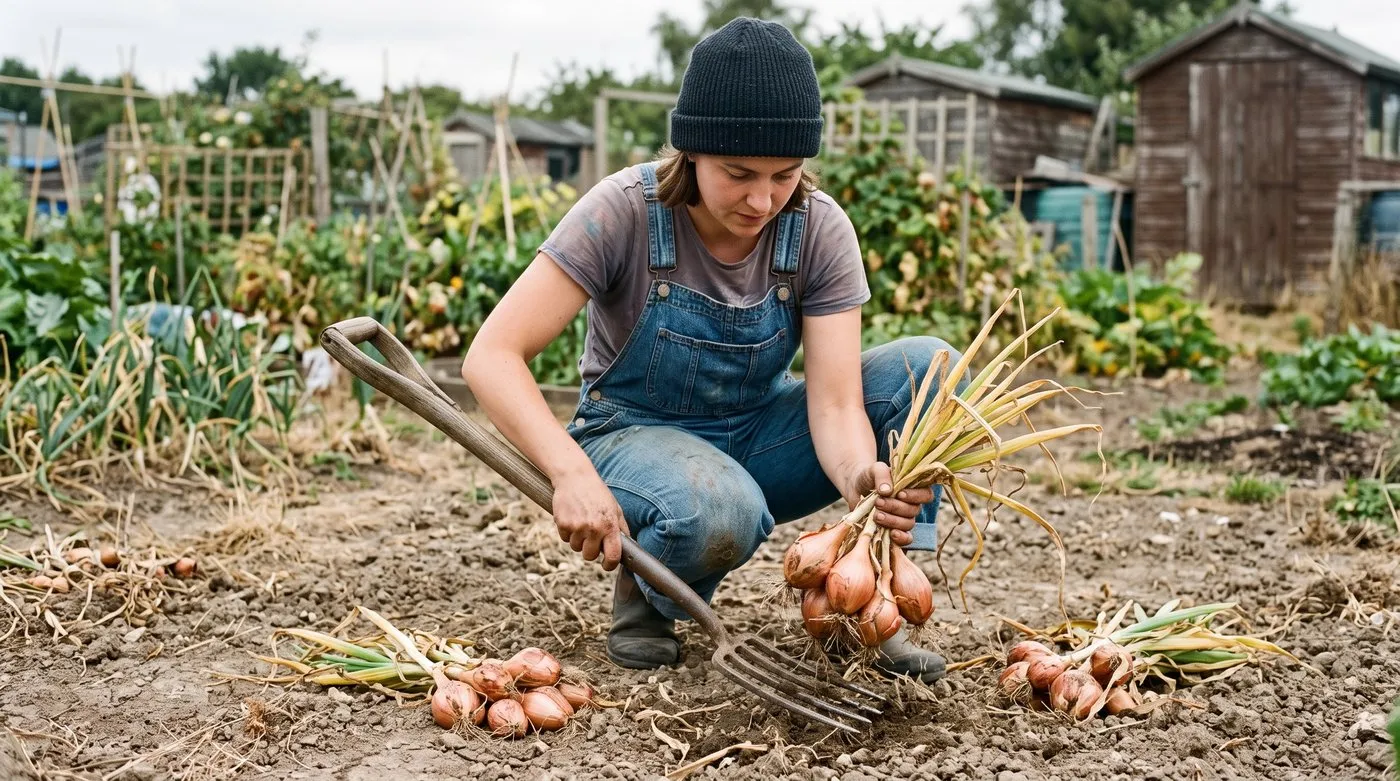
Slide a fork under each cluster and lift rather than pulling the stems. Shake off loose soil, but don’t wash them, as wet shallots rot.
Drying
Spread the bulbs out in one layer on a rack, greenhouse bench or pallet, somewhere dry, warm and airy. A greenhouse, shed or covered porch is ideal.
Leave them for 10-14 days, until the skins rustle, the necks feel dry and tight, and the roots are dry and brittle. Then trim the roots and cut the stems to about 3cm.
Storing shallots
Dried well, shallots often keep for months, sometimes into the next spring. That’s one of the best things about them.
Store them in nets, old tights or open crates somewhere cool, dry, frost-free and airy. A garage, shed or unheated utility room is perfect. Kitchens are too warm.
How well they keep:
- Golden Gourmet and Longor: the longest keepers
- Jermor and Pesandor: good keepers
- Red Sun and Pikant: use these first
Check them every few weeks and remove any that feel soft, look mouldy or start sprouting. One bad bulb soon spoils its neighbours.
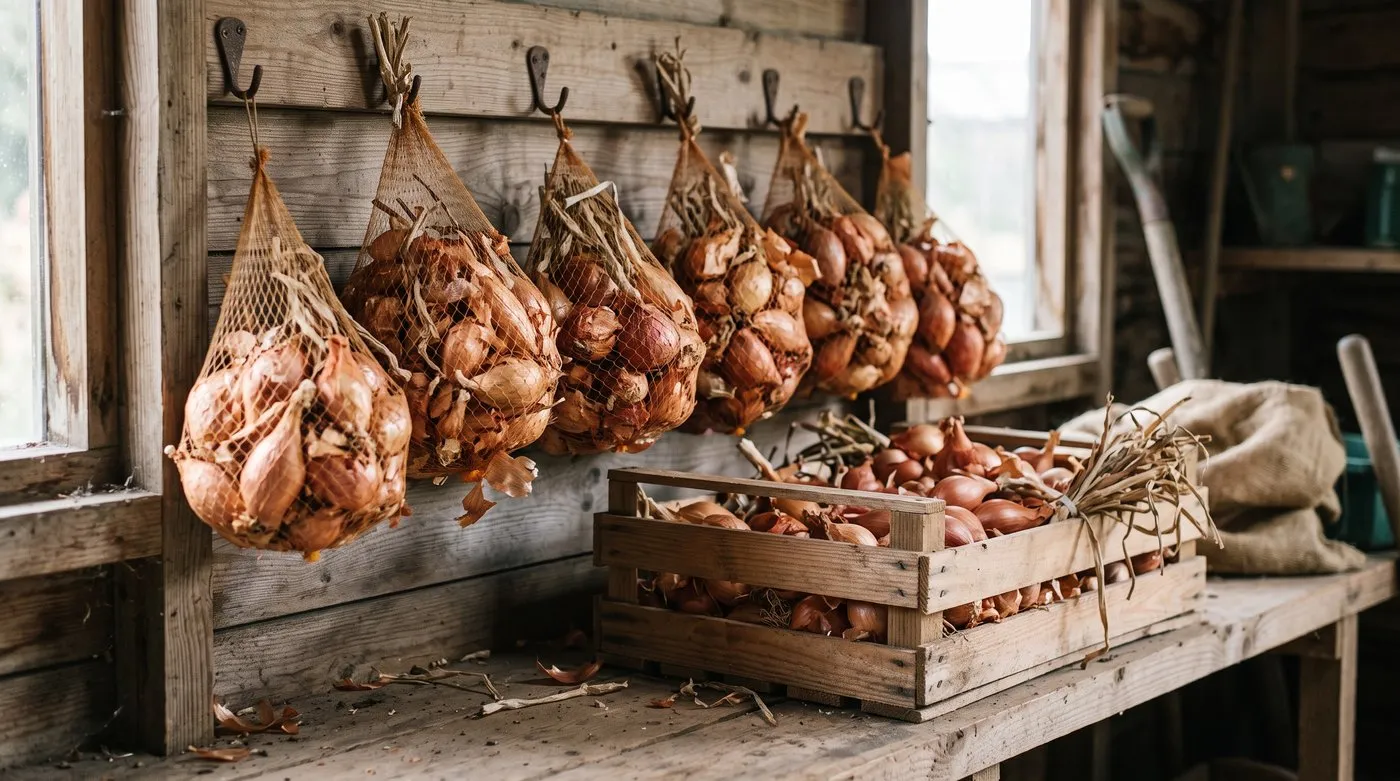
Somewhere cool, dry, airy and frost-free keeps shallots for months. Use the red ones first, as they don’t keep as long.
Saving your own sets
At harvest, pick out some of the firmest medium-sized bulbs and store them separately. Plant them next spring. It’s the traditional way to keep shallots going for free. Every few years, buy fresh sets so disease doesn’t build up.
Growing shallots in pots
Shallots grow well in pots and troughs at least 25cm deep with drainage holes. Use multipurpose compost with a little perlite or grit mixed in. Space sets 12cm apart. Water regularly, as pots dry out faster than the ground. One balanced liquid feed in April is plenty. A 40cm pot holds five or six sets.
Pots are handy for balconies, or if your soil has had white rot, as you can use fresh compost each year. For more ideas, see our guide to growing in grow bags.
Shallots or onions?
Both earn their place in a UK veg patch. They just do different jobs.
| Shallots | Onions | |
|---|---|---|
| Flavour | Mild and sweet | Stronger |
| What you get | A cluster from each set | One bulb from each set |
| Bulb size | Small | Bigger |
| Keeps | Months, often until spring | Depends on variety |
| Planting depth | Tip just showing | Tip just showing |
| Spacing | 15cm x 30cm | 10cm x 25cm |
| Harvest | July-August | July-September |
| Best for | Sauces, dressings, pickling | Everyday cooking |
If you only have room for one, shallots give you more from a small patch. For the others, see our guides to growing onions and growing garlic.
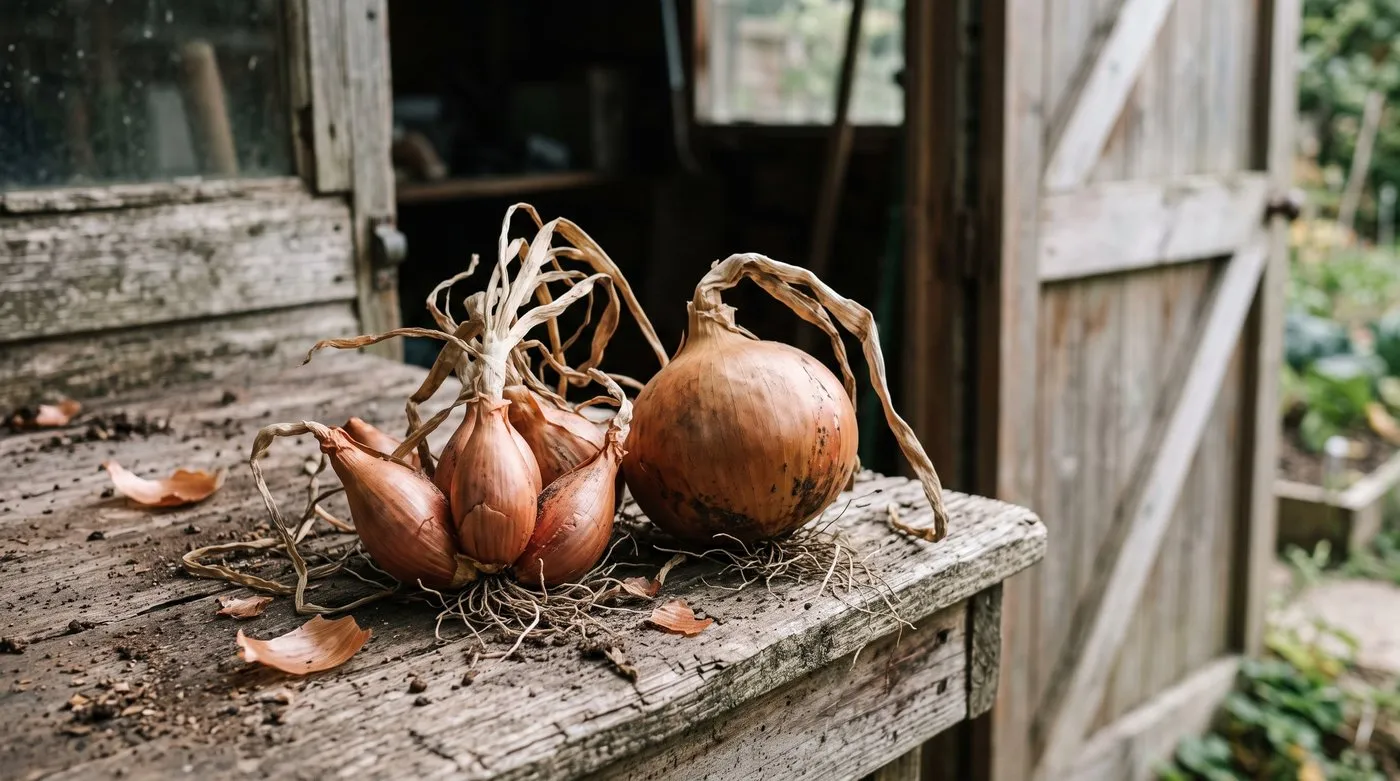
One shallot set gives you a whole cluster, while an onion set gives one bulb. That’s why shallots are so good in a small patch.
Cooking and preserving shallots
Home-grown shallots are firm, sweet and really tasty.
Great ways to use them:
- Finely chopped in dressings and French sauces like sauce béarnaise
- Roasted whole with balsamic vinegar until sticky and golden
- Pickled in malt vinegar with a bay leaf and peppercorns
- Sliced raw in salads where an onion would be too strong
Got a glut? Our guide to preserving fruit and vegetables covers pickling and more.
Frequently asked questions
When should I plant shallot sets in the UK?
Plant shallot sets from late February to early April. Wait until the soil is dry enough to work. In southern England, late February or early March is usually fine. In colder northern areas, wait until March or early April. Some varieties can go in during autumn, but spring planting is more reliable, especially on heavy, wet soil.
How many shallots do you get from one set?
Each set usually grows into a cluster of several bulbs. How many depends on the variety, the size of the set and the growing conditions. Some give a few big bulbs, others more, smaller ones. Good spacing, decent soil and water in dry spring weather all help. Plant on time, as late planting means smaller clusters.
What is the difference between shallots and onions?
A shallot set grows into a cluster, while an onion makes one bulb. Shallots are milder and sweeter than most onions. They’re smaller and usually store very well. Cooks love them for sauces, dressings and pickling. Both are part of the same allium family.
Can I grow shallots from seed?
Yes, but sets are easier and more reliable. Sow seed indoors in late winter, or outside in spring, and grow them like onions. Shallots from seed take longer and usually make one bulb each, not a cluster. Sets are quicker and give you those handy clumps.
Why are my shallots not forming clumps?
Usually late planting, growing from seed or too much feed. Planting late gives the bulbs less time to split. Shallots from seed often make single bulbs. Lots of nitrogen gives leafy growth instead of more bulbs. Plant sets on time, skip fresh manure and choose a reliable variety sold as sets.
How do I know when shallots are ready to harvest?
They’re ready when the leaves turn yellow, dry out and flop over. That’s usually July or August for spring-planted sets. The bulbs should feel firm with papery skins. Lift them on a dry day by easing them out with a fork. Don’t pull them up by the leaves, or they won’t keep as well.
How long do home-grown shallots last in storage?
Dried well, they often keep for several months. Some last until the next spring. Hang them in nets or lay them in trays somewhere cool, dry and airy. Some varieties keep better than others. Check them now and then and throw out any soft or mouldy ones.
Our team produces practical UK gardening guidance from source research, contributor records and established horticultural practice. Editorial standards are overseen by Matt W.


