
Key takeaways
- Plant cloves in October or November so they get the winter cold they need
- Softneck garlic keeps for up to a year; hardneck lasts about 4-6 months
- Plant cloves 2.5cm deep, 15cm apart, in rows 30cm apart, pointy end up
- Snap off the curly flower stalks on hardneck garlic in late spring, and eat them
- Lift when the lower third of the leaves turn yellow, from June to August
- Dry the bulbs somewhere airy for 2-4 weeks, then store them cool and dry
Garlic is one of the easiest and most satisfying crops you can grow. It takes up very little room and needs almost no attention over winter. Plant one clove in autumn and it turns into a whole bulb by summer. Fresh garlic is juicier and tastier than anything in the shops, too.
British winters give garlic the cold it needs to split into cloves, and our long spring days help it grow steadily. It’s happy in the ground, in raised beds and in pots, so it’s a great crop for beginners. Here’s how to grow it, from planting to storing.
What type of garlic should I grow?
There are two main kinds, and the difference affects how you grow them and how long they keep.
Softneck garlic is the type you usually see in shops. It doesn’t grow a flower stalk, so all its energy goes into the bulb. Each bulb has lots of cloves in layers. The big plus is storage: a well-dried softneck can keep for up to a year. The stems are soft enough to plait into garlic strings.
Hardneck garlic grows a stiff stem with a curly flower stalk, called a scape, in late spring. It has fewer cloves, but they’re bigger, and the flavour is stronger. Hardnecks are tougher in the cold, so they’re a good pick for northern or exposed gardens. They don’t keep as long, about 4-6 months.
There’s also elephant garlic, which is actually a kind of leek. It makes huge, mild cloves and grows well here.
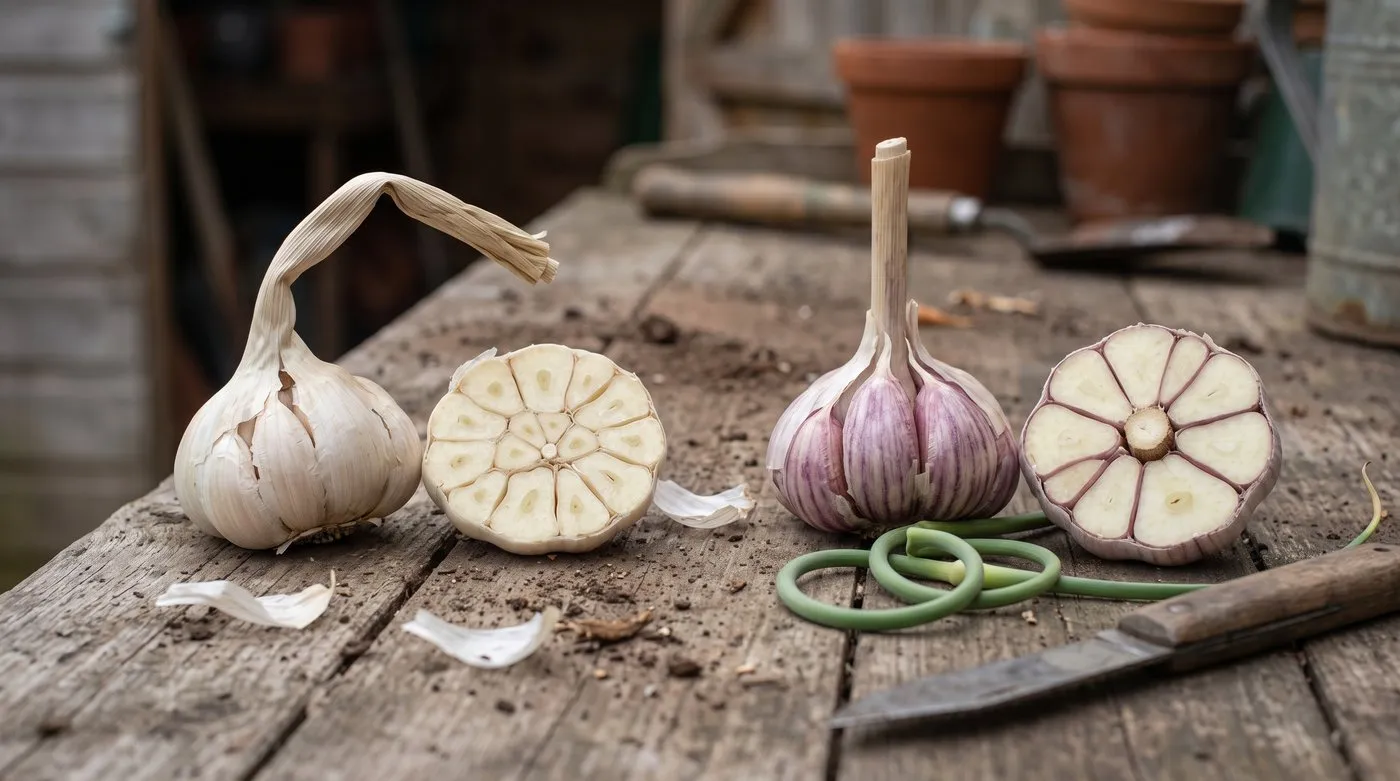
Softnecks have lots of cloves and keep for ages. Hardnecks have fewer, bigger cloves round a stiff stem and cope better with cold.
Which garlic varieties grow best in the UK?
Choose varieties that suit British conditions. Garlic from warmer countries often struggles in our cool, wet winters. The RHS garlic growing guide lists good ones for the UK.
Softneck varieties
- Solent Wight: a popular Isle of Wight softneck with big bulbs that keep well into the next spring. A reliable all-rounder.
- Germidour: a purple-skinned French softneck that does well here. Strong but not harsh, with good disease resistance.
- Picardy Wight: big bulbs with a mild, sweet flavour. Lovely roasted whole.
- Early Purple Wight: the earliest to harvest, from May in southern England. Mild, but doesn’t keep as long.
Hardneck varieties
- Lautrec Wight: a pink-skinned hardneck with a rich, deep flavour that cooks love.
- Carcassonne Wight: a vigorous hardneck with purple-striped bulbs and a spicy kick. Good in cold gardens.
- Chesnok Red: deep red skin, sweet and mellow when roasted. Great for baking.
- Music: white skin and very big cloves that peel easily. Bold flavour, and happy in northern gardens.
Elephant garlic
- Elephant garlic: fist-sized bulbs with a few huge, mild cloves. Plant deeper than normal garlic and 30cm apart, as it needs more room. Good if you find ordinary garlic too strong.
Variety comparison
| Variety | Type | Flavour | Keeps | Good for |
|---|---|---|---|---|
| Solent Wight | Softneck | Medium | Up to a year | Beginners, all-round |
| Germidour | Softneck | Medium-strong | Long | Reliable crops |
| Picardy Wight | Softneck | Mild | Long | Roasting whole |
| Early Purple Wight | Softneck | Mild | Short | Earliest harvest |
| Lautrec Wight | Hardneck | Strong, rich | Short | Flavour |
| Carcassonne Wight | Hardneck | Spicy | Short | Cold gardens |
| Chesnok Red | Hardneck | Sweet when cooked | Short | Roasting, baking |
| Elephant | Leek relative | Very mild | Medium | Mild garlic fans |
When to plant garlic in the UK
Plant in October or November for the biggest bulbs. Our guide on when to plant garlic in the UK covers the best timing for each part of the country. Garlic needs a cold spell over winter to split into separate cloves. Without enough cold, you get one round bulb instead.
Autumn planting (the best time)
Plant cloves from mid-October to mid-November. Plant too early and they can make lots of soft leaf before winter. You can still plant through December in milder southern areas, though the bulbs may be smaller.
In northern England and Scotland, aim for the first half of October, so the cloves settle in before the cold arrives.
Spring planting (plan B)
Missed autumn? Plant in February or early March. You’ll still get a crop, but the bulbs are usually smaller. Softneck varieties cope with spring planting better than hardnecks.
Handy tip: If your soil is waterlogged in autumn, start cloves in modules of multipurpose compost and keep them outside in a cold frame. Plant them out in February once the soil is workable. That stops them rotting in wet ground.
Can I still plant garlic in December or January?
Yes, in most of the UK you can plant up to the end of December, and in January if the ground isn’t frozen or waterlogged.
Late cloves get less cold before spring, so bulbs are often smaller. Softnecks like Solent Wight cope better than hardnecks. If the ground is too wet, plant one clove per module of multipurpose compost and stand them outside in a cold frame or sheltered spot so they still get the cold. Plant them out 15cm apart in late winter or early spring, once the soil isn’t sticky.
Should you soak garlic cloves before planting?
No, there’s no need. Just plant dry cloves flat end down, with the tip 2.5cm below the surface.
Soaking can soften the clove and make it more likely to rot in cold, wet British soil. What helps more is picking big, firm outer cloves and breaking up the bulb on the day you plant. That keeps the flat base, where the roots grow, in one piece. Throw away any cloves that are soft, mouldy or have sunken brown patches.
How to plant garlic
Garlic needs full sun and soil that drains well. Wet, soggy soil is the main reason it fails. On heavy clay, mix in plenty of grit and organic matter first, or grow it in raised beds filled with free-draining compost.
Soil preparation
Garlic isn’t greedy, but it likes decent soil. Dig in some well-rotted manure or compost a few weeks before planting. If your soil is acid, a sprinkle of garden lime helps, as garlic prefers neutral soil.
On heavy clay, better drainage matters more than extra food. Our guide to improving clay soil shows you how.
Planting steps
- Break the bulb into cloves. Use the biggest, healthiest outer ones; small inner cloves give small bulbs.
- Make holes 2.5cm deep with a dibber or your finger.
- Pop each clove in pointy end up, flat end down.
- Space them 15cm apart in rows 30cm apart.
- Cover with soil and firm gently. The tip should sit about 2.5cm below the surface.
- Water in if the soil is dry. After that, leave them be unless autumn is very dry.
Plant elephant garlic a bit deeper and 30cm apart, as the bulbs get much bigger.
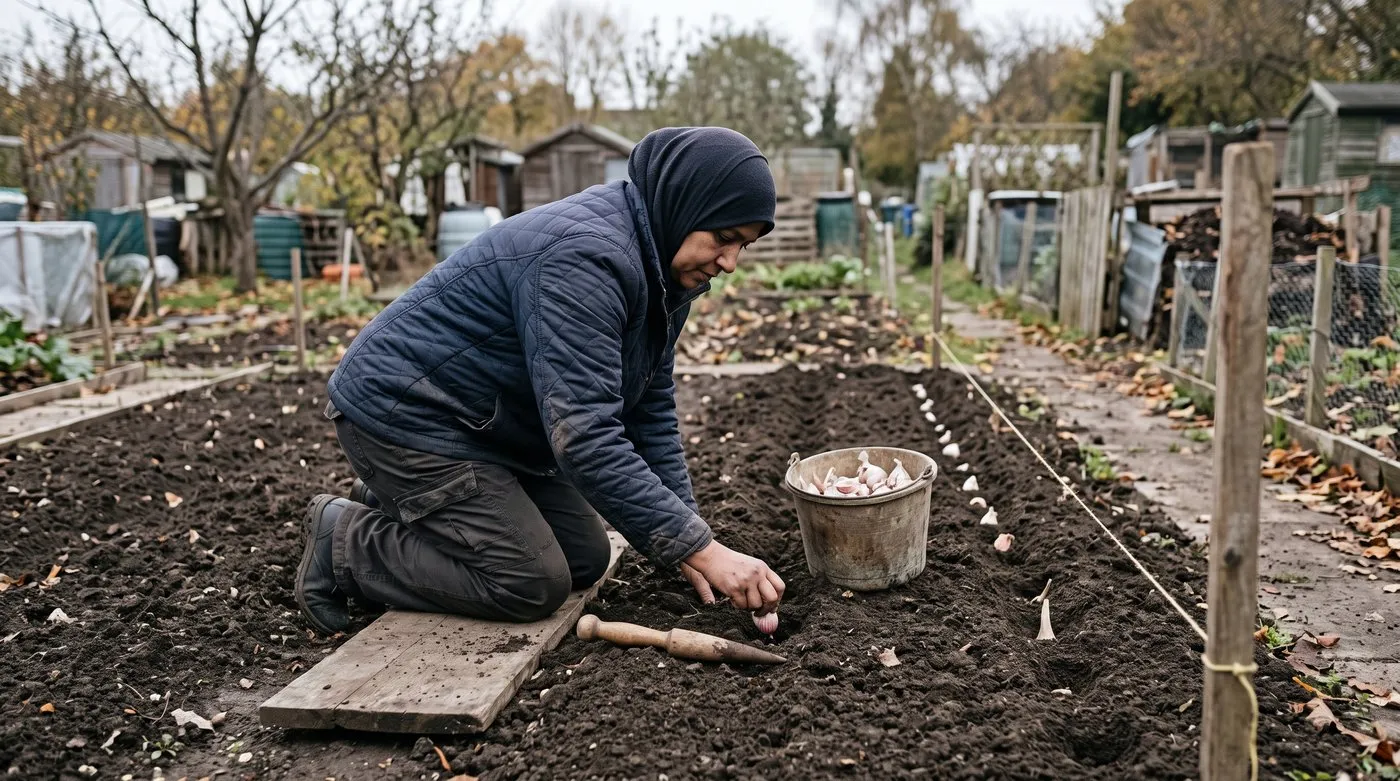
Use the big outer cloves and plant them pointy end up, with the tip about 2.5cm below the surface.
Growing in containers
Garlic grows well in pots and troughs at least 20cm deep with good drainage holes. Fill with multipurpose compost mixed with some perlite or grit. Space cloves 10cm apart. Keep the pots outside all winter so the garlic gets its cold spell. Water sparingly until spring, then keep the compost moist but not soggy.
Caring for garlic through the seasons
Garlic looks after itself over winter. The real work starts in spring.
Winter (November to February)
Green shoots may pop up a few weeks after planting. That’s normal, and they’re tough enough to need no protection. Birds sometimes pull at young shoots. If they do, cover the bed with netting until the shoots are about 10cm tall.
Keep an eye on pots in long wet spells. Raise them on pot feet or bricks so the water can drain.
Spring (March to May)
Growth speeds up from March. This is when garlic builds its leaves, and more healthy leaves means a better-wrapped bulb that keeps longer.
Watering: Water in dry spells from March to May. Stop from mid-June, as dry soil helps the bulbs ripen and the skins dry.
Feeding: Give a general fertiliser or chicken manure pellets in March. Once is enough. Avoid high-nitrogen feeds after April, as they push leaves instead of bulbs.
Weeding: Keep the bed weed-free. Garlic’s narrow leaves can’t compete with weeds. Hand weed gently so you don’t disturb the shallow roots.
Removing scapes (hardneck varieties only)
Hardneck garlic sends up a curly flower stalk, called a scape, in late May or June. Left on, it takes energy away from the bulb, so the RHS advises removing it early.
Snap or snip scapes off once they’ve made one full curl, before they straighten. Don’t throw them away! They taste of mild garlic and are lovely chopped into stir-fries, pesto or scrambled eggs.
Handy tip: Want more garlic for free? Leave one or two scapes on. They form tiny cloves called bulbils at the top. Plant these in autumn and they make small round bulbs in year one. Replant those the next autumn for full-sized bulbs in year three. It takes patience, but it costs nothing.
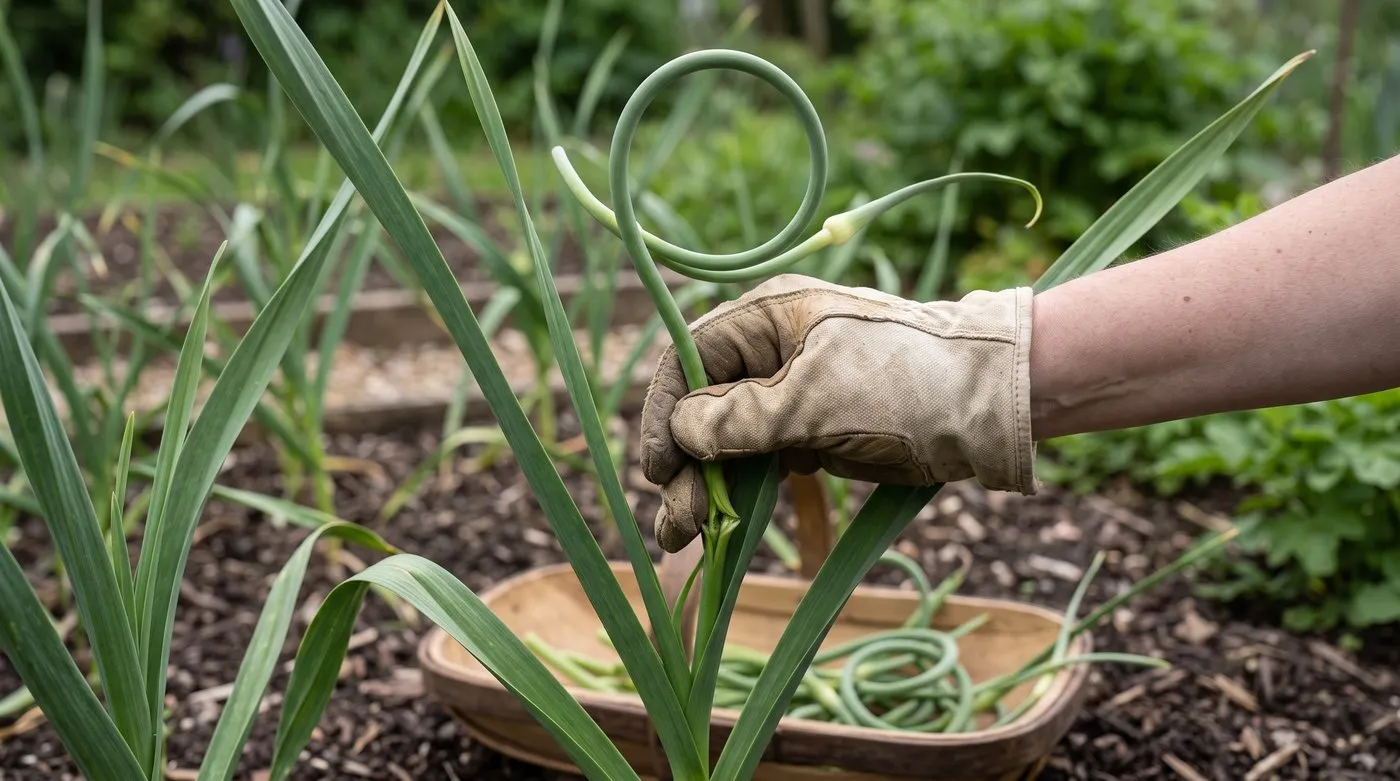
Snap scapes off once they’ve made one curl. Don’t waste them, as they’re lovely chopped into stir-fries or pesto.
Month-by-month garlic calendar
| Month | What to do |
|---|---|
| September | Order seed garlic. Prepare beds with compost and grit |
| October | Plant cloves, early in the month in the north and later in the south |
| November | Finish planting by mid-month. Shoots may appear in a few weeks |
| December-February | Nothing much. Check pots drain well |
| March | Feed. Water in dry spells. Start weeding again |
| April | Water regularly while the leaves grow |
| May | Keep watering. Snap off scapes on hardnecks once they curl |
| June | Stop watering mid-month. Lift Early Purple Wight. Watch for rust |
| July | Main harvest. Lift when the lower leaves yellow |
| August | Lift late varieties. Dry the bulbs. Order garlic for autumn |
How to harvest garlic
Getting the timing right makes a big difference to how well garlic keeps. Too early and the cloves are small. Too late and the papery skins break down.
When to harvest
Garlic is ready when the lower third of the leaves have turned yellow but the top leaves are still green. For most varieties that’s late June to early August.
- Early Purple Wight: late May to mid-June
- Solent Wight: late June to mid-July
- Germidour: July
- Hardnecks: July to early August
- Elephant garlic: August
Don’t wait until every leaf is brown. Each green leaf means one intact skin around the bulb. Once they’ve all died, the skins break down and the cloves start to come apart in the ground, and those bulbs won’t keep well.
How to lift bulbs
Loosen the soil around the bulbs with a fork, then lift them gently. Don’t pull them up by the stems, which can tear the neck. Brush off loose soil, but don’t wash them. Wet garlic rots quickly.
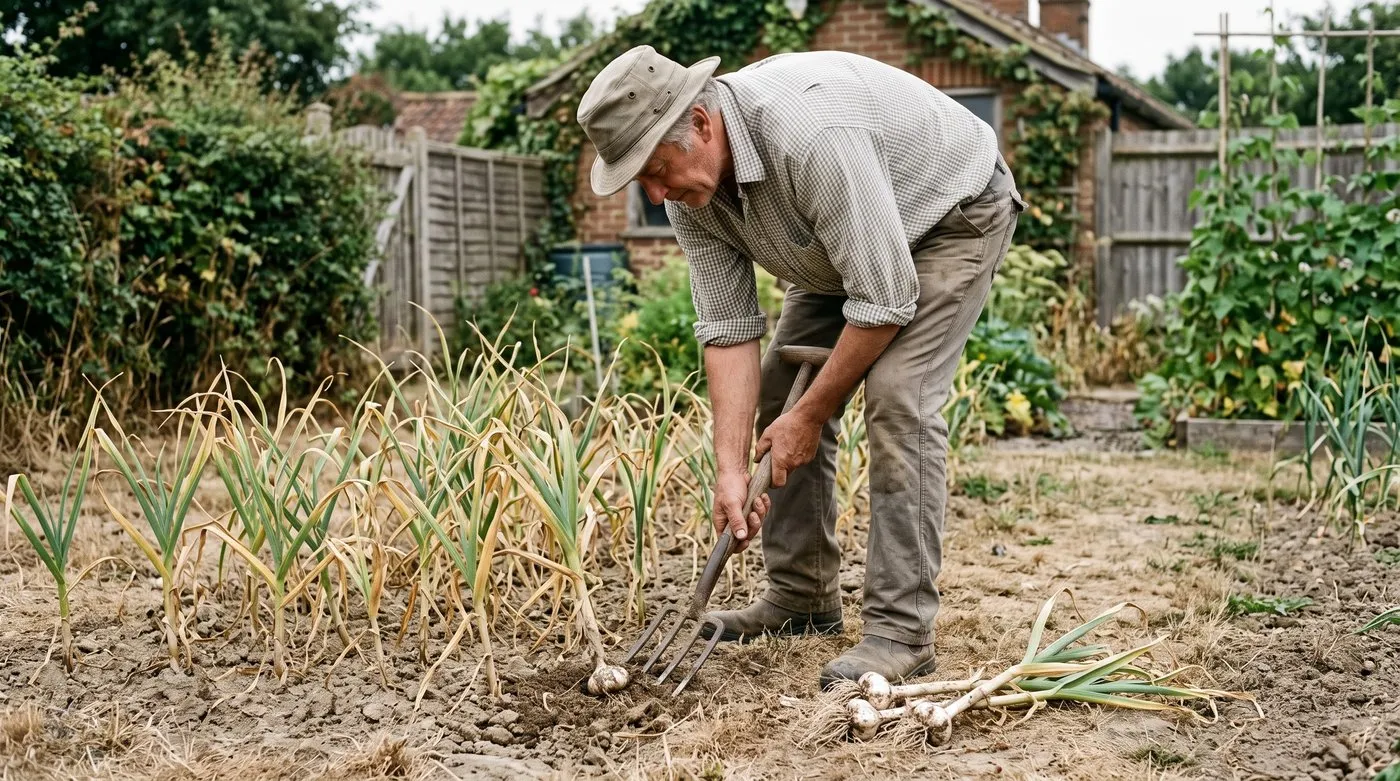
Lift when the lower third of the leaves has yellowed. Loosen the soil with a fork rather than tugging on the stems.
How to cure and store garlic
Freshly lifted garlic is too moist to store. It needs drying, or curing, first.
Curing method
Lay the bulbs in a single layer on a wire rack, greenhouse bench or pallet, somewhere dry, warm and airy. A greenhouse, polytunnel, porch or airy shed all work. Keep them out of the rain and turn them every few days.
Leave them for 2-4 weeks, out of very hot sun, until the outer skins are papery, the neck feels firm and dry when squeezed, and the roots are shrivelled. Trim the roots to 1cm and cut the stems to 3-5cm above the bulb. Leave the stems long on softnecks you want to plait.
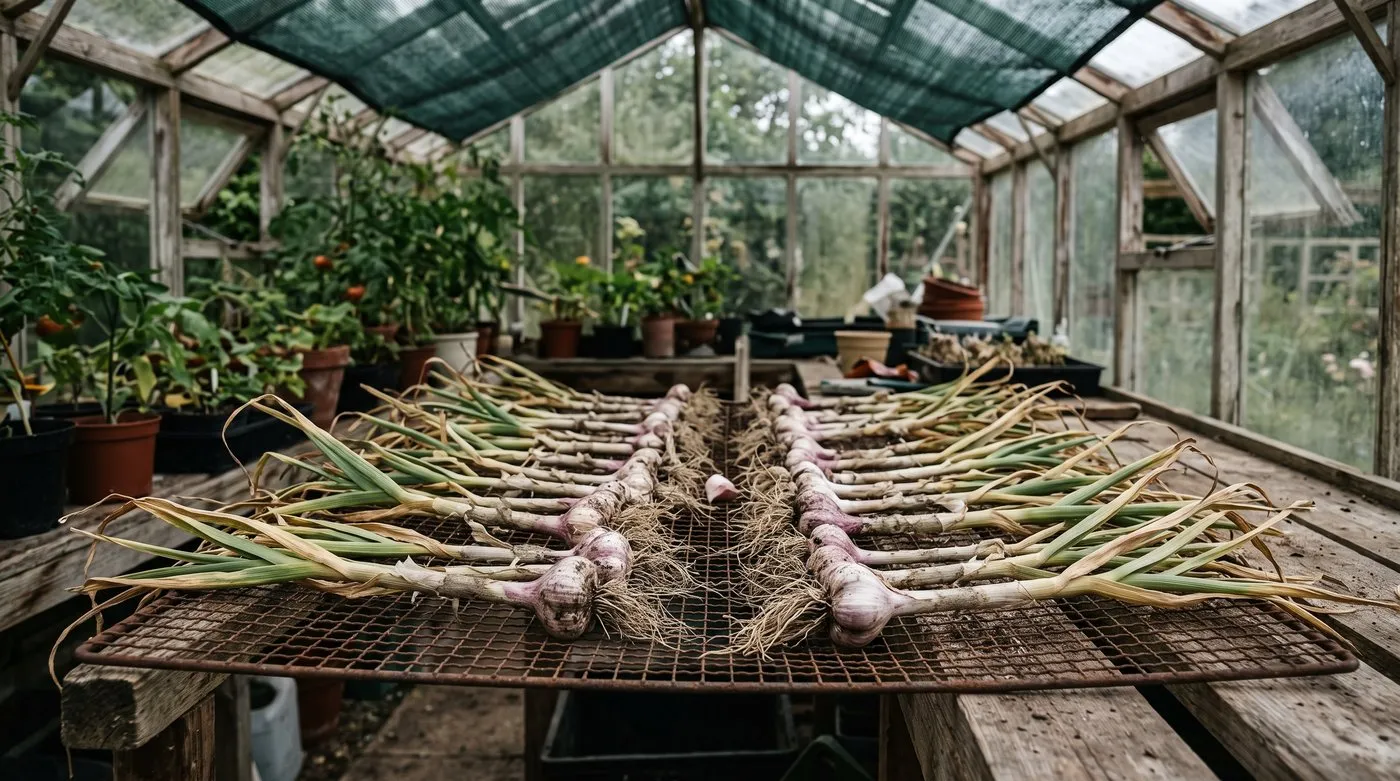
Dry garlic in a single layer somewhere warm and airy for two to four weeks. It’s ready when the skins rustle and the necks feel firm.
Storage conditions
Once dry and rustly, store garlic somewhere cool and dry, around 5-10C, with plenty of air, as the RHS advises. Net bags, open crates and plaits all work. Avoid sealed plastic bags, which trap moisture and cause mould.
Softneck garlic keeps for up to a year. Solent Wight lifted in July can last until the next April or May.
Hardneck garlic keeps for about 4-6 months, so eat these first.
Check your garlic every month and use up any that are softening or sprouting. You can replant cloves from your own healthy bulbs, but buy fresh certified garlic if you had rust, white rot or poor growth.
Common problems and diseases
Garlic rust
Rust is the most common garlic problem here. You’ll see bright orange spots on the leaves, usually from April, especially in warm, damp springs. A little rust just makes bulbs a bit smaller. A lot can weaken the plants.
Remove badly affected leaves. Keep plants well spaced and the bed weed-free so air can move. Don’t splash the leaves when watering, and lift a little early if it gets bad. Moving onion-family crops to a different bed each year helps.
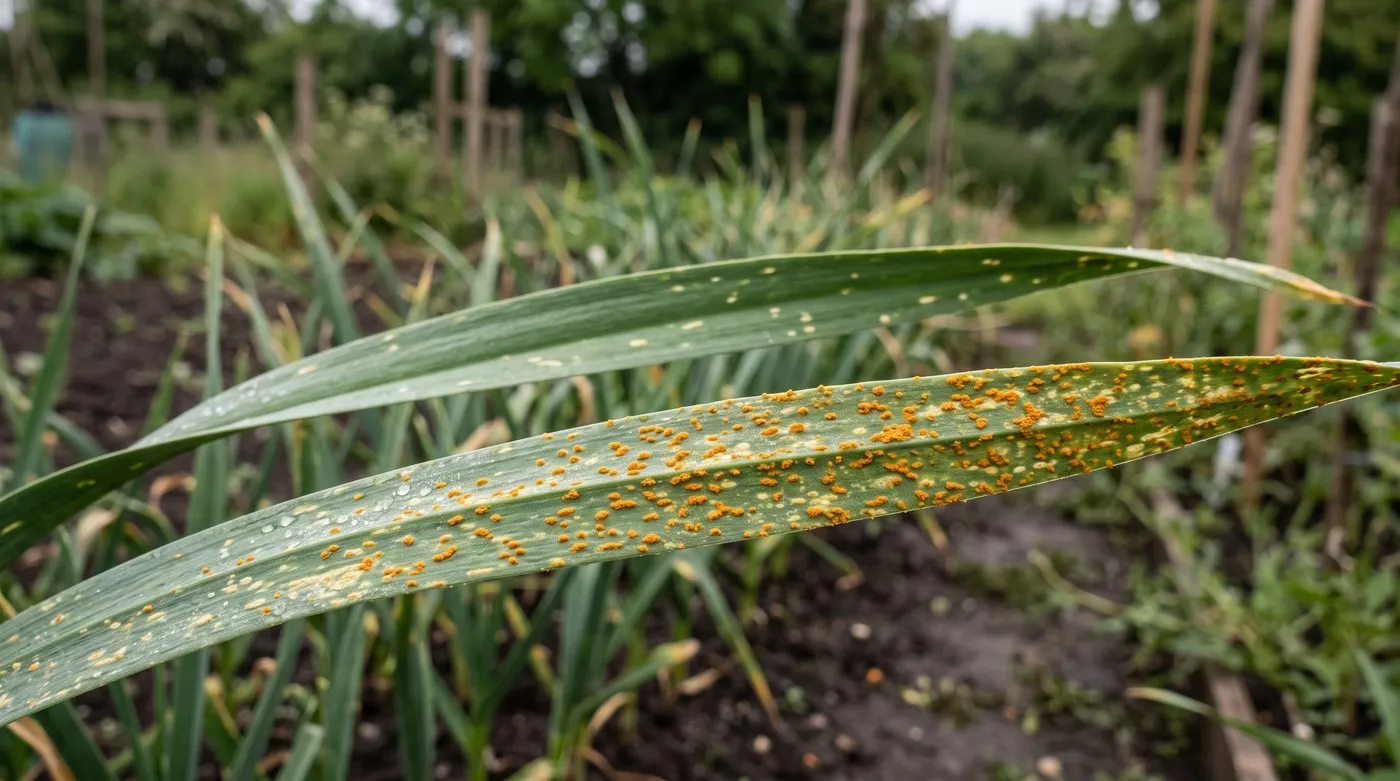
Bright orange spots on the leaves mean rust. Pick off the worst leaves and keep plants well spaced so air can move.
White rot
White rot is the most serious garlic disease and also hits onions, leeks and shallots. Look for fluffy white mould at the base of the bulb, dotted with tiny black specks. Plants yellow and collapse, and there’s no cure. The RHS warns that it can stay in the soil for at least 15 years.
If you find it, dig up and bin affected plants. Don’t compost them. Don’t grow onions, garlic, leeks or shallots in that soil again, and clean your tools and boots so you don’t spread it. Our vegetable planting calendar helps you plan where crops go.
Prevention is everything. Buy certified seed garlic, never plant cloves from a sick crop, and grow garlic in pots of fresh compost if your soil has had white rot.
Onion fly
Onion fly maggots tunnel into the base of the plants, making them wilt and collapse. Cover the bed with insect-proof mesh from planting until late June, and firm the soil around the plants after planting.
Birds pulling shoots
Pigeons and other birds sometimes tug at young shoots in winter. Cover the bed with netting or lay twiggy sticks over it until the shoots are well established.
Why are my garlic leaves turning yellow?
In summer, yellow leaves usually just mean the bulbs are nearly ready. In spring, it points to a problem such as wet soil, rust, white rot or a hungry plant.
Look closely. Orange spots mean rust. Plants that yellow, wilt and pull up easily, with white fluff at the base, suggest white rot. Pale, evenly yellow plants on poor or very wet soil usually need better drainage or a spring feed. Twisted, tunnelled leaves can mean allium leaf miner or leek moth. Insect-proof mesh fitted after planting keeps them out.
Common mistakes when growing garlic
- Planting too late in spring. Garlic that misses the winter cold makes single round bulbs. Aim for October or November.
- Using supermarket garlic. It’s often bred for warmer countries and can carry viruses. Buy certified seed garlic instead.
- Planting in soggy soil. Cloves rot in wet ground over winter. Add grit, use raised beds or start them in modules.
- Watering in summer. Stop from mid-June so the bulbs ripen and the skins dry out.
- Leaving scapes on hardnecks. They take energy from the bulb. Snap them off once they curl.
- Lifting too late. Lift when the lower third of the leaves are yellow, not when they’re all brown.
- Skipping the drying. Fresh garlic is too moist to store. Dry it for 2-4 weeks first.
- Growing it in the same spot every year. Pests and diseases build up. Move it to a new bed each year.
Growing garlic in raised beds
Raised beds are great for garlic, especially if your garden has heavy clay. The loose, free-draining mix stops cloves sitting wet in winter. If you’re new to them, our beginner’s guide to raised bed gardening shows how to build and fill one.
A mix of mostly topsoil with some compost and a little grit works well. Plant at the same depth and spacing as in the ground: 2.5cm deep, 15cm apart, in rows 30cm apart.
Raised beds also warm up sooner in spring, giving garlic a head start, and the better drainage means you can plant in late September or early October with less risk of rot.
Garlic fits nicely into a raised bed rotation. Follow it with peas or beans, then cabbages and their relatives the year after. Our guide to starting a vegetable garden explains how crop rotation works.
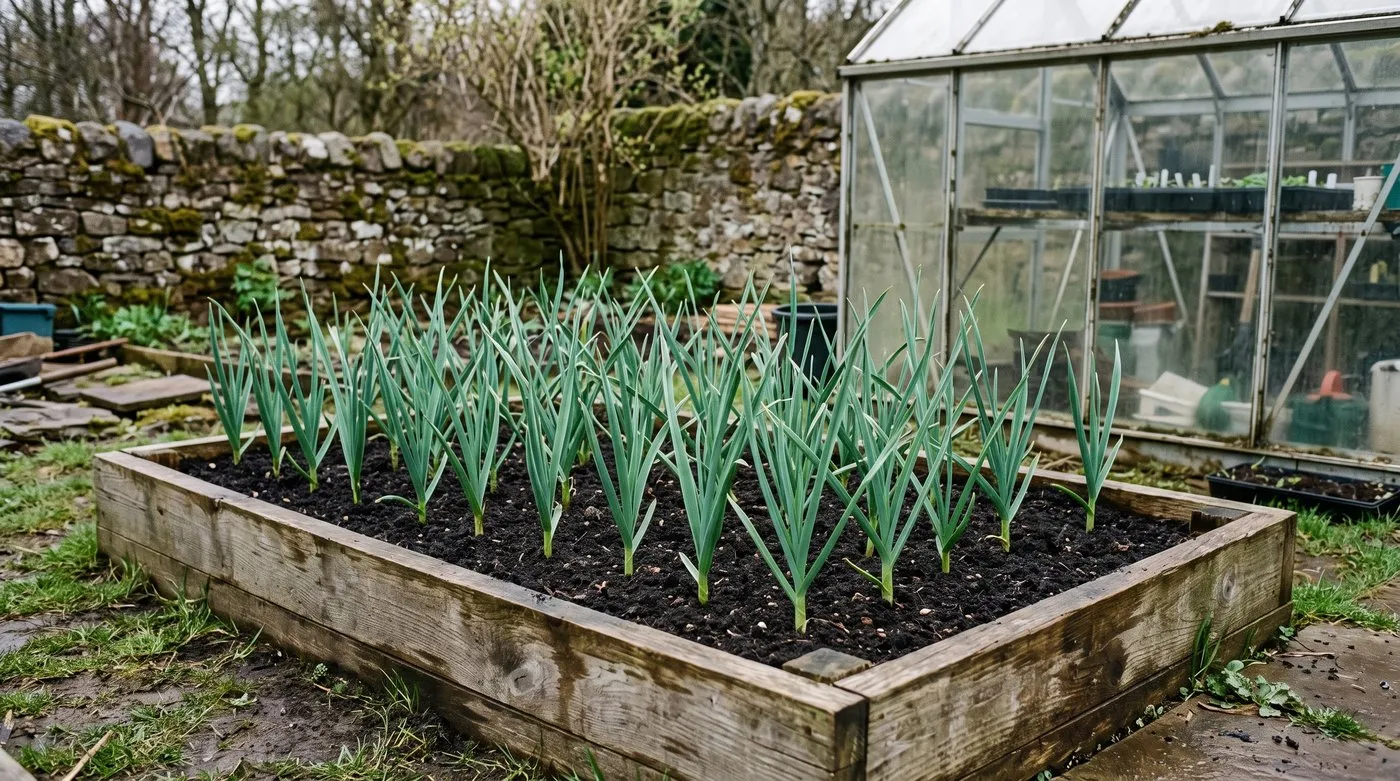
A raised bed keeps garlic out of wet winter clay. It warms up sooner in spring too, so the bulbs get a head start.
Companion planting with garlic
Garlic gets on with most vegetables, but there’s little proof that it helps them. Many people plant garlic under roses to keep greenfly away, but that’s old garden lore rather than a sure thing.
Good pairings are really about space. Garlic sits happily next to carrots, beetroot and lettuce, which like the same soil and don’t shade it. Some people grow onions or garlic near carrots to confuse carrot fly, but insect-proof mesh works far better.
Keep garlic in the same rotation group as onions, leeks and shallots. Grouping them makes it easy to move them all to fresh ground each year, and to keep white rot in one place if it appears.
Now you’ve got garlic sorted, read our UK vegetable planting calendar to plan the rest of your growing year and fit garlic into your rotation.
Growing garlic really is one of the simplest pleasures in a British garden. Plant a few cloves in October, leave them alone over winter, and lift them in July for months of home-grown garlic. Save your best healthy bulbs for replanting, and buy fresh certified garlic now and then to keep your stock clean.
Frequently asked questions
When should I plant garlic in the UK?
Plant garlic cloves in October or November for the best bulbs. They need a spell of winter cold to split into cloves. If you miss autumn, plant in February or March, but expect smaller bulbs. Softneck varieties cope with spring planting better than hardnecks.
Can I plant garlic from the supermarket?
It may grow, but results are hit and miss. Shop garlic can carry disease, and imported types often aren’t suited to British winters. The RHS advises buying named varieties from garden centres or mail-order suppliers. Certified seed garlic is checked for disease and suits our climate.
What is the difference between softneck and hardneck garlic?
Softneck keeps longer; hardneck has bigger cloves and more flavour. Softneck garlic has lots of cloves, no flower stalk, and stores for up to a year. Hardneck garlic has fewer, bigger cloves, grows a curly edible flower stalk called a scape, and is tougher in cold northern gardens.
How deep should I plant garlic cloves?
Plant each clove 2.5cm deep with the pointy end up. Space them 15cm apart in rows 30cm apart. Only plant deeper in light, sandy soil. On heavy clay, keep to 2.5cm and add grit, or start the cloves in modules.
Why has my garlic not formed separate cloves?
It probably didn’t get enough winter cold. That happens when cloves go in late in spring or after a very mild winter, so you get one round bulb instead of cloves. It’s fine to eat, just small. Plant earlier in autumn next year.
How do I know when garlic is ready to harvest?
Lift it when the lower third of the leaves turn yellow. The upper leaves should still be green. That’s from June for early varieties and July to August for the rest. Don’t wait until every leaf is brown, as the papery skins break down and the cloves start to separate.
How long does home-grown garlic last in storage?
Softneck garlic keeps for up to a year if well dried. Hardneck keeps for about 4-6 months. Dry the bulbs for 2-4 weeks somewhere airy, then hang them in net bags or plait softneck stems. Store somewhere cool and dry, and use any bulbs that go soft.
Our team produces practical UK gardening guidance from source research, contributor records and established horticultural practice. Editorial standards are overseen by Matt W.


