
Key takeaways
- Ants rarely damage plants; the trouble is ant hills, aphid farming and dry pots
- Brush ant hills flat on a dry day before mowing rather than trying to kill the nest
- Clear aphids with a jet of water and ants lose interest in the plant
- Nematodes sold for ants make a nest move on; water them in when the soil is warm
- Boiling water is only for nests in paving, never on lawns or near plants
- Vinegar and home-made sprays are not authorised pest controls in the UK
Ants turn up in almost every UK garden, and most of the time they do no harm at all. They throw up little hills on the lawn, run trails across paths and sometimes set up home in a pot. They rarely damage plants themselves.
So the best way to get rid of ants is usually to deal with the thing that bothers you, not the whole colony. This guide covers ants in lawns, on plants and in pots, and when to simply leave them be.
Which ants are in your garden?
Two kinds cause most of the questions in UK gardens.
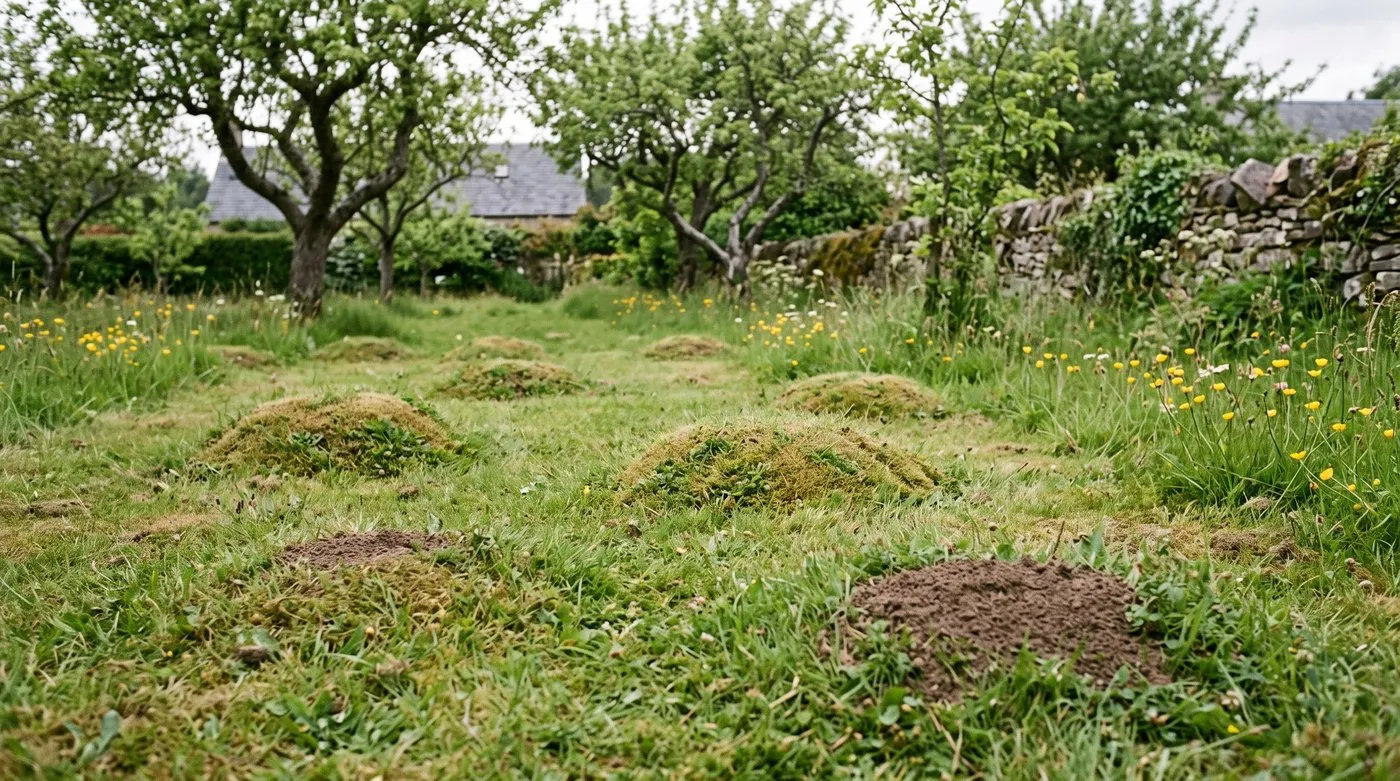
Grassy domes like these are yellow meadow ant mounds. They live underground and leave your plants alone.
| Ant | What it looks like | Where it nests | What it does |
|---|---|---|---|
| Black garden ant (Lasius niger) | Small, dark brown to black | Lawns, borders, under paving | Farms aphids on plants, runs trails into houses |
| Yellow meadow ant (Lasius flavus) | Small, pale yellow | Lawns and rough grass | Builds grassy mounds, rarely seen above ground |
| Red ant (Myrmica rubra) | Reddish-brown | Damp borders, rockeries | Can give a sharp sting if disturbed |
Yellow meadow ants make the biggest lawn mounds, often domes covered in grass. They live almost entirely underground and leave your plants alone.
Black garden ants are the ones you see marching across the patio and up plant stems. If they’re the problem on your paving, the guide to stopping patio ants goes into joints and slabs in detail.
Do ants damage plants?
Ants rarely harm plants themselves. They don’t eat leaves, stems or roots. The trouble is indirect.
- Aphid farming. Ants “milk” aphids for their sugary honeydew and chase off ladybirds. That lets aphid colonies grow bigger than they would otherwise.
- Dry pots. A nest in a container loosens the compost so it dries out fast, and the roots suffer.
- Lawn ant hills. Small heaps of fine soil smother the grass beneath them and make mowing bumpy.
- Loose paving. Ants carry soil and sand out from under slabs and joints.
How to stop ants farming aphids on your plants
Get rid of the aphids and the ants follow. If you see a busy ant trail running up a stem, check the shoot tips and leaf undersides for aphids.
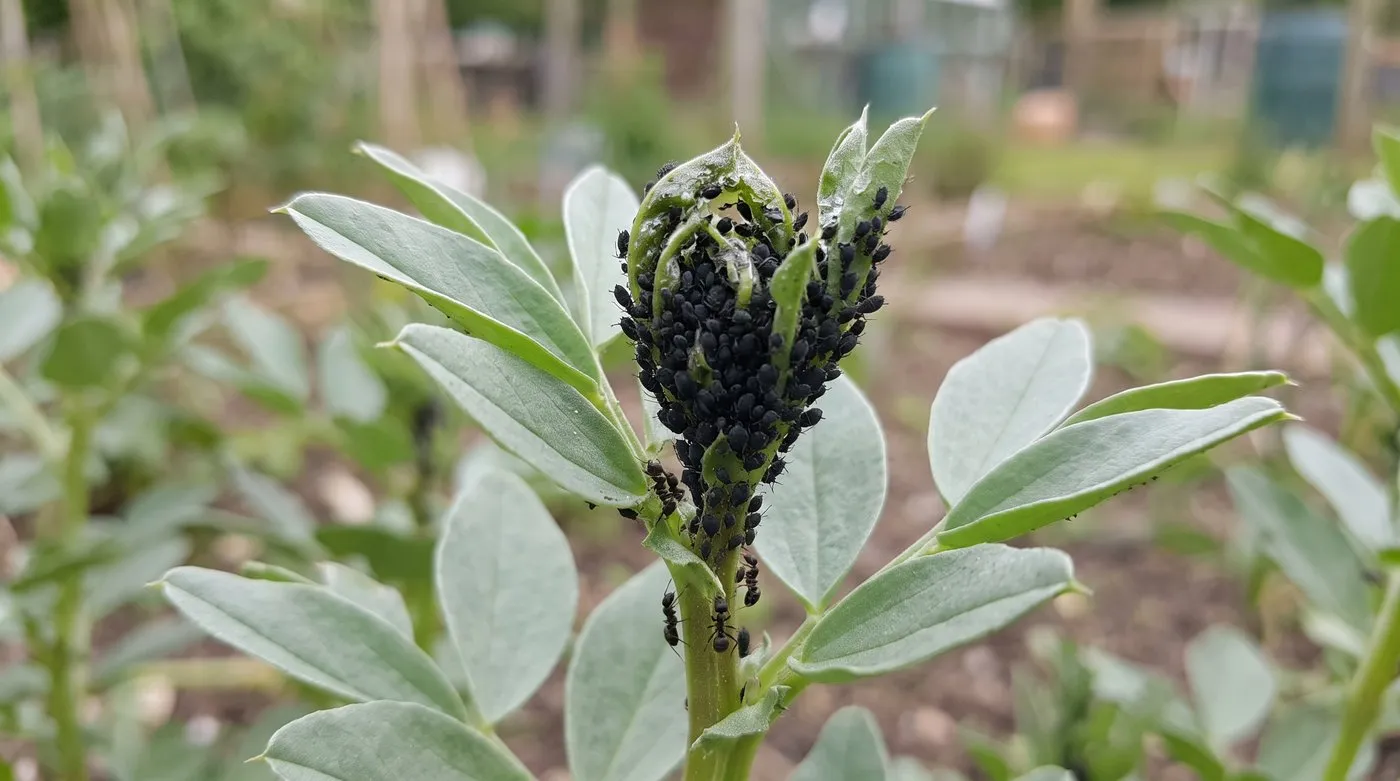
A trail of ants up a stem usually leads to aphids. Hose them off and the ants soon lose interest.
Squash small colonies with your fingers or blast them off with a jet of water from the hose. Do this every few days until they stop coming back. Ladybirds, hoverflies and lacewings will move in once the ants stop guarding the colony. The guide to getting rid of aphids has more ways to keep numbers down.
Avoid washing-up liquid and other home-made sprays. They aren’t authorised pest controls in the UK, and they can scorch leaves and harm the ladybirds you want. If you really need a spray for a big outbreak, use an authorised one exactly as the label says.
How to get rid of ant hills in a lawn
Ant hills on a lawn are mostly a cosmetic nuisance, so tidy them rather than wage war.
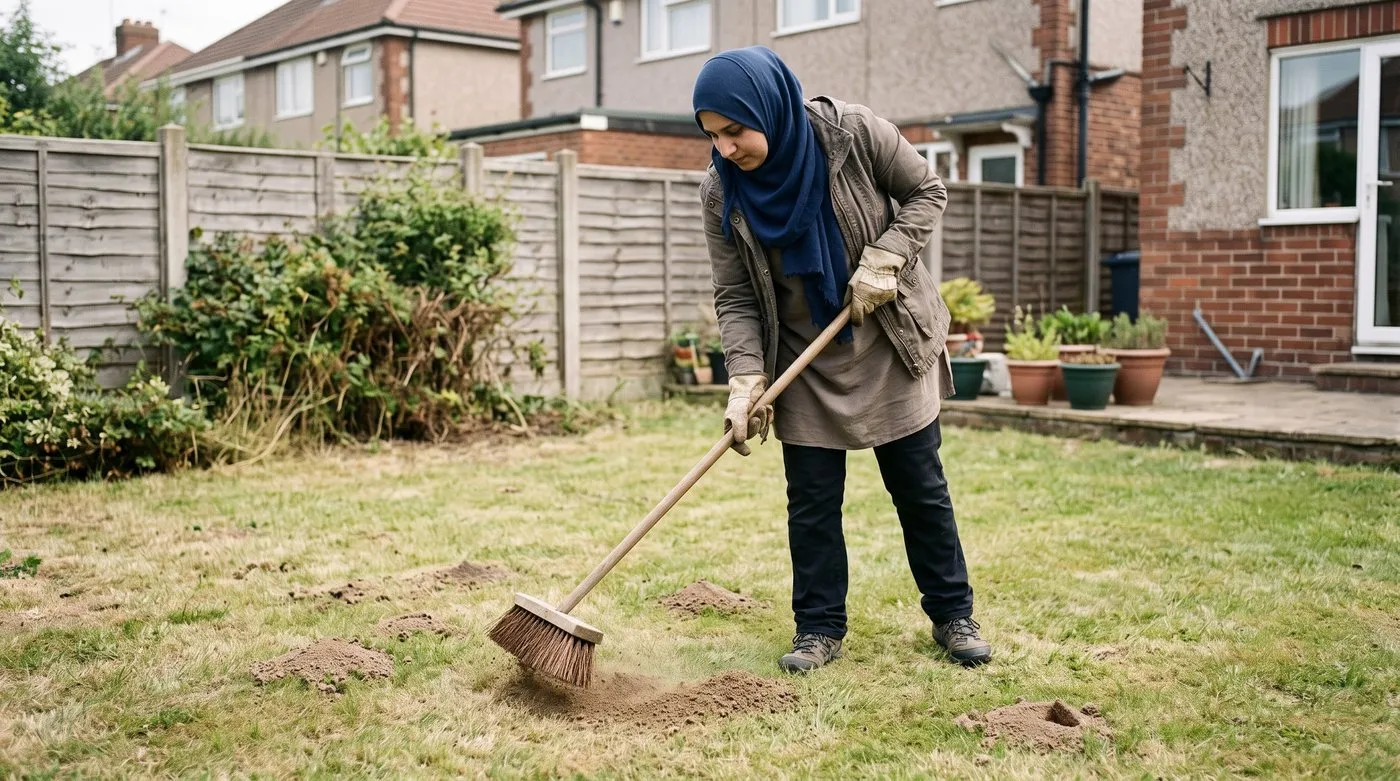
On a dry day the fine soil of an ant hill brushes out easily, ready for mowing.
- Brush them flat. On a dry day, spread the soil with a stiff brush or the back of a rake before you mow. Fine soil spreads easily and works into the lawn.
- Mow a little higher. Thicker, longer grass covers small mounds and copes better.
- Water in nematodes if mounds keep coming back. Nematodes sold for ants are tiny worms that you mix with water. They disturb the colony and often make it move elsewhere. Apply them when the soil is warm, usually from late spring to early autumn, following the pack.
- Look after the lawn. Feeding, aerating and scarifying in autumn give you dense grass that hides small mounds.
Big grassy domes from yellow meadow ants are worth leaving if you can. Mow over the top, or let that corner become a mini meadow. The lawn care calendar shows what to do and when through the year.
How to get rid of ants in pots and raised beds
Flood the pot. Stand it in a bucket or bowl of water for an hour so the compost is soaked. The ants carry their eggs out and leave. Let the pot drain well afterwards.
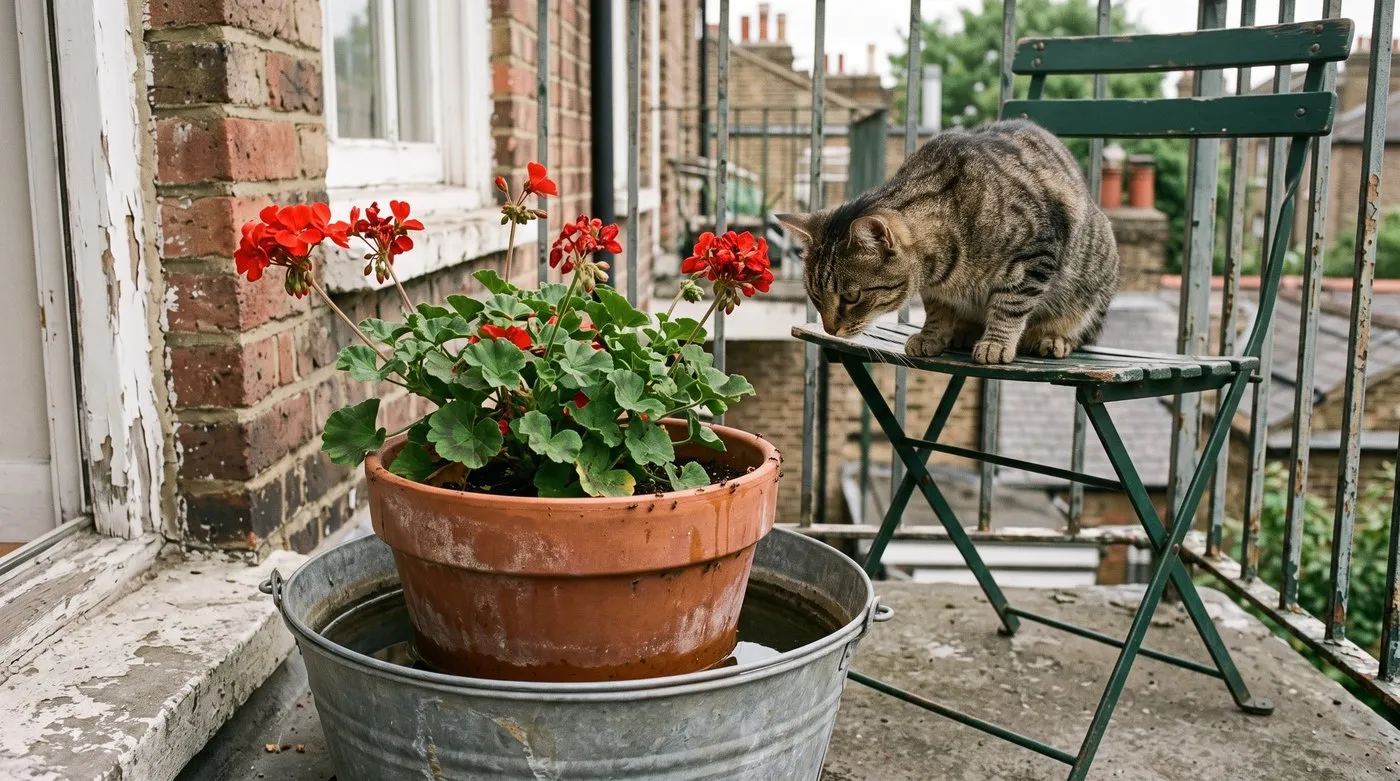
An hour in a bucket of water floods the compost and the ants move out.
If the nest has left the compost loose and dry, repot the plant into fresh compost. Check the roots while it’s out, and tease out any dry clumps. Keeping pots evenly moist through summer helps, as ants prefer dry, warm compost.
In raised beds, ants usually nest in the driest corner. Water that end more often and dig it over when you change crops.
Should you use boiling water or ant powders?
Boiling water kills the ants it reaches, but the queen is usually deep down out of reach. Use it only on nests in paths and between paving slabs. On a lawn or near plants it scalds the grass and roots. Carry the kettle carefully and keep children and pets well away.
Ant powders, gels and bait stations are sold for use around homes and paths. Baits work best, because the workers carry them back to the nest. Choose one labelled for the place you want to use it and follow the label exactly. Keep them away from children, pets and plants that bees visit, as they kill other insects too.
Skip the kitchen remedies. Vinegar, essential oil sprays and kitchen powders aren’t authorised pest controls. Vinegar also scorches any plant it touches.

Ants love the warm, dry gaps under paving. Boiling water is fine here, but keep it off the lawn and away from plants.
When should you leave ants alone?
In most gardens, ants are a help rather than a pest. They mix and air the soil, clear up dead insects and are food for birds. Green woodpeckers in particular feed on ants on lawns.
Leave them be if:
- They’re nesting in borders, rough grass or corners you don’t walk on
- They aren’t farming aphids on plants you care about
- They aren’t loosening paving or drying out pots
Every summer, ant colonies send out winged queens and males on warm, still days. It’s harmless and over in a day or two. The guide to flying ant day explains what’s going on.
Common mistakes with garden ants
Pouring boiling water on the lawn. It kills a patch of grass and rarely kills the colony.
Spraying home-made mixes. Vinegar and soap sprays aren’t authorised and harm plants and helpful insects.
Ignoring the aphids. Ants on a plant are a sign of aphids. Treat the aphids and the ants leave.
Trying to make the garden ant-free. It can’t be done, and you’d lose a useful part of the garden’s wildlife.
Frequently asked questions
Are ants harmful to garden plants?
Ants rarely damage garden plants directly. They farm aphids for their sweet honeydew and guard them from ladybirds. Clear the aphids with a jet of water and the ants lose interest.
What is the best way to deal with an ant nest in a lawn?
Brush the ant hill flat on a dry day before mowing. If it keeps coming back, water in nematodes sold for ants when the soil is warm. They disturb the colony and often make it move away.
Does boiling water kill ant nests?
It kills the ants it reaches, but rarely the whole nest. Use it only on nests in paths and paving, as it scalds grass and roots. Take care carrying the kettle outside.
Will vinegar get rid of ants?
No, and it isn’t an authorised pest control in the UK. Vinegar also scorches any plant it touches. Use non-chemical methods or an authorised ant product, following the label.
How do I get rid of ants in plant pots?
Sink the pot in a bucket of water for an hour. The ants leave as the compost floods. Let it drain, and repot into fresh compost if the nest has made it dry and loose.
Are ants good for the garden?
Yes, ants do a lot of good. They mix and air the soil, clear up dead insects and are food for birds such as green woodpeckers. In most gardens it’s better to live with them.
How do I stop ants coming into my house from the garden?
Seal the gaps they use and remove what draws them in. Fill gaps around doors, windows and pipes, and keep sweet food in sealed tubs. For a lasting trail, use an authorised ant bait station as the label directs.
Next steps
Ants are often a sign of aphids, so read the guide to black bean aphids if your broad beans are covered, or browse more fixes in pest control.
Our team produces practical UK gardening guidance from source research, contributor records and established horticultural practice. Editorial standards are overseen by Matt W.


