Key takeaways
- Black garden ants love patios because slabs stay warm and sandy joints are easy to dig
- Refill gaps with kiln-dried sand or a firm jointing compound before anything else
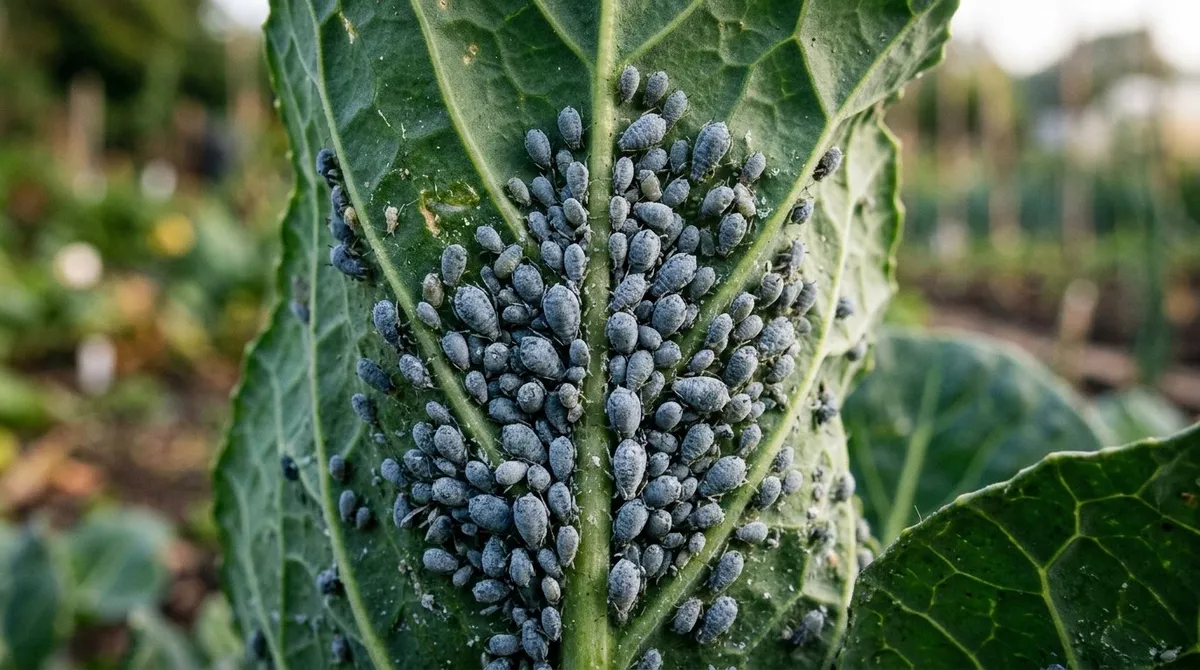
- Squash or hose aphids off nearby plants, as ants feed on the sweet honeydew they make
- Boiling water poured into an active nest entrance knocks back a colony, but keep it off plants
- For stubborn nests, use a ready-made ant bait station and follow the label
- Skip bleach, salt and vinegar: they don't reach the nest and they harm paving and plants
Ants on the patio don’t mean it’s dirty. They mean the slabs, joints and plants around it suit them perfectly. Change those things and the ants move on.
Nearly every patio ant in the UK is the black garden ant. It doesn’t sting and does little direct harm. The trouble is the sand it pushes up between slabs, and the aphids it guards on your plants. Here’s how to stop patio ants in the right order.
Why ants love patios
Three things make a patio ideal for ants:
- Warmth. Slabs soak up the sun and keep the ground beneath them warm.
- Easy digging. Dry, loose sand in the joints is a ready-made tunnel.
- Food nearby. Aphids on roses and other plants make sweet honeydew, which ants feed on.
Queens land on warm paving after mating flights in summer, then dig down through any open joint. The guide to flying ant day explains when that happens. Block the joints and cut off the food, and new colonies struggle to settle.

A small gap in a sandy joint is all a colony needs. Refilling joints like this is the single best fix.
Step 1: Refill every joint
This is the fix that matters most, and the one most people skip.
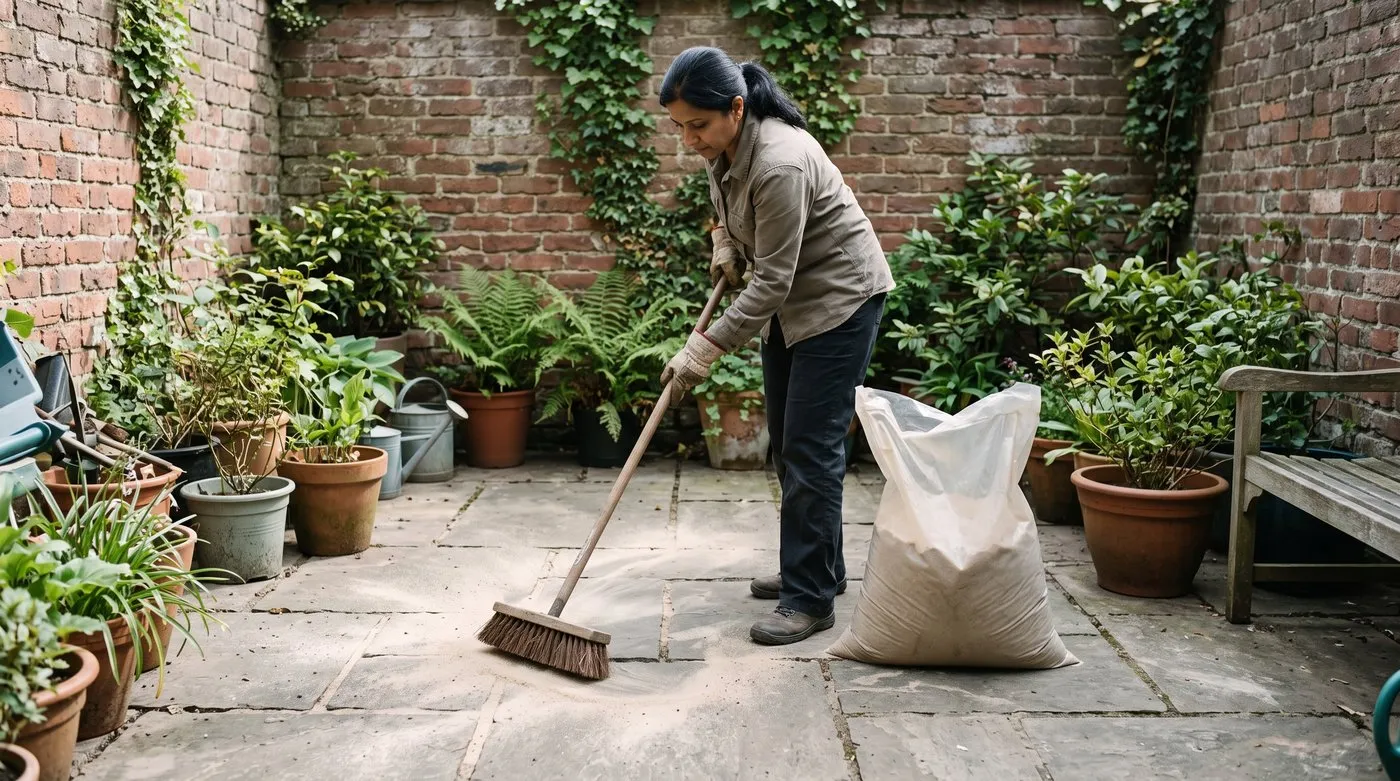
Brush the sand diagonally across the joints until they’re full to the top. It’s the single best way to keep ants out.
- Wait for a dry spell and sweep the patio.
- Scrape out loose or crumbling material with an old knife or pointing tool.
- Tip kiln-dried sand over the slabs. It’s a fine, very dry sand sold in bags at builders’ merchants.
- Brush it diagonally across the joints with a stiff broom until they’re full to the top.
- Sweep off the excess and keep the patio dry for a day or two.
On a patio with a solid base, a resin or polymer jointing compound sets firm and leaves fewer gaps for ants. Follow the instructions on the bag. The guide to laying a patio covers jointing on new patios.
Step 2: Cut off the aphid food supply
Black garden ants farm aphids. They protect them from ladybirds and drink the honeydew they make. Fewer aphids means less food and a smaller colony.
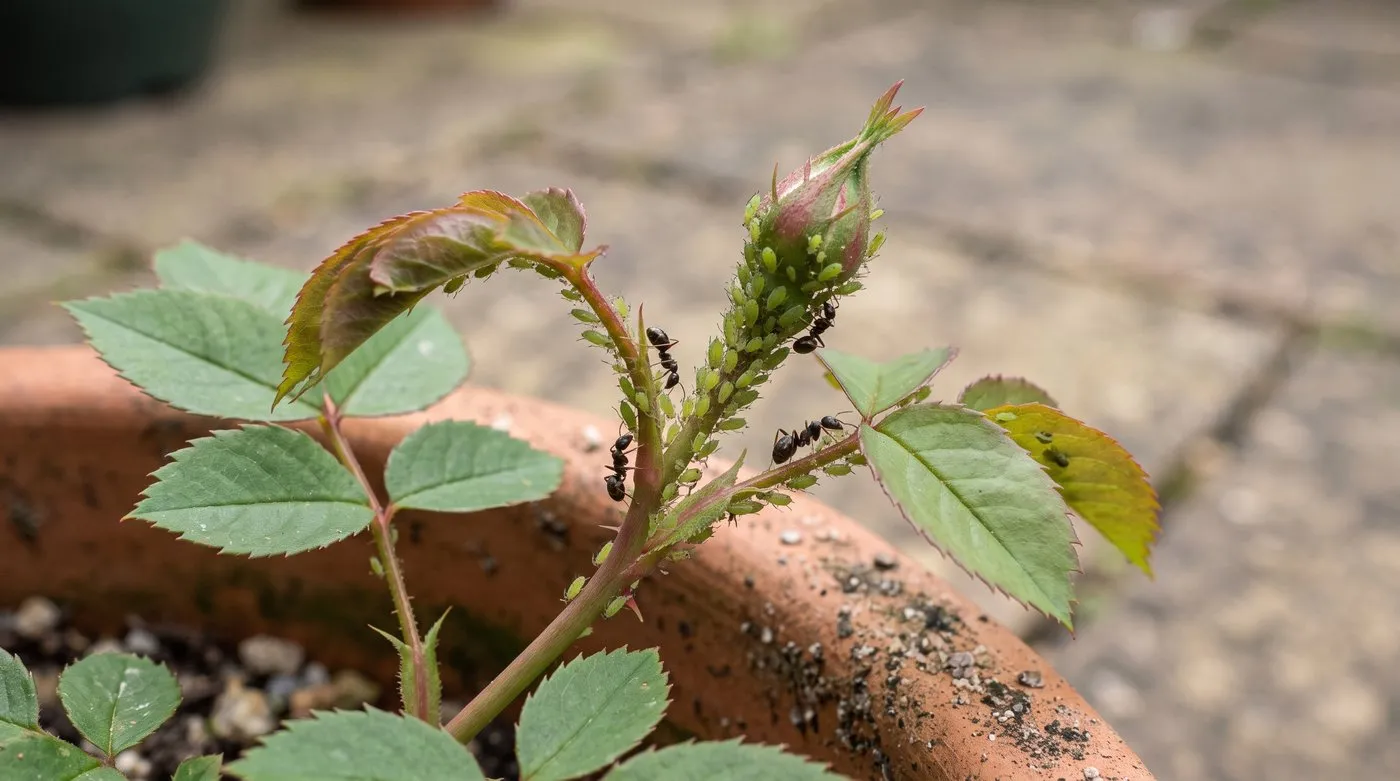
Ants guard aphids for their sweet honeydew. Clear the aphids from plants near the patio and the ants lose a food supply.
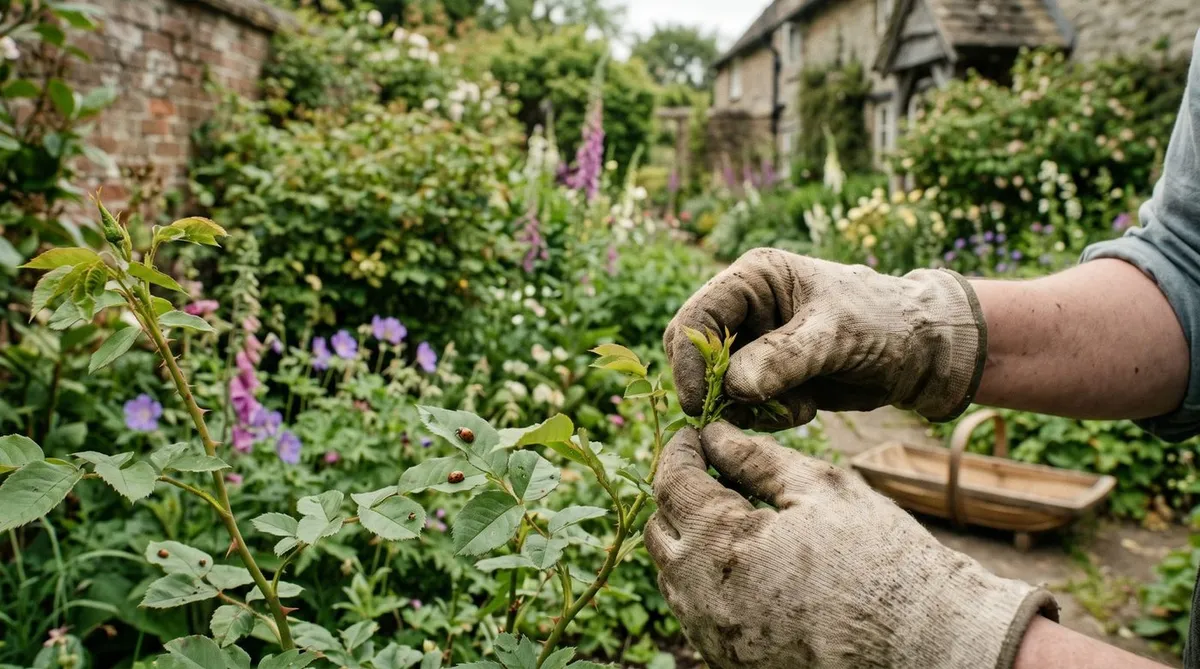
Check roses, pots and shrubs close to the patio for clusters of green or black aphids on new shoots. Squash small colonies with your fingers, or blast them off with a jet of water from the hose. Ladybirds, hoverflies and blue tits will help once the ants stop guarding the aphids. The guide to getting rid of aphids has more ways to keep them down.
Skip home-made soapy sprays. They aren’t approved for use as pesticides and can harm the ladybirds you want. If a spray is really needed, use an approved product for that use, following the label.
Step 3: Deal with an active nest
Boiling water poured into a nest entrance is a quick way to knock back a colony in paving. Pour slowly from the kettle so the water runs down into the tunnels, rather than splashing over the slab. Repeat the next day if ants are still using the hole.
Take care with it. Boiling water scalds any roots it reaches, so keep it well away from pots and border edges. Keep children and pets out of the way while you pour. Make sure it really is an ant nest: ants run in trails, while bees fly in and out of a single hole.

Pour slowly so the water runs down the tunnels. Then refill the joint so the ants can’t dig back in.
Step 4: Use a bait station for stubborn colonies
If ants keep coming back after Steps 1 to 3, try a ready-made ant bait station. Worker ants carry the bait back into the nest, where it reaches the rest of the colony. It’s slower than boiling water, usually taking a couple of weeks.
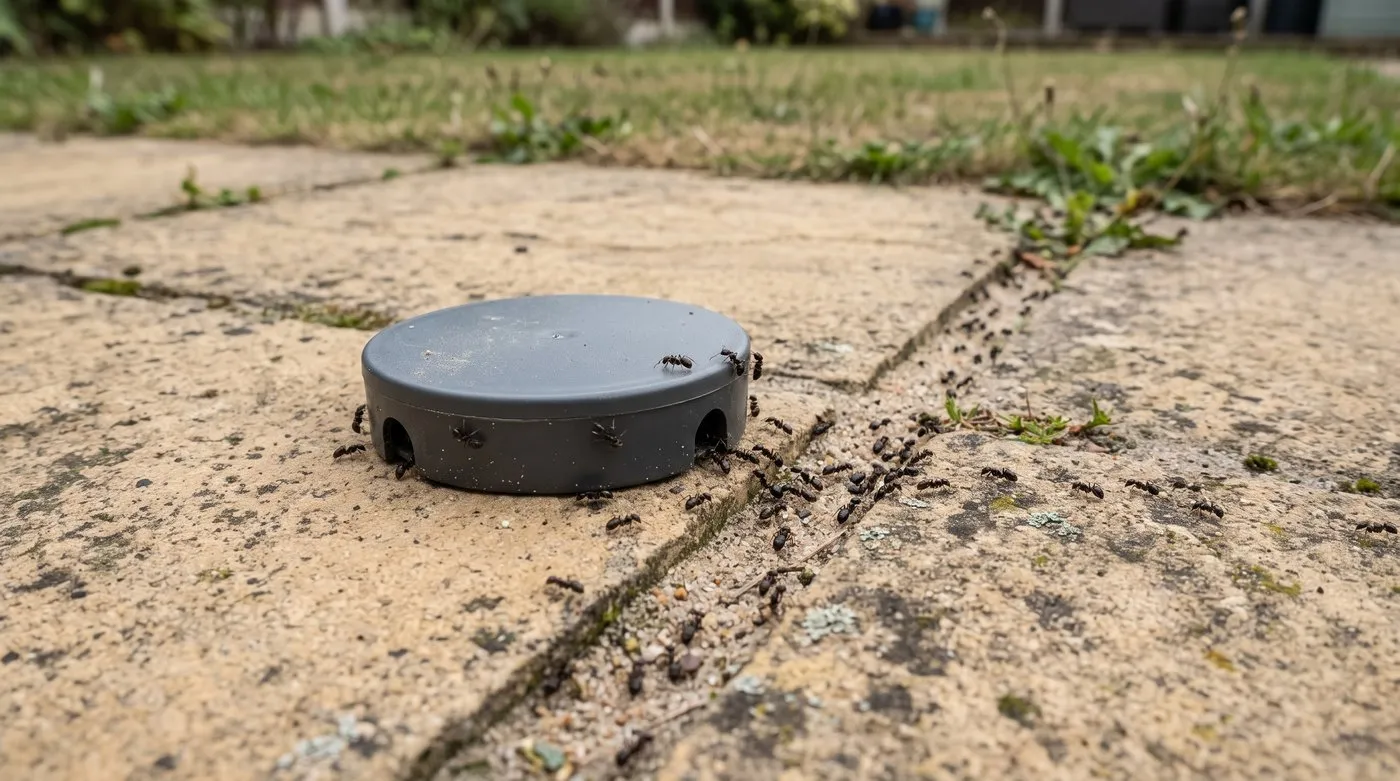
Put the bait station right on the trail and leave it alone. The workers carry the bait back into the nest.
Choose a sealed station sold for outdoor ant control and follow the label. Put it on the ant trail and leave it alone. Don’t disturb the trail or pour boiling water on that nest at the same time, or the workers won’t carry the bait home. Keep stations out of reach of pets and children.
Don’t make your own borax and sugar bait. Home-made mixes aren’t approved for use against ants and are risky around dogs and small children.
What doesn’t work
| Remedy | Why to skip it |
|---|---|
| Bleach | Kills a few surface ants, misses the nest, can stain stone and harm plants |
| Salt | Damages nearby plant roots and soil, doesn’t reach the queen |
| Vinegar | Not approved for pest control, scorches plants, does nothing to the nest |
| Coffee grounds or cinnamon | Washes away in the first rain and the ants just walk round |
| Spraying the trail | Kills a few workers while the colony carries on underground |
Keep ants off the patio for good
Once the patio is clear, a little upkeep stops the ants returning:
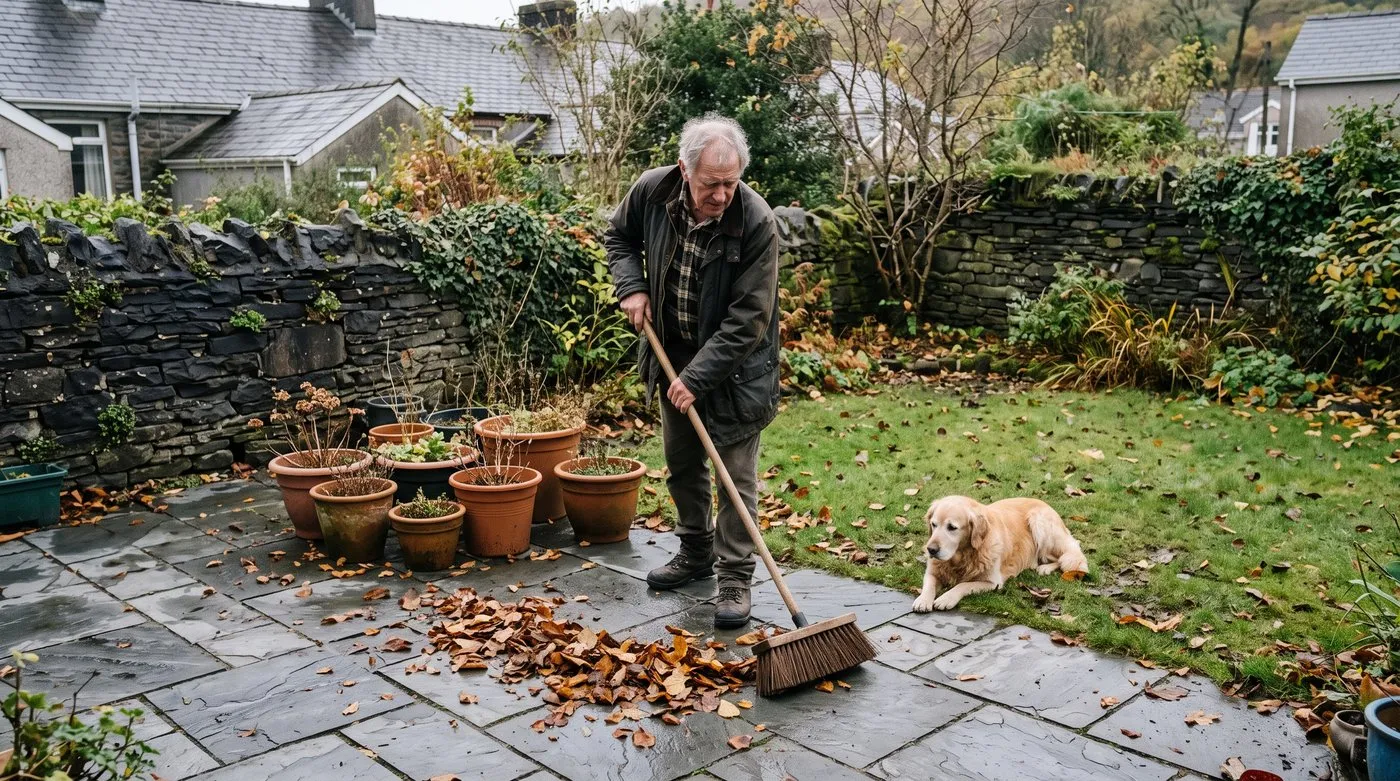
A quick autumn sweep, with pots lifted and joints cleared, leaves ants fewer places to settle next year.
- Each spring, sweep the patio and top up any joints that have lost sand over winter.
- After heavy rain, check the joints and refill any that have washed out.
- Through summer, check plants near the patio for aphids every week or two.
- In autumn, lift pots, sweep underneath and clear leaves out of the joints.
Weeds sprouting in the joints are a sign the sand is low, and they open the gaps up further. The guide to cleaning a patio covers a yearly clean that fits in nicely with re-sanding.
Patio ant calendar
| Month | What to do |
|---|---|
| March to April | Sweep the patio and top up joints. Start checking nearby plants for aphids |
| May to June | Squash or hose off aphids. Refill any joints the ants are using |
| July to August | Flying ants appear. Deal with new nests early with boiling water |
| September | Use a bait station on any colony that has survived |
| October to November | Lift pots, sweep underneath and clear leaves from joints |
| December to February | Little to do. Stock up on kiln-dried sand for spring |
Common patio ant mistakes
Treating the nest but not the joints. The colony just moves along a slab. Always refill the joints too.
Using bleach instead of boiling water. Bleach misses the queen and can stain the paving.
Pouring boiling water near plants. It kills roots as well as ants. Keep it to the middle of the patio.
Mixing methods on one nest. Boiling water kills the workers that would carry bait home. Pick one approach per nest.
Forgetting the neighbours. An ant-filled patio next door can send new queens your way each summer. Refilling your own joints is still your best defence.
Frequently asked questions
What is the fastest way to stop ants on a patio?
Pour boiling water slowly into the nest entrance. It knocks back the colony quickly. Then brush kiln-dried sand into the joints around it so new ants can’t dig back in. Keep the water well away from plants you want to keep.
Is it safe to pour boiling water on ants in paving?
Yes, as long as you keep it away from plants and people. Pour slowly from a kettle so it runs down the tunnels. It scalds any roots it reaches, so don’t use it near pots or border edges. Check first that the hole isn’t a bee nest.
Will bleach kill ants on a patio?
No, bleach won’t clear an ant colony. It may kill a few ants on the surface, but the queen and young underground survive. It can also stain stone and harm nearby plants. Use boiling water or a bait station instead.
Do ant powders work on a patio?
Powders only kill ants that walk through them. Most of the colony stays safely underground. If you use one, choose a product labelled for ants outdoors and follow the label. Refilling the joints does more long term.
Why do ants keep coming back to my patio every summer?
Because the joints are still open and food is still nearby. Warm slabs, loose sand and aphids on nearby plants all suit ants. Refill the joints, deal with aphids close to the patio and keep the paving swept. Top up the sand every spring.
Are home-made ant baits safe?
No, avoid home-made borax and sugar baits. They aren’t approved for use against ants and are risky around pets and children. A sealed, ready-made bait station used as the label says is the safer choice.
Are patio ants harmful?
Black garden ants don’t sting and rarely harm plants directly. The nuisance is sand pushed up from the joints and slabs that may loosen over time. They also protect aphids, which do harm plants nearby.
Now your patio is ant-free, read the guide to getting rid of ants in the garden for nests in lawns and borders. There’s more help with garden pests in the pest control hub.
Our team produces practical UK gardening guidance from source research, contributor records and established horticultural practice. Editorial standards are overseen by Matt W.