Key takeaways
- Young pears that swell fast, blacken at the tip and drop in May or June mean pear midge
- Cut one open and you'll find tiny white to orange maggots inside
- The maggots spend winter in the soil under the tree, then hatch as midges in spring
- Pick off and bin every affected fruitlet, ideally before mid-May
- Lightly fork the soil under the tree in summer so birds can find the maggots
- Sprays don't reach maggots inside the fruit, so hand-picking does the job
Young pears that swell quickly, turn black at the tip and drop in May or June are almost certainly suffering from pear midge. It’s a tiny fly that lays eggs in pear blossom. Its maggots eat the fruitlets from inside. The fix needs no spray: pick off and bin every affected fruitlet before the maggots reach the soil, and fork the ground under the tree.
A bad year can take most of the crop from one tree. But pear midge has a weak spot. It spends the winter in the soil right under your tree, so if you keep the maggots out of that soil for a couple of seasons, numbers drop fast.
How to spot pear midge on your tree
The first clue is fruitlets that grow faster than their neighbours in late April. They look swollen, rounded and a bit soft, rather than pear-shaped. Within a week or two the end opposite the stalk starts to blacken, and the black spreads up the fruit.
By late May and June these fruitlets fall. You often notice a scatter of small black fruitlets on the grass under the tree before anything else.

A pear midge fruitlet swells, rounds out and blackens from the tip. Compare it with the healthy one beside it.
Pear midge or frost? The cut-open test
Frost and poor pollination also make young pears drop, so check before you act. Frost damage usually browns the fruitlets evenly after a cold night in blossom time. Poorly pollinated fruitlets stay small, turn yellow and shrivel. Pear midge is different: the fruitlets swell bigger than healthy ones first, then blacken.
The quick test is to slice a suspect fruitlet in half. Frost or poor pollination leaves the inside pale and dry. Pear midge leaves a dark, mushy middle with tiny white to orange maggots. Find maggots, and you know it’s midge.

The clincher: slice a fruitlet open. Little maggots in a dark centre mean pear midge.
The pear midge year and when to act
Pear midge has one generation a year, and most of it happens out of sight.
| Time | What the midge is doing | What to do |
|---|---|---|
| March to April | Tiny midges come out of the soil and lay eggs in unopened blossom buds | Nothing you can do yet. Never spray blossom |
| April to May | Maggots feed inside the fruitlets, which swell and blacken | Pick off affected fruitlets every few days |
| May to June | Fruitlets drop and the maggots crawl into the soil | Clear every dropped fruitlet. Finish picking by mid-May if you can |
| June to September | Maggots rest in cocoons in the soil | Lightly fork the soil under the tree |
| Autumn and winter | Still in the soil | Fork again and keep the ground open |
The key moment is before the maggots reach the soil. Once they are in the ground, they’re safe until next spring. Every affected fruitlet you remove in time means fewer midges next year.

The midges lay their eggs in buds like these, just before they open. It all happens out of sight.
How to remove affected fruitlets
Picking off affected fruitlets is the single best control. From late April, check the tree every few days. Pick any fruitlet that looks swollen, rounded or black at the tip. Drop it straight into a bucket, never onto the grass.
Aim to finish the main sweep by mid-May, before the fruitlets start falling. Then pick up any that drop. Put them all in a bag in the general waste bin. Don’t add them to the compost heap, as the maggots can still crawl into the soil.
On a small tree this takes a few minutes per visit. It’s a chore in the first year when there are lots, but after a couple of seasons there are far fewer. A small, well-pruned tree is much easier to check, so it’s worth following the guide to pruning fruit trees.

Pick affected fruitlets into a bucket, never onto the grass, and try to finish by mid-May.
Fork the soil under the tree
The maggots spend the winter in cocoons just under the surface, under the spread of the branches. Lightly forking or hoeing this ground from June onwards brings some of them up, where birds and the weather can deal with them. Keep it shallow so you don’t damage the tree’s roots.
A thick mulch or dense ground cover under the tree gives the cocoons shelter. Pull the mulch back while you’re tackling pear midge, and let the soil stay open. The guide to growing pear trees covers feeding and watering if you do take the mulch away.

Turn over the soil under the tree and the robins will soon be along to pick off what you uncover.
Why sprays don’t work for pear midge
For most of its life the maggot is sealed inside the fruitlet, where no spray can reach. The adults are about for only a short time around blossom time, which is very hard to hit. And spraying open blossom harms bees and other pollinators that your crop needs. Hand-picking and soil work are simply more effective.
The RHS pear midge page has more photos if you want to double-check what you’ve got.
Pear midge or another pear problem?
Pear midge is only one of the things that can spoil a pear crop:
- Codling moth tunnels into nearly ripe fruit later in summer. See the guide to codling moth.
- Scab leaves dark, scabby patches on leaves and fruit skins. See apple and pear scab.
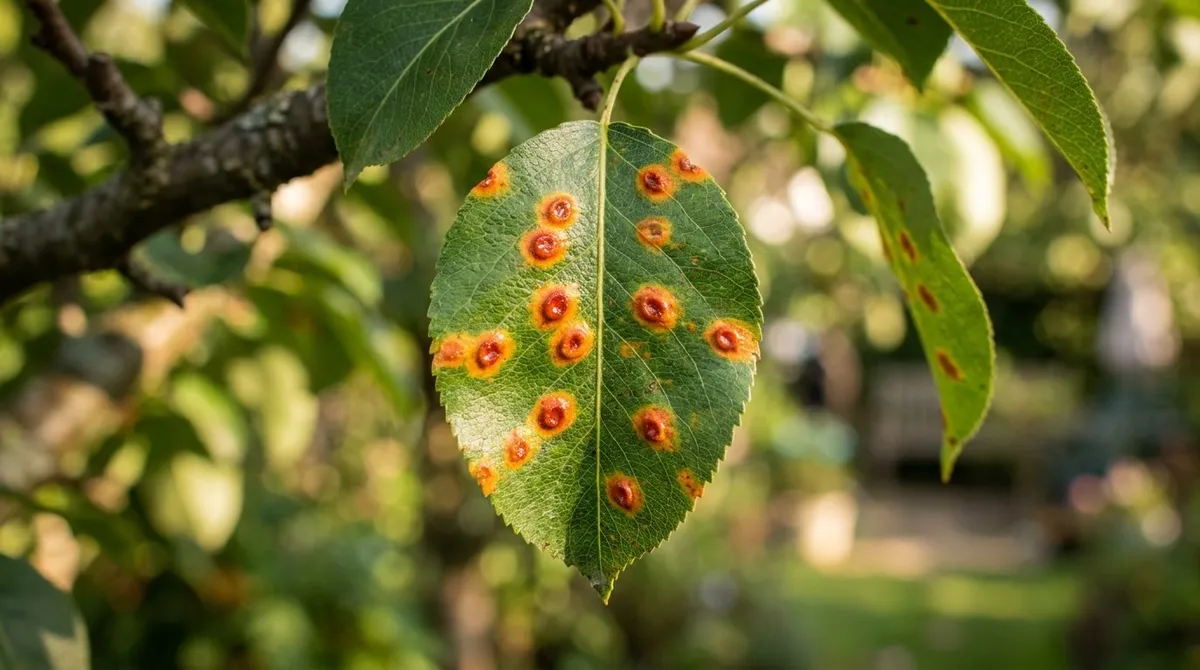
- Pear rust makes bright orange spots on the leaves. See pear rust.
If you’re planting a new tree, the guide to the best pear tree varieties helps you pick one that suits your garden.
Common mistakes with pear midge
Leaving dropped fruitlets on the ground. It looks like a natural early drop, but the maggots go straight into the soil. Pick them up.
Composting affected fruitlets. The maggots survive the heap. Bin them instead.
Mulching thickly under the tree. It shelters the cocoons. Keep the soil open while you’re dealing with midge.
Reaching for a spray. It can’t reach the maggots and can harm bees on the blossom.
Giving up after one year. It takes a couple of seasons of picking to break the cycle. Keep going.
Frequently asked questions
How do I know if my pears have pear midge?
Cut open a swollen, blackened young pear and look for maggots. Affected fruitlets grow faster than the rest, turn rounded, then blacken from the tip. Inside are tiny white to orange maggots and a dark, mushy middle.
What time of year does pear midge attack?
The midges lay eggs in spring, just before the blossom opens. The maggots feed inside the fruitlets through April and May. Damaged fruitlets drop in May and June, and the maggots go into the soil.
Will spraying get rid of pear midge?
No, sprays don’t reach the maggots inside the fruit. The adult midges are only about for a short time around blossom. Picking off affected fruitlets and forking the soil work better, and never spray open blossom.
Can I save fruitlets that already show pear midge damage?
No, an affected fruitlet won’t ripen and will drop. Remove it anyway, so the maggots inside don’t reach the soil. That protects next year’s crop.
Which pear varieties are most affected by pear midge?
Any pear can be hit, including popular choices like Conference. No variety is resistant. Breaking the cycle under your own tree matters far more than the variety.
How long does it take to get rid of pear midge?
Usually a couple of seasons of careful picking. The midges breed in the soil under your tree, so every fruitlet you remove means fewer next spring. Keep going until damaged fruitlets become rare.
What should I do with dropped pear fruitlets?
Pick them up and put them in the general waste bin. Don’t compost them or leave them on the grass. The maggots crawl out and burrow into the soil to become next year’s midges.
Find more fruit tree troubles in the problems hub. Once your pears are clean again, read the guide to storing apples and pears to make the crop last.
Our team produces practical UK gardening guidance from source research, contributor records and established horticultural practice. Editorial standards are overseen by Matt W.