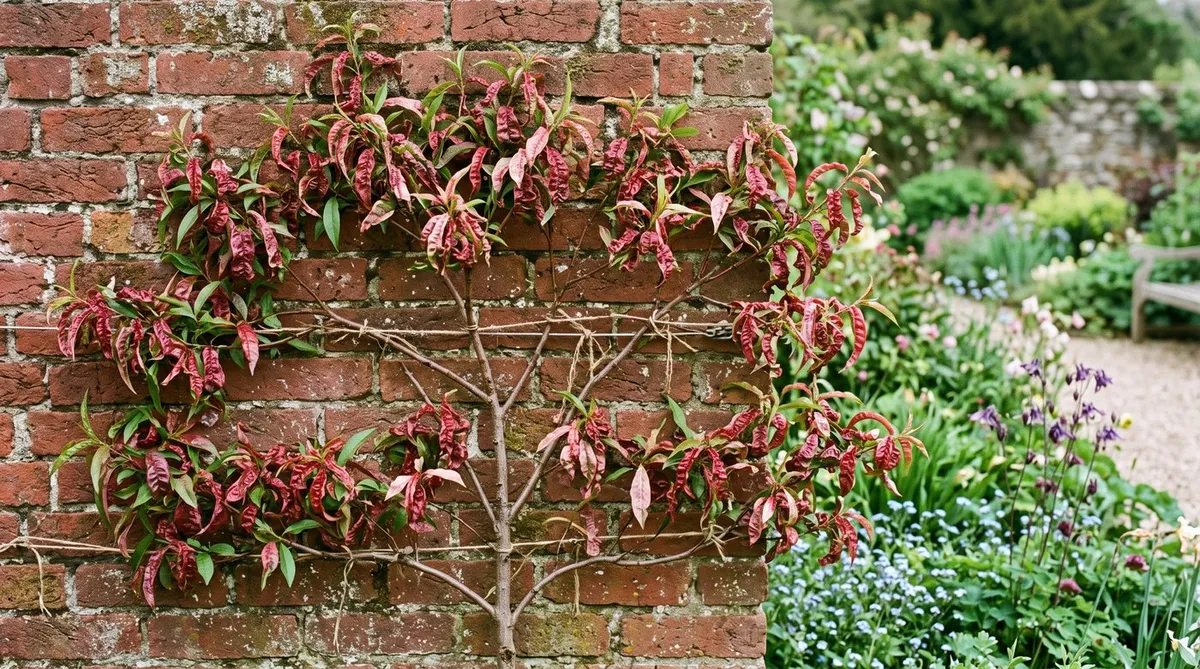
Key takeaways
- Bright orange spots on pear leaves in summer mean pear rust
- Turn a leaf over in late summer to see brown, fringed horns under each spot
- The fungus needs a juniper too, and spends winter there, never on your pear
- Raking fallen pear leaves and spraying in summer don't help with rust
- Spores can blow in from a juniper several gardens away
- Mature pears usually crop fine, so young trees are the ones to worry about
Bright orange spots on your pear leaves in summer are pear rust. It looks alarming, but on a mature tree it rarely harms the crop. The surprise is where it comes from. The fungus spends most of its life in a juniper, often in someone else’s garden, and only visits your pear for the summer.
That’s why raking leaves and spraying the pear don’t help. This guide shows how to recognise pear rust, why the juniper matters, which junipers are to blame, and what actually makes a difference.
How to identify pear rust
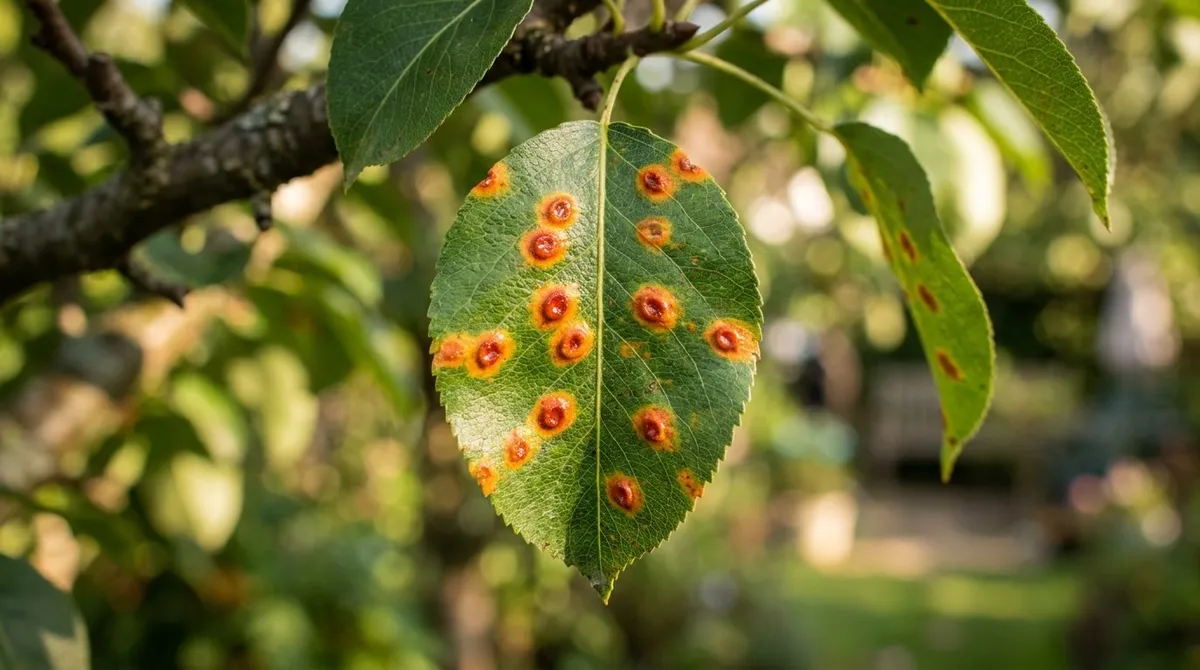
Look for bright orange to orange-red spots on the upper side of the leaves. They are round, often a little raised, sometimes with a yellow edge. In a bad year the tree looks as if someone has flicked orange paint over it. Look closely and you may see tiny black dots in the middle of each spot.
The spots usually appear in summer and are at their brightest in August. Orange marks earlier in spring are probably something else.
Pear rust mostly sticks to the leaves. Now and then it causes small swollen cankers on young shoots. Prune these out in winter. If you’re not sure what a bark problem is, the guide to canker on fruit trees helps you check.
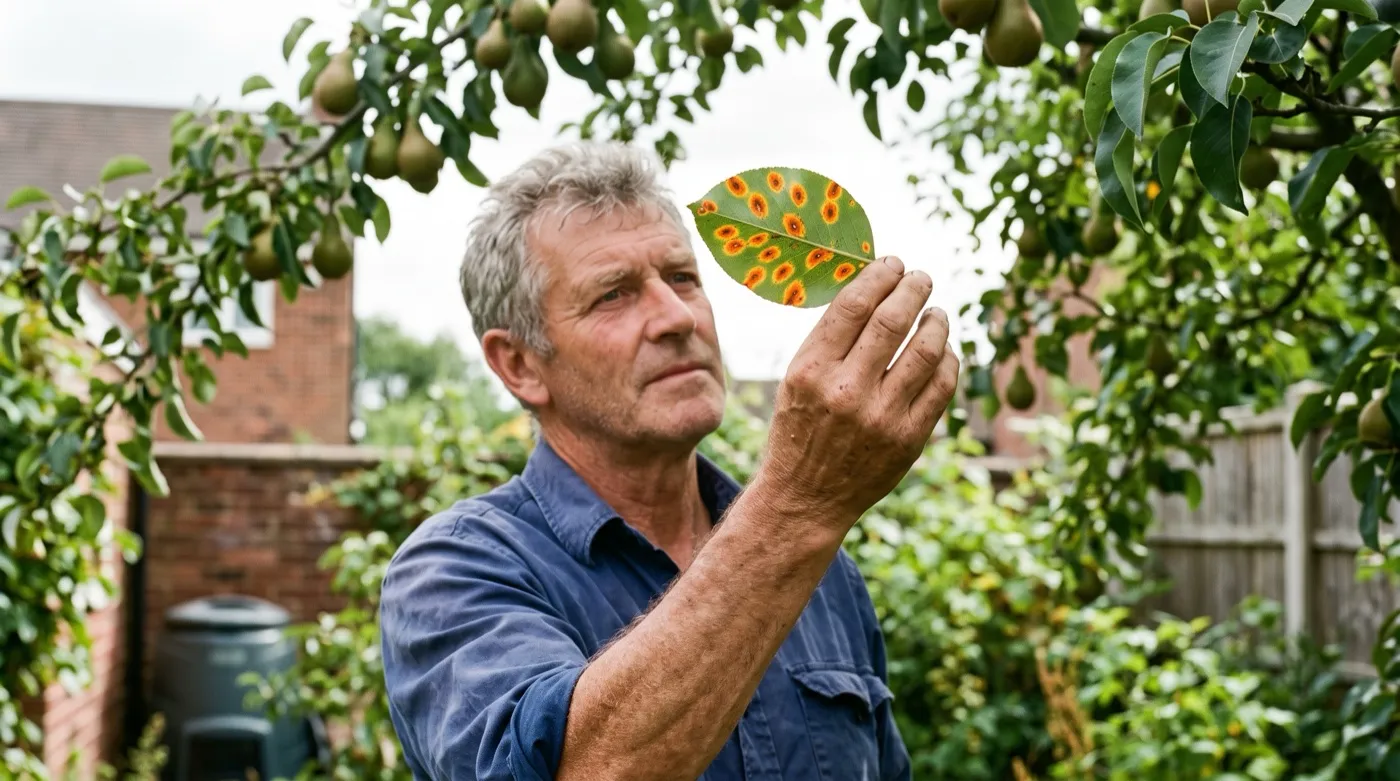
Hold a leaf up to the light and the orange spots really stand out. Then turn it over to be sure.
Turn the leaf over: the fringed horns that confirm it
From late summer into autumn, the underside of each orange spot swells into a brown, blister-like growth. As it ripens it splits open into a little fringe of curled, horn-like points, like a tiny shuttlecock.
Orange spots on top plus brown, fringed horns underneath means pear rust. No other common pear problem makes them.
Here’s the odd part. The spores from those horns can’t infect pear. They can only infect juniper. So your tree isn’t spreading rust to itself or to other pears. It’s sending spores back to a juniper somewhere nearby.
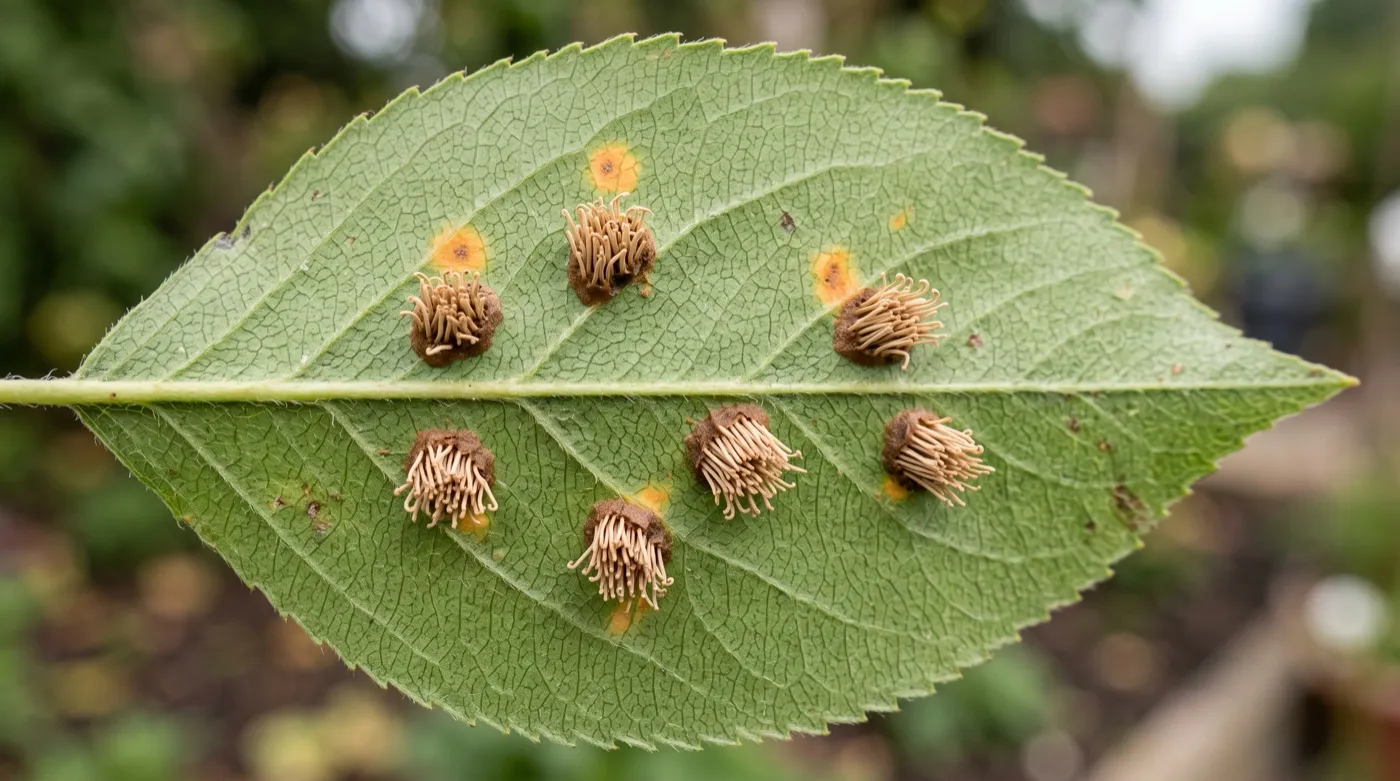
The giveaway: brown, fringed horns under each spot. Once you’ve seen them, you won’t mistake pear rust again.
Why pear rust needs a juniper
Most rusts, like rose rust, spread from leaf to leaf all summer on the same kind of plant. Pear rust doesn’t. It needs two different plants, and it swaps between them each year.
- In spring, infected juniper stems put out orange, jelly-like horns after rain. Spores from these blow onto young pear leaves and infect them.
- Over summer, the orange spots appear on the pear.
- In late summer and autumn, the pear leaves send spores back to the juniper.
- Over winter, the fungus lives inside the juniper’s stems. It doesn’t survive on the pear at all.
So every spot on your tree came in from a juniper, weeks before you noticed it. That’s why spraying in summer and clearing leaves in autumn don’t change next year. The general guide to rust disease in plants covers the more usual rusts, where clearing up does help.
| Time of year | What the fungus is doing | What you can do |
|---|---|---|
| January to March | Living inside juniper stems | Cut out galled juniper stems, or replace the juniper |
| April to May | Orange jelly horns on juniper after rain | Look for them. This is the easiest time to find a host juniper |
| April to June | Spores infecting young pear leaves | Nothing useful to do on the pear |
| July to August | Orange spots on pear leaves | Check the leaves and confirm it’s rust |
| September to October | Fringed horns under leaves send spores to juniper | Rake leaves for tidiness only. Plan any juniper swap |
| November to December | Back inside the juniper | Talk to neighbours about their junipers if needed |
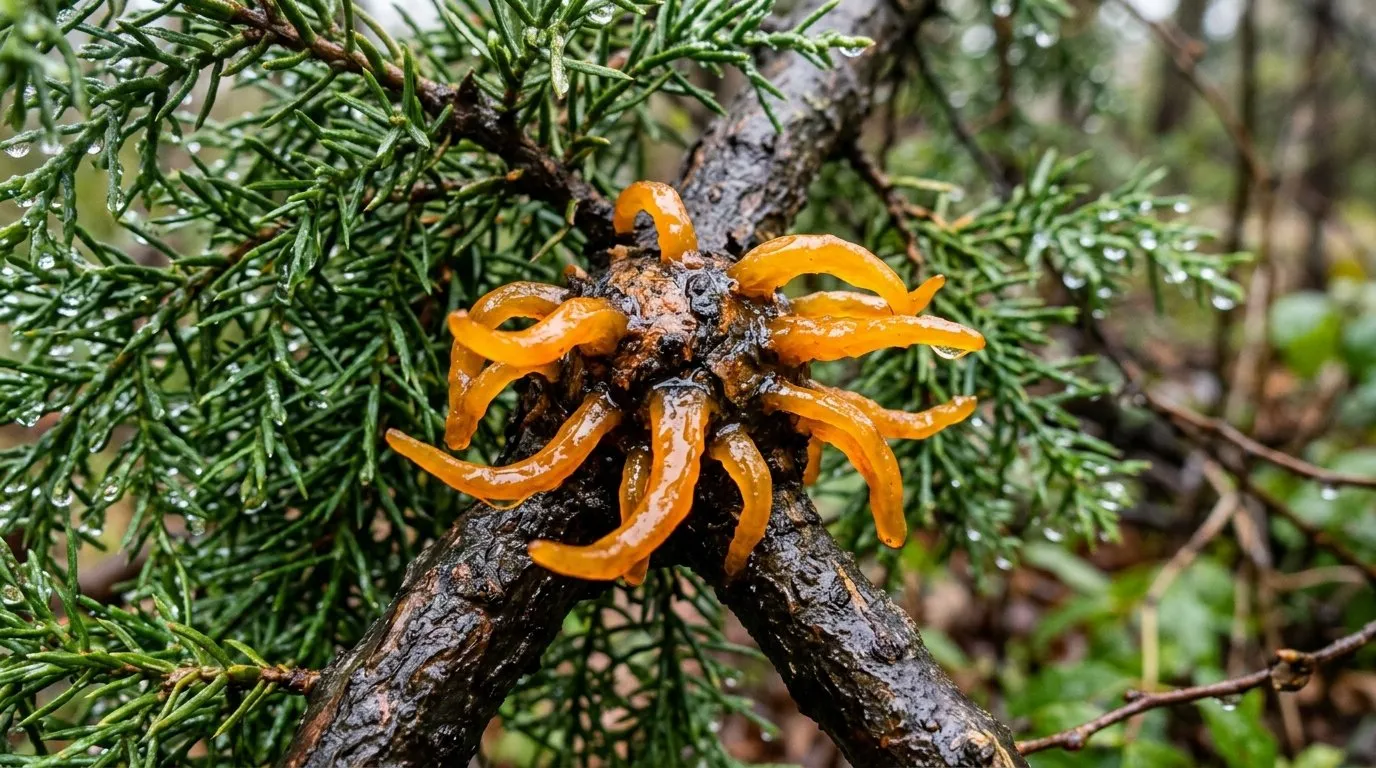
This is where pear rust really lives. After spring rain, infected juniper stems push out orange jelly horns like these.
Which junipers cause pear rust?
Not every juniper carries pear rust, so check before you dig anything out.
The main culprits are savin juniper (Juniperus sabina) and Chinese juniper (J. chinensis), and their garden varieties. The low, spreading ‘Tamariscifolia’, a form of savin juniper, is a common one in front gardens and rockeries.
Common juniper (J. communis) isn’t a usual host. Nor are yew, thuja or chamaecyparis, so you can grow them freely.
An infected juniper is easiest to spot in April and May after rain. Look for small swollen lumps on the stems that burst into bright orange jelly. The rest of the year those lumps are just small brown swellings, and easy to miss.
Gardener’s tip: Go looking for the source after a couple of wet days in late April. Infected junipers are covered in bright orange blobs that you can often spot over a fence.
How to find and deal with the source juniper
Spores can blow in from a juniper several gardens away, so you may not find the source in your own garden. That doesn’t mean it isn’t pear rust.
Start with any junipers you own. If one is a host:
- Cut out swollen, galled stems in winter. This helps, but the fungus can be hiding in stems you can’t see.
- Better still, remove the juniper and replace it with a non-host evergreen, such as yew or common juniper.
If the culprit is next door, have a friendly chat. Show them the orange horns in spring and the spots on your pear. Offering to help with a replacement plant often goes a long way. Removing even one close host juniper usually makes a big difference.
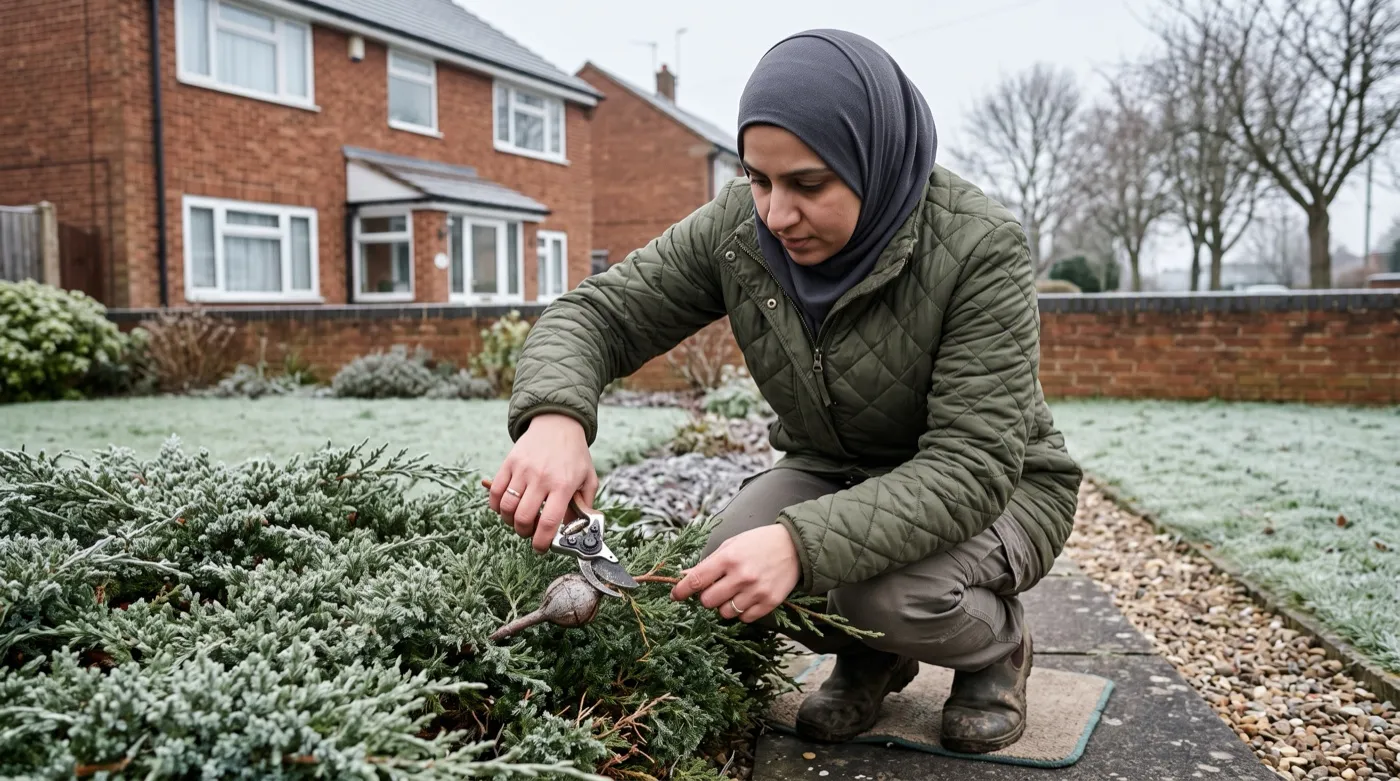
Winter is a good time to cut galled stems out of a host juniper, or to swap it for a non-host evergreen.
Pear rust or pear scab?
These two get mixed up a lot, and they need different fixes.
| Pear rust | Pear scab | |
|---|---|---|
| Colour | Bright orange spots | Olive-green to sooty black blotches |
| Leaf underside | Brown, fringed horns in late summer | Nothing special |
| Fruit | Rarely affected | Often corky, cracked patches |
| Spends winter on | Juniper | Fallen pear leaves and shoots |
| Does raking leaves help? | No | Yes |
| Main fix | Remove the host juniper | Clear leaves, prune, choose a resistant variety |
The winter row is the key one. Raking leaves helps a lot with scab but does nothing for rust. The guide to apple and pear scab covers scab in full. If your problem is young pears turning black and dropping in early summer, that’s pear midge, an insect.
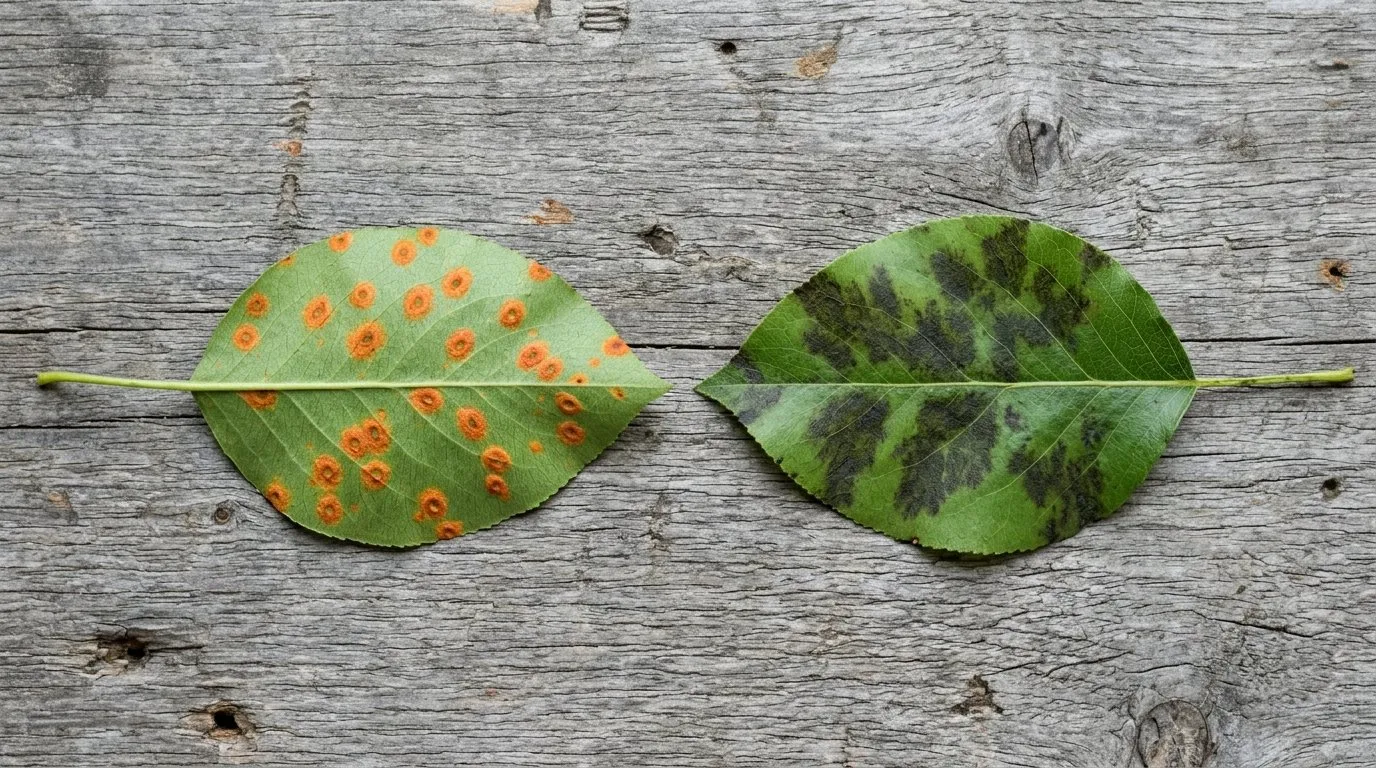
Rust on the left, scab on the right. Orange spots against sooty dark blotches makes them easy to tell apart.
Does pear rust damage the crop?
On a mature tree, usually not much. It looks dreadful, but there’s plenty of green leaf left between the spots to feed the fruit. Many trees crop well year after year with rust on their leaves.
It matters more on young trees, which have fewer leaves to spare, and on trees that are already struggling from drought or poor soil. Watch for shoot cankers too, and prune them out.
So match your effort to the tree. A big, established pear: find the juniper if you reasonably can, otherwise enjoy the fruit. A young tree you’ve just planted: hunt for the source juniper properly. Planting well and feeding young trees helps them cope. The guide to growing pear trees covers this.
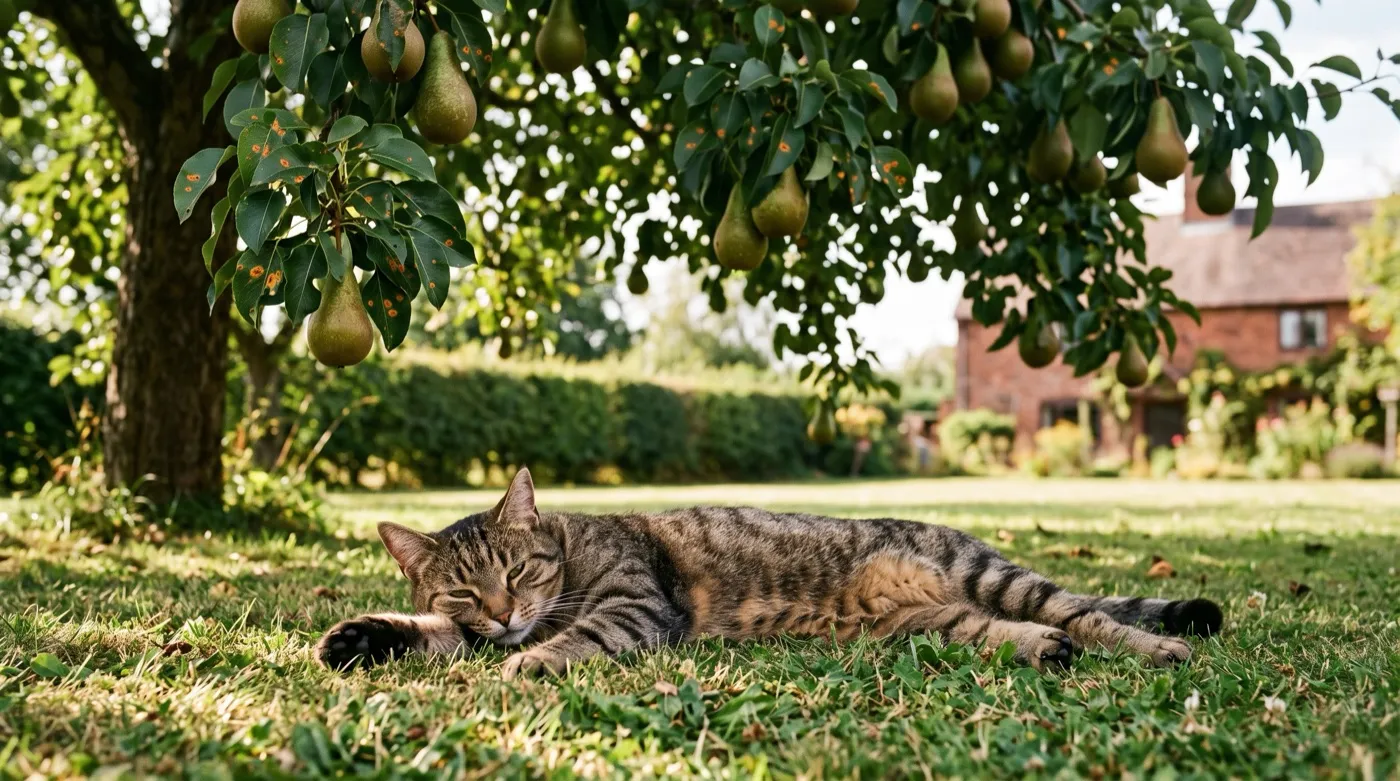
Plenty of mature pears carry rust spots and still give a full crop. The cat doesn’t seem worried either.
Can you spray pear rust?
Spraying isn’t worth it on a fruiting pear. The infection blows in from a juniper each spring, so even a protective spray would need repeating every year, forever. And spraying once the orange spots show does nothing, as the infection happened weeks earlier.
Put the effort into the juniper instead. It fixes the problem once. The RHS pear rust page has more photos of both stages.
Common mistakes with pear rust
Raking and binning pear leaves for rust. The fungus spends winter in the juniper, not the leaves. Rake for scab or tidiness only.
Spraying in summer. The infection happened in spring. By the time you see orange, there’s nothing left to stop.
Only looking in your own garden. Spores can blow in from several gardens away.
Blaming every juniper. Common juniper, yew, thuja and chamaecyparis aren’t usual hosts. Check before you dig anything up.
Panicking about a mature tree. It usually crops well anyway. Save your worry for young trees.
Frequently asked questions
What causes pear rust?
A fungus called Gymnosporangium sabinae that needs both a pear and a juniper. It lives all year in infected juniper stems. In spring it sends spores to pear leaves, and in autumn the pear sends spores back to juniper.
Will removing fallen leaves stop pear rust next year?
No, the fungus doesn’t spend winter on pear leaves. Each spring’s infection blows in fresh from a juniper. Rake fallen leaves for tidiness or to help with scab, but it won’t change the rust.
Which junipers cause pear rust?
Mainly savin juniper (Juniperus sabina) and Chinese juniper (J. chinensis) and their varieties. The spreading ‘Tamariscifolia’ is a common culprit in gardens. Common juniper, yew, thuja and chamaecyparis are not usual hosts.
How far can pear rust spores travel?
Far enough to come from a garden several streets away. That’s why many people find no juniper nearby. Removing a close host juniper still usually makes a big difference.
Will pear rust kill my pear tree?
Rarely, and mature trees usually crop well despite it. Young trees with few leaves can be held back by a bad attack. Occasional cankers on shoots are worth pruning out.
How do I tell pear rust from pear scab?
Pear rust is bright orange, while pear scab is olive-green to black. Rust makes round orange spots with fringed horns underneath. Scab makes sooty blotches and often marks the fruit with corky, cracked patches.
Do fungicides work on pear rust?
Spraying isn’t worth it on a fruiting pear. A spray can’t stop fresh infection blowing in from a juniper every spring. Dealing with the juniper is the only lasting fix.
Find more fruit tree troubles in the problems hub. If you’re choosing a new tree, the guide to the best pear tree varieties is the place to start.
Our team produces practical UK gardening guidance from source research, contributor records and established horticultural practice. Editorial standards are overseen by Matt W.