Key takeaways
- Red, blistered, puckered spring leaves on a peach or nectarine mean leaf curl
- The fungus only gets in while the buds are wet, from late winter into spring
- A clear polythene shelter from late January to mid-May keeps the buds dry
- Potted trees can simply move into a greenhouse or porch for those months
- There's no spray for home gardeners, so shelter and variety choice do the work
- Avalon Pride resists leaf curl, and a hit tree usually grows a fresh set of leaves
Red, puckered, blistered leaves on your peach or nectarine in spring? That’s peach leaf curl, a fungus that gets into the buds while they are wet. Keep rain off the buds from late January to mid-May and it can’t get in. A simple polythene shelter does it, or move a potted tree under cover.
Once the blisters show, the infection has already happened, so you can’t cure those leaves. But the tree will usually grow a fresh set. This guide shows how to recognise leaf curl, how to stop it next year and how to help a tree that has it now. It applies to peaches, nectarines and, less often, almonds and apricots.
What does peach leaf curl look like?
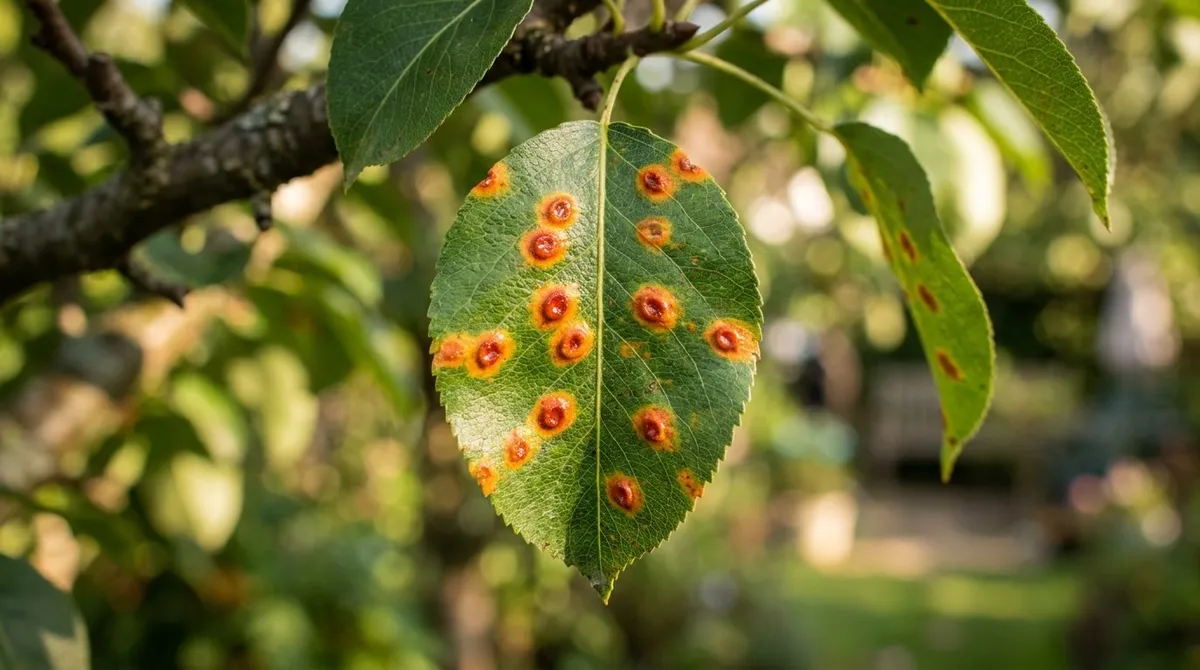
As the new leaves unfold in April, parts of them thicken, pucker and turn bright red or purple. The leaves curl and crumple instead of lying flat. A badly hit tree looks as if it’s covered in red crisps.
Over the next few weeks, the blisters fade and get a powdery white bloom. That bloom is the fungus making spores. Then the leaves turn brown and fall. A bad attack can strip much of the first set of leaves by early summer.
One bad year won’t kill an established tree. It does use up the tree’s energy, though, so the crop is smaller. Several bad years in a row weaken it badly.
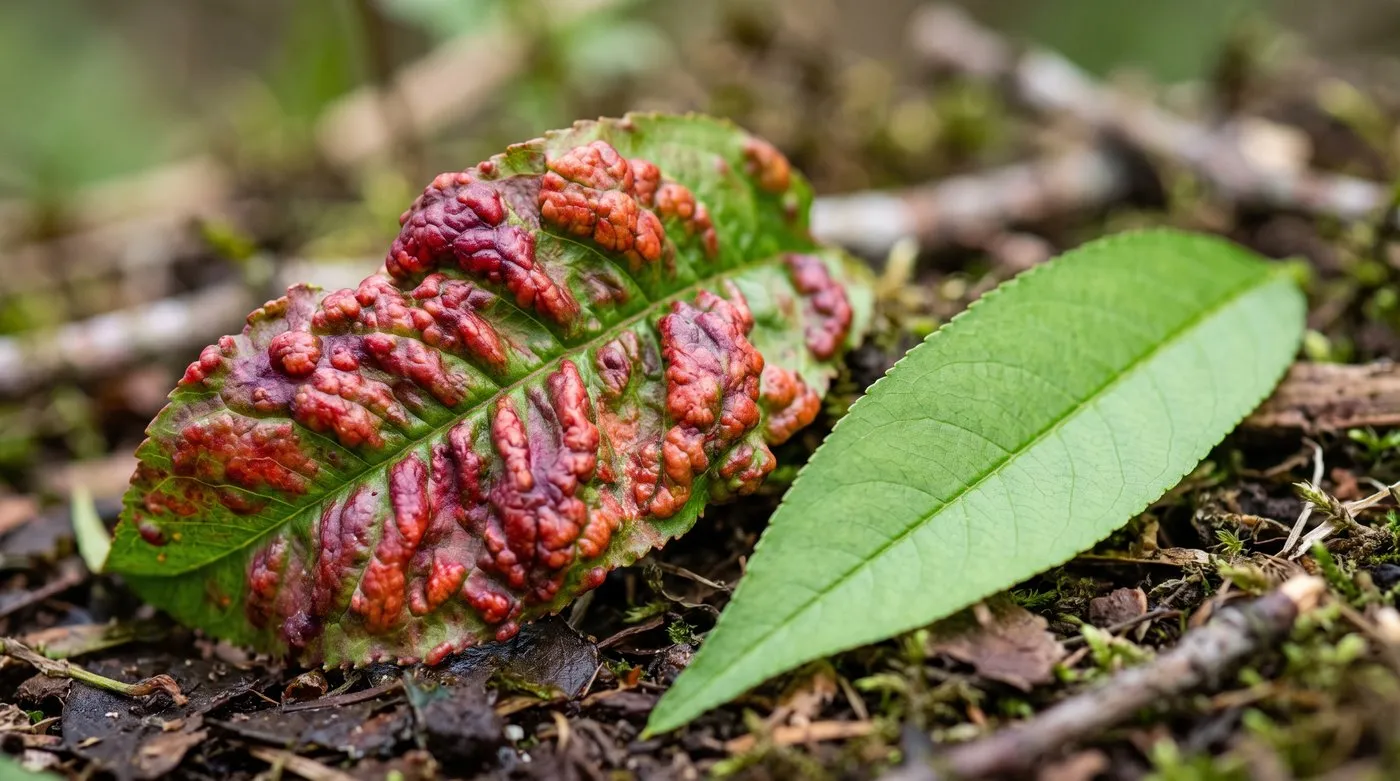
Thick, puckered, red-purple blisters are the classic sign. Compare it with the flat, healthy leaf alongside.
When does peach leaf curl infect the tree?
The infection happens weeks before you see anything. The fungus spends the winter on the tree’s bark, twigs and buds. It doesn’t need to blow in from elsewhere.
From late January, the buds start to swell. When rain or heavy dew keeps them wet, the spores get into the tiny leaves still forming inside. Cool, wet springs bring bad attacks. Warm, dry springs bring far less.
By April, when the red blisters appear, the infection is long finished. That’s why spraying or fussing over blistered leaves doesn’t help. Everything that works happens before the leaves open, by keeping the buds dry.
How to build a rain shelter for a peach tree
Keeping rain off the buds is the most reliable way to stop leaf curl. For a tree trained flat against a wall, it’s quick and cheap.
- Fix a batten along the wall above the top of the tree.
- Add a few arms sticking out about 30-45cm from the wall.
- Staple clear polythene over them, so rain runs off clear of the branches.
- Leave both ends open, so air moves through and insects can reach the blossom.
- Put it up in late January and take it down in mid-May, once the leaves are fully open.
Don’t seal the tree into a closed box. That traps damp air and heat, and keeps out the insects that pollinate the flowers.
Wall-trained fans make sheltering easy, which is a good reason to grow a peach that way. The guide to fan-training fruit trees shows how.
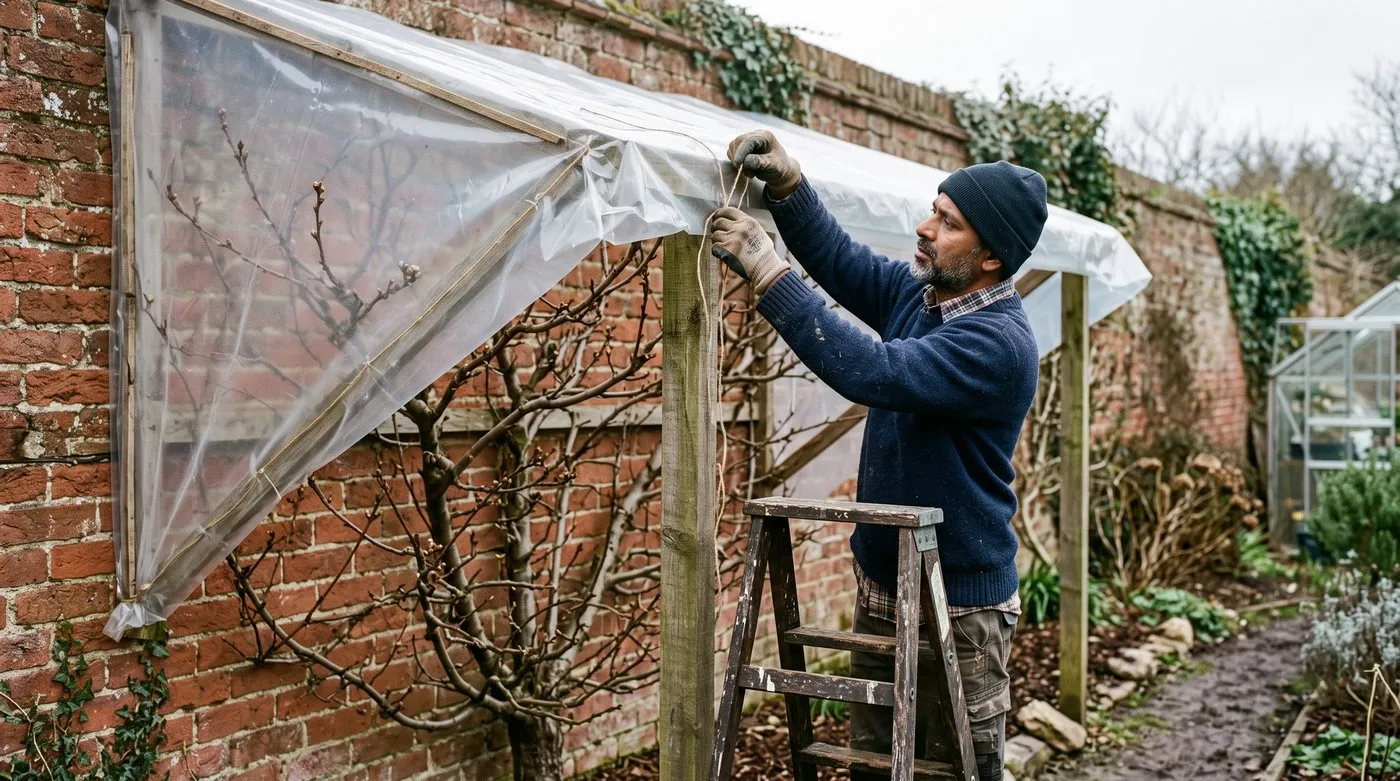
A clear polythene lean-to, open at both ends, keeps the swelling buds dry from late January to mid-May.
Growing a peach under cover
A peach in a greenhouse or conservatory rarely gets leaf curl, because its buds stay dry. A tree in a big pot can move into an unheated greenhouse or porch from January to May, then go back outside for summer.
Two things to remember under cover. First, hand pollinate the blossom, because insects can’t reach it. Dab a soft brush from flower to flower around midday, every couple of days while it’s in flower. Second, open vents on sunny days so it doesn’t overheat.
The guide to winter care for potted fruit trees covers moving trees in and out without upsetting them.
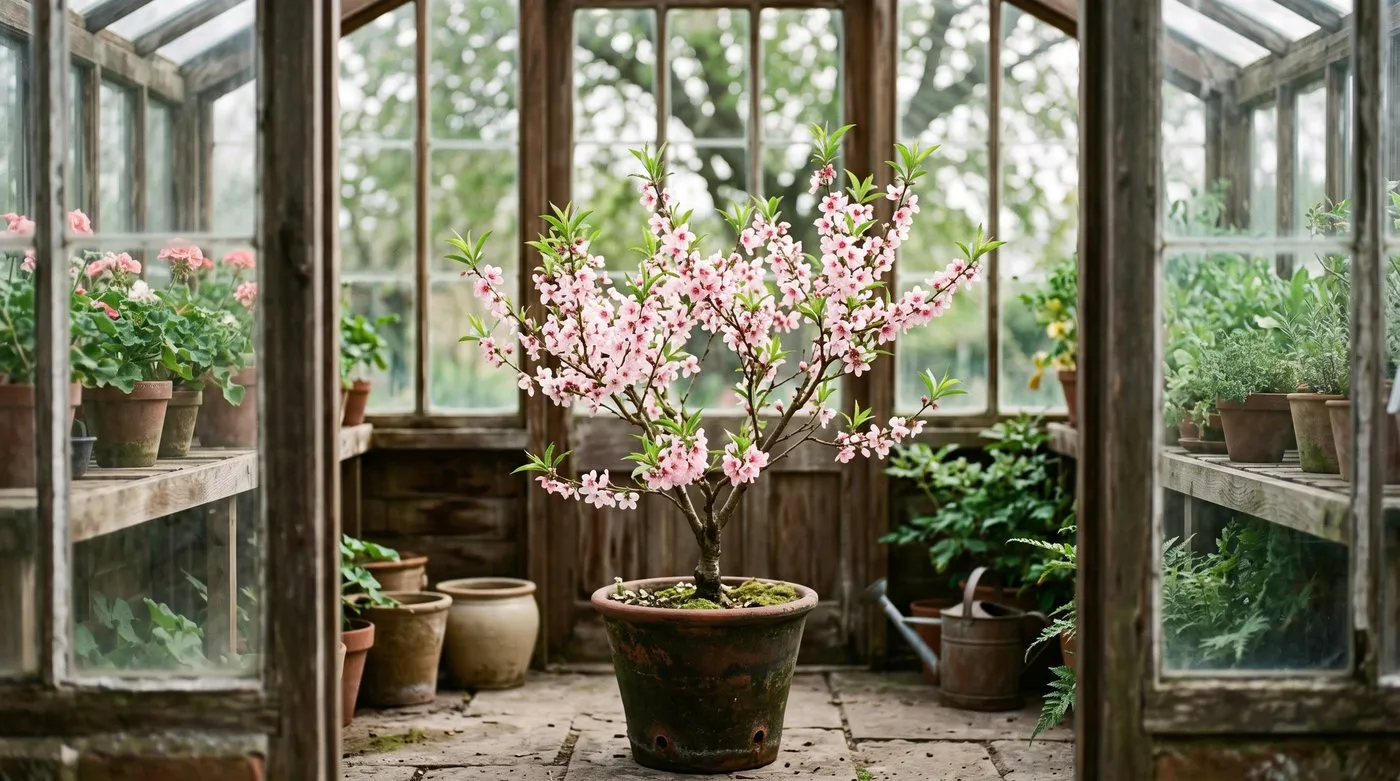
A potted peach under glass from January to May keeps its buds dry. Just remember to hand pollinate the blossom.
How to help a tree with leaf curl now
If your tree has leaf curl this spring, the year isn’t lost. An established peach usually grows a fresh set of leaves once the weather warms, and these are normally healthy.
Pick off blistered leaves before they turn white and powdery. Put them in the general waste bin, not the compost heap.
Feed, mulch and water. Give a general fruit feed and spread a 5-7cm mulch of compost or well-rotted manure over the roots, keeping it off the trunk. Water well in dry spells. This helps the tree push out its new leaves.
Thin the fruit if the tree has lost a lot of leaves. A weak tree can’t ripen a heavy crop and grow new leaves at the same time.
A stressed tree is also more open to other troubles. Look out for brown rot on stone fruit and canker on fruit trees.
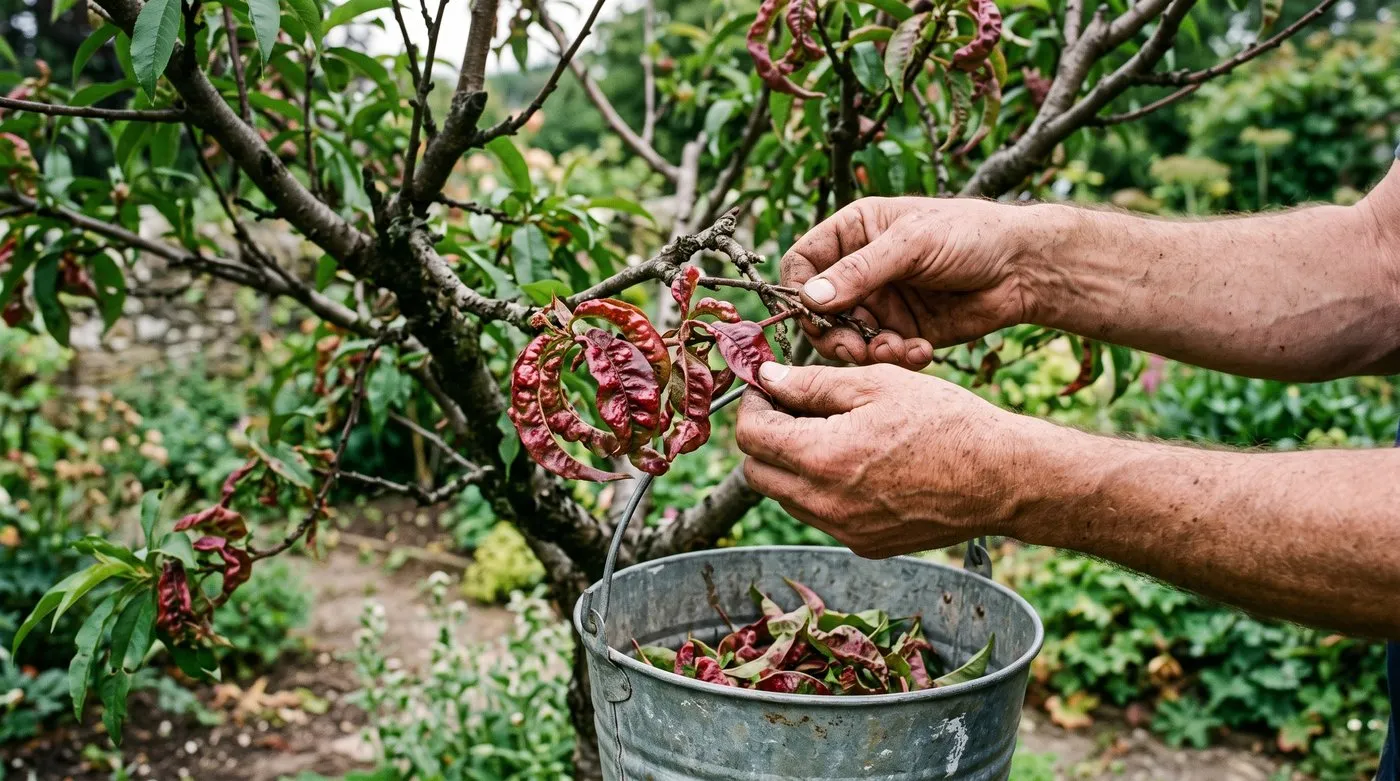
Pick off blistered leaves before they turn white. The tree soon replaces them with a clean new set.
Can you spray for peach leaf curl?
No. There is no fungicide for home gardeners to use on peach leaf curl in the UK. Older books and foreign websites often suggest copper-based products. These are no longer authorised for garden use here, so don’t use them.
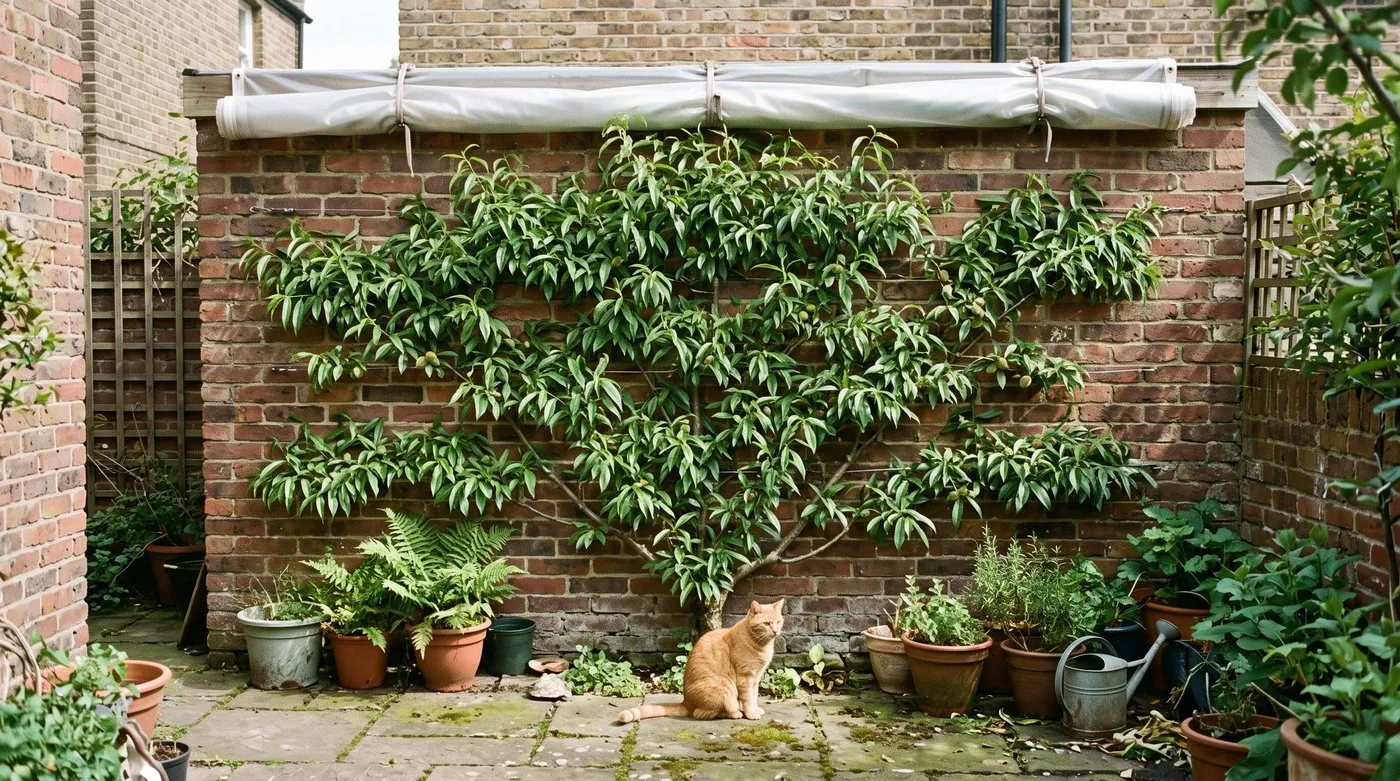
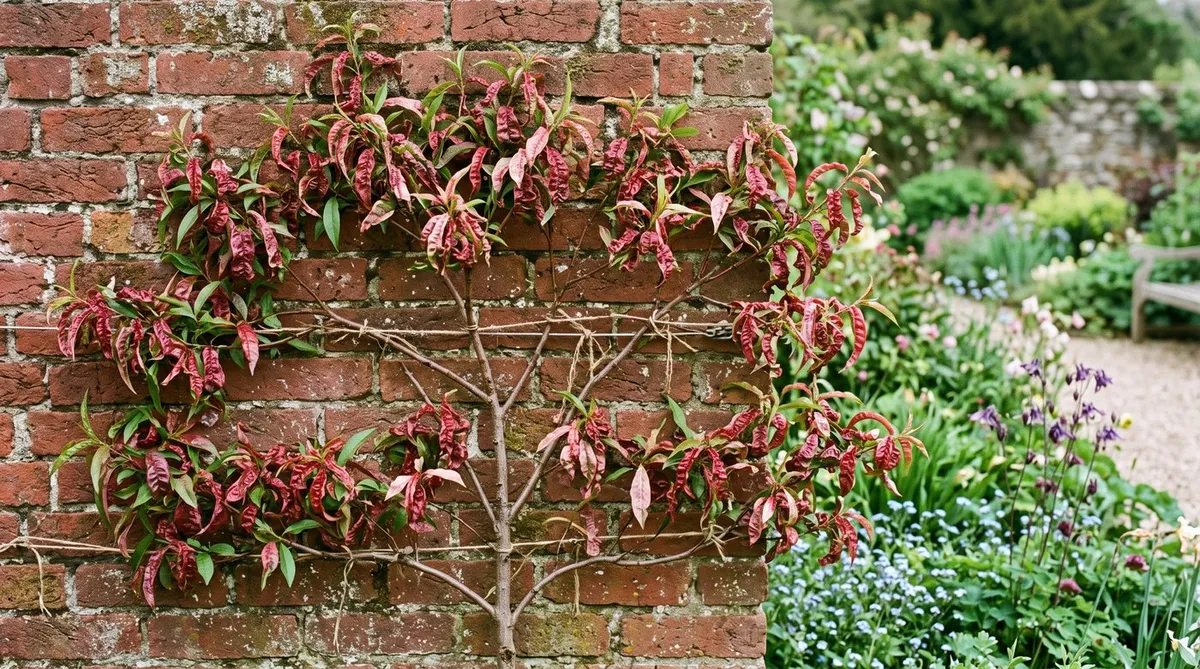
Kept dry until mid-May, this fan came through with clean leaves and no spray at all.
That’s not a big loss. A rain shelter is more reliable than spraying ever was, and it leaves nothing behind on the tree or in the soil.
Which peach varieties resist leaf curl?
Avalon Pride is the peach to choose if you can’t shelter a tree. It has good resistance to leaf curl and can be grown out in the open. No peach is completely immune, but it copes far better than most.
Nectarines are the same species as peaches and often suffer just as badly, so shelter them in a wet area. The guide to growing nectarine trees covers choosing one. Apricots get leaf curl less often. The apricot growing guide covers their care.
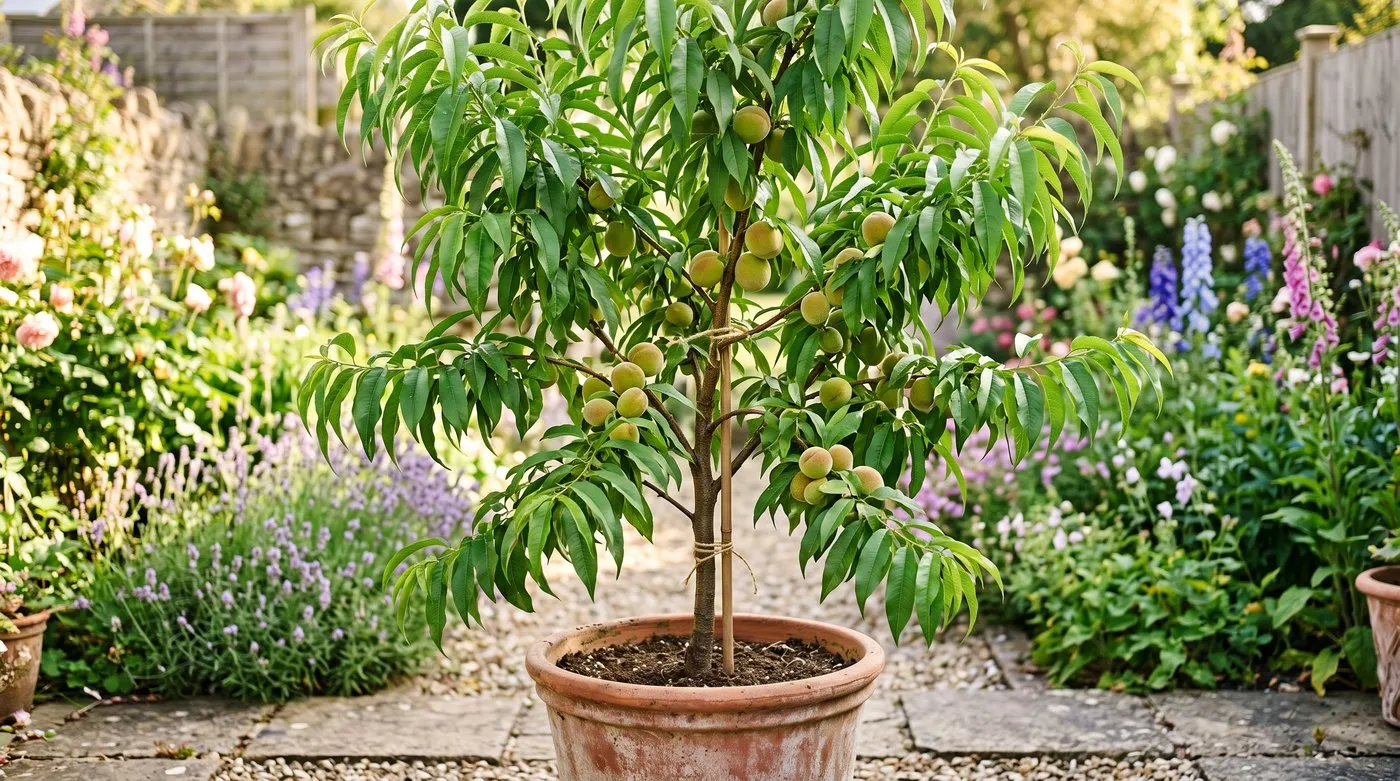
A resistant variety like Avalon Pride can grow in the open with clean, flat leaves and no shelter.
Peach leaf curl calendar
| Month | What to do |
|---|---|
| January | Put up the rain shelter late in the month. Move potted trees under cover |
| February to March | Keep the shelter up while buds swell and blossom opens. Hand pollinate trees under glass |
| April | Watch for red blisters on any unprotected trees. Pick off affected leaves |
| May | Take the shelter down mid-month. Feed and mulch any tree that lost leaves |
| June | New leaves appear on trees that were hit. Thin fruit on weak trees |
| July to August | Water in dry spells. Watch ripening fruit for brown rot |
| September to October | Harvest. Clear fallen leaves from under the tree |
| November to December | Plan next year’s shelter. Leave pruning of peaches until spring or summer |
Common mistakes with peach leaf curl
Acting when the blisters show. By April the infection is weeks old. Prevention happens while the buds are swelling.
Sealing the shelter into a box. It traps damp air, overheats the blossom and keeps insects out. Leave the ends open.
Hunting for a spray. There’s nothing authorised for gardeners to use. A shelter works better anyway.
Composting infected leaves. Bin them instead of adding them to the heap.
Giving up on a tree. One bad year rarely kills a peach. Feed, mulch and let it grow new leaves.
Frequently asked questions
What causes peach leaf curl?
A fungus called Taphrina deformans that infects wet buds in late winter and spring. Its spores spend the winter on the tree’s bark and buds. Rain washes them onto the swelling buds, and they get into the tiny leaves.
How do I stop peach leaf curl without spraying?
Keep rain off the buds from late January to mid-May. Fix a clear polythene lean-to over a wall-trained tree, or move a potted tree under cover. Leave the shelter’s ends open so air and insects can get in.
Will a peach tree recover from leaf curl?
Yes, an established tree usually recovers from one bad year. Pick off the worst leaves, feed, mulch and water, and it grows a fresh set of healthy leaves by early summer. Bad attacks year after year weaken it, so shelter it next spring.
Should I remove leaves with peach leaf curl?
Yes, pick off blistered leaves before they turn white and powdery. That white bloom is the spore stage. Put the leaves in the general waste bin rather than on the compost heap.
Is there a peach variety resistant to leaf curl?
Yes, Avalon Pride has good resistance to leaf curl. It can be grown in the open without a shelter. No peach is completely immune, but Avalon Pride is the one to choose if you can’t cover a tree.
Do nectarines get leaf curl worse than peaches?
Nectarines often suffer at least as badly as peaches. They are the same species and catch it the same way. Shelter a nectarine just as you would a peach, especially in a wet area.
Can I grow a peach under glass to avoid leaf curl?
Yes, peaches under glass rarely get leaf curl. The buds stay dry, so the spores can’t infect them. You will need to hand pollinate the blossom with a soft brush and open the vents on sunny days.
Find more fruit tree troubles in the problems hub. For siting, feeding and pruning, read the guide to growing peach trees in the UK.
Our team produces practical UK gardening guidance from source research, contributor records and established horticultural practice. Editorial standards are overseen by Matt W.