
Key takeaways
- Grow nectarines fan-trained against a sunny south or south-west facing wall
- 'Lord Napier' is a reliable UK variety, ready from mid-August
- Keep rain off the tree from January to May to stop peach leaf curl
- Prune in spring or summer, never in winter
- Thin the baby fruits to about 15cm apart in June for bigger, sweeter nectarines
- Help pollinate the early blossom with a soft paintbrush
Growing nectarines in the UK starts with a warm wall and the right variety. Nectarines are simply smooth-skinned peaches. They need more warmth than apples or plums, but against a sunny wall they do well in most of England and Wales. And picking your own sun-warm nectarine is a real treat.
Which nectarine varieties grow best in the UK?
‘Lord Napier’ is the classic choice for UK gardens. It has been grown in Britain since Victorian times. The fruit ripens from mid-August, with sweet, juicy white flesh.
Other varieties are worth a look depending on where you live and when you want to pick.
| Variety | Ready to pick | Flesh | Best for |
|---|---|---|---|
| Lord Napier | Mid-August | White | Most UK gardens |
| Fantasia | Early September | Yellow | Warm southern gardens |
| Nectarella (dwarf) | Late August | Yellow | Pots and patios |
| Early Rivers | Late July | White | Warm walled gardens |
| Humboldt | Late August | Yellow | Sunny walls |
| Pineapple | Mid-August | Yellow | Something different, or a greenhouse |
Nectarine trees are grafted onto a rootstock, the root part that controls how big the tree grows. St Julien A gives a medium-sized tree, a fan around 3-4m wide. Pixy keeps it smaller, which suits pots and small gardens. Torinel sits in between. Pick the one that fits your wall.
How to plant a nectarine tree
Plant bare-root trees between November and March, while they’re dormant. November is ideal because the roots get the longest time to settle before spring. Pot-grown trees can go in at any time, but autumn is still best. Our guide to planting bare-root trees walks you through the basics.
Pick the spot carefully. Nectarines need a south or south-west facing wall that gets at least six hours of sun a day. The wall soaks up heat by day and gives it back at night, which keeps the tree warmer. Avoid east-facing walls: morning sun on frosted blossom does a lot of damage.
Get the soil ready. Dig a hole about 60cm wide and 45cm deep, 20-25cm out from the wall. Mix in two buckets of well-rotted compost and a handful of bonemeal. Nectarines like free-draining soil. On heavy clay, mix plenty of grit into the soil you put back.
Planting depth. Keep the graft union, the knobbly join near the base of the trunk, about 10cm above the soil. If you bury it, the tree can grow too big. Firm the soil, water in with a full watering can or two, and mulch with bark. Keep the mulch a hand’s width away from the trunk.
 Prune in spring once the buds open, with clean cuts just above outward-facing buds.
How to fan-train a nectarine tree
A fan is the best shape for a nectarine in the UK. It spreads the branches flat in the sun, lets air through and makes covering the tree easy. Our espalier and fan training guide has more on training shapes.
First, put up wires. Fix horizontal wires about 15cm apart on the wall, the lowest about 40cm off the ground. Hold them a few centimetres out from the wall with vine eyes so air can flow behind the branches.
Year 1: The easy route is to buy a two-year-old tree that’s already partly trained as a fan. If you start with a one-year-old whip, cut it back to about 45cm above the graft in late March, just above two strong buds. These become your first two arms.
Year 2: Tie the two arms to canes fixed to the wires at about 45 degrees. Let four or five side shoots grow on each arm over summer and tie them in with soft string. Rub out any shoots growing straight into the wall or straight out from it.
Year 3 onwards: Now it’s a routine. Nectarines fruit on shoots that grew last year. So each year you pick a new shoot near the base of each fruiting branch, let it grow over summer, pick your fruit in August, then cut out the branch that fruited and tie the new shoot in its place.
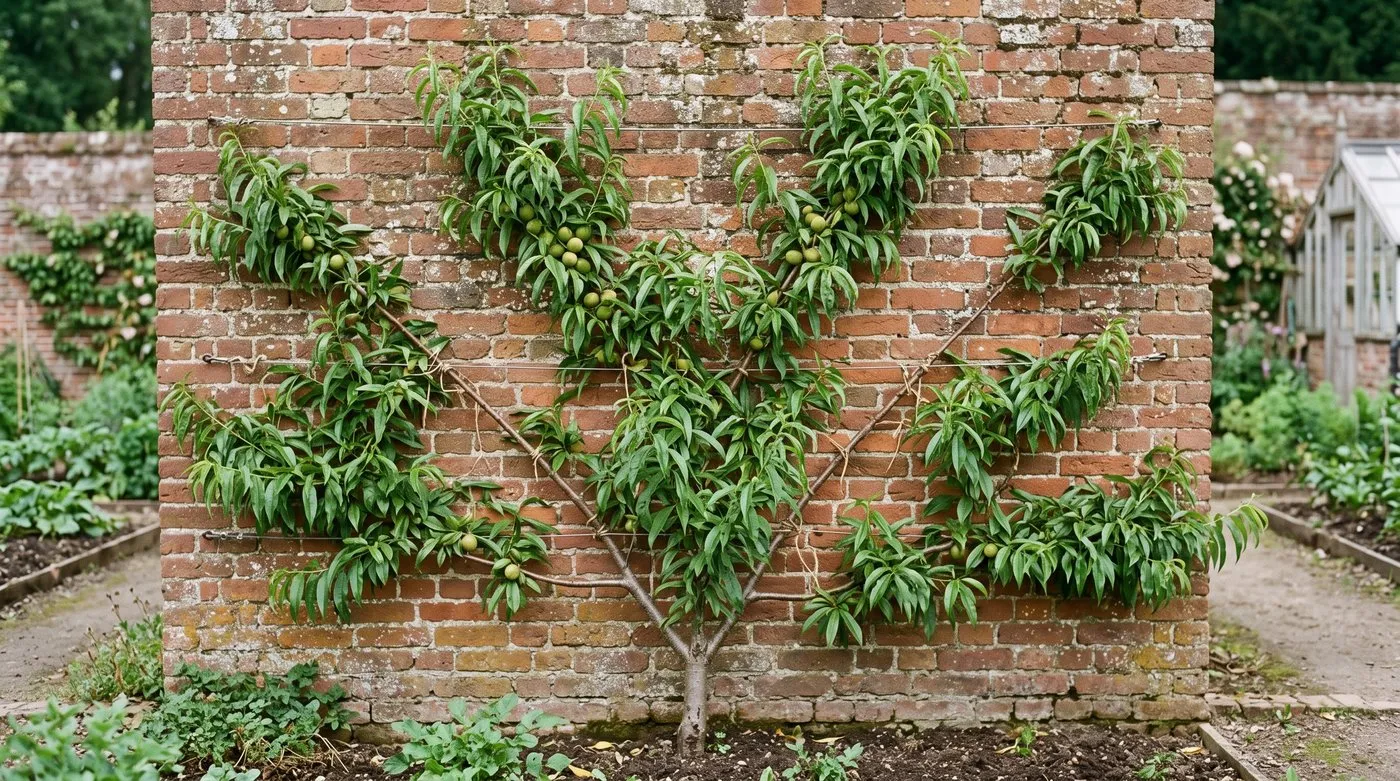
A fan spreads the branches flat in the sun and makes covering the tree easy. Hold the wires a few centimetres off the wall so air can flow.
How to prevent peach leaf curl
Peach leaf curl is the biggest problem for UK nectarines. It’s a fungus that makes the leaves blister, pucker and go red before they drop. A bad attack strips the tree, spoils the crop and weakens it for next year.
It spreads in the rain. The fungus sits on the bark over winter. When rain splashes onto swelling buds between January and May, it gets into the new leaves. So the answer is simple: keep the rain off during those months.
Make a rain shelter. From late December to late May, fix a clear polythene or plastic sheet over the tree like a little roof. Let it stick out about 30cm past the branches and leave the bottom and sides open so air can move. It’s the most reliable fix and means no spraying.
What about sprays? Copper sprays such as Bordeaux mixture used to be the standard backup, but they’re no longer approved for home gardeners in the UK. Rely on the shelter and clear fallen leaves in autumn.
If leaf curl strikes anyway, leave the affected leaves on, as the tree still needs them. Give it a liquid feed and water in dry spells. Most trees grow a fresh set of healthy leaves by midsummer.
 Peach leaf curl makes leaves red, puckered and blistered. A rain shelter from January to May keeps it away.
Month-by-month nectarine calendar
| Month | What to do |
|---|---|
| January | Check the rain shelter is secure. Order bare-root trees. Check ties and wires. |
| February | Check the shelter after storms and look for waterlogging after heavy rain. |
| March | Hand-pollinate open flowers with a soft brush. Start pruning once buds open. |
| April | Feed every fortnight with tomato feed. Watch for greenfly on new shoots. |
| May | Take the rain shelter off in late May, once the leaves are fully open. |
| June | Thin the fruits to about 15cm apart after the natural “June drop”. Tie in new shoots. Water well in dry spells. |
| July | Keep watering. Net the tree against birds and squirrels. |
| August | Pick fruit when it comes away easily. Cut out branches that fruited and tie in new ones. |
| September | Stop feeding. Clear fallen fruit and leaves. |
| October | Check branches for canker. Fix any loose ties or wires. |
| November | Plant new bare-root trees. Clear fallen leaves. Start putting up the rain shelter. |
| December | Finish the rain shelter. Mulch over the roots. |
For planning the rest of your fruit, see our fruit tree growing guide.
Growing nectarines in pots
No wall? A pot works too. Choose a tree on Pixy rootstock and a container of at least 50 litres. ‘Nectarella’ is naturally compact and the top pick for a patio or balcony.
Compost: Use John Innes No. 3 with some perlite mixed in. It’s heavy enough to stop the pot blowing over and drains well. Peat-free multipurpose on its own dries out too fast. Add some slow-release fertiliser when you pot up.
Watering: Every day in summer, maybe twice in a heatwave. Push a finger into the compost, and if it’s dry, water until it runs out of the bottom. In winter, water only when the top few centimetres are dry. Our guide to growing fruit in pots has more tips.
Feeding: From April to August, give tomato feed every fortnight. Stop in September so the new wood can toughen up before winter.
Winter: Move the pot to a sheltered spot by a sunny wall. Roots in pots feel the cold more than roots in the ground, so wrap the pot (not the tree) in bubble wrap in a cold snap.
Repotting: Every three years, in November, lift the tree out, trim back some of the roots and replant in fresh compost in the same pot.
 A nectarine in a big terracotta pot on a sunny patio. Terracotta warms up nicely in the sun.
How to prune nectarine trees
Prune nectarines in spring and summer, never in winter. Pruning after the buds open (late March to April) cuts the risk of canker and silver leaf, two diseases that get in through winter cuts. It’s the opposite of apples and pears. Our guide to pruning fruit trees covers the basics.
Spring (late March to April):
- Cut out dead, damaged and diseased wood first
- Remove branches growing into the wall or straight out from it
- Thin out crowded areas to let in light and air
- Always cut just above a bud facing the way you want the branch to grow
Summer (June to August):
- Pinch out the tips of new side shoots once they’re about 45cm long
- Pick one or two new shoots at the base of each fruiting branch and tie them in
- After picking, cut the fruited branch back to its new shoot
- Remove strong, upright shoots growing from the main framework
Common nectarine problems
Peach leaf curl: Red, blistered, curled leaves in spring. See the rain shelter advice above.
Bacterial canker: Sticky amber gum oozing from the bark, and branches dying back. It’s most common on trees pruned in autumn or winter. Cut back to healthy wood in spring or summer.
Brown rot: Fruit turns brown with rings of white spots. Pick off affected fruit straight away, never leave fallen fruit lying about, and thin branches so air can flow.
Greenfly: Clusters on shoot tips in spring. Pinch off badly hit tips and let ladybirds and lacewings do their job. If numbers get out of hand, use an approved bug spray exactly as the label says.
Frost on the blossom: Nectarines flower early, when frosts are still common. On frosty nights, drape fleece over the tree, then take it off in the day so insects can reach the flowers. Our guide to protecting plants from frost has more.
Not much fruit: Usually poor pollination in a cold spring. Hand-pollinate on every sunny day while it’s in flower. Too much nitrogen feed can also mean leaves instead of flowers, so switch to tomato feed.
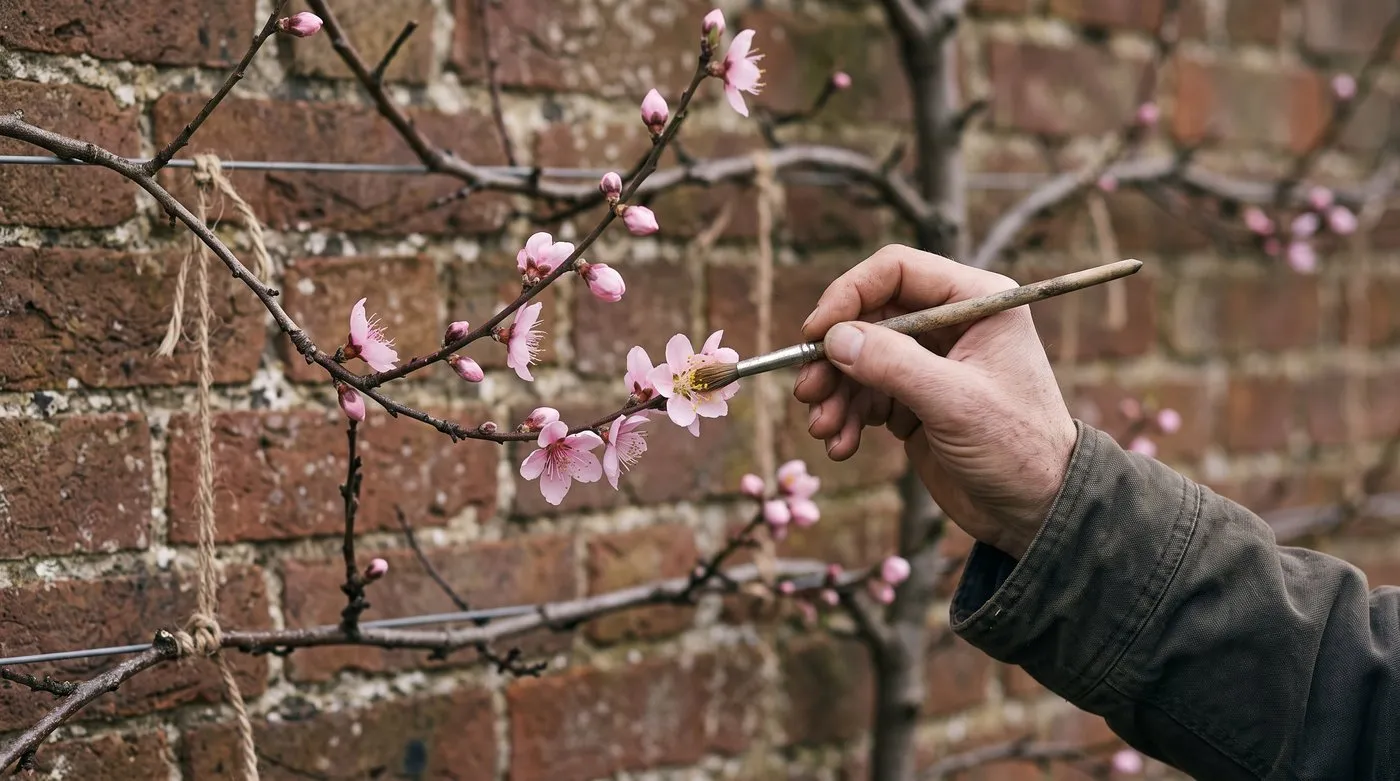
Nectarines flower before many insects are about. Dab a soft brush from flower to flower on sunny days for a better set.
Picking and storing nectarines
A nectarine is ripe when it comes away in your hand with a gentle lift. The skin turns from green to yellow-orange with a red blush, and the flesh gives slightly near the stalk. Handle them gently, as ripe fruit bruises easily.
Timing depends on the variety. Early Rivers is ready from late July, Lord Napier from mid-August and Fantasia from early September. Further north, expect them a week or two later.
Storing: Ripe nectarines keep a couple of days at room temperature and a few more in the fridge. To freeze, halve and stone them, freeze on a tray, then bag them up. They’re great in smoothies, crumbles and jam.
Bigger fruit: Thin the baby fruits to about 15cm apart after the June drop. Leave them crowded and you’ll get lots of small, less tasty nectarines.
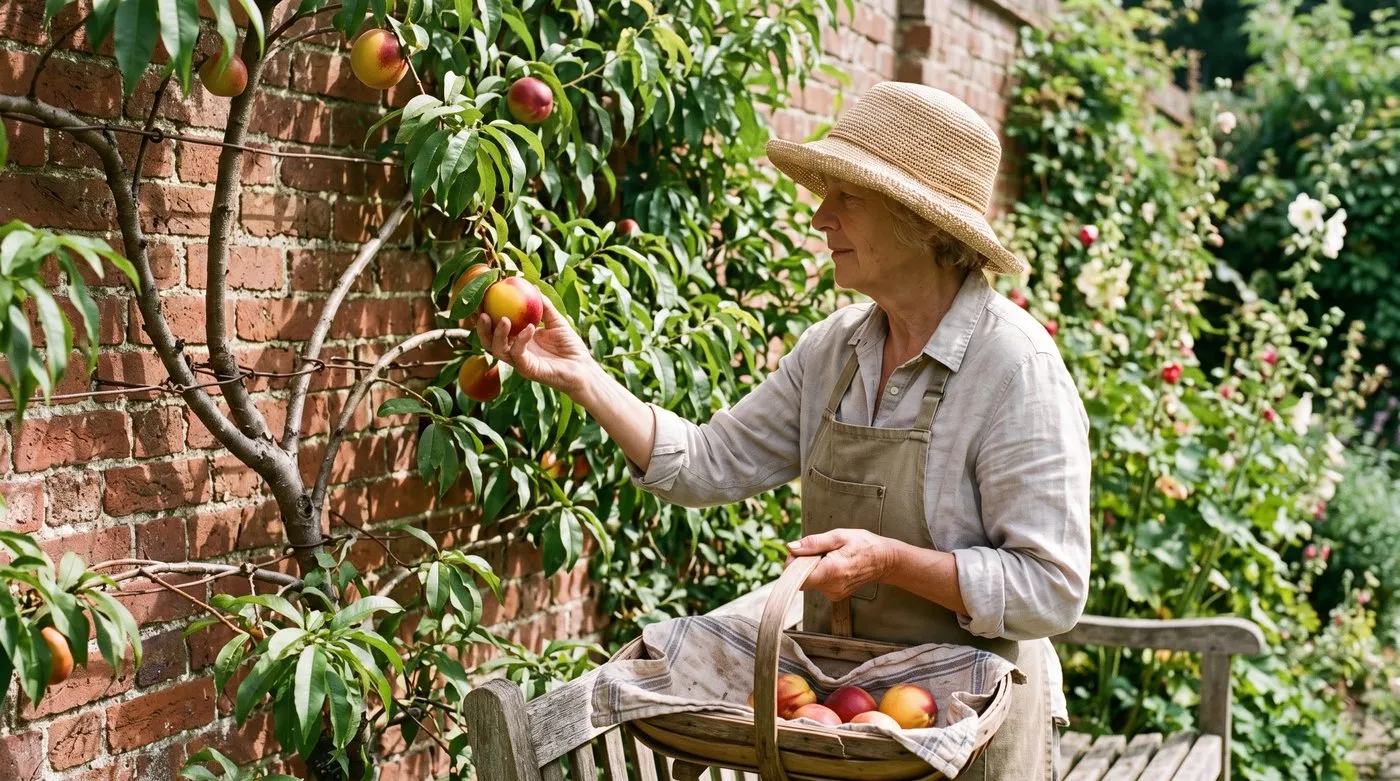
A ripe nectarine comes away with a gentle lift. Handle them softly, as ripe fruit bruises easily.
Nectarine or peach?
Nectarines and peaches are the same plant. The only difference is smooth skin instead of fuzzy. They grow in exactly the same way, with the same warm wall, rain shelter and pruning.
Choose nectarines if you like eating fruit straight off the tree without the fuzz. Choose peaches if you just prefer them. If you have the wall space, grow one of each for picking from late July to September. The RHS peach and nectarine guide covers both.
Short of wall space? Try dwarf fruit trees in pots. Cherries and plums are other stone fruits that are less fussy in the UK.
Fancy another fruit for a warm wall? Our guide to growing fig trees is a good next read.
Frequently asked questions
Can you grow nectarines outdoors in the UK?
Yes, with a warm wall and a bit of help. Fan-train the tree against a south-facing wall, which soaks up the sun and keeps it warmer. They do best in England, Wales and sheltered lower-lying spots further north. The big thing is a rain shelter over the tree from January to May to stop peach leaf curl.
What is the best nectarine variety for UK gardens?
‘Lord Napier’ is a great choice for most UK gardens. It’s an old favourite in Britain, with sweet, juicy white flesh ready from mid-August. For a later crop, ‘Fantasia’ ripens in early September. For a pot, try compact ‘Nectarella’.
How do I prevent peach leaf curl on nectarines?
Keep rain off the branches from January to May. The fungus spreads in rain splashes onto the swelling buds. A simple polythene or clear plastic shelter over the tree is the best way to stop it. No copper sprays are approved for home gardeners in the UK, so the shelter and tidying fallen leaves are your best defences. Take the shelter off in late May once the leaves are fully open.
When should I prune a nectarine tree?
Prune in spring once the buds open, from late March to April. Never prune in winter, because fresh cuts let in canker and silver leaf disease. Cut out dead, damaged and crossing branches first. On a fan, tie in new shoots in summer and cut out the branches that fruited after you pick in August.
Can I grow a nectarine tree in a pot?
Yes, choose a tree on dwarfing Pixy rootstock or compact ‘Nectarella’. Use a pot of at least 50 litres filled with John Innes No. 3 mixed with some perlite. Water daily in summer and feed every fortnight with tomato feed from April to August. Stand it against a sunny wall.
How long does a nectarine tree take to fruit?
Usually about three to four years after planting. A young two-year-old tree is quicker than a one-year-old whip. If a newly planted tree flowers in its first spring, pick the flowers off so it puts its energy into roots instead.
Do nectarine trees need another tree for pollination?
No, one tree will fruit on its own. But nectarines flower early, when there aren’t many insects about. On sunny days, dab a soft paintbrush into each open flower around midday to spread the pollen. It’s an easy way to get more fruit.
Our team produces practical UK gardening guidance from source research, contributor records and established horticultural practice. Editorial standards are overseen by Matt W.


