Key takeaways
- Pick the warmest, sunniest and most sheltered spot you have
- A large pot or a lined planting pit keeps the roots snug and the tree fruitful
- Water steadily while the fruit swells, especially in pots
- In autumn, pick off larger unripe figs but keep the tiny pea-sized ones
- Prune lightly and tie in new shoots rather than cutting hard
Figs can crop outdoors in the UK, and there’s nothing quite like eating one warm off the tree. The secret is the spot: warm, sunny and sheltered, with room for the leaves to soak up the light.
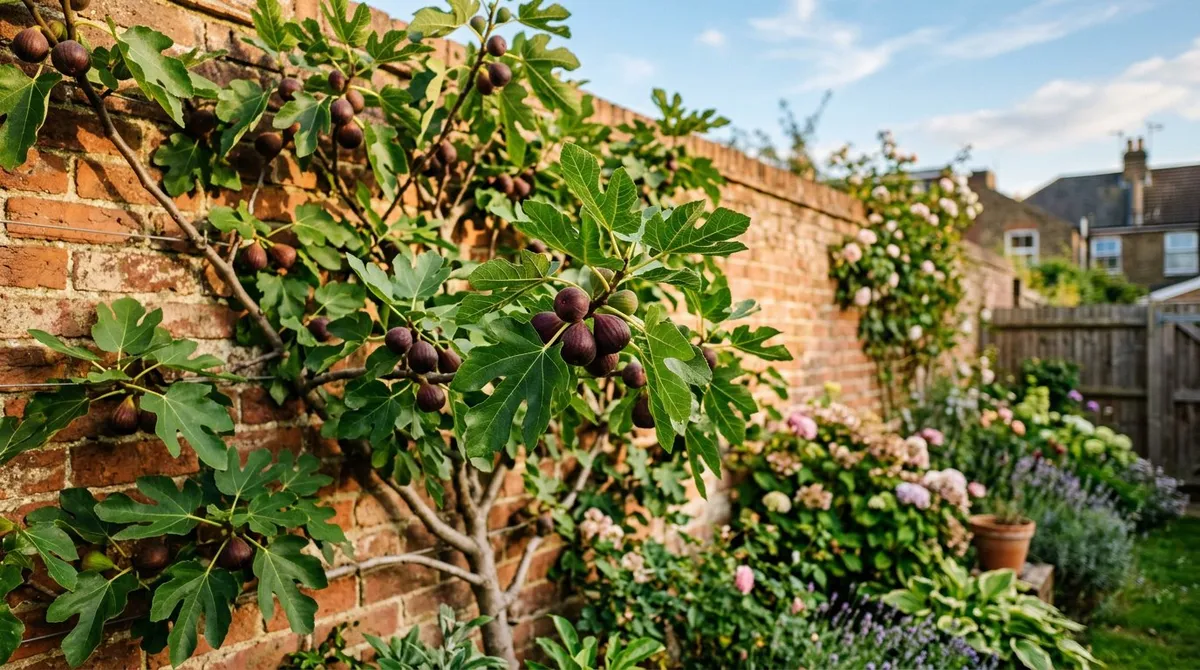
A wall helps a lot, as it soaks up warmth and gives shelter. Keeping the roots snug, in a large pot or a lined planting pit, stops the tree getting too leafy. And don’t forget watering. Dry compost while the fruit is swelling can spoil a promising crop.
Where is the best place to grow a fig tree?
Look for the sunniest, most sheltered spot in the garden. A south or south-west-facing wall is a great choice, especially in cooler areas. Avoid frost pockets and windy spots where cold air can damage young shoots.
Leave room for air and light around the branches. A fan-trained fig fits neatly against a wall, as long as the wires sit a little away from the brickwork. Make sure gutters don’t empty into the planting hole and the roots can’t reach drains or weak walls.
In a small garden, a pot gives you more control. You can move it somewhere more sheltered in a cold snap, though a big pot gets heavy. Have a look at our guide to growing fruit in pots before you choose one.
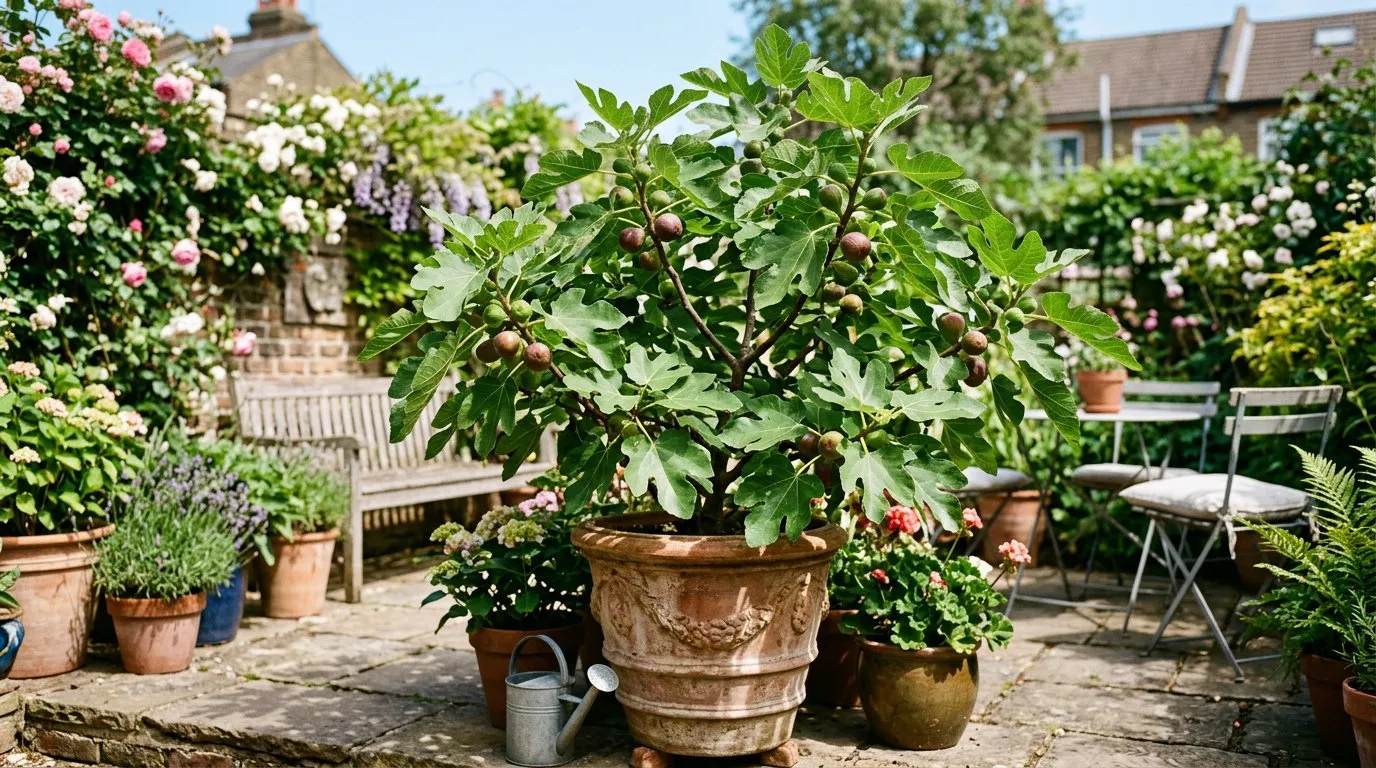
A big pot keeps the roots snug and lets you put the tree in the sunniest spot.
Which fig variety should you choose?
Choose a named fig that’s suited to growing outdoors in Britain. ‘Brown Turkey’ is the popular one. It’s reliable and doesn’t need a partner tree, so one tree is all you need for a patio or small garden. Other varieties are worth a try too, but how warm your spot is makes a big difference to whether the fruit ripens.
Pick a healthy plant with a nice spread of branches rather than one tall, weak shoot. Check the label for the expected size.
The RHS guide to growing figs has more on varieties and care.
Should you restrict fig-tree roots?
Yes, in most gardens. Figs in open, rich soil tend to make loads of leaves and not much fruit. Keeping the roots snug calms them down, which is handy in a small garden too.
The easiest way is a large pot with good drainage holes. Use loam-based compost and lift the pot slightly on pot feet so water can drain away. Don’t leave it standing in a saucer of water over winter.
To plant in the ground, you can dig a pit and line the sides with paving slabs, with a layer of rubble or broken bricks at the bottom. This stops the roots spreading sideways but still lets water drain. On heavy, wet ground, a pot is the safer choice.
Snug roots dry out faster, though, so they rely on you for water and food.
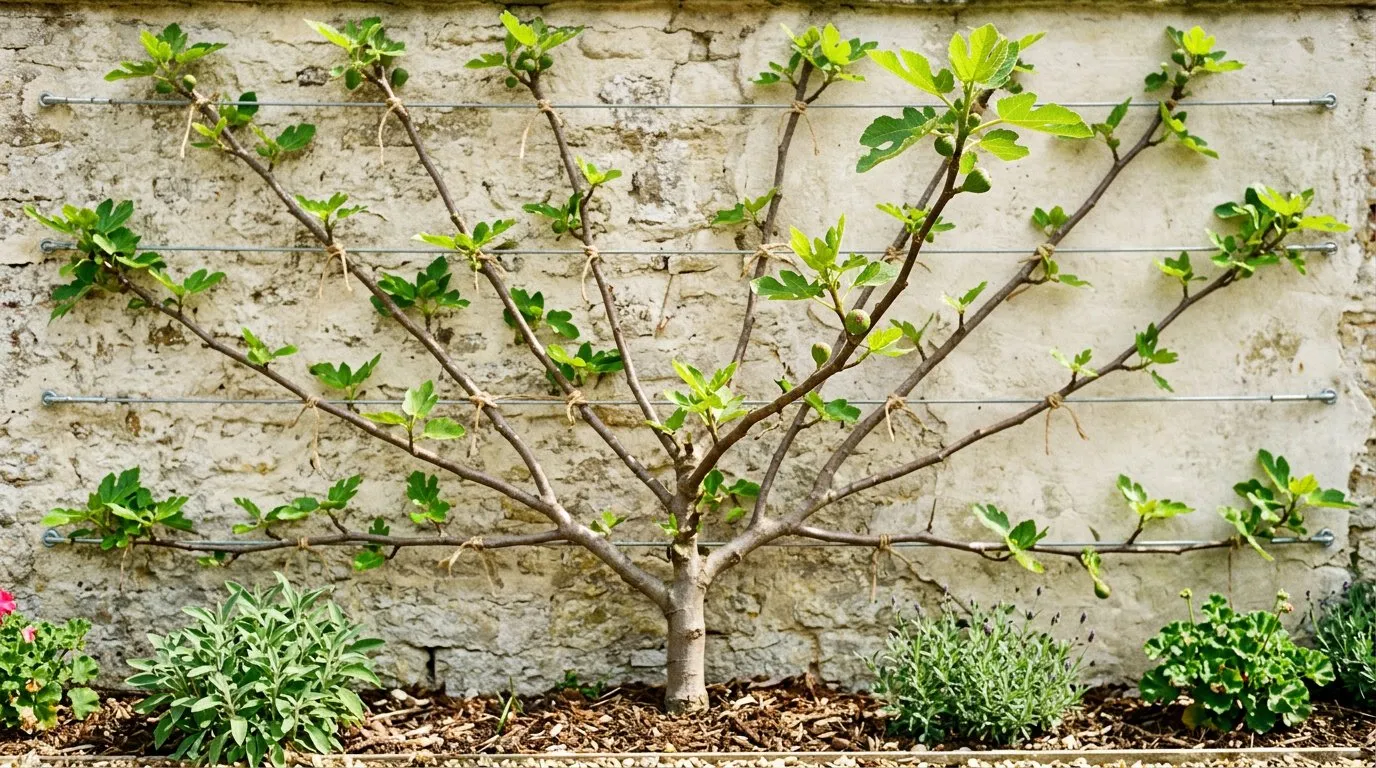
Training a fig into a fan spreads the branches across a warm wall without taking over the border.
How to plant a fig tree
Plant in spring, as the soil warms up. Water the plant before you take it out of its pot, and plant it at the same depth.
In a pot:
- Choose a frost-proof pot with drainage holes that’s heavy enough not to blow over.
- Fill with loam-based compost and set the root ball at the same depth as before.
- Firm gently, water well and leave a gap below the rim for watering.
- Put the pot in place before it gets too heavy to move.
In a lined pit, sort out the drainage and side slabs before planting. Don’t bury the stem or pile fresh manure against it. Mulch the surface, keeping it away from the trunk.
If you’re training a fan, fix strong horizontal wires to the wall first. Our fan-training guide shows you how to build the framework.
Watering and feeding figs
Water new trees in dry spells while they settle in. Pots need much more attention, as they can dry out fast in warm weather.
Aim for steady moisture, not bone dry one week and soaked the next. Check below the surface before watering. Summer, when the fruit is swelling, is the most important time.
Feed pot-grown figs while they’re growing with a general feed, following the label. Once the fruit starts to form, switch to a high-potash liquid feed such as a tomato feed. Too much nitrogen just gives soft, leafy growth.
Each spring, scrape off the top layer of compost in the pot and replace it with fresh. Only move up a pot size when you really need to, as a huge new pot undoes the benefit of snug roots.
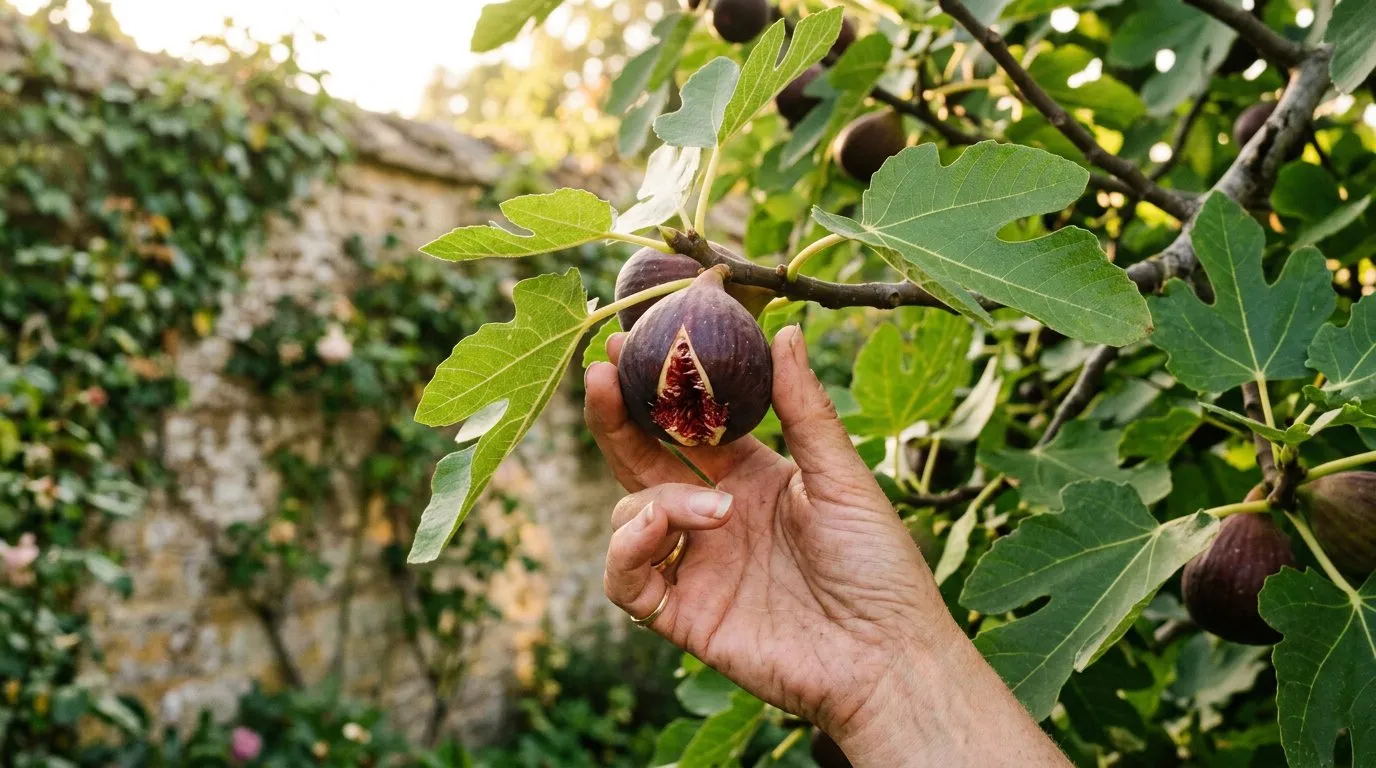
A ripe fig goes soft and hangs down. Colour alone isn’t a reliable sign for every variety.
How and when to prune a fig tree
Light pruning keeps the tree open and in its space. Wear gloves, as fig sap can irritate skin, and use clean tools.
In spring, once the worst cold has passed, cut out any dead or damaged growth. On a fan, tie in useful new shoots to fill the gaps. In early summer, pinching out the tips on an established tree encourages side shoots.
Avoid cutting hard year after year. It just makes lots of vigorous new shoots and removes fruiting wood. Spread bigger jobs over a couple of years.
The RHS fig pruning guide explains how to prune free-standing and fan-trained trees. Our fruit-tree pruning guide covers tools and planning your cuts.
How fig fruit develops in the UK
Tiny figs form near the shoot tips late in the season and sit there through winter. These are the ones most likely to swell and ripen the following summer.
Larger green figs left after the main harvest usually won’t ripen in the UK. Pick those off in autumn, but leave the little pea-sized ones. Be gentle so you don’t damage the shoot tips.
A fig is ready when it’s soft, hangs down and sometimes shows a bead of sweet juice at the end. Pick carefully, as ripe figs bruise easily. Birds love them too, so cover the tree with netting. Keep the net taut and check it often so birds don’t get caught.
In a cool summer, some fruit may not ripen. Don’t respond by pruning hard. Improve the light, shelter and watering, and see how next year’s crop does.
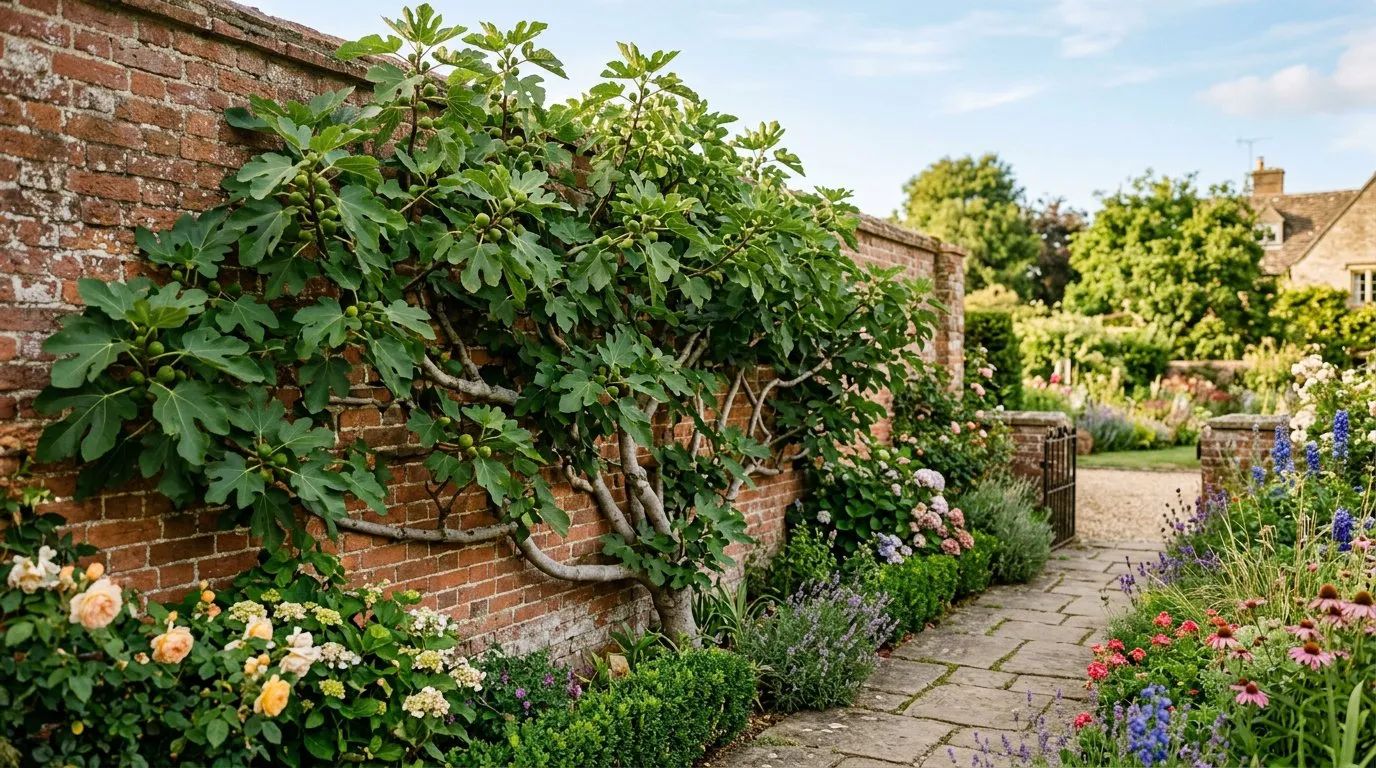
A fan on a warm wall makes the most of the heat and keeps the fruit within easy reach.
Winter care for fig trees
Established figs in a sheltered spot usually look after themselves in winter. Young shoots and roots in pots need more care in long cold spells.
When a hard frost is forecast, move pots against a sheltered wall or into a cold greenhouse. Wrap the pot to protect the roots, but keep the drainage holes clear. You can cover outdoor shoots with fleece, then loosen or remove it when the weather improves so damp doesn’t get trapped.
Don’t bring a dormant fig into a heated room. It needs a proper winter rest. Our guide to winter care for potted fruit trees has more tips.
Common fig-growing problems
Plenty of leaves but little fruit
The tree may be too vigorous, too shaded or just young. Give it more light and avoid high-nitrogen feeds. If it’s growing freely in rich soil, think about restricting the roots.
Fruit forms but does not ripen
The spot may not be warm enough, or the tree dried out while the fruit was swelling. Keep the roots evenly moist and look after those tiny overwintering figs.
Leaves wilt in a container
Check the compost first. If it’s dry, give it a slow, thorough soak. If it’s soggy, the pot needs better drainage. Wilting doesn’t always mean thirsty.
Small dark marks on leaves
Clear away badly marked fallen leaves and keep the branches airy. Work out the cause before treating anything, as weather damage, pests and disease can look alike.
There’s lots more in our growing guides, or try the fruit-tree growing guide if you’re planning a little orchard.
Frequently asked questions
Where is the best place to plant a fig tree?
The warmest, sunniest and most sheltered spot you have. A south or south-west-facing wall is ideal. It helps the fruit ripen and keeps cold winds off.
Do fig trees need a lot of sun?
Yes, sun and warmth ripen the fruit. In a cool or windy garden, use your warmest wall, or grow the tree in a pot you can move to the best spot.
Can a fig tree grow in a pot?
Yes, and it’s a great way to grow one. Use a large, sturdy pot with drainage holes and loam-based compost. Water and feed it regularly while it’s growing.
Why does my fig tree produce leaves but no ripe fruit?
Usually too little warmth, uneven watering or too much root room. A tree in rich, open soil puts its energy into leaves. Improve the spot and the watering before reaching for the secateurs.
Should I remove unripe figs in autumn?
Yes, pick off the larger unripe ones after harvest. Leave the tiny pea-sized figs near the shoot tips, as these can become next year’s crop.
Our team produces practical UK gardening guidance from source research, contributor records and established horticultural practice. Editorial standards are overseen by Matt W.