
Key takeaways
- Hedgehogs hibernate from about November to March, so don't disturb leaf piles or compost heaps
- Small birds need high-energy food and fresh water every day in winter
- Leave dead stems and leaf litter until spring to shelter insects
- Float a ball on your pond and never smash the ice
- Mahonia, hellebores and snowdrops feed bees on mild winter days
- The kindest thing you can do is not tidy up too much in autumn
Winter is the toughest season for garden wildlife. Food is hard to find, nights are long and cold, and the days are short. What you do between October and March can help hedgehogs, birds, frogs and insects make it through to spring.
The good news? Helping wildlife in winter is mostly about what you don’t do. Don’t tidy too much. Don’t disturb sleeping animals. Don’t let the pond freeze solid. After that, it’s simple: keep feeders full, leave shelter in place, and plant a few winter flowers. For year-round ideas, see our guide to building a wildlife garden.
Helping hibernating hedgehogs
Hedgehogs usually start hibernating in November or December, or even January in a mild year, and wake up between mid-March and early April. While they sleep, their heart slows right down and their body cools. They live off their fat, so they wake up much lighter.
Where hedgehogs hibernate
Hedgehogs build snug winter nests from leaves, grass and moss. They usually tuck them under a log pile, a shed, a compost heap or a dense shrub.
Leave leaf piles alone from October onwards. If you really must move leaves, lift gently from the edge and check first. Never stick a fork into a leaf pile or compost heap without looking. Our guide to composting for wildlife explains how to look after a compost heap safely.
Feeding hedgehogs in autumn
Before hibernating, hedgehogs eat as much as they can to build up fat. Young ones need to reach a good weight first, around 450g, to get through the winter. Put out meaty cat or dog food, cat biscuits or hedgehog food, with a dish of fresh water. Never give milk or bread. Milk upsets their tummies and bread does them no good.
Should I keep feeding hedgehogs all winter?
Yes, keep a little food and water out. Hedgehogs wake and move nests a few times over winter, especially in mild spells, and a snack helps them top up.
Use a small amount of meaty cat or dog food or cat biscuits in a shallow dish. A feeding station, such as an upturned plastic box with a 13cm entrance hole, keeps cats out. If the food sits untouched for a couple of weeks, cut back to a small handful of biscuits. Keep the water ice-free and wash the bowls daily.
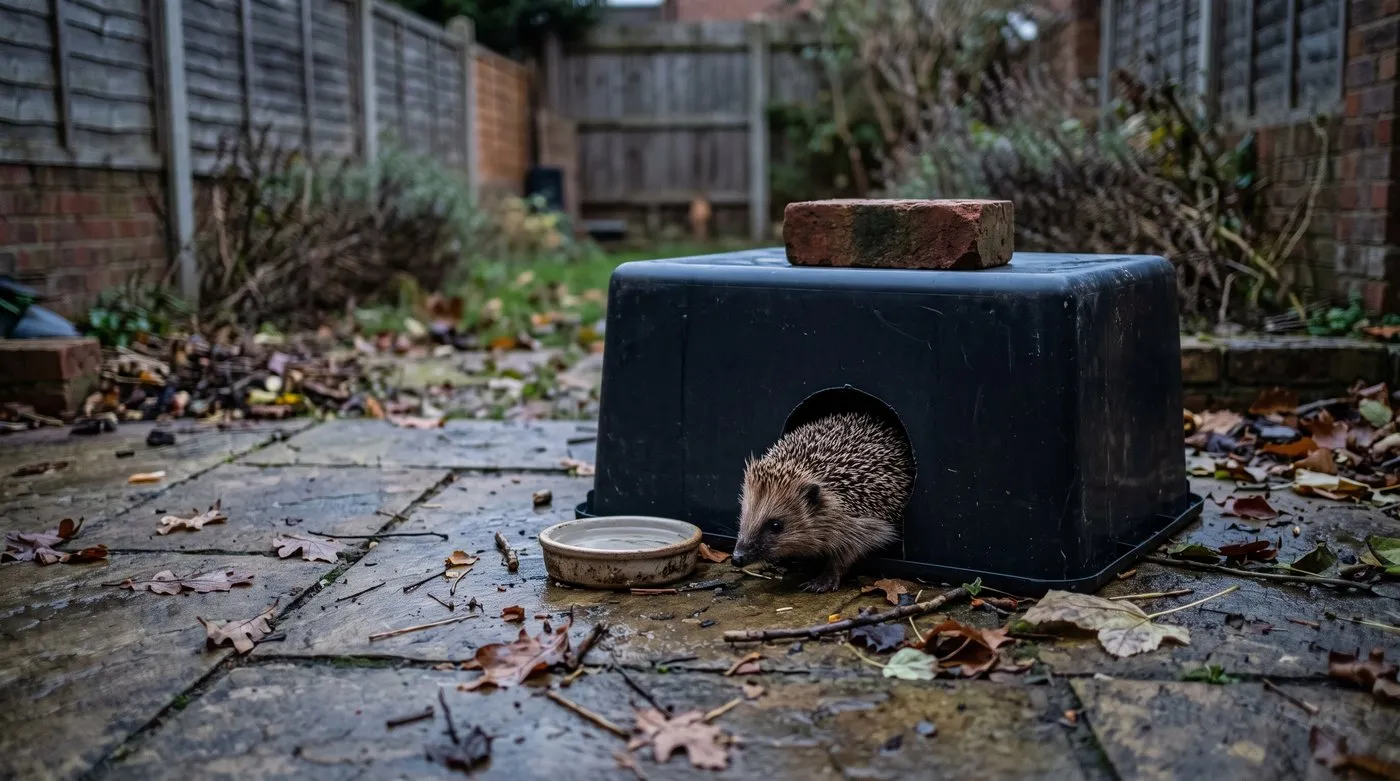
An upturned box with a 13cm entrance keeps cats off the hedgehog food. Put out meaty cat food or biscuits and fresh water, never milk.
What should I do if I see a hedgehog out in winter?
A hedgehog out briefly on a mild night may just be moving nests, so watch before you act. A hedgehog out in daylight, one that looks wobbly or hurt, or a small one in late autumn needs help.
Pick it up with gloves, pop it in a high-sided box with a towel, and keep it somewhere quiet and warm. Offer meaty cat or dog food and water, never milk. Then call the British Hedgehog Preservation Society on 01584 890801 or a local hedgehog rescue for advice.
Linking your garden to the neighbours’ with hedgehog highways helps hedgehogs find enough food before winter.

A log pile with fallen leaves makes a perfect hedgehog bedroom. Leave it alone from October to April.
Feeding birds in winter
Feeding birds in winter helps them survive long, cold nights. Tiny birds like tits, wrens and goldcrests need to eat almost all day to store enough fat for the night. Feeders give them a reliable meal when wild food runs short.
Best winter bird foods
| Food | Best for | Tips |
|---|---|---|
| Sunflower hearts | Tits, finches, sparrows | Loved by lots of birds. No husks to clear up |
| Fat balls | Tits, starlings, woodpeckers | Take off any netting, as it traps feet |
| Suet blocks | Woodpeckers, nuthatches | Lasts well in a cage feeder |
| Nyjer seed | Goldfinches, siskins | Needs a special feeder with tiny holes |
| Mealworms | Robins, wrens, dunnocks | Soak dried ones in warm water first |
| Grated mild cheese | Robins, wrens, blackbirds | Scatter on the ground. A cheap standby |
| Windfall apples | Blackbirds, thrushes, fieldfares | Leave them on the lawn |
When to feed
Feed twice a day if you can: once at first light and again mid-afternoon. The afternoon top-up matters most, as it sets birds up for the long night.
Clean feeders at least once a week. Wash them in warm soapy water with a wildlife-safe disinfectant, then rinse and dry. Dirty feeders spread diseases that have hit greenfinches hard. Move feeders around now and then so droppings don’t build up underneath. If squirrels empty the feeders first, our squirrel-proof bird feeders guide compares designs that keep them out.
For feeding through the whole year, see our bird feeding guide. Our guide to attracting birds to your garden covers feeder types and where to put them.
Don’t forget water
Fresh water matters as much as food. Birds need to drink and bathe even in freezing weather. A shallow dish refreshed daily is enough. In a hard frost, pour in warm (not boiling) water each morning. Never add salt, antifreeze or glycerine to stop it freezing.

A busy feeding station on a frosty morning. Top up before dusk so birds can fill up for the night.
When should I clean out bird boxes?
Clean nest boxes once a year, between late September and the end of January. Take out the old nest and pour boiling water over the inside. Don’t use insecticide or flea powder.
The timing matters by law too. Any unhatched eggs left in a box may only be removed from September to January, and they must be thrown away, not kept. Cleaning in autumn also means tits and wrens can use the box to roost on cold nights. A handful of clean wood shavings inside makes it extra cosy. Put up new boxes by February, before birds start house-hunting.
Sheltering insects through winter
Insects need dead stems, leaf litter and bark left in place until spring. Ladybirds, lacewings, hoverflies and solitary bees all tuck themselves away from October to April.
What to leave alone
- Dead stems. Hollow stems of plants like verbena, fennel and teasel shelter solitary bees and other insects. Cut them back in spring, not autumn.
- Leaf litter under hedges. Sweep fallen leaves under hedges and shrubs instead of bagging them. Moth pupae, beetle larvae and centipedes spend the winter there.
- Log piles. A stack of old logs in a shady corner suits beetles, woodlice and fungi, and shelters hedgehogs and frogs too. For something more structured, see our guide on how to build a bug hotel.
- Ivy. Flowering ivy is one of the last big nectar feasts of autumn, and its berries feed birds in late winter. Leave it be. It’s one of the best bee-friendly garden plants for late-season food.
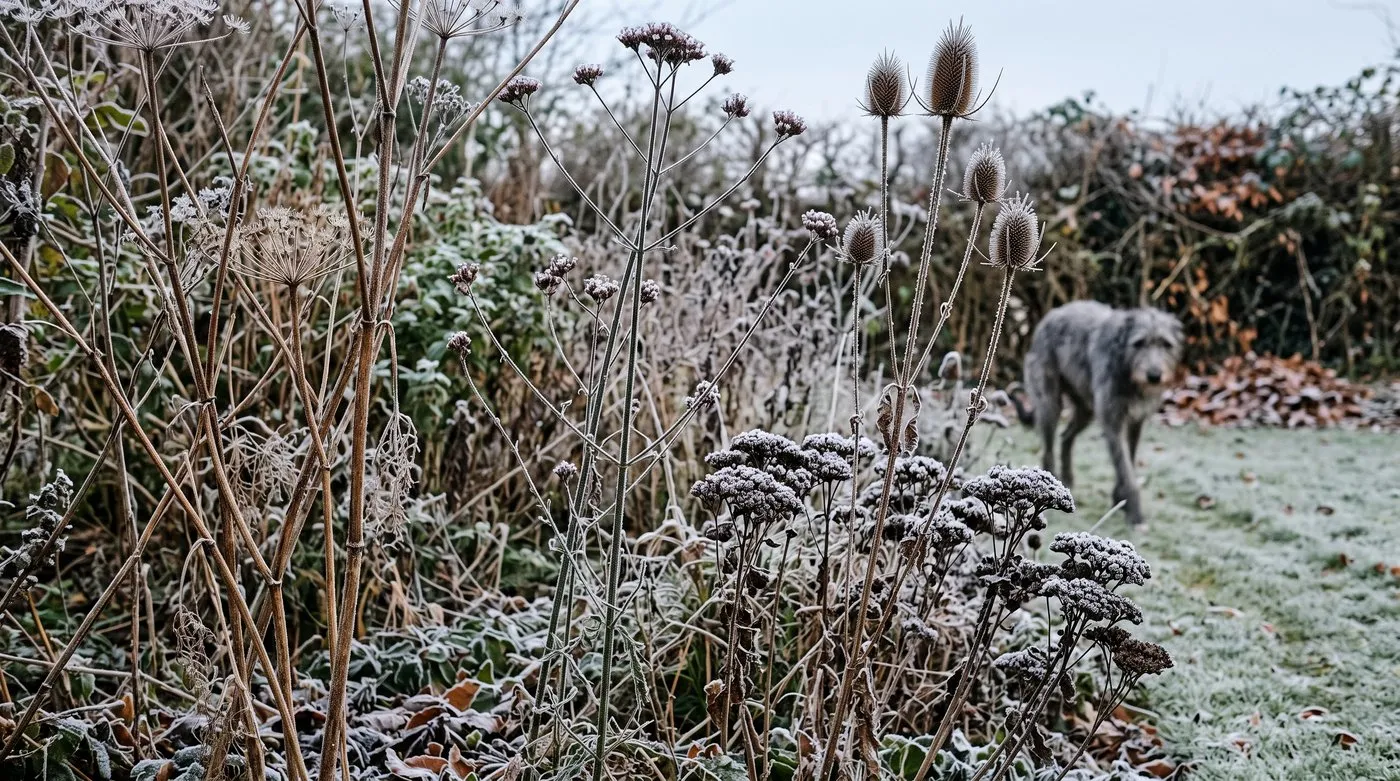
Leave dead stems standing until spring. The hollow ones shelter solitary bees and ladybirds, and the seed heads feed finches.
Frogs, toads and newts in winter
Frogs, toads and newts all spend the winter in gardens, mostly on land. Some frogs sleep at the bottom of ponds. Others shelter under logs, in rockeries or inside compost heaps.
Frogs
Common frogs either hibernate at the bottom of the pond or on land under logs and stones. The underwater ones breathe through their skin, so they need the pond surface to stay partly open.
Toads
Toads nearly always hibernate on land, in gaps under sheds, in stone walls or beneath log piles. Many make a long trek back to their breeding pond in February or March. Our frog and toad garden guide has more on helping both.
Pond care in winter
- Float a ball on the water. It bobs about and helps stop a complete freeze.
- Never smash the ice. The shock can harm sleeping frogs and fish.
- Melt a hole by standing a pan of hot water on the ice. This lets gases from rotting leaves escape.
- Keep one part of the pond at least 60cm deep. Deeper water is less likely to freeze solid.
- Take off leaf netting once the leaves have fallen. Netting can trap frogs, hedgehogs and birds.
For building and caring for a pond, see our wildlife pond guide. Our pond plants guide covers plants that give frogs winter cover.
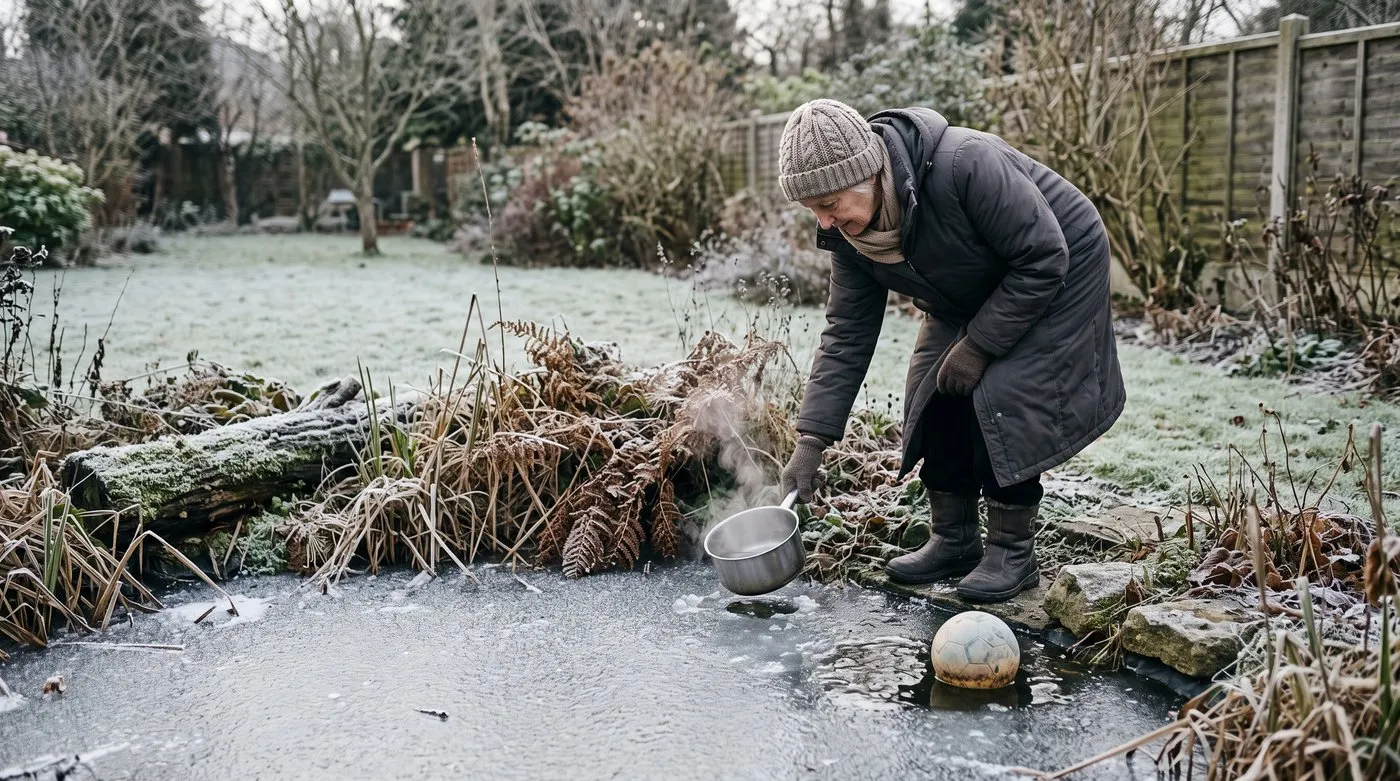
Never smash pond ice. Stand a pan of hot water on it to melt a hole gently, and float a ball to help keep a patch open.
Bats in winter
UK bats hibernate from around November to March, in buildings, trees, caves and bat boxes. A bat woken in winter burns fat it can’t easily replace.
If you find a bat in winter, don’t handle it. Bats are protected by law. If it’s somewhere risky, like on the ground or in your living room, call the Bat Conservation Trust helpline on 0345 1300 228 for advice. Our bat-friendly gardens guide has year-round tips.
Winter flowers for bees and other pollinators
On mild winter days, queen bumblebees, honeybees and hoverflies pop out to feed. In parts of southern Britain, some buff-tailed bumblebees stay busy all winter. Winter flowers are often their only food.
| Plant | Flowers | Height | Good to know |
|---|---|---|---|
| Mahonia x media ‘Charity’ | November to February | 2-3m | Scented yellow spikes. Copes with shade |
| Winter honeysuckle (Lonicera fragrantissima) | December to March | 2m | Gorgeous scent |
| Hellebores | January to March | 40cm | Single flowers are best for bees. Copes with shade |
| Snowdrops | February to March | 15cm | Plant “in the green” in February |
| Winter aconite | February to March | 10cm | Bright yellow cups. Spreads under trees |
| Sarcococca (Christmas box) | December to February | 1m | Strong scent. Copes with deep shade |
| Viburnum x bodnantense ‘Dawn’ | November to February | 2.5m | Pink flowers on bare stems |
| Crocus tommasinianus | February to March | 10cm | An early crocus that spreads happily |
Plant them near the house or by paths so you can enjoy the scent too. Most cope with shade, so they’re great for north-facing borders or under trees. For more tricky-spot ideas, see our guide to the best plants for shade. Many are also low-maintenance plants that look after themselves.

Mahonia, snowdrops and hellebores give early bees a welcome meal. Plant them in groups for the best show.
What not to do in winter
These common slip-ups do the most harm to garden wildlife.
Don’t cut back dead stems until spring. Hollow stems shelter insects through winter, and the seed heads feed birds.
Don’t disturb leaf piles or compost heaps. Hedgehogs, frogs, toads and insects shelter in them from October to April. If you need to turn compost, do it in October or early November, before hedgehogs settle in. Otherwise wait until spring.
Don’t use salt near ponds or borders. Rock salt harms frogs and damages plant roots. Use sand or grit on paths nearby instead.
Don’t light a bonfire without checking. A heap built in advance looks like a perfect hedgehog home. Move it to a new spot on the day you light it, checking as you go. Light it from one side so anything inside can escape.
Don’t remove ivy in winter. Its berries feed thrushes, blackbirds and pigeons in late winter, and its evergreen leaves shelter roosting birds and insects.
Month-by-month winter wildlife calendar
| Month | What wildlife is up to | What to do |
|---|---|---|
| October | Hedgehogs feeding up. Birds forming winter flocks | Feed hedgehogs. Clean and fill feeders. Clean old nest boxes. Leave leaf piles. Build a bug hotel |
| November | Hedgehogs start hibernating. Fieldfares and redwings arrive. Bats hibernate | Leave rough edges by hedges. Put out windfall apples. Float a ball on the pond |
| December | Hedgehogs and bats fast asleep. Shortest days | Feed birds twice a day. Check pond ice. Plant winter aconites |
| January | Coldest month. Birds struggle most. Foxes barking at night | Top up feeders before dusk. Melt pond ice gently. Enjoy mahonia and snowdrops |
| February | Hedgehogs still asleep. Great tits singing. Frogspawn in mild areas | Leave hedgehog houses alone. Put up nest boxes. Plant snowdrops “in the green” |
| March | Hedgehogs waking. Bumblebee queens out. Toads on the move | Start feeding hedgehogs again. Open up hedgehog highways. Watch for toads crossing roads at dusk |
So: autumn is for getting ready and holding back on the tidying. Midwinter is for feeding and protecting. Late winter is for watching the first signs of spring. Every garden helps, from a small courtyard with one feeder to a big plot with a pond and hedges.
Now you’ve set up your garden for winter wildlife, read our guide on how to attract hedgehogs to your garden for the next step.
Related reading: Early nectar matters to bumblebees waking in March, so see our guide to flowering currant for wildlife.
Frequently asked questions
Should I feed birds in winter?
Yes, it really helps them survive. Birds use up lots of energy on cold nights. Put out high-fat foods like sunflower hearts, fat balls and suet. Feed twice a day if you can, with the afternoon top-up before dusk the most important.
What do hedgehogs do in winter?
They hibernate, usually from November or December to March or early April. They build nests of leaves and grass under log piles, sheds or compost heaps. Their heart slows right down and they live off their fat. Never disturb a sleeping hedgehog, as waking up uses up precious reserves.
Should I break ice on my pond in winter?
No, never smash pond ice. The shock can harm sleeping frogs, newts and fish. Float a ball on the surface to keep a small area open. If the pond freezes over, stand a pan of hot water on the ice to melt a hole gently.
Is it bad to tidy the garden in autumn?
Too much tidying takes away wildlife homes. Dead stems shelter ladybirds, lacewings and solitary bees. Leaf piles make hedgehog bedding. Seed heads feed finches and sparrows. Save the big tidy for spring, once everything has woken up.
What flowers bloom in winter UK?
Mahonia, winter honeysuckle, hellebores and snowdrops all flower in winter. Mahonia runs from November to February, and winter honeysuckle from December to March. Hellebores start in January, and snowdrops and winter aconites in February. All feed bees and hoverflies on mild days.
Do frogs hibernate in ponds?
Some do, at the bottom, breathing through their skin. Others shelter on land under logs, stones or in compost heaps. A pond with a section at least 60cm deep gives them a safe spot that’s less likely to freeze solid.
When should I start feeding hedgehogs in autumn?
Start putting food out from late summer. Hedgehogs eat lots in autumn to build fat for hibernation, and young ones need to reach about 450g. Meaty cat or dog food or hedgehog biscuits in a shallow dish, with water, work well. Clear away leftovers each morning so you don’t attract rats.
Our team produces practical UK gardening guidance from source research, contributor records and established horticultural practice. Editorial standards are overseen by Matt W.


