
Key takeaways
- Most succulents need a sunny, south-facing windowsill in UK homes
- Mix 1 part peat-free compost with 2 parts grit or perlite
- Water every 2-3 weeks in summer and every 4-6 weeks in winter
- Haworthia and gasteria cope with east or west-facing windows
- Never mist succulents, as wet leaves rot
- Stretching towards the window means it needs more light
Succulents are sold as easy plants, yet lots of them don’t last long in UK homes. It’s not that people neglect them. It’s that a British windowsill is a lot darker than the sunny places they come from.
Rosette-forming types like the dark-leaved ones make a great next step, covered in our guide to growing aeonium.
Most succulents come from sunny spots in Mexico, South Africa and the Mediterranean. A UK windowsill in January gives them a fraction of the light they’re used to. Get the light, soil and watering right, though, and they’ll happily last for years.
Why succulents stretch in UK winters
Stretching, also called etiolation, is the most common succulent problem in the UK. A neat rosette slowly grows taller, gaps appear between the leaves and the plant leans towards the window. It’s a sign it isn’t getting enough light.
Even a south-facing window is much darker in winter, and glass cuts the light further. So winter is when most stretching happens.
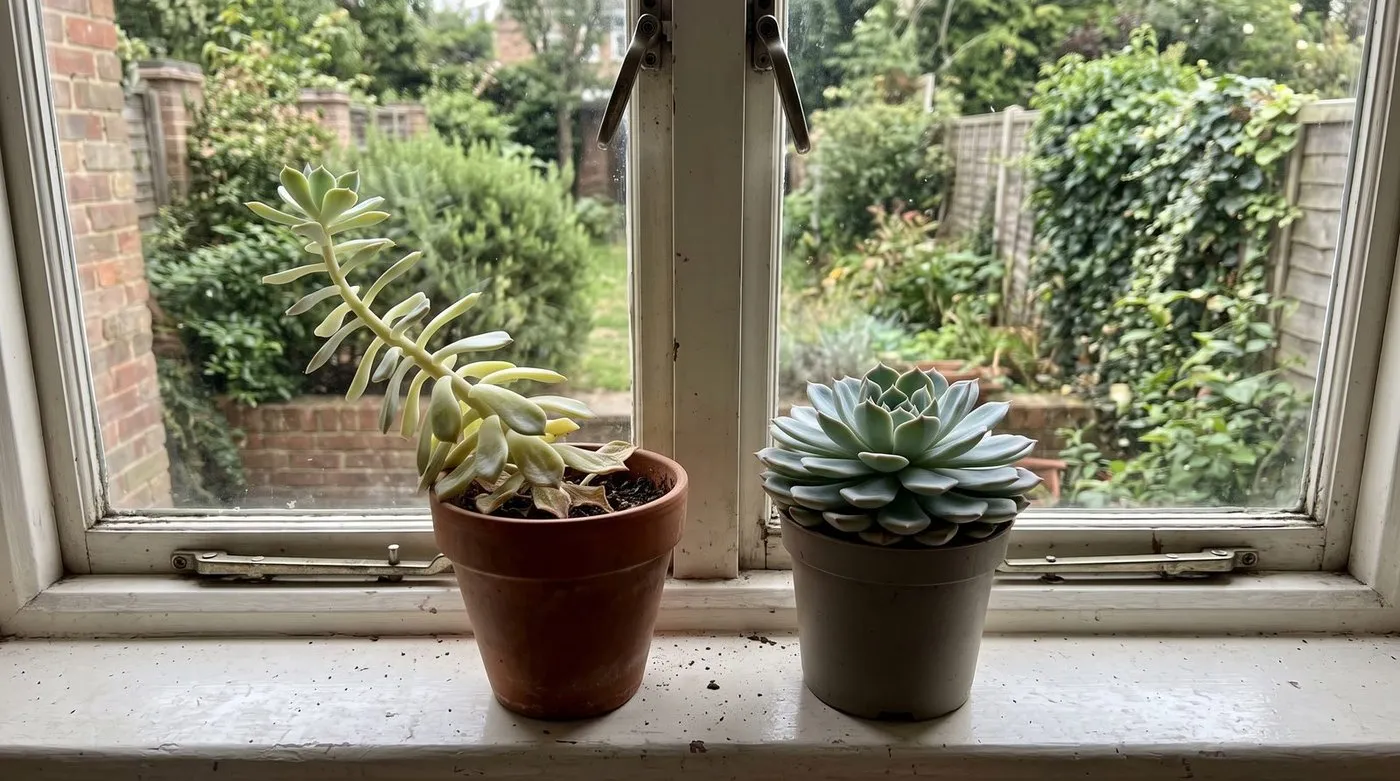 Left: a succulent stretching for the light. Right: a compact plant getting plenty of sun.
A stretched stem won’t shrink back. Instead, cut off the top rosette and leave it to dry for 2-3 days so the cut seals. Then pop it into dry, gritty compost to root. The leftover stump usually sprouts a few new baby plants, so you end up with more than you started with.
How much light do succulents need indoors
For most succulents, a south-facing windowsill is a must. Even then, winter light falls short. Put them right up against the glass, as light drops quickly the further back you go.
Give pots a quarter turn every week so they grow evenly. Clean your windows in autumn to let in as much light as possible. Open net curtains and blinds fully during the day.
If they still stretch on a south-facing sill, a grow light is the answer. Run it for 10-12 hours a day, about 15-30cm above the plants, to keep them compact through winter. Plenty of house plants for beginners cope with low light, but succulents aren’t among them.
The right soil mix for succulents
Ordinary houseplant compost stays too wet and soon rots succulent roots. They need a gritty mix that dries out fully between waterings.
The recipe is easy: 1 part peat-free compost to 2 parts horticultural grit or perlite. The mix should feel rough and gritty when you squeeze it, not spongy.
 A gritty succulent mix. You can see the grit and perlite, and water runs straight through.
Always use pots with drainage holes. Terracotta is perfect, because the clay helps the compost dry out. Glazed or plastic pots without holes let water pool at the bottom and rot the roots unseen. If you love a pot without a hole, use it as an outer cover and sit a terracotta pot inside.
Top the compost with a layer of fine gravel or grit. It keeps the base of the plant dry, stops soil splashing onto the leaves and looks neat. If you make your own compost, you can use that, or any peat-free multipurpose compost.
How to water succulents properly
Use the “soak and dry” method. It’s the one that works. Little-and-often watering, misting and ice cubes all cause trouble.
Step 1: Make sure the soil is completely dry. Push a finger 2-3cm into the mix. If it feels at all damp, wait.
Step 2: Water well until it runs out of the drainage holes, so the whole root ball gets wet.
Step 3: Let it drain, and empty the saucer after about 15 minutes. Never leave a succulent sitting in water.
Step 4: Don’t water again until the soil is bone dry. In summer that’s usually 2-3 weeks. In winter, 4-6 weeks or longer.
Temperature matters too. Below about 12C, most succulents rest and need hardly any water. One on a cool windowsill in an unheated room might only need watering every couple of months in winter. Overwatering a resting succulent is the quickest way to lose it. The exception is the Christmas cactus, a rainforest cactus that keeps drinking lightly while it sets winter buds.
Never mist succulents. Water on the leaves and in the rosettes leads to mould and rot. Always water the soil.
Best succulent varieties for UK homes
Some succulents need blazing sun that British windows rarely give. Others are happy with a bit less.
| Succulent | Light | Indoors? | Notes |
|---|---|---|---|
| Echeveria | Full sun | Good on a south window | Rosettes in lots of colours |
| Jade plant (Crassula) | Bright | Very good | Lives for decades |
| Haworthia | Medium | Excellent | Happy on east or west windows |
| Gasteria | Medium | Excellent | Tongue-shaped leaves, copes with shade |
| Aloe vera | Bright | Good | Makes lots of babies |
| Sempervivum | Full sun | Better outdoors | Very hardy, fine outside all year |
| Sedum | Full sun | Better outdoors | Many are hardy outside |
| Aeonium | Bright | Good | Grows in winter, rests in summer |
 A selection of succulents that suit UK windowsills. Haworthia (front left) copes with less light than most.
Haworthia and gasteria are the stars for UK homes. In the wild they grow tucked into partial shade, so they cope with east or west-facing windows. They stay small too, perfect for a narrow sill. Haworthia cooperi has see-through leaf tips that glow when the light shines through, which is lovely.
Common problems and how to fix them
Etiolation (stretching)
Pale, stretched growth with gaps between the leaves means not enough light. Move it to a south-facing window or add a grow light. Cut the top off stretched plants and re-root it in fresh gritty compost.
Mushy base and dropping leaves
This is root rot, from too much water or poor drainage. The base of the stem goes soft and see-through. Take the plant out of the wet soil straight away and cut off all the soft, rotten parts with a clean blade. Let the healthy piece dry for 2-3 days until the cut seals. Plant it in dry, gritty mix and wait a week before watering.
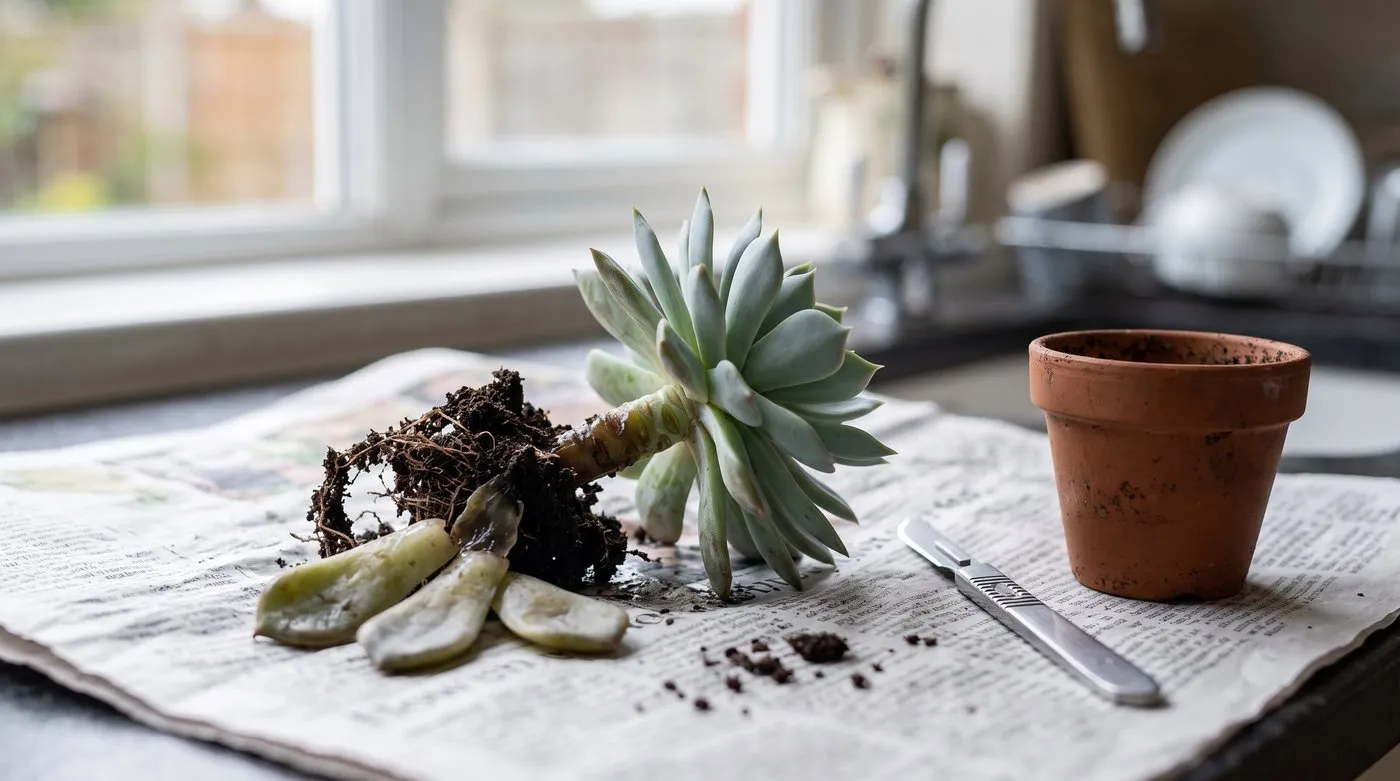
A soft, see-through base means root rot. Cut back to firm, healthy tissue and let the cut dry for a few days before replanting in gritty mix.
Mealybugs
White, cottony tufts in the leaf joints are mealybugs. Wipe them off with a damp cotton bud or soft brush, and cut out badly affected shoots. For a bad attack, use an insecticide that’s authorised for houseplants, exactly as the label says. Home-made sprays aren’t legal to use as pesticides in the UK. Keep the plant away from others while you sort it out. The RHS guide to mealybugs also covers biological controls, such as a ladybird that eats them.
Brown, crispy lower leaves
Dry, papery leaves at the bottom are normal, as succulents use up their old leaves as they grow. Peel them off gently to keep things tidy and give pests fewer hiding places. If the top leaves are shrivelling, the plant is thirsty, so give it a good soak.
Leaf damage from cold
Leaves touching cold window glass in winter can get damaged. Leave a small gap between the plant and the glass. If the windowsill regularly drops below 5C, move plants to a shelf nearby.
Seasonal care calendar
Spring (March to May): Water a bit more as growth starts again. Move pot-bound plants into a pot one size bigger. Start feeding once a month with half-strength cactus feed. Move plants somewhere brighter as the days lengthen.
Summer (June to August): Water every 2-3 weeks using soak and dry. Succulents and other best indoor plants can go outside in a sheltered, sunny spot, where they love the sunshine. Bring them in before nights drop below about 10C.
Autumn (September to November): Cut back watering to every 3-4 weeks and stop feeding. Bring outdoor plants in before the first frost. Clean the windows ready for the darker months.
Winter (December to February): Water every 4-6 weeks at most. Keep them above 5C, as a cool, bright room is ideal. Don’t feed. Growth will slow right down, and that’s fine. Watch for stretching and move plants to your brightest window.
Now your succulents are sorted, read our guide to the best low light houseplants for UK homes for plants that suit the darker corners.
Frequently asked questions
Why is my succulent stretching and going leggy?
It isn’t getting enough light. UK windows are especially dim in winter. Move it to a south-facing windowsill, right up by the glass, or give it a grow light for 10-12 hours a day. Stretched stems won’t shrink back, so cut off the top rosette and re-root it for a compact plant.
How often should I water succulents in winter?
About every 4-6 weeks, and only when the soil is bone dry. In a cool room below about 12C, water even less, or hardly at all. Too much water in winter is the most common way succulents die.
Can succulents survive in a north-facing room?
Most struggle in a north-facing room. Haworthia and gasteria are the exceptions, as they naturally grow in partial shade. Echeveria, jade plants and most rosette types need direct sun from a south-facing window.
Should I mist my succulents?
No, never mist them. Water sitting on leaves and in rosettes leads to mould and rot. Water the soil instead, soaking it well and then letting it dry out completely. Succulents are happy in dry air.
What soil mix do succulents need?
Mix 1 part peat-free compost with 2 parts grit or perlite. It should feel gritty and drain almost straight away when you water. Ordinary houseplant compost stays too wet and rots the roots. Always use pots with drainage holes.
Can succulents live outside in the UK?
Some can, all year round. Sempervivums (houseleeks) and many sedums are tough enough for rockeries, walls and troughs. Most others, including echeveria, jade plant and aloe, need to come indoors before nights drop below about 5C in autumn.
Our team produces practical UK gardening guidance from source research, contributor records and established horticultural practice. Editorial standards are overseen by Matt W.


