
Key takeaways
- Pothos, snake plant, spider plant, peace lily and ZZ plant are the easiest house plants to start with
- Too much water kills more beginners' plants than anything else, so check the compost with a finger first
- Water less in winter, when plants grow slowly and dry out more slowly
- Pick a plant to suit the light you have, not the other way round
- Spider plant is safe with cats and dogs; the other four can upset a pet that chews them
- Start with two or three plants and learn their signals before buying more
The best house plants for beginners are pothos, snake plant, spider plant, peace lily and ZZ plant. They forgive missed waterings, cope with the dim light of a British winter and don’t need misting, special lamps or fancy feeds. Start with one or two of these and you’ll soon learn what a happy plant looks like.
This guide is for your very first plants. It covers the five easiest, the few habits that keep them alive, and the mistakes that finish off most beginners’ plants. When you’re ready to fill every room, our guide to the best indoor plants for each room picks up from here.
The five easiest house plants for beginners
These five cope with the things that usually kill house plants: low light, forgetful watering and central heating.
Pothos (Epipremnum aureum)
The easiest of the lot. Heart-shaped green or marbled leaves on long trailing stems, lovely on a shelf. It copes with low light, though marbled types turn plainer in deep shade. Water when the top 3cm of compost is dry. The leaves droop when it’s thirsty and perk up within hours of a drink. Our guide to growing pothos covers training and cuttings.
Snake plant (Sansevieria trifasciata)
Stiff, upright, striped leaves that look smart in any room. It’s happy anywhere from a shady corner to a sunny sill. Water every two to three weeks, and less in winter. It stores water in its leaves, so too much watering is the only real way to kill it. See our snake plant care guide if the leaves go soft.
Spider plant (Chlorophytum comosum)
Arching green-and-white leaves with baby plants dangling on long stems. It likes bright light but copes with some shade. Water about weekly in summer and fortnightly in winter. Pot up the babies to give to friends. It’s also safe with cats and dogs.
Peace lily (Spathiphyllum)
Glossy dark leaves and white flowers, even in a shady room. It flops dramatically when thirsty, then stands back up within an hour of watering. That makes it a great teacher for beginners. Keep the compost just moist and out of hot sun. Our peace lily guide explains how to get more flowers.
ZZ plant (Zamioculcas zamiifolia)
Waxy, dark green leaves on upright, arching stems. It grows happily in a dark corner. Chunky roots store water, so it needs a drink only every two to three weeks in summer and about monthly in winter. It’s a good pick if you travel a lot.

Pothos, snake plant and peace lily make an easy starter trio for a bright windowsill.
Easy house plant comparison
Use this table to pick the right starter plant for your home.
| Plant | Light | Watering | Pet safe | Best for |
|---|---|---|---|---|
| Pothos | Low to bright | When top 3cm is dry | No | Shelves and trailing |
| Snake plant | Low to bright | Every 2-3 weeks | No | Forgetful waterers |
| Spider plant | Medium to bright | Weekly in summer | Yes | Homes with pets |
| Peace lily | Low to medium | Keep just moist | No | Flowers in shade |
| ZZ plant | Low to medium | Every 2-4 weeks | No | Dark corners, holidays |
How to water house plants properly
Water when the top 2-3cm of compost feels dry. Push a finger in to check. If it feels damp, wait a few days and check again.
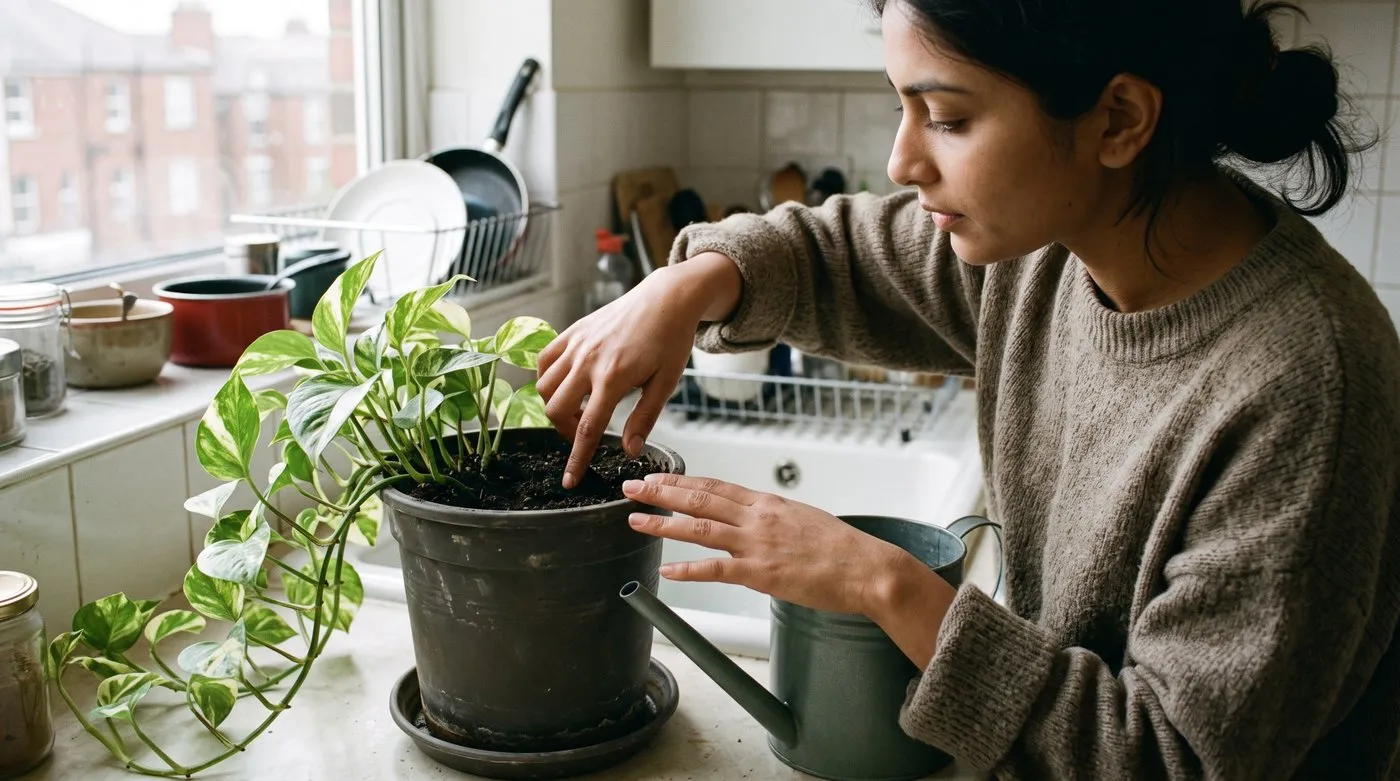
A finger in the compost is the best watering gauge. If the top 2-3cm feels damp, wait a few days.
When you do water, water well until a little runs out of the bottom. Then tip away anything left in the saucer after about half an hour. Plants sitting in water get soggy roots, and soggy roots rot.
Plants grow slowly in winter, so they need much less water. Most need roughly half as much as in summer. Always use pots with drainage holes. If you love a pretty pot with no holes, keep the plant in a plastic pot inside it.
Gardener’s tip: Lift the pot after watering and again when it’s dry. You’ll soon feel the difference in weight, which is a quick way to check without getting your fingers dirty.
Finding the right light for your plants
Light makes or breaks a house plant. A sunny south-facing sill and a dim hallway suit very different plants.
All five starter plants cope with lower light, which is why they’re so easy. Even so, they grow better with a bit more. A spot a metre or so from an east or west window suits all of them. Move plants closer to the glass in winter, when the days are short and grey.
Two warning signs tell you the light is wrong. Long, stretched stems leaning to the window mean too little light. Pale, scorched patches on leaves mean too much hot sun.

ZZ plant and cast iron plant are happy in a dim hallway, where most other plants would sulk.
Keeping beginner plants warm and comfortable
Most house plants come from warm places. Keep them above about 12°C and away from cold draughts from outside doors or single-glazed windows on frosty nights.
Central heating dries the air in winter, which can give plants brown leaf tips. Grouping a few plants together helps them keep the air around them a bit moister. Keep pots away from radiators and hot air vents.
Feed lightly in spring and summer with a house plant feed, following the pack. Don’t feed in winter while plants are resting.
Which beginner plants are safe with pets?
Of the five, only spider plant is safe with cats and dogs. Pothos, snake plant, peace lily and ZZ plant can cause mouth irritation, drooling or sickness if chewed. If your pets like to nibble, put those plants out of reach or choose spider plant, calathea or Boston fern instead.
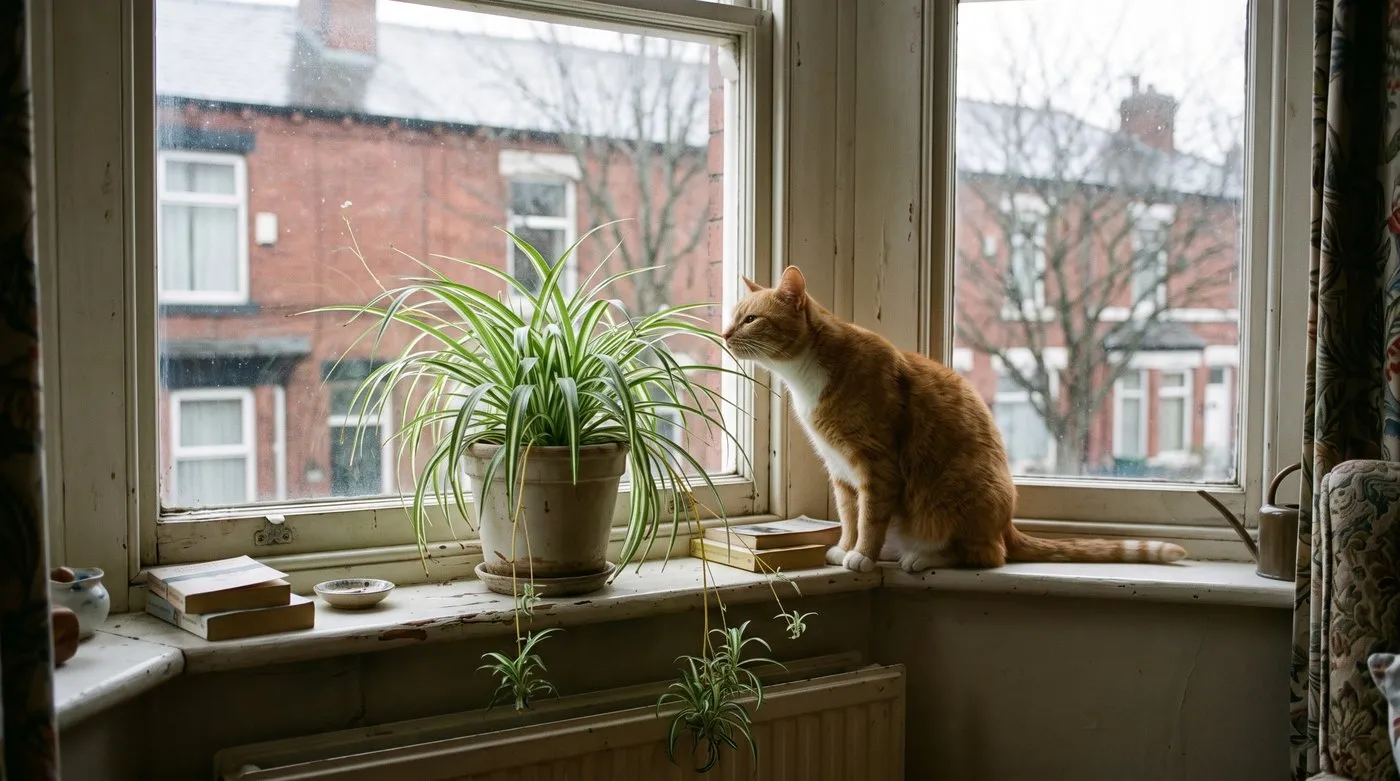
Spider plant is the one beginner plant you don’t need to worry about if your cat likes a nibble.
Lilies are a different matter. True lilies, often in cut-flower bunches, are deadly to cats, even the pollen. Our guide to plants toxic to cats lists the ones to keep out of the house.
How to buy healthy house plants
Check the leaves. Pick plants with firm, glossy leaves and no yellowing, brown tips or sticky patches. Look under the leaves for small white fluffy bits or bugs.
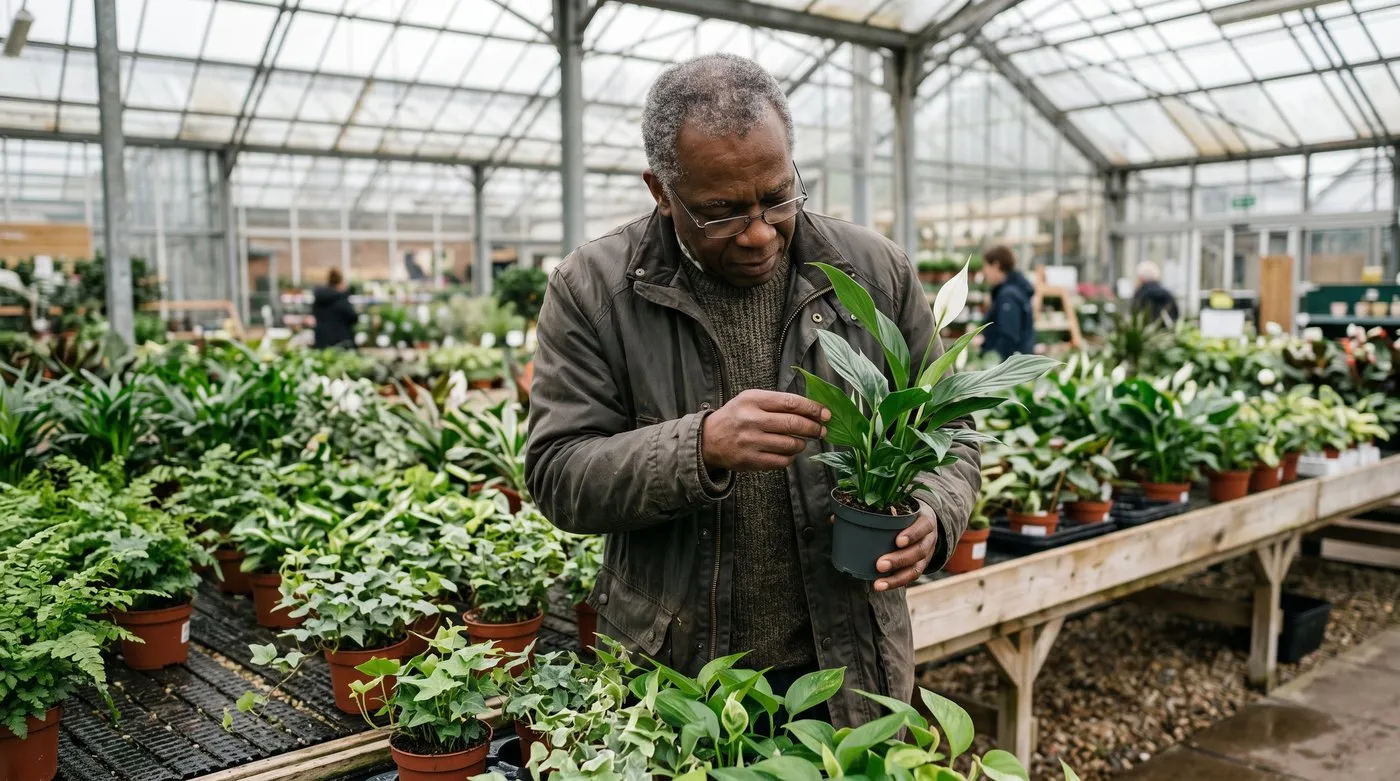
Turn a few leaves over before you buy. Clean, firm leaves with no sticky patches mean a healthy plant.
Check the compost. It should be damp, not soggy or bone dry. A smell of rot is a bad sign.
Buy small. Young plants settle into a new home more easily, and they cost less too. Watching them grow is half the fun.
Mind the cold. In winter, ask for the plant to be wrapped for the trip home. A short spell in freezing air can damage tropical leaves.
Common beginner mistakes with house plants
- Overwatering. The number one killer. Check the compost before every drink.
- A pot with no drainage hole. Water collects at the bottom and rots the roots.
- The wrong light. A cactus in a dark bathroom or a peace lily on a hot sill both struggle. Match the plant to the spot.
- Repotting too soon. Most plants like a snug pot. Repot only when roots fill it, as our guide on how to repot house plants explains.
- Buying too many at once. Start with two or three. Learn their signals, then add more.
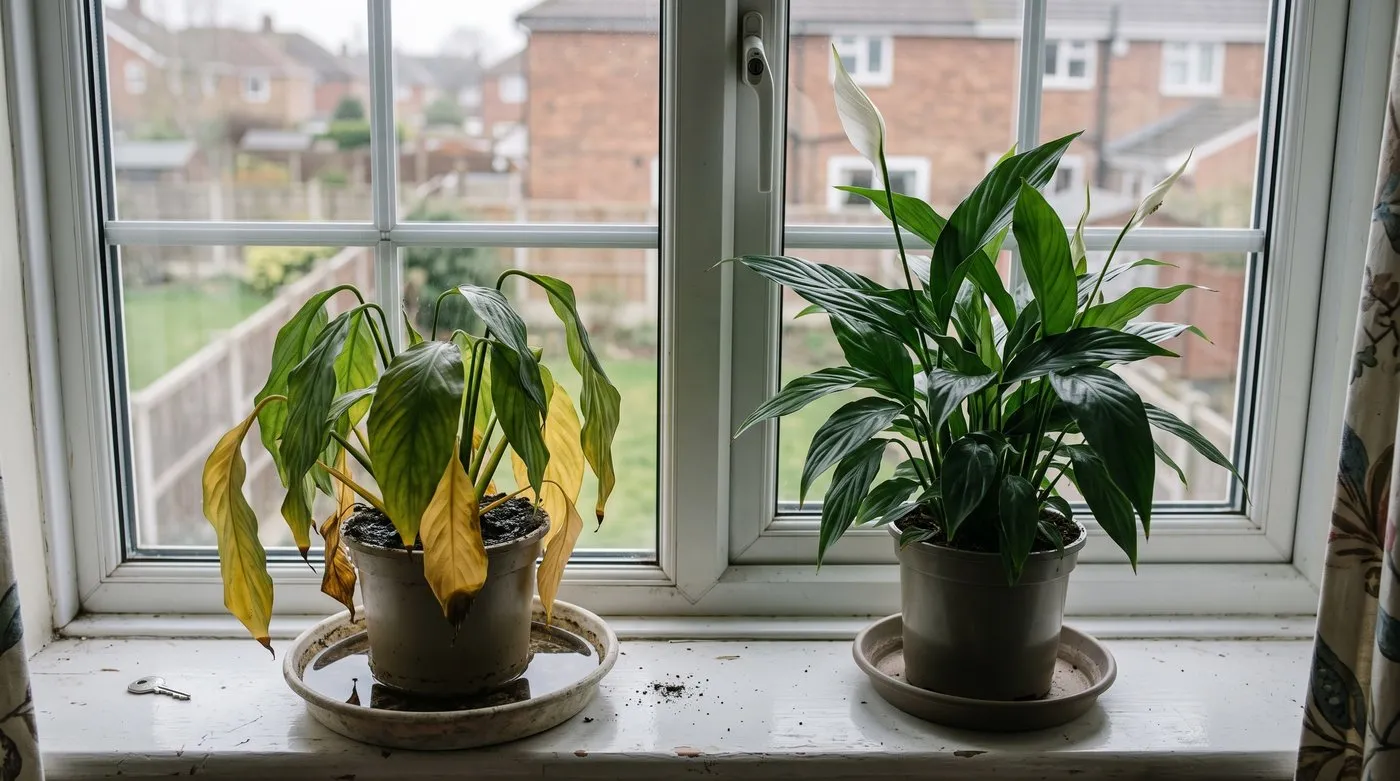
Yellow leaves and a saucer full of water are the classic signs of overwatering. Tip the saucer out after watering.
Frequently asked questions
What is the easiest house plant to keep alive?
Pothos, also called devil’s ivy, is the easiest. It copes with low light and missed waterings. When it’s thirsty its leaves droop a little, then they perk up within hours of a drink. Snake plant and ZZ plant come a close second.
What house plants grow in low light?
Snake plant, ZZ plant, pothos and peace lily all cope with low light. Cast iron plant is another tough choice for a dim hallway. No plant lives in a room with no daylight at all, so even shade-lovers need a window somewhere in the room.
How often should I water house plants?
Water when the top 2-3cm of compost feels dry. That’s often about once a week in summer and every two weeks in winter, but it varies. Always check with your finger rather than watering on a fixed day.
Do house plants improve air quality?
Only a little, so don’t rely on them. A few pots can’t clean the air in a whole room. Opening a window does far more. Grow house plants because they look good and make a room feel nicer. Our guide to air-purifying house plants explains more.
Why are my house plant leaves turning yellow?
Too much water is the most common cause. Check the pot drains freely and isn’t standing in a full saucer. Too little light, cold draughts or old lower leaves dying off naturally can also turn leaves yellow.
When should I repot a house plant?
Repot when roots poke out of the drainage holes or circle the pot. That’s usually every year or two, in spring. Move up just one pot size, as a much bigger pot holds too much wet compost.
Now your first plants are settled, try our guide to the best low-light house plants for darker rooms, or browse the houseplants hub for more ideas.
Our team produces practical UK gardening guidance from source research, contributor records and established horticultural practice. Editorial standards are overseen by Matt W.


