
Key takeaways
- Lilies and daylilies can cause fatal kidney failure in cats, even from pollen licked off fur
- Every part of a lily is toxic, including the leaves, pollen and vase water
- After any lily contact, go to a vet straight away, as fast treatment saves lives
- The Animal Poison Line (01202 509000) is open 24 hours and charges a fee per call
- Peace lilies, monstera, pothos and aloe can cause mouth pain or an upset tummy
- Roses, snapdragons, sunflowers, camellias, spider plants and calatheas are good cat-safe choices
Lilies are the most dangerous common plant for cats in the UK. A nibbled leaf, a dusting of pollen licked off fur or a drink of vase water can cause kidney failure. Cats also struggle to break down some plant toxins, so they’re more sensitive than dogs to several plants.
Some plants, like lilies, yew and autumn crocus, can kill. Others, like ivy and chrysanthemums, cause unpleasant but treatable symptoms. Below you’ll find the common culprits in British gardens and homes, the warning signs and the lovely cat-safe plants you can grow instead.
Lily emergency: If your cat has touched, chewed or licked any part of a lily or daylily, or drunk lily vase water, go to a vet now. Don’t wait for symptoms. The sooner treatment starts, the better the chance.
Why are lilies so dangerous to cats?

Lily pollen is deadly to cats. Brushing past the flowers and grooming the pollen off is enough.
Tiny amounts of any part of a lily can cause kidney failure in cats. No other common garden plant does so much harm from so little.
All true lilies (Lilium) and daylilies (Hemerocallis) are dangerous. That includes Easter, Asiatic, Oriental (such as ‘Stargazer’) and tiger lilies. Petals, pollen, leaves and stems are all toxic, and International Cat Care warns that water from a vase of lilies is too.
Signs usually start within a few hours, but kidney failure can take a few days to develop. Without treatment, lily poisoning is usually fatal.
How pollen makes lilies uniquely lethal
Cats swallow pollen when they groom. If a cat brushes against a lily, pollen sticks to its coat, and it licks it off. It doesn’t even need to chew the plant.
Dogs that eat lilies may get an upset tummy, but they don’t get the same kidney failure. That’s why lily warnings are aimed squarely at cat owners.
Which lilies are toxic to cats?
Not every plant called “lily” is equally dangerous. True lilies and daylilies cause kidney failure. Others have different effects.
| Common name | Botanical name | Risk to cats |
|---|---|---|
| Easter lily | Lilium longiflorum | Can kill (kidney failure) |
| Asiatic lily | Lilium Asiatic hybrids | Can kill (kidney failure) |
| Oriental lily, ‘Stargazer’ | Lilium Oriental hybrids | Can kill (kidney failure) |
| Tiger lily | Lilium lancifolium | Can kill (kidney failure) |
| Daylily | Hemerocallis | Can kill (kidney failure) |
| Lily of the valley | Convallaria majalis | Serious (affects the heart) |
| Peace lily | Spathiphyllum | Moderate (sore mouth) |
| Calla lily | Zantedeschia | Moderate (sore mouth) |
| Peruvian lily | Alstroemeria | Listed as non-toxic (may upset the tummy) |
The top five cause kidney failure. Lily of the valley affects the heart instead. Peace lilies and calla lilies contain tiny sharp crystals that make the mouth very sore.
Is it safe to grow lilies outside if you have a cat?
No. It’s best not to have lilies in the house or the garden if you own a cat. Outdoor lilies are just as risky as cut flowers, as pollen brushes onto fur when a cat walks through a border.
Snipping off the pollen-bearing stamens helps but doesn’t make the plant safe, as the leaves and petals are toxic too. Pots of lilies on a patio are just as risky. Daylilies are easy to forget because they’re sold as tough, easy perennials, but they’re just as dangerous.
Cats roam, so a friendly word with neighbours who grow lilies can help too. If you dig lilies up, bag them for the green waste bin rather than leaving them on an open compost heap.
Which UK garden plants are toxic to cats?

Rhododendrons, daffodils and ivy are all common garden plants that are toxic to cats.
Besides lilies, plenty of popular garden plants are toxic to cats, from yew and foxglove to daffodils, ivy and hydrangea. Some can kill, while others just cause an upset tummy.
Fatal and severe toxicity
These can kill a cat or cause life-threatening harm. Remove them from any garden cats use.
Lily of the valley (Convallaria majalis) affects the heart. Every part is poisonous, berries included. Watch for sickness, a slow or uneven heartbeat and fits. It spreads through shady borders and is common in older gardens.
Foxglove (Digitalis purpurea) also affects the heart. Chewing the leaves, flowers or seeds can cause sickness, drooling and an uneven heartbeat, and dried bits are still toxic. It seeds itself everywhere. If you grow clematis along a fence, snapdragons make a safer partner at its feet than foxgloves.
Yew (Taxus baccata) is deadly. Everything except the red berry flesh is poisonous, and the seed inside the berry is too. Chewing the needles or bark can cause sudden heart failure. Yew hedges are common in older gardens and churchyards.
Autumn crocus (Colchicum autumnale) can damage the organs, and signs may not show straight away. Spring crocuses are much less dangerous but can still cause sickness, diarrhoea and drooling.
Oleander (Nerium oleander) isn’t common in UK gardens but grows in sheltered southern spots and conservatories. Every part affects the heart.
Dieffenbachia is a house plant with big patterned leaves. It causes severe mouth pain and swelling, and in bad cases can affect breathing.
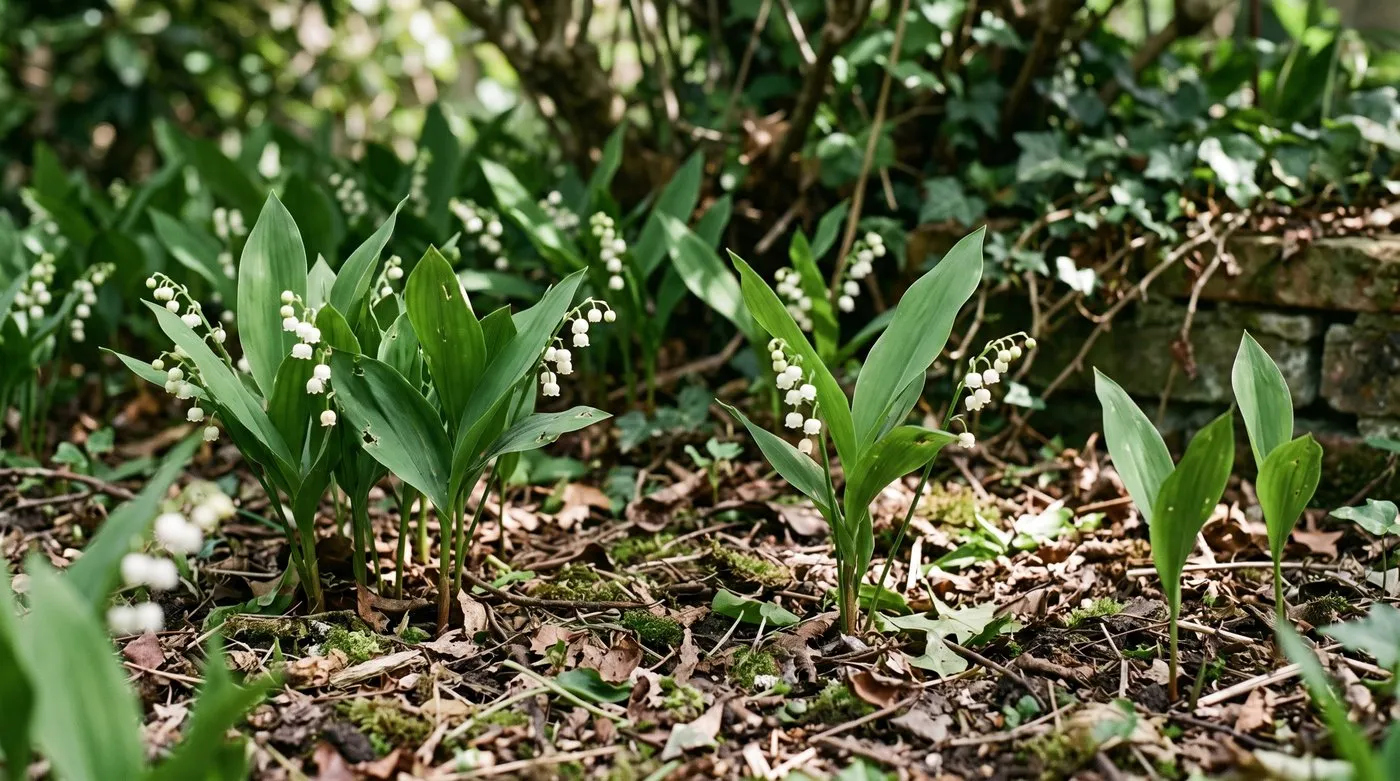
Lily of the valley spreads quietly through shady corners of older gardens. Learn its paired leaves and white bells so you can spot it and dig it out.
Moderate toxicity
These usually need a trip to the vet. Deaths are uncommon but possible, especially in kittens and older cats.
Daffodils (Narcissus) are toxic all over, and the bulbs are the worst part. Cats rarely dig up bulbs, but cut daffodils in vases are a risk. Watch for sickness, drooling and diarrhoea, and shaking with larger amounts. Our guide to growing daffodils has tips for pet owners.
Tulip bulbs are the most toxic part. Bulbs left on windowsills for forcing are a hazard. They cause sickness, drooling and diarrhoea.
Azaleas and rhododendrons are toxic in every part. Chewing the leaves can cause drooling, sickness, weakness and heart rhythm problems. They’re common in gardens with acid soil.
Ivy (Hedera helix) causes sickness, tummy pain, drooling and diarrhoea, and the leaves are worse than the berries. Cats meet it on walls, fences and trees everywhere.
Chrysanthemums cause drooling, sickness, diarrhoea and wobbliness. They’re very popular as cut flowers and in autumn pots.
Mild toxicity
These cause unpleasant but rarely dangerous symptoms.
Holly berries cause sickness, diarrhoea and drooling. The prickly leaves put most cats off. Fallen winter berries are the main risk.
Wisteria seeds and pods cause sickness and diarrhoea. Kittens may play with dangling pods.
Hydrangea leaves and buds usually cause mild sickness and tiredness. If you’re growing hydrangeas, plant them away from where your cat likes to lounge.
Cyclamen tubers are the most toxic part and can cause bad sickness if a cat digs them up. The leaves and flowers are milder.
Are lavender and catmint safe for cats?
Not completely, but the risk is low. Lavender can cause sickness and loss of appetite if eaten. Catnip can cause sickness and diarrhoea if a cat eats a lot, and it makes some cats sleepy and others giddy.
Most cats just sniff and roll on these plants rather than eating much. A clump of catmint in a sunny border is fine for a healthy adult cat. The real worry is concentrated products. Lavender oil, diffusers and scented potpourri are far more dangerous than the plant, so keep them well away from cats.
Toxic house plants: the indoor danger

Peace lily, monstera and aloe vera are all toxic to cats.
Lots of popular house plants are toxic to cats, including monstera, philodendron, aloe vera, snake plant and pothos. Indoor cats spend more time near plants, love batting dangly leaves and may chew out of boredom.
If you’re choosing indoor plants for a home with cats, check each one before you buy.
Monstera causes painful swelling of the mouth, tongue and throat if chewed, with drooling and trouble swallowing.
Philodendron has the same problem as monstera. Trailing types are especially tempting to bat and chew.
Aloe vera can cause sickness, tiredness and diarrhoea if a cat chews the leaves.
Snake plant (now called Dracaena trifasciata) causes nausea, sickness and diarrhoea. It’s one of the best beginner house plants for homes without pets, but not for homes with cats.
Pothos causes mouth pain, drooling and swelling. Swap it for a cat-safe trailing plant like a spider plant.
Poinsettia is only mildly toxic, despite its scary reputation. The milky sap can make the mouth sore and sometimes causes sickness.
Toxic plant reference table
Here are the common toxic plants in UK gardens and homes. Why not print it and stick it on the fridge?
| Plant | Where | How serious | Worst parts | Main signs |
|---|---|---|---|---|
| Lily | Garden or indoors | Can kill | All, including pollen and vase water | Kidney failure |
| Daylily | Garden | Can kill | All | Kidney failure |
| Lily of the valley | Garden | Serious | All | Slow or uneven heartbeat, fits |
| Foxglove | Garden | Serious | All | Heart problems, sickness |
| Yew | Garden or hedge | Can kill | All except berry flesh | Sudden heart failure |
| Autumn crocus | Garden | Can kill | All, especially the corm | Delayed organ damage |
| Oleander | Garden or conservatory | Can kill | All | Heart problems |
| Dieffenbachia | Indoors | Serious | All | Swollen mouth, breathing trouble |
| Daffodil | Garden or vase | Moderate | All, bulbs worst | Sickness, diarrhoea, shaking |
| Tulip | Garden or indoors | Moderate | Bulbs worst | Sickness, drooling |
| Azalea, rhododendron | Garden | Moderate | All | Heart rhythm changes, weakness |
| Ivy | Garden | Moderate | Leaves more than berries | Sickness, drooling, diarrhoea |
| Chrysanthemum | Garden or vase | Moderate | All | Drooling, wobbliness |
| Monstera | Indoors | Moderate | Leaves, stems | Sore, swollen mouth |
| Philodendron | Indoors | Moderate | All | Sore mouth, drooling |
| Aloe vera | Indoors | Moderate | Leaves | Sickness, tiredness, diarrhoea |
| Snake plant | Indoors | Moderate | All | Nausea, sickness |
| Pothos | Indoors | Moderate | All | Sore, swollen mouth |
| Holly | Garden | Mild | Berries | Sickness, diarrhoea |
| Wisteria | Garden | Mild | Seeds, pods | Sickness, diarrhoea |
| Hydrangea | Garden | Mild | Leaves, buds | Sickness, tiredness |
| Cyclamen | Indoors or garden | Mild | Tubers worst | Sickness |
| Lavender, catnip | Garden | Mild | All | Sickness, diarrhoea |
Month-by-month danger calendar
The risk changes through the year, and lily bouquets in summer and at Christmas are the biggest danger.
| Month | Plants to watch | Why |
|---|---|---|
| January | Holly berries, mistletoe, house plants | Christmas plants hang around and berries fall off decorations |
| February | House plants, cyclamen | Forced bulbs on windowsills and bored indoor cats |
| March | Daffodil shoots, autumn crocus leaves | Cats explore fresh spring growth |
| April | Daffodils, tulips, lily of the valley | Spring bulbs at their peak and cut flowers in vases |
| May | Foxglove, azalea, rhododendron | Gardens in full bloom with petals on paths |
| June | Lilies, foxglove, oleander | Lily season starts and lily bouquets are everywhere |
| July | Lilies, daylilies, wisteria pods, hydrangea | Garden lilies and daylilies in flower |
| August | Lilies, yew | Late lilies still out and yew berries forming |
| September | Autumn crocus, ivy, yew berries | Autumn crocus flowers and yew berries turn red |
| October | Autumn crocus, chrysanthemum, ivy | Chrysanthemum season and berries dropping |
| November | Ivy, yew berries | Berries in borders |
| December | Poinsettia, holly, mistletoe, lily bouquets | Christmas plants and gift bouquets |
June to August is the riskiest time because of lilies in gardens and bouquets. A kind gift of lilies can kill a cat if the person receiving it doesn’t know.
December brings a second peak, as Christmas bouquets often include lilies.
Symptoms of plant poisoning in cats
Look out for vomiting, drooling, going off food, tiredness and hiding. Cats are good at hiding when they’re poorly, so poisoning can be easy to miss.
Lily poisoning symptoms (emergency)
Lily poisoning often follows a pattern, though every cat is different.
First few hours: Sickness, drooling and going off food. Your cat may seem quiet or restless.
Next several hours: The sickness may stop and your cat may seem better. Don’t be fooled, the kidney damage carries on.
Over the next one to three days: More drinking and weeing as the kidneys struggle, then little or no wee as they fail. Twitching and fits can happen too.
That false recovery fools many owners. Any cat that may have touched a lily needs a vet straight away, even if it seems fine.
General poisoning symptoms
Different plants cause different signs. Common ones are vomiting, drooling, going off food, tiredness, hiding, diarrhoea and pawing at the mouth. Pawing often means a sore mouth from plants like monstera or peace lily.
Plants that affect the heart, such as foxglove and lily of the valley, can cause a slow or uneven heartbeat, weakness and collapse.
What to do if your cat eats a toxic plant
Act fast: move your cat away, work out what the plant is and phone for help. Speed matters most with lilies.
- Move your cat away from the plant. Pick up any fallen petals, leaves or pollen.
- Work out what it is. Take a piece of the plant or a clear photo, as it helps the vet.
- Phone your vet or nearest emergency vet. Say what the plant is, how much might have been eaten and how much your cat weighs. If it’s a lily, say so clearly.
- If you can’t reach a vet, call the Animal Poison Line on 01202 509000. The Animal Poison Line is open 24 hours. It charges a fee per call, paid by card before you’re put through.
- Don’t make your cat sick unless a vet tells you to. Some toxins do more harm on the way back up.
- If there’s pollen on the fur, stop your cat grooming. Wrap it gently in a towel and wipe the pollen off with a damp cloth.
- Note the time. It helps the vet decide how urgent it is.
At the vet, treatment for lily poisoning usually means clearing the stomach, washing pollen off the coat and putting your cat on a drip to protect the kidneys.
Can a cat survive lily poisoning?
Yes, if it’s treated quickly. Cats treated early often do well, while untreated lily poisoning is usually fatal. The longer you wait, the worse the outlook.
So go to a vet the moment you suspect contact, even if your cat seems well. Some cats that recover are left with mild kidney damage, which is usually manageable but may need checking later in life.
Keep this number handy: Animal Poison Line 01202 509000 (24 hours, fee per call). For lily contact or a cat that’s collapsing, go straight to your nearest vet.
Safe alternatives to toxic plants

A cat-safe border of roses, snapdragons, sunflowers and asters. All the colour, none of the worry.
Most toxic plants have a cat-safe swap with a similar look. All the swaps below are listed as non-toxic to cats.
| Instead of | Try | Similar look | Good to know |
|---|---|---|---|
| Lily | Rose | Showy summer flowers | Lots of colours, often scented |
| Foxglove | Snapdragon | Tall flower spikes | Sow under cover in early spring |
| Rhododendron | Camellia | Evergreen with big flowers | Needs acid soil and shelter |
| Chrysanthemum | China aster (Callistephus chinensis) | Late summer daisies | Half-hardy annual |
| Daylily | Sunflower | Bold summer colour | Sow from April |
| Monstera | Calathea | Bold patterned leaves | Likes shade and humidity |
| Philodendron | Boston fern | Lush green leaves | Great in bathrooms |
| Snake plant | Haworthia | Spiky little succulent | Needs little water |
| Aloe vera | Echeveria | Rosette succulent | Likes bright light |
| Pothos | Spider plant | Trailing house plant | Makes lots of babies |
Moth orchids are also listed as non-toxic, so they’re a lovely flowering house plant for homes with cats.
Common mistakes cat owners make
Accepting lily bouquets without checking
Shop and florist bouquets often include lilies. Check every bunch before it comes inside. If there are any lilies or daylilies in it, take the whole bouquet out of the house, as pollen spreads easily. Better still, let friends and family know not to send lilies.
Assuming “lily” names mean equal danger
Peace lilies, calla lilies and Peruvian lilies aren’t true lilies and don’t cause kidney failure. True lilies and daylilies are the killers. Mixing up the names can lead people to shrug off lily warnings altogether. If in doubt, take it out.
Trusting cats to avoid toxic plants
Cats don’t reliably steer clear of poisonous plants. Kittens chew anything, and adult cats bat dangly leaves, nibble grassy foliage and drink from plant saucers. Bored indoor cats chew more. A pot of cat grass gives them something safe to munch.
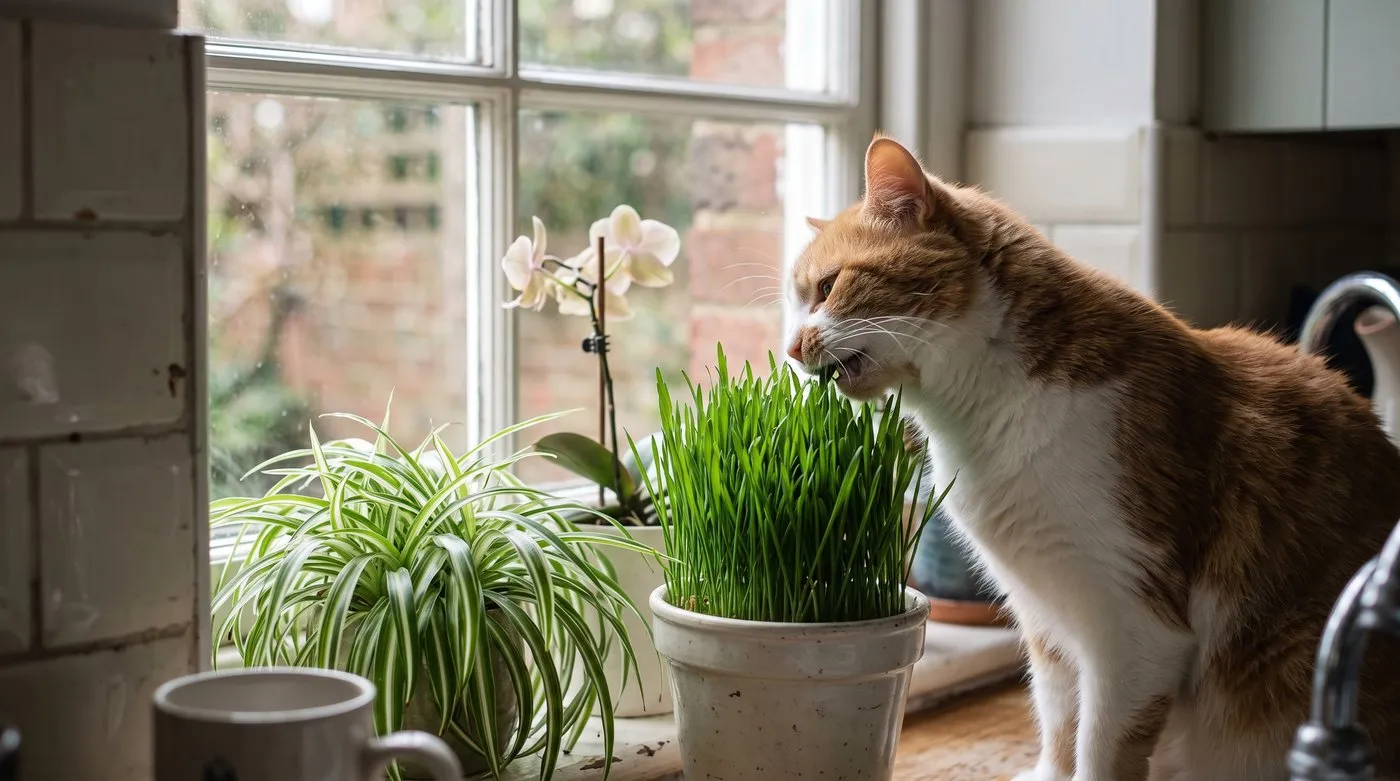
A pot of cat grass gives a chewy cat something safe to munch. It’s especially handy for bored indoor cats.
Overlooking vase water
Water from a vase of lilies is toxic, and cats will drink from almost anything. Daffodil vase water is a risk too. Keep toxic cut flowers out of rooms your cat uses, or better, out of the house.
Relying on raised shelves for indoor plants
Cats climb, so a high shelf won’t keep a toxic plant safe. Trailing leaves dangle within reach too. If a plant is toxic, keep it in a room your cat can’t get into, or rehome it.
How to make your garden safer for cats
A cat-proof garden starts with removing the most dangerous plants: lilies first, then foxglove, lily of the valley and yew.
Remove all lilies and daylilies. This is the big one. Dig up every one and don’t compost them where a cat could reach. Roses give you summer colour without the risk.
Swap foxgloves for snapdragons. They give similar spikes of flowers in a cottage border.
Check your hedges. Yew is deadly to cats. If you replace a yew hedge, check the new plant first.
Go round your house plants. Check each one against the table above and swap any toxic ones for a safe alternative.
Use a lidded compost bin. Foxglove, yew clippings and lily scraps stay toxic as they rot.
Tell everyone at home. Make sure the whole household knows lilies are deadly to cats. Tell regular visitors too, as gift bouquets are a common way lilies sneak in.
For more on cats outdoors, see our guide to stopping cats using your garden as a toilet. The dog-friendly garden guide shares lots of the same plant safety ideas.
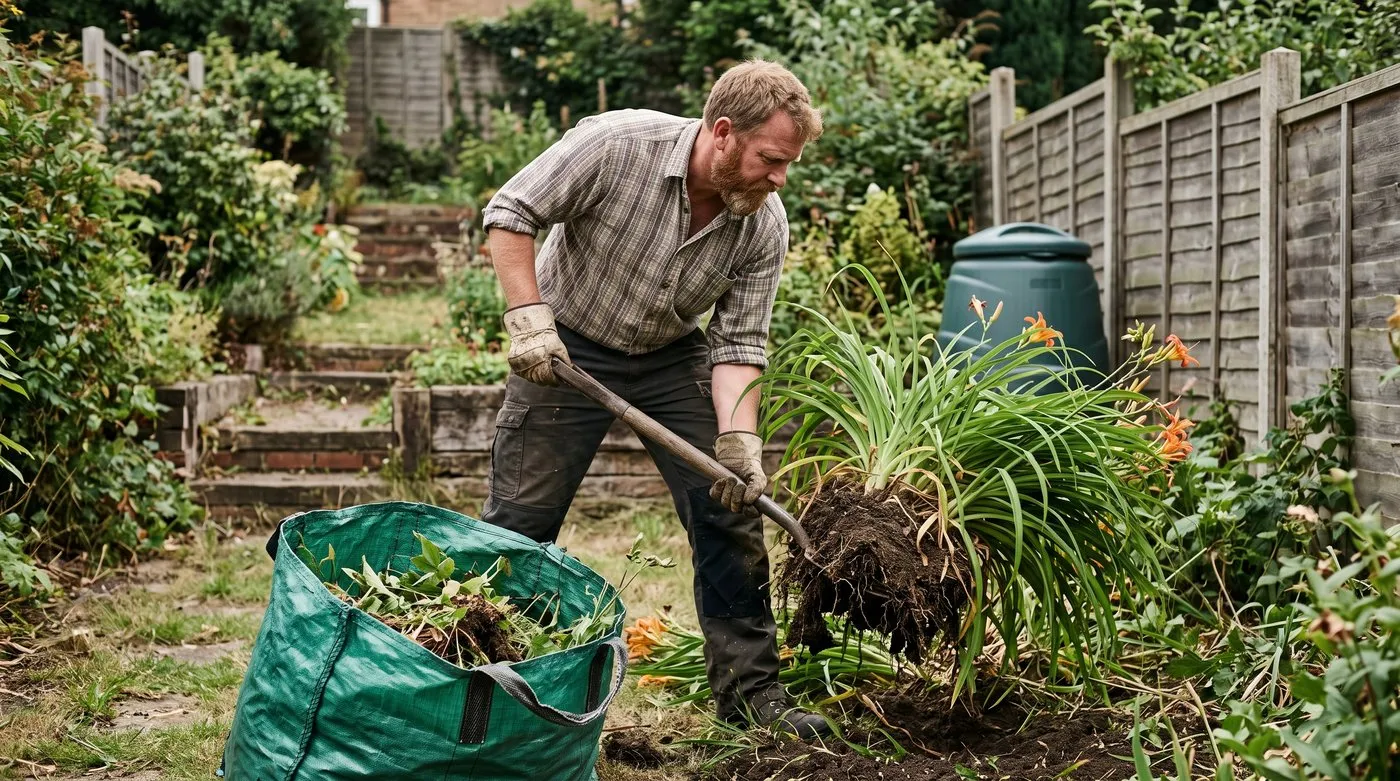
Daylilies are as dangerous to cats as true lilies. Dig out the whole clump and bag it for the green waste bin rather than the open compost heap.
Cats vs dogs: key differences in plant toxicity
Cats and dogs aren’t sensitive to the same things, and lilies are the clearest example. Our companion guide to plants toxic to dogs covers dogs in detail. Here’s what’s different for cats.
Lilies cause kidney failure in cats but not in dogs. That alone makes lilies the number one plant for cat owners to remove.
Permethrin, found in some dog flea treatments, can be fatal to cats. Never use a dog flea product on a cat.
Essential oils like tea tree are much more dangerous to cats than dogs.
Garlic and onions harm cats’ red blood cells, and cats are more sensitive to this than dogs.
A garden that’s fine for dogs isn’t always fine for cats. Check plants for cats specifically, rather than trusting a general “pet safe” label.
For lots of non-toxic plants to fill your borders, see our guide to pet-safe garden plants.
Frequently asked questions
Are lilies poisonous to cats?
Yes, very. True lilies (Lilium) and daylilies (Hemerocallis) can cause fatal kidney failure in cats. Every part is toxic, including petals, leaves, pollen and vase water. A small nibble or pollen licked off the fur can be enough. Take your cat to a vet straight away after any contact, even if it seems well.
What should I do if my cat eats a toxic plant?
Ring your vet or the Animal Poison Line (01202 509000) straight away. Don’t wait for symptoms. Take a sample or photo of the plant with you. Never make your cat sick unless a vet tells you to. With lilies, go straight to a vet, as fast treatment gives the best chance.
Are peace lilies toxic to cats?
Yes, but much less so than true lilies. They cause mouth pain, drooling, sickness and pawing at the face. Very rarely, a swollen mouth can affect breathing. They don’t cause the kidney failure that true lilies and daylilies do.
Which house plants are safe for cats?
Spider plants are a great choice. Boston ferns, calatheas, parlour palms, moth orchids, African violets, money trees and haworthia are also listed as non-toxic to cats. Avoid monstera, philodendron, aloe vera, snake plant and pothos.
What are the first signs of plant poisoning in cats?
Look out for vomiting, drooling and going off food. Tiredness and hiding are common too. With lilies, you may also see more drinking and weeing, twitching or fits. Kidney failure can take a few days to show, so never wait for signs after lily contact.
Are daffodils poisonous to cats?
Yes, and the bulbs are the worst part. They can cause sickness, drooling and diarrhoea, and larger amounts can cause shaking and heart problems. Cut daffodils indoors are the most common risk, as cats may chew the stems or drink the vase water.
Can cats die from lily pollen?
Yes, sadly they can. Pollen sticks to the fur when a cat brushes past, and the cat swallows it while grooming. That’s enough to cause kidney failure. If you see pollen on your cat, stop it grooming, wipe the fur clean and call a vet.
How do I make my garden safe for cats?
Start by removing all lilies and daylilies. Then deal with foxglove, lily of the valley and yew. Swap them for cat-safe plants like roses, snapdragons, sunflowers and camellias. Check house plants and bouquets too, and save the Animal Poison Line number (01202 509000) in your phone.
Our team produces practical UK gardening guidance from source research, contributor records and established horticultural practice. Editorial standards are overseen by Matt W.


