Key takeaways
- Decide first whether you're keeping a cat in, keeping cats out, or building a catio
- Block gaps at the bottom of fences and gates before buying fence toppers
- Use kind barriers and skip anything sharp or loose
- Give a contained cat shade, hiding places, water and things to do
- Lilies are very dangerous to cats, so check every new plant
A cat-proof garden starts with knowing what you’re trying to do. Keeping your own cat in, building a safe outdoor run and putting off a neighbour’s cat are three different jobs.
Spend a little time watching how cats use the garden. Look for gaps under gates, sheds next to fences, low branches and bins they could leap from. Fix the easy routes first. A fancy fence topper won’t help if a cat can just wriggle through the bottom of the hedge.
Choose the right approach
| What you want | Where to start | Bear in mind |
|---|---|---|
| Keep your cat in the garden | A fence with no gaps and nothing to jump from | Some cats can still climb a plain fence |
| Safe outdoor time | A roofed catio | It needs to be roomy and interesting |
| Put off visiting cats | Cover bare soil, try a water sprinkler | No single trick works everywhere |
| Protect birds and wildlife | Put feeders in open spots with cover nearby | A fence won’t stop all hunting |
There’s no one product that makes every garden cat-proof. Every cat is different, so try changes while you’re watching before you rely on them.
Inspect the whole garden boundary
Walk slowly round the edge of the garden. Look behind shrubs and sheds, where a broken board or small gap is easy to miss. Check whether the gate can be pushed open, and whether a tree gives a route onto a neighbour’s roof.
Mend broken panels and close gaps with smooth, solid materials. Don’t leave sharp wire ends, spikes or loose mesh. If a hedge forms part of the boundary, check the bottom of it through the year, as new growth can hide a gap.
Height isn’t everything. Cats Protection suggests a close-boarded fence about two metres high, with a hedge beside it, as one way to encourage a cat to stay put. Planning rules and boundary agreements can affect what you change, so check before raising a fence or adding a topper.

Fence toppers work best once the gaps and jumping spots have been sorted.
Cat-proof fence toppers and rollers
An inward-facing mesh topper makes the last bit of the climb tricky. Rollers spin when a cat grabs the top, so they can’t get a grip. Either way, it needs to run the whole length, with strong brackets and neat finishes at gates and corners.
Follow the fitting instructions and check it after strong winds. Mesh should stay tight. Rollers should spin freely without any pinch points. Trim back branches that reach over the top, checking first for nesting birds.
Never use barbed wire, spikes or electric fencing. A kind barrier should turn a cat round, not hurt it. Our garden fence ideas guide helps if you’re replacing the fence altogether.
Don’t assume it works on day one. Watch your cat for a while and see if a corner or the gate becomes the new way out.
When a catio is the better answer
A catio gives a cat fresh air in a safe, enclosed space, without the whole fence needing to be perfect. It can fix onto a window or door, stand on its own as a run, or be big enough to walk into.
Use a strong frame, firmly fixed mesh and a covered roof. Add a lockable door or a hatch for cleaning. If you’ve got room, two doors with a little lobby between them stop a cat slipping out as you go in.
Inside, add sturdy shelves at different heights, a shady spot, somewhere to hide, fresh water and a toilet area. Don’t clutter the floor. Cats like clear routes between levels and an easy place to retreat to.
The Cats Protection garden guidance suggests hiding places, shade and a quiet toilet spot. It also reminds you to check sheds, where a cat can easily get shut in by mistake.

A good catio is secure but fun, with shelves, shelter and places to hide.
Make a contained garden worth staying in
A cat that’s happy in the garden is less keen to leave. Give it sunny and shady spots, a high lookout and some dense planting to hide in, as long as it isn’t a ladder over the fence.
Cats Protection lists catnip, cat thyme, nasturtium, calendula, lavatera, cosmos and gerbera as cat-friendly choices. Every cat has its own taste, and plants are no substitute for play and a fuss.
A patch of long grass or a sturdy log gives interesting smells and textures, as long as neither helps them over the fence. Swap toys round now and then, and scatter a little of their normal food for them to hunt out while you watch. Put string toys away afterwards so nothing gets tangled.
Our pet-safe garden plants guide is a good place to start, but check each plant before assuming it’s safe.

Cat-safe plants with a clear path through the border.
Remove toxic plants and hidden hazards
Lilies are seriously dangerous to cats. The PDSA poisonous plants guide says every part is highly toxic, pollen included. Call a vet straight away if you think your cat has chewed a lily or licked pollen off its fur.
Common names can be confusing, so check the botanical name on the label. Our guide to plants that are toxic to cats covers the usual suspects.
Keep slug pellets, fertilisers, weedkillers and cleaning products shut away. Follow the label and keep cats off treated areas for as long as it says. Cover water butts, make sure the pond has an easy way out, and peek inside the shed before you lock it.
Netting needs extra care. Loose bird or crop netting can trap cats, hedgehogs and birds. If you need mesh, keep it tight with no saggy loops, fix every edge and check it often.
Humane ways to discourage visiting cats
Start by taking away what draws them in. Close bins, bring pet food indoors and block dry hidey-holes under the shed, as long as wildlife isn’t using them. Cover freshly dug soil with rigid mesh or twiggy prunings until your plants fill in.
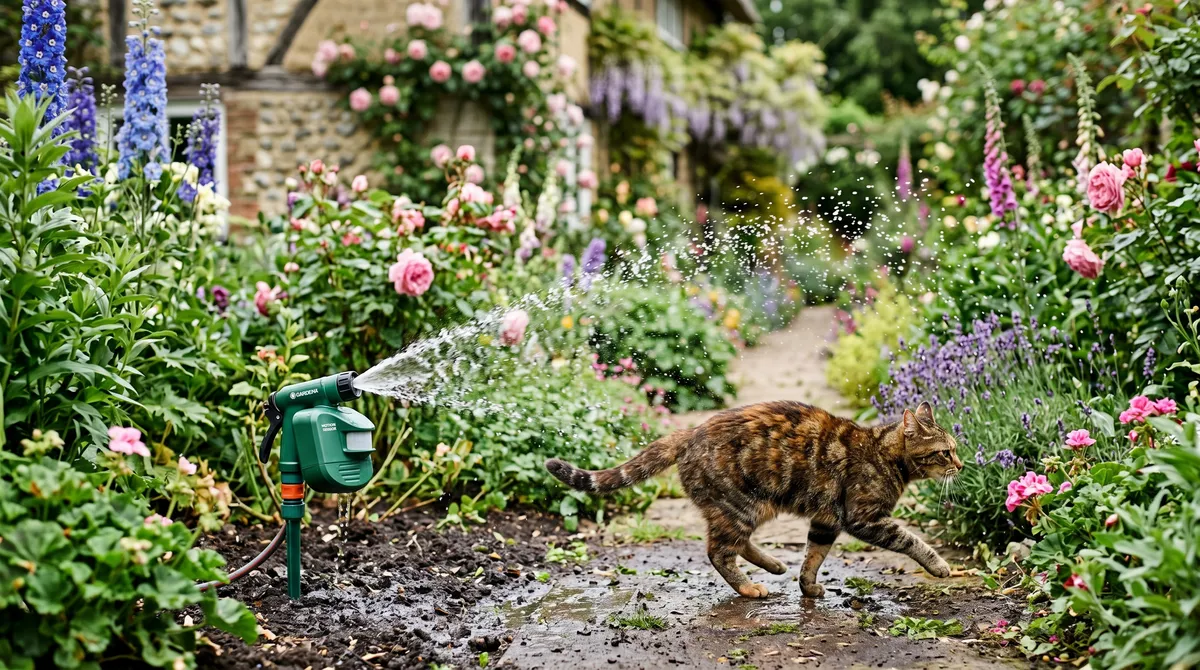
A motion-activated water sprinkler gives a harmless surprise that breaks a regular route. Point it into your own garden, away from paths and the neighbours’ doors. Move it now and then if a cat learns its way round.
Skip home-made chemical mixes, essential oils and anything meant to sting or irritate. They can harm pets, soil and plants. If poo is the main problem, try our guide to stopping cats pooing in the garden. For flower beds, see our tips on keeping cats out of flowerbeds.

A well-placed sprinkler sends cats elsewhere without hurting them.
A practical installation checklist
- Decide whether you’re keeping your cat in or keeping visitors out.
- Note every gap, weak gate and anything a cat could climb.
- Check permissions before changing a fence’s height or look.
- Fix gaps at the bottom before fitting a topper.
- Remove anything sharp and keep mesh tight.
- Add shade, water, hiding spots and safe plants for your own cat.
- Watch how it works, and check again after storms or pruning.
Look again as a kitten grows or an older cat slows down. Things change, and a storm can move a branch that was out of reach.
Common cat-proofing mistakes
Protecting the fence but not the gate
A small gap by a hinge or under a gate undoes all your hard work. Check the gate both open and shut.
Leaving a launch point beside the boundary
Move bins, benches and piles of stuff away from the fence. Trim branches that reach over, where it’s safe and allowed.
Installing loose mesh
Saggy mesh can tangle a cat. Fix every edge, keep it tight and replace damaged bits quickly.
Assuming scented plants will solve the problem
Smelly plants don’t put every cat off. Rely on good barriers and take away what draws them in.
Forgetting enrichment
A bare run may be secure, but cats need to climb, hide, rest and watch the world. Build all of that in.
For more fixes, browse our garden problem guides, or carry on with the pet-safe garden plants guide.
Frequently asked questions
What is the safest way to cat-proof a garden?
A secure, roofed catio is the safest bet. Build it with a strong frame, a roof, a lockable door, and check it now and then for gaps.
Will a two-metre fence keep a cat in?
It helps, but a keen climber may still get over. Move anything they could jump from and think about adding an inward-facing topper.
How can I stop other cats entering?
Block the gaps and take away anything that draws them in. Cover bare soil, close bins and try a motion-activated water sprinkler.
Which garden plants are dangerous to cats?
Lilies are the big one, and even the pollen is toxic. Check any plant you don’t know with a reliable vet source before adding it.
Can you use netting to keep cats out?
Avoid loose netting, as cats and wildlife can get tangled in it. Any mesh you use should be tight, firmly fixed and checked often.
Our team produces practical UK gardening guidance from source research, contributor records and established horticultural practice. Editorial standards are overseen by Matt W.