
Key takeaways
- Flowers from June to October with no deadheading needed
- Cut every stem back to 30cm in March, or it gets top-heavy and blows over
- It's a short-lived shrub, so take cuttings in August to keep it going
- Poor, dry soil suits it best, so don't feed it
- Barnsley is the favourite, with white flowers that blush pink
- Great by the sea, as it shrugs off salty wind
Lavatera is one of the fastest flowering shrubs you can grow in the UK. Cut it to 30cm stumps in March and by July it’s back to head height and smothered in funnel-shaped flowers. They keep coming until the first hard frosts in autumn. Few hardy shrubs give you so much flower from a standing start.
The catch is that it doesn’t live long, often 5-8 years. That matters less than it sounds, because cuttings root easily in August and give you free replacements. The secret to success is simple: poor soil, a hard prune and a bit of benign neglect. Pamper it with rich compost and lots of water and it’ll give up sooner.
What is lavatera and where does it come from?
Garden lavatera (Lavatera x clementii) is a hybrid tree mallow, a cousin of hibiscus and hollyhocks. Its parents come from the Mediterranean and from central and eastern Europe, which helps make it tough enough for UK gardens.
It keeps some leaves in a mild winter but drops them in hard frost, then grows back strongly from the base in spring. Flowers appear all along every stem. Each one lasts only a few days, but new ones keep opening from June until frost.
The most famous variety, ‘Barnsley’, was found in Rosemary Verey’s garden at Barnsley House in Gloucestershire. It became the must-have cottage garden shrub of the 1990s and is still the most popular today.
Lavatera ‘Barnsley’ has white flowers that blush pink as they age, so you get two tones on one plant.
Best lavatera varieties for UK gardens
Barnsley is the favourite, but there are other lovely colours to try. They all want the same things: full sun, poor soil and a hard prune each spring.
| Variety | Flower colour | Size | Growth | Why grow it |
|---|---|---|---|---|
| Barnsley | White, blushing soft pink | Tall | Strong | Two-tone look, easy to find |
| Rosea | Clear mid-pink | Very tall | Very strong | The biggest and fastest |
| Burgundy Wine | Deep pink with dark veins | Medium | Moderate | Darkest colour, good for smaller gardens |
| Bredon Springs | Dusky mauve-pink | Medium-tall | Strong | Soft, old-fashioned colour |
| Red Rum | Deep rosy pink | Medium | Moderate | Rich colour for bold schemes |
Barnsley
The classic. Flowers open white with a red eye and fade to soft pink over a few days, so the bush is a mix of shades. It grows to around 2m from its spring stumps. You’ll find it in almost every garden centre.
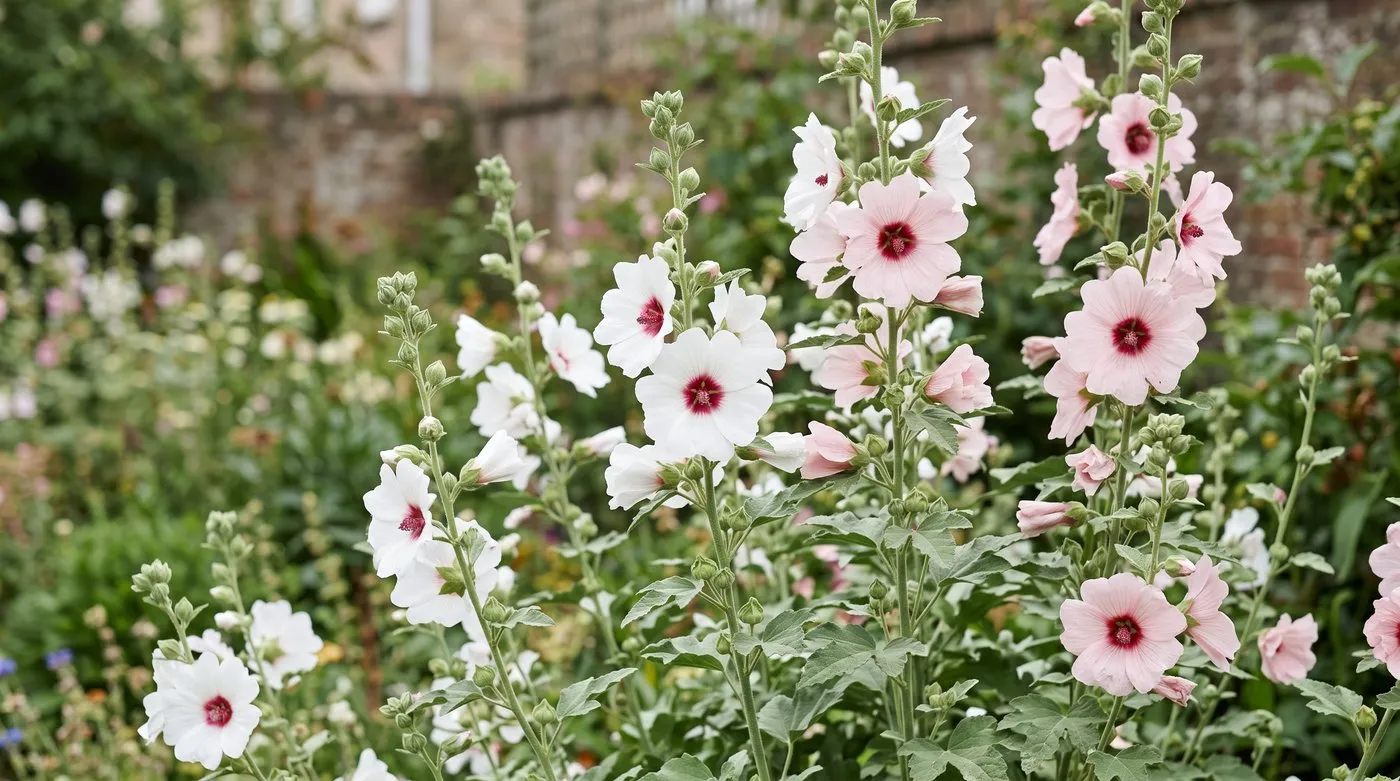
Barnsley flowers open white with a red eye and fade to pink. That’s why one bush shows two shades at once.
Rosea
The most vigorous of the lot, with clear mid-pink flowers. Choose it if you need quick height for a screen or the back of a border. Being so vigorous, it really does need that hard spring prune to stop wind damage.
Burgundy Wine
Deep pink flowers with darker veins that stand out from the paler kinds. It’s a little less vigorous, so it suits smaller gardens. You may need a specialist nursery to find it.
Bredon Springs
Dusky mauve-pink flowers with an old-fashioned feel. Lovely with silver plants like artemisia and lavender. A good pick if Rosea feels too bright.
Red Rum
Rich, deep rosy-pink flowers on a medium-sized plant. Less common than Barnsley or Rosea, but worth hunting down. It looks great with dark purple foliage such as cotinus.
Where to plant lavatera in UK gardens
Plant it in the poorest, driest, sunniest spot you’ve got. It sounds odd, but lavatera really does better in rough ground than in a rich border.
Sunlight requirements
It needs full sun, at least six hours a day. A little afternoon shade is fine, but no more. In shade the stems go floppy, flowers are sparse and the plant tends to collapse in the first strong wind. South and west-facing borders are ideal.
Soil preferences
Poor, well-drained soil gives the longest-lived, most flowery plants. Rich soil and feeding make soft, sappy growth that frost and wind damage easily. It likes:
- Sandy or gravelly soil that drains freely
- Unfed, low-fertility ground
- Neutral to chalky soil
- Ground that never gets waterlogged
On heavy clay, mix plenty of coarse grit into the planting hole, or plant on a low mound 15-20cm high. Lavatera is a great choice for sandy soil and chalky soil where lots of other shrubs struggle.
Coastal suitability
Lavatera is brilliant by the sea. It copes with salt spray, sea winds and sandy, chalky coastal soils. On a very exposed site it grows shorter but bushier.
Lavatera Rosea fills a sunny border with clear pink flowers from June to October.
How to plant lavatera
Plant from March to May. You can plant in autumn, but cold, wet soil over winter can rot the roots before they settle.
- Pick a spot in full sun with well-drained soil.
- Dig a hole twice as wide as the pot and just as deep.
- On clay, put 5cm of grit in the bottom and mix grit into the soil you put back.
- Take the plant out of its pot and gently tease out any circling roots.
- Plant at the same depth it was in the pot, no deeper.
- Firm in and water once to settle the soil.
- Keep any mulch 10cm away from the stem to avoid rot.
Space plants 1-1.5m apart. It fills its space fast and will swamp anything planted too close.
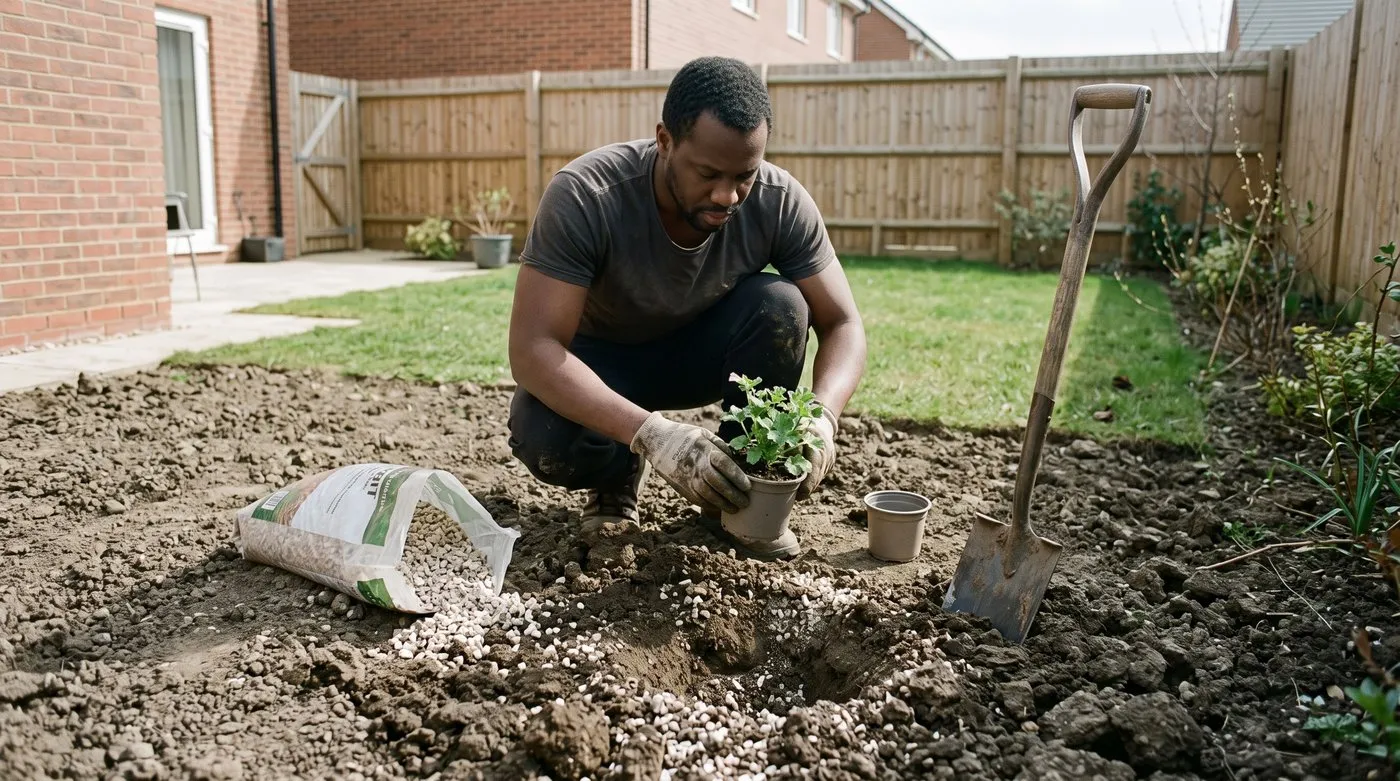
On clay, mix plenty of grit into the hole and plant no deeper than it sat in the pot. Keep any mulch well away from the stem.
How and when to prune lavatera
Cut every stem back to 30cm above the ground each March. It’s the most important job of the year. Don’t be shy about it.
Why hard pruning matters
A hard prune keeps the plant compact and sturdy, so it’s far less likely to rock or snap in the wind. It also sparks lots of strong new growth from the base. Lavatera flowers on new stems, so a hard-pruned plant flowers just as well, only on shorter, tougher stems.
Pruning step by step
- When: mid to late March, after the worst frosts. In the north, wait until early April if hard frosts are still forecast.
- How low: 30cm above the ground. Use loppers or a pruning saw for thick stems.
- Where: cut just above an outward-facing bud or leaf joint.
- Dead wood: cut out any dead stems completely.
- Not in autumn. The old stems help protect the base through winter. Wait for spring.
Our spring pruning guide has the right timings for the other shrubs in your garden.
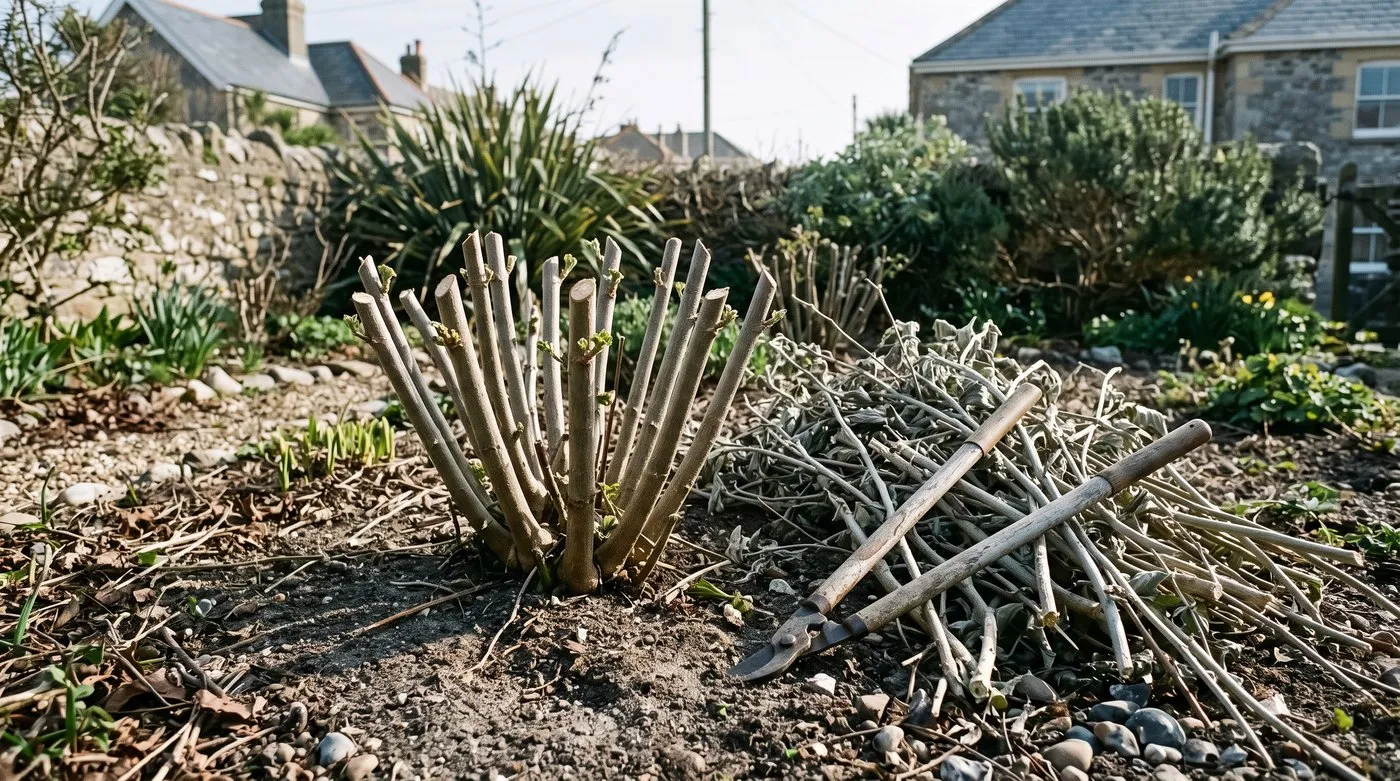
Cut every stem back to about 30cm in March. It feels brutal, but you’ll get sturdy new growth that flowers from June.
What if I inherit an unpruned lavatera?
Cut it back to 30cm in March anyway. Old plants don’t always recover, especially if they’re past their best. If there’s no new growth by June, it’s gone. A young plant will do far better than an old, wobbly one that’s likely to blow over.
Lavatera lifespan and succession planting
Expect lavatera to live around 5-8 years. That’s just how it is, not a sign you’ve done anything wrong. Plants in poor soil and full sun, pruned every spring, tend to last longest. In rich, wet soil or heavy clay they may fade after just a few years.
Signs it’s on the way out:
- Fewer flowers each year, even after pruning
- Weak, thin new shoots from the base
- Main stems dying back and not regrowing
- Hollow or rotten centres when you cut old stems
Succession strategy
Take a few cuttings every August from your healthiest plant. Grow them on in pots over winter. When the old plant fades, you’ve got young ones ready to go. That way you never lose lavatera from the garden.
If you grow annuals from seed, this will feel familiar. Treat lavatera as a quick, woody plant that you replace every few years.
How to propagate lavatera from cuttings
Take semi-ripe cuttings in July or August. Garden varieties don’t come true from seed, so cuttings are the way to get more of the same plant.
Taking cuttings
- Pick a healthy side shoot from this year’s growth, 10-15cm long.
- It should be firming up at the base but still soft and green at the tip.
- Cut just below a leaf joint with a clean, sharp blade.
- Strip the leaves off the bottom half.
- Dip the base in hormone rooting powder.
- Push it into a 9cm pot of half perlite, half peat-free compost.
- Water once and stand it in a cold frame, unheated greenhouse or sheltered spot by the house.
- Keep it on the dry side rather than wet, as soggy cuttings rot.
- Roots usually form in 4-6 weeks. A gentle tug that meets resistance means it’s rooted.
- Pot on in autumn, keep in a cold frame over winter and plant out in May.
Success rate
Not every cutting will root, so take more than you need. Pick side shoots without flowers for the best results.
Each flower lasts only a few days, but new ones keep opening from June to October.
Common lavatera problems in the UK
Lavatera is mostly trouble-free in the right spot. Most problems come from soil that’s too rich, too wet or too shady.
| Problem | Why it happens | What to do |
|---|---|---|
| Snapped or blown over | Top-heavy, not pruned | Cut back to 30cm every March |
| Sudden collapse | Roots rotting in wet soil | Improve drainage, plant on a mound |
| Few flowers | Too much shade or feeding | Move to full sun, stop feeding |
| Dies after 2-3 years | Heavy clay or wet ground | Add grit, plant higher |
| Orange spots on leaves | Rust, common in damp summers | Pick off bad leaves, give it space |
| Twisted shoot tips | Capsid bugs in spring | Usually cosmetic, it grows out of it |
| Frosted new growth | Late frost on young shoots | Leave old stems on until March |
Hollyhock rust
Lavatera is related to hollyhocks and can catch hollyhock rust. You’ll see orange-brown spots under the leaves from midsummer, and bad cases make leaves drop. Pick off and bin affected leaves and give plants space for air to move. It rarely needs more than that, and the spring prune clears away a lot of old growth anyway.
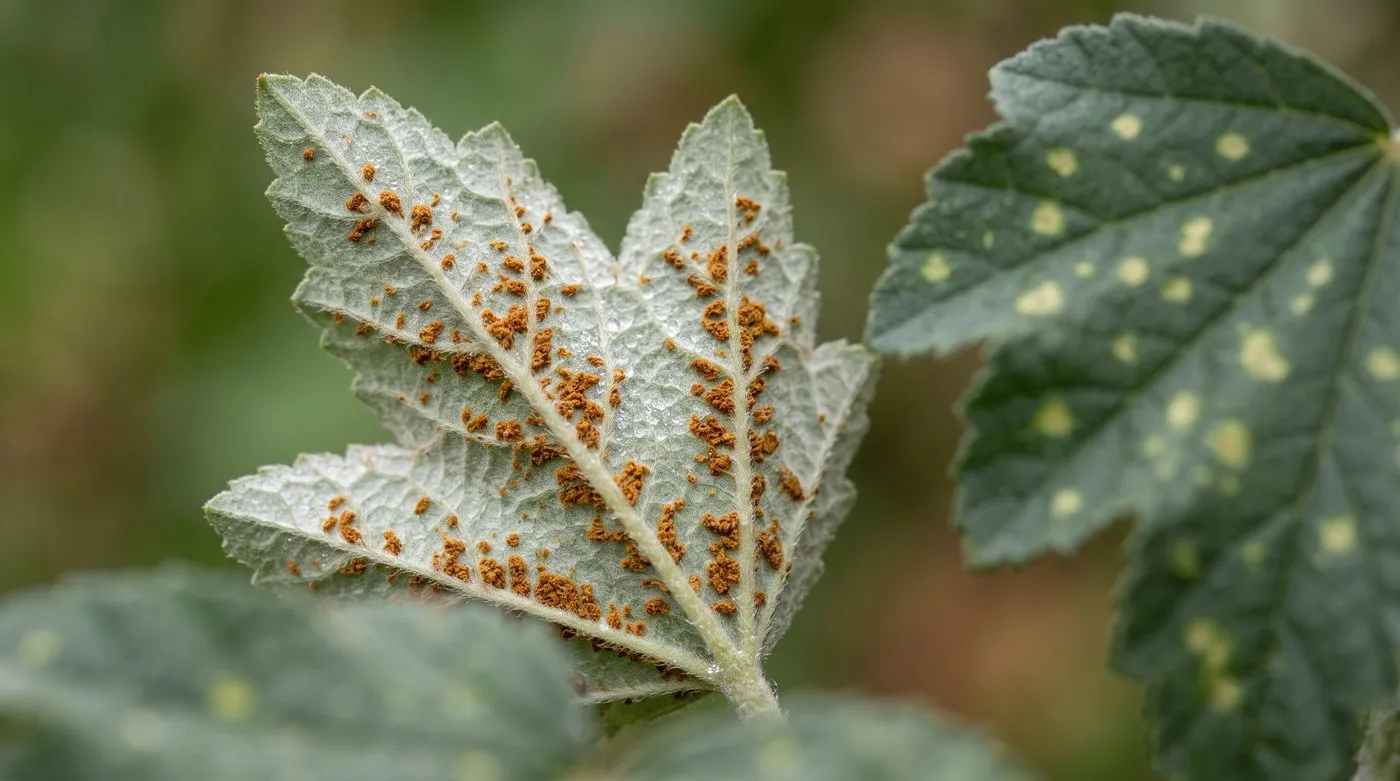
Look under the leaves for orange-brown spots from midsummer. Pick off and bin the worst leaves and give the plant room to breathe.
Lavatera in the garden: design ideas
Lavatera fills the gap between shrubs and big perennials in a cottage border. Because it’s so quick, it’s great for instant impact in a new garden or for hiding an eyesore in one summer.
Cottage garden combinations
Some lovely partners:
- Lavatera and lavender: pink flowers above silver-grey leaves
- Lavatera and delphiniums: pink and blue, the classic cottage combo
- Lavatera and climbing roses: the same soft colours and relaxed style
- Lavatera and bronze fennel: feathery leaves soften its bulk
Screening and temporary structure
Because it grows so tall in one season, lavatera makes a handy stop-gap screen while a slow hedge or tree grows up. Plant a row 1m apart in April and by July you’ll have a flowery screen. Take it out once the permanent planting is tall enough. Among flowering shrubs for UK gardens, few beat it for speed and flower power.
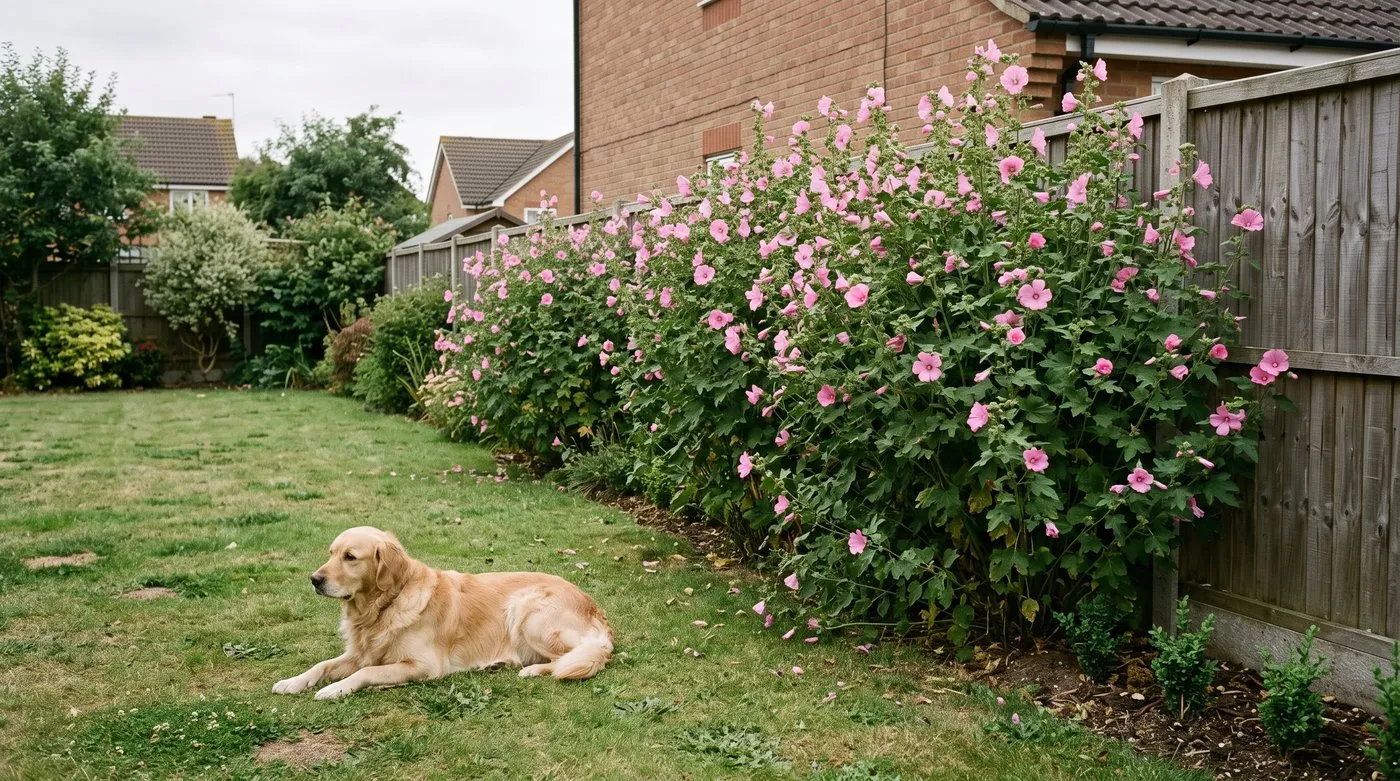
Planted in April, a row of lavatera can screen a fence by July. It’s a handy stop-gap while a slower hedge grows up.
Frequently asked questions
When should I prune lavatera?
Prune it hard in March every year. Cut all the stems back to 30cm above the ground. Don’t prune in autumn or winter, as the old stems help protect the base from frost. Try not to skip a year, or it gets top-heavy, leggy and easily snapped by wind.
Why did my lavatera die suddenly?
Usually wind rock or waterlogged roots. Lavatera doesn’t anchor well in wet, heavy soil. Strong winds rock it back and forth, tearing roots and letting rot in. A hard prune each spring keeps it compact and steadier, and adding grit at planting helps on clay.
How long does lavatera live?
Often around 5-8 years in UK gardens. It’s just a short-lived shrub by nature. Plants in poor, well-drained soil tend to last longer than those in rich, damp ground. Take cuttings each August so you have young plants ready to take over.
Can I grow lavatera from cuttings?
Yes, cuttings taken in July or August root easily. Take 10-15cm side shoots from this year’s growth that are just starting to firm up at the base. Remove the lower leaves, dip in rooting powder and push into gritty compost. Keep them in a cold frame or sheltered spot, then pot them up and plant out the next spring.
Does lavatera grow in clay soil?
It survives on clay but much prefers good drainage. Clay that stays wet all winter rots the roots and shortens its life. Mix plenty of coarse grit into the planting hole, or plant on a low mound or in a raised bed.
Is lavatera good for pollinators?
Yes, bees and butterflies love it. The open flowers make pollen and nectar easy to reach from June to October. Bumblebees visit most, along with honeybees and hoverflies. That long season makes it more useful than shrubs that flower for just a few weeks.
What is the difference between lavatera and hibiscus?
They’re close relatives in the mallow family. Lavatera has smaller, more delicate flowers. Hardy hibiscus has bigger, bolder flowers and blooms later, from late summer. Lavatera grows faster and flowers for longer, but it doesn’t live as long.
Our team produces practical UK gardening guidance from source research, contributor records and established horticultural practice. Editorial standards are overseen by Matt W.


