
Key takeaways
- February to March: prune bush roses, buddleja, Group 3 clematis, dogwoods grown for stems and wisteria
- March to April: cut back hardy fuchsias, penstemons and lavatera once new shoots appear
- April: lightly shape evergreens such as choisya and photinia
- Shrubs that flower in spring or early summer are pruned just after flowering, not now
- Check every shrub and hedge for nesting birds before you cut from March onwards
Spring pruning is mostly about plants that flower later in the year. Cut them in February to April and they grow fresh, strong stems that flower this summer. Shrubs that flower in spring are the opposite: leave them until just after they bloom.
This guide is your checklist for February, March and April: what to cut, how hard, and what to leave well alone. For jobs in the rest of the year, the year-round pruning calendar has every month.
The one rule that prevents most spring pruning mistakes
Ask when the shrub flowers. That tells you when to prune it.
Flowers in spring or early summer? It flowers on stems that grew last year. Prune now and you cut off this year’s flower buds. Wait until the flowers fade, then prune. Forsythia, flowering currant, philadelphus, weigela, deutzia and kerria all fall in this group.
Flowers from midsummer onwards? It flowers on stems that grow this year. Pruning in spring gives strong new shoots that carry this summer’s flowers. Buddleja, lavatera, caryopteris, hardy fuchsias and Group 3 clematis are in this group.
If you’re not sure, leave it until it flowers. Then you’ll know which group it’s in.
What to prune in February
February starts the season for roses and other plants that flower on new growth. Most are still bare, so you can see the shape of each plant clearly.
Roses are the main job. Prune bush roses from late February to March. Cut hybrid teas to about 15-20cm and floribundas to about 25-30cm, each just above an outward-facing bud. Take out dead, crossing and inward-growing stems first. The full method is in the guide to pruning roses.
Wisteria gets its winter prune now. Shorten last summer’s side shoots to two or three buds from the main stems. The wisteria pruning guide explains both the winter and summer cuts.
Group 3 clematis, the ones that flower from midsummer, can be cut to about 15-30cm above the ground, just above a pair of healthy buds.
Ornamental grasses such as miscanthus can be cut down to about 10cm before new growth starts. Leave evergreen grasses alone and just comb out the dead bits.

A pruned bush rose should look like an open vase, with no stems crossing through the middle.
What to prune in March
March is the busiest month. Most of these plants respond within weeks, which makes the work satisfying.
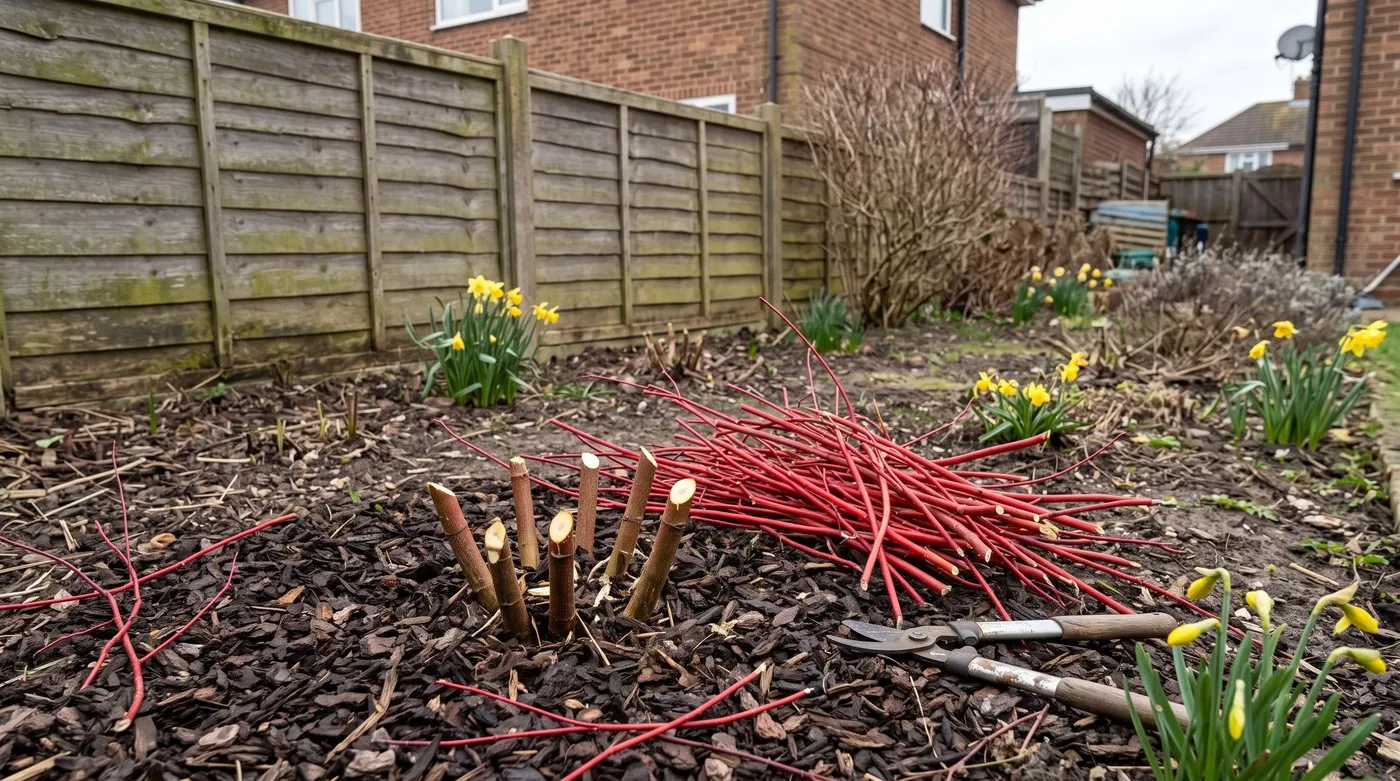
Cutting dogwoods low in March gives fresh, brightly coloured stems by next winter.
Buddleja davidii wants a hard prune in March. Cut the stems back to a low framework, about 30-60cm high. Left alone, it gets tall and leggy with flowers only at the top.
Dogwoods grown for coloured winter stems can be cut to about 5-10cm from the ground in March. The new stems give the brightest colour next winter. On a young plant, cut just a third of the stems each year.
Lavatera (tree mallow) can be cut back hard to about 30cm once the worst frosts are over. Without this it gets woody, top-heavy and prone to snapping.
Hardy fuchsias are cut back to near the base once new shoots appear. In mild coastal gardens you can leave a taller framework.
Penstemons are cut back to just above the lowest fresh green shoots. Don’t cut into bare stems with no shoots, as they rarely regrow from there. In cold gardens, wait until April.
What to prune in April
April is for evergreens and tender plants that are safer cut once the hardest frosts have passed.
Evergreen shrubs such as choisya, Viburnum tinus and photinia can be lightly shaped now, or just after they flower. Cut back to a side shoot inside the leafy outline. Avoid cutting deep into bare wood, as many regrow slowly.
Rosemary only gets a light trim into green growth. It rarely regrows from old, bare wood, so never cut below the last leaves.
Lavender can have a light tidy now if you missed the late-summer trim. Again, keep to the leafy part.
Wildlife note: Birds start nesting in March. Check shrubs and hedges carefully before you cut, and leave any with an active nest. Damaging an active nest is an offence. Save big hedge trims for late summer.

Evergreens like choisya just need a light shape in spring. Look for nests before you start.
What not to prune in spring
These shrubs flower on last year’s stems. Prune them now and you lose this year’s flowers. Wait until just after flowering instead.
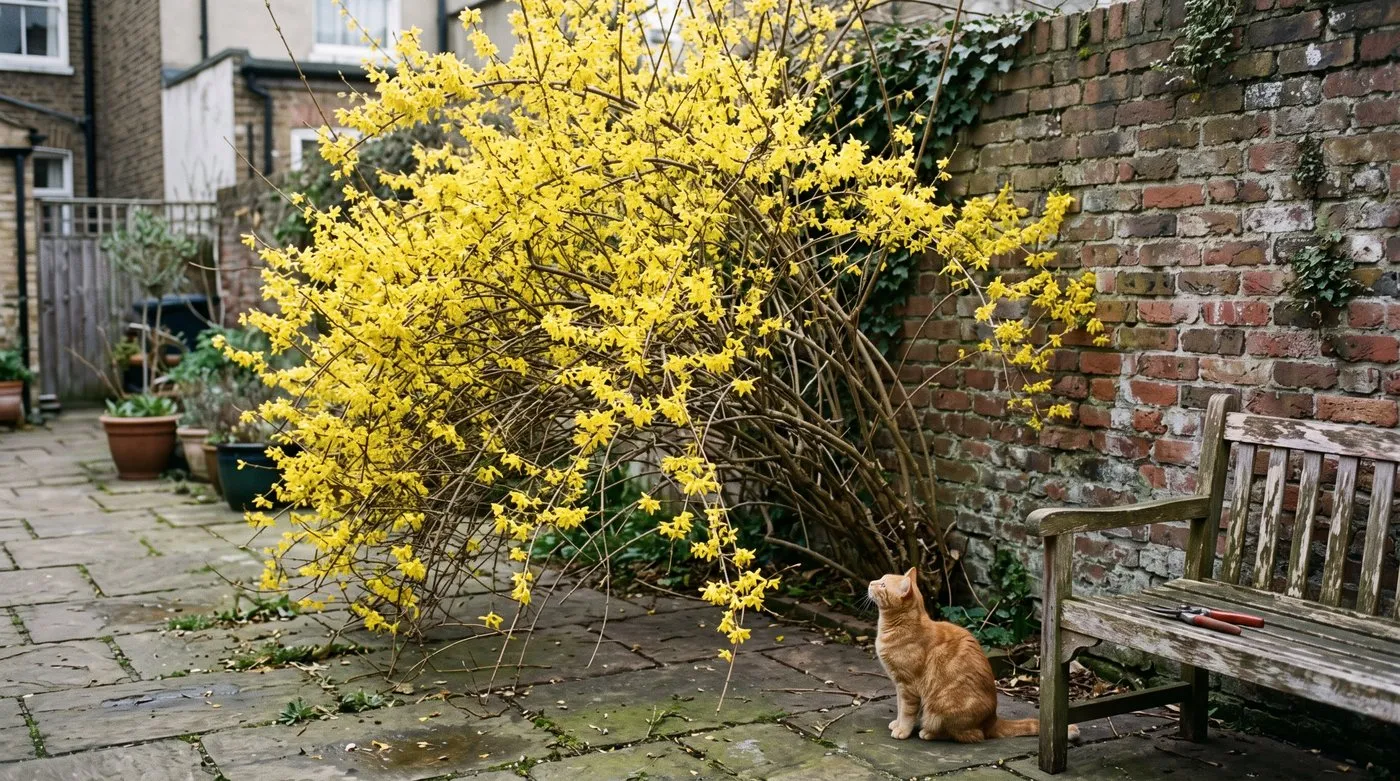
If it’s in flower now, like this forsythia, leave the secateurs on the bench until the flowers fade.
| Shrub | Usually flowers | Prune |
|---|---|---|
| Forsythia | March to April | Straight after flowering |
| Flowering currant | March to April | Straight after flowering |
| Kerria | April to May | Straight after flowering |
| Weigela | May to June | Straight after flowering |
| Deutzia | May to June | Straight after flowering |
| Philadelphus | June to July | Straight after flowering |
| Group 1 clematis | Early spring | Straight after flowering, if needed |
| Ornamental cherry | Spring | Midsummer, if needed |
The same goes for magnolia, camellia and rhododendron, which rarely need pruning at all. If a shrub is covered in fat flower buds or is flowering now, put the secateurs down. Many of these come round in the guide to May pruning jobs.
For mophead and lacecap hydrangeas, only snip off last year’s dead flower heads, just above the first fat pair of buds. The hydrangea pruning guide covers the other types.
Fruit to prune in spring
Only a few fruit jobs belong in spring.
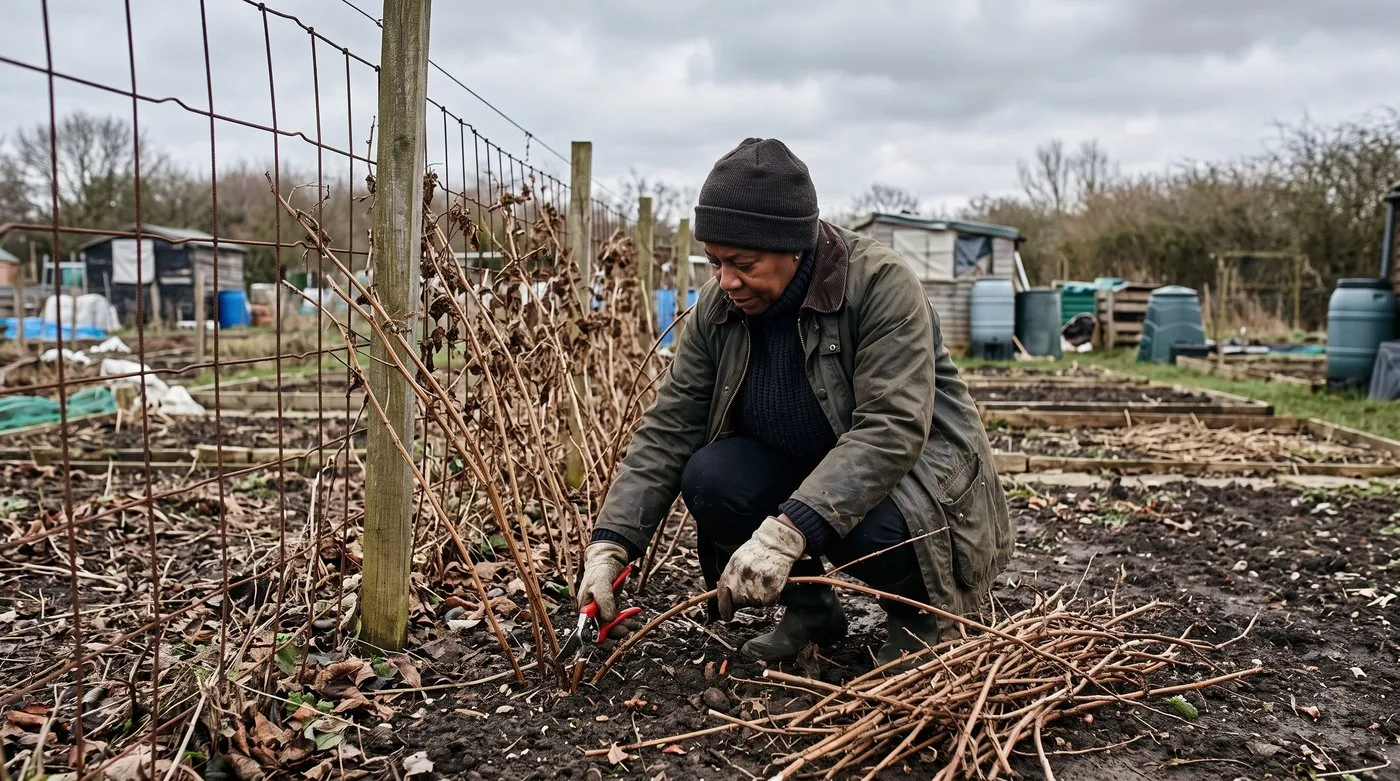
Autumn raspberries are the easy ones: cut every cane to the ground in February and new ones fruit this autumn.
- Autumn-fruiting raspberries: cut all the canes down to the ground in February.
- Summer-fruiting raspberries: just tip any canes that are taller than their supports. The old canes should have come out after last summer’s harvest.
- Gooseberries and redcurrants: finish the winter prune by early March.
- Plums and cherries: never prune in winter. Young trees are shaped in spring as growth starts, and older trees after picking in summer. This helps avoid silver leaf disease.
Apples and pears are pruned in winter, from November to early March. The guide to pruning fruit trees covers them in detail.
Pruning tools and clean cuts
Sharp tools make clean cuts, and clean cuts let the plant seal the wound quickly.
- Bypass secateurs for stems up to about pencil thickness or a little more. They cut with a scissor action and are kinder to live stems than anvil types.
- Loppers for thicker stems, up to about 3cm.
- A folding pruning saw for anything thicker.
Cut just above a bud, sloping slightly away from it so rain runs off. On plants with buds in pairs, cut straight across just above the pair. Need a new pair? The guide to the best secateurs helps you choose.

Three tools cover almost every spring pruning job. Clean and sharpen them before you start.
Common spring pruning mistakes
- Pruning forsythia and other spring flowerers now. You cut off the flower buds. Wait until just after flowering.
- Cutting too early in a cold spell. Fuchsias, penstemons and lavatera can be damaged if new shoots meet a hard frost. Wait for new growth.
- Cutting into bare wood on lavender and rosemary. They rarely regrow. Keep to the green part.
- Skipping the nest check. Birds nest from March. Look before you cut.
- Blunt secateurs. They crush stems and leave ragged ends. Sharpen them first.
Spring pruning checklist
| Plant | When | How hard |
|---|---|---|
| Hybrid tea roses | Late Feb to Mar | 15-20cm, to an outward bud |
| Floribunda roses | Late Feb to Mar | 25-30cm, to an outward bud |
| Climbing roses | Feb to Mar | Side shoots to 2-3 buds |
| Wisteria | Feb | Side shoots to 2-3 buds |
| Group 3 clematis | Feb to Mar | 15-30cm, above a bud pair |
| Buddleja davidii | Mar | Low framework of 30-60cm |
| Dogwood (for stems) | Mar | 5-10cm from the ground |
| Lavatera | Mar to Apr | About 30cm |
| Hardy fuchsia | Mar to Apr | Near the base, once shooting |
| Penstemons | Mar to Apr | To the lowest new shoots |
| Evergreen shrubs | Apr | Light shaping only |
Frequently asked questions
What should I prune in March in the UK?
Prune shrubs that flower later in the summer on new growth. That means bush roses, buddleja, Group 3 clematis, lavatera and hardy fuchsias once they start shooting. Cut back old stems of grasses and perennials too. Leave forsythia and other spring flowerers until after they bloom.
When is it too late to prune in spring?
Aim to finish hard pruning by mid-April. After that the plant has put lots of energy into new shoots, and cutting late can delay flowering. Removing dead wood and light tidying can be done later. Spring-flowering shrubs are different. They’re pruned straight after flowering.
Should I prune before or after new growth appears?
Prune just as the buds begin to swell. You can see the healthy buds to cut above, and the plant soon grows away. With frost-tender shrubs like fuchsias and penstemons, wait until you see new shoots near the base.
Can I prune roses in April?
Yes, April pruning is fine, especially in colder parts of the UK. The first flowers may come a little later. Avoid cutting off lots of soft new growth if the rose is already growing strongly.
What should I not prune in spring?
Leave shrubs that flower in spring or early summer until just after flowering. That includes forsythia, flowering currant, philadelphus, weigela and deutzia. Group 1 clematis wait too. For mophead hydrangeas, only remove the old flower heads in spring.
How hard should I prune roses in spring?
It depends on the type of rose. Cut hybrid teas to about 15-20cm and floribundas to about 25-30cm, just above an outward-facing bud. On shrub roses, take out a few of the oldest stems. On climbers, shorten side shoots to two or three buds.
Spring pruning done? Find more seasonal jobs in the how-to hub, then read the guide to pruning clematis by group so every clematis gets the right cut.
Our team produces practical UK gardening guidance from source research, contributor records and established horticultural practice. Editorial standards are overseen by Matt W.


