
Key takeaways
- A bypass pair is the best all-round choice for most gardeners
- Anvil secateurs crush stems a little, so save them for dead, dry wood
- Ratchet secateurs make cutting easier on hands with arthritis
- Felco and Niwaki last for years and sell spare parts
- Wipe, dry and oil your secateurs after each use to stop rust
- Sharp blades make clean cuts that heal better than ragged tears
Secateurs are the tool you’ll reach for most, and a good pair makes every job easier. A clean cut heals quickly. A ragged tear lets disease in, especially in a damp British autumn and winter.
What type of secateurs do you need?
There are three types, and each has its own job. Pick the wrong one and you’ll get tired hands, messy cuts and a damaged tool.
Bypass secateurs have two curved blades that slide past each other like scissors. If you only buy one pair, make it these. They handle live green stems up to about 20mm and leave a clean cut. The RHS has a handy guide on how to choose secateurs.
Anvil secateurs press one sharp blade down onto a flat metal plate. They’re good on dead, dry wood up to about 25mm, where a perfect cut matters less. They need less grip than bypass for the same stem. But they bruise live stems, which can let disease in. Save them for clearing deadwood in winter.
Ratchet secateurs can be bypass or anvil, with a clever mechanism that cuts in a few small squeezes. Each click drives the blade a bit further through the stem. They’re slower, but brilliant if you have arthritis or sore wrists, or a long day of pruning ahead.
 The three main types: bypass (red handles), anvil (green) and ratchet (orange). Each suits a different job.
What to look for when buying secateurs
Not every feature on the packet matters. These are the ones that do.
Blade steel decides how long the edge lasts. Carbon steel gets sharper but rusts faster. Stainless steel resists rust but blunts sooner. A coated carbon blade is a good middle ground for our wet weather.
Cutting size is the thickest stem a pair handles comfortably, usually around 20mm. Forcing a thicker stem can knock the blades out of line. For anything over 25mm, use loppers. Good secateurs for pruning roses cut normal rose stems easily.
Handle fit matters more than people think. If the handles open too wide for your hand, every cut is harder work. Try them in the shop if you can. A rotating lower handle helps stop blisters on long sessions.
Weight adds up over a day. Lighter pairs suit small hands and light jobs. Heavier ones start to tell on your wrist after an hour or so.
Spare parts keep a good pair going for years. Brands that sell new blades, springs and bolts let you repair rather than replace.
Value. A pair that costs twice as much but lasts many times longer, with parts you can replace, is better value than a cheap pair that’s done after one season.
Bypass vs anvil vs ratchet at a glance
This table sums up which type suits which job.
| Bypass | Anvil | Ratchet | |
|---|---|---|---|
| How it cuts | Like scissors | Blade onto a flat plate | In several small squeezes |
| Best for | Live green stems | Dead, dry wood | Thicker stems with less effort |
| Cut quality | Clean | Some squashing | Depends on blade type |
| Effort on your hand | Medium | Lower | Lowest |
| Hand sizes | Small to large | Medium to large | Medium to large |
For most UK gardeners, a good bypass pair is the best buy. Add an anvil pair for winter deadwood if you have big trees and shrubs. Go for a ratchet if your grip isn’t what it was.
UK brands compared
These six brands are easy to find in garden centres, hardware shops and online. Prices are a rough guide and change over time.
| Brand | Price | Good for | Spare parts |
|---|---|---|---|
| Felco (Model 2) | Premium | Years of regular use | Full range |
| Bahco (PX-M2) | Mid-range | Long sessions, rotating handle | Blades, springs |
| Spear & Jackson (Kew Gardens) | Budget to mid | Wet weather, coated blade | Limited |
| Darlac (Expert Bypass) | Budget | A first pair or a spare | Blades |
| Niwaki (GR Pro) | Premium | Fine, precise cuts | Full range |
| Burgon & Ball (RHS-endorsed) | Mid-range | Everyday garden jobs | Limited |
Felco is the classic professional choice. The Model 2 is widely used by commercial growers. You can buy new blades and springs, so a well-kept pair lasts for many years.
Niwaki uses Japanese steel that takes a very fine edge. The GR Pro is light in the hand, which is easier on the wrist. It’s great for careful jobs like pruning roses and training fruit trees.
Bahco is a strong mid-range choice. The PX-M2 has a rotating lower handle that helps stop blisters, and you can get replacement blades.
Spear & Jackson and Burgon & Ball are good value with decent steel. The coated Spear & Jackson Kew Gardens blades help in wet weather. They won’t stay sharp as long as Felco or Niwaki, but suit occasional gardeners well.
Darlac is the budget pick that still does the job. It makes a handy first pair or a spare for rough work.
Looking after your secateurs
A few minutes of care after each use keeps secateurs cutting cleanly for years. Leave them wet and dirty and even a Felco will struggle after one soggy autumn.
Cleaning
Wipe the blades with a damp cloth after every use. Sap dries hard and pushes the blades apart, which spoils the cut. After pruning diseased wood such as canker, coral spot or silver leaf, clean the blades with methylated spirit or a 10% bleach solution before you touch a healthy plant.
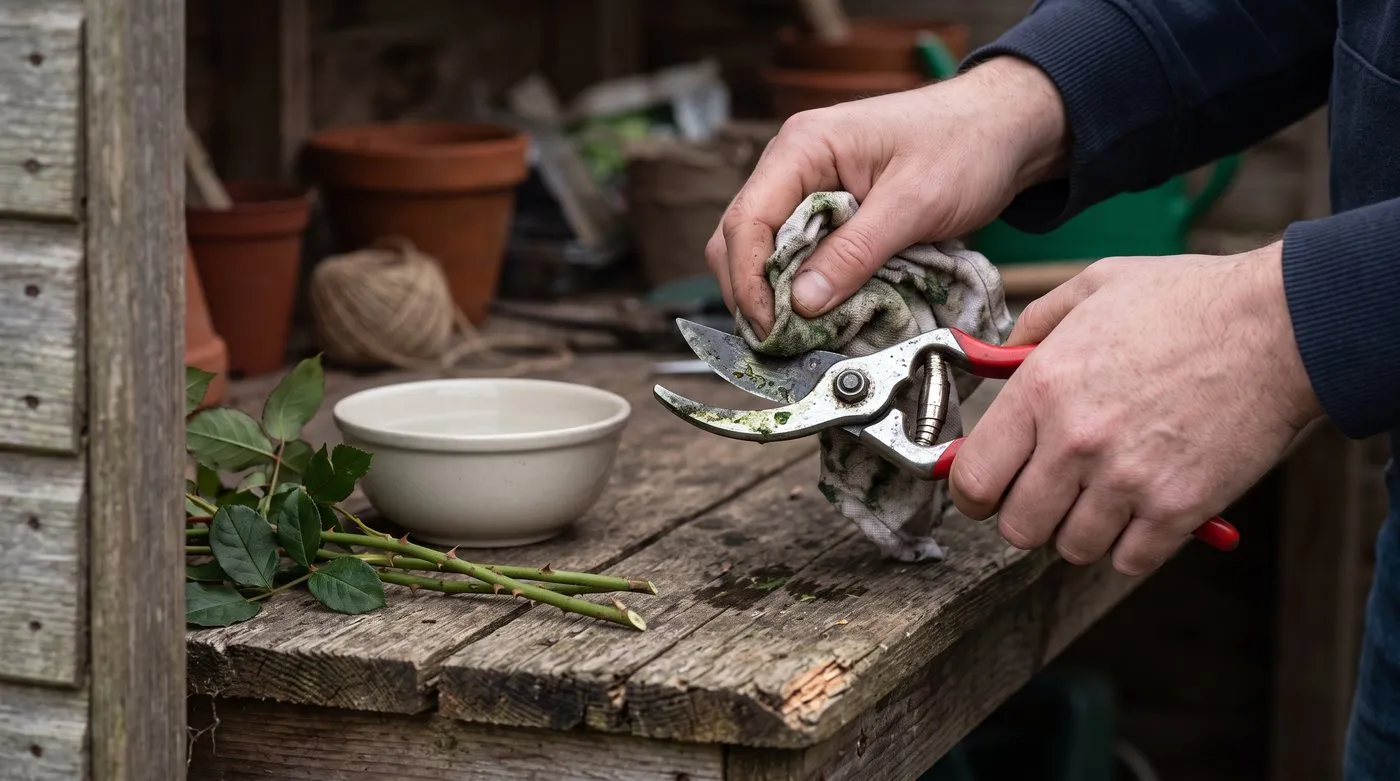
A quick wipe after every use stops sap drying hard and pushing the blades apart. Clean them properly before moving on from diseased wood.
Sharpening
Sharpen after every 2-3 hours of cutting. Hold a diamond stone or fine whetstone flat against the angled edge and stroke it along the blade in one direction.
 Sharpening secateurs on a diamond stone. Keep the stone flat against the angled edge and draw it one way.
Oiling
After each session, rub a thin coat of camellia oil or light machine oil on the blade, pivot and spring. In a wet British garden, this is the best way to stop rust.
Storage
Keep secateurs indoors somewhere dry. Sheds and greenhouses get damp in winter, and metal gathers condensation overnight. A hook by the back door or a kitchen drawer is ideal. If they must live in the shed, wrap them in a lightly oiled cloth.
Care checklist
| Job | How often | What to use |
|---|---|---|
| Wipe off sap and dirt | After every use | Damp cloth |
| Clean after diseased wood | Straight away | Methylated spirit or 10% bleach |
| Sharpen the blade | Every 2-3 hours of use | Diamond stone or fine whetstone |
| Oil blade, pivot and spring | After every session | Camellia oil or light machine oil |
| Check the bolt is snug | Monthly | Spanner or Allen key to fit |
| Replace a worn spring | When cutting takes extra effort | The brand’s spare |
| Replace the blade | When sharpening no longer works | The brand’s spare |
Choosing the right secateurs for your garden
The best pair depends on what you prune. A courtyard with a few roses needs less than a big plot with fruit trees, borders and a long hedge.
For roses: A good bypass pair handles everything from deadheading to hard winter pruning. The Felco 2 or Niwaki GR Pro are both excellent. Our guide on how to grow roses covers the care that keeps pruning simple.
For borders and shrubs: The same bypass pair covers most jobs. Add loppers for anything over 20mm, and a pruning saw for removing larger branches safely without tearing the bark. If you tackle big spring pruning sessions, Bahco’s rotating handle saves your hands.
For fruit trees: Bypass secateurs handle young shoots and spur pruning. A Niwaki pair makes neat cuts close to the fruiting wood. For keeping trees cropping well, see our fruit tree growing guide.
 Winter pruning a fruit tree with bypass secateurs. A clean, angled cut heals well before spring.
For sore or weak hands: A ratchet bypass pair takes the strain out of thicker stems. Choose the lightest one you can find, with soft, rotating handles.
Frequently asked questions
What is the difference between bypass and anvil secateurs?
Bypass secateurs cut like scissors. Two curved blades slide past each other and leave a clean cut on live stems. Anvil secateurs press one blade down onto a flat plate, which tends to squash soft stems. Use bypass for green, growing wood and anvil for dead, dry wood.
Which secateurs are best for arthritic hands?
Ratchet secateurs are the best choice. They cut in a few small squeezes, so you need much less grip at any one time. A rotating lower handle cuts down rubbing on the palm. Soft-grip handles help too. Steer clear of heavy all-steel models.
How often should I sharpen my secateurs?
Sharpen them after every 2-3 hours of cutting. A diamond stone or fine whetstone works well. Hold the stone flat against the angled edge and draw it along the blade in one direction. If the blade is nicked or badly worn, start with a coarser stone.
Do I need to clean secateurs after pruning diseased wood?
Yes, always. Wipe the blades with methylated spirit or a 10% bleach solution after cutting anything diseased. Coral spot, canker and silver leaf can spread on dirty blades. Clean them after each diseased plant, not just at the end.
How do I stop my secateurs rusting in wet weather?
Dry the blades after every use, then oil them. Keep them indoors rather than in a damp shed. Stainless steel rusts less than carbon steel, but still needs oiling. A quick wipe takes ten seconds and saves you buying new blades.
Are expensive secateurs worth the money?
For regular use, yes. Felco and Niwaki use harder steel that stays sharp longer, and they sell spare parts. A Felco 2 can last many years if you replace the blade when it wears. Budget pairs are often hard to resharpen and have no spares.
What size secateurs do I need for small hands?
Choose a pair that opens to less than 50mm across the handles. Felco 6 and Bahco PX-S1 are made for smaller hands. Avoid big professional models like the Felco 4 or Bahco PX-L3, which need a full adult grip.
Our team produces practical UK gardening guidance from source research, contributor records and established horticultural practice. Editorial standards are overseen by Matt W.


